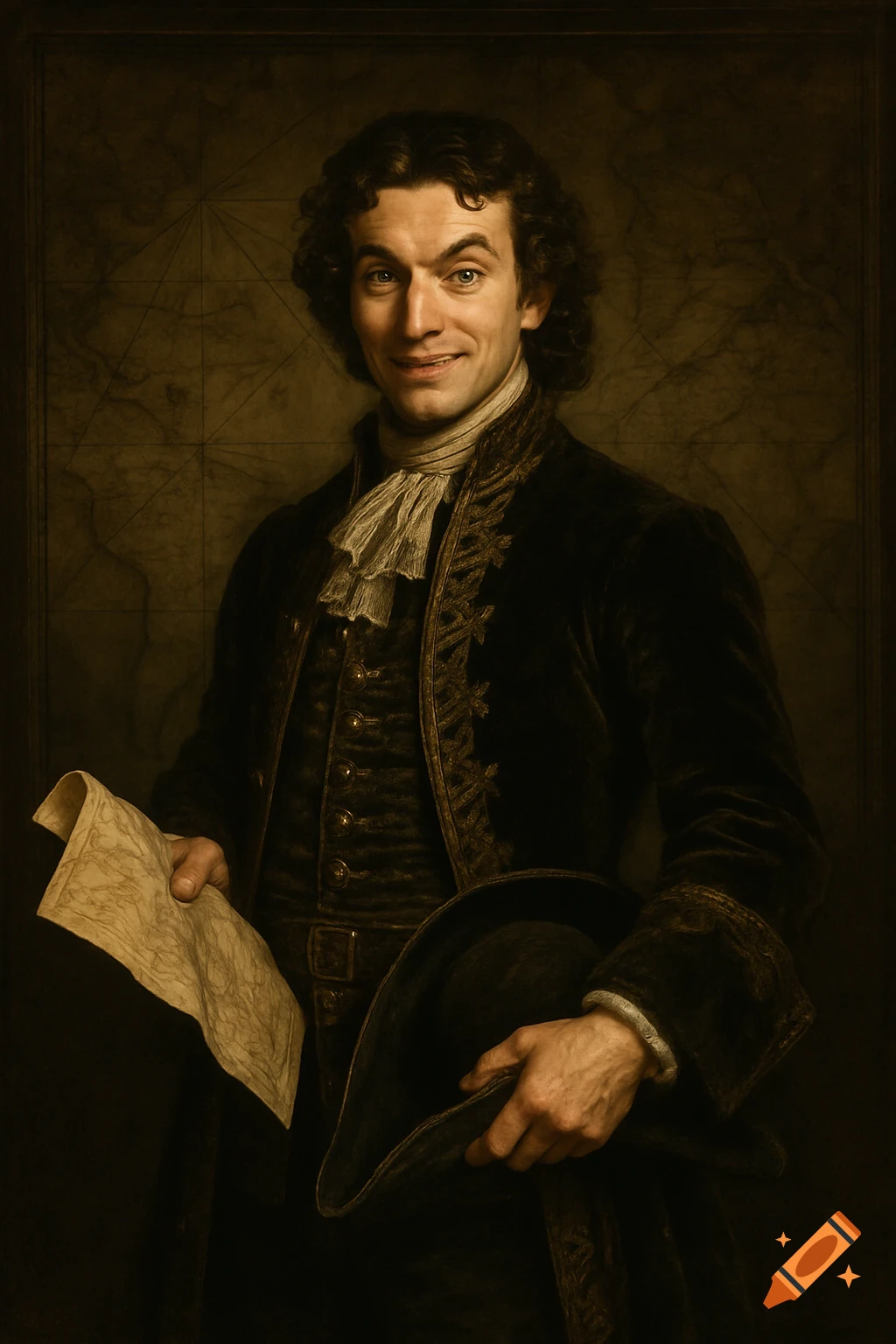
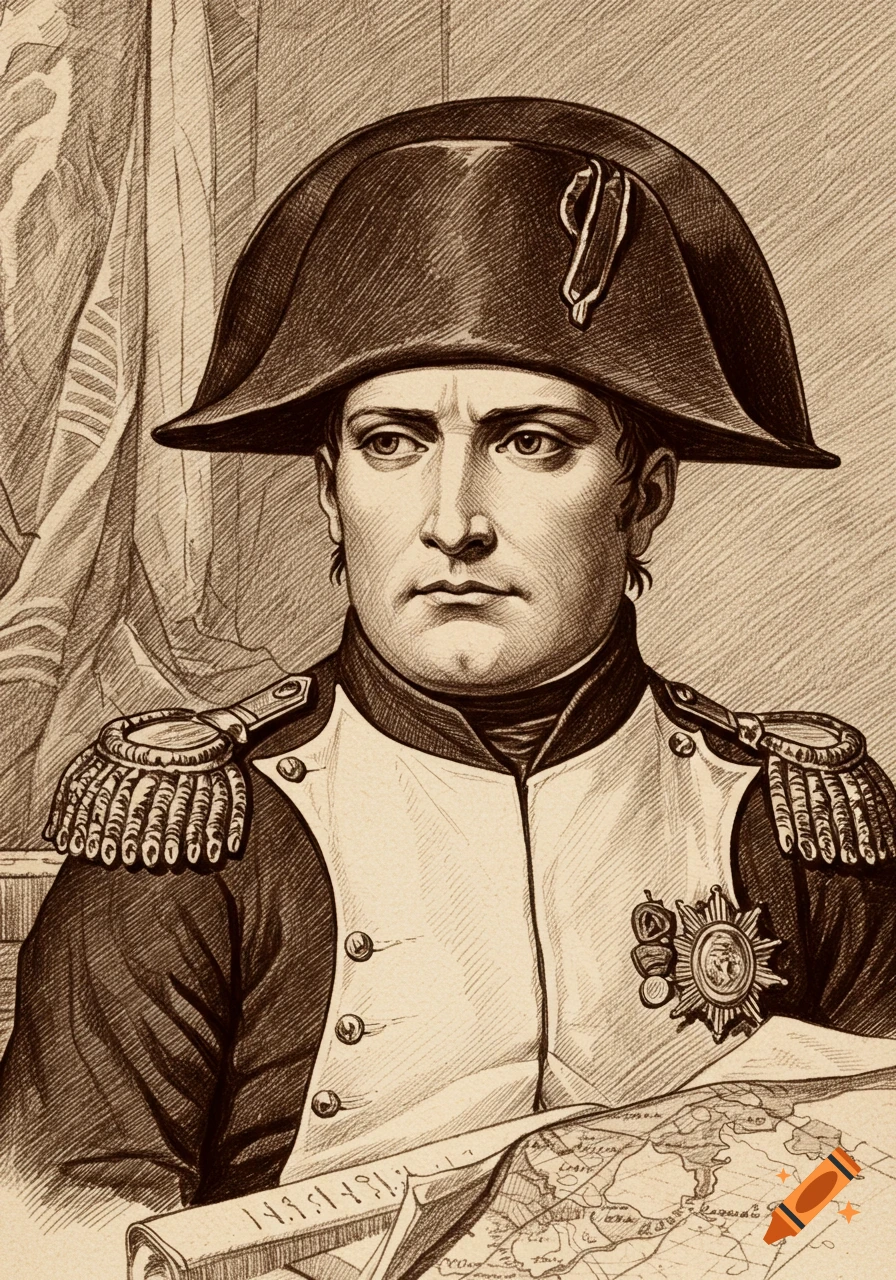
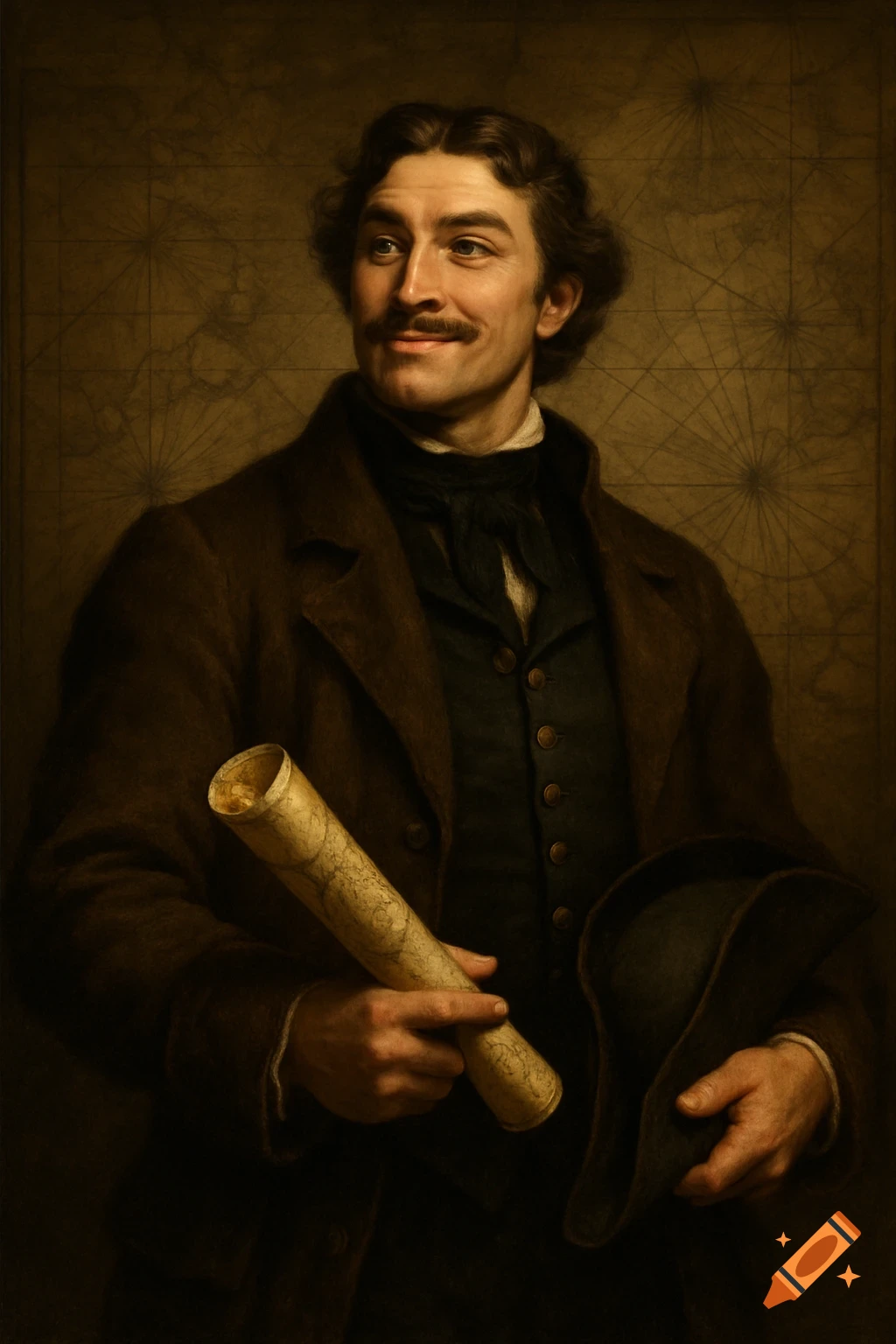
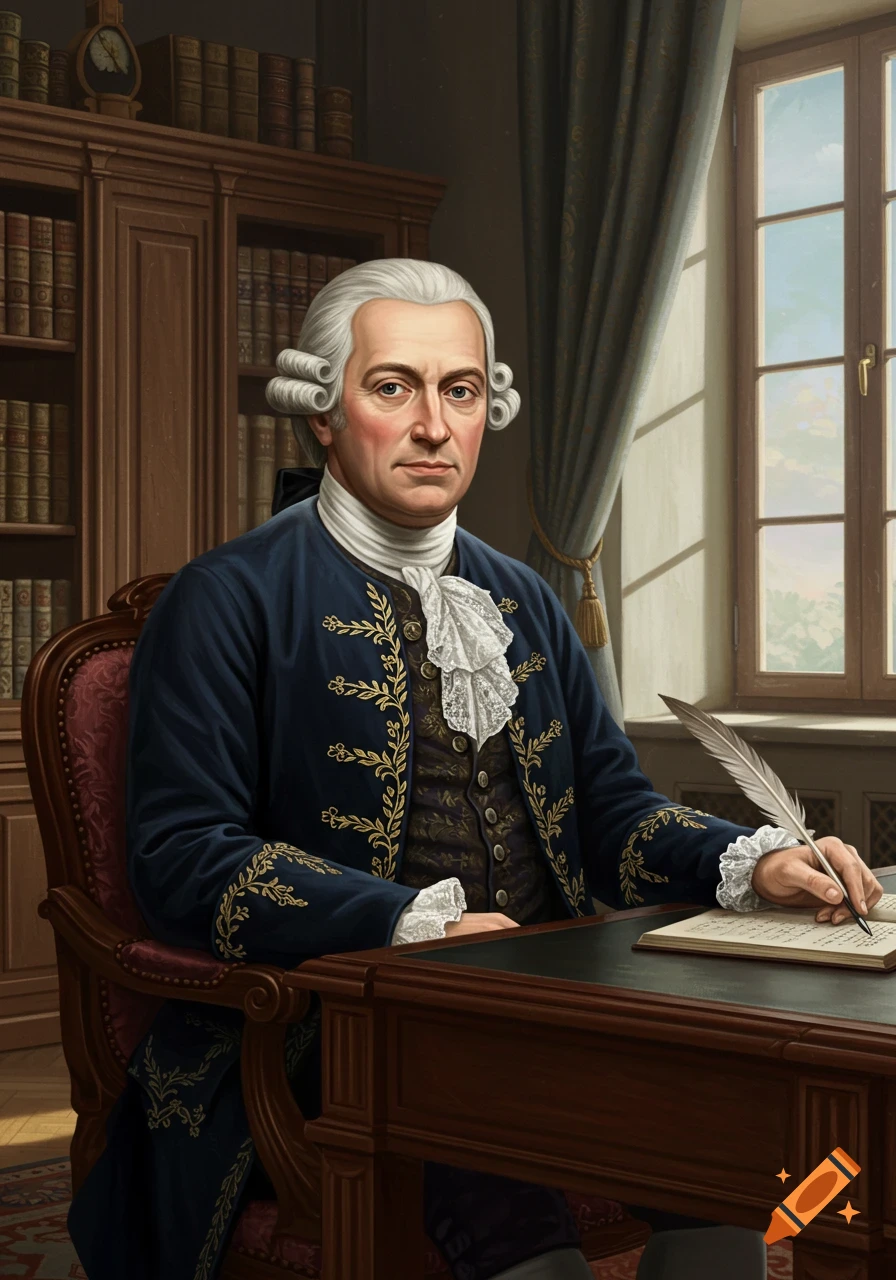
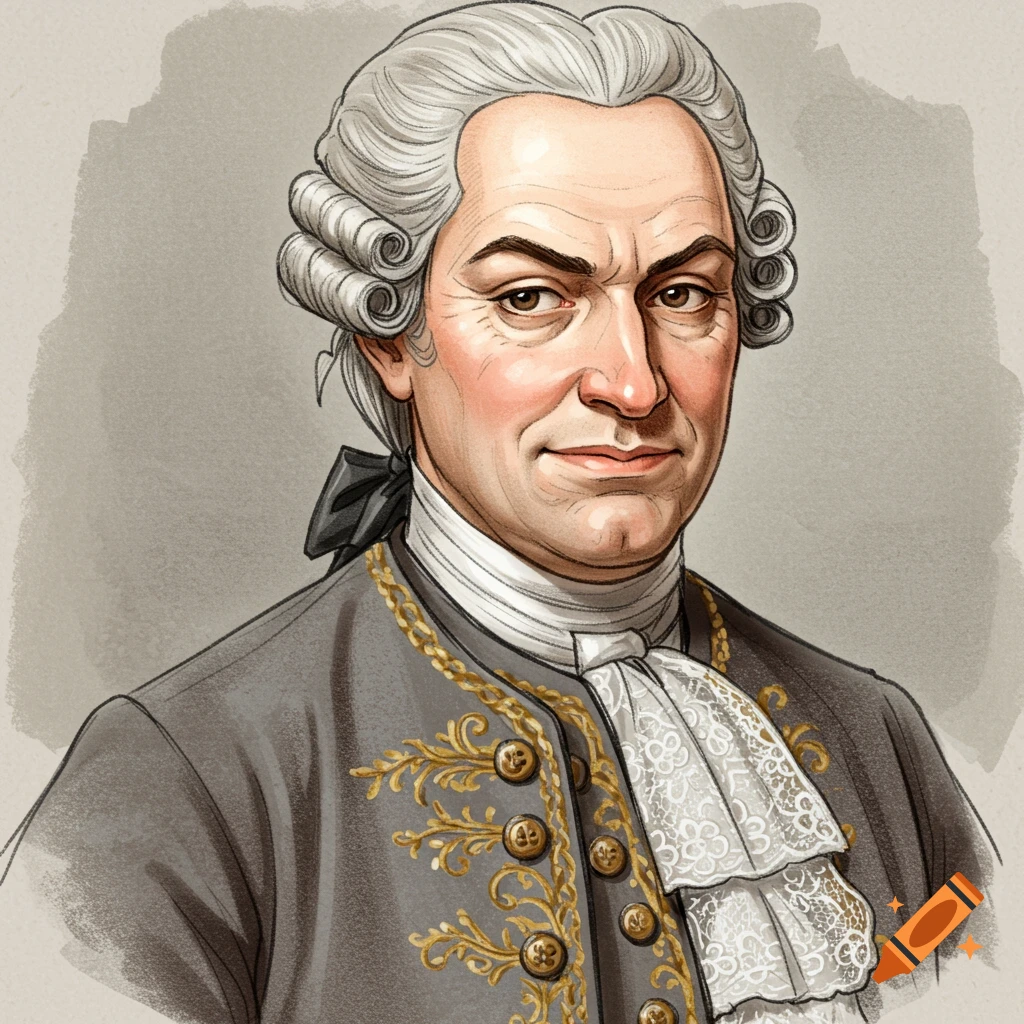
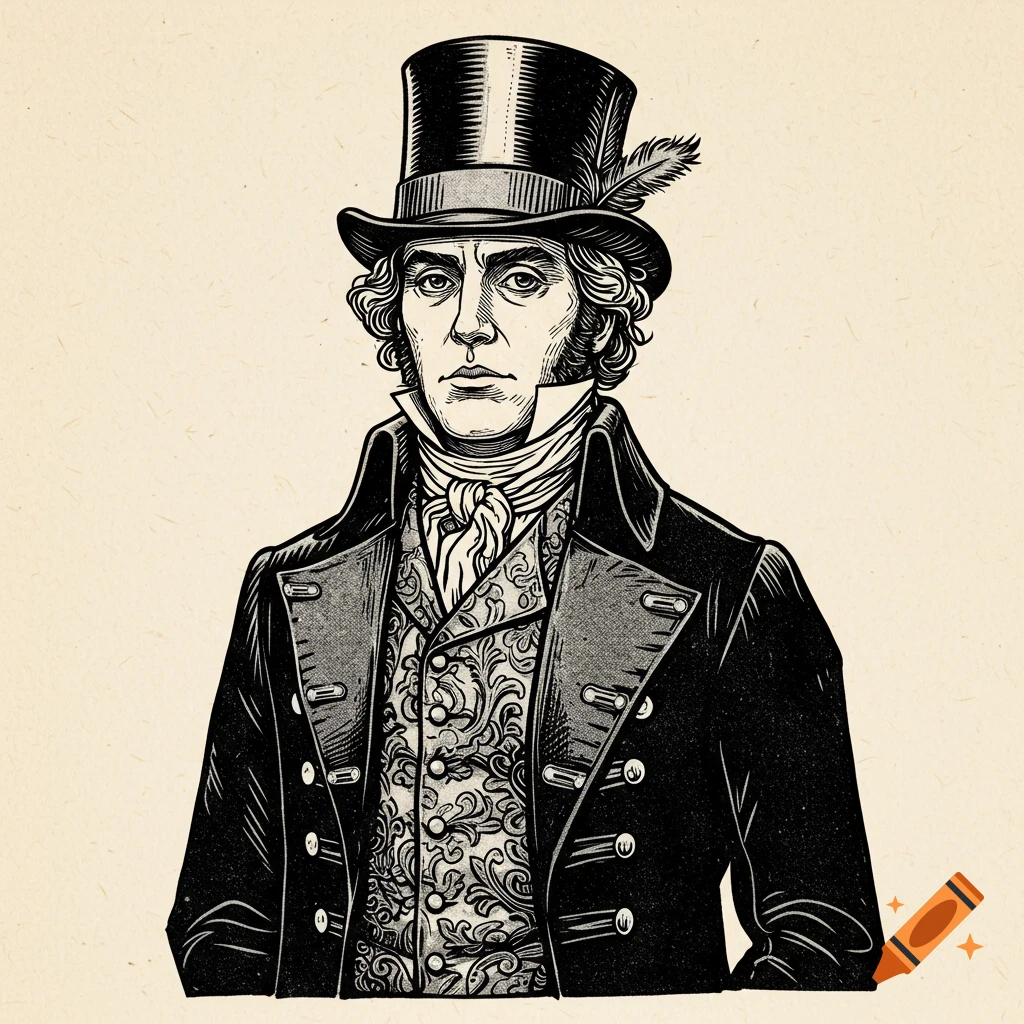
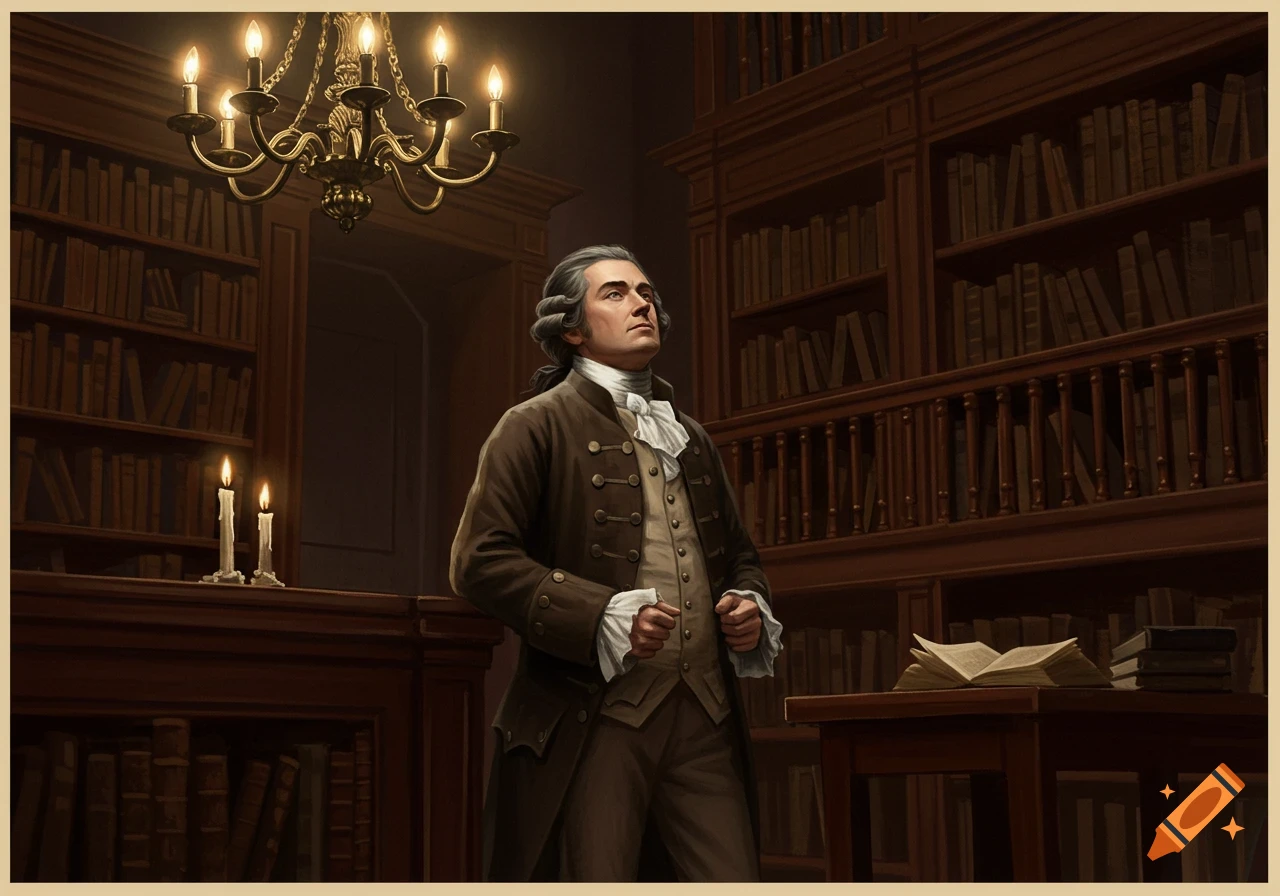
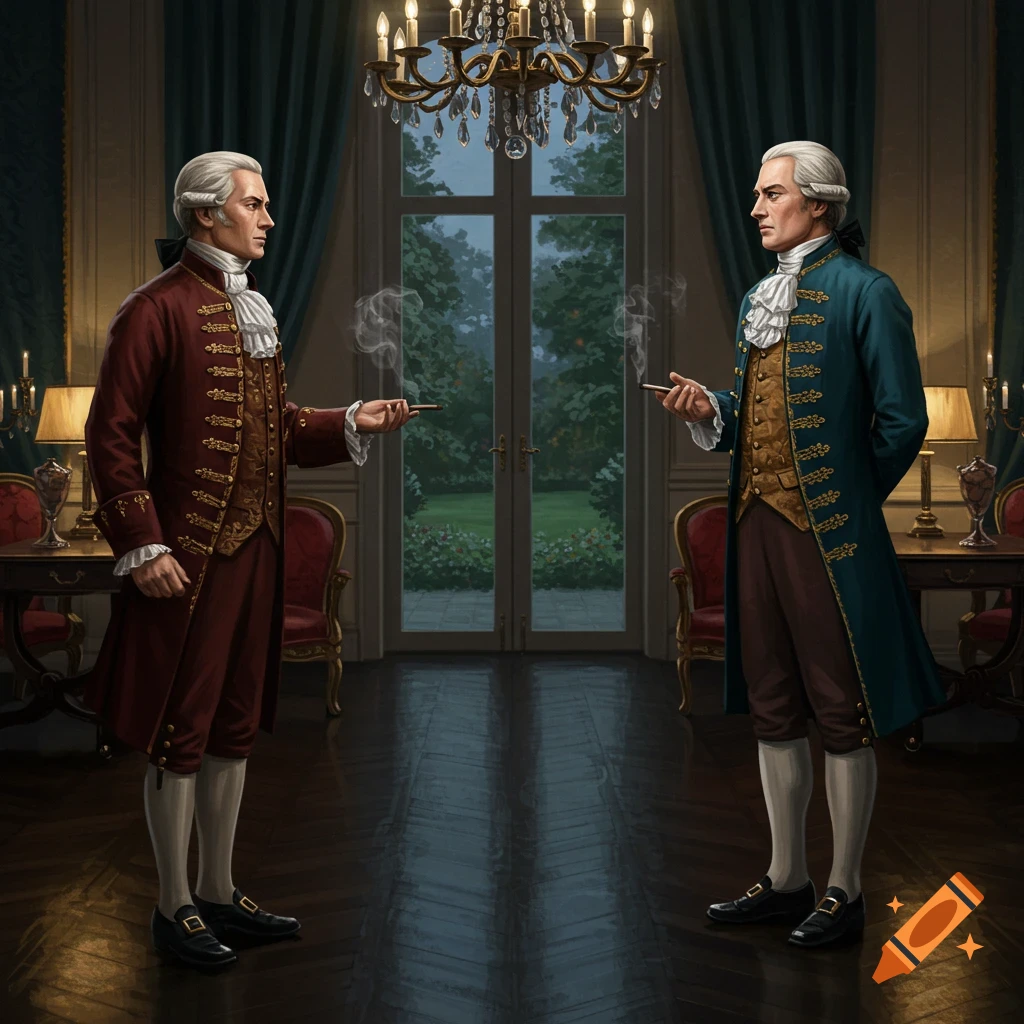
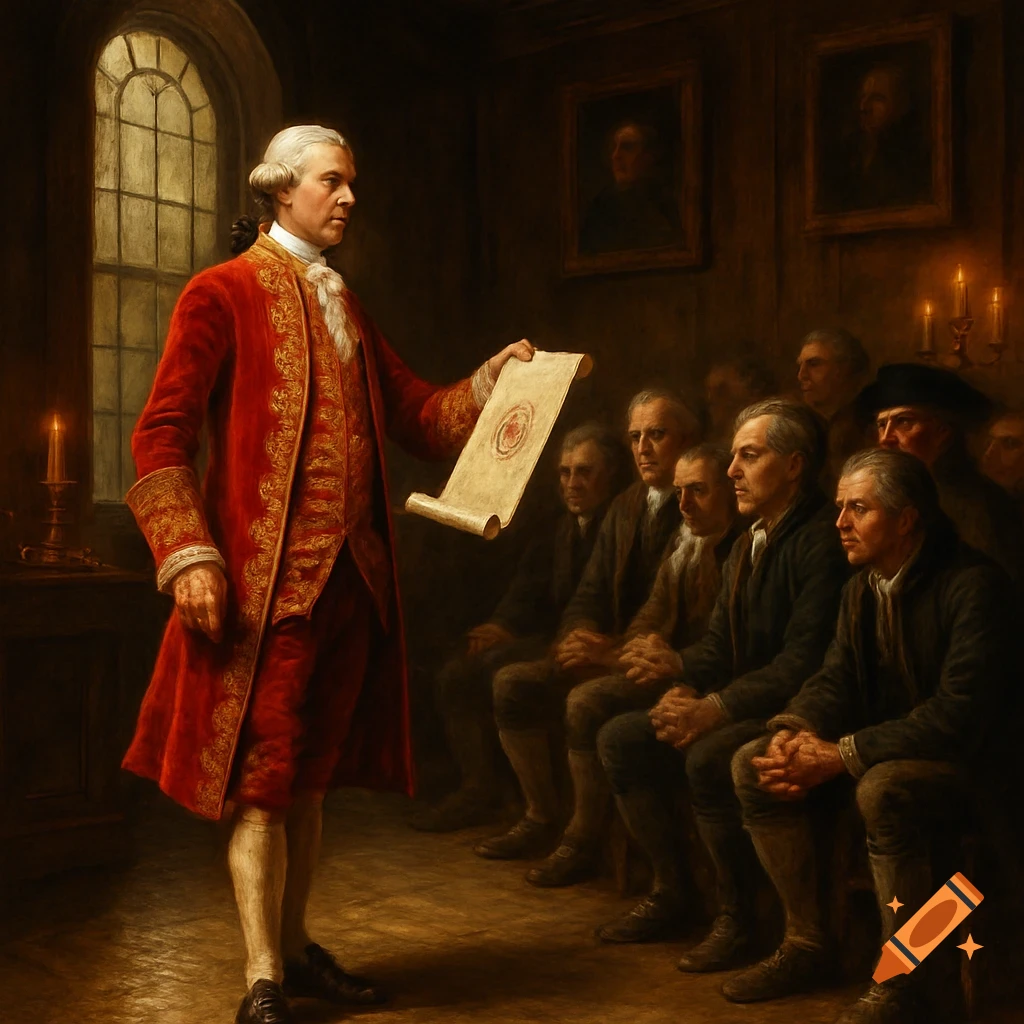
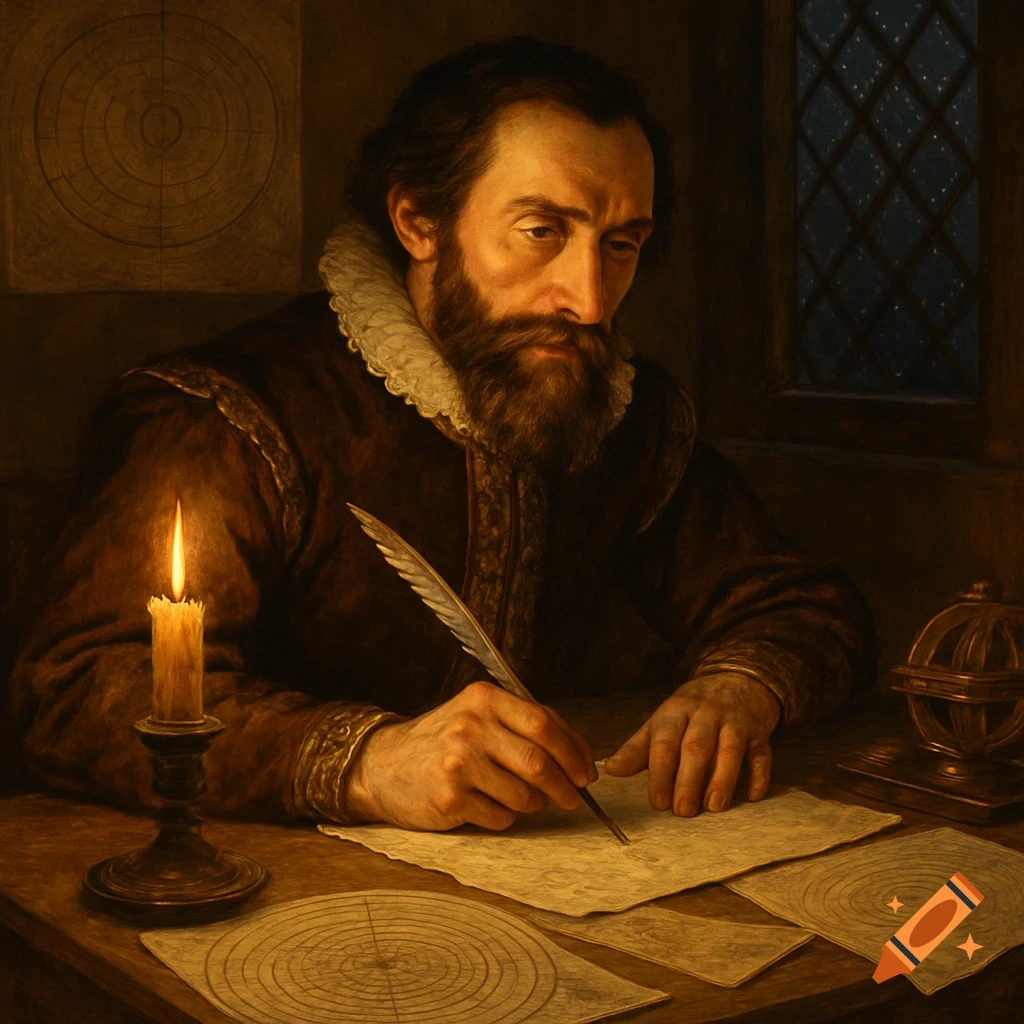
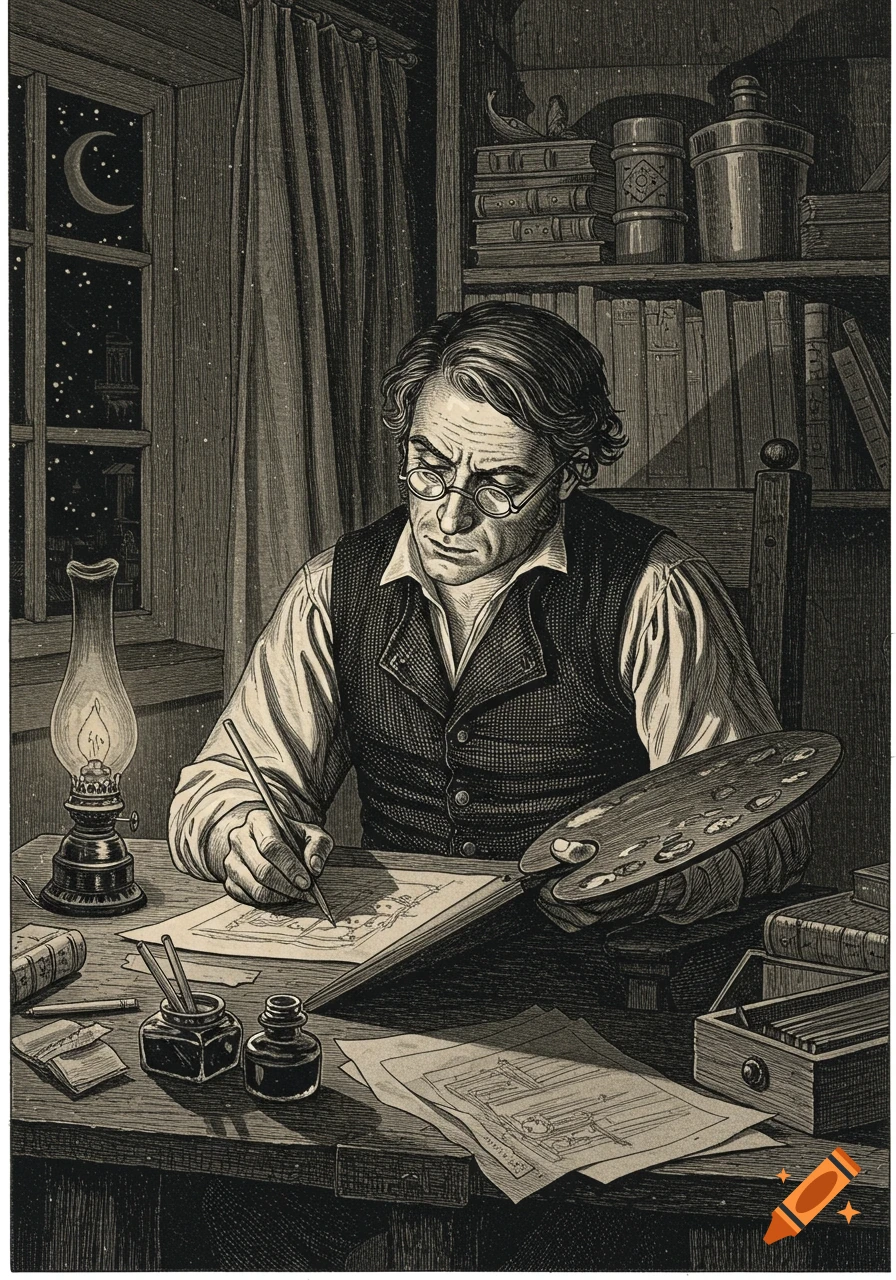
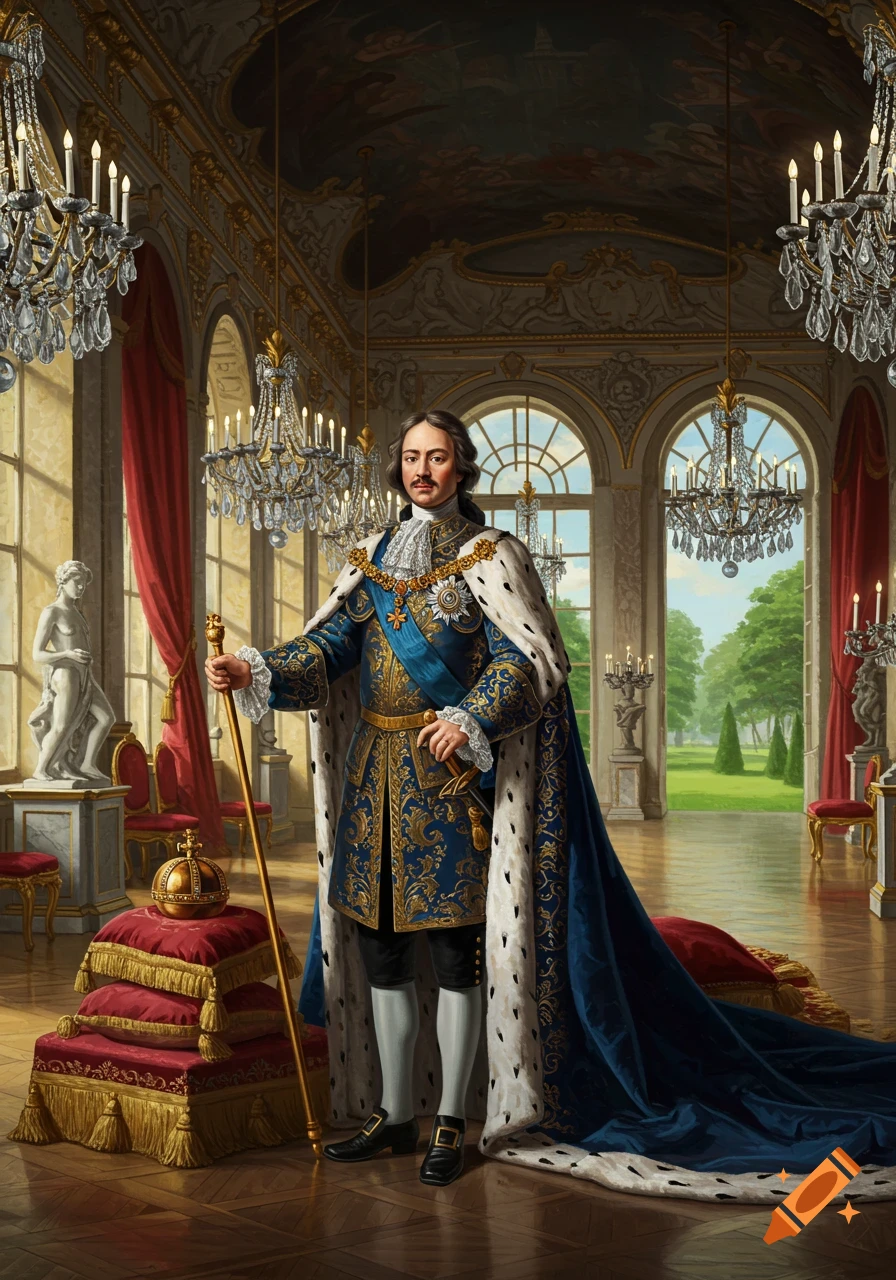
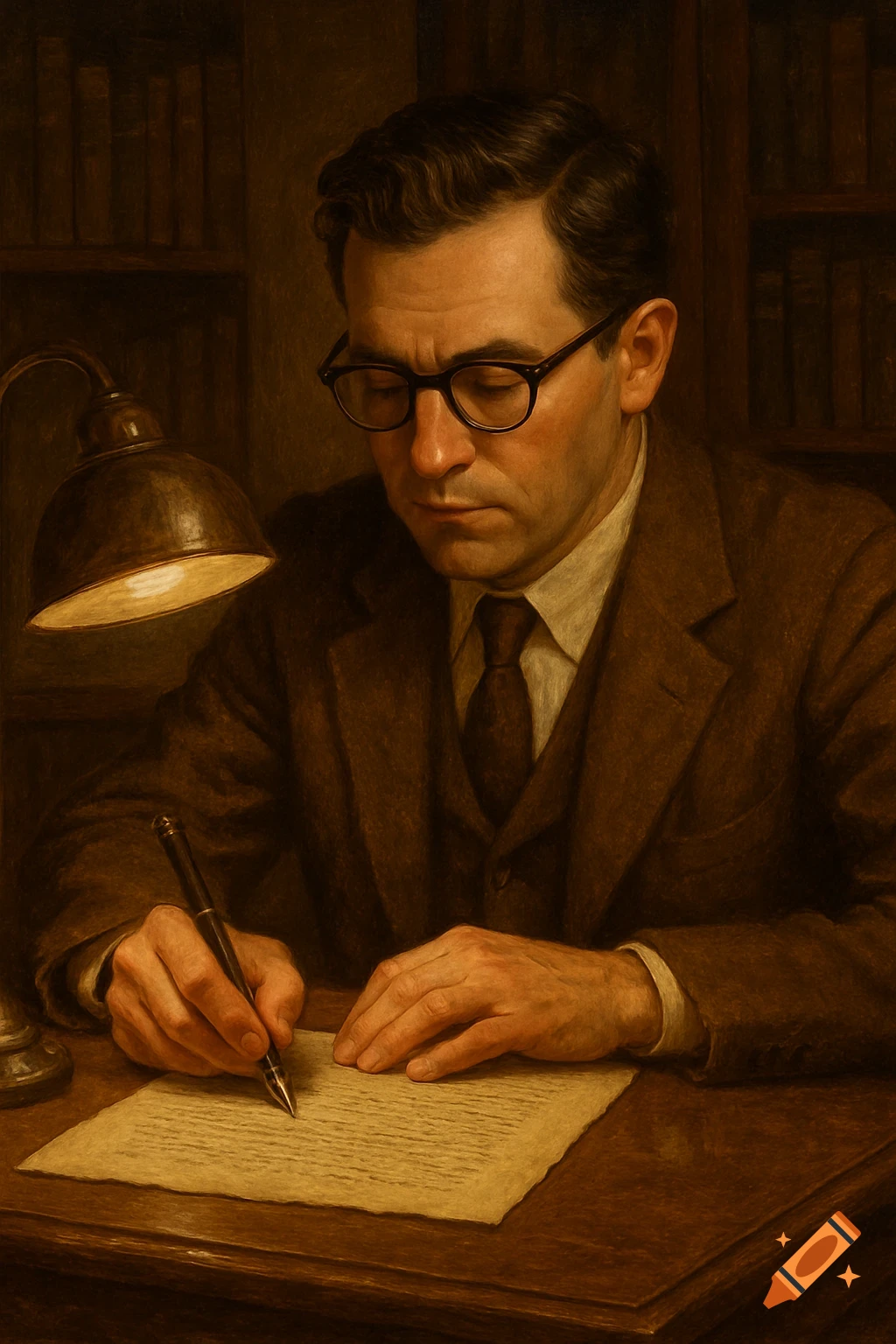
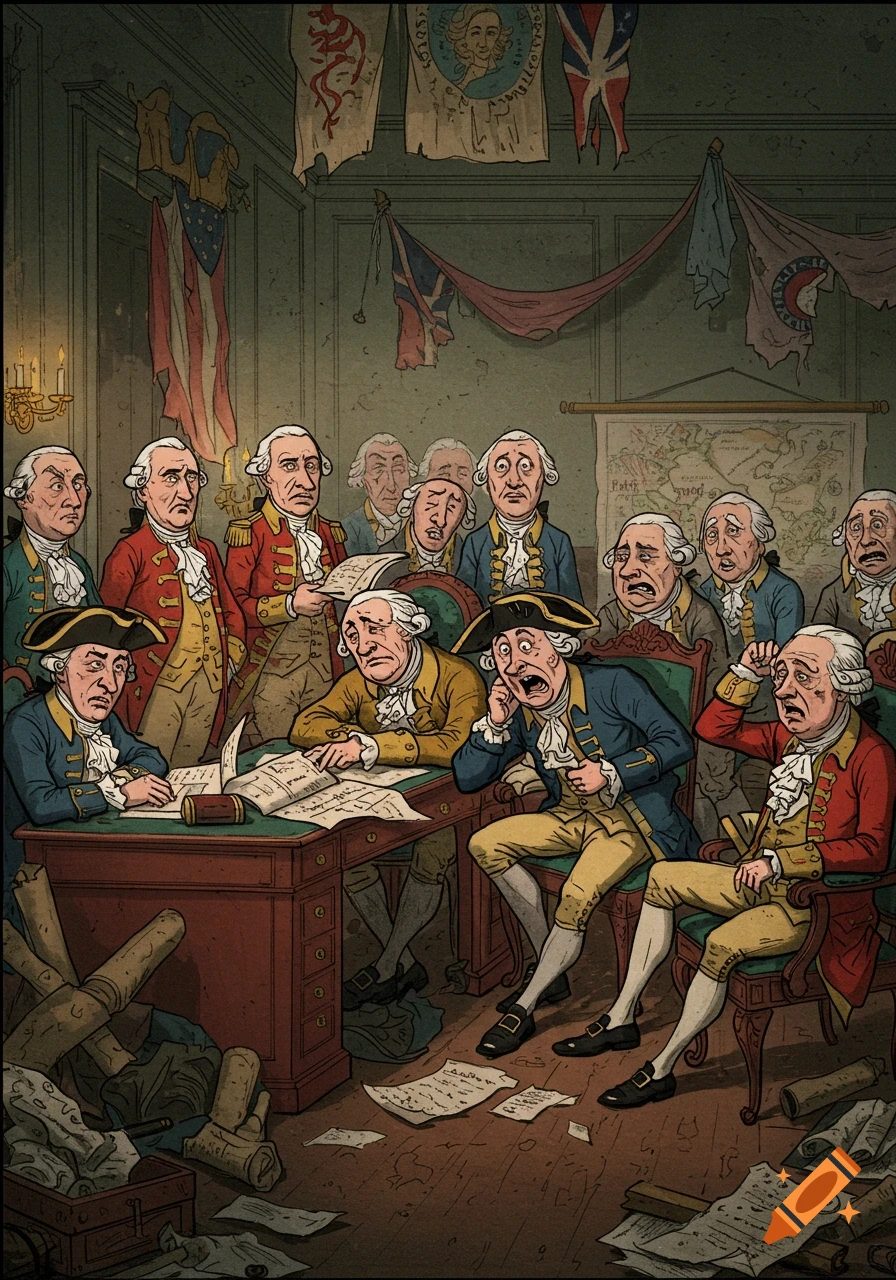
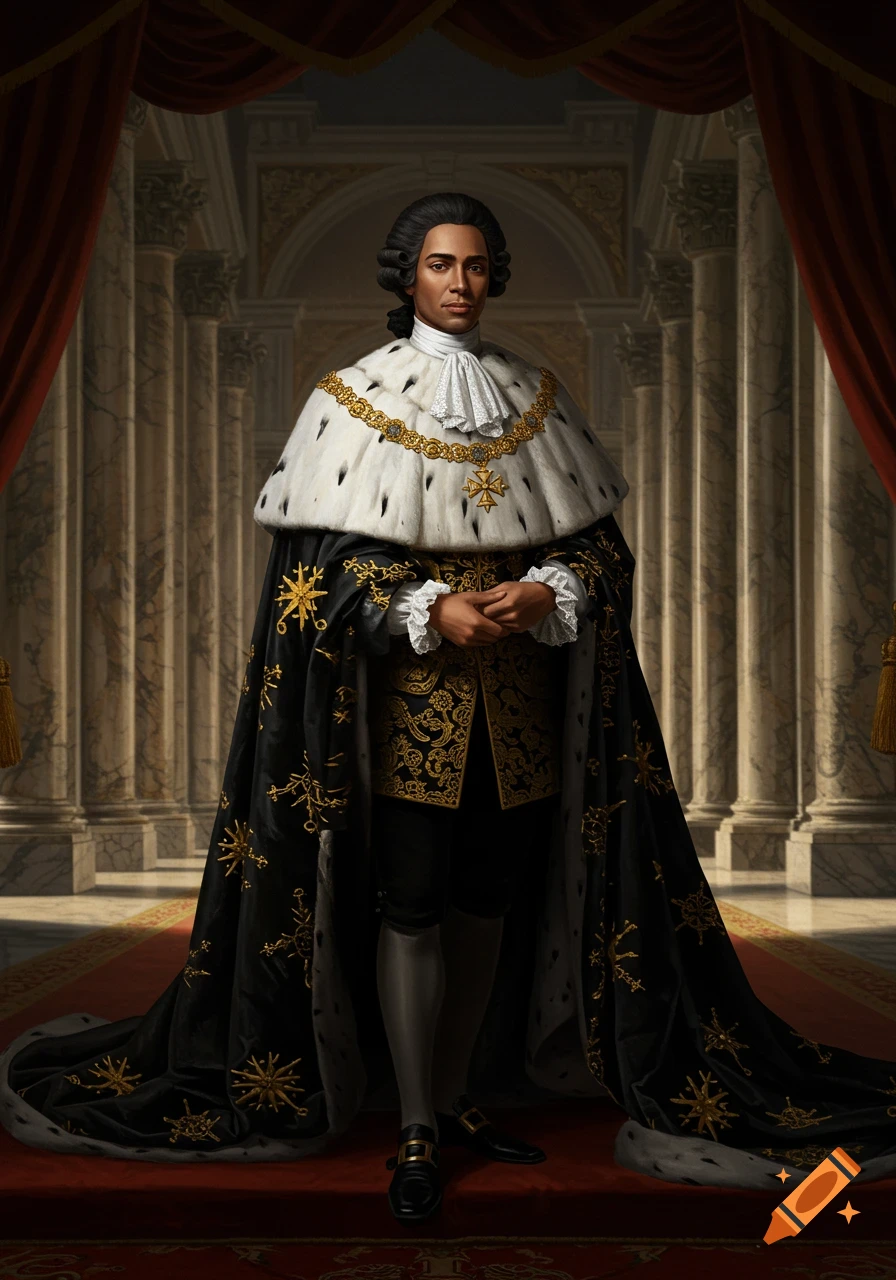
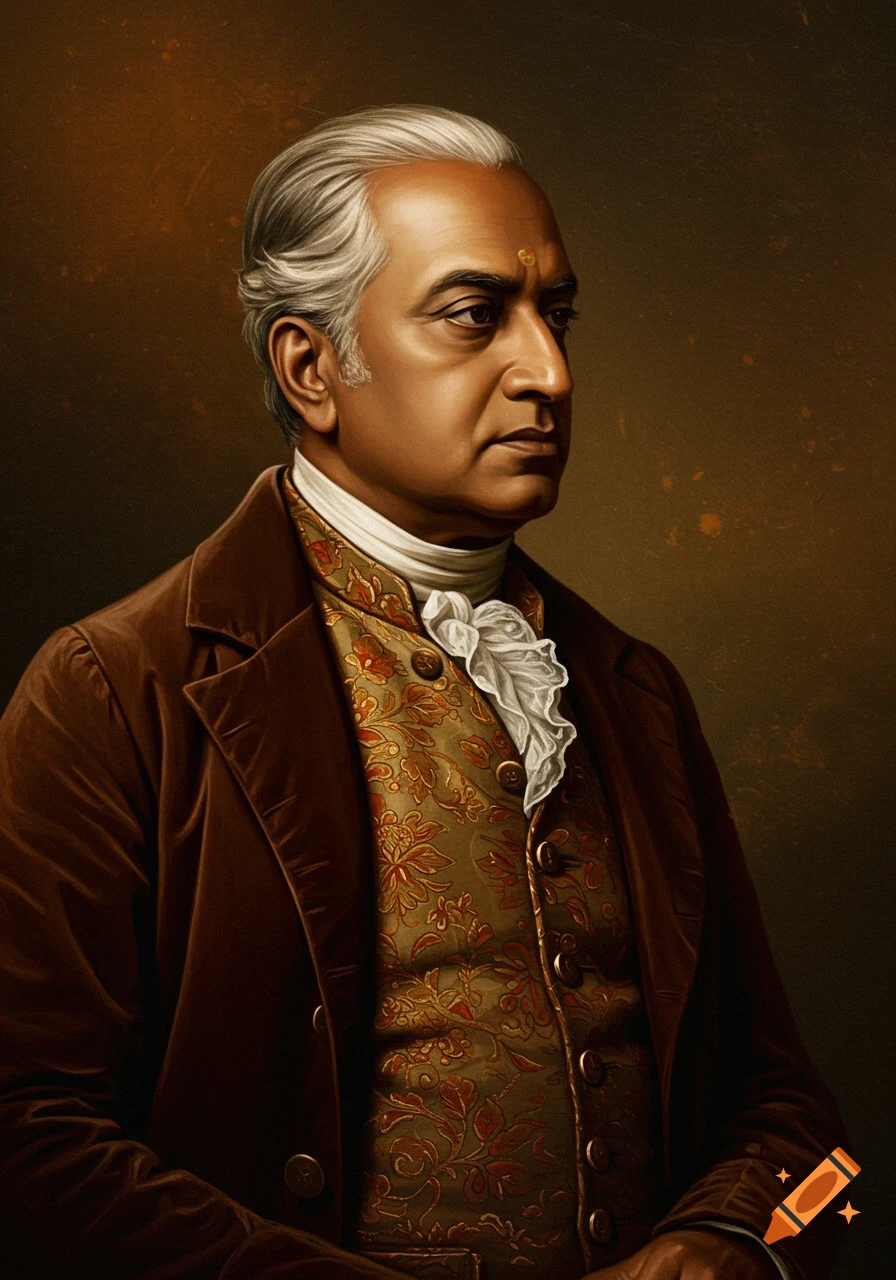
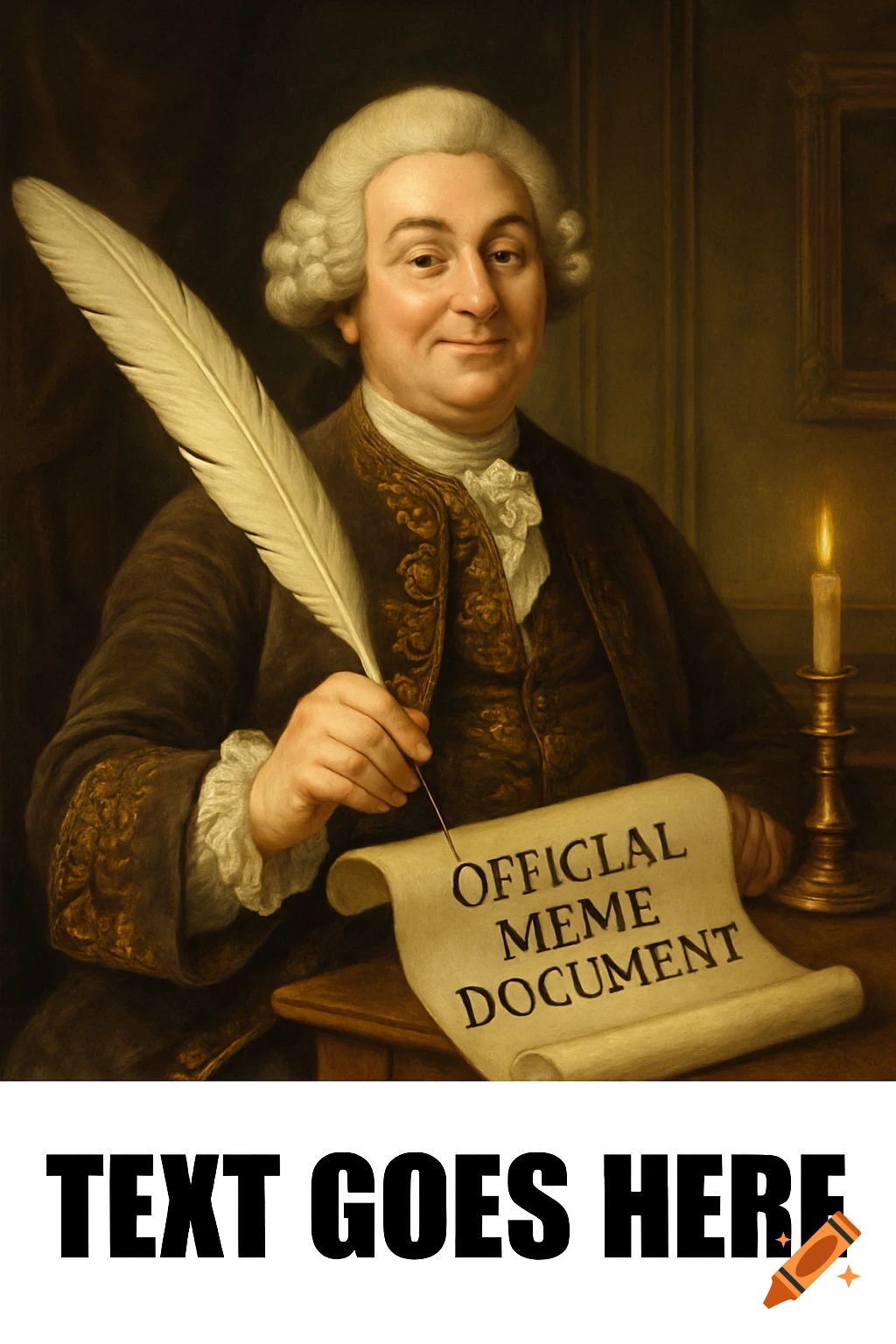
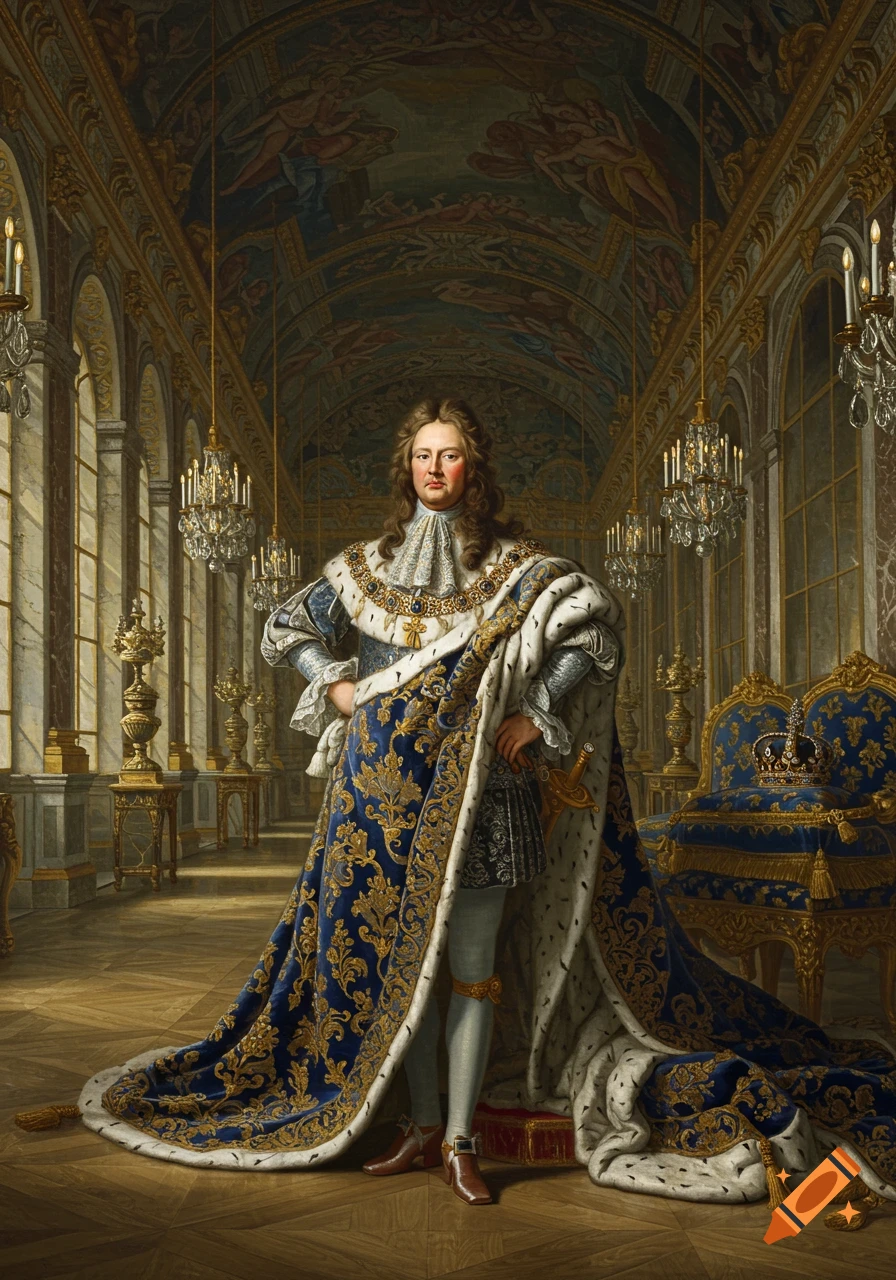
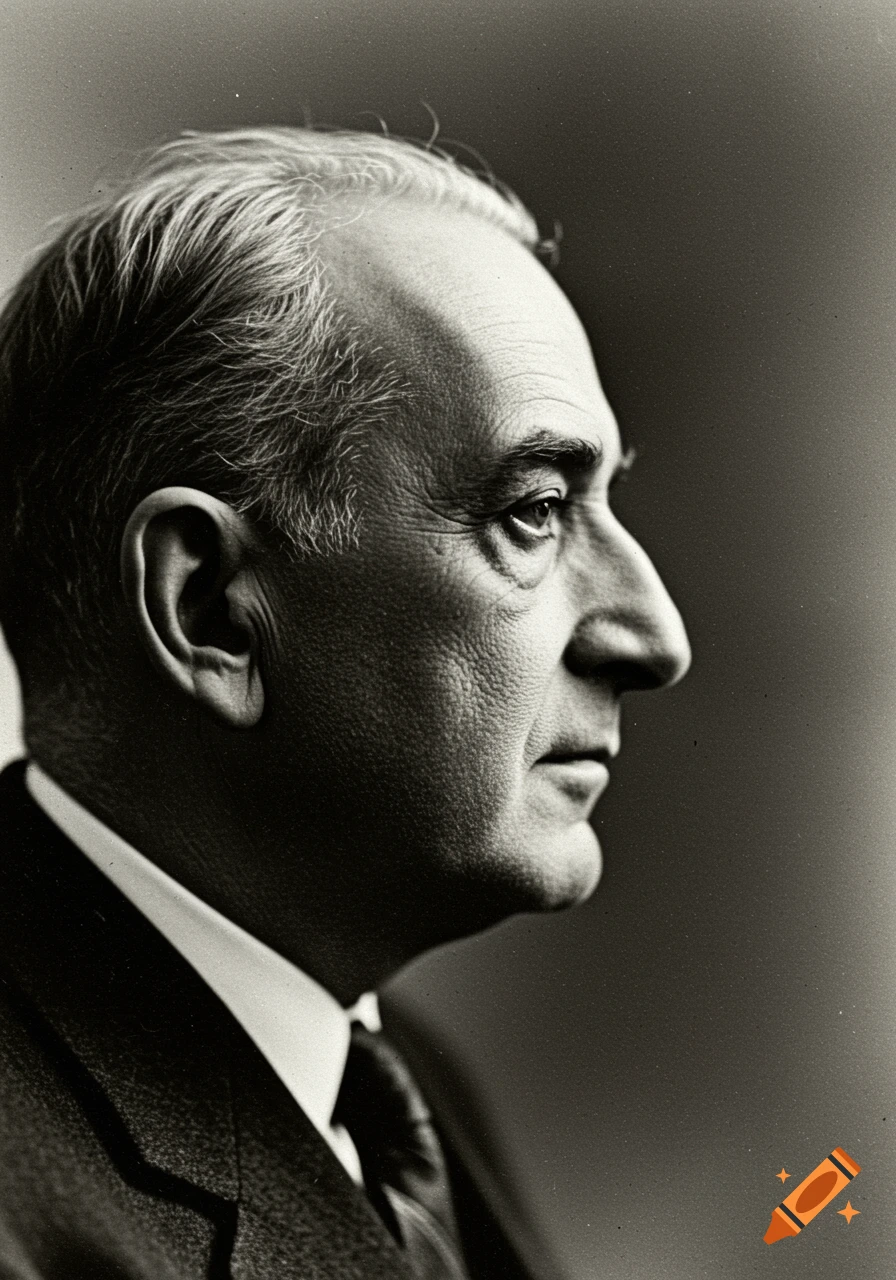
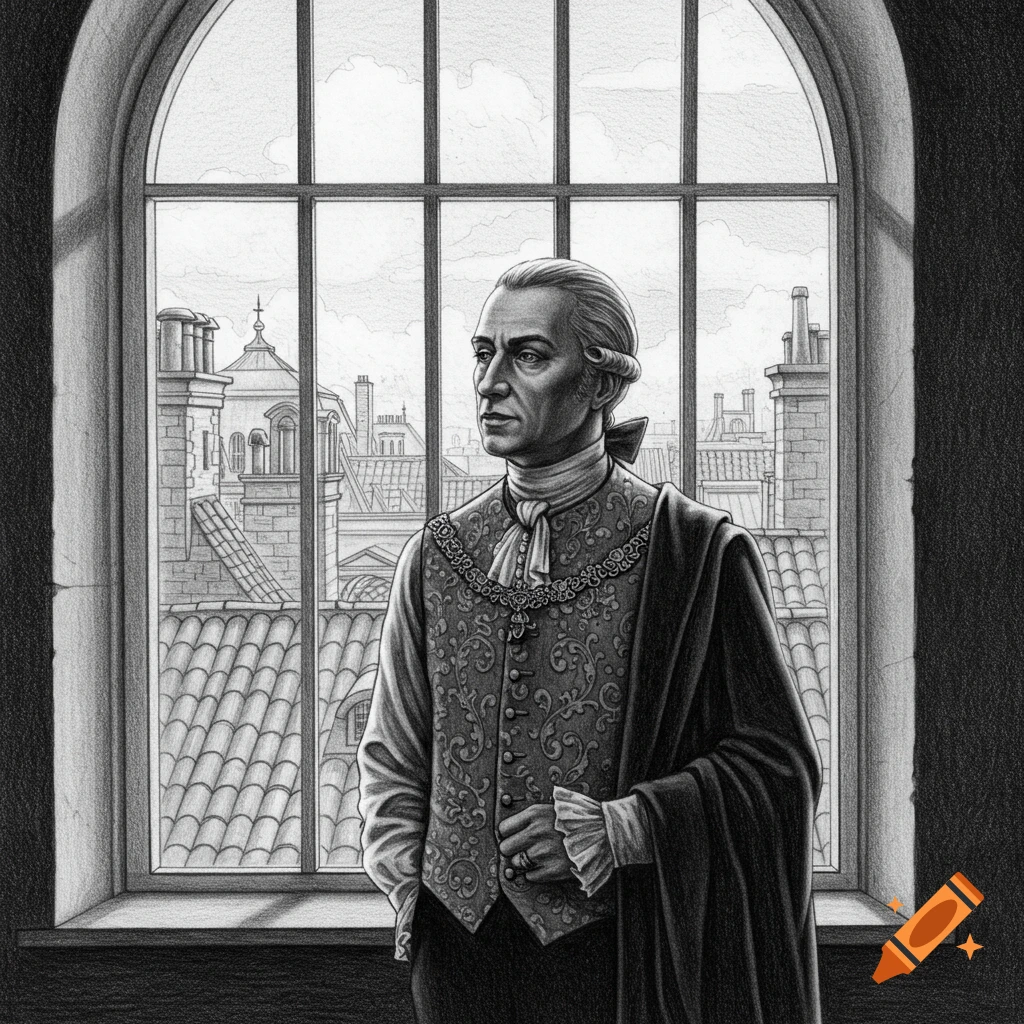
An 18th-century copperplate engraving of a French magistrate holding a quill and document.
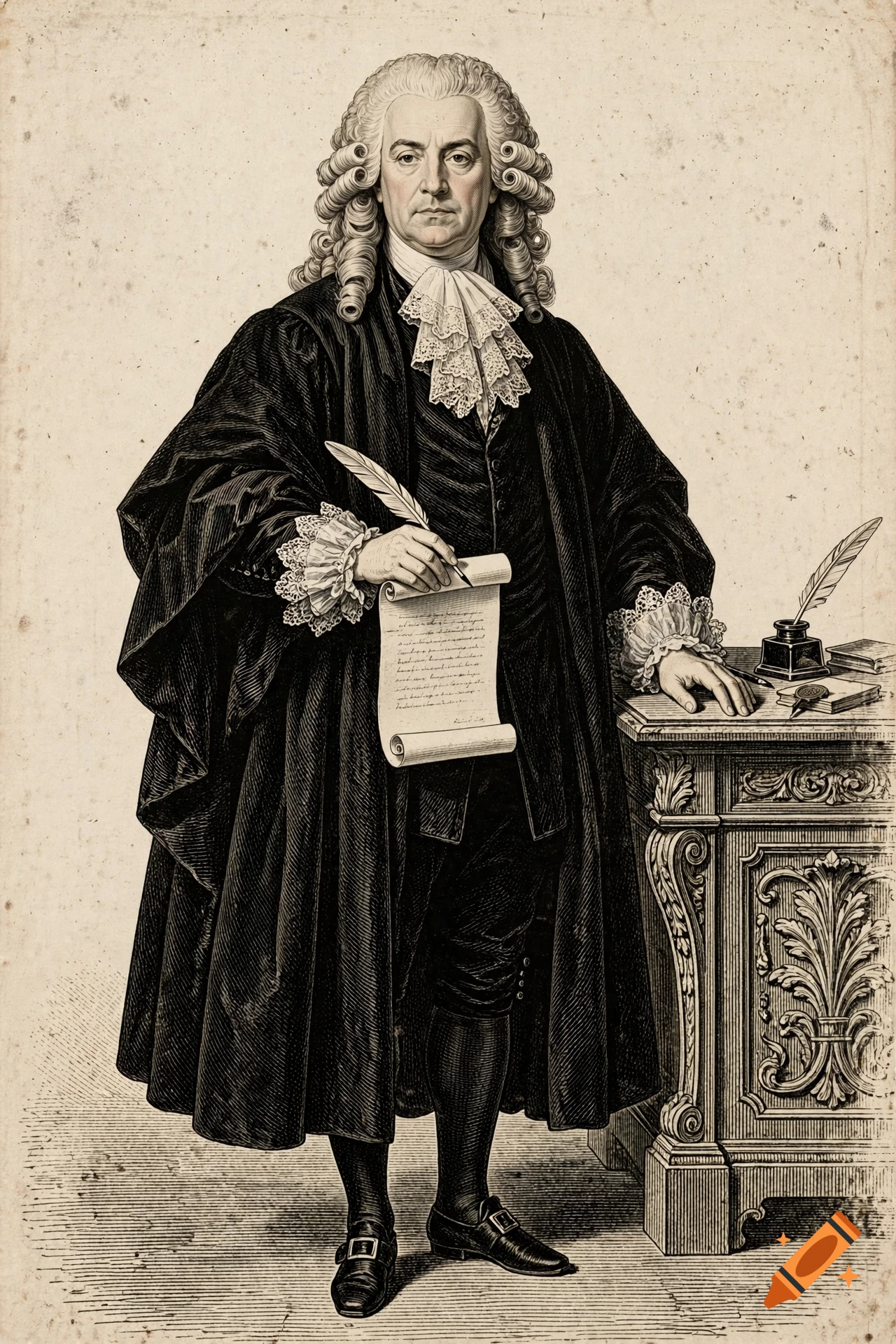
A full-body portrait of an 18th-century French magistrate (bailli), standing, wearing a traditional black judicial robe with a double ruff (rabat double), white lace cuffs, and a solemn expression. The style is a detailed, high-contrast woodcut or copperplate engraving, reminiscent of classical French portrait prints from the 1700s. The background is plain or subtly textured, focusing attention on the figure. The lighting is dramatic, with strong shadows and fine linework, evoking the aesthetic of antique etchings. Inspired by the portraits of Charles Sivard de Beaulieu and the anonymous magistrate from the provided references: [https://www.antikeo.com/uploads/images/img_x500_172658_6a8c2ecf2a2136-09063938-99957158.jpg](https://www.antikeo.com/uploads/images/img_x500_172658_6a8c2ecf2a2136-09063938-99957158.jpg) and [https://www.wikimanche.fr/images/3/32/Sivard-Charles1.jpg](https://www.wikimanche.fr/images/3/32/Sivard-Charles1.jpg). The image should be monochromatic, with a sepia or black-and-white palette, and include fine hatching and cross-hatching to create depth and texture. The pose should be dignified, with one hand resting on a table or holding a document, and the other hand visible, perhaps holding a quill or a book. The facial features should be refined, with a wig (perruque) typical of the period, and the robe should be richly detailed, with folds and fabric texture clearly visible. Ver mais
More images like this