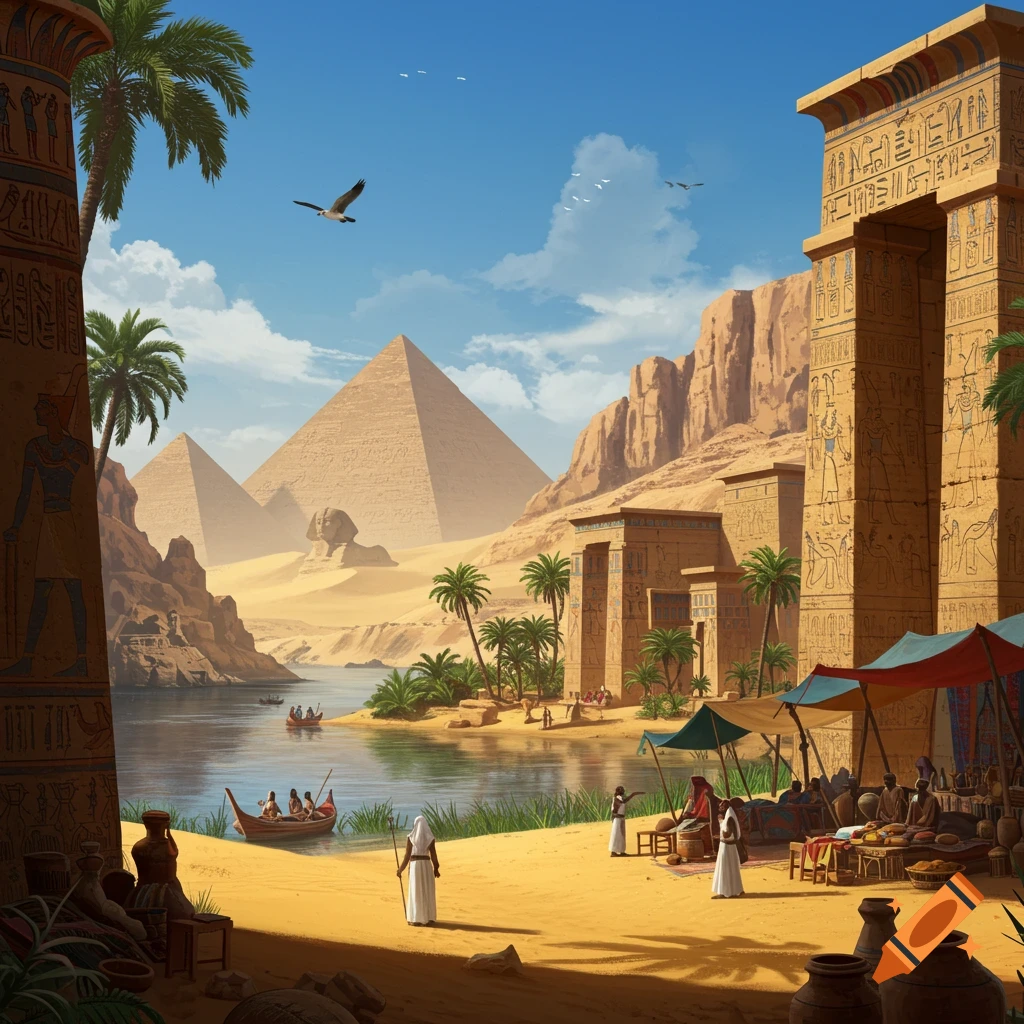
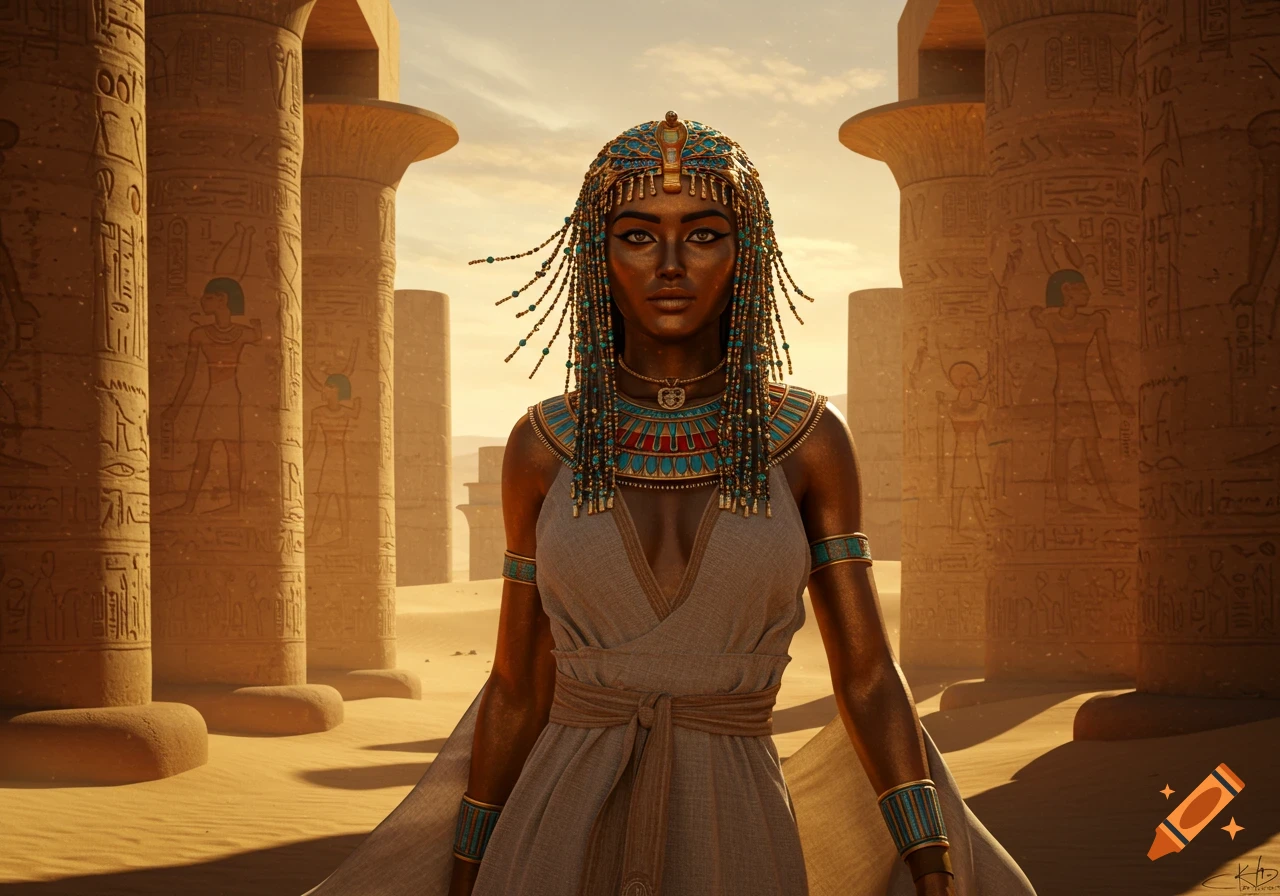
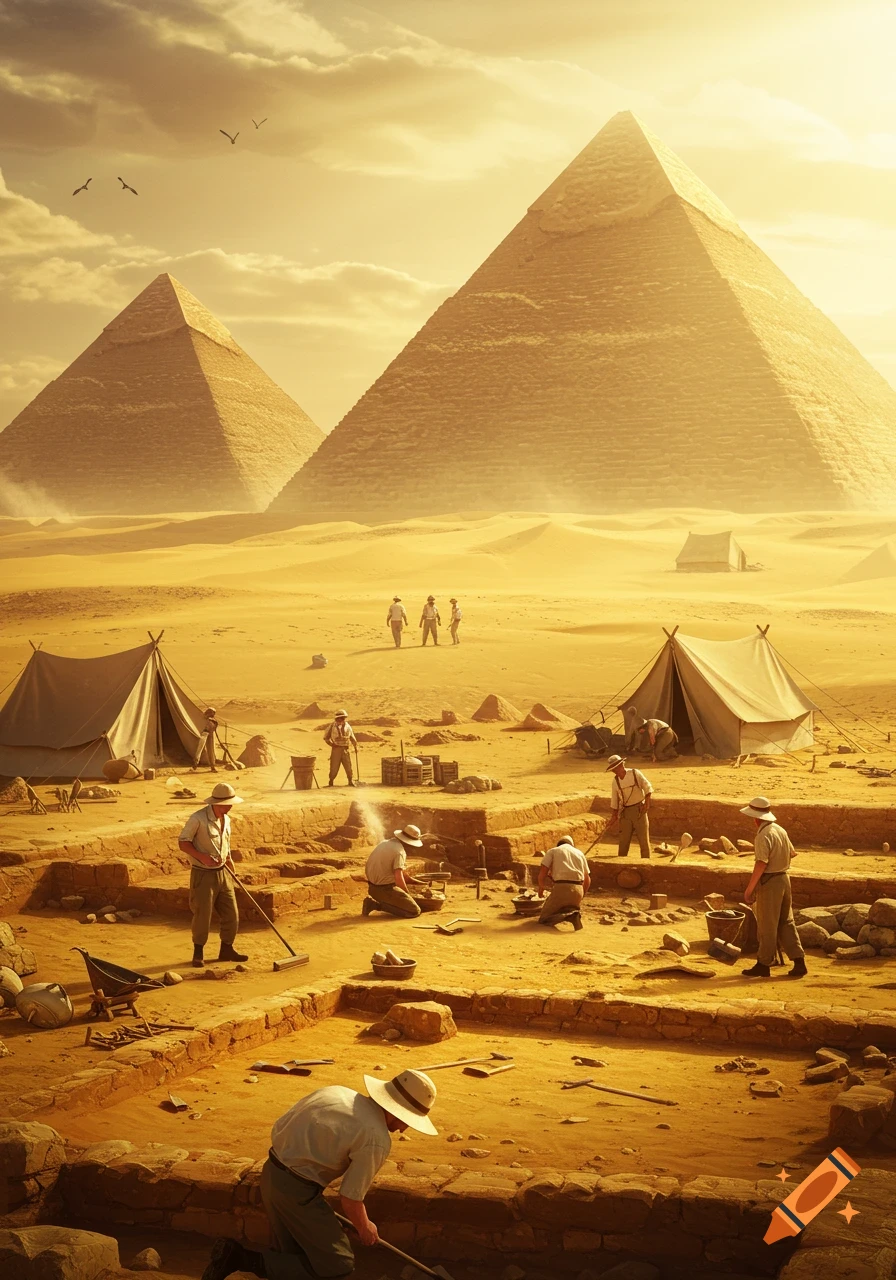
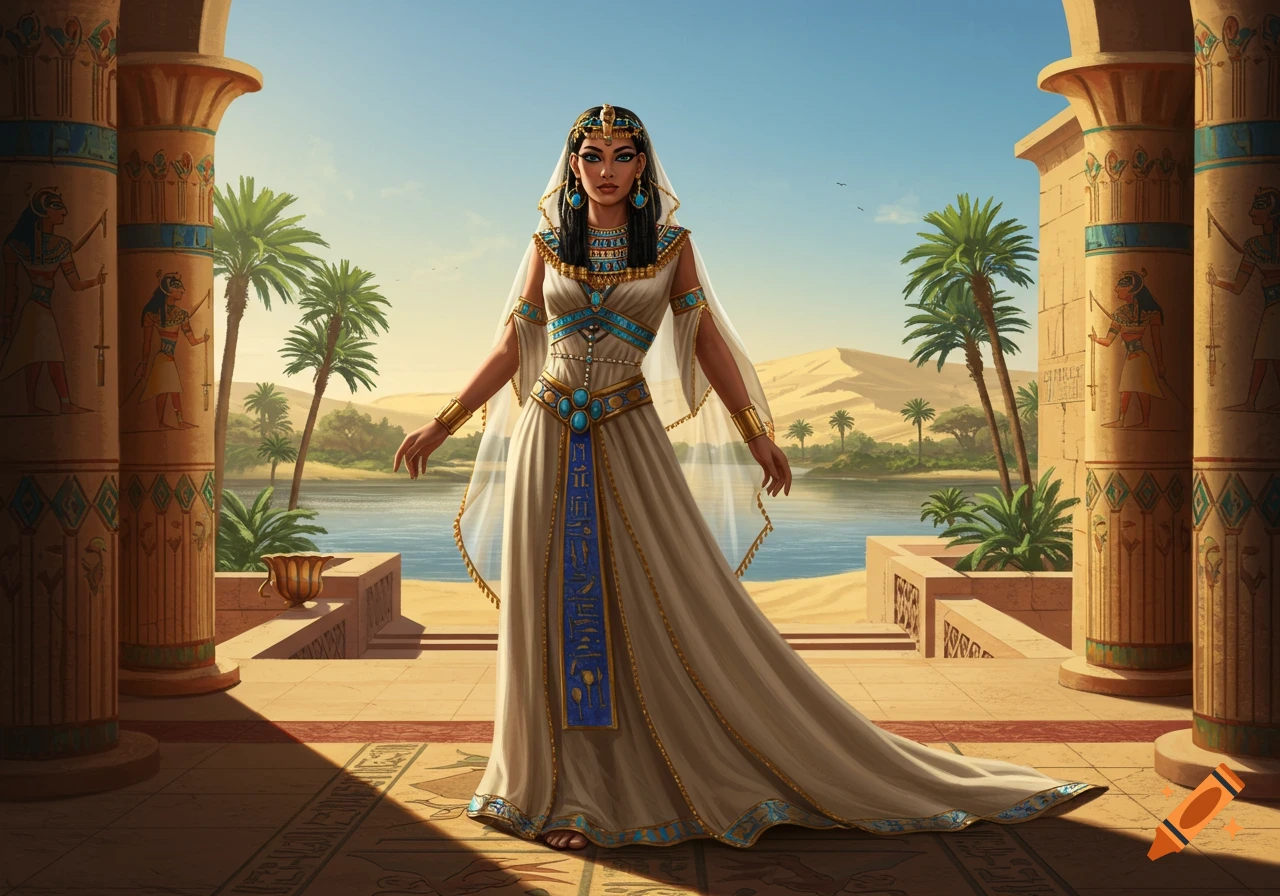
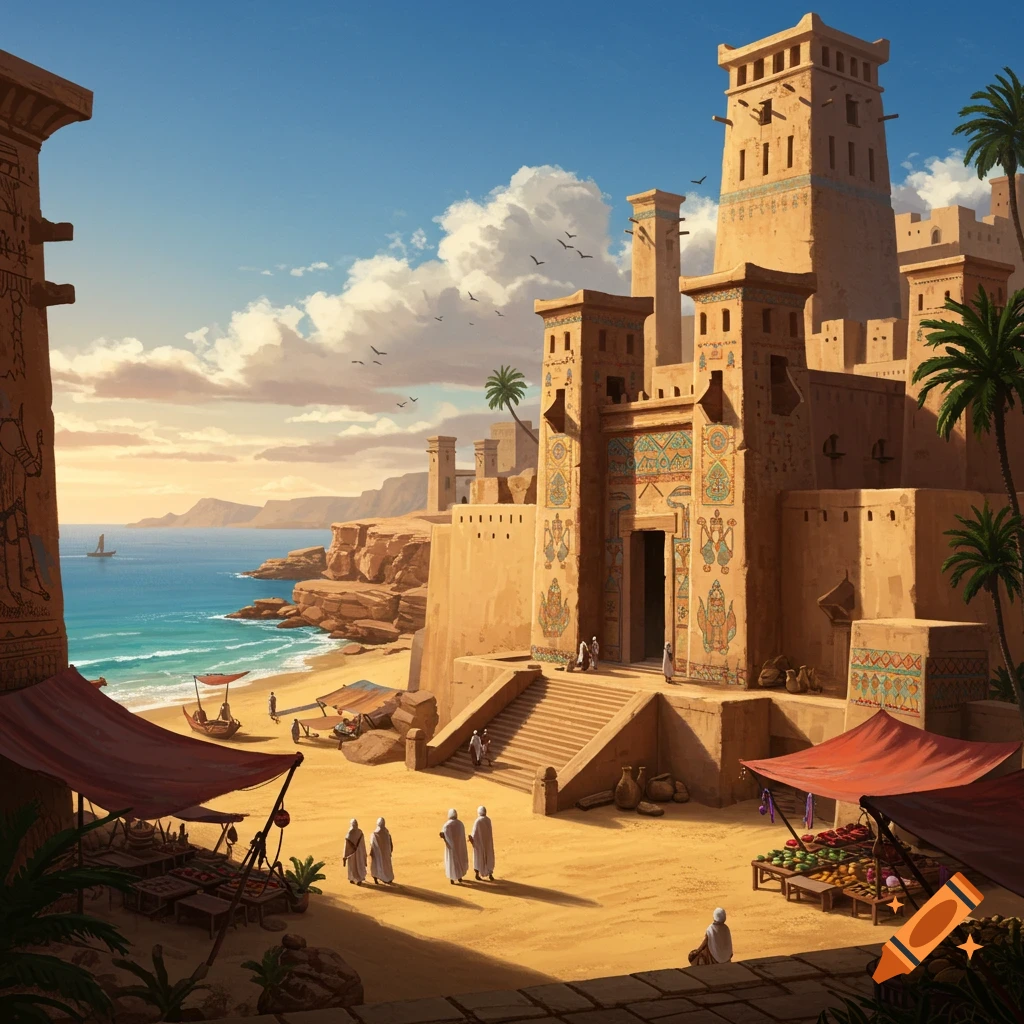
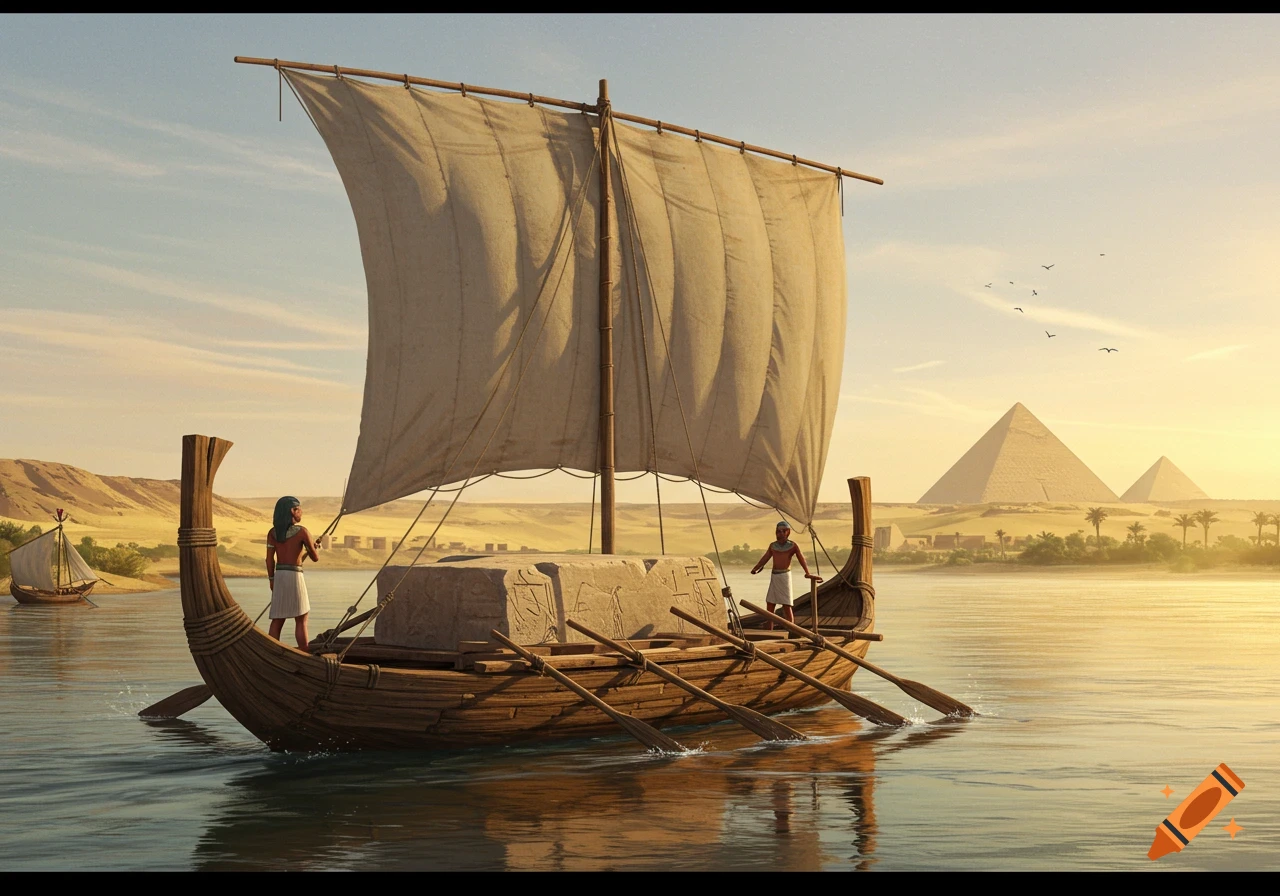
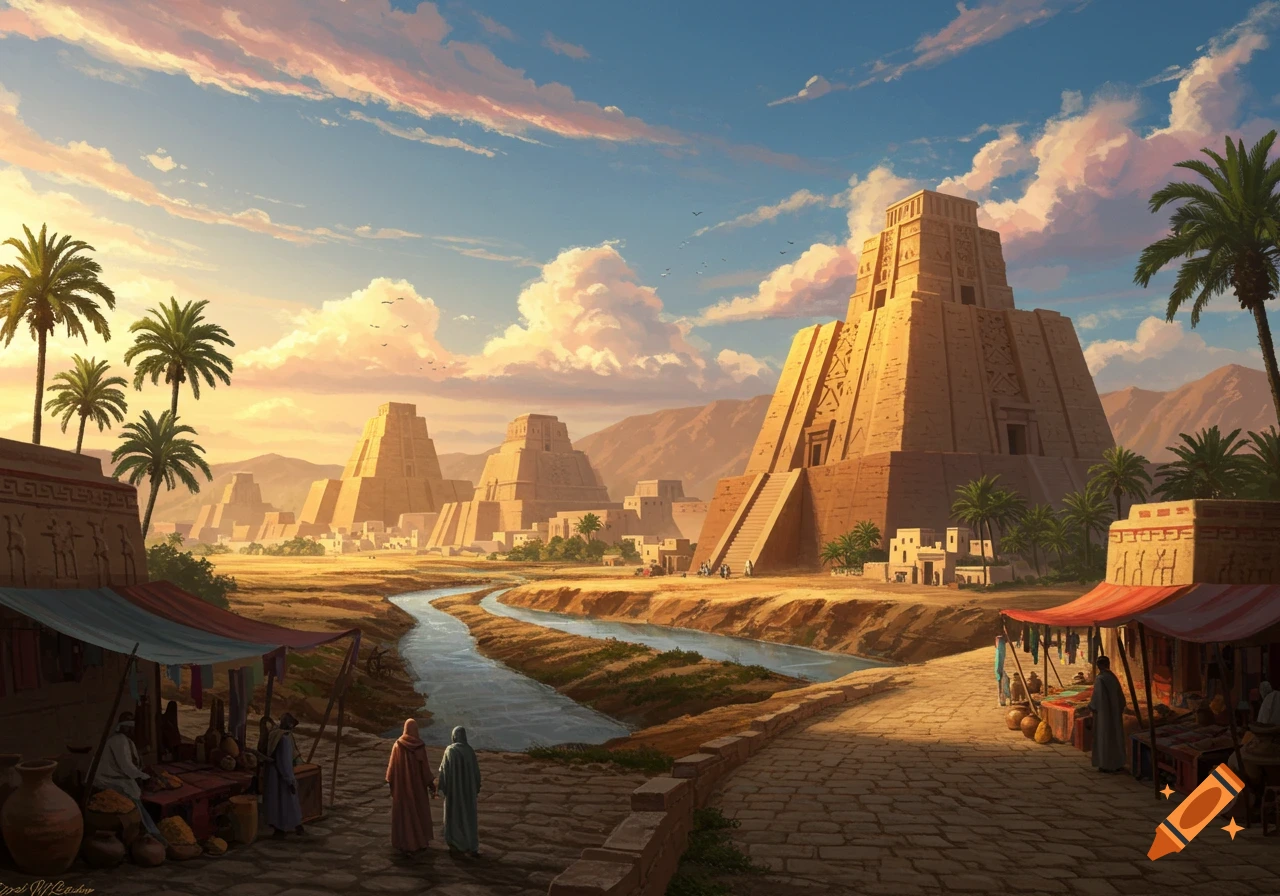
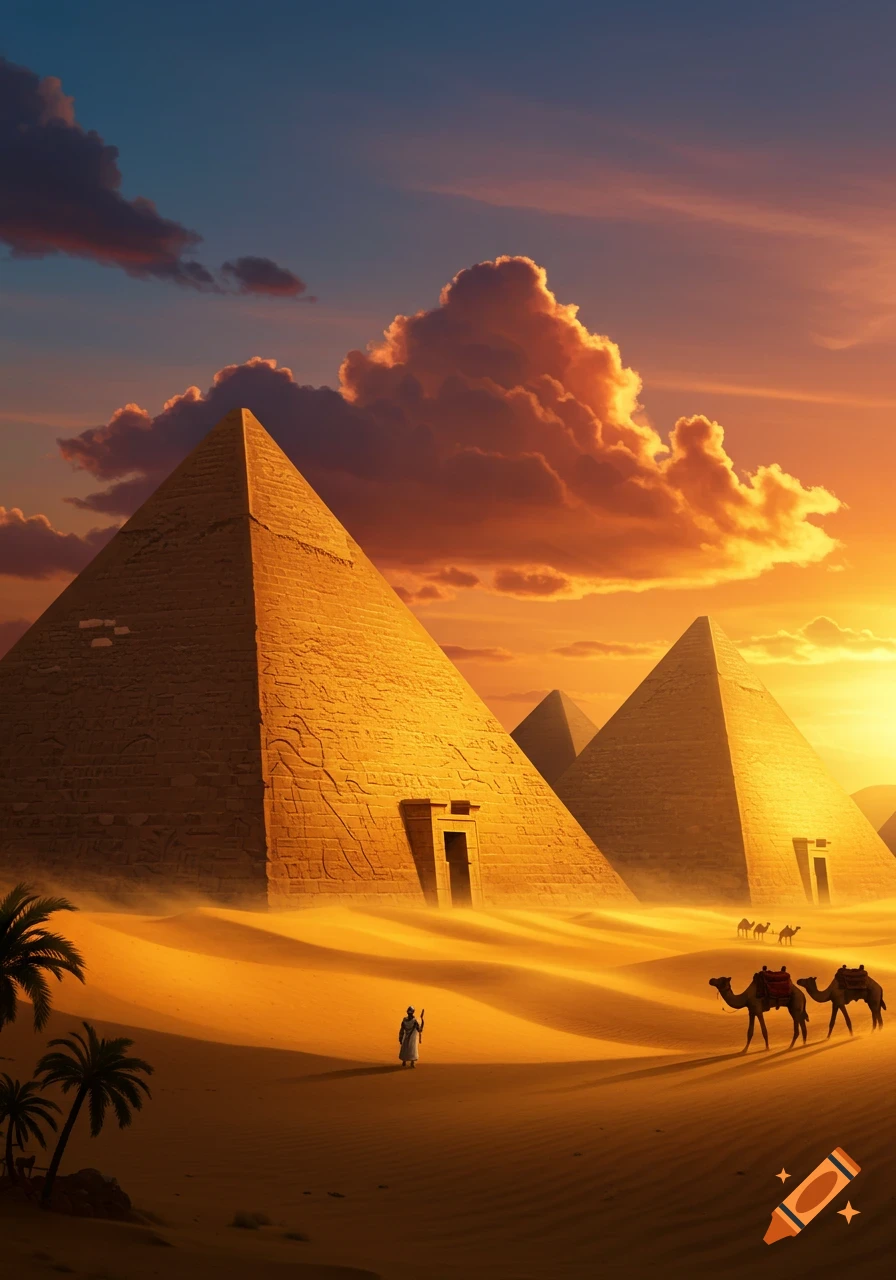
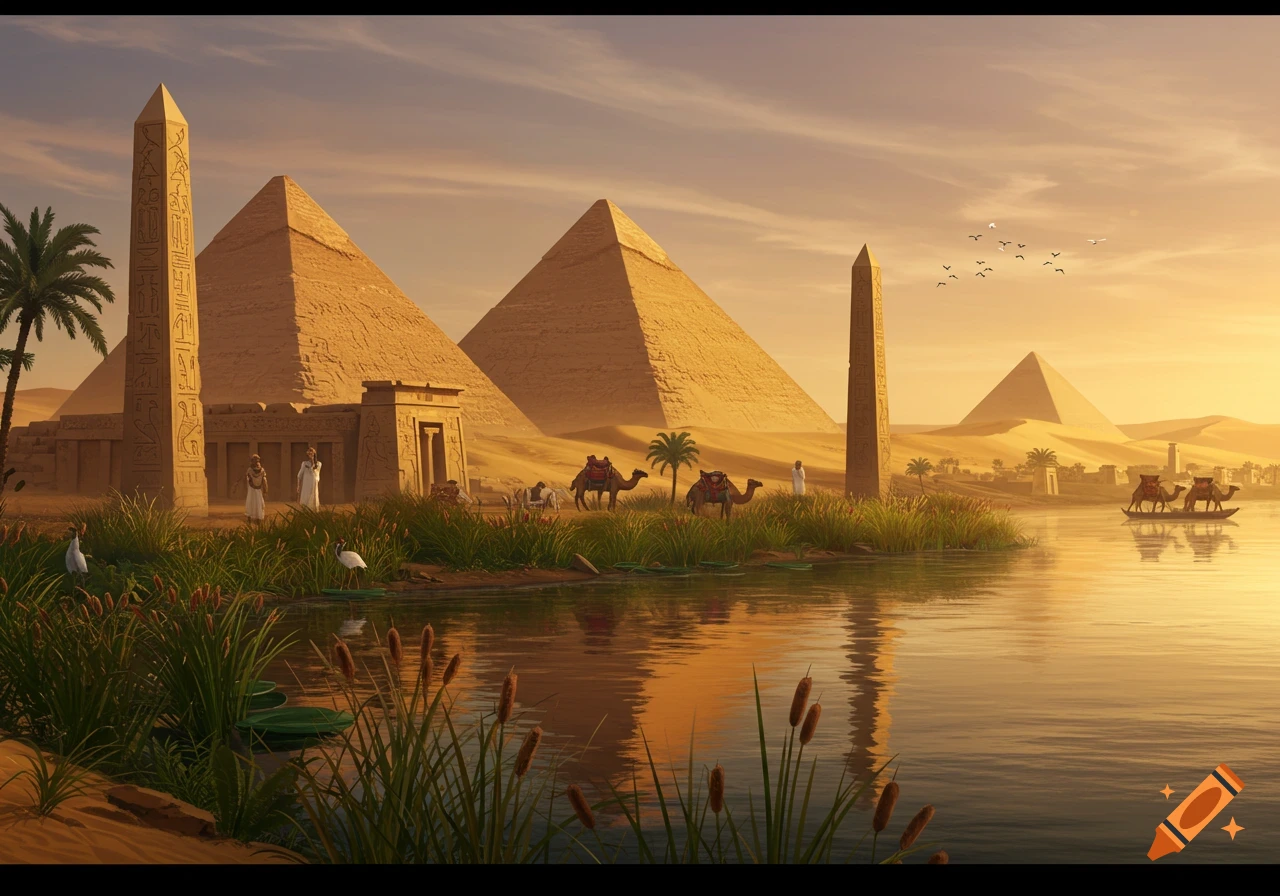
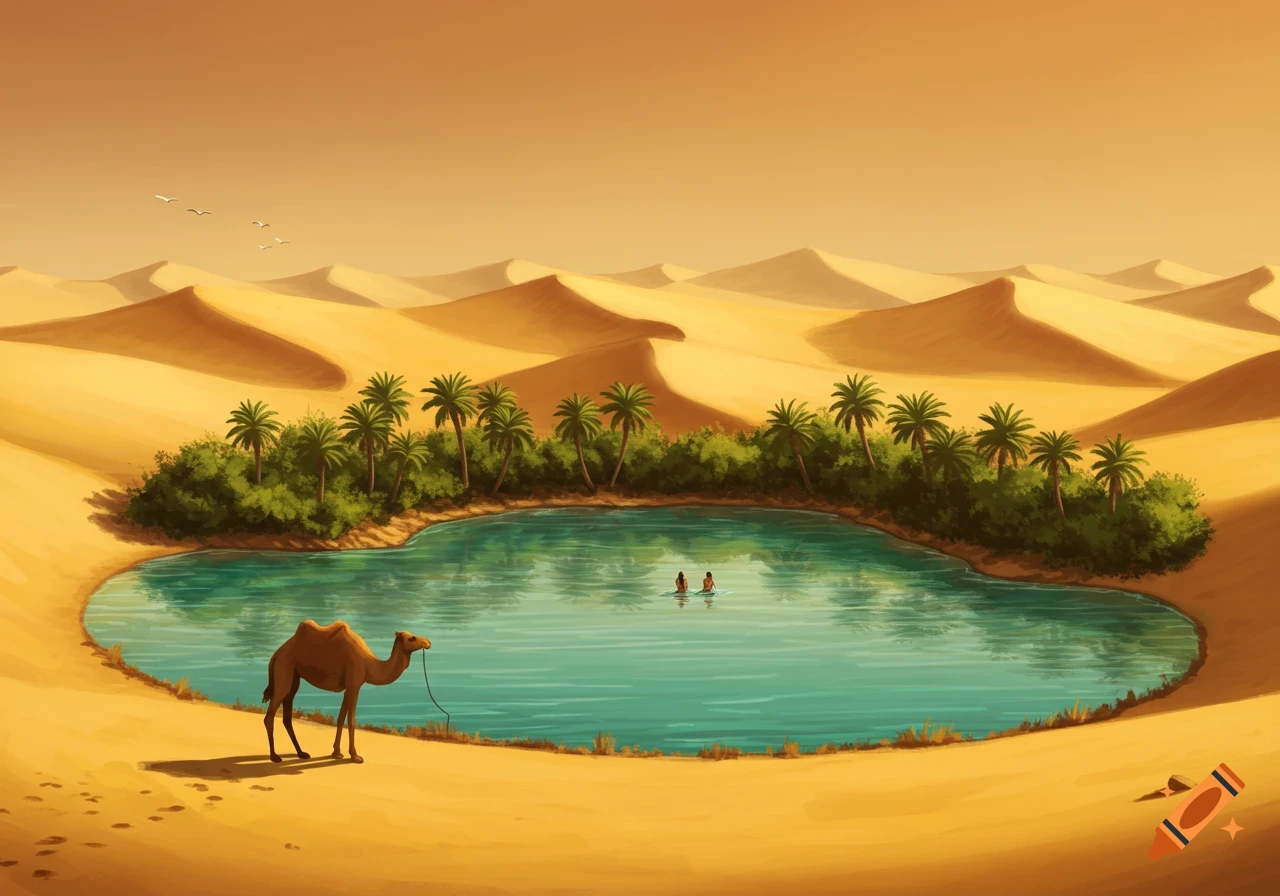
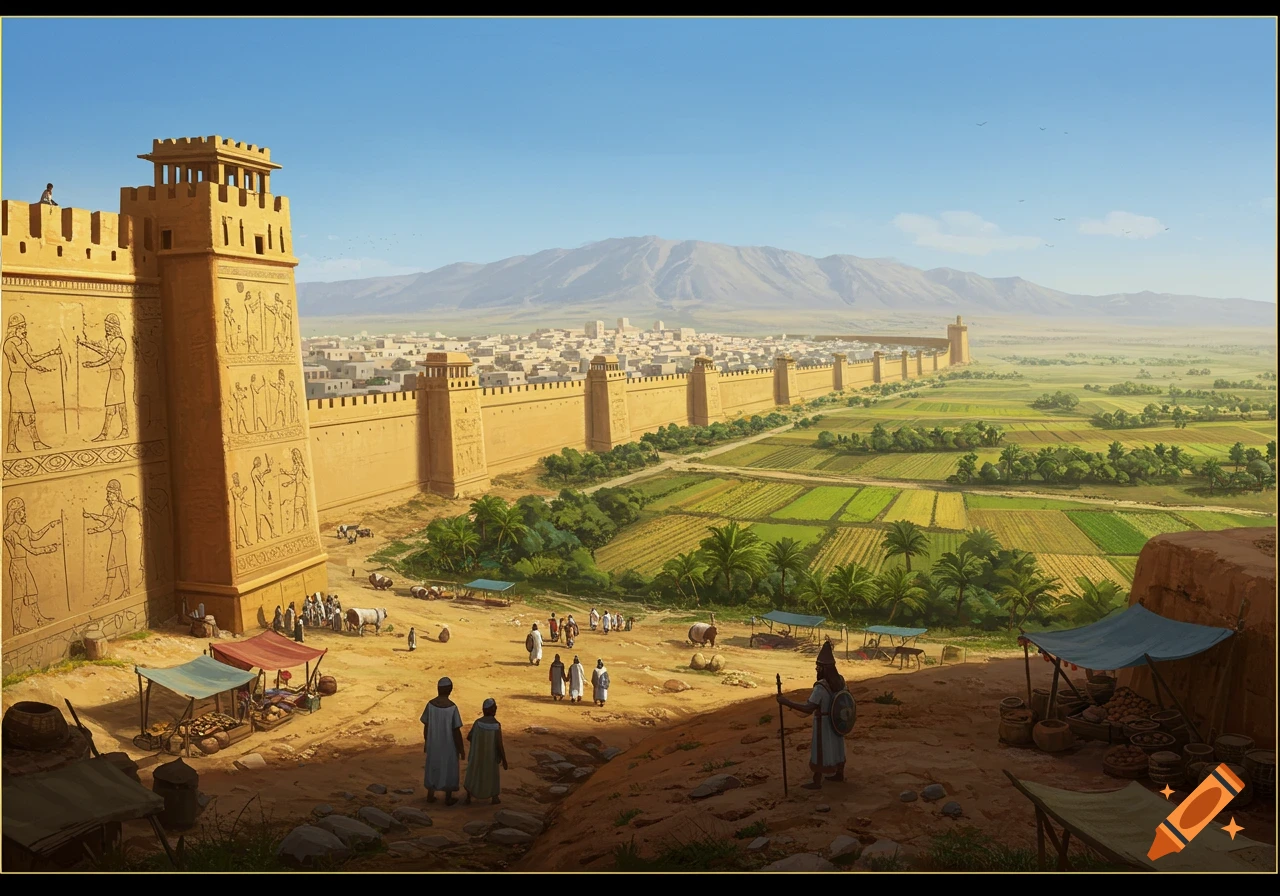
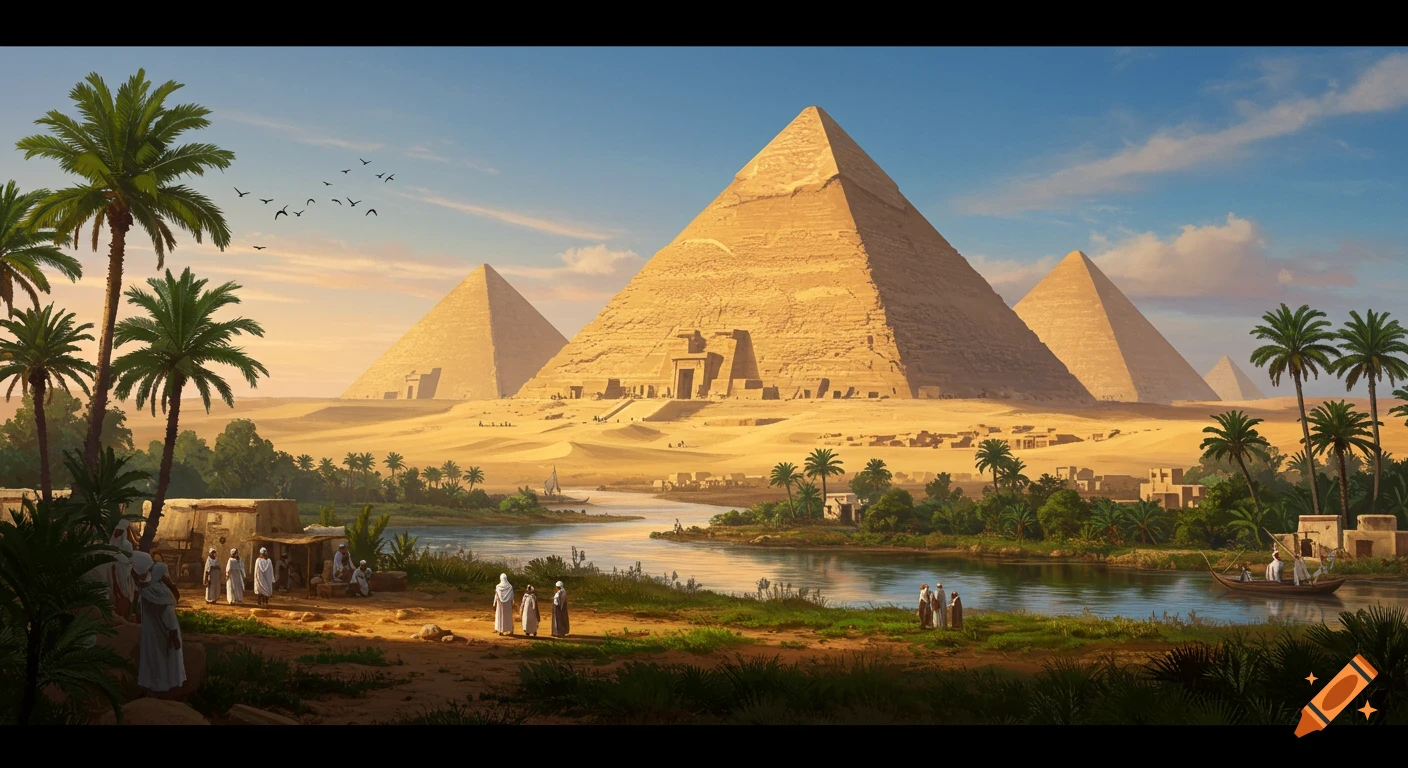
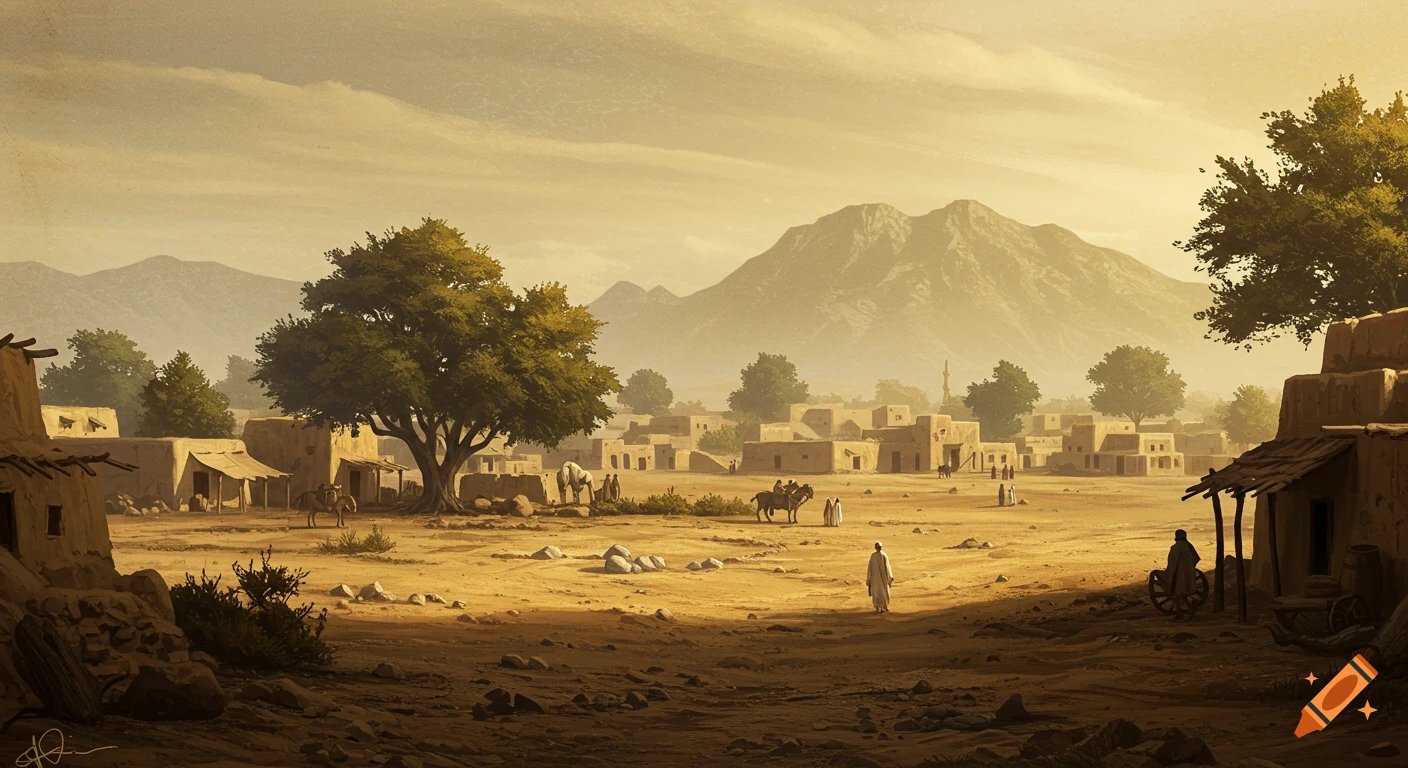
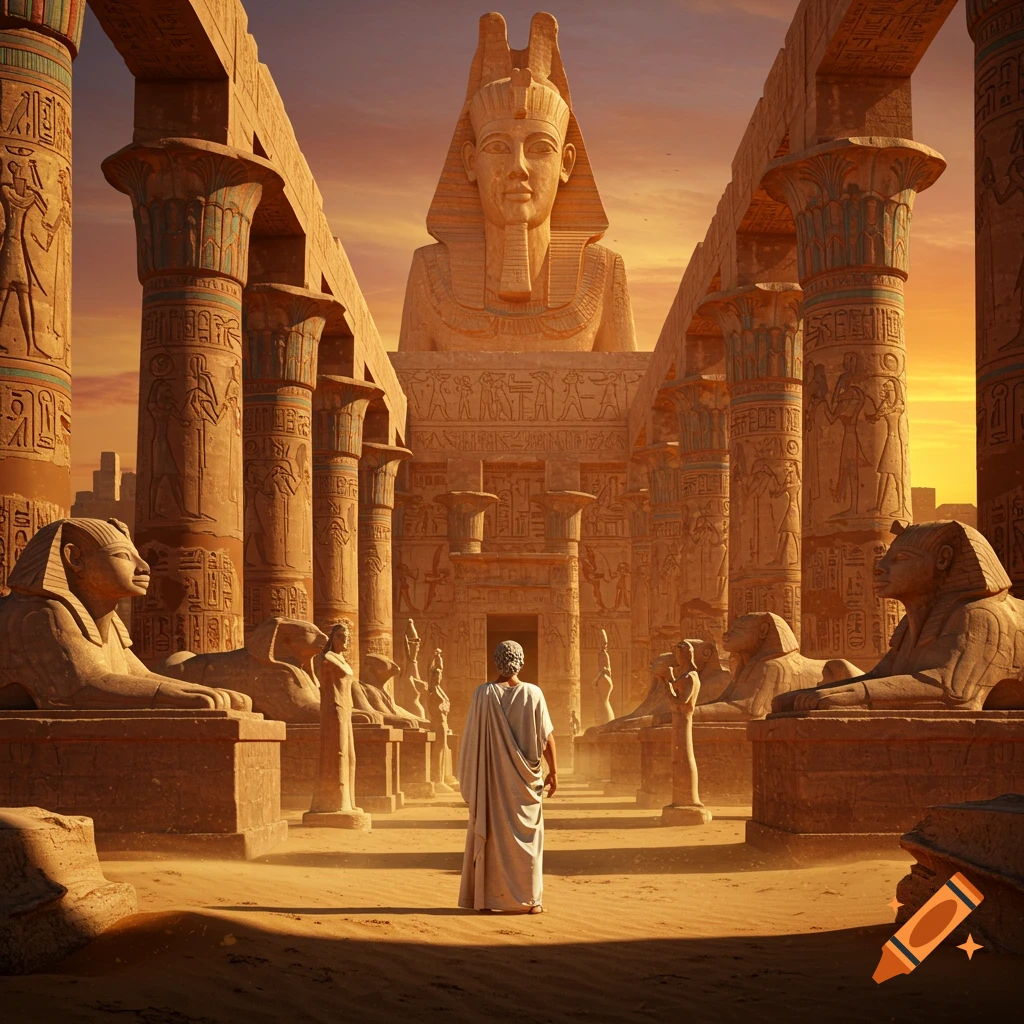
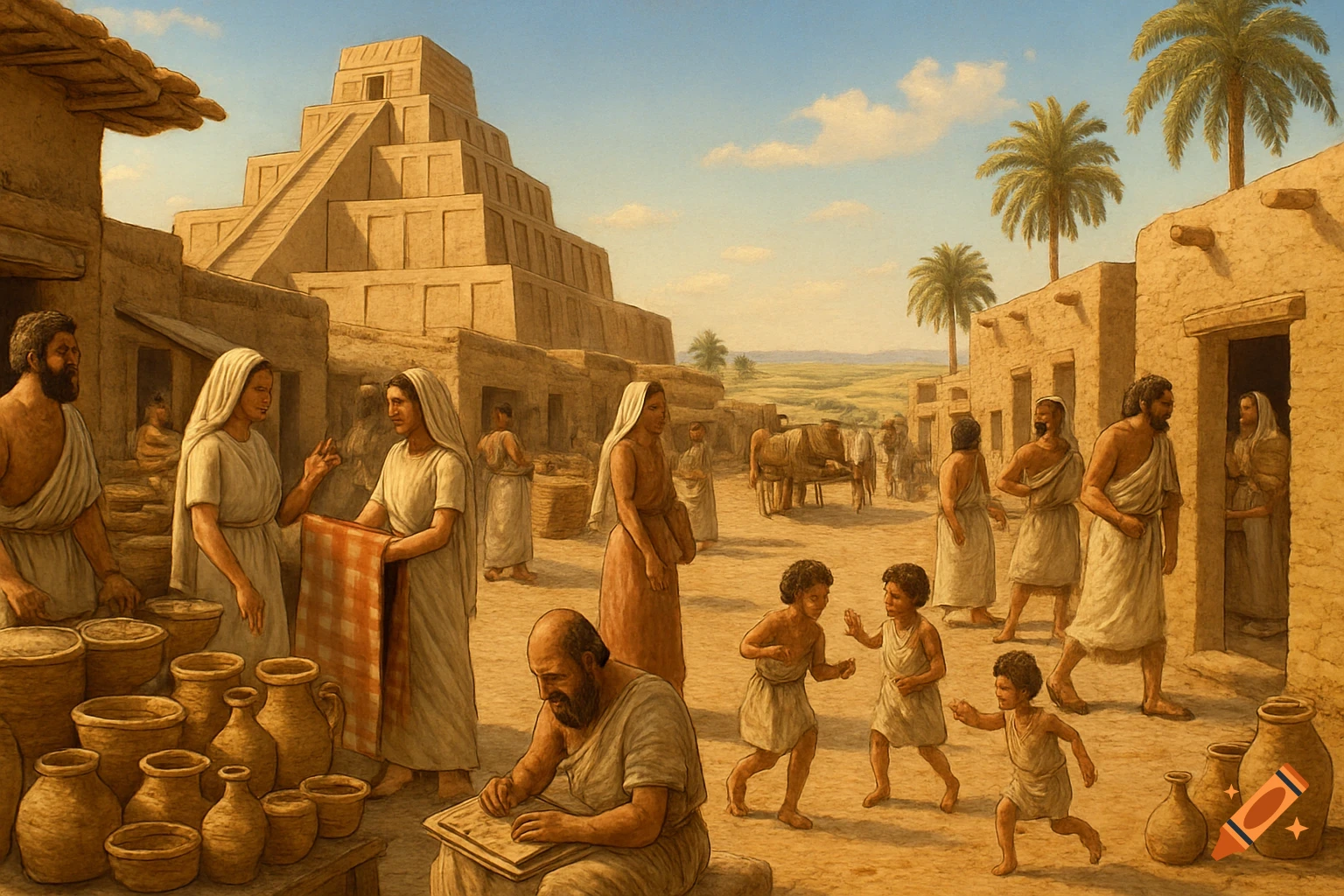
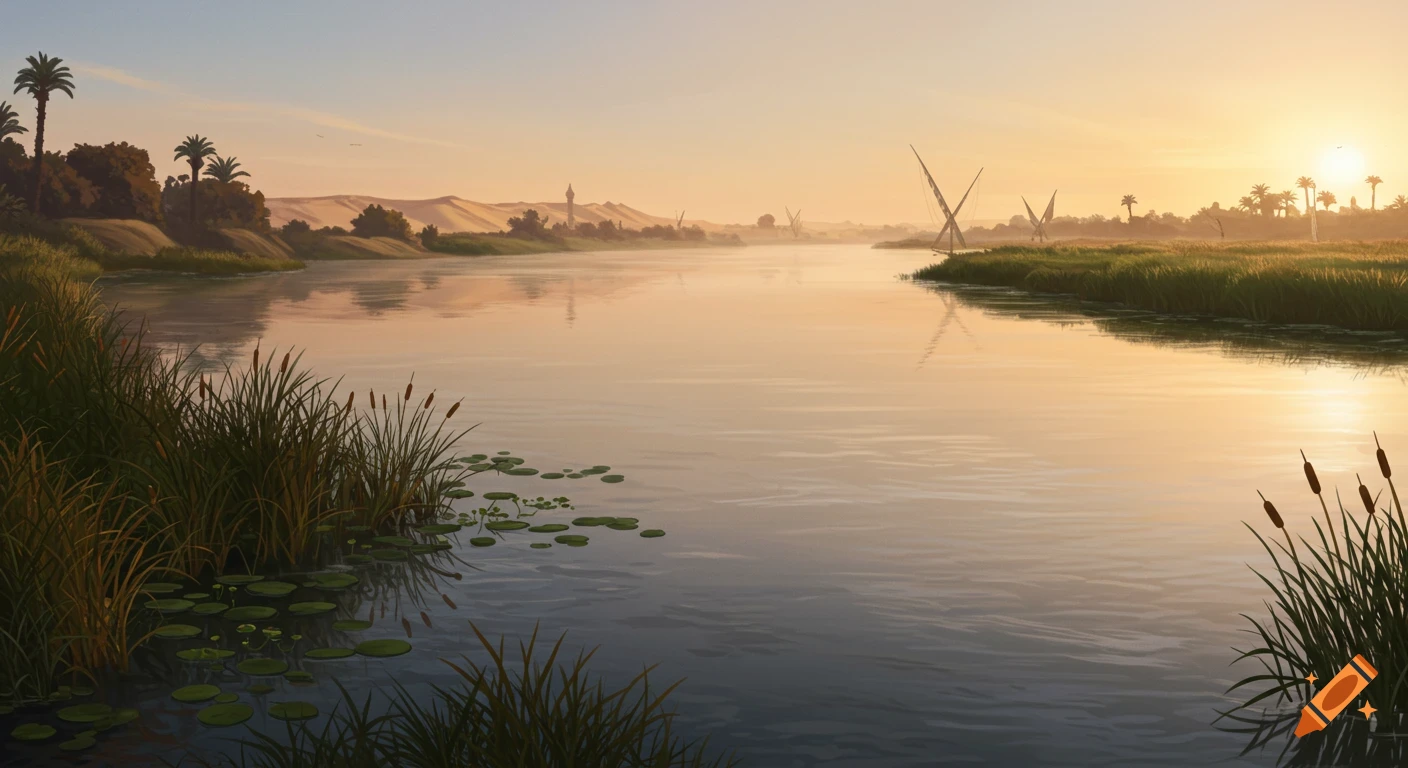
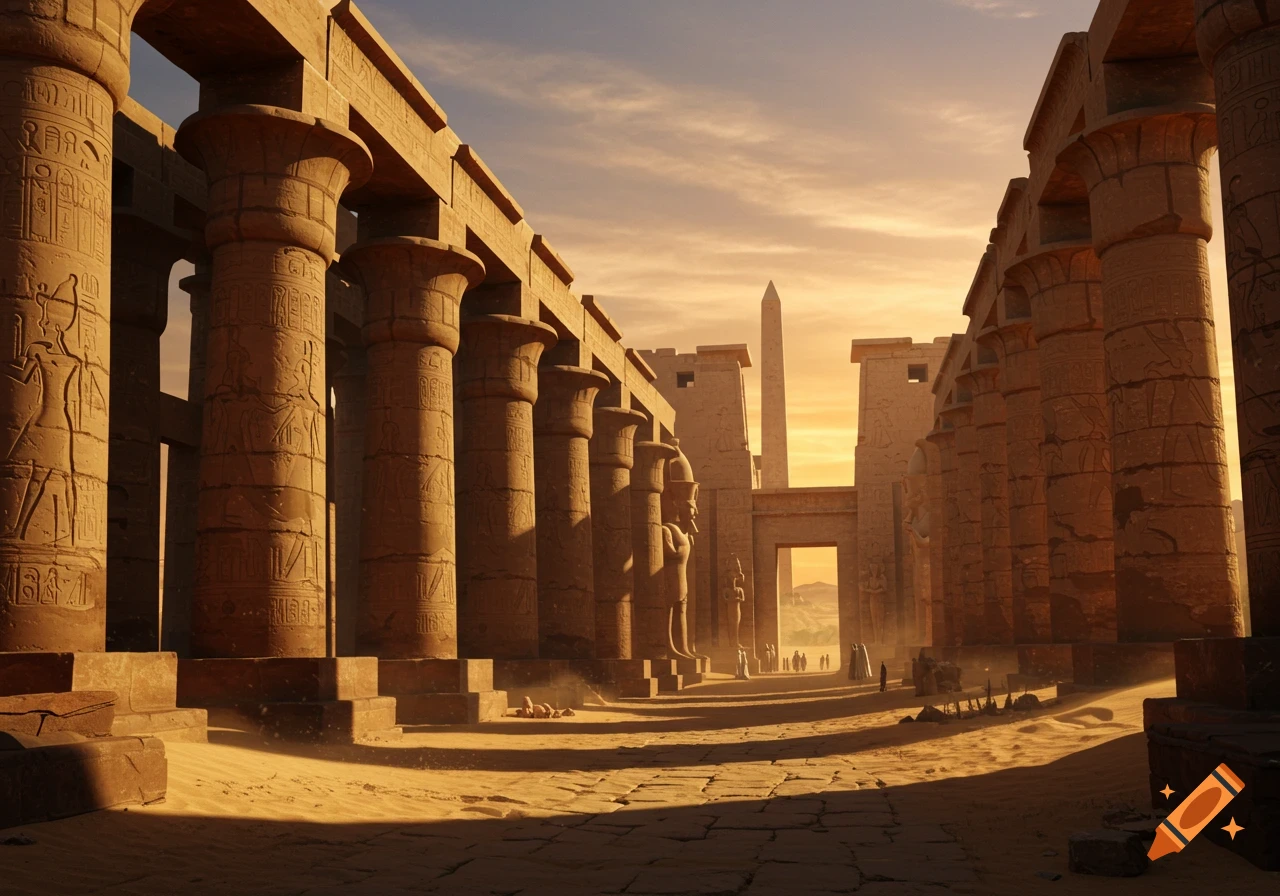
Photorealistic wide-angle view of the Nile Valley in Upper Egypt during the Naqada III period, showing a small prehistoric settlement, farmers, and a riverboat.
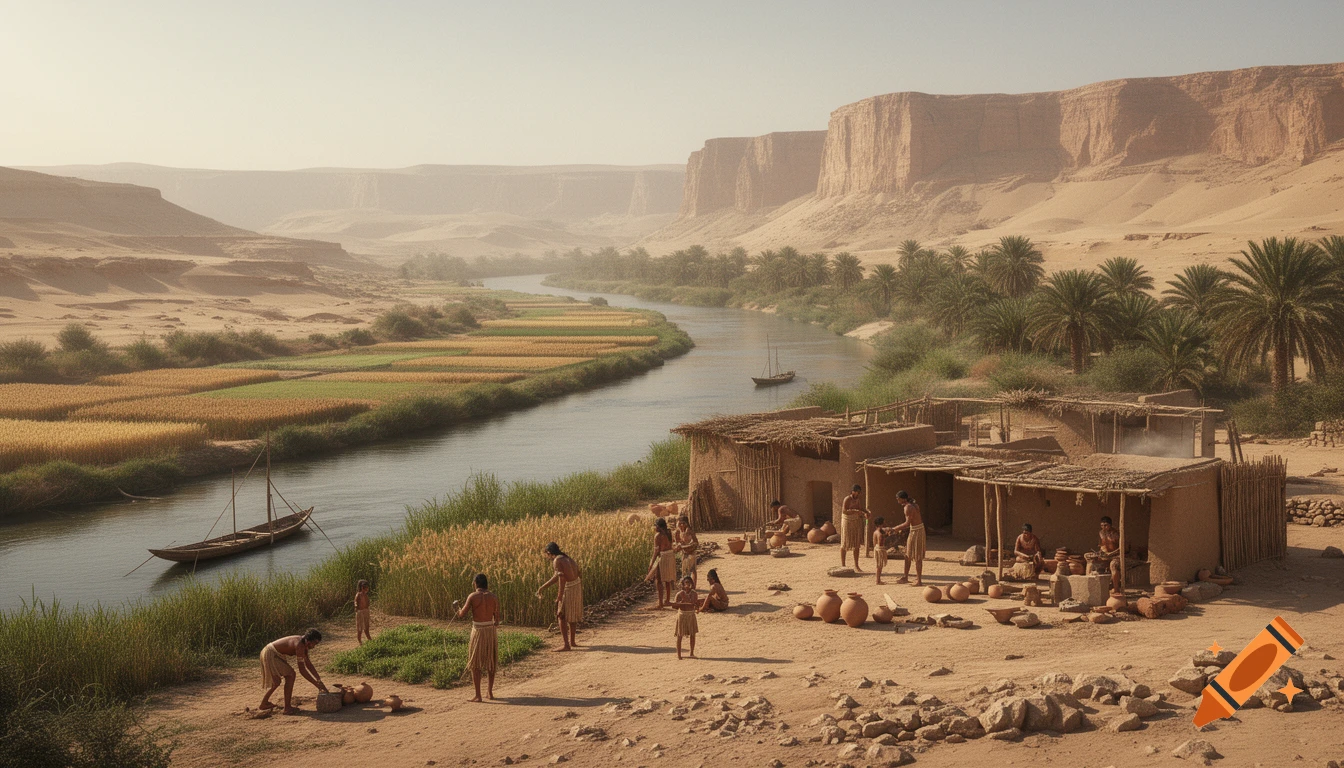
A historically grounded landscape of Upper Egypt during the Naqada III period, approximately 3200–3000 BCE, before the fully established Egyptian dynastic period. A wide view of the Nile Valley in Upper Egypt. The Nile is the central source of life, bordered by narrow strips of fertile cultivated land with fields of early cereals, patches of reeds, date palms and native vegetation. Beyond the fertile riverbanks, the landscape gradually transitions into dry desert, rocky ground, low barren hills and distant cliffs. A small prehistoric Egyptian settlement stands near the river, built from mud, reeds, wood and locally available materials. Simple rectangular mud-brick structures, courtyards, storage areas, pottery workshops and open working spaces. The settlement feels inhabited and practical, not monumental. People of the Naqada III period are present naturally in the landscape: men, women and children wearing historically plausible simple linen or plant-fiber garments, with period-appropriate hairstyles, jewelry and body decoration. Farmers work the fields, fishermen use simple wooden or reed boats, craftspeople work with pottery and stone tools. The visual atmosphere should evoke late Predynastic Upper Egypt: ancient, warm, dry, intimate and believable. Strong sunlight, dusty air, natural earth tones, deep shadows, distant desert haze. NO pyramids. NO large pharaonic temples. NO monumental statues. NO later Egyptian architecture. NO New Kingdom clothing. NO Greek or Roman Ver mais
More images like this