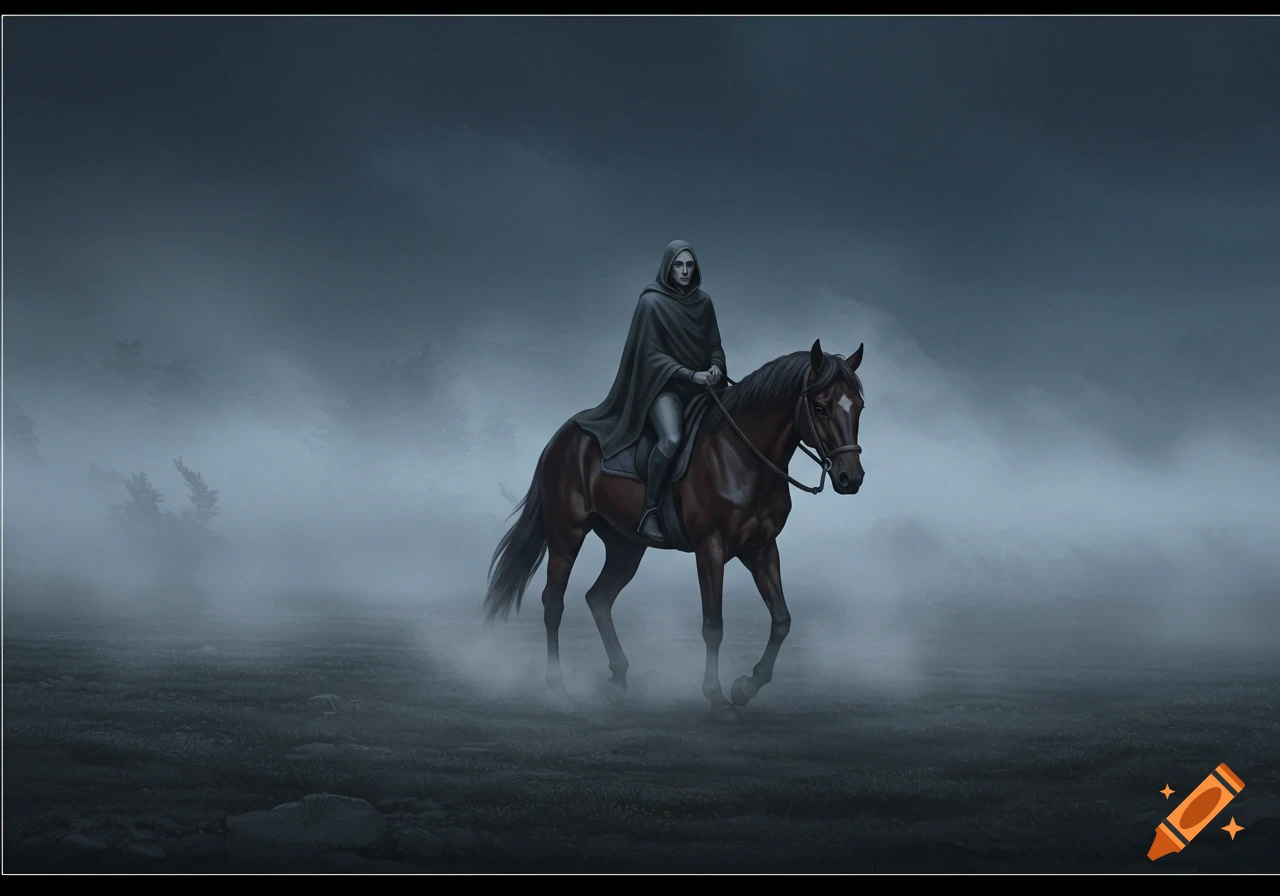
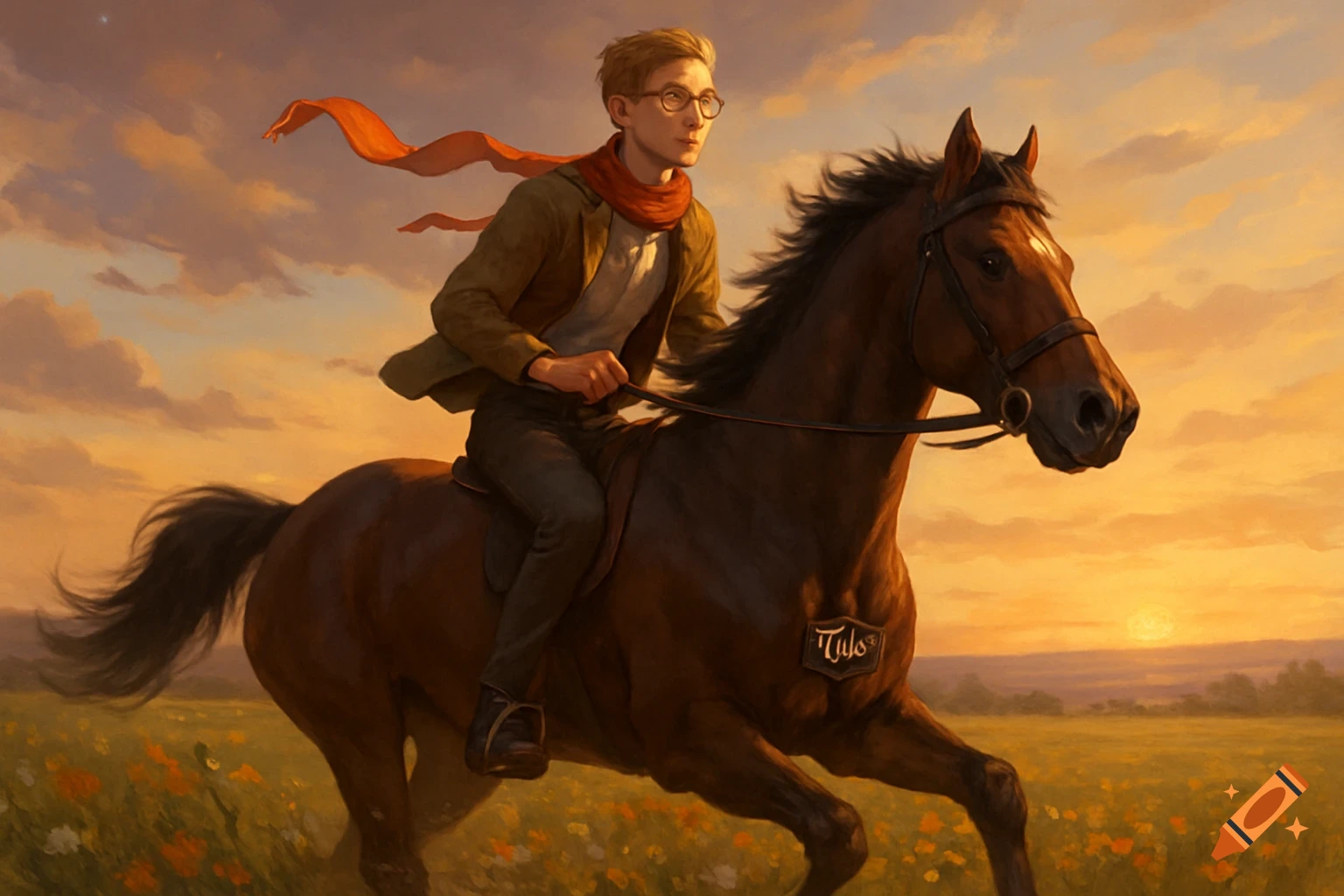
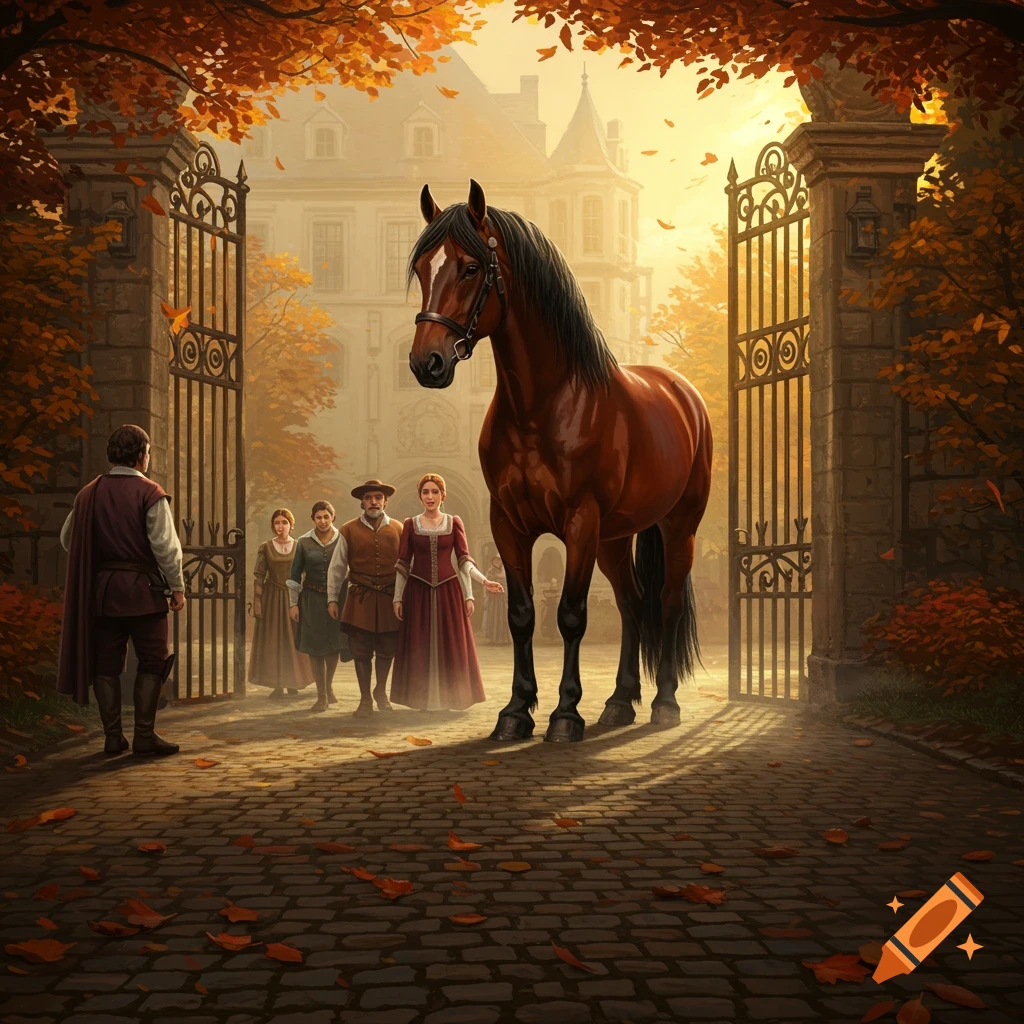
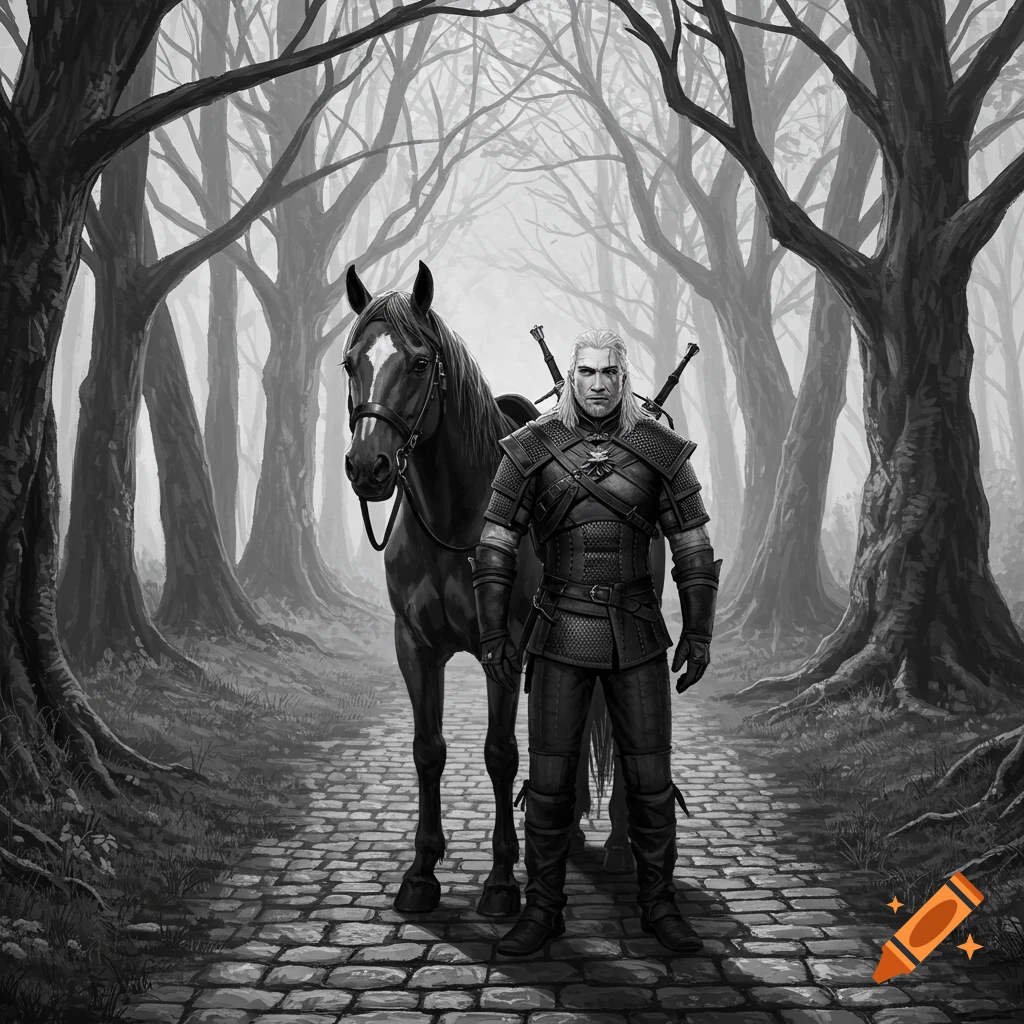
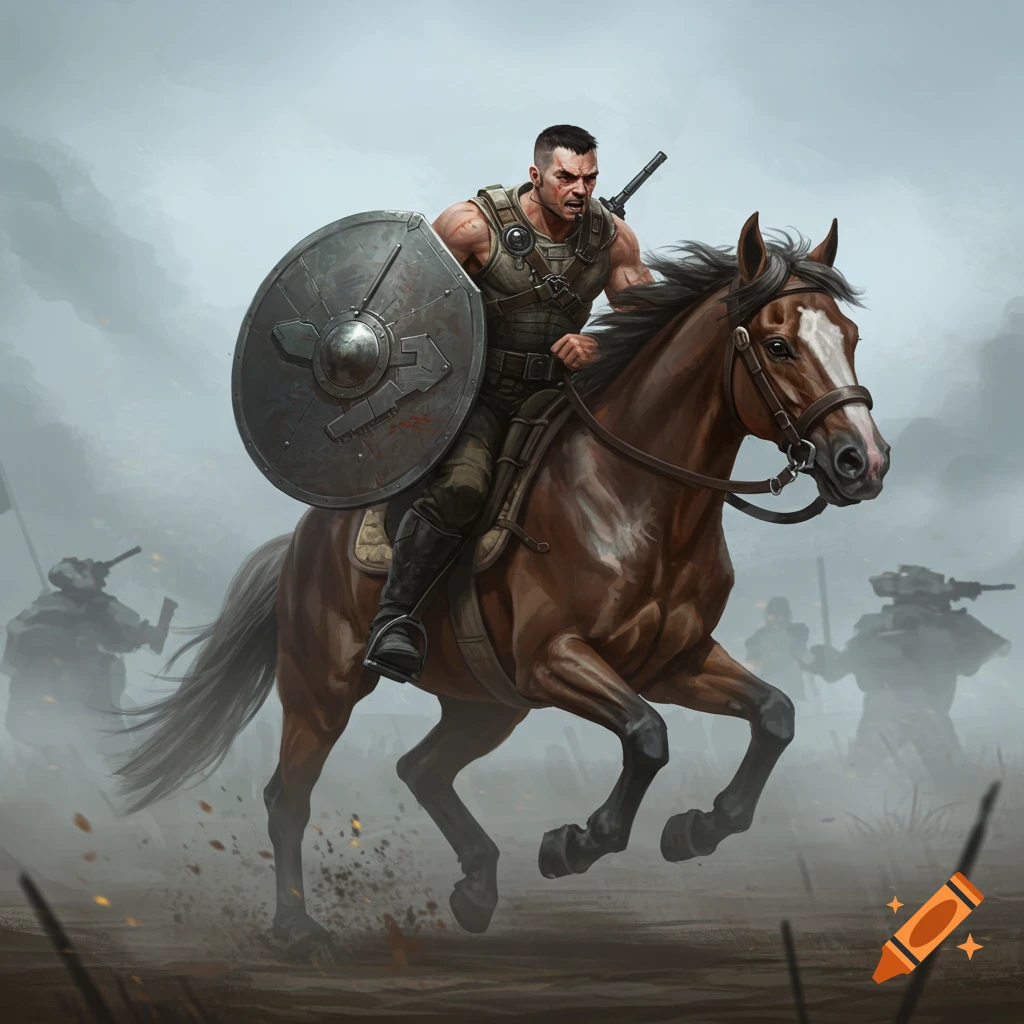
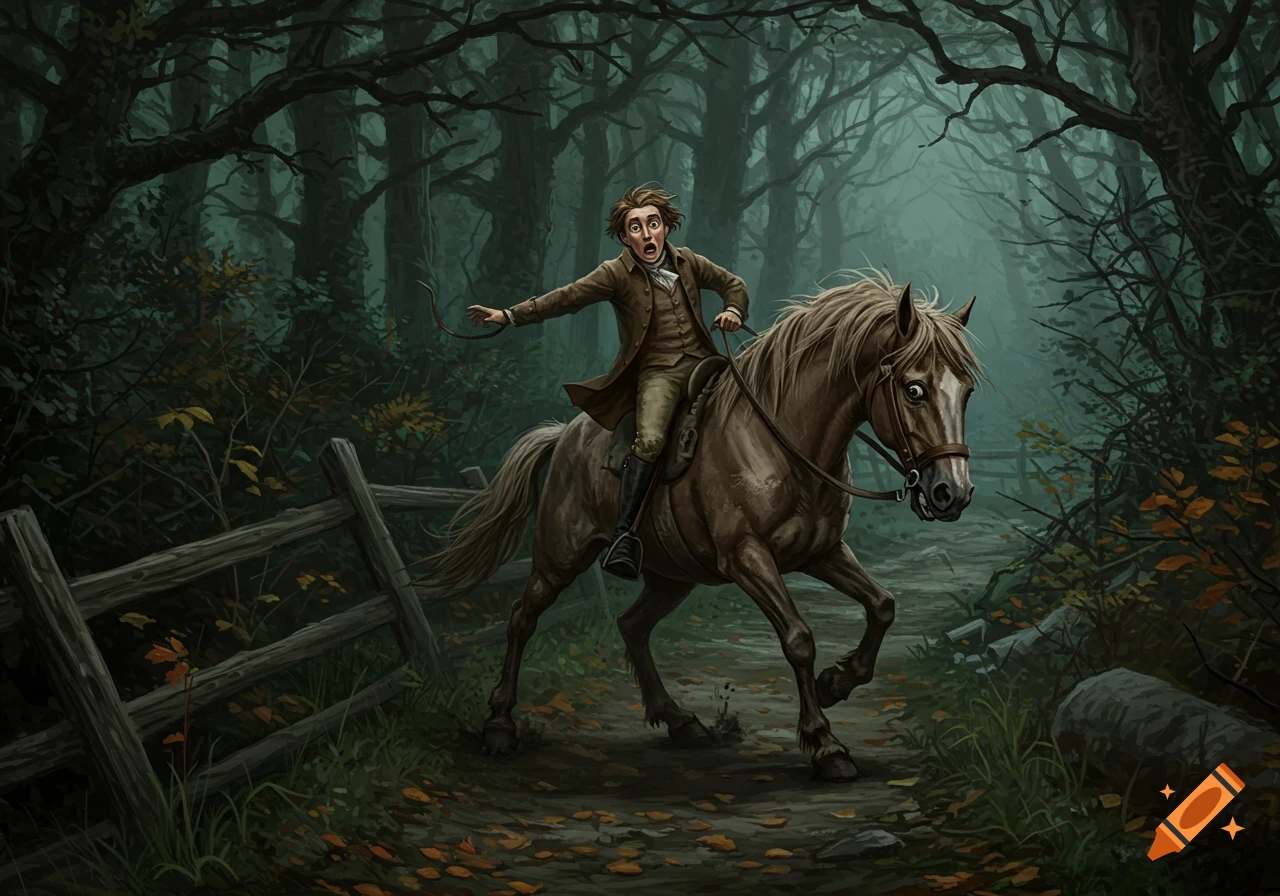
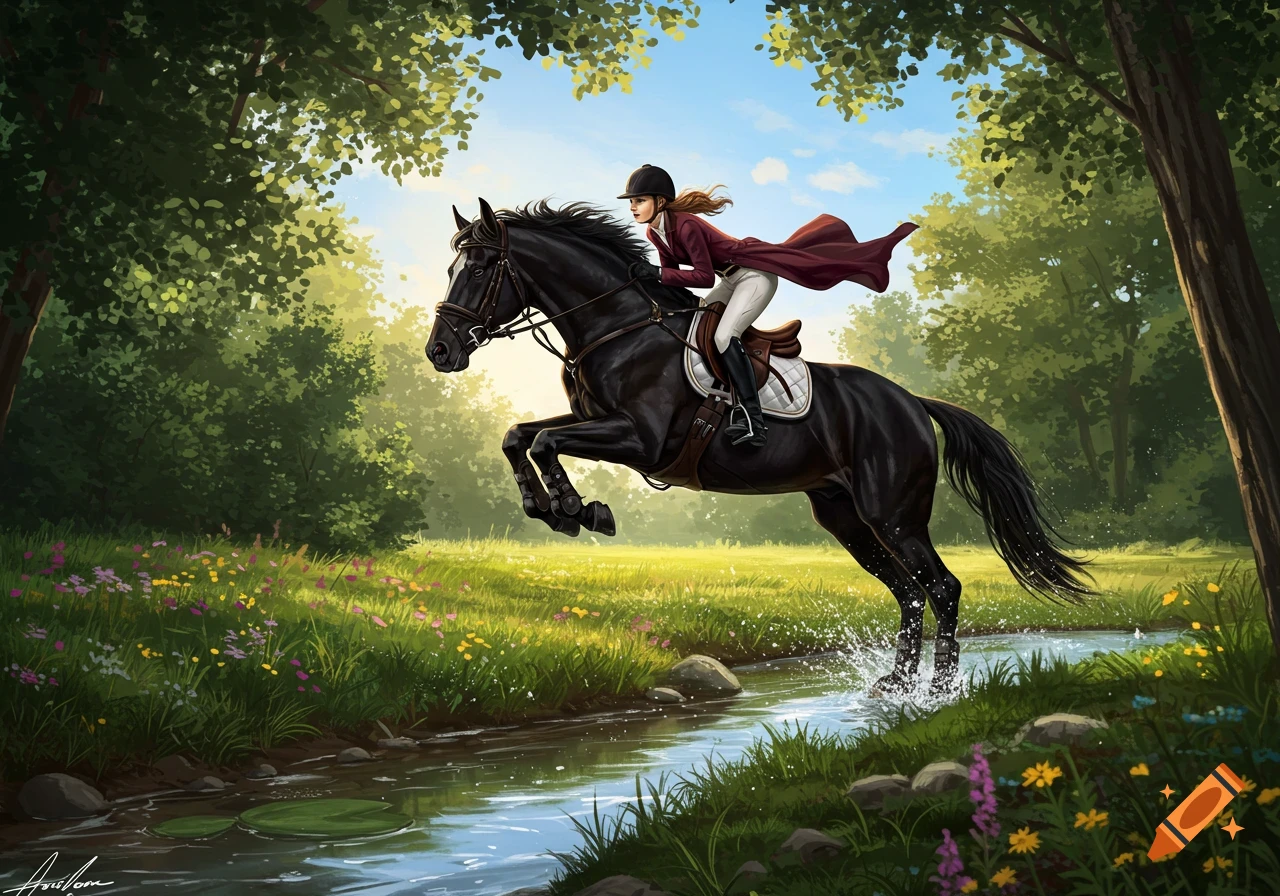
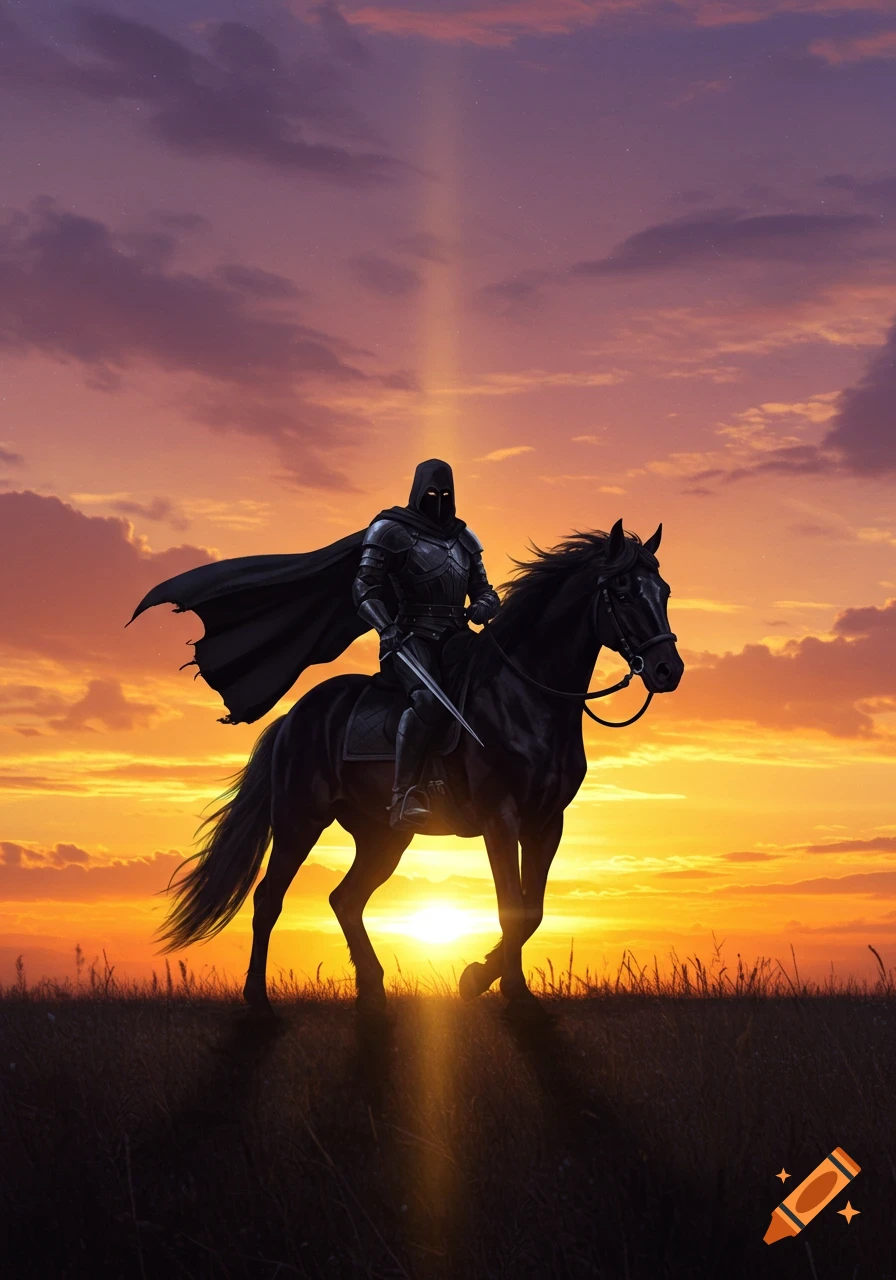
Dramatic watercolor of a cloaked man riding a galloping brown horse, holding two small children close. Willow branches and stormy washes frame the scene.

A dramatic watercolor study . A powerful horse in a full gallop, viewed from approximately a 40-degree angle, with its left side dominant. Low viewpoint close to the ground. The horse is anatomically accurate but only the front half is sharply defined: the left eye, nostril, neck, chest and front shoulder are the main focus. From the middle of the body backward, the horse gradually dissolves into wind, loose watercolor washes and motion. The mane merges with the storm. The hind legs are partially lost in mist and movement. A cloaked father rides the horse, holding a small three-year-old boy tightly against his chest. Their faces are only slightly defined—just enough to understand the gesture. The father's hands embracing the child are the second focal point. The boy has slightly longer light hair and rests his head against his father. Wide composition. In the background stand several mature weeping willow trees, bent violently by the wind. Their long hanging branches stream through the air and visually merge with the storm. No bushes, only real weeping willows. The watercolor should preserve large areas of white paper. Transparent washes, expressive brushwork, soft edges everywhere except the two focal areas. Motion is more important than detail. The atmosphere is dark, cold and stormy, but elegant rather than theatrical. Very faint handwritten German text is embedded into the paper texture beneath the watercolor washes, almost invisible from a distance, as if the poem Ver mais
More images like this