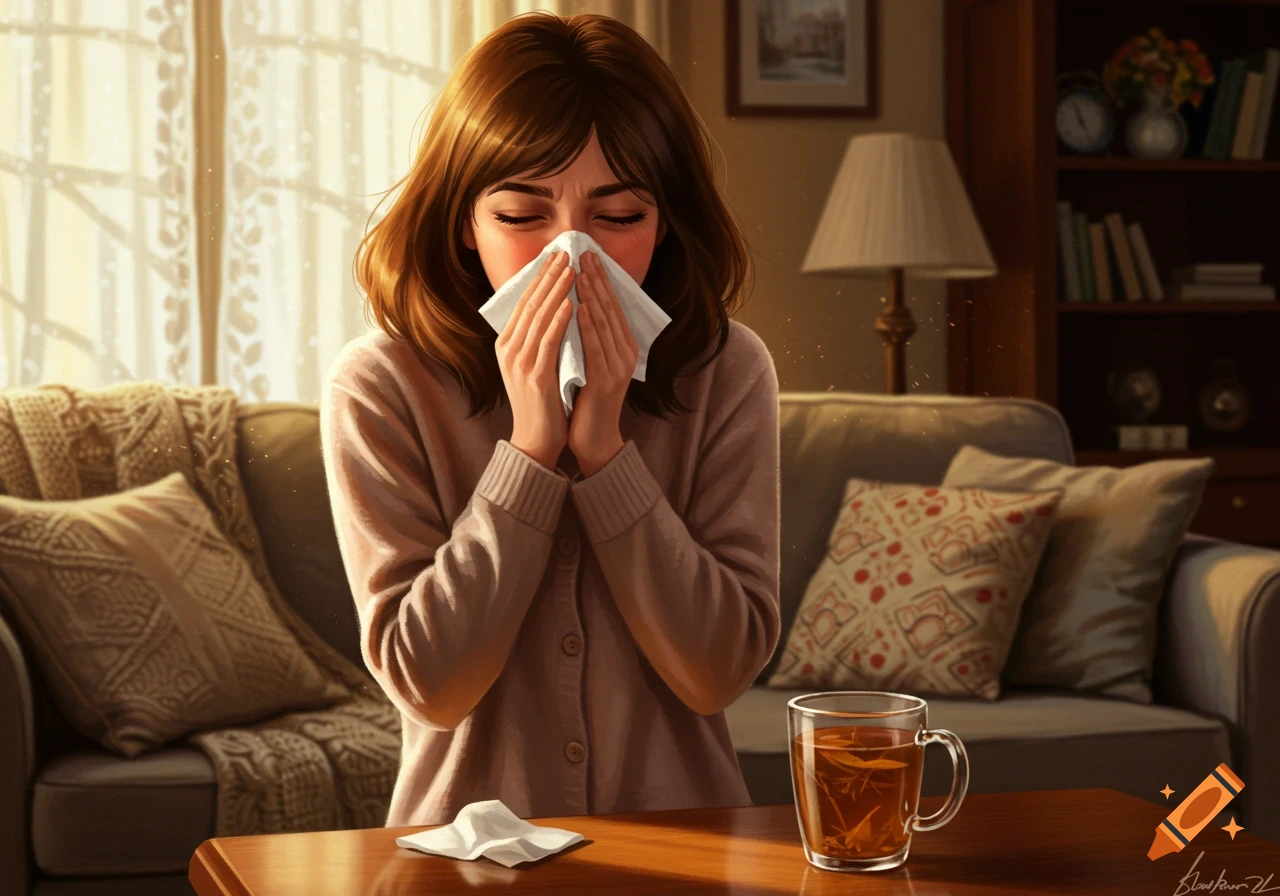
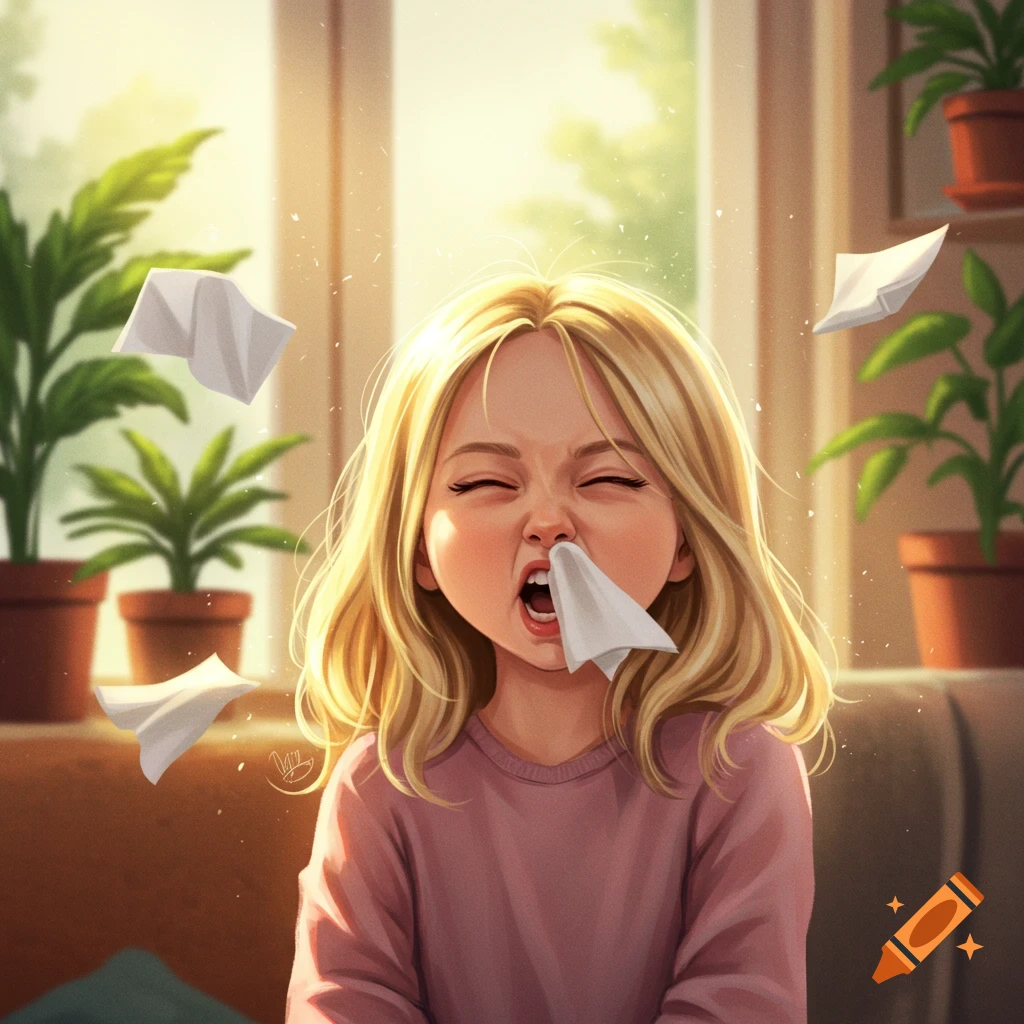
A young woman, flushed and sweaty, sneezes into a tissue while wrapped in a blanket, a thermometer and medicine on her bedside table.

A young woman in her early 20s sits near a softly lit window, wrapped in a thick, oversized knit sweater and a rumpled blanket. She clearly looks feverish — her cheeks are noticeably flushed, almost glowing with heat, and her skin has a slight sheen of sweat, especially along her forehead and upper lip. Damp strands of hair cling to her temples and the back of her neck, suggesting lingering warmth and discomfort. She is captured in the exact moment of a sneeze — eyes squeezed tightly shut, eyebrows lifted with tension, and her mouth open mid-burst. One hand holds a crumpled tissue just in front of her nose, slightly too late to fully catch the sneeze, while the other hand grips the blanket as her body tenses. Her shoulders are hunched, posture weak and fatigued. The tip of her nose is pink and irritated, and her breathing appears heavy, as if she’s been congested. There’s a faint watery gloss in her eyes, and her expression conveys both the force of the sneeze and the exhaustion of being sick. Around her, the environment reinforces the fever: a bedside table holds a digital thermometer, a glass of water with condensation, a small bottle of medicine, and a box of tissues with several pulled out. The room lighting is soft and slightly warm, enhancing the sense of heat and discomfort, like a quiet afternoon spent recovering. The overall mood is intimate and realistic — a cinematic freeze-frame of a vulnerable, human moment, highlighting both the sudden motion of the sneeze and Ver mais
More images like this