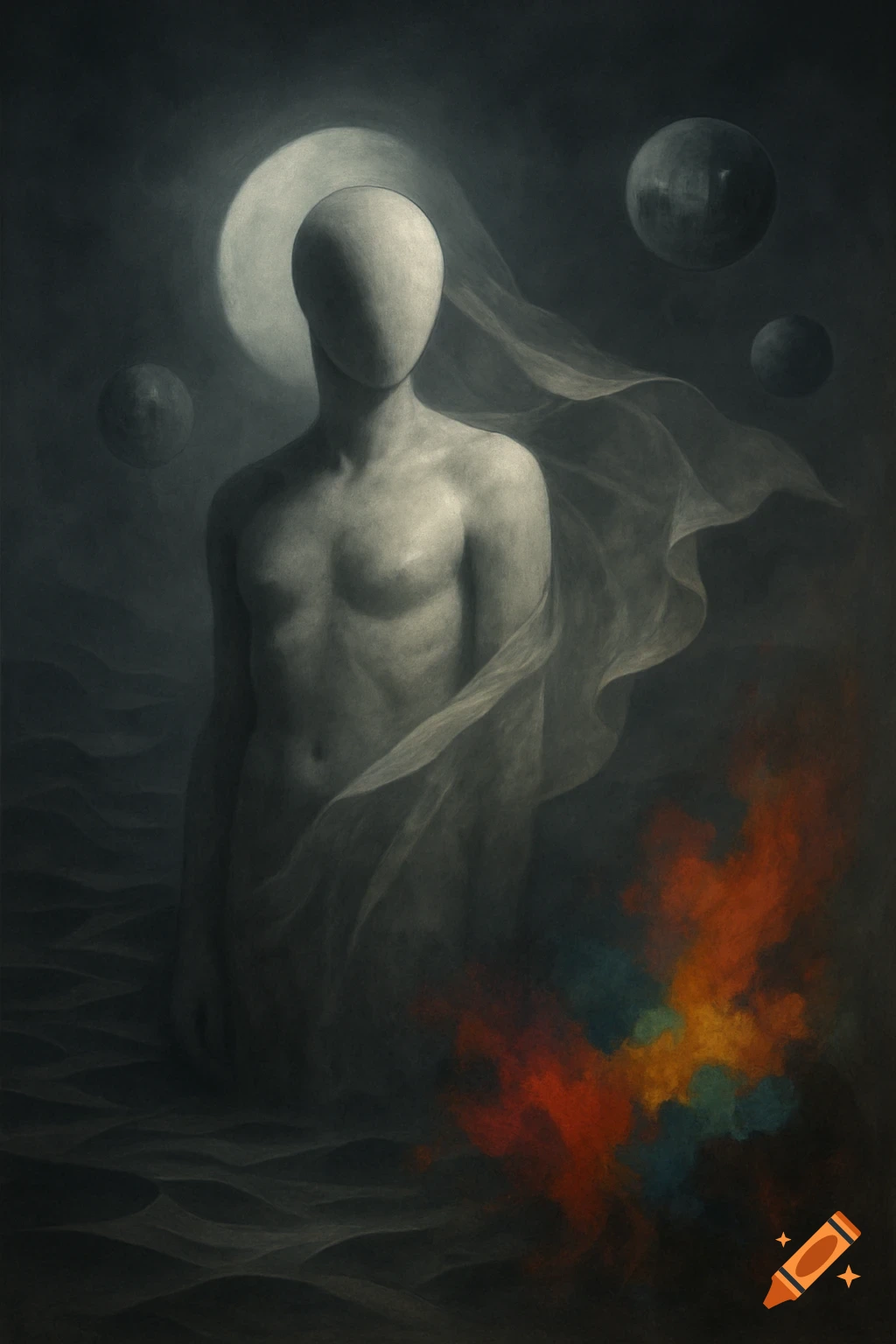
An abstract expressionist painting depicting a cracking white cube with red and black streaks, surrounded by gray pillars with faces and a golden orb.

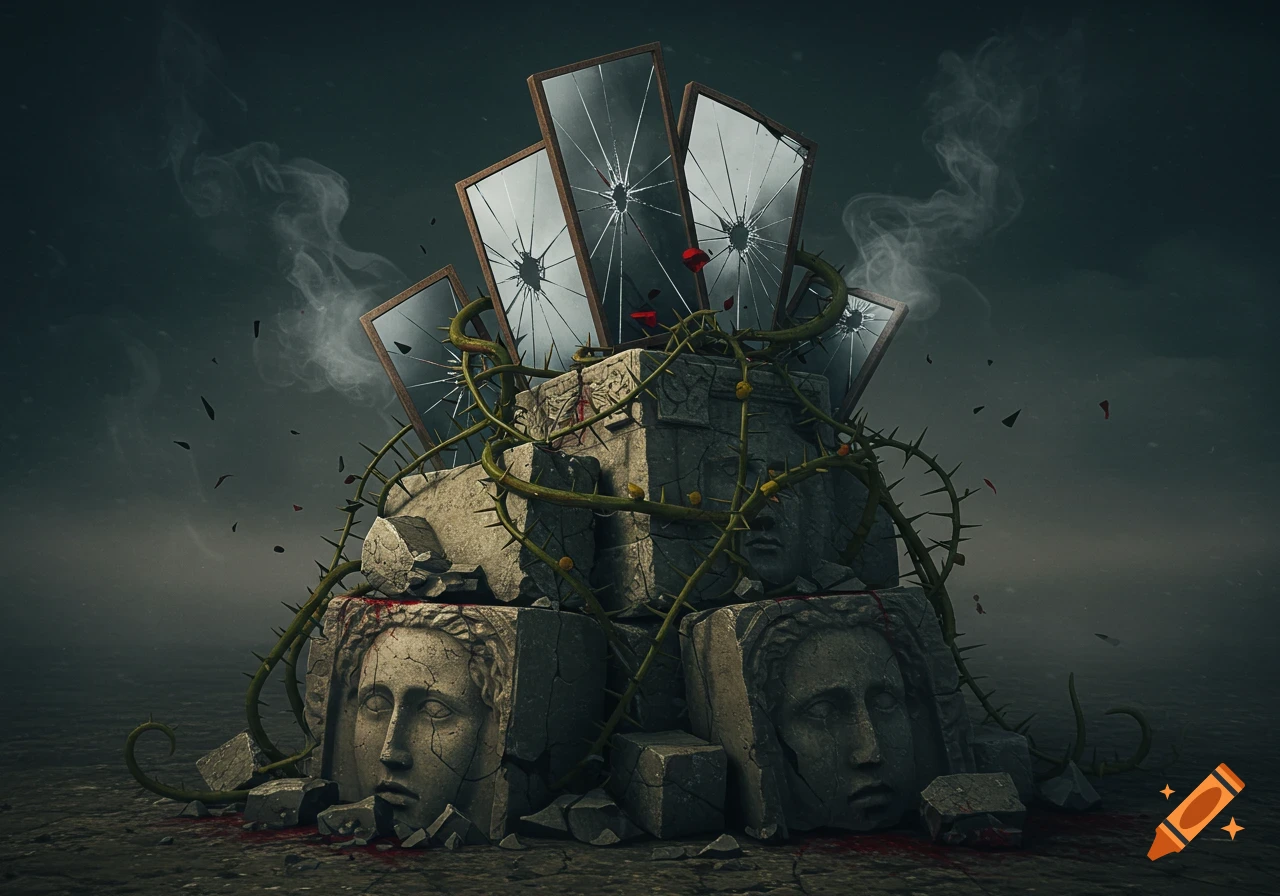
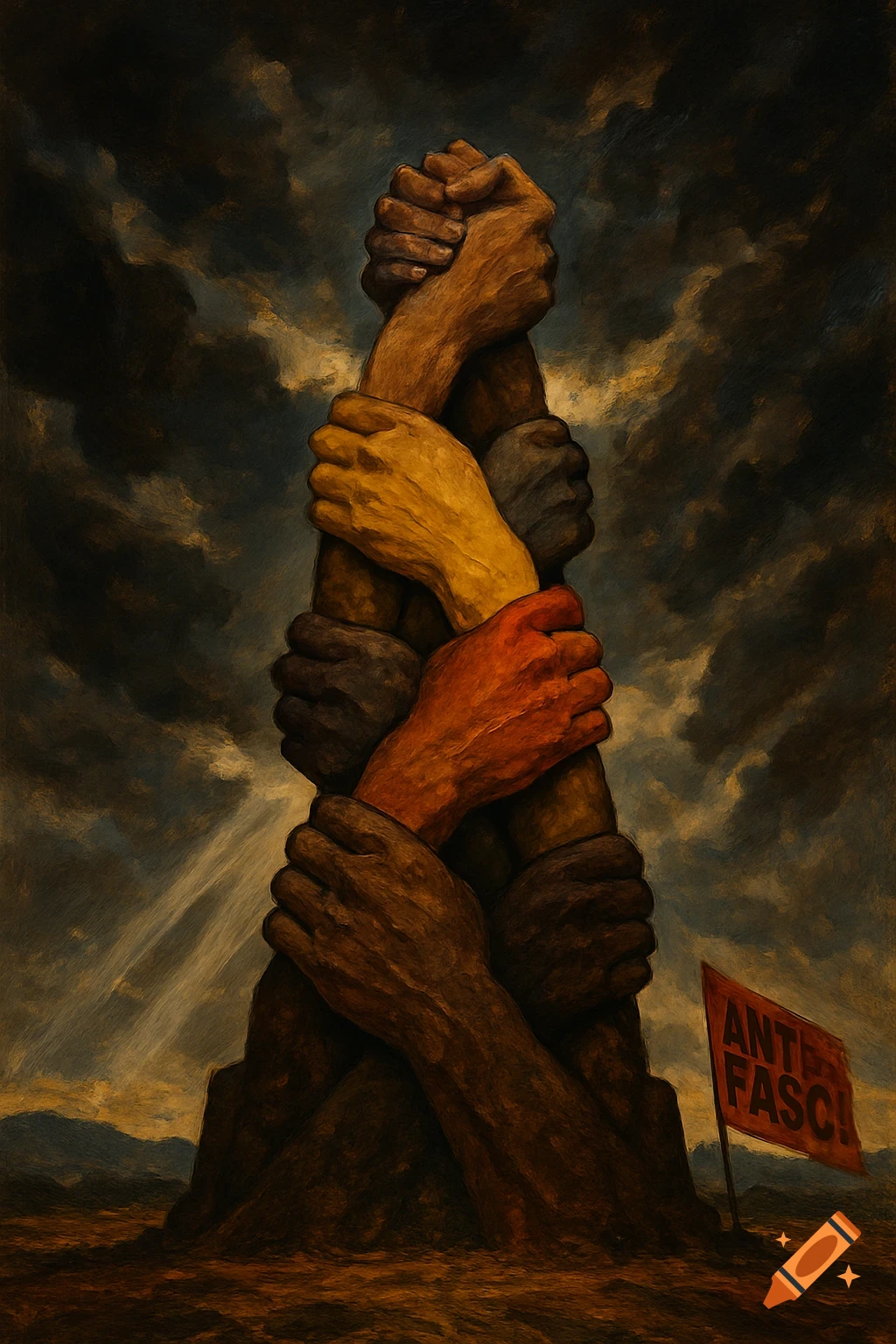
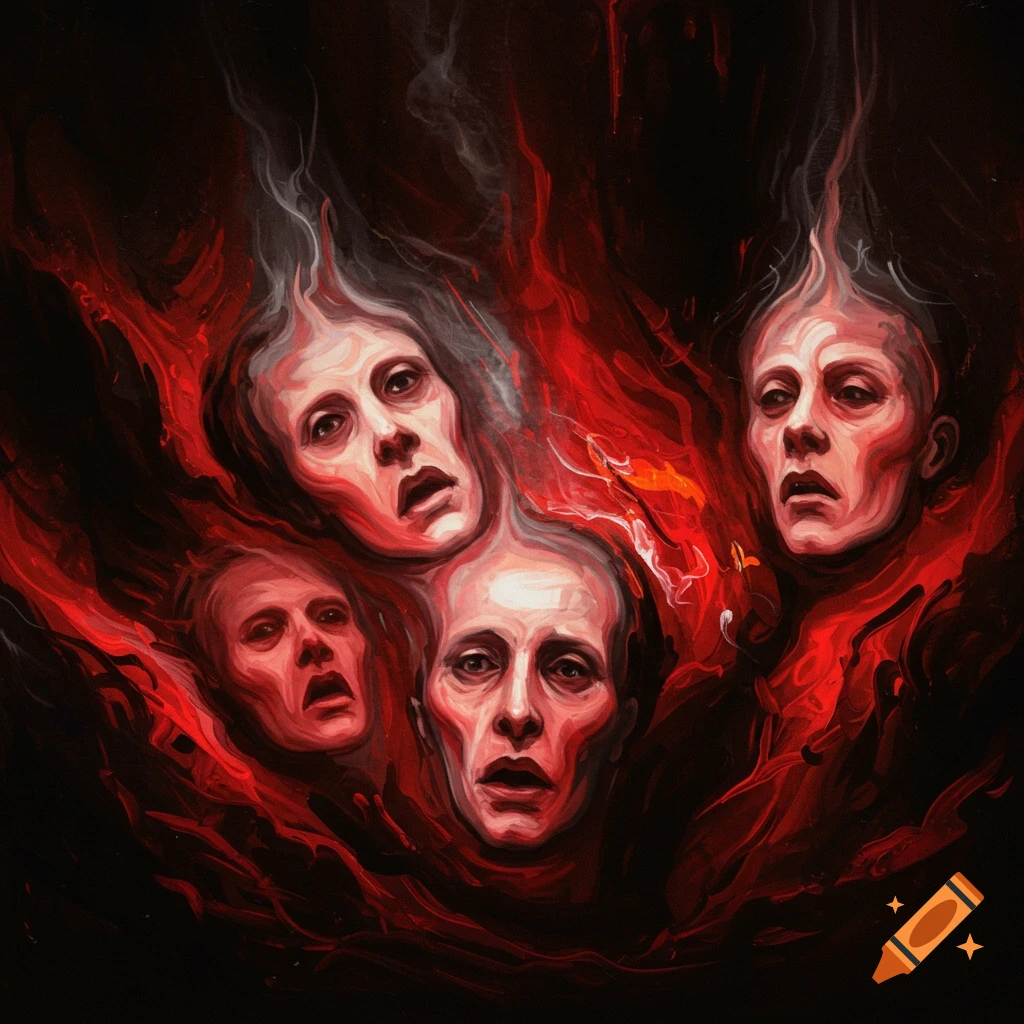
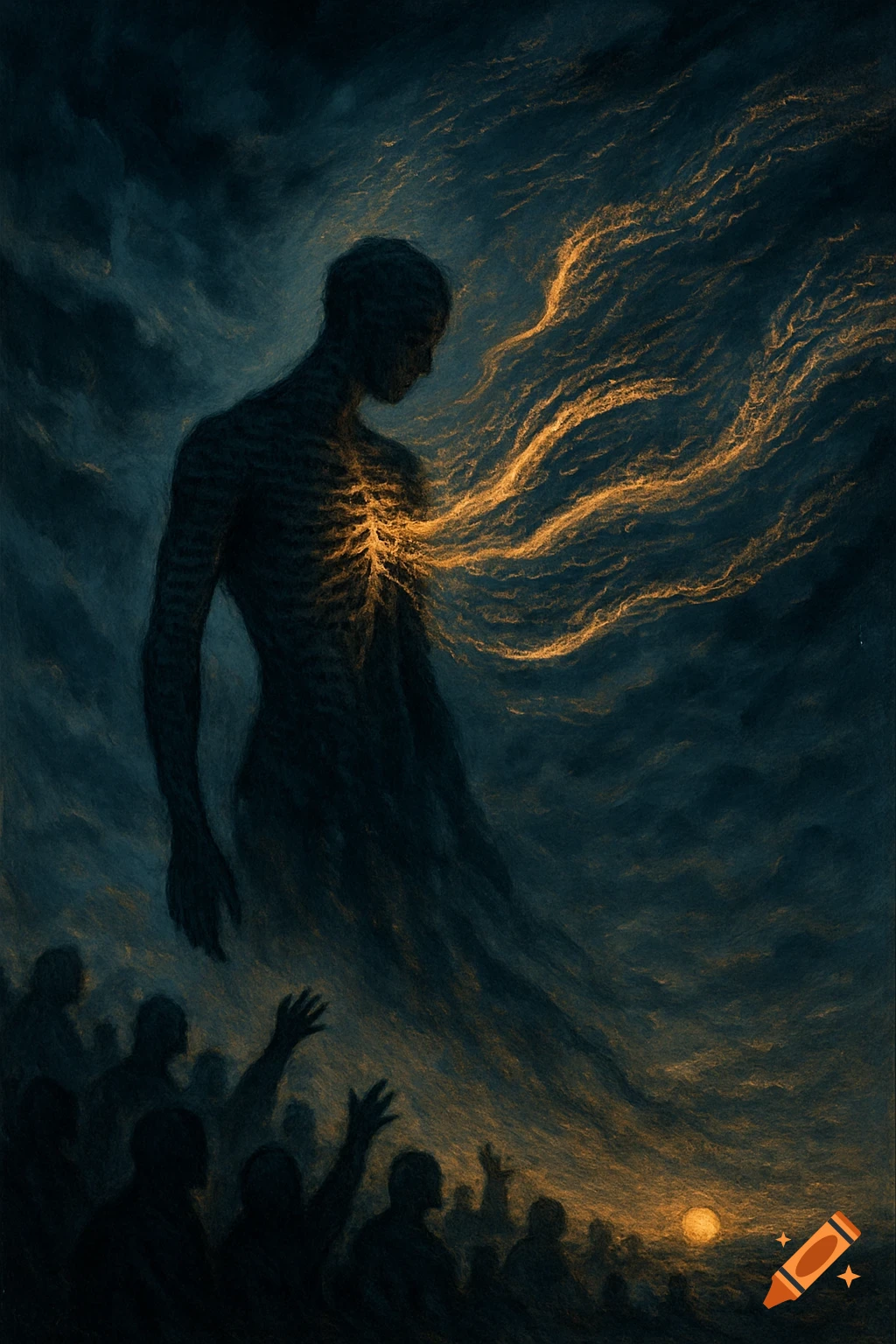
An abstract, expressionist painting based on the tragedy *“Medea”* by Euripides. The image should not simply portray Medea as a realistic person, but rather visualize her inner conflict and the tension between her, Jason, and the patriarchal society of ancient Greece. At the center stands Medea as a female cube-shaped form. The cube symbolizes the role of women at that time: restricted, confined, and forced into clear societal boundaries. The surface of the cube is cracked and partially broken open to represent Medea’s inner conflict and her resistance against this social order. Red and black streaks emerge from the cracks, symbolizing anger, pain, and revenge. Jason, in contrast, is not shown as a human figure but as a large golden circle in the background. The circle represents male power, societal perfection, and freedom. While Medea’s cube appears heavy, angular, and trapped, Jason’s circle seems elevated, light, and almost untouchable. Tense lines and tearing threads stretch between both forms, symbolizing their destroyed relationship. Some of these lines resemble chains, showing that Medea remains emotionally bound to Jason even after his betrayal. The patriarchal society is represented by massive gray pillars surrounding the scene like a cage. Within the pillars, faint male faces without eyes or emotions can be recognized. This makes society appear cold, controlling, and inhuman. Medea’s cube seems trapped between these pillars, while Jason’s circle moves freely above Ver mais
More images like this