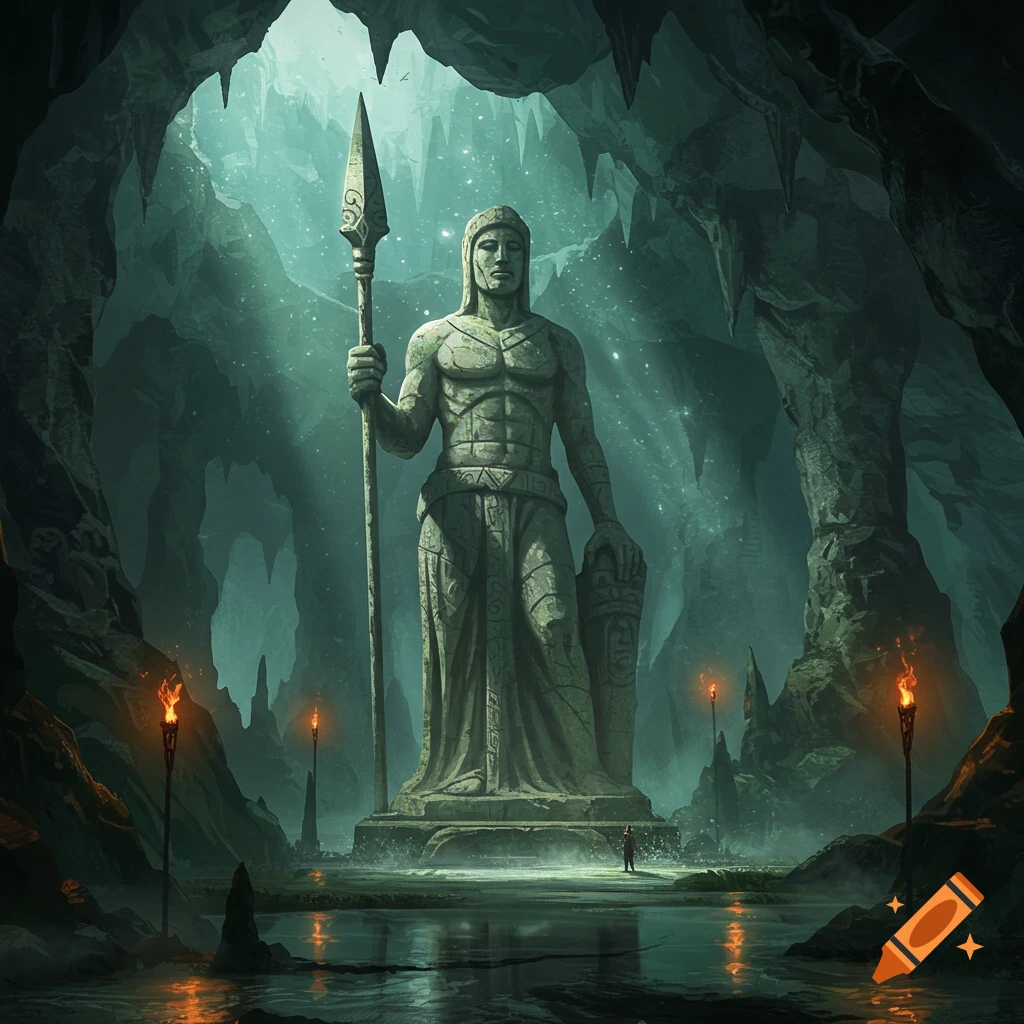
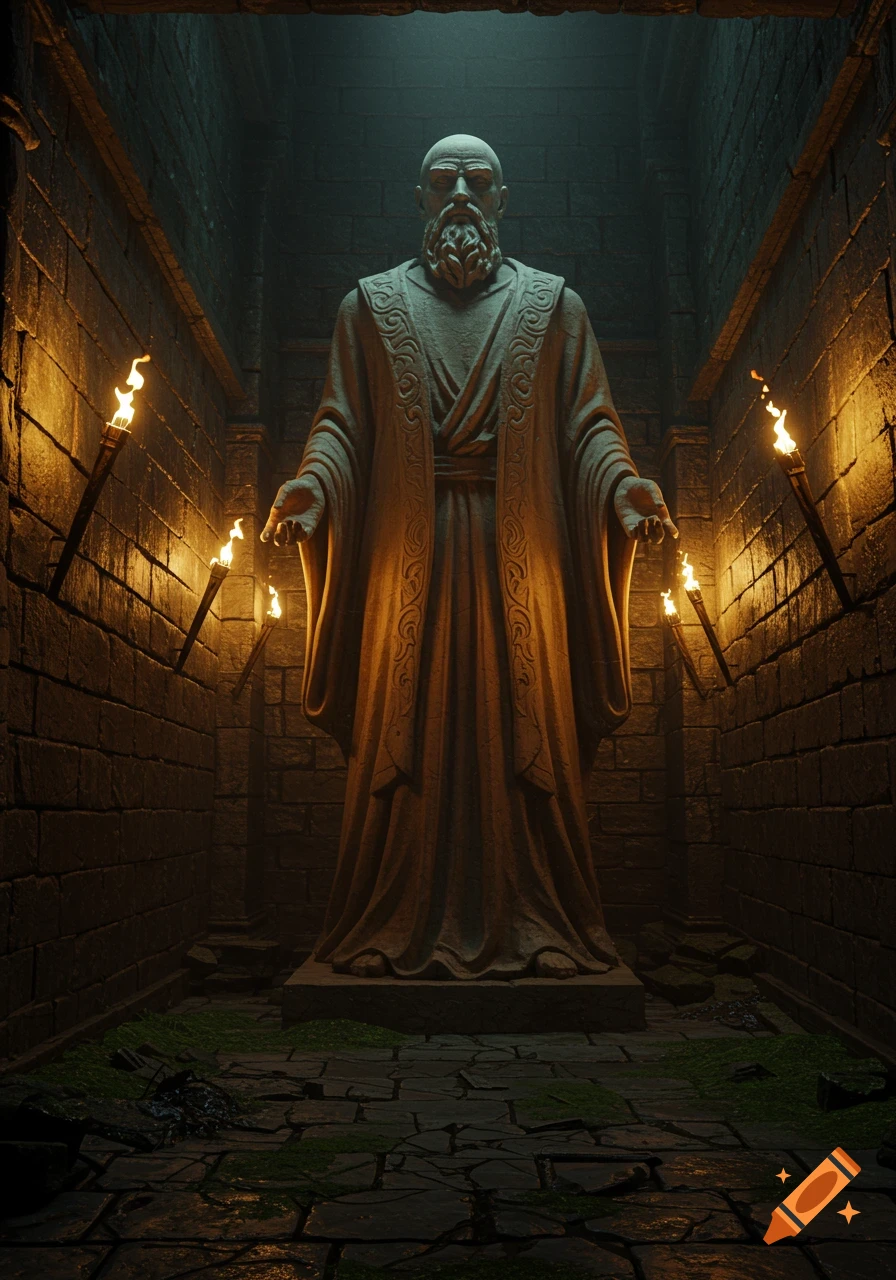
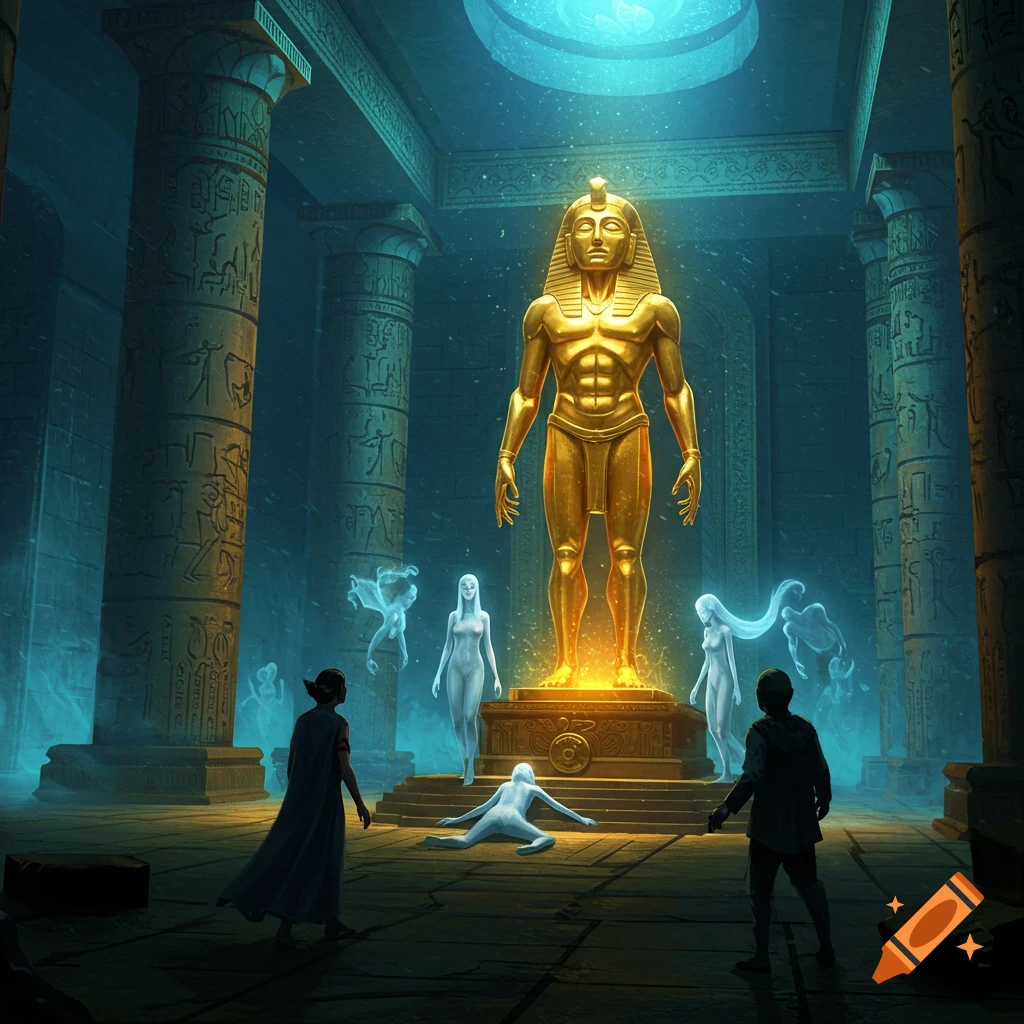
A massive, intricately carved stone statue stands rigidly on a pedestal amidst a vast pile of human bones and broken weapons in a dusty, dimly lit ancient ruin.
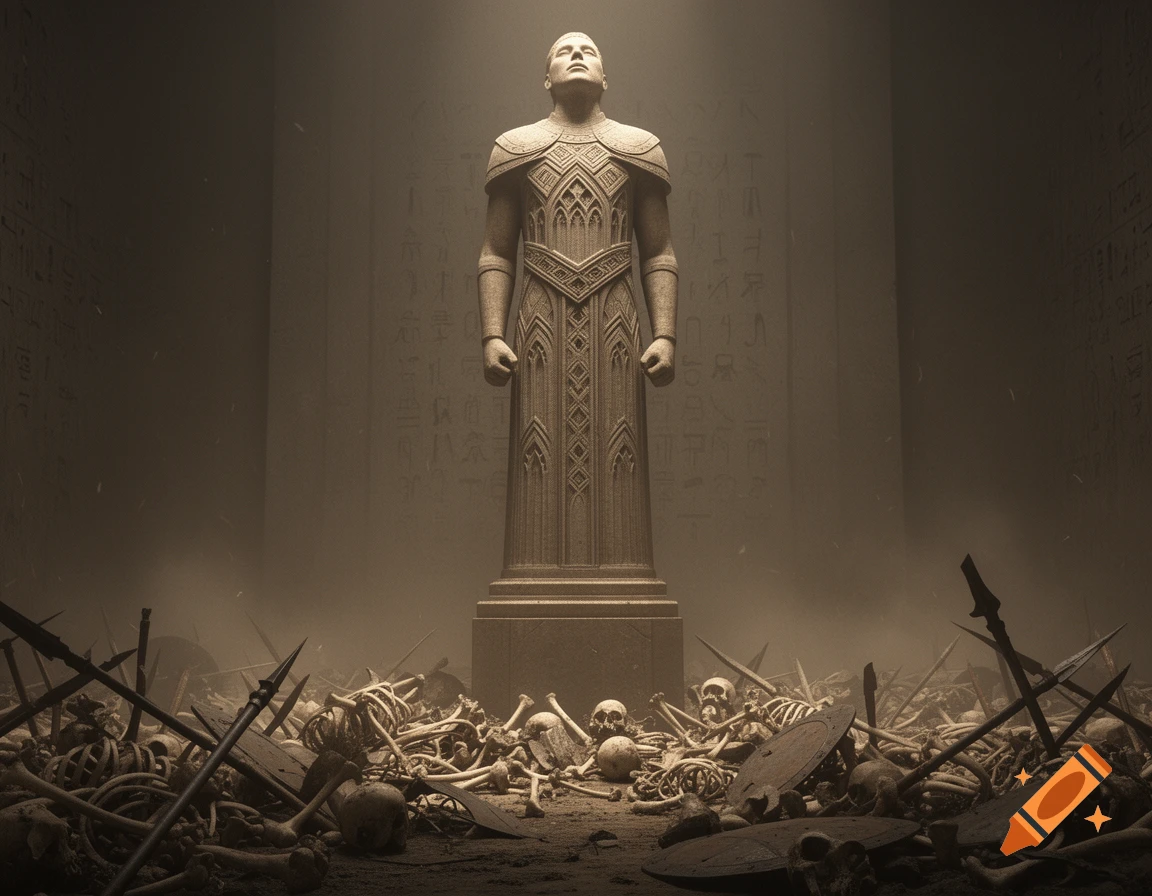
• monolithic figure, standing rigid, shoulders squared, arms pressed close to the body, fists clenched against the sides. • The head tilts slightly upward, mouth closed tight, expression unreadable — almost serene, almost condemning. • His robe or armor is patterned with geometric, almost cathedral-like carvings across the torso — intricate, formal, more crafted than the others. • The lower body merges into the pedestal, giving no sense of legs — his weight is unmovable, column-like. • Around his feet lies a field of bones and broken weapons — spears snapped, shields split, skulls scattered across the dust. A scene of ancient massacre or ritual slaughter, frozen forever at his base. • The air is hazy with dust and light — thin shafts falling across the ruin, illuminating both the skeletal remains and the towering presence above. • The walls behind him are carved with symbols, but far more sparse, plain — as if his figure itself is the message, overshadowing any written mark. • His stillness radiates a grim inevitability: as though he is the silent witness of all those deaths, and nothing about his expression betrays sorrow or triumph. This Thul feels like a silent witness to slaughter, forever gazing above the ruin at his feet, unmoved by the bones of the fallen. Ver mais
More images like this