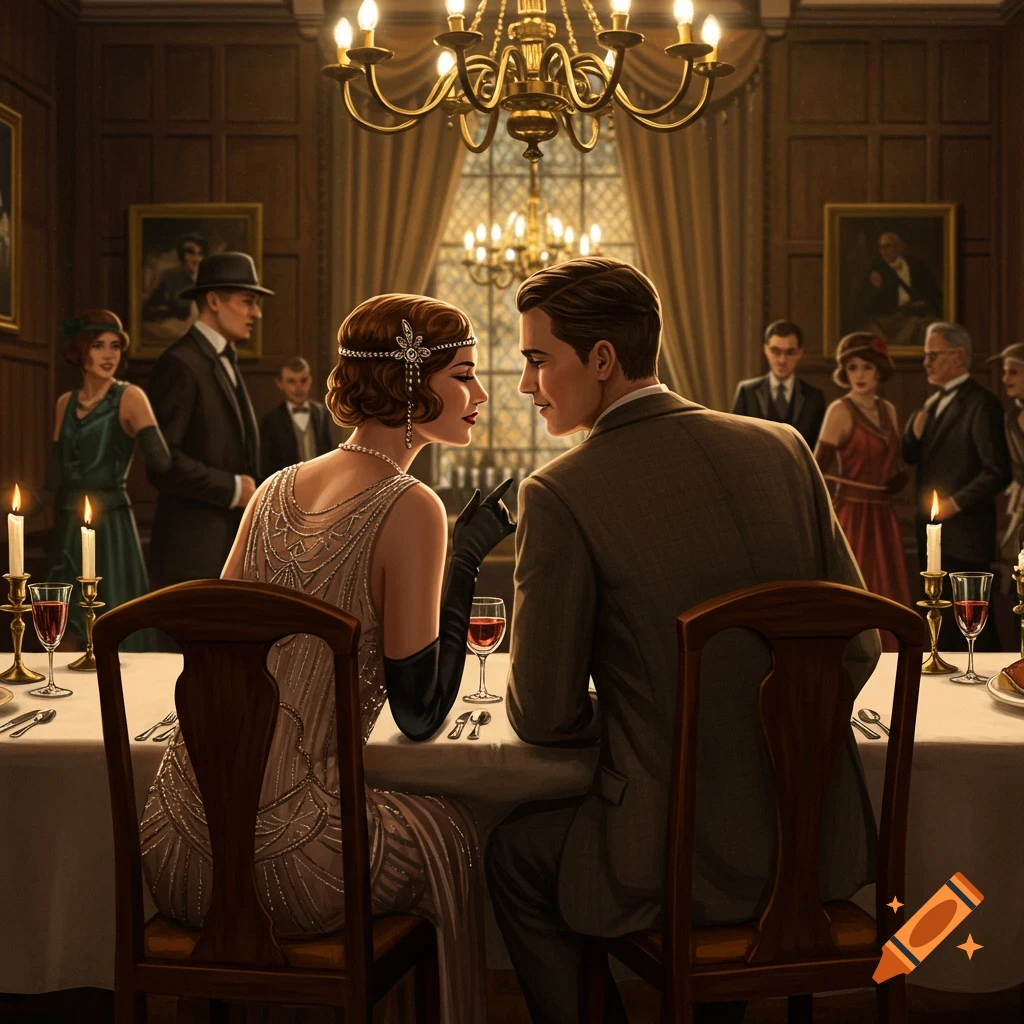
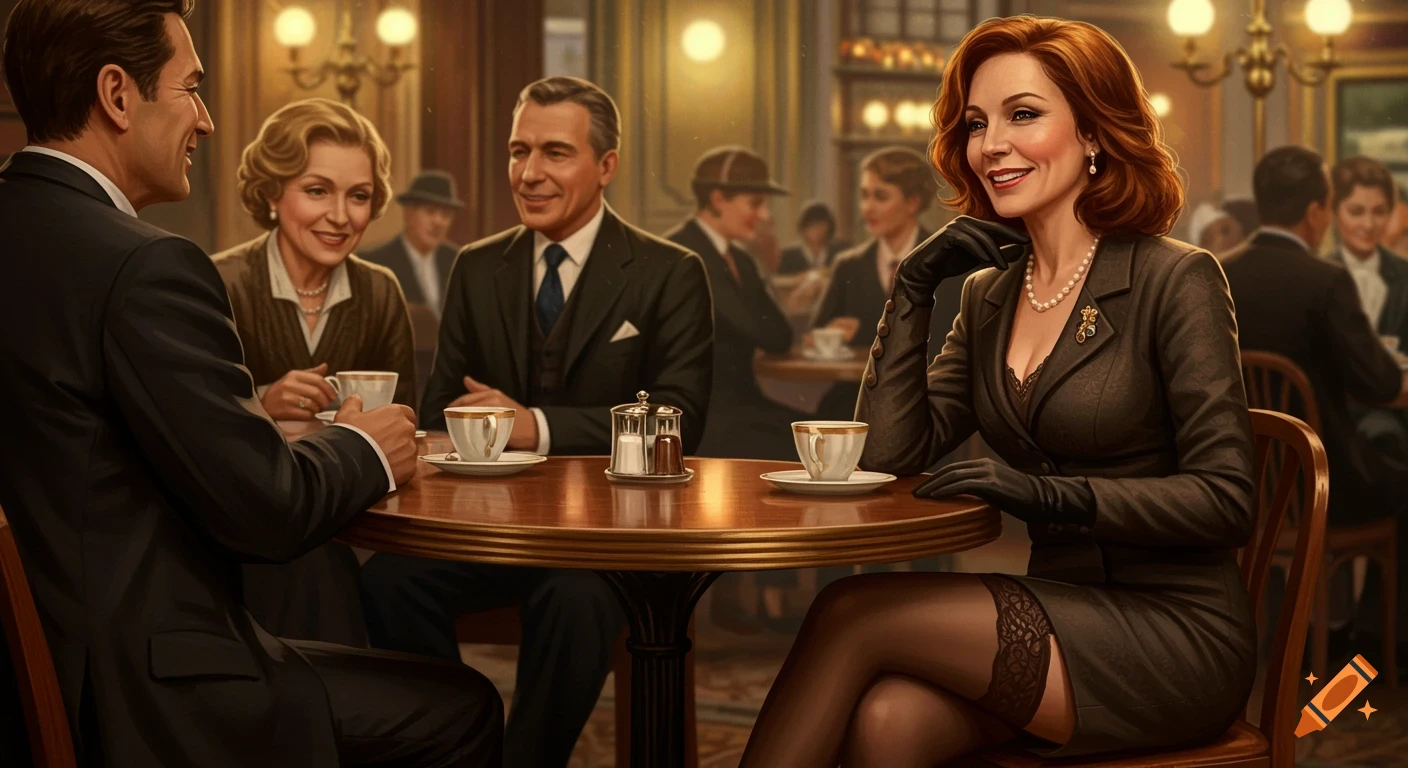
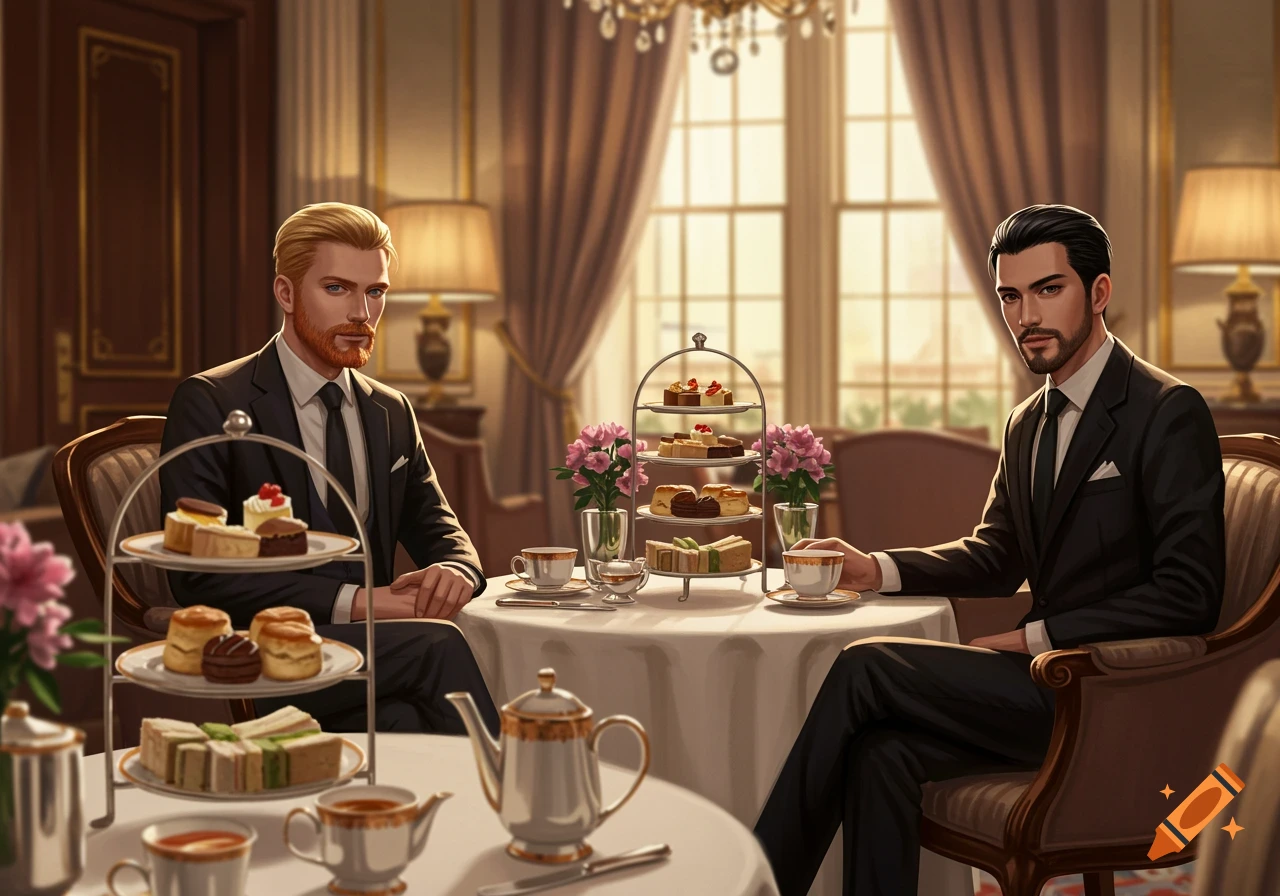
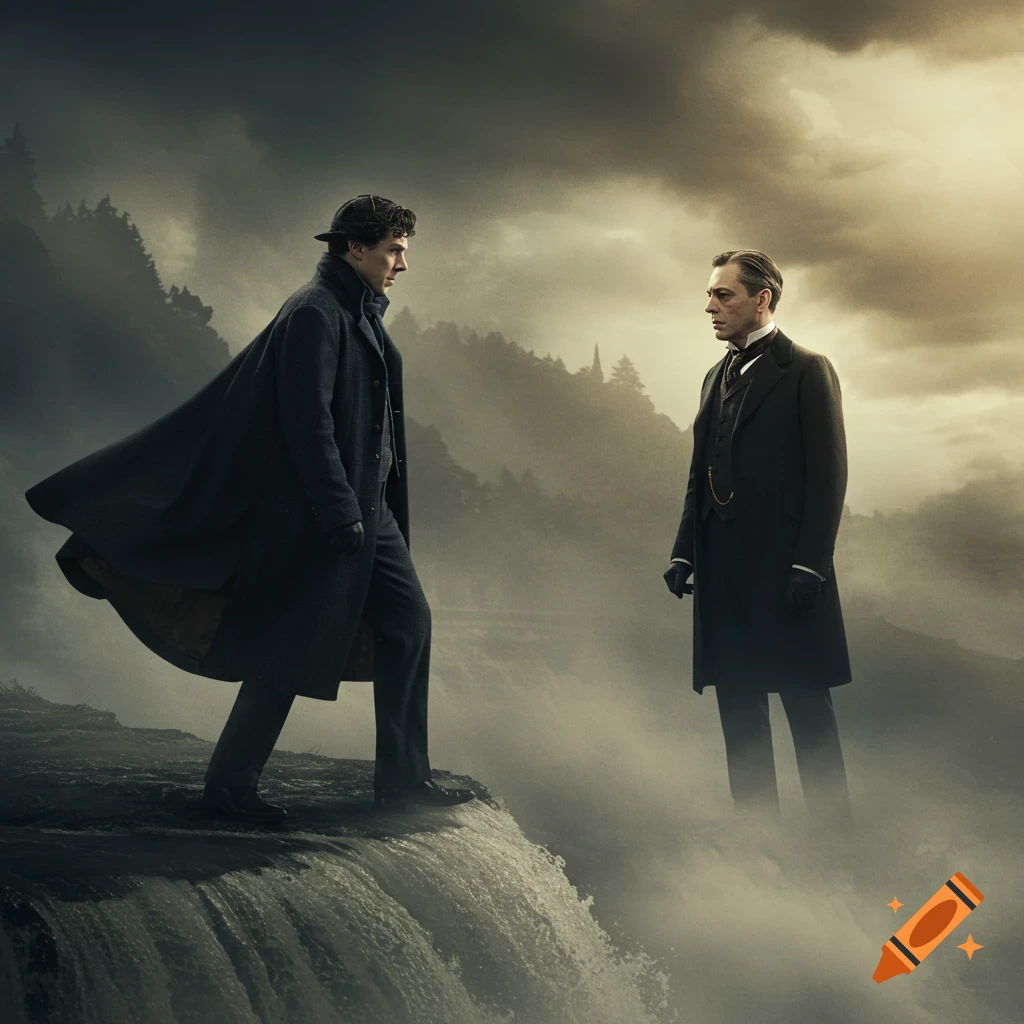
A 1920s formal group portrait in watercolor style. A naturalistically rendered man sits, with a woman standing behind him. Other figures have increasingly fragmented, geometric faces.

formal 1920s group portrait where fragmentation represents social status, not gender: the seated central figure is fully intact and naturalistically rendered — smooth skin, organic hands, no faceting anywhere on his body or face. Status is measured strictly by proximity to power, independent of sex. One of the most intact, unfragmented figures in the composition is a standing woman positioned close behind the seated man, rendered with the same naturalistic clarity as he is — her dress and face remain smooth and classical, with faceting only appearing in the background around her. Conversely, at least one male figure standing at the outer edge of the group is heavily fragmented into coarse geometric facets across both face and clothing, equal in degree to the most fragmented women. Facet density increases with physical distance from the seated central figure, regardless of gender. Deco palette, chandelier lighting, watercolor and ink texture." Ver mais
More images like this