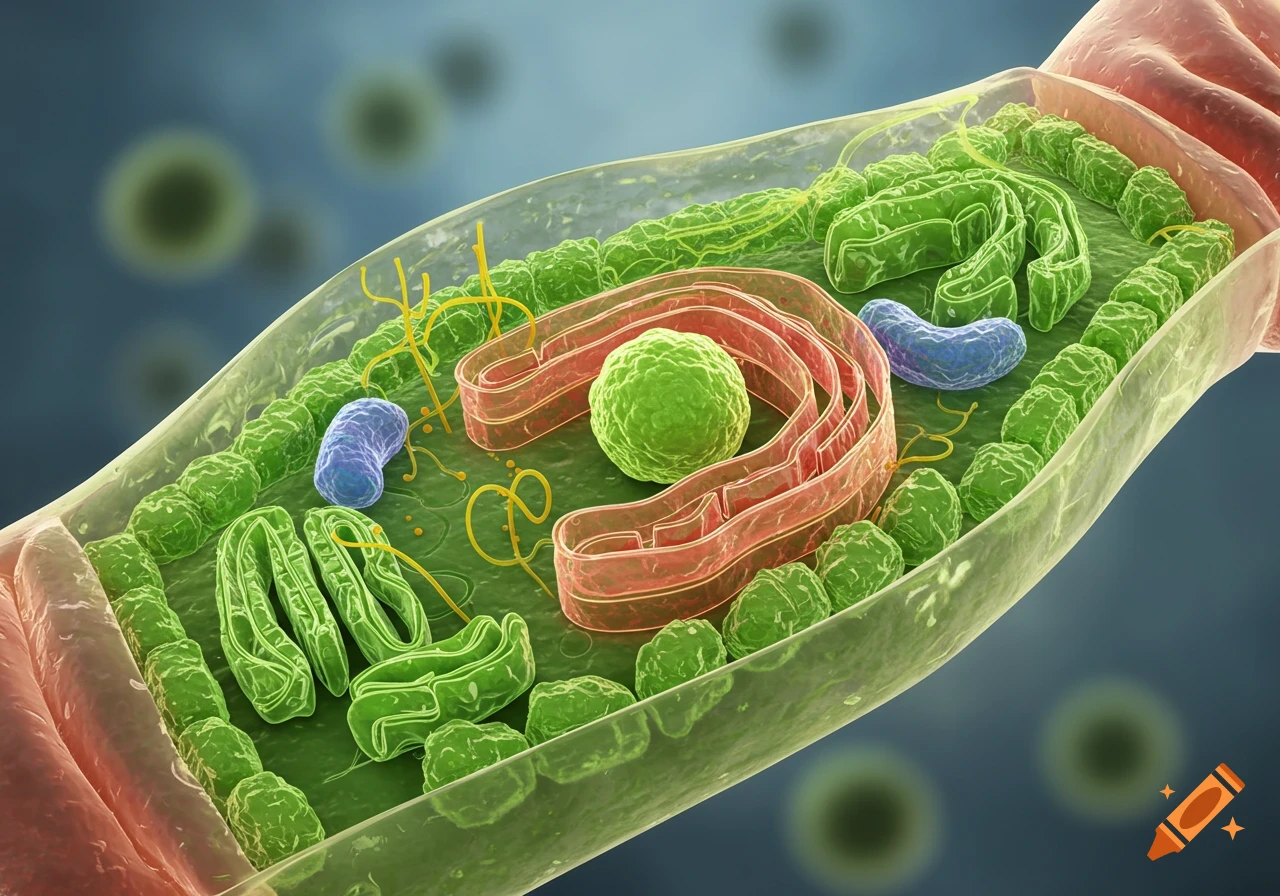
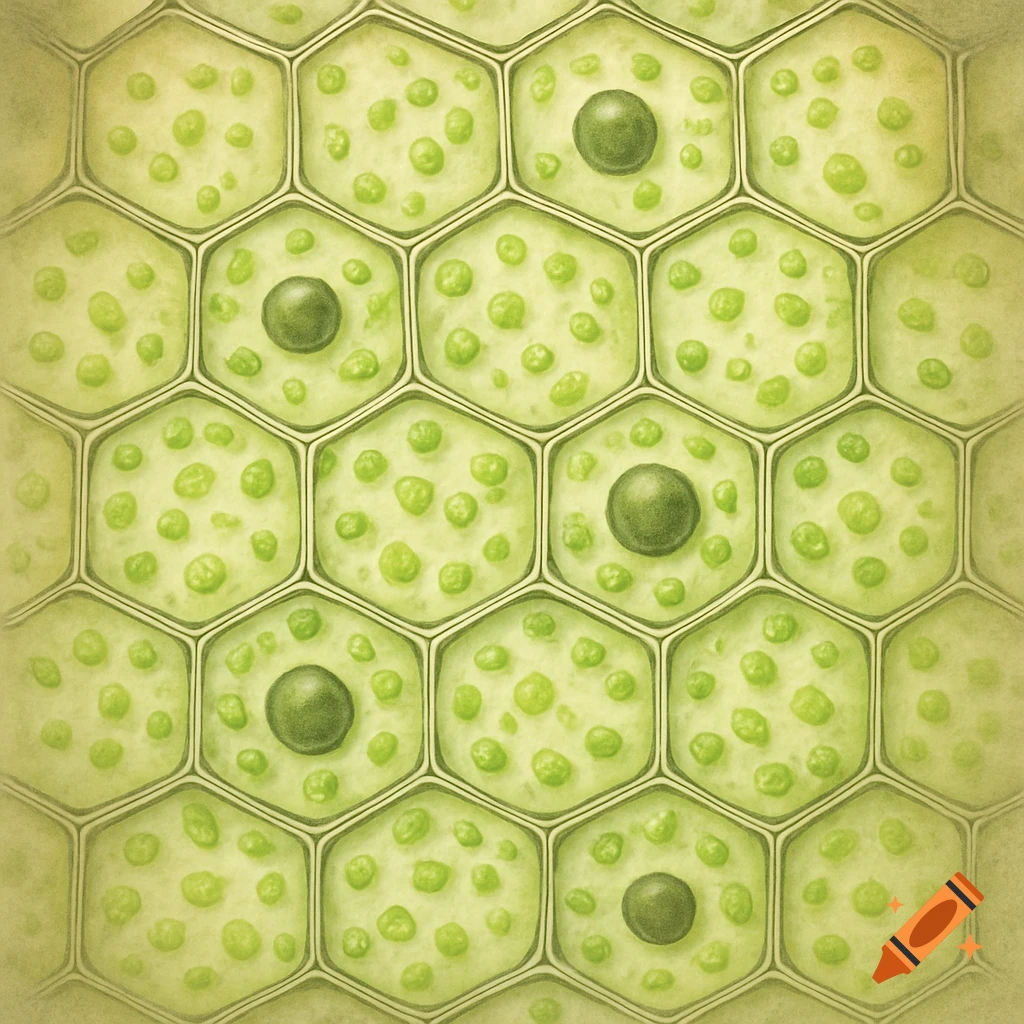
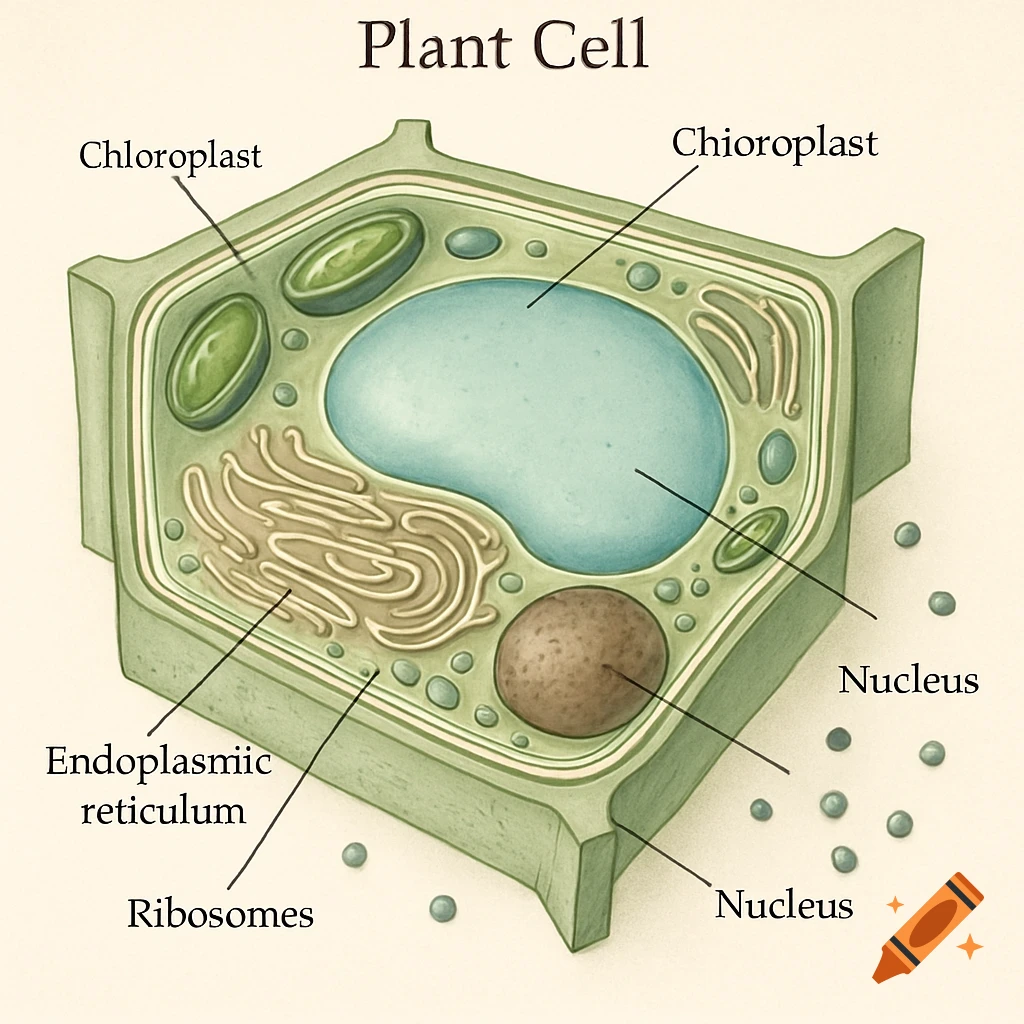
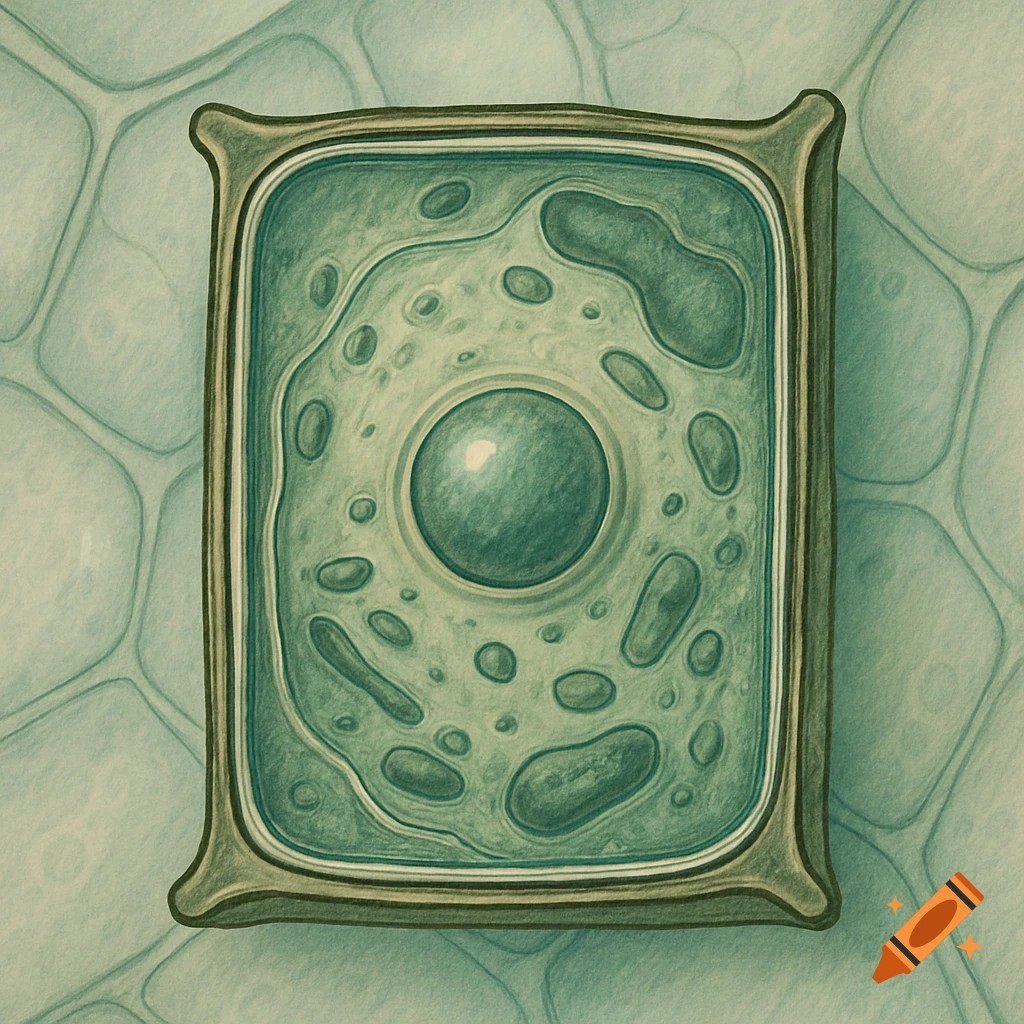
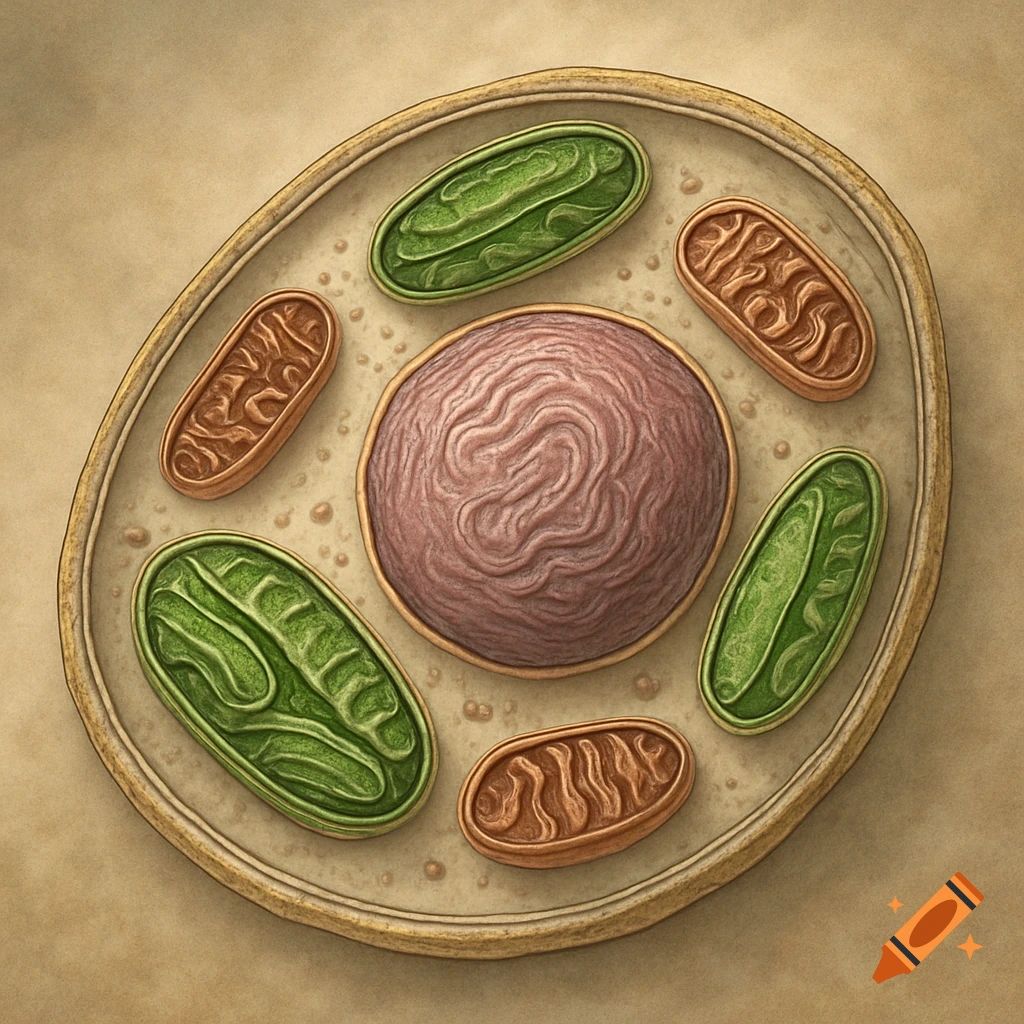
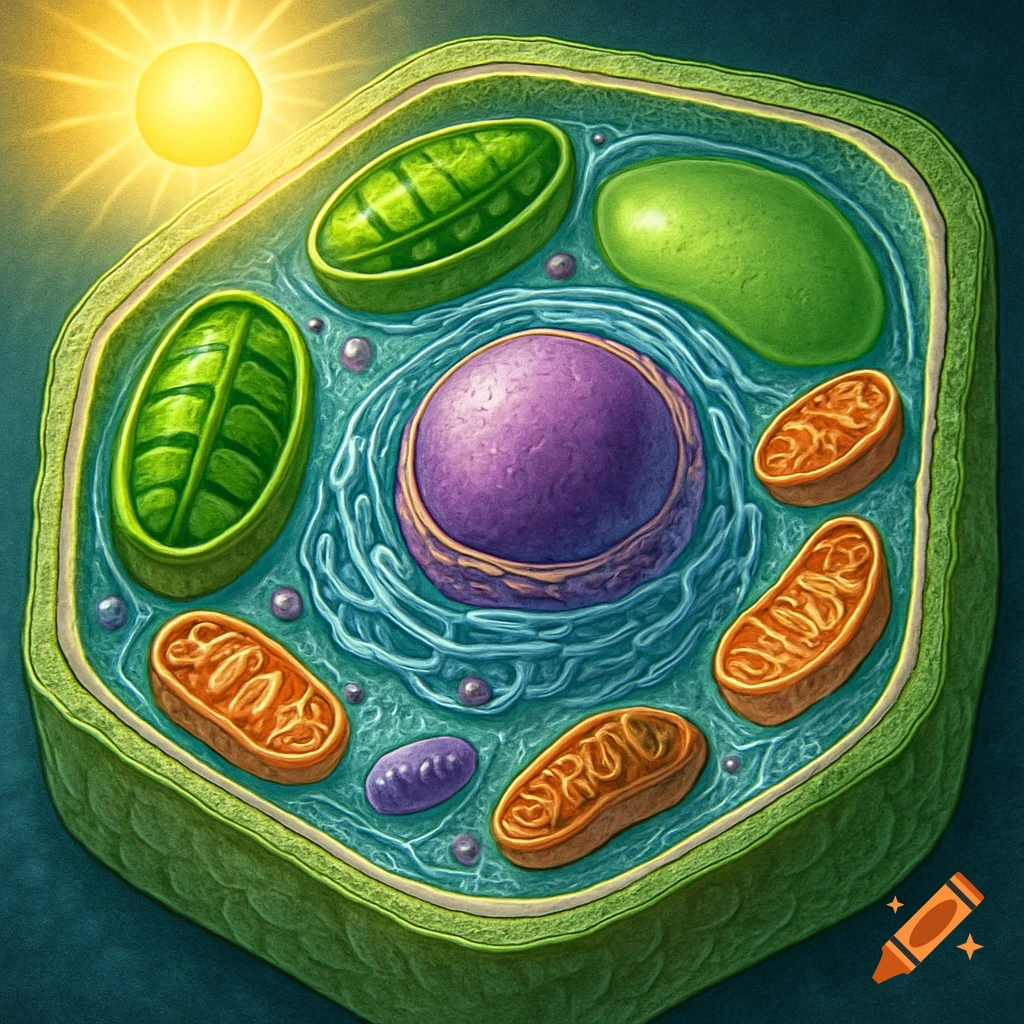
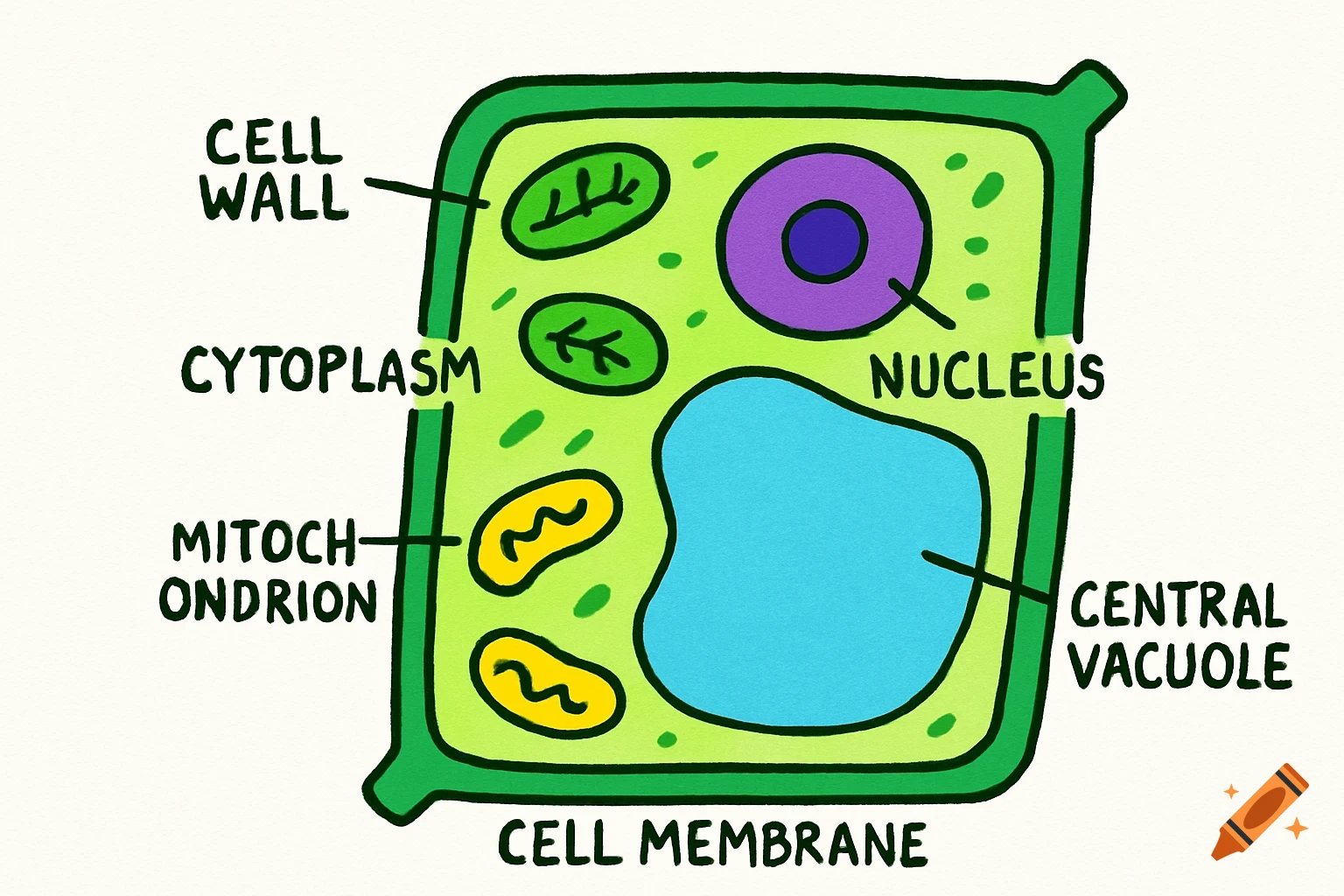
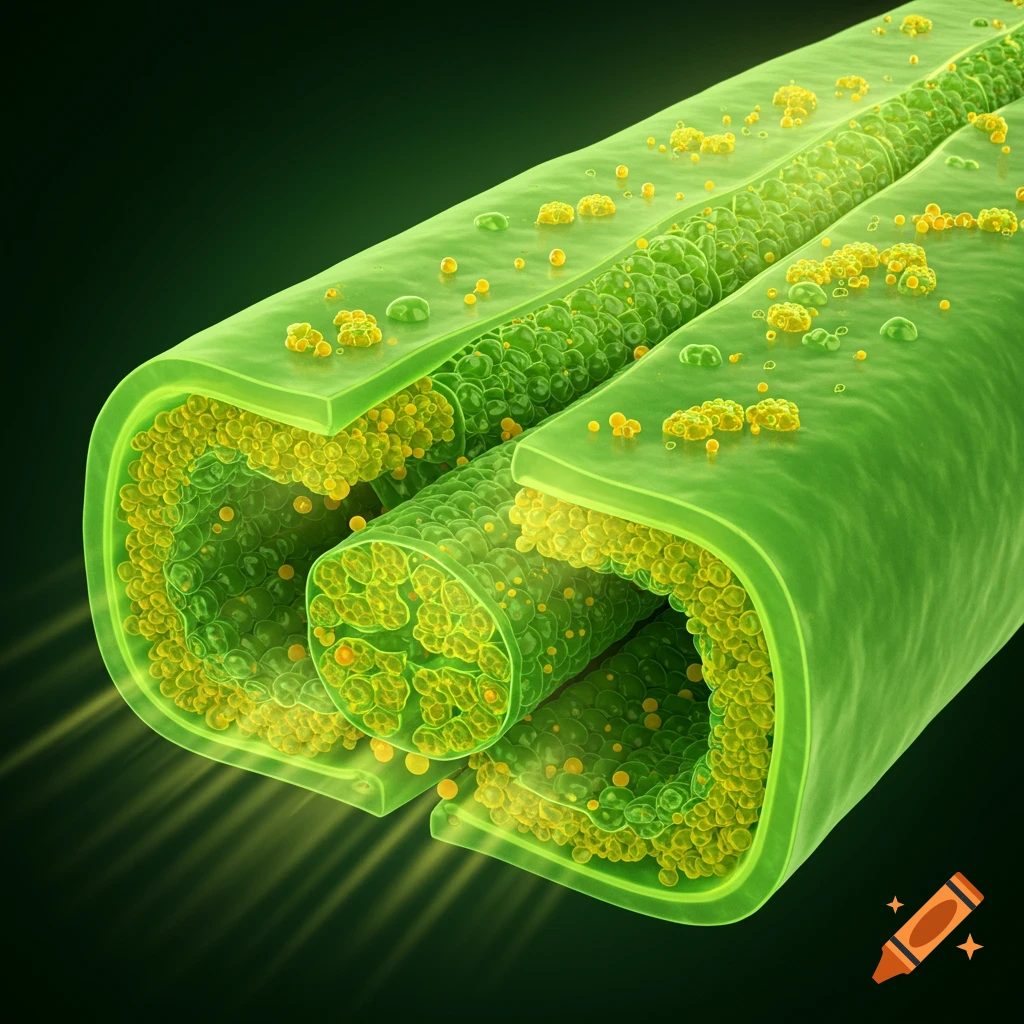
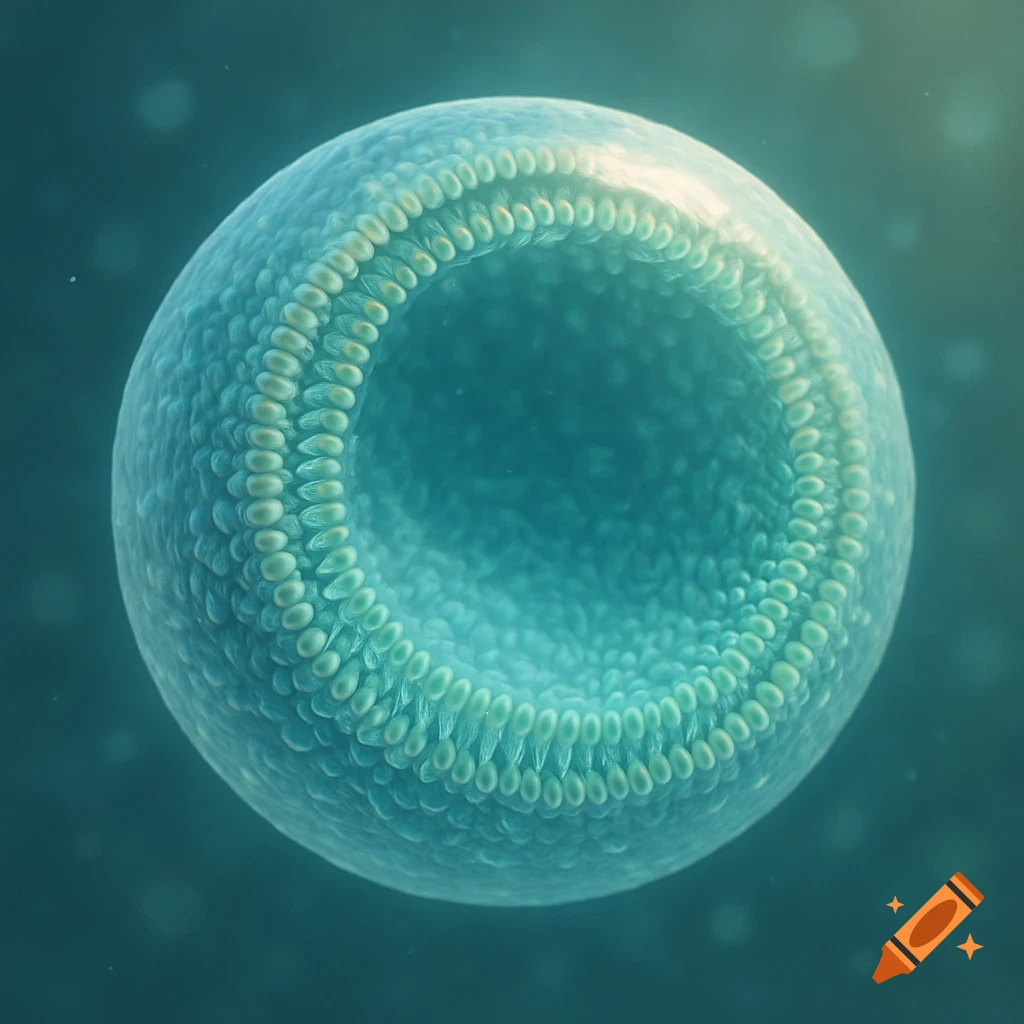
Black and white scientific diagrams showing a plant cell with labeled components and a detailed chloroplast structure with labeled membranes and grana.

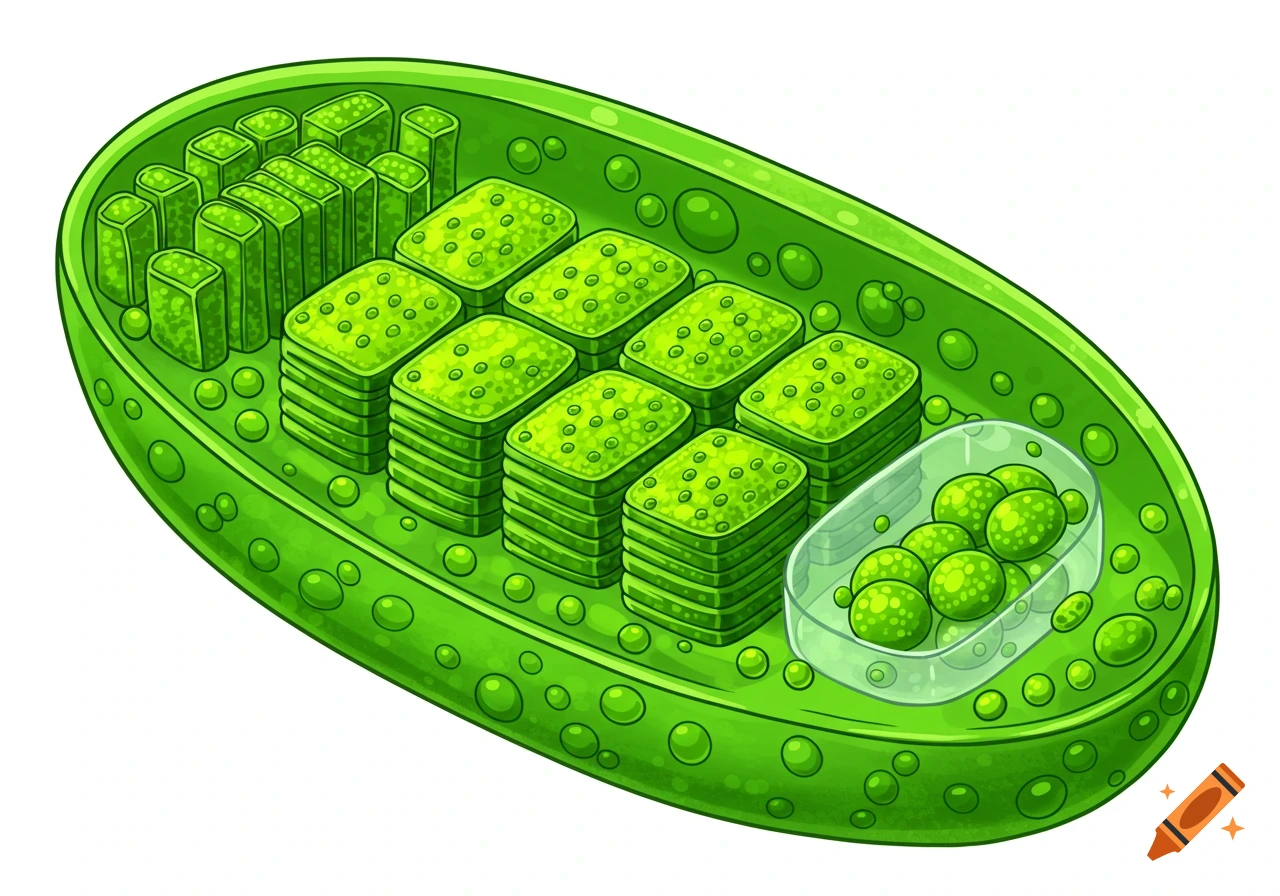
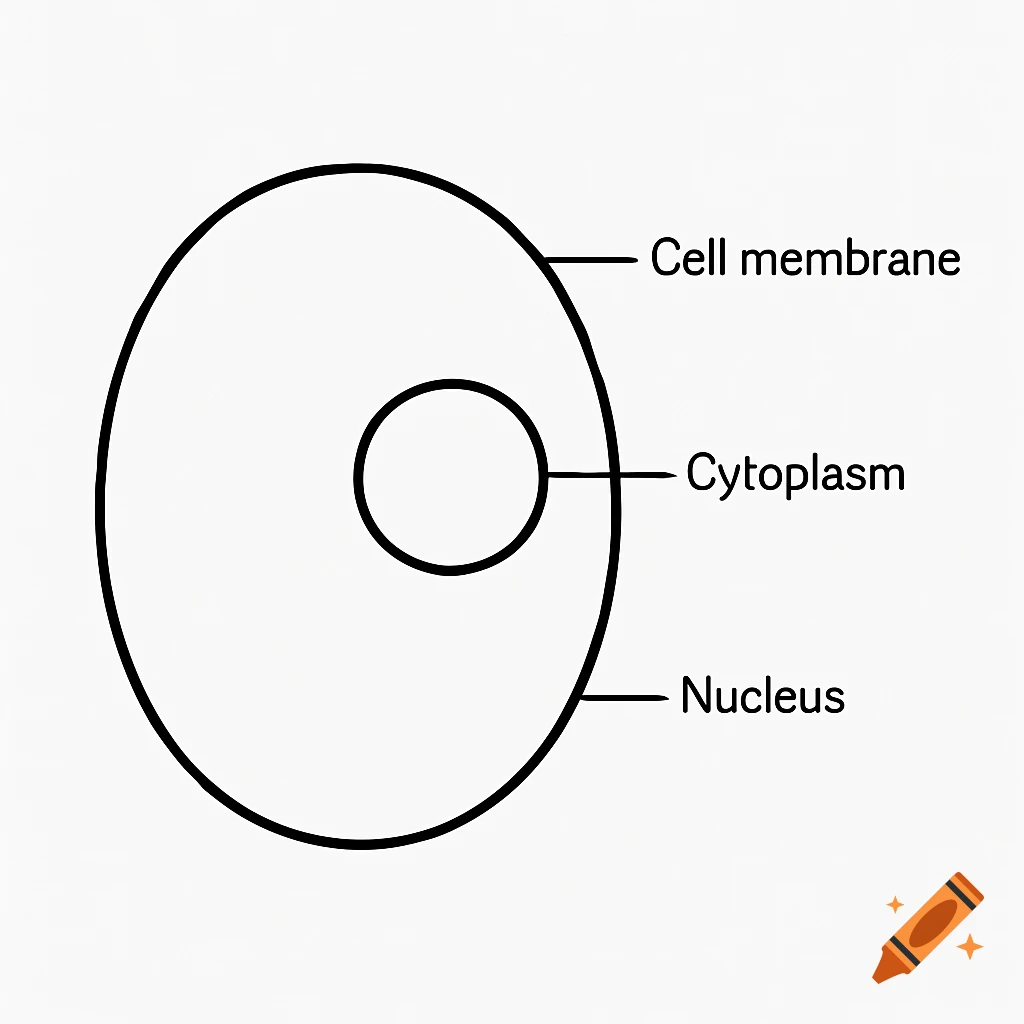
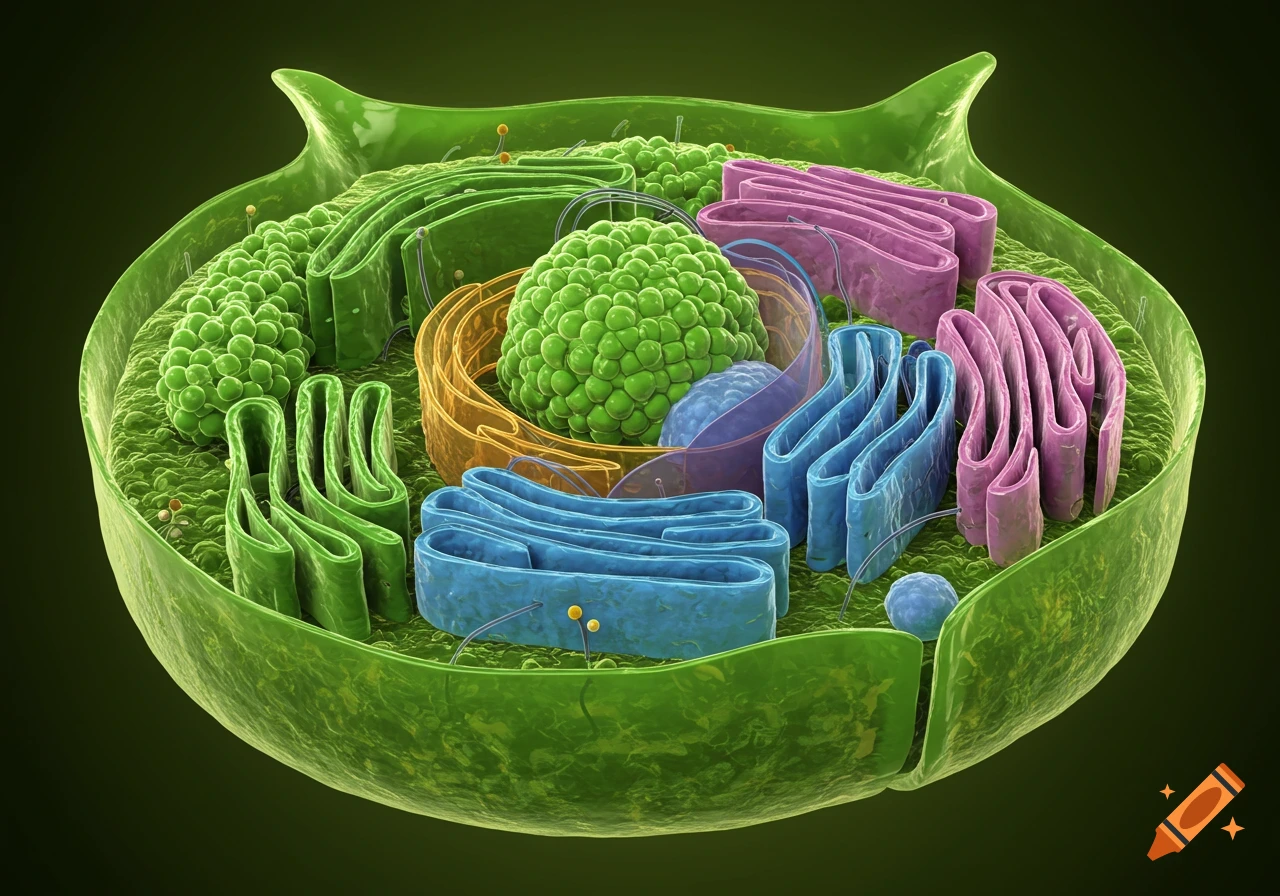
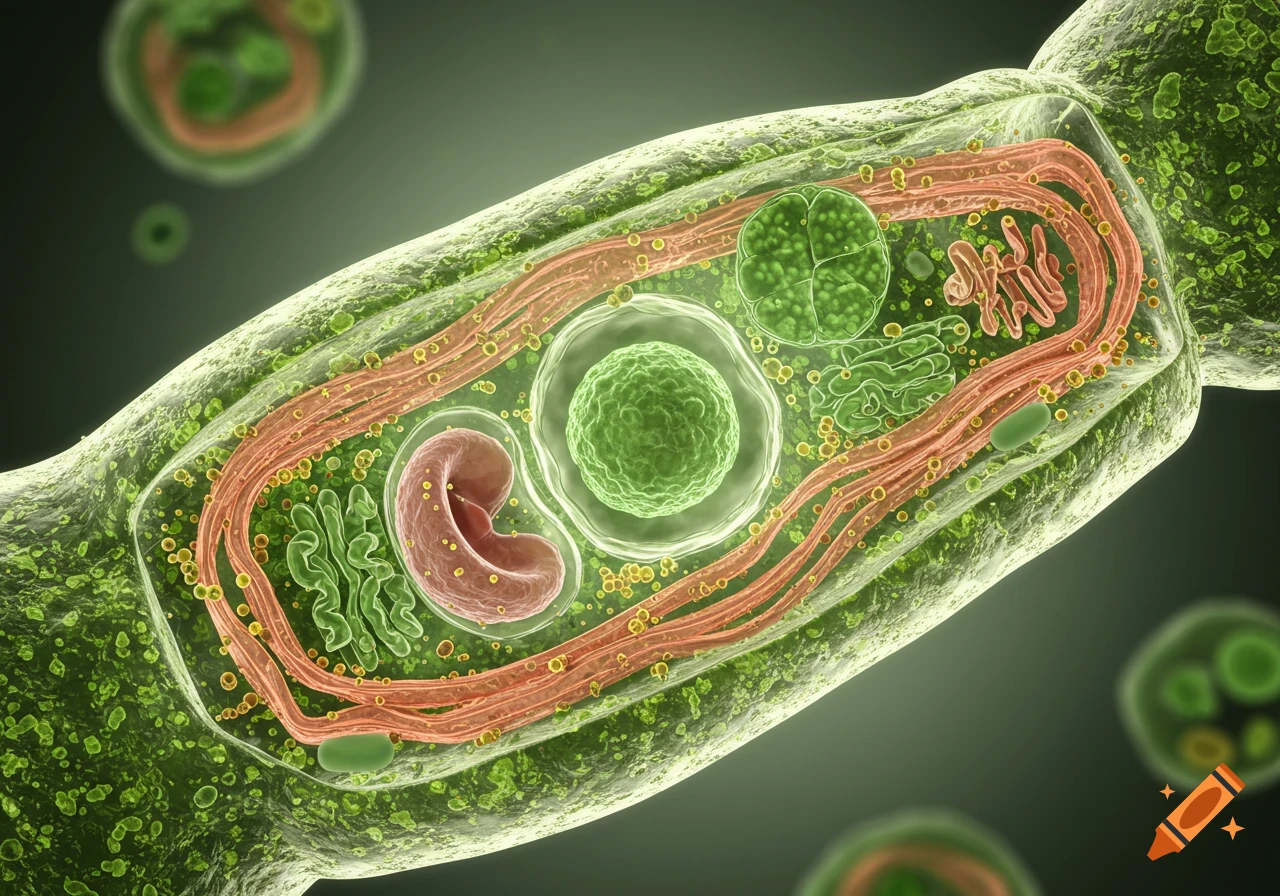
Diagram 1: Chloroplast Under a Light MicroscopeThis drawing should reflect the low-magnification reality where a chloroplast looks like a tiny, un-detailed block.Draw the cell outline: Lightly sketch a large rectangular shape to represent a generic plant cell wall.Draw the chloroplasts: Inside the rectangle, draw 3 or 4 small, simple, completely blank circles or ovals. Leave the insides of these shapes totally empty.Draw label lines: Extend horizontal lines to the right of your drawing and label:Cell Wall (the outer rectangle)Cytoplasm (the blank space inside the rectangle)Chloroplast (one of the small circles)Diagram 2: Diagrammatic Representation of a ChloroplastThis drawing must detail the internal ultrastructure discovered via electron microscopy.Draw the double outer wall: Outline a large, smooth oval. Draw a second oval just a millimeter inside the first one to create a thin boundary gap.Draw the internal stacks (Grana): Inside the inner oval, draw 4 to 5 vertical stacks that look like small piles of pancakes or coins. Each "pancake" in a stack is a single thylakoid disc.Connect the stacks: Draw simple, thin single lines (lamellae) that bridge across and connect the different pancake stacks to each other.Draw empty space inclusions: Sketch 1 or 2 small, irregular closed shapes in the open space to represent starch granules.Draw straight label lines to the right side and write:Outer Membrane: Point to the very outermost line.Inner Membrane: Point to the internal line of Voir plus
More images like this