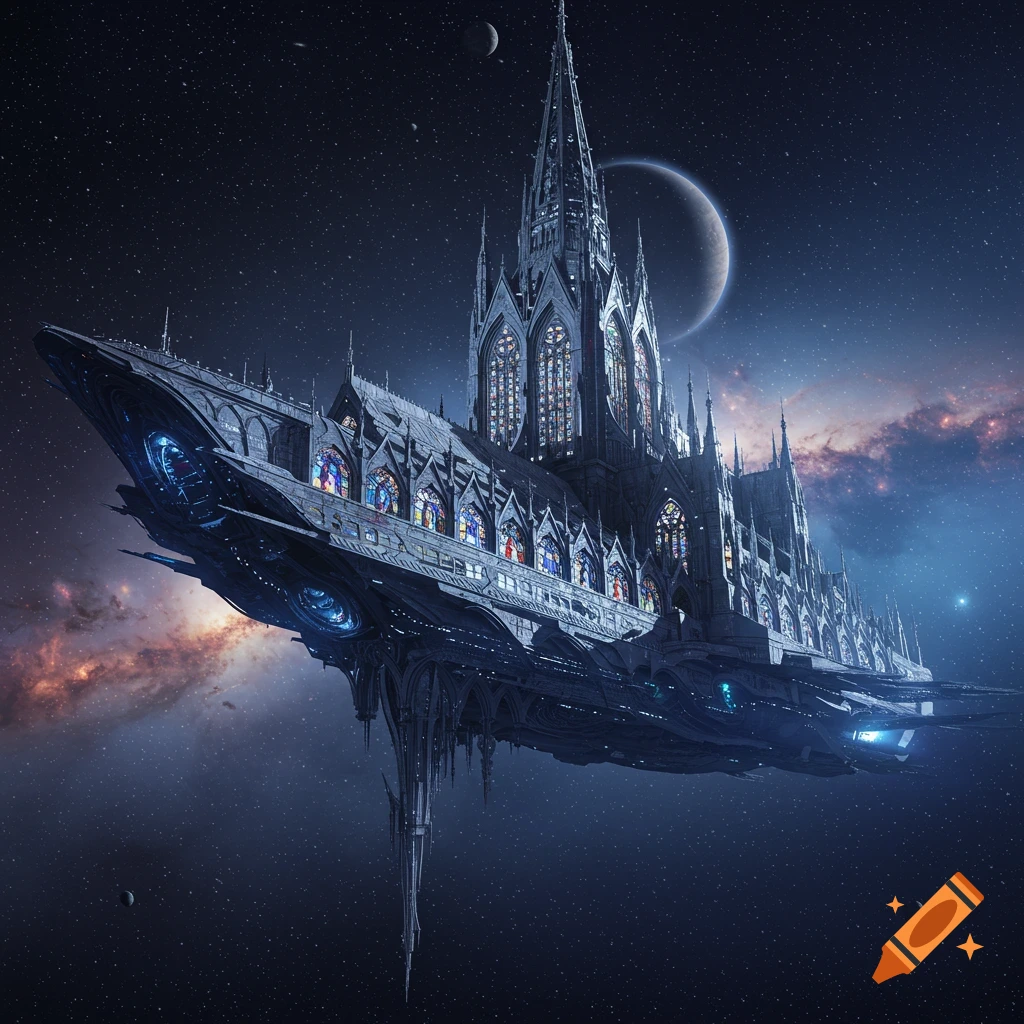
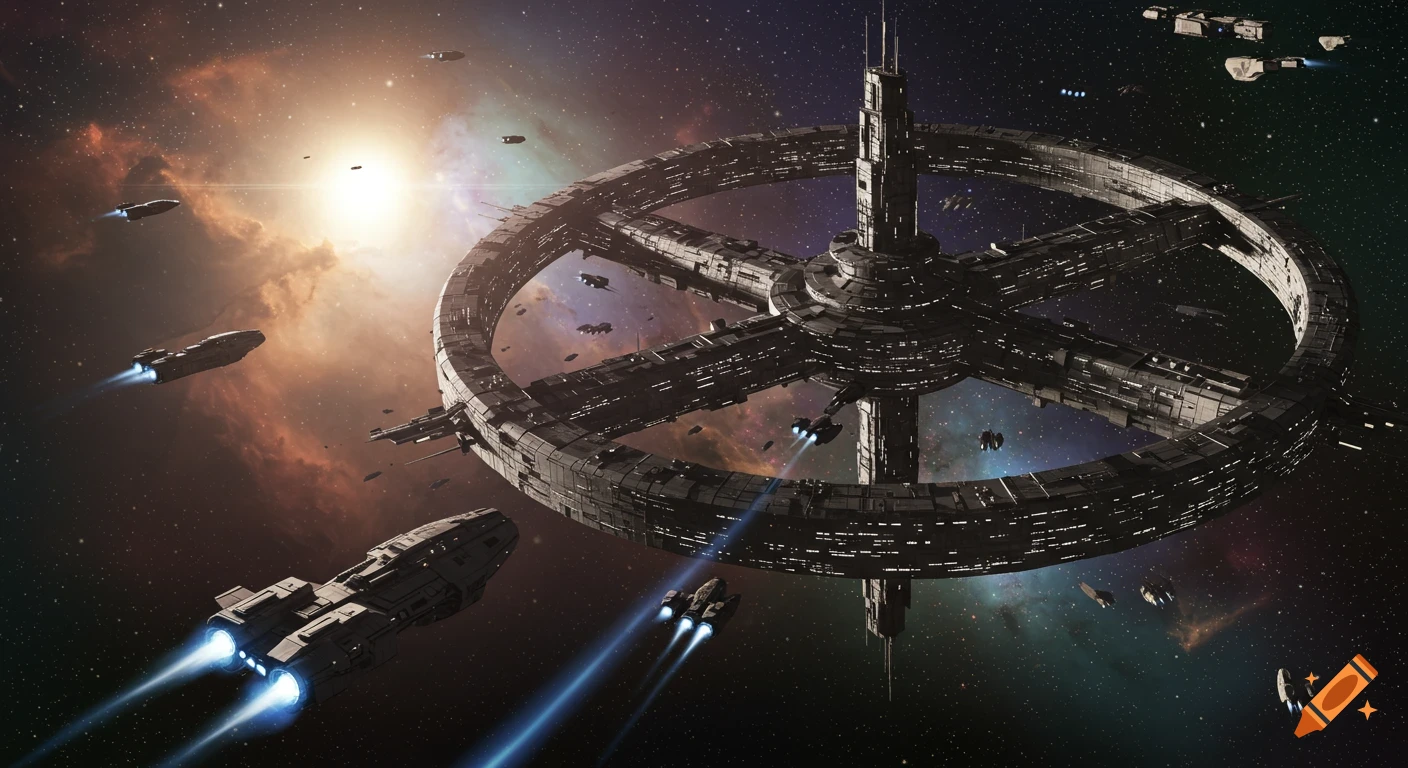
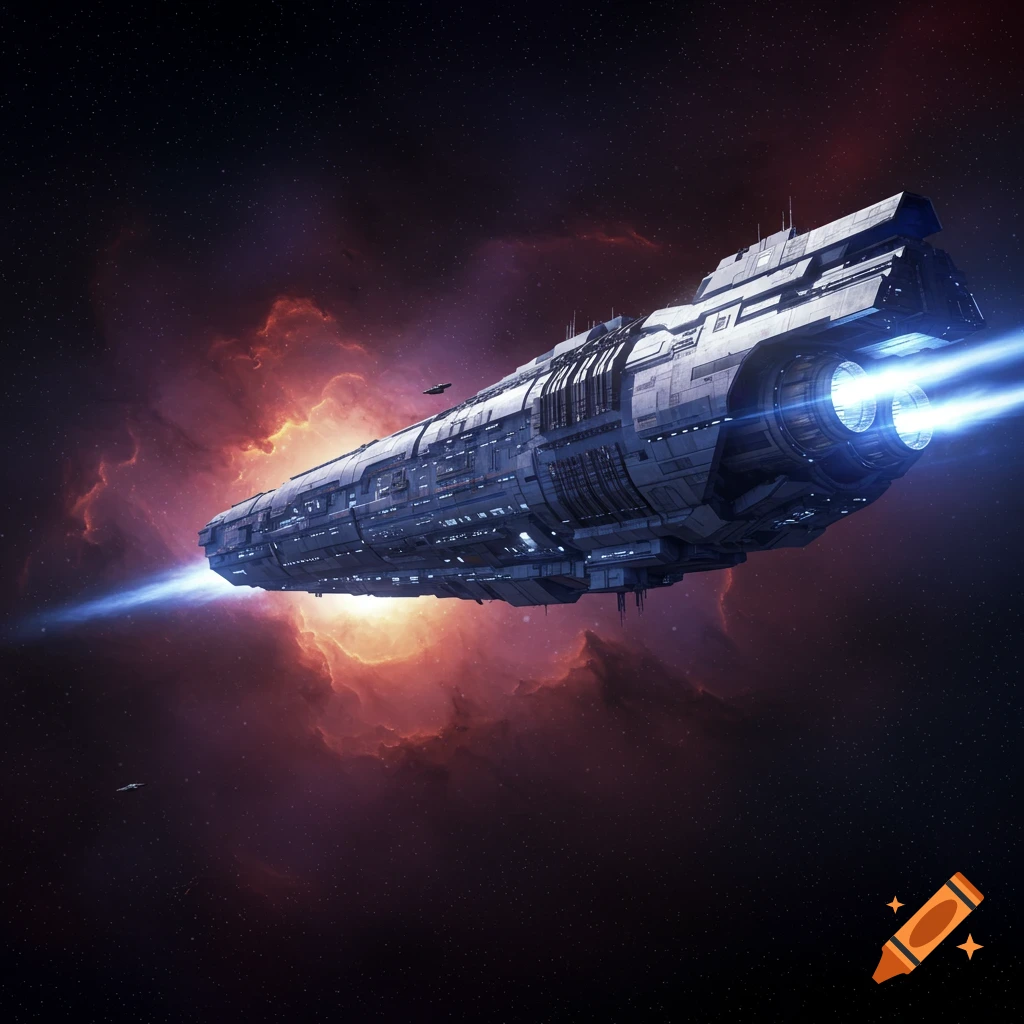
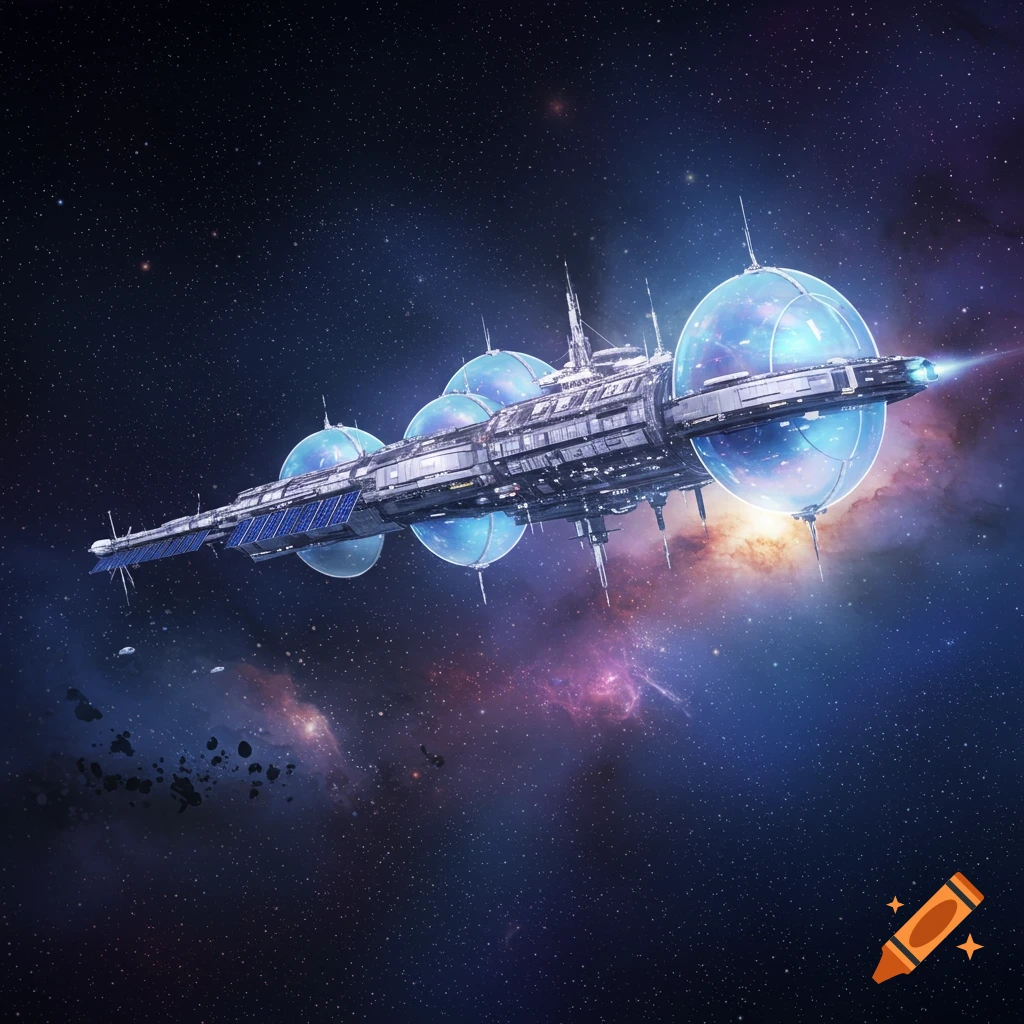
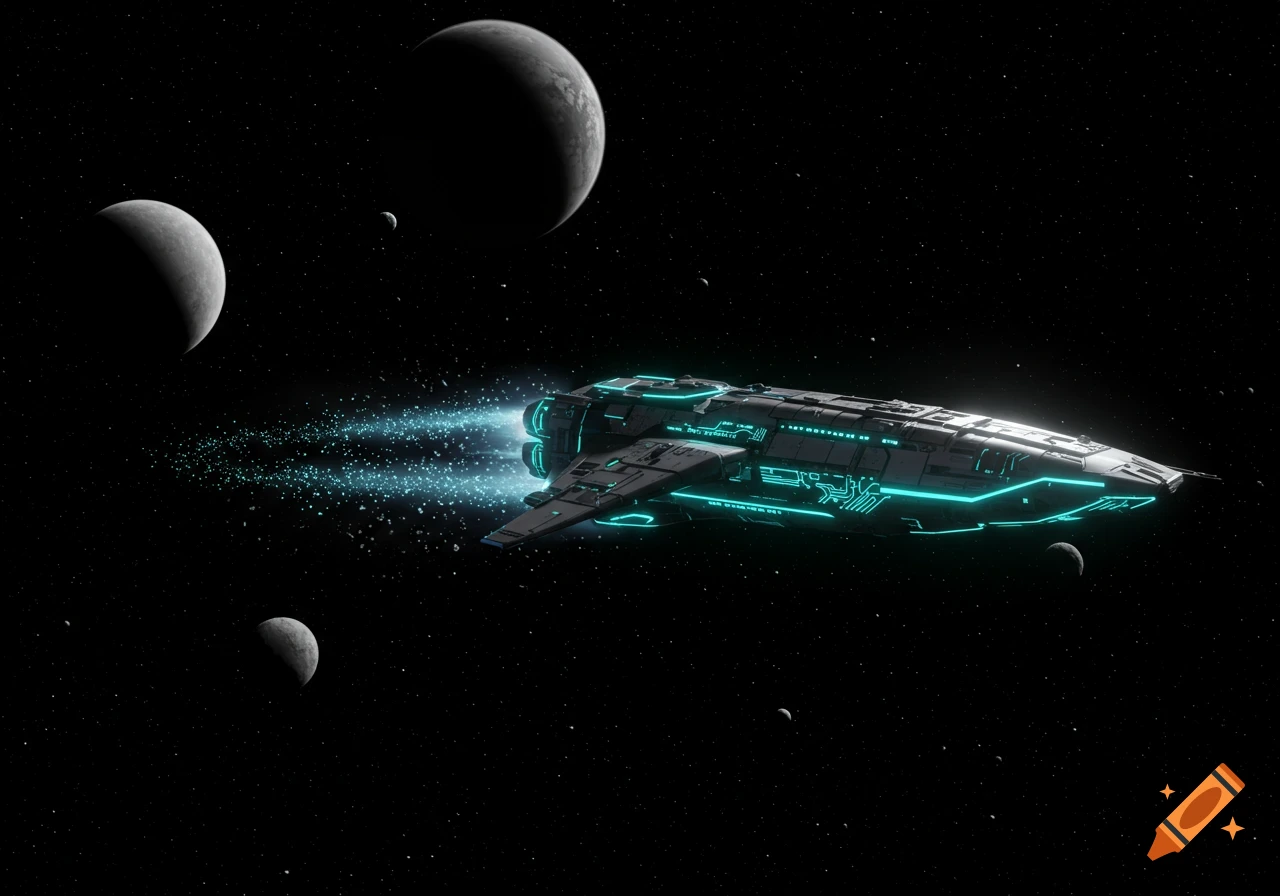
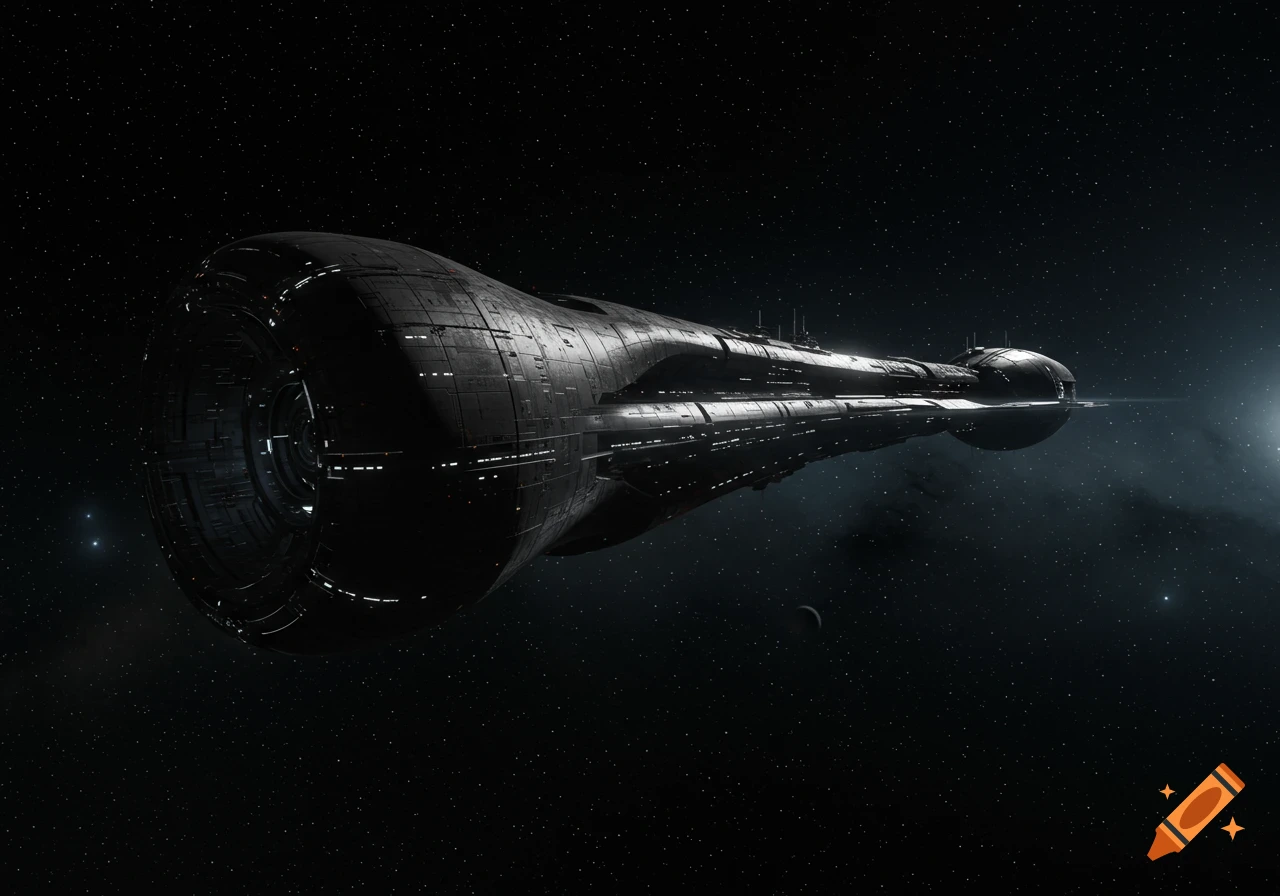
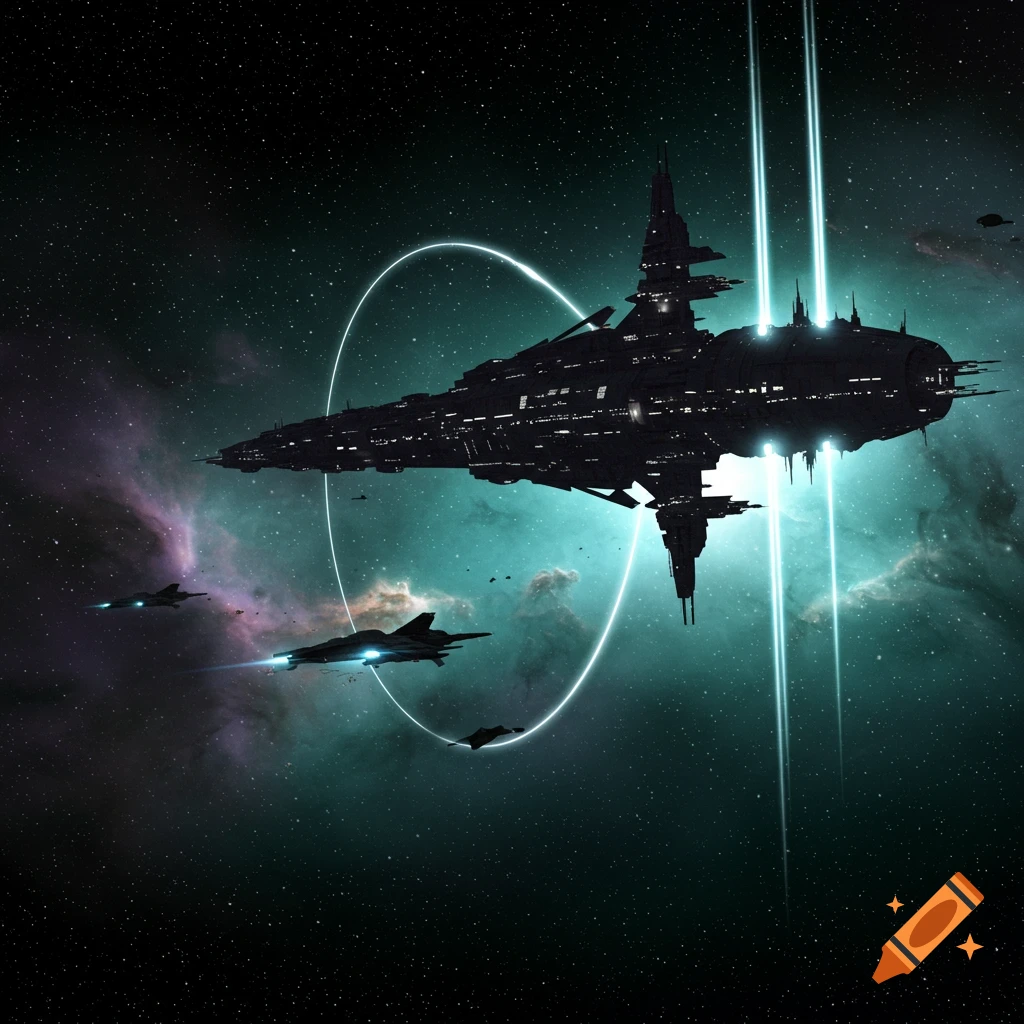
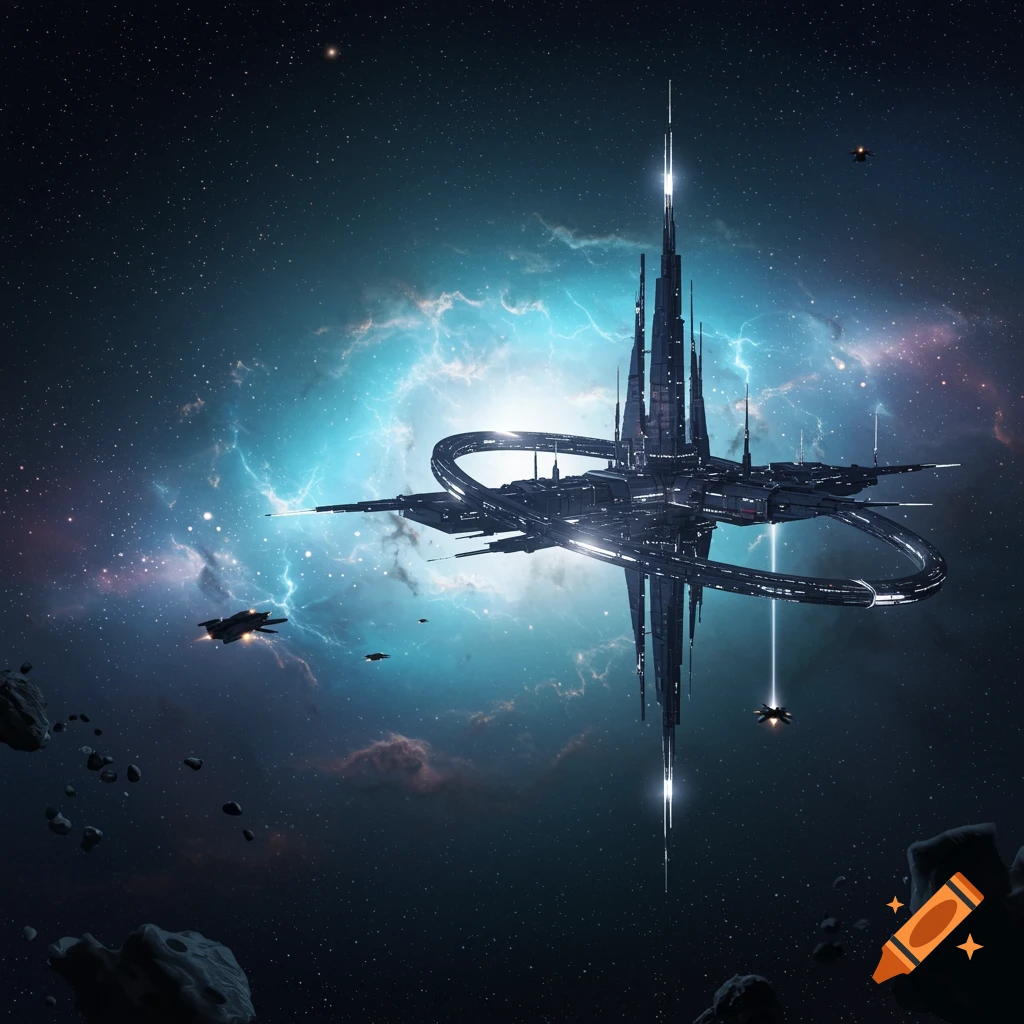
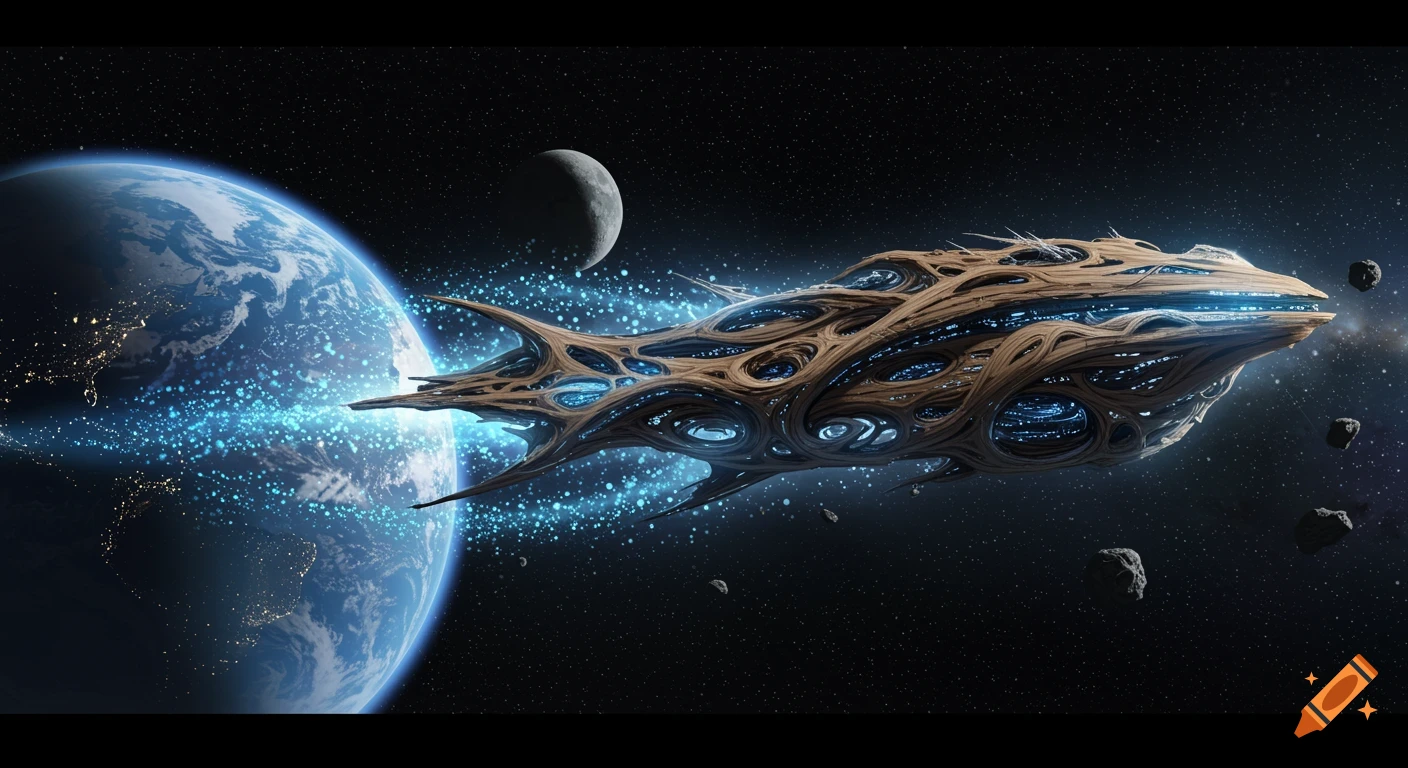
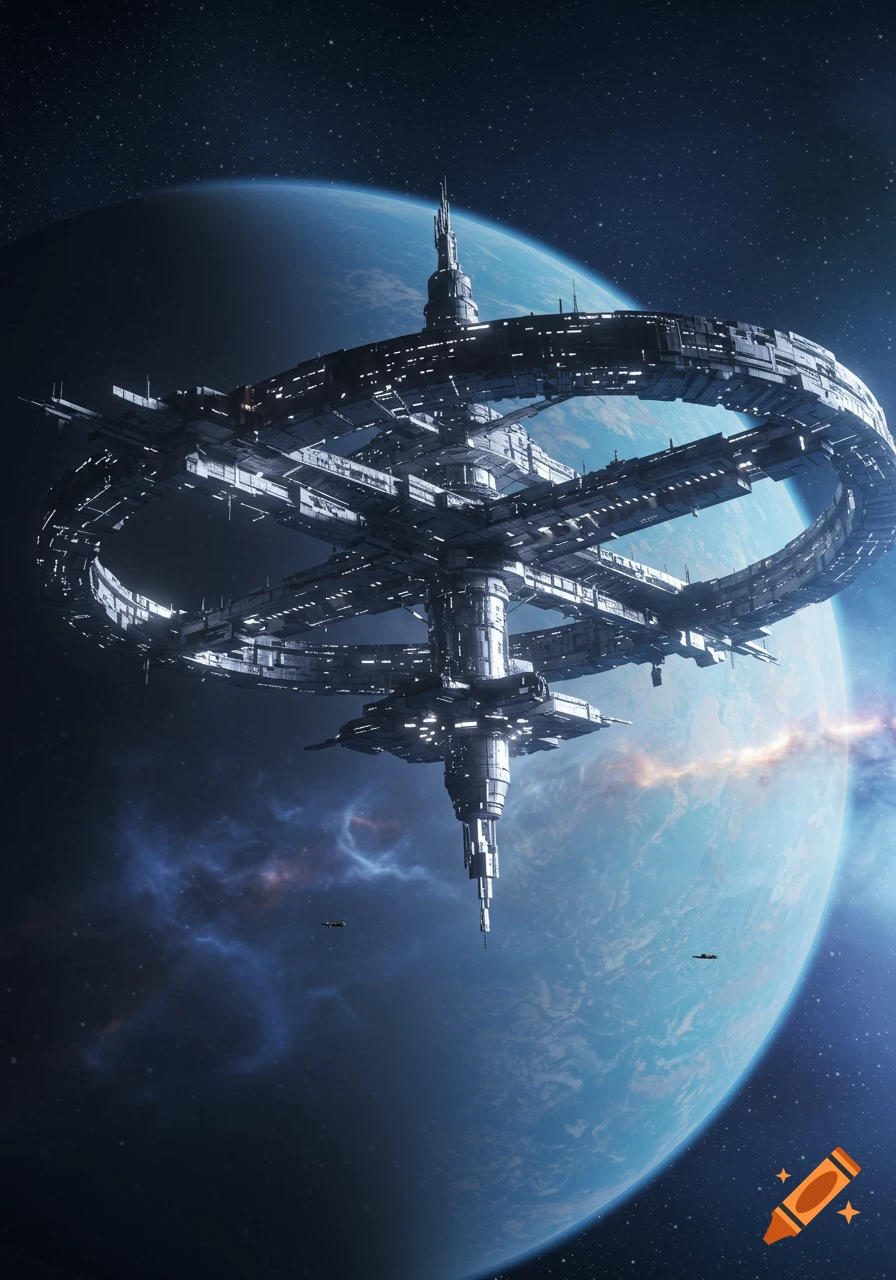
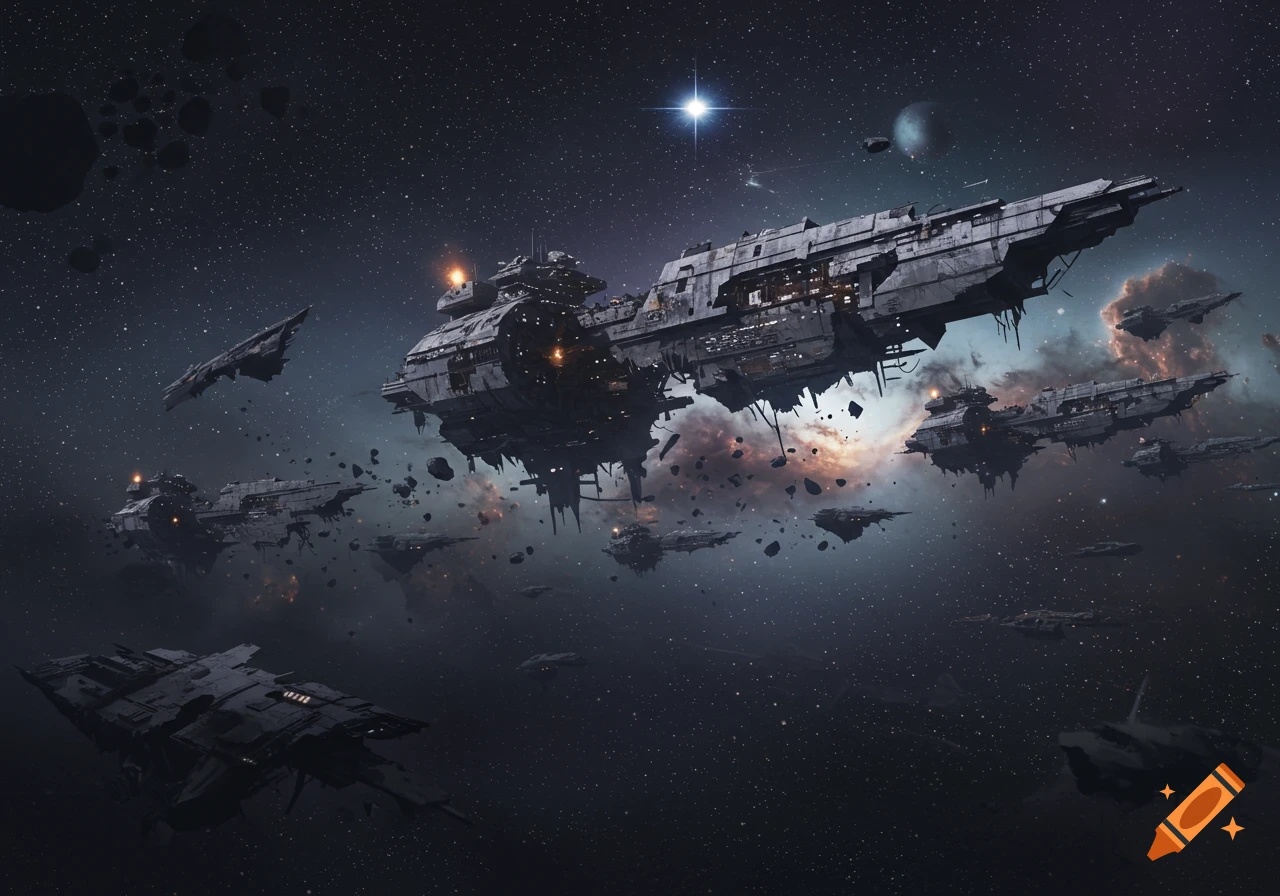
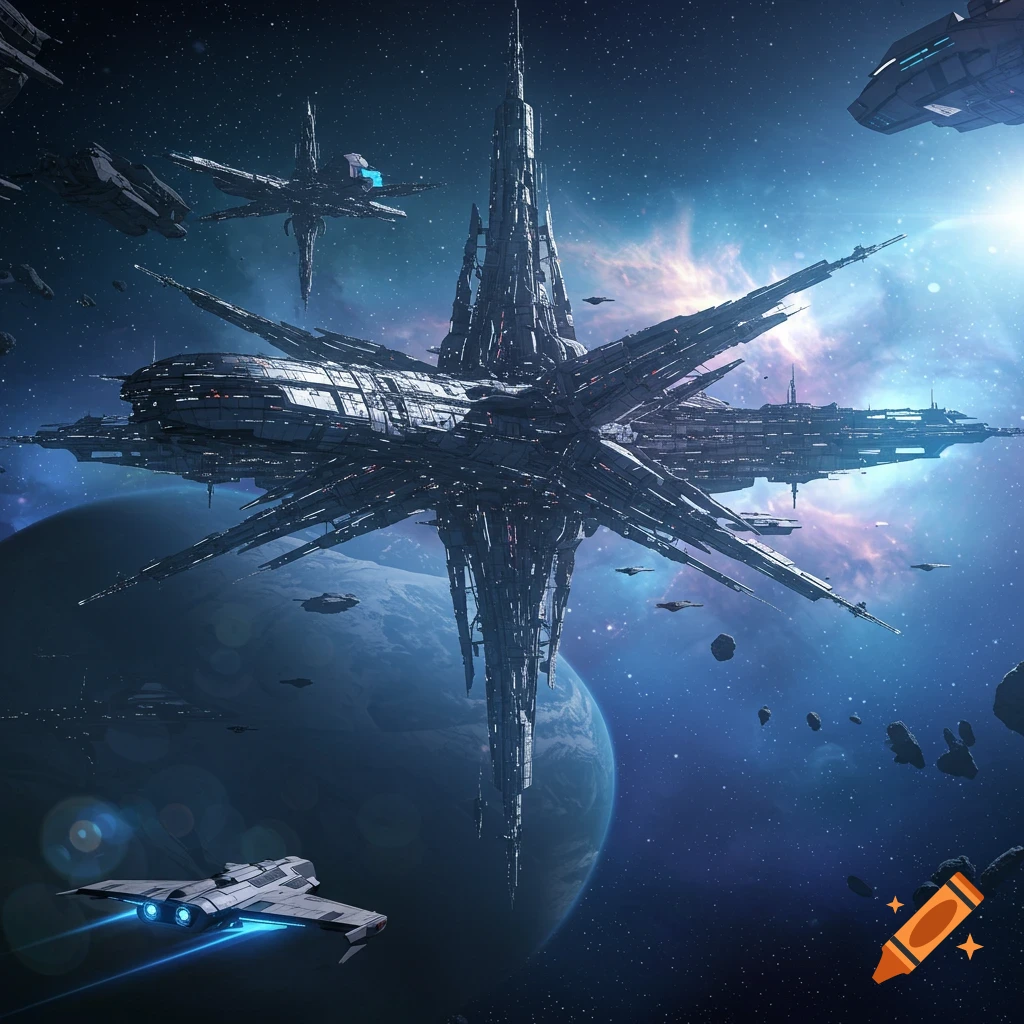
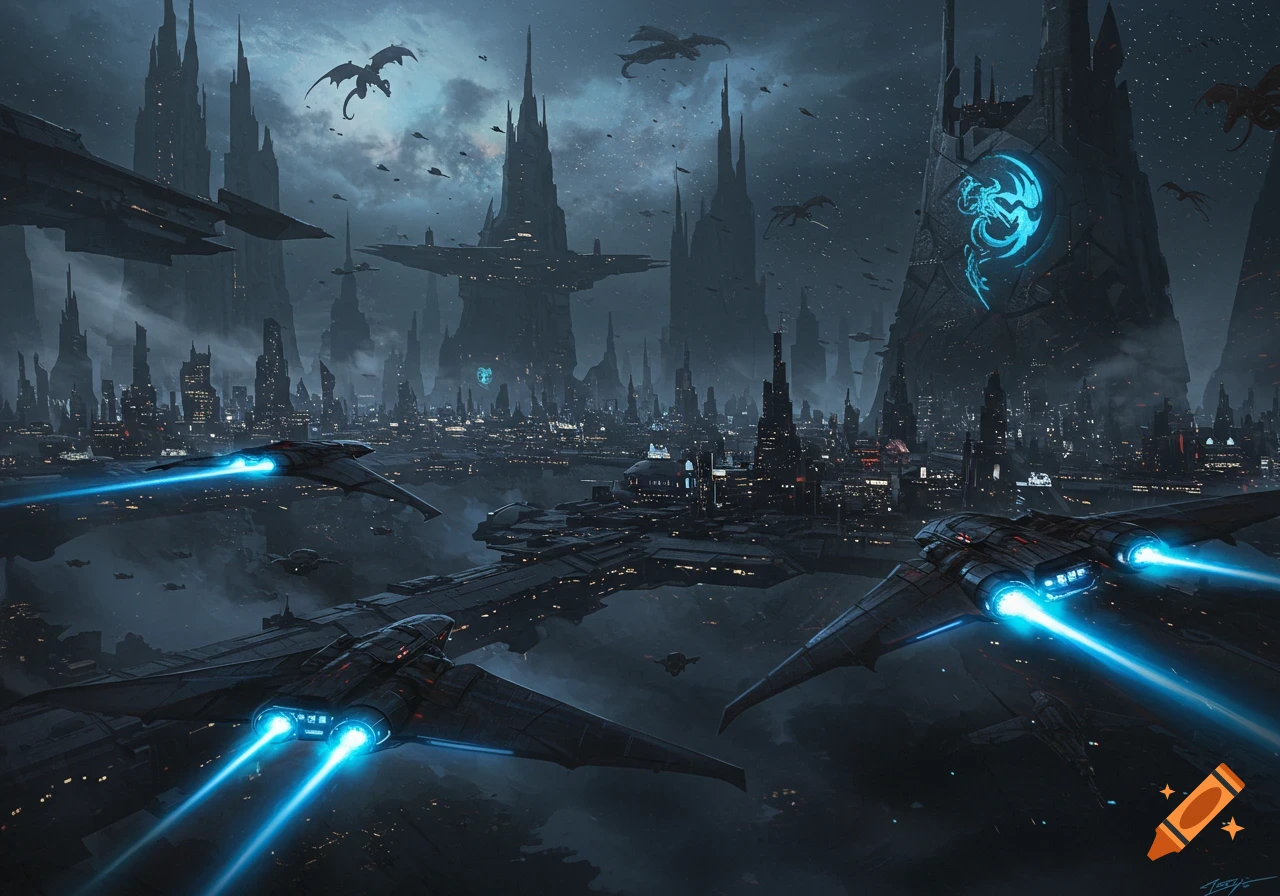
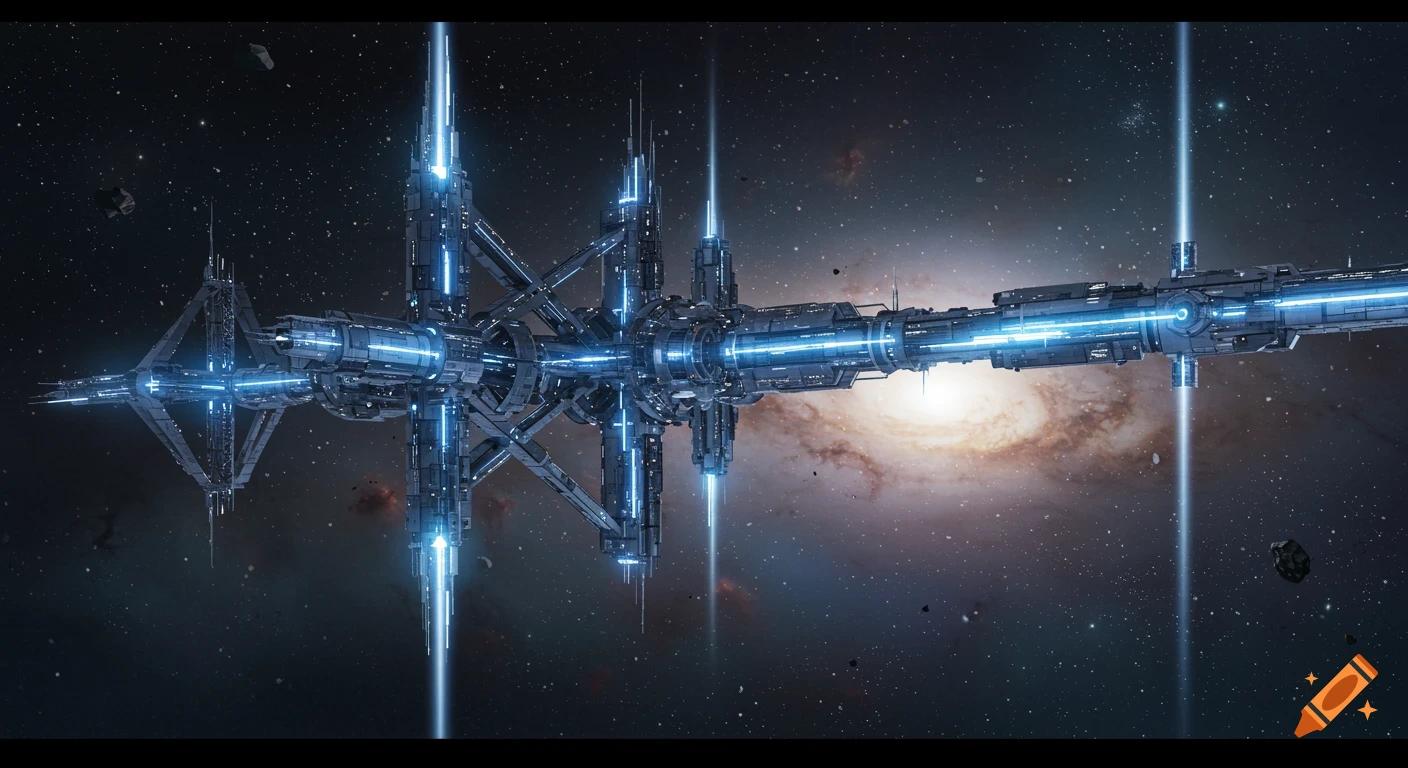
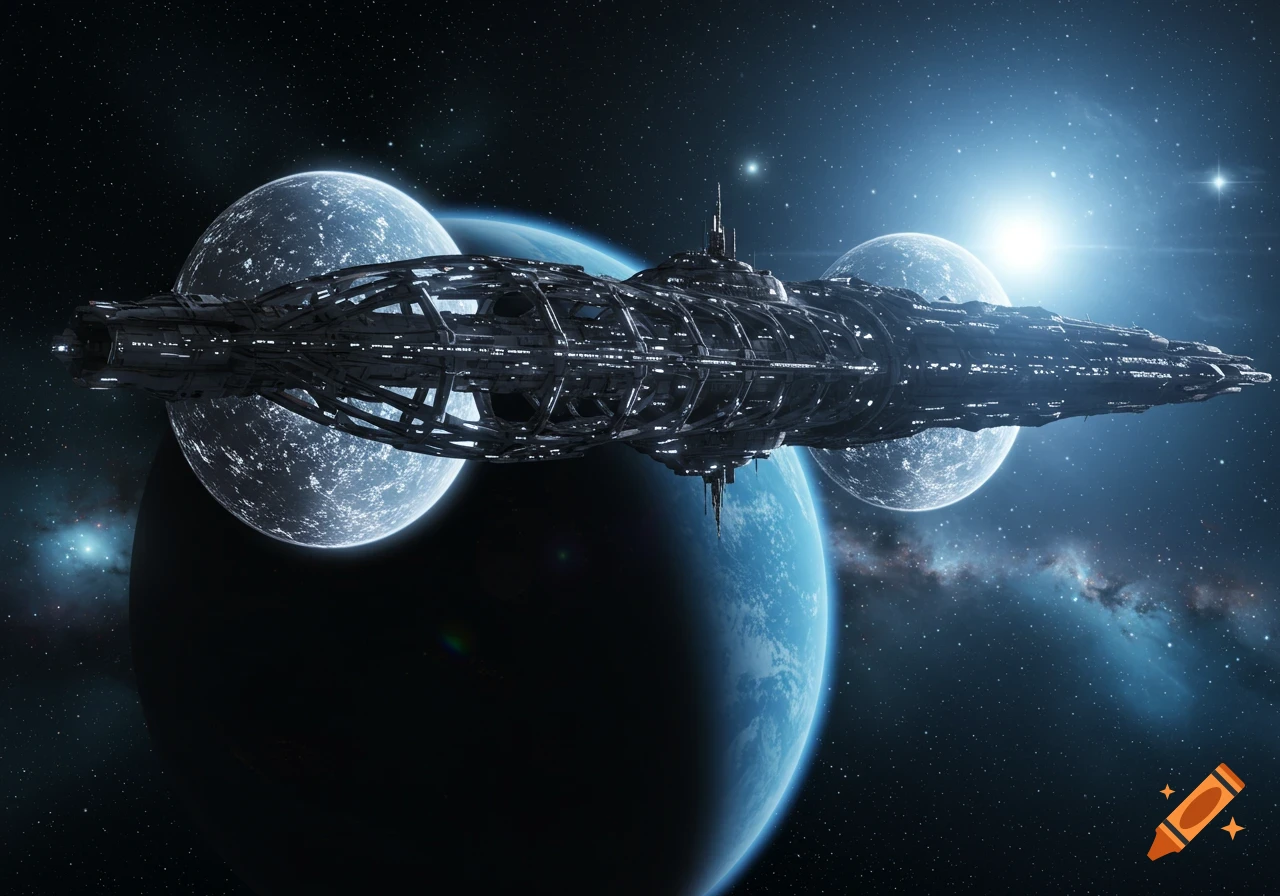
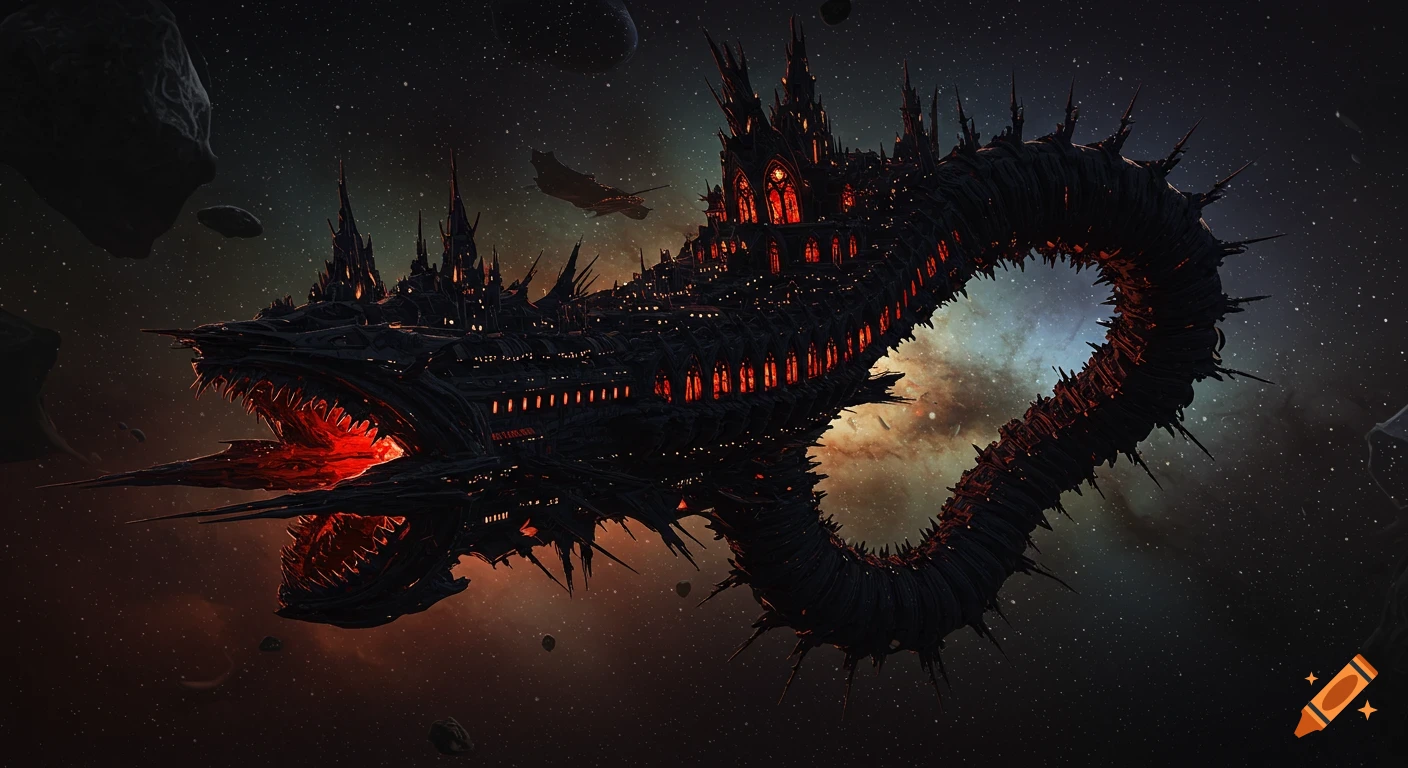
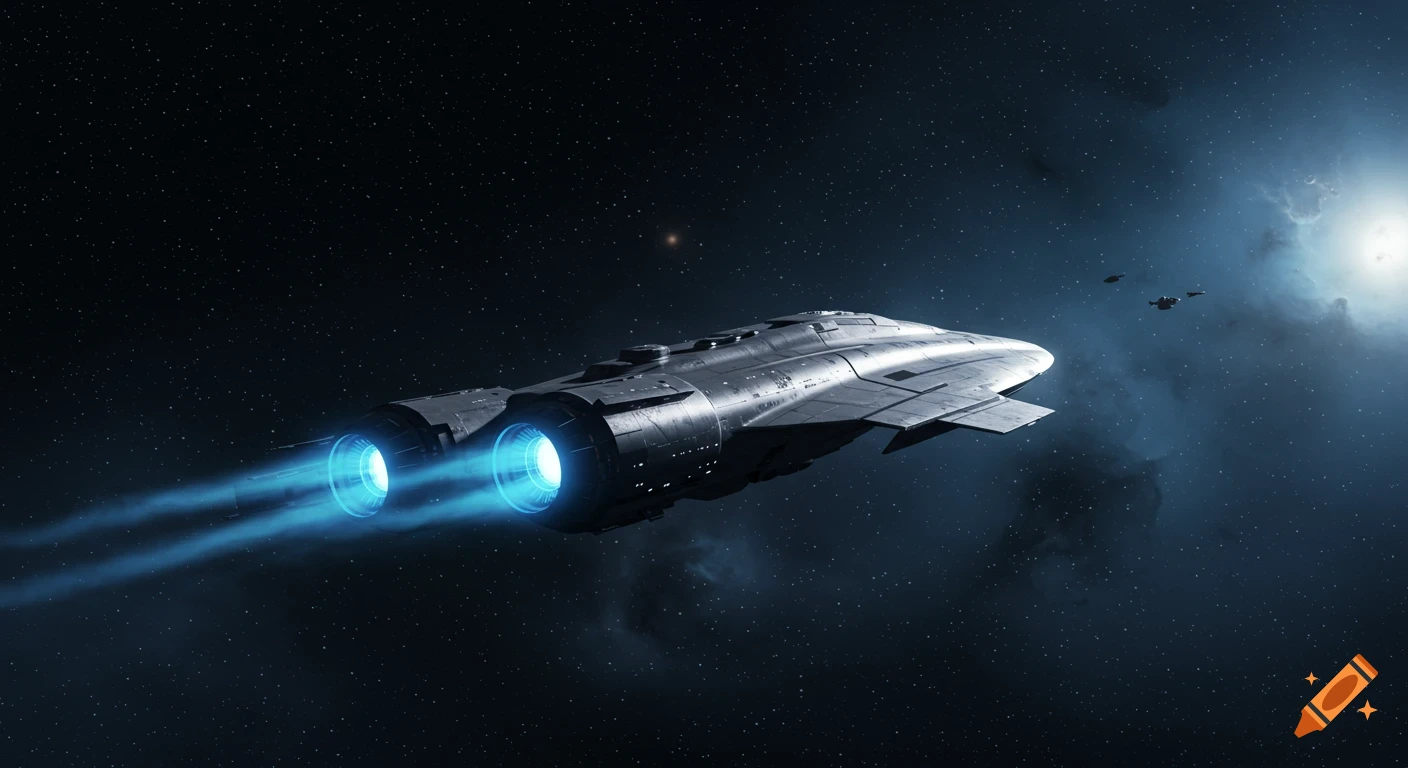
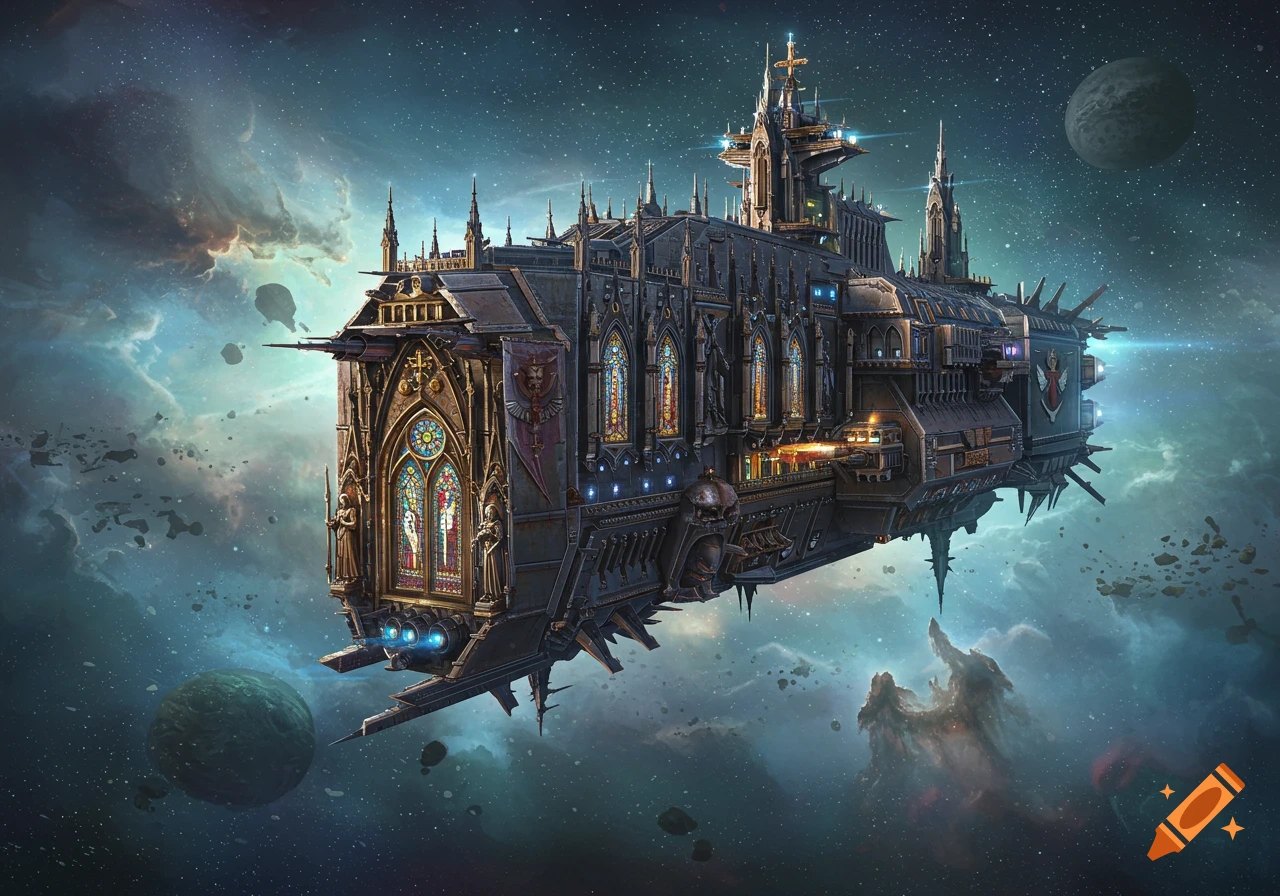
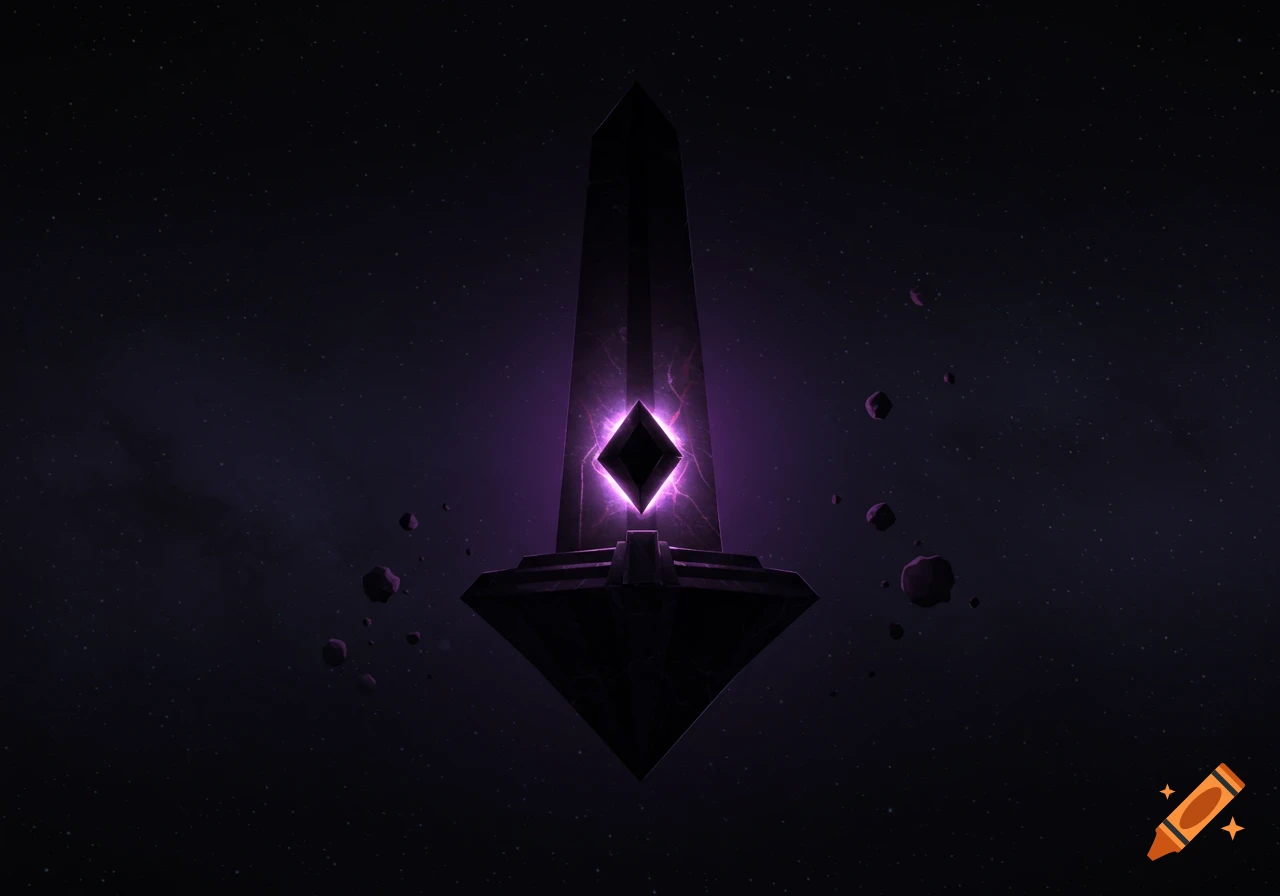
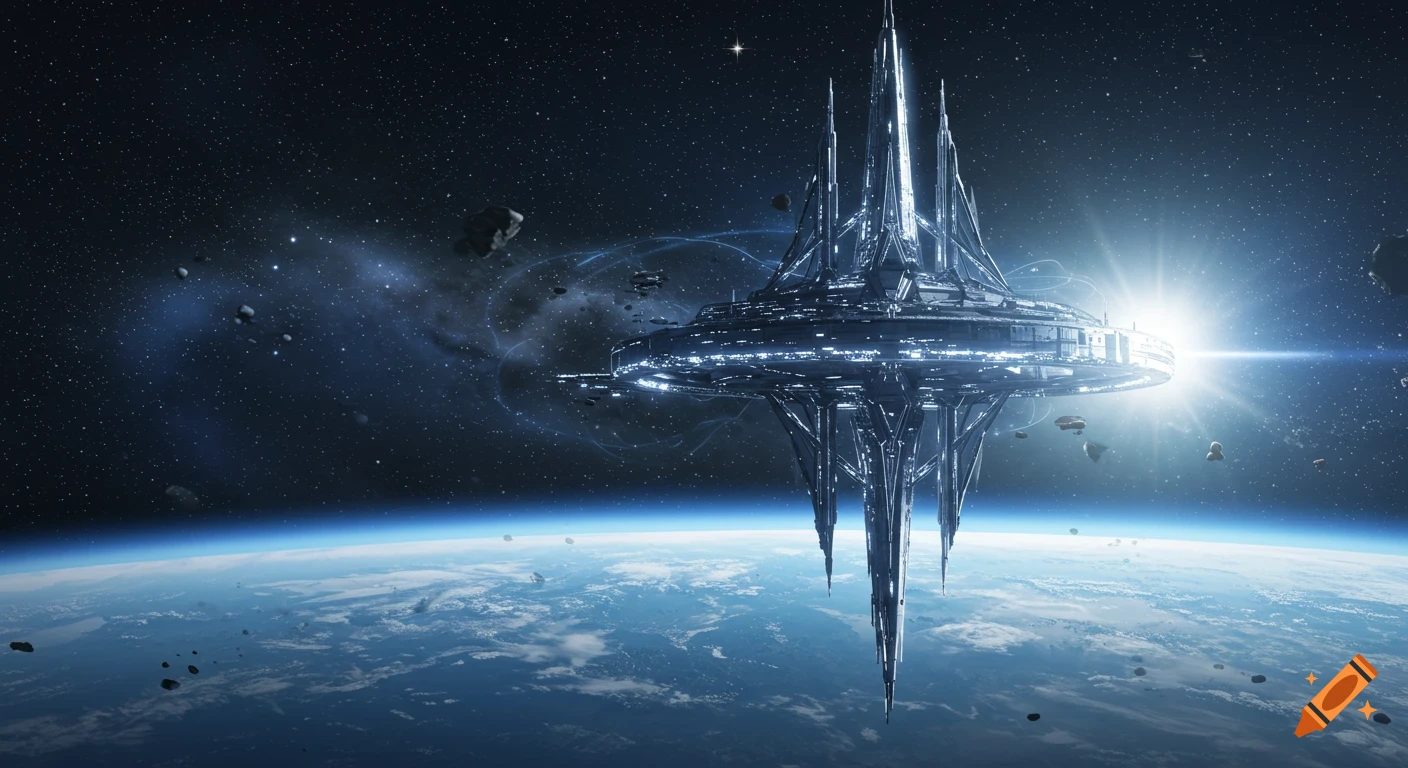
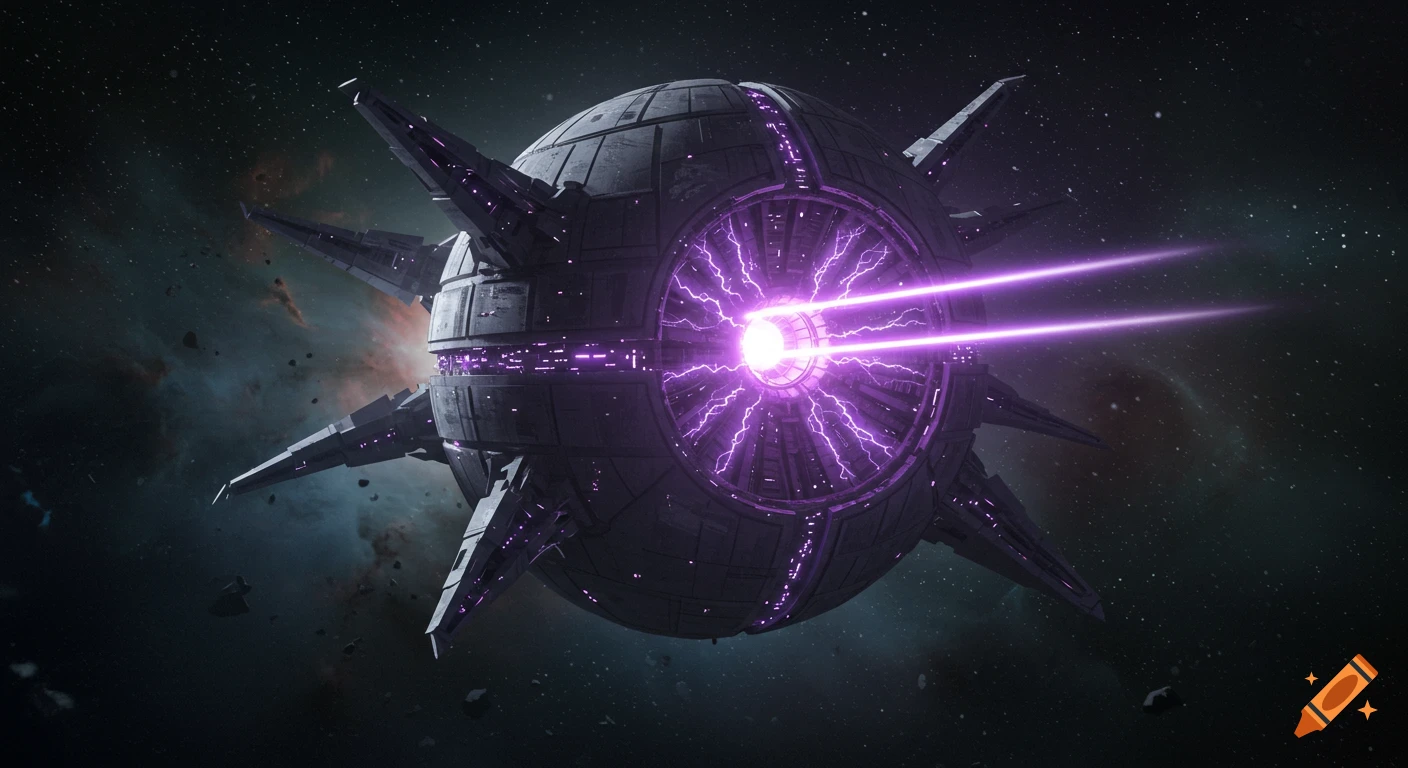
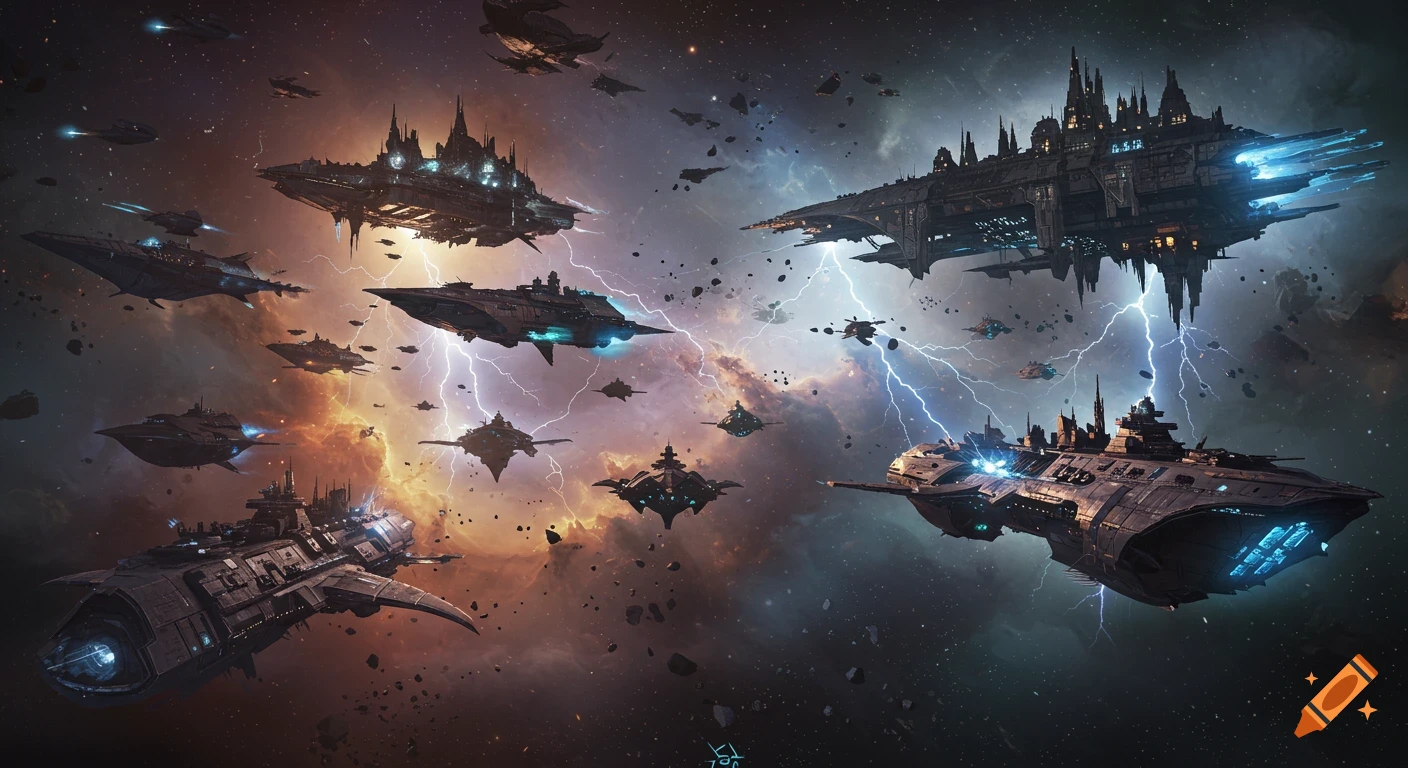
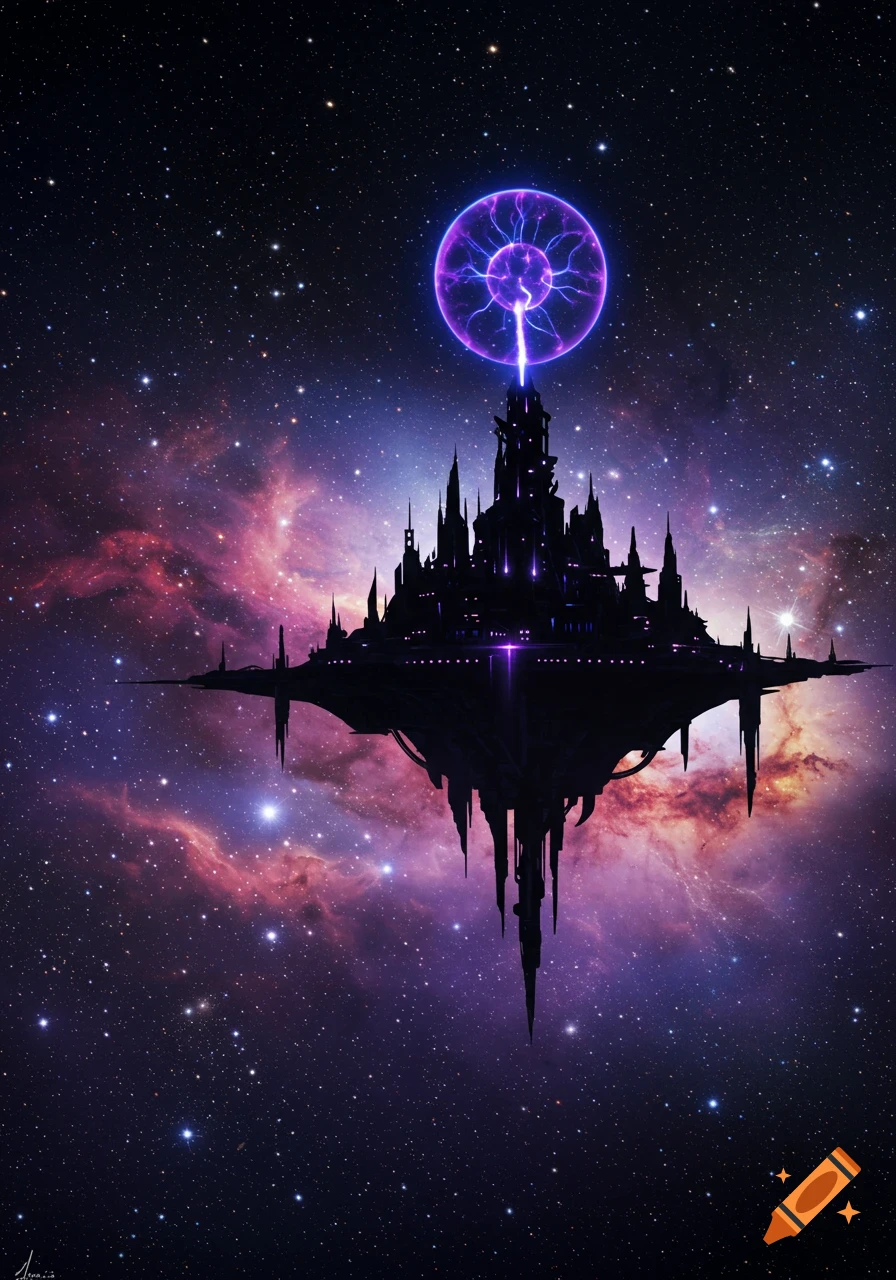
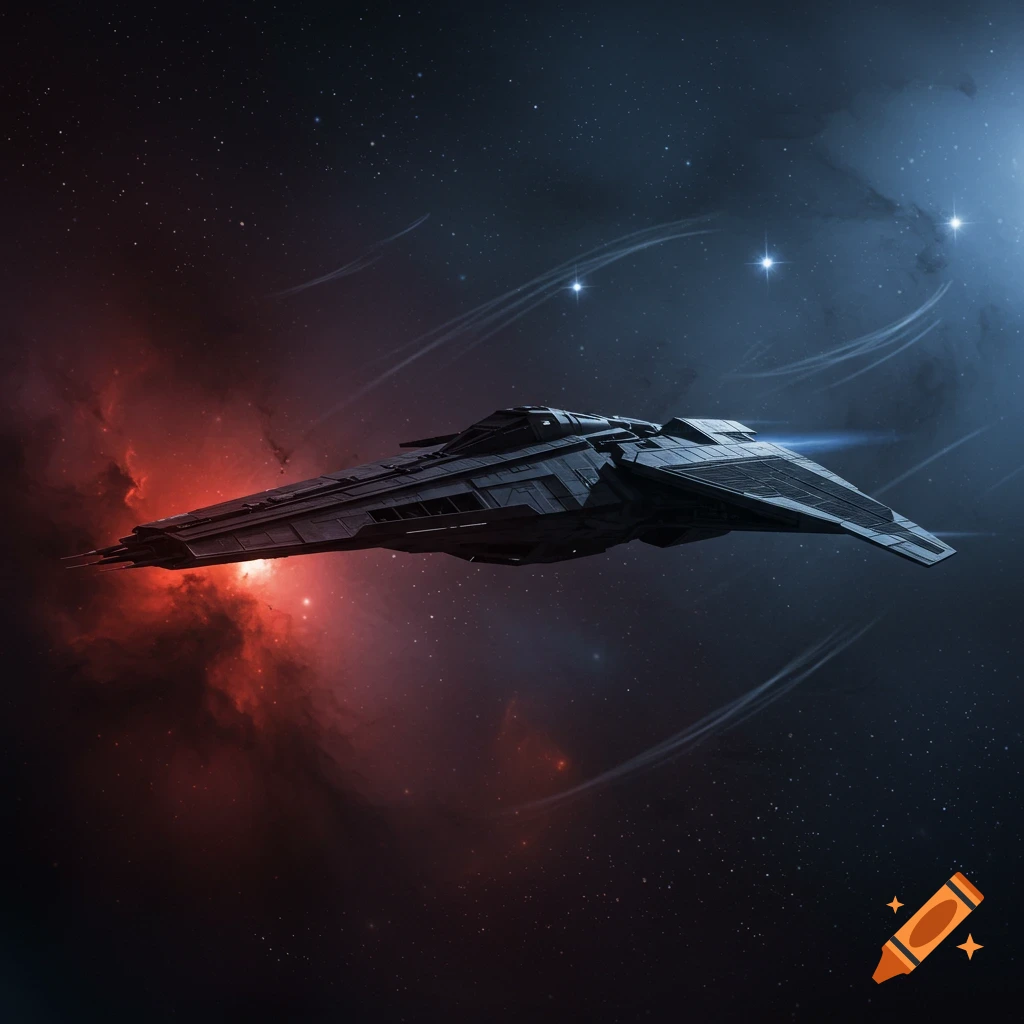
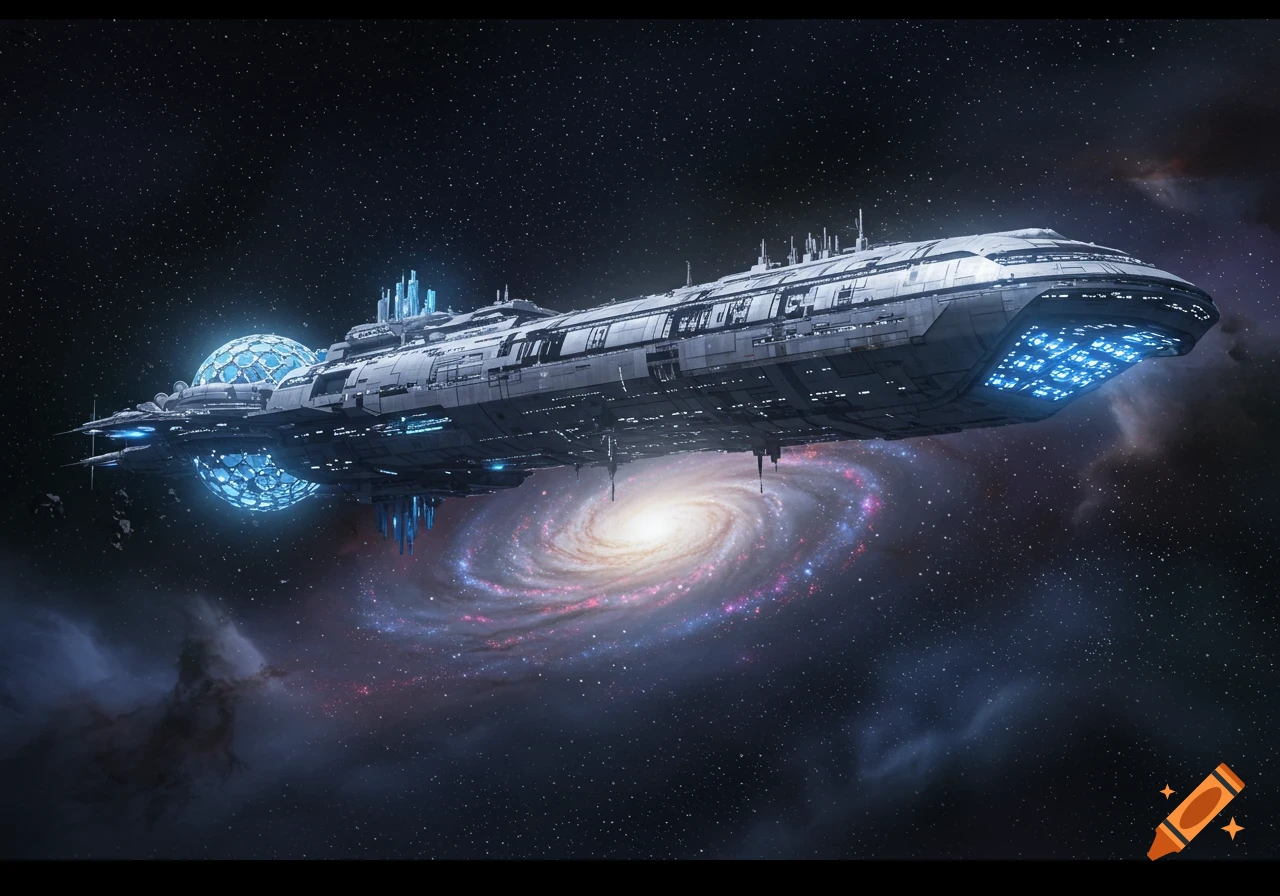
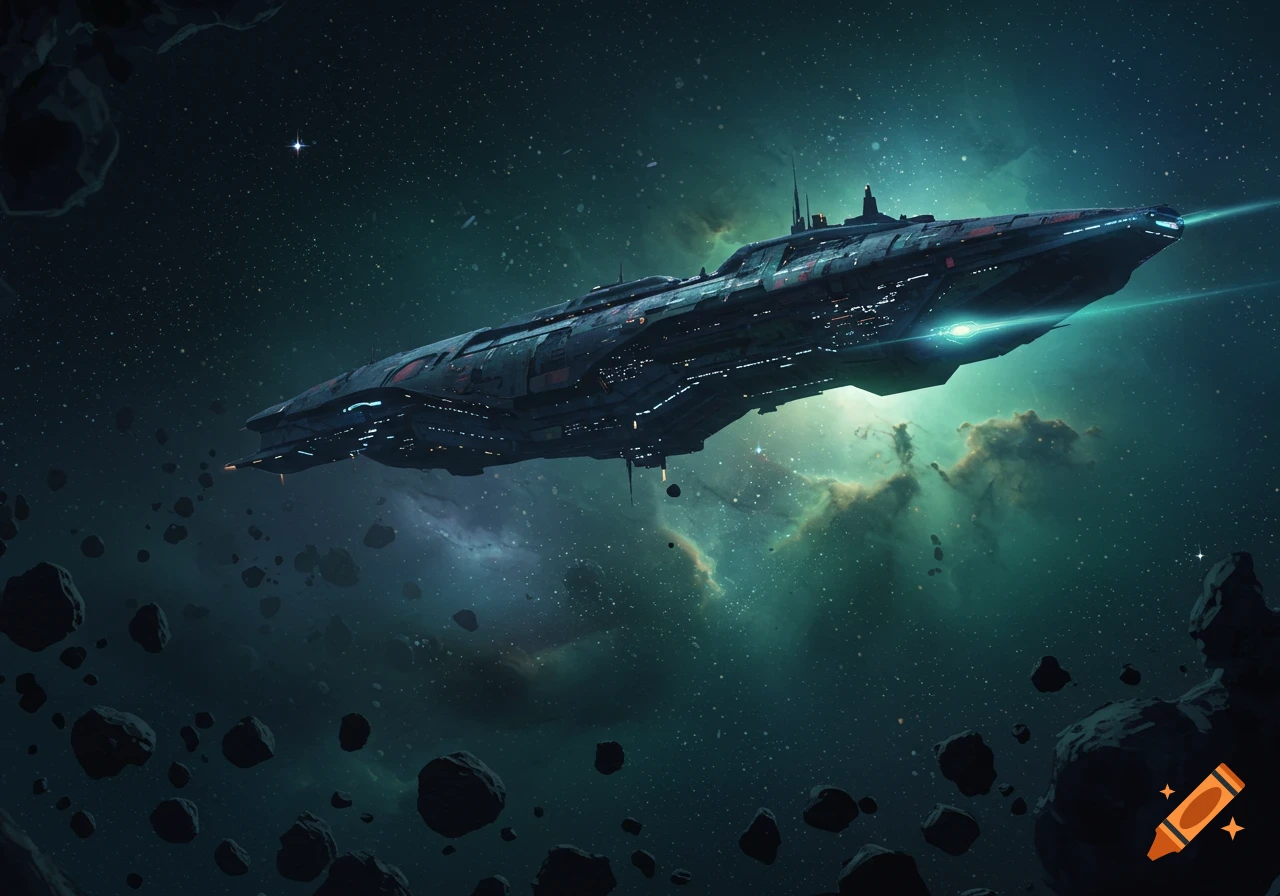
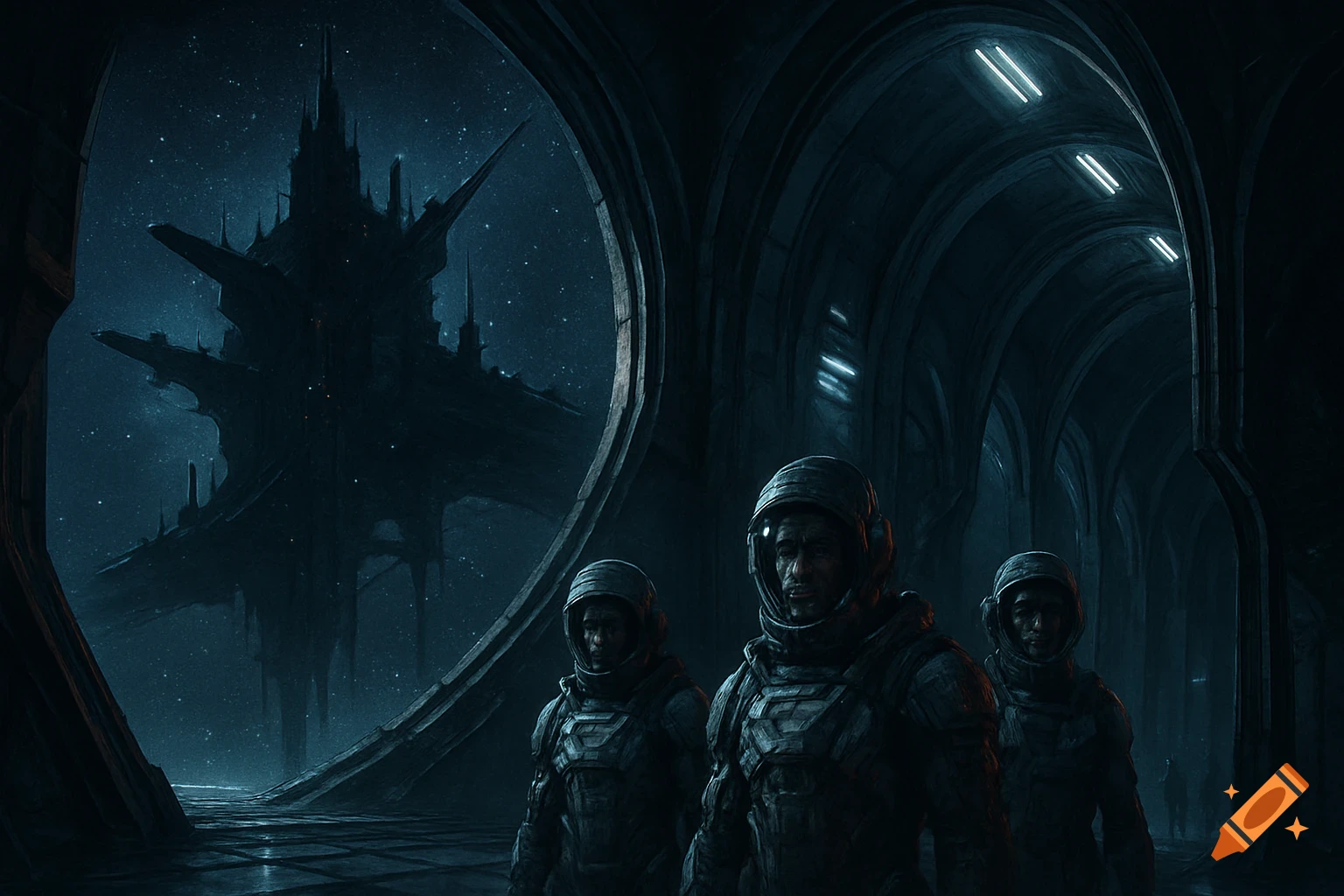
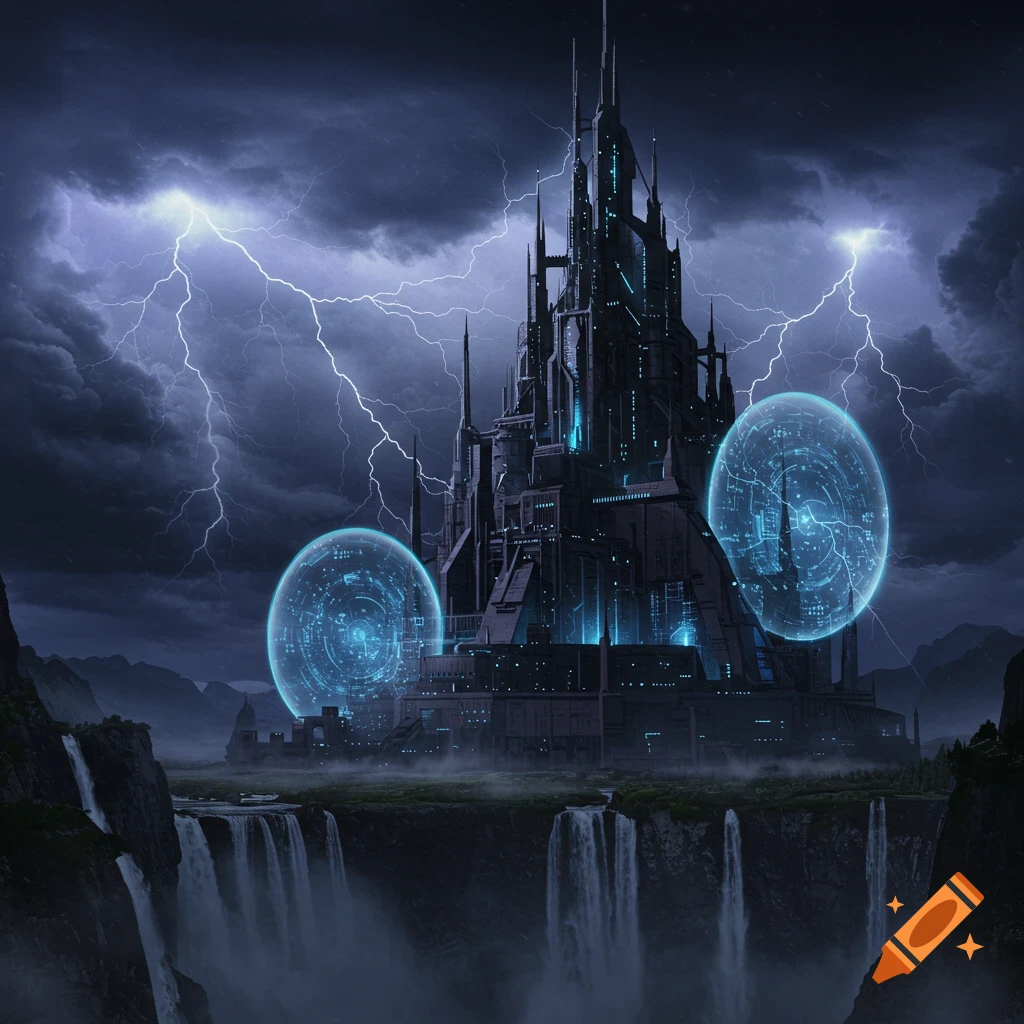
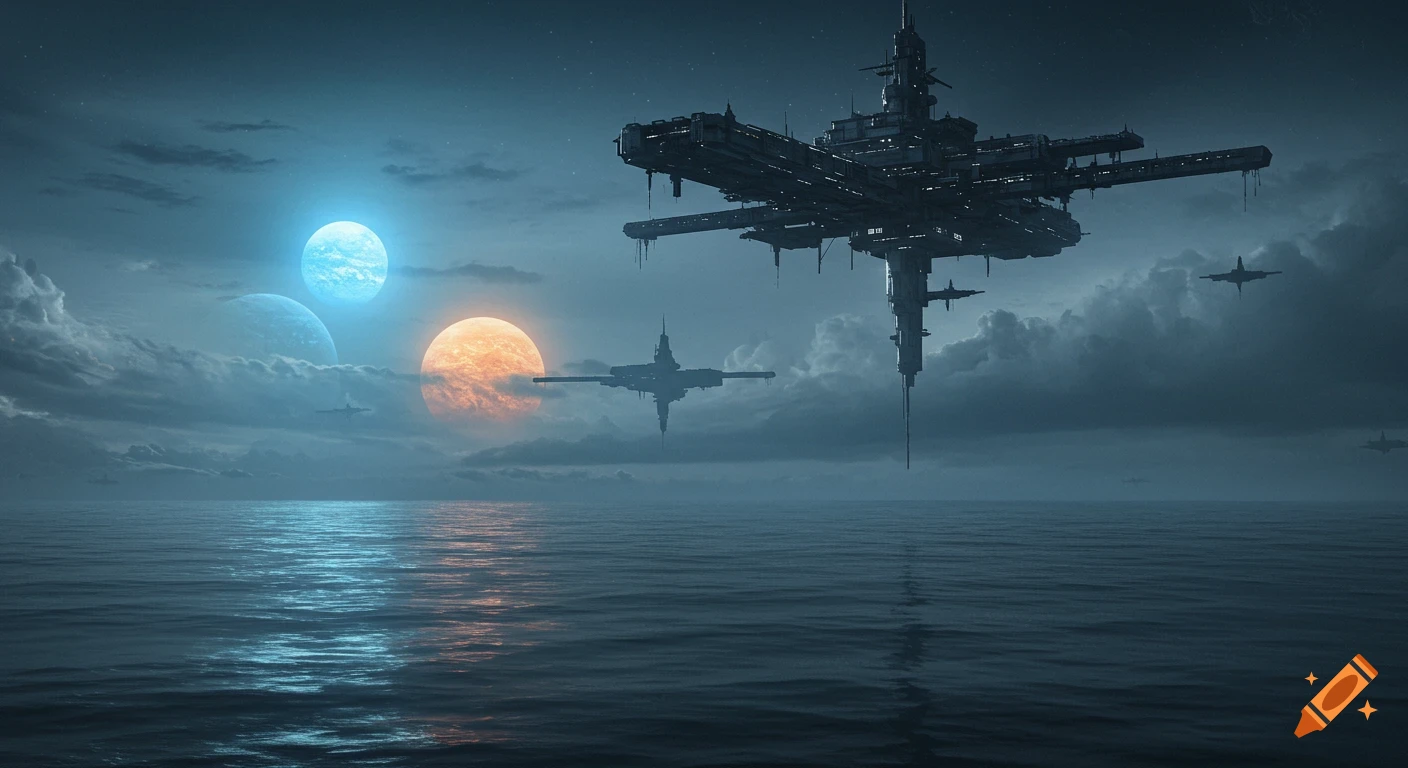
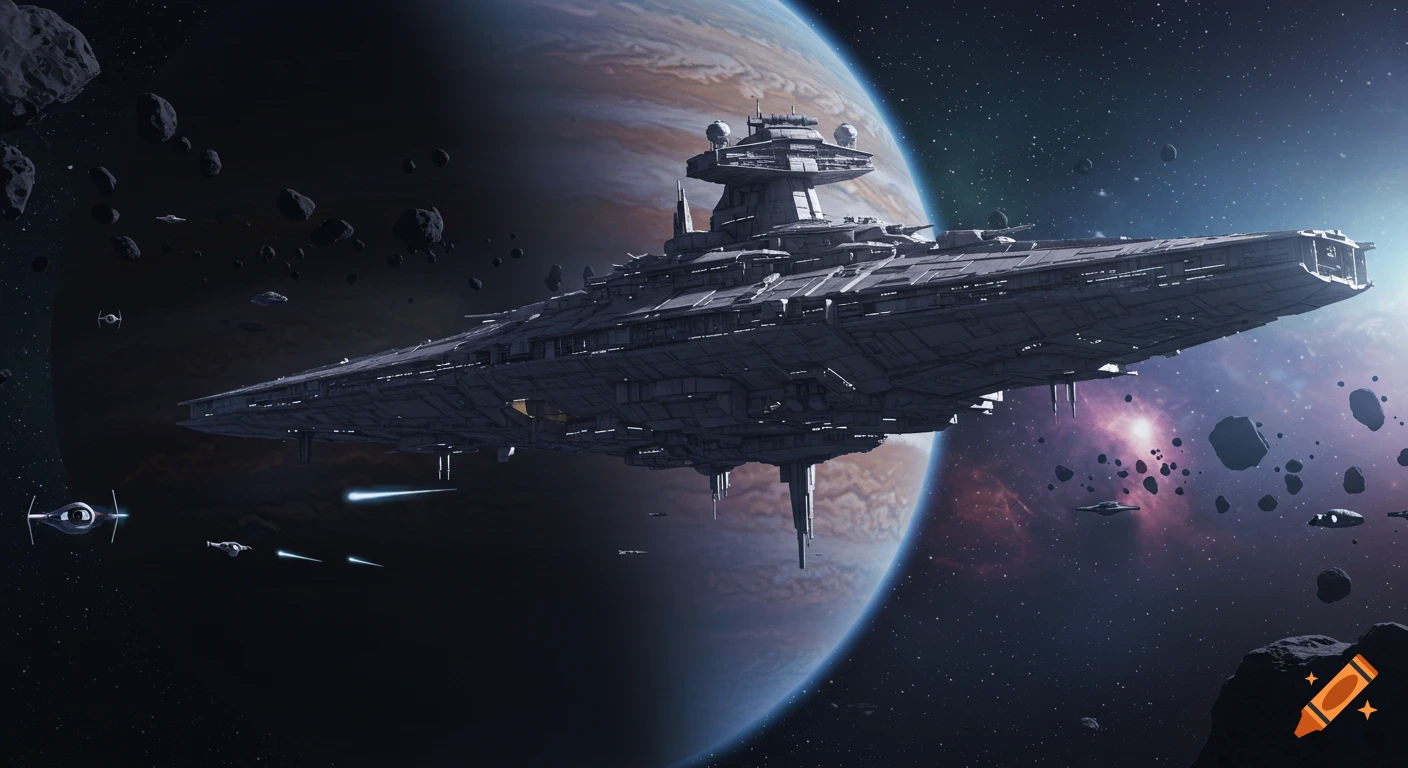
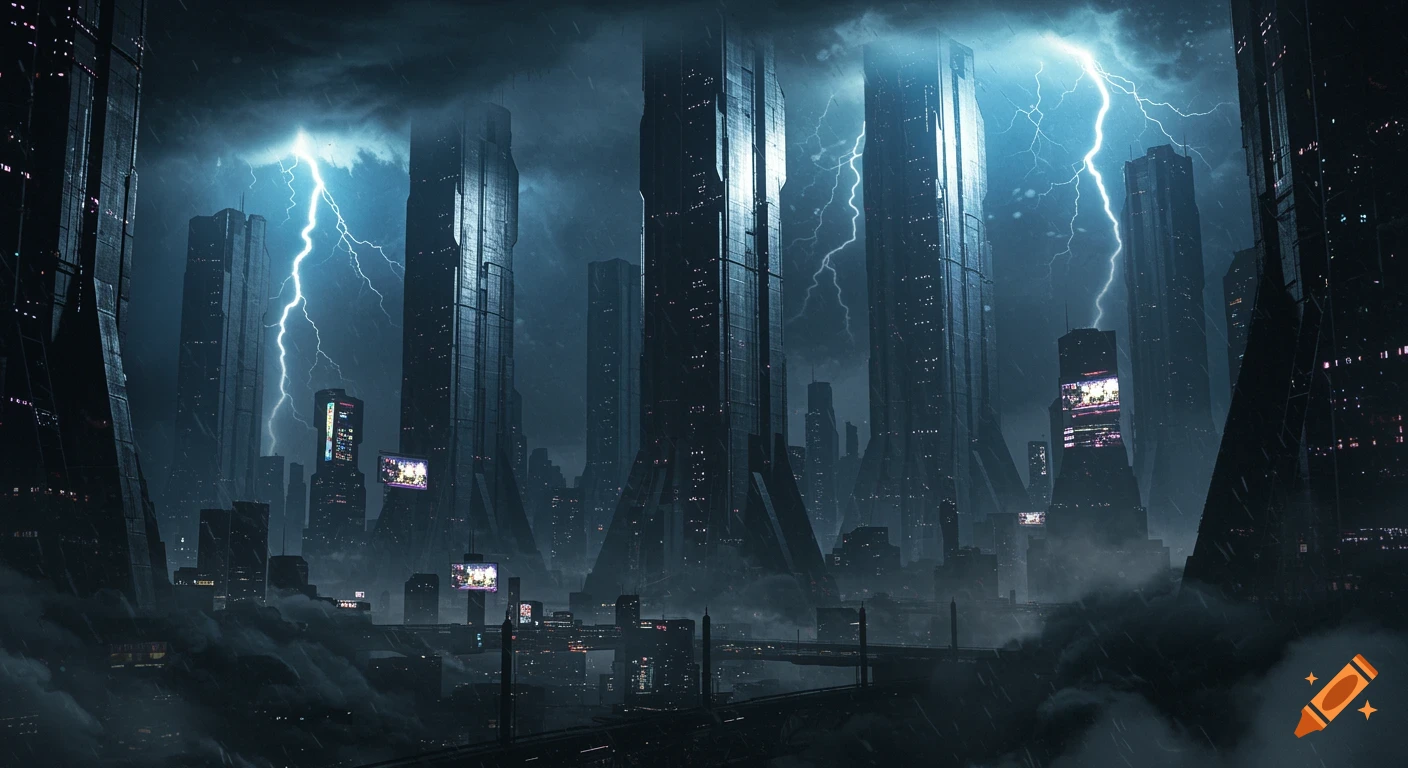
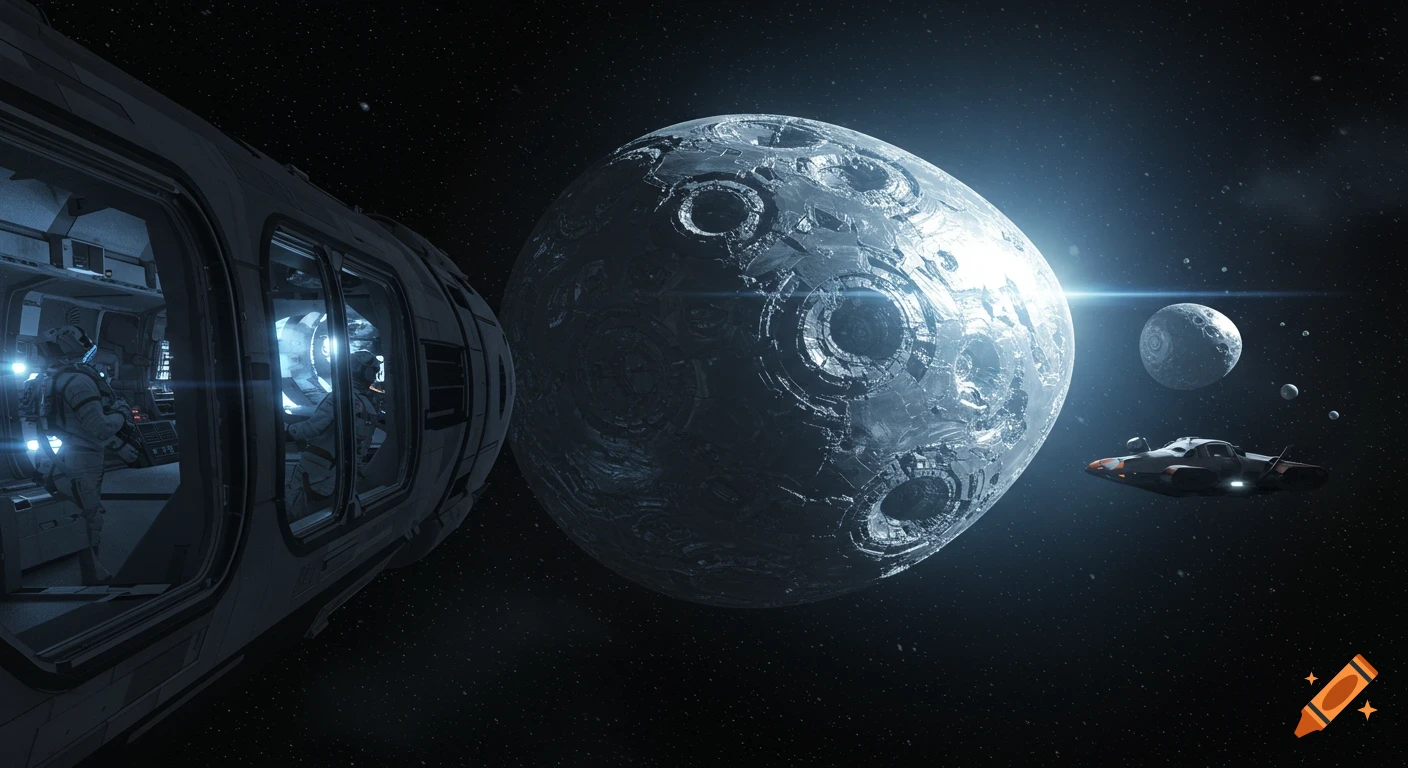
Massive dark gothic fortress-city space warship floats majestically in a starry nebula, bathed in cosmic light.

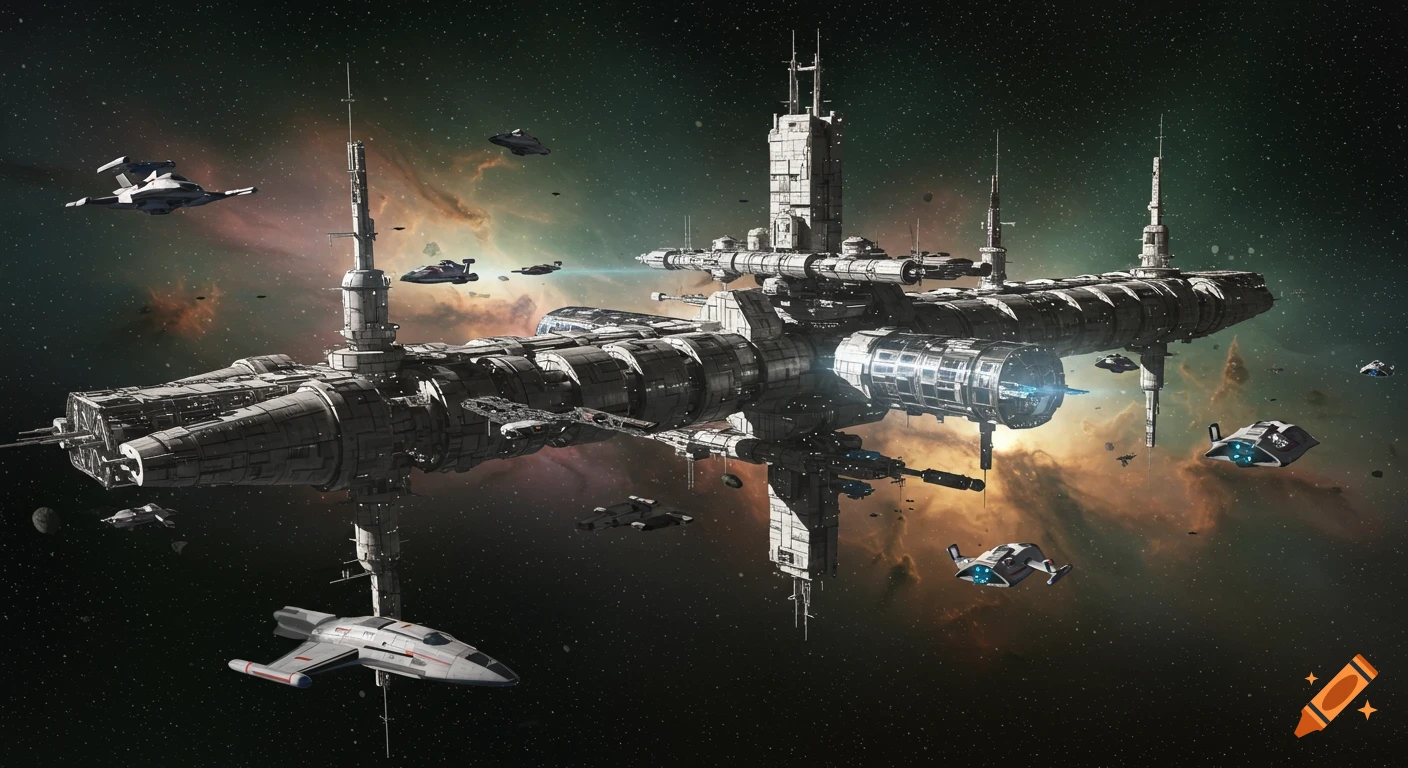
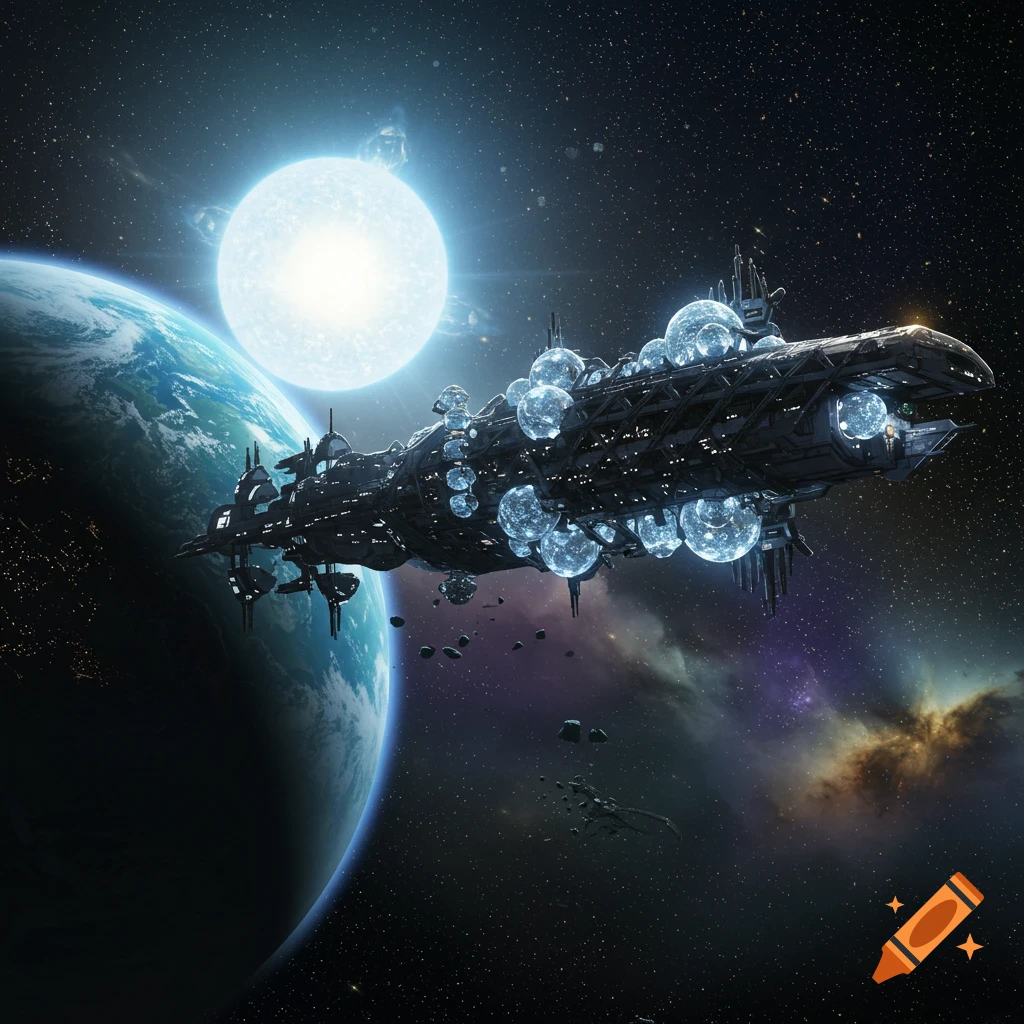
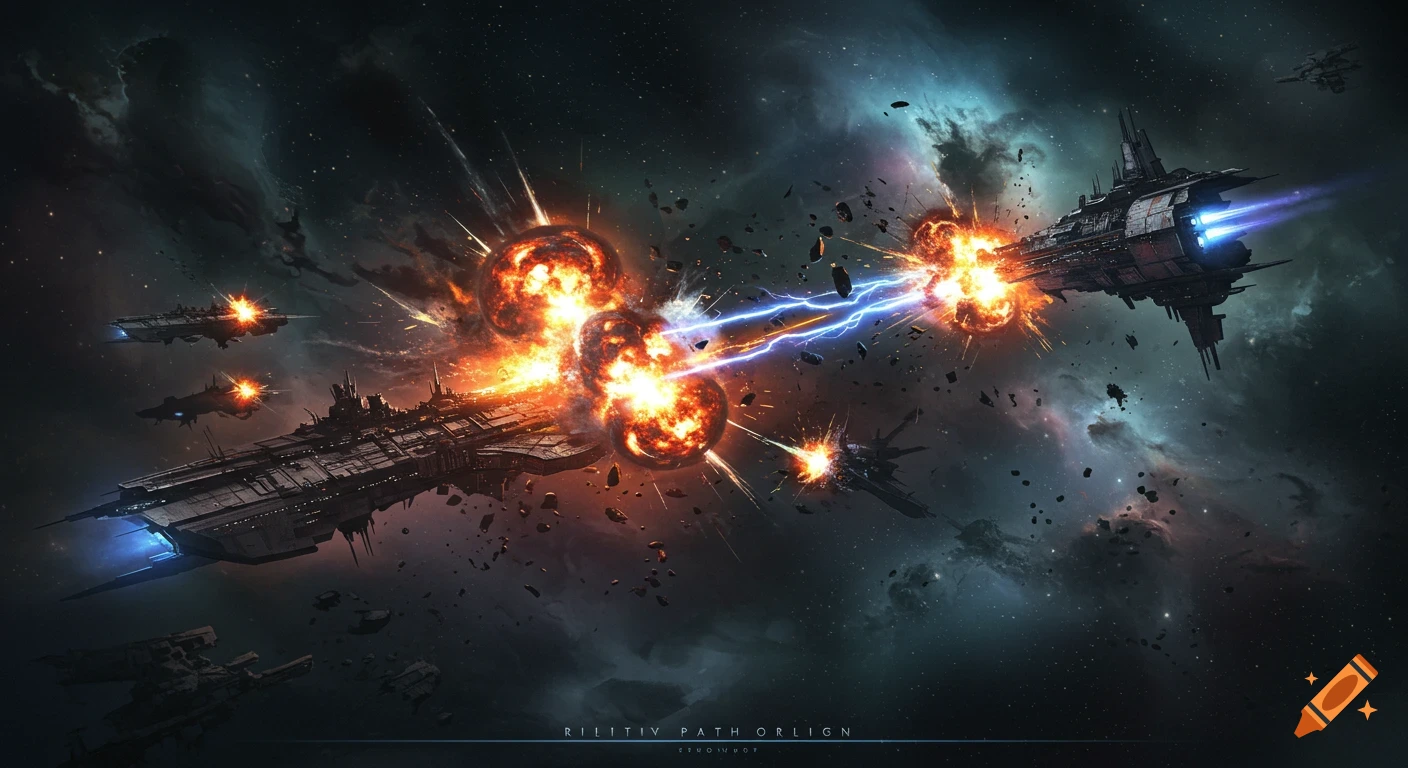
Generate a full look at the space warship : The exterior would probably avoid the classic "spaceship with a bridge tower." Instead: • Massive armored central spine. • Cathedral-like armored sections. • Internal command sanctums. • Few external protrusions. • Hundreds of redundant sensor nodes. • Defensive batteries integrated into the hull. From a distance, the ship might look less like a sleek spacecraft and more like a floating gothic fortress-city. The command section would not be a glass-fronted bridge or an exposed tower. The primary command areas would be buried deep inside the command ship: • Encased in multiple layers of armor. • Surrounded by redundant life-support systems. • Isolated from external damage. • Protected by internal security forces. • Connected to multiple sensor networks rather than direct visual observation. In each ship, there are two Magister Classis-level officers positioned "above" and "below" because there is no universal up or down in space. A fleet can be attacked from any vector. A traditional naval command hierarchy assumes: • forward, • rear, • port, • starboard, • above, • below. Space removes those assumptions. The two subordinate Magister Classis could specialize in controlling vertical vectors: The Magister Classis Superior (The Upper Watch) is responsible for: • dorsal formations, • high-orbit maneuvering, • long-range sensor coordination, • strategic missile engagements. The Magister Classis Inferior (The Lower Watch) is responsible Voir plus
More images like this