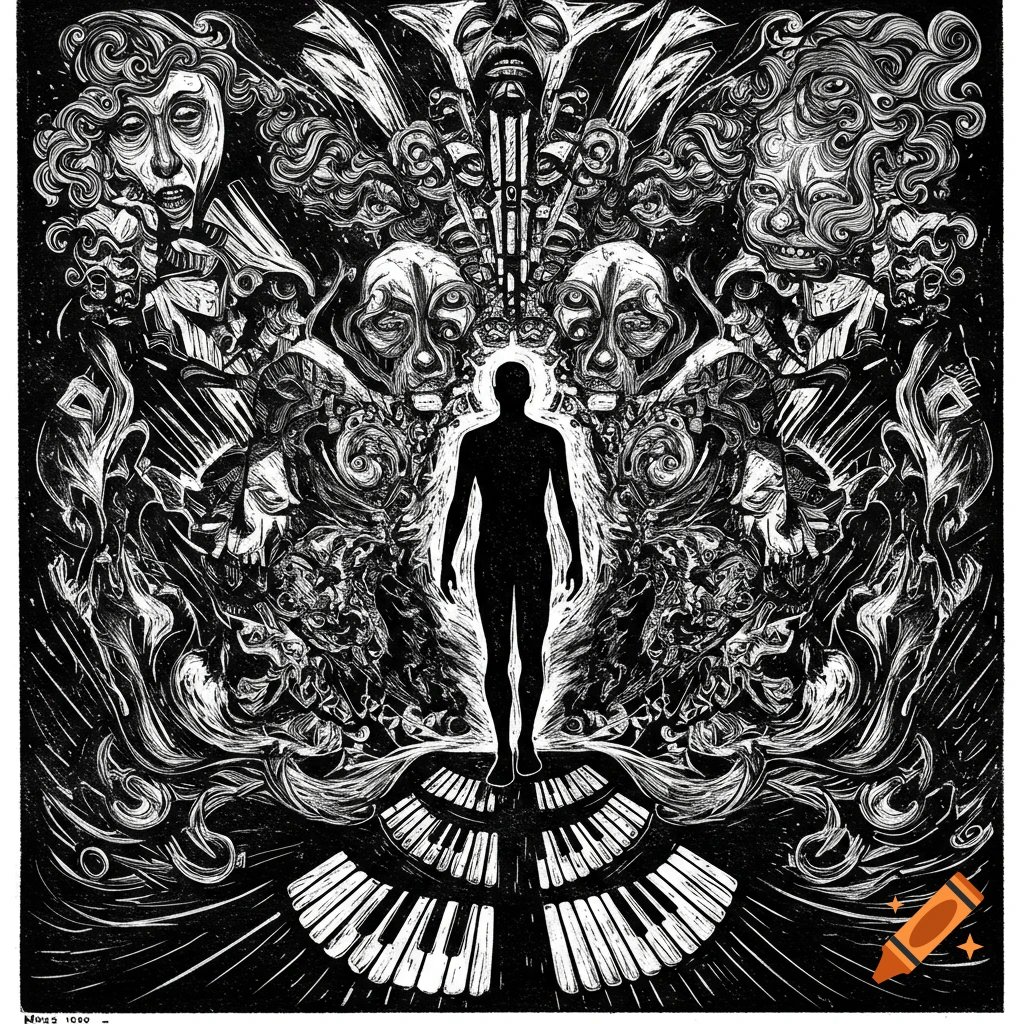
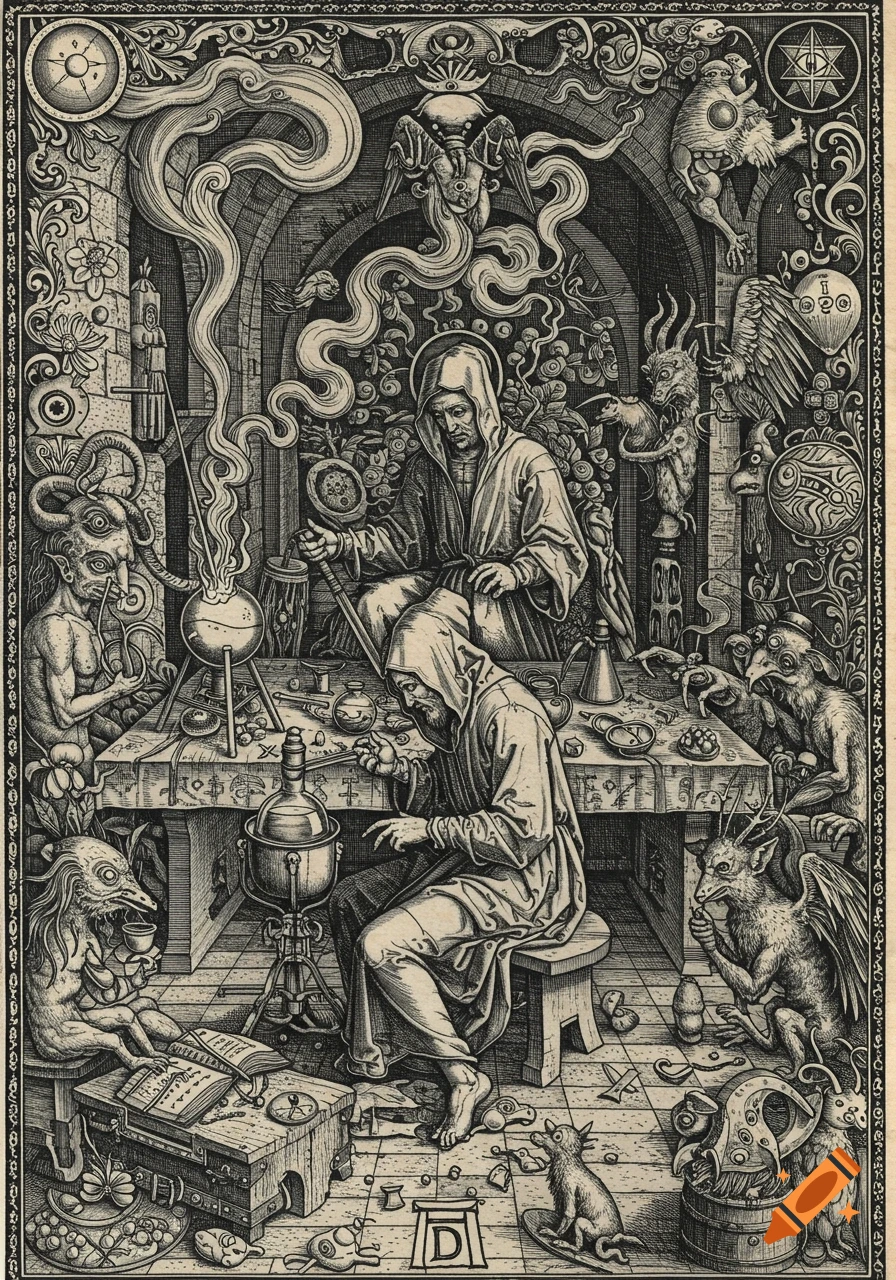
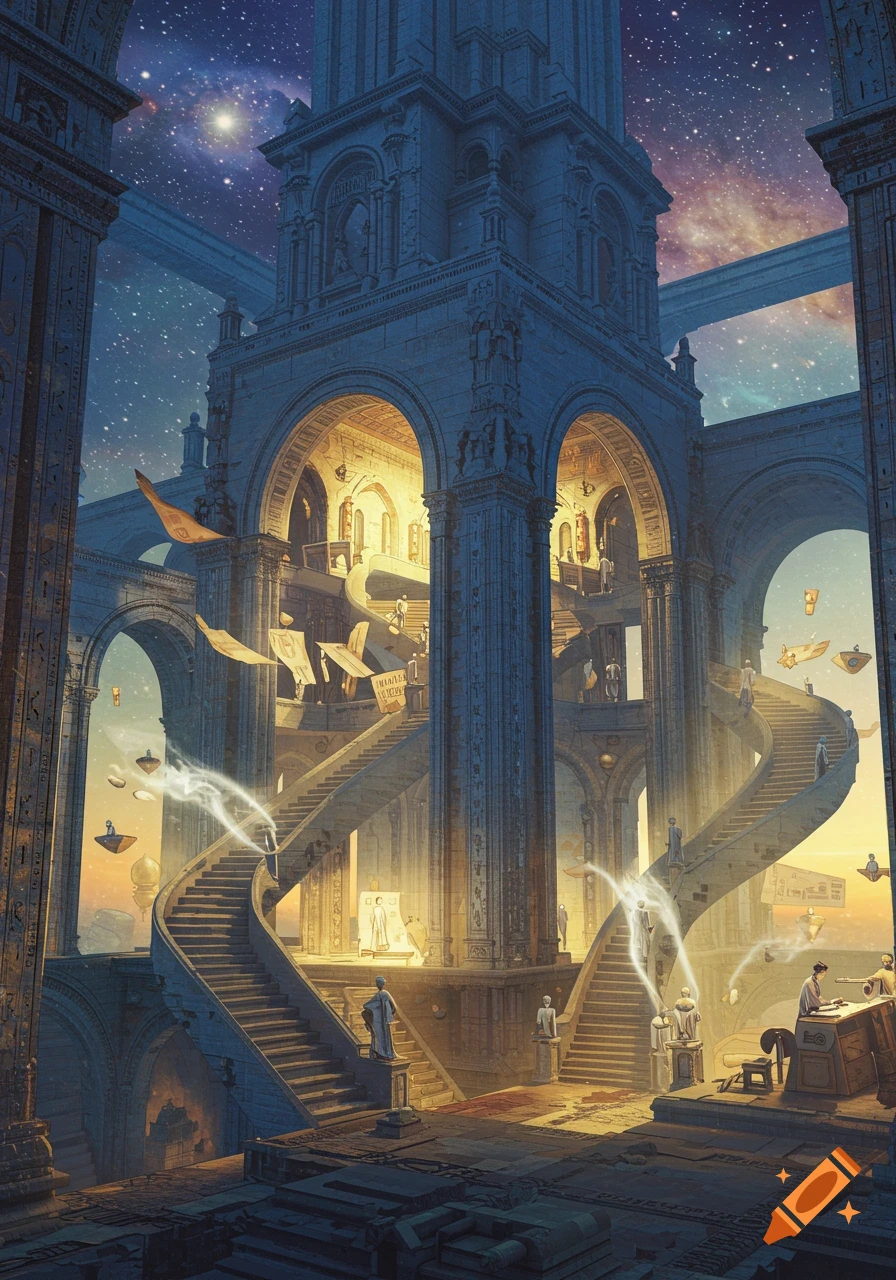
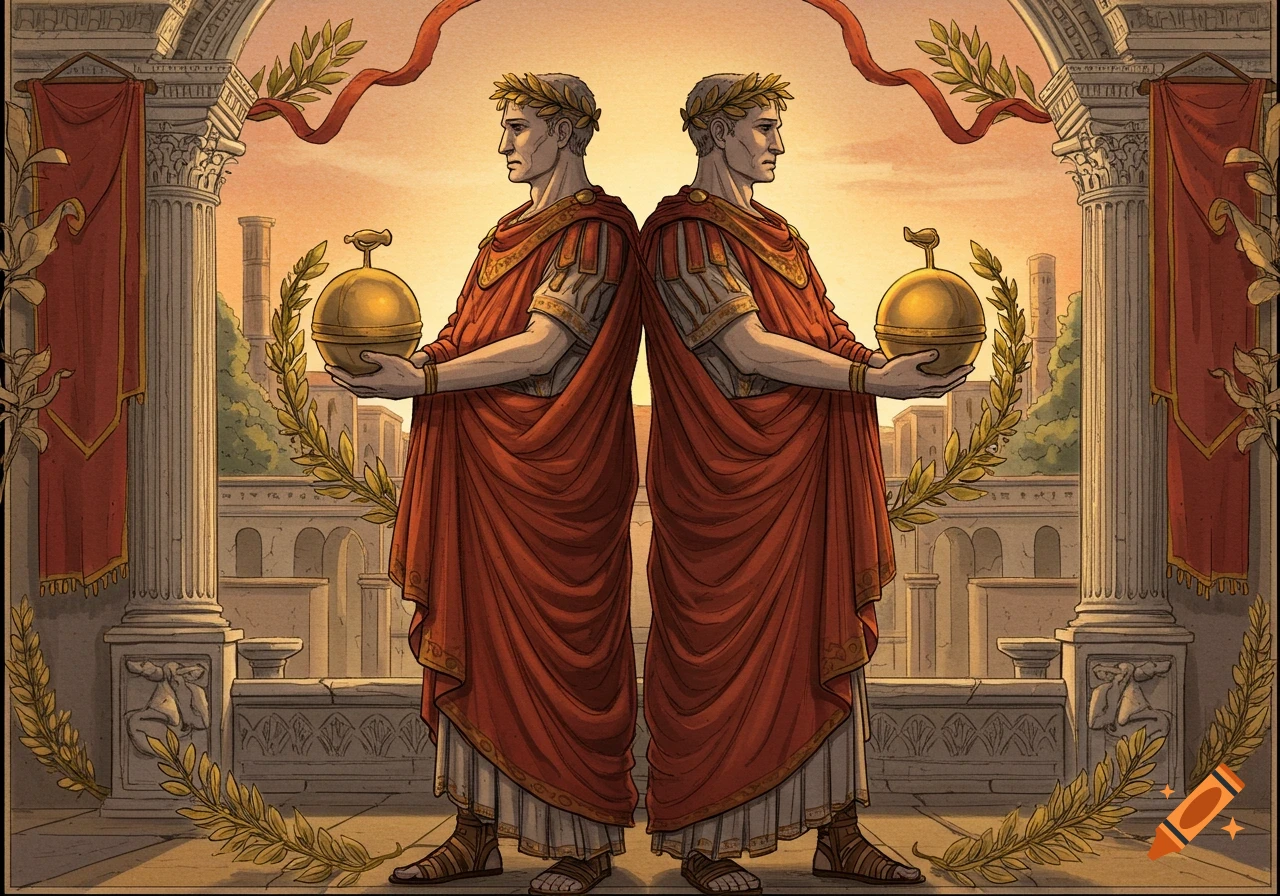
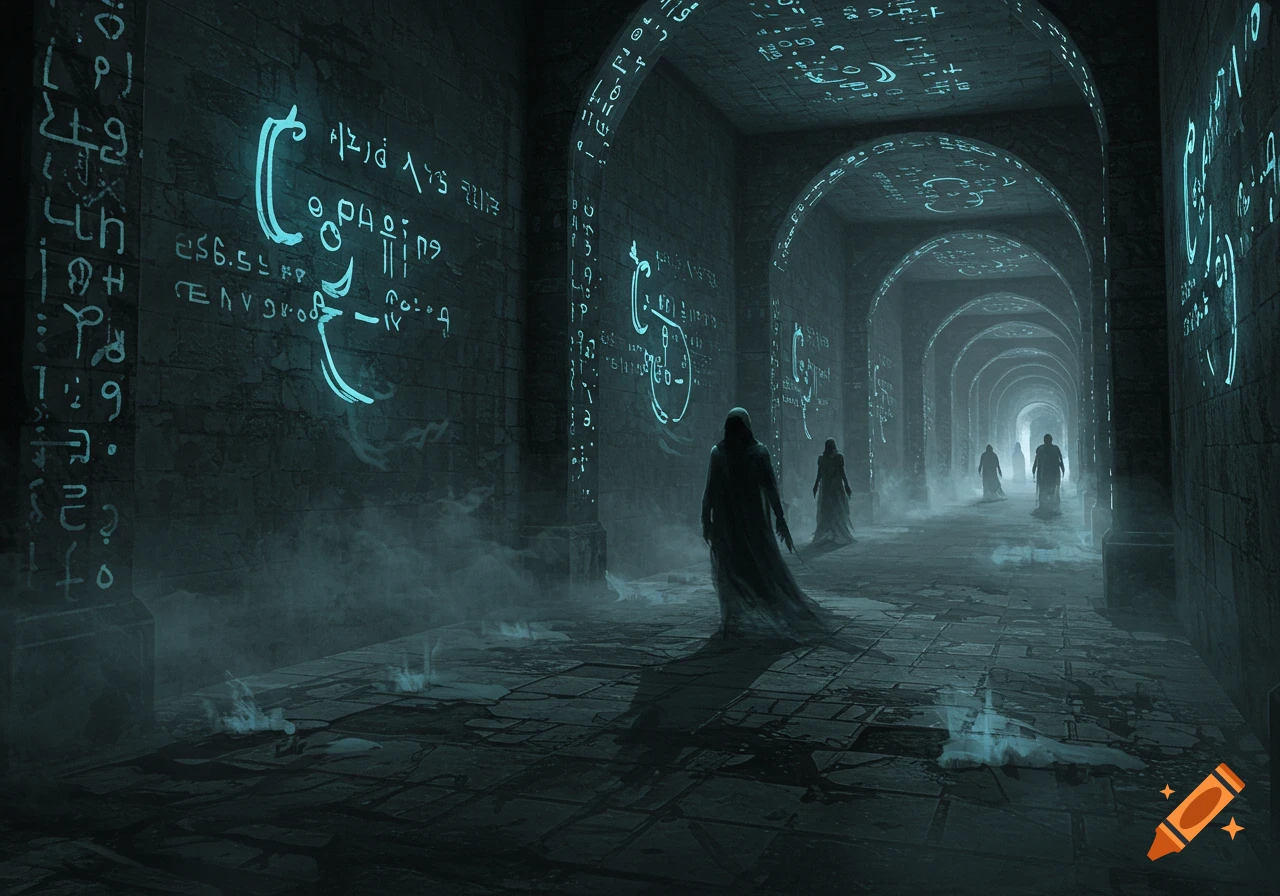
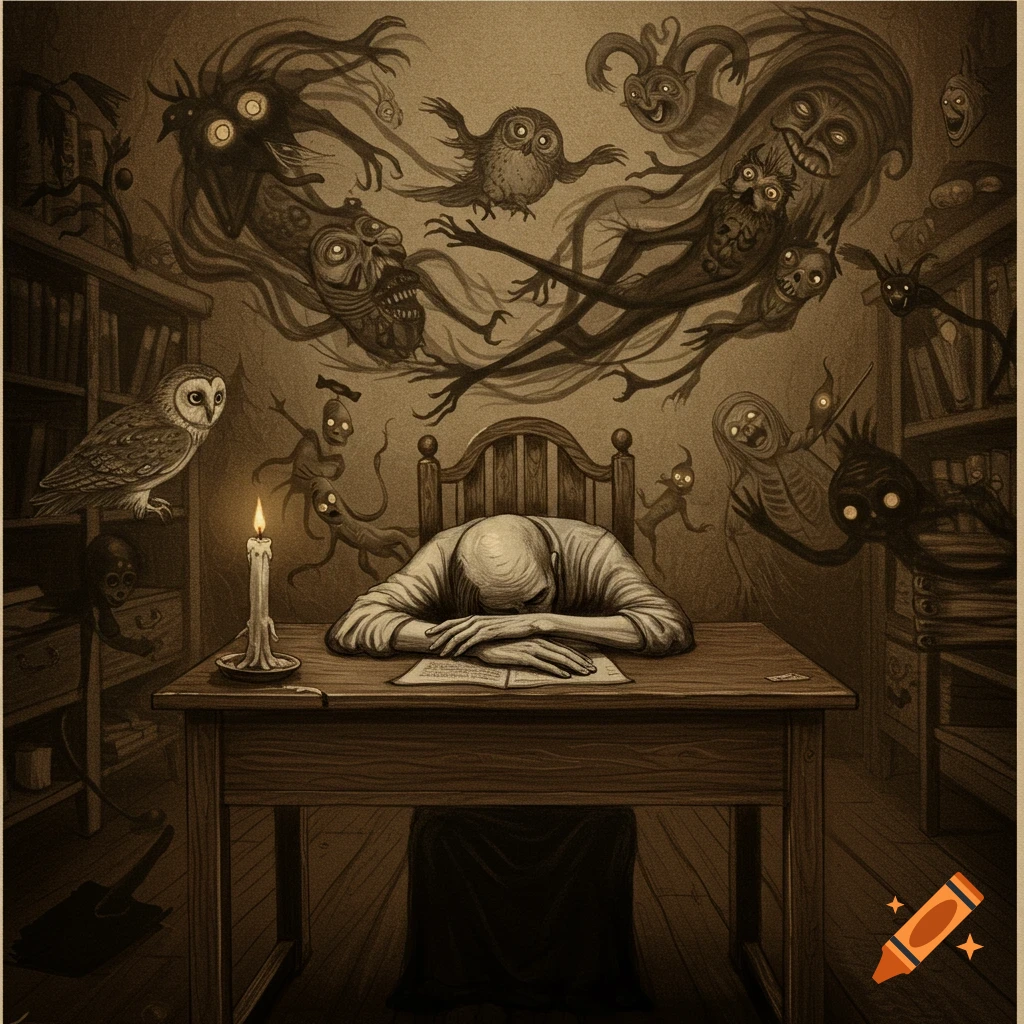
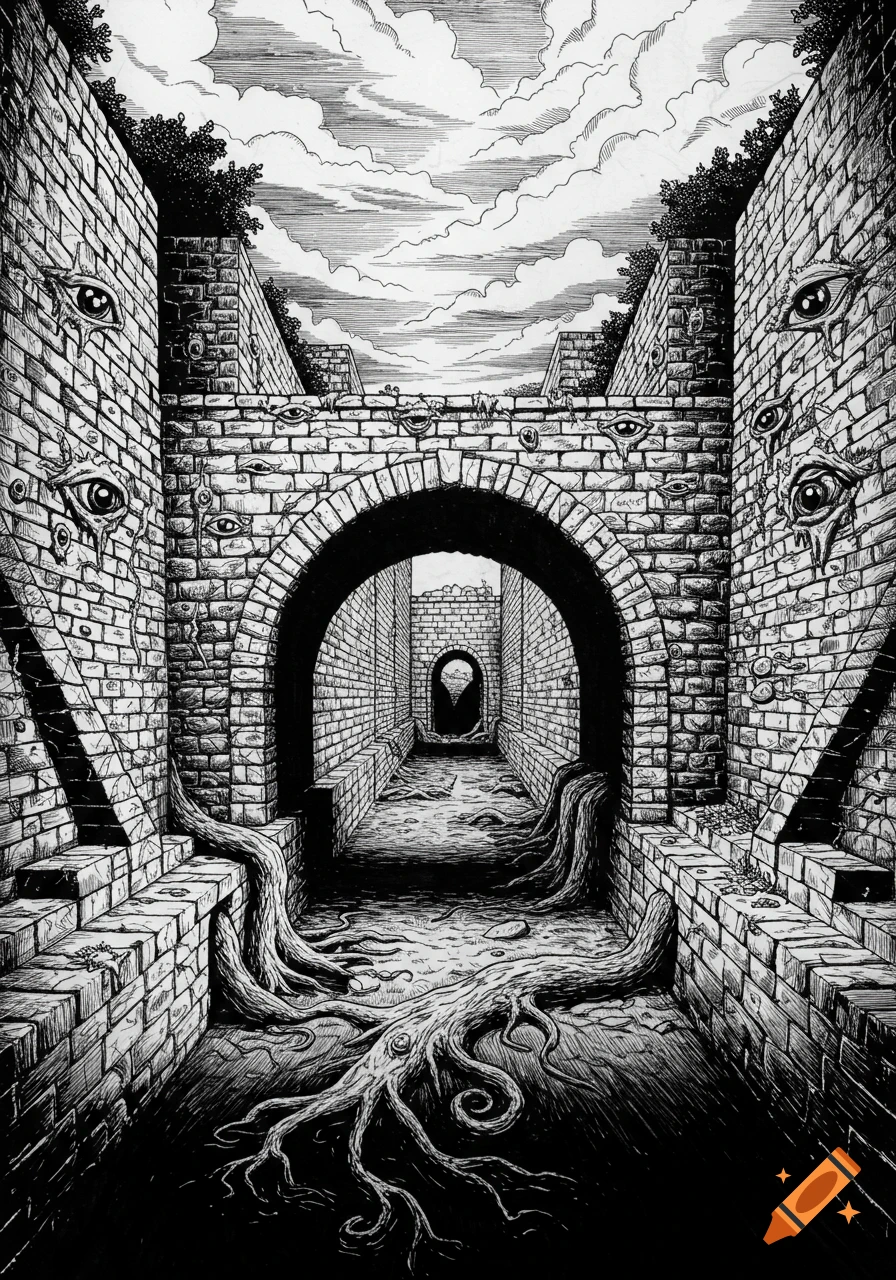
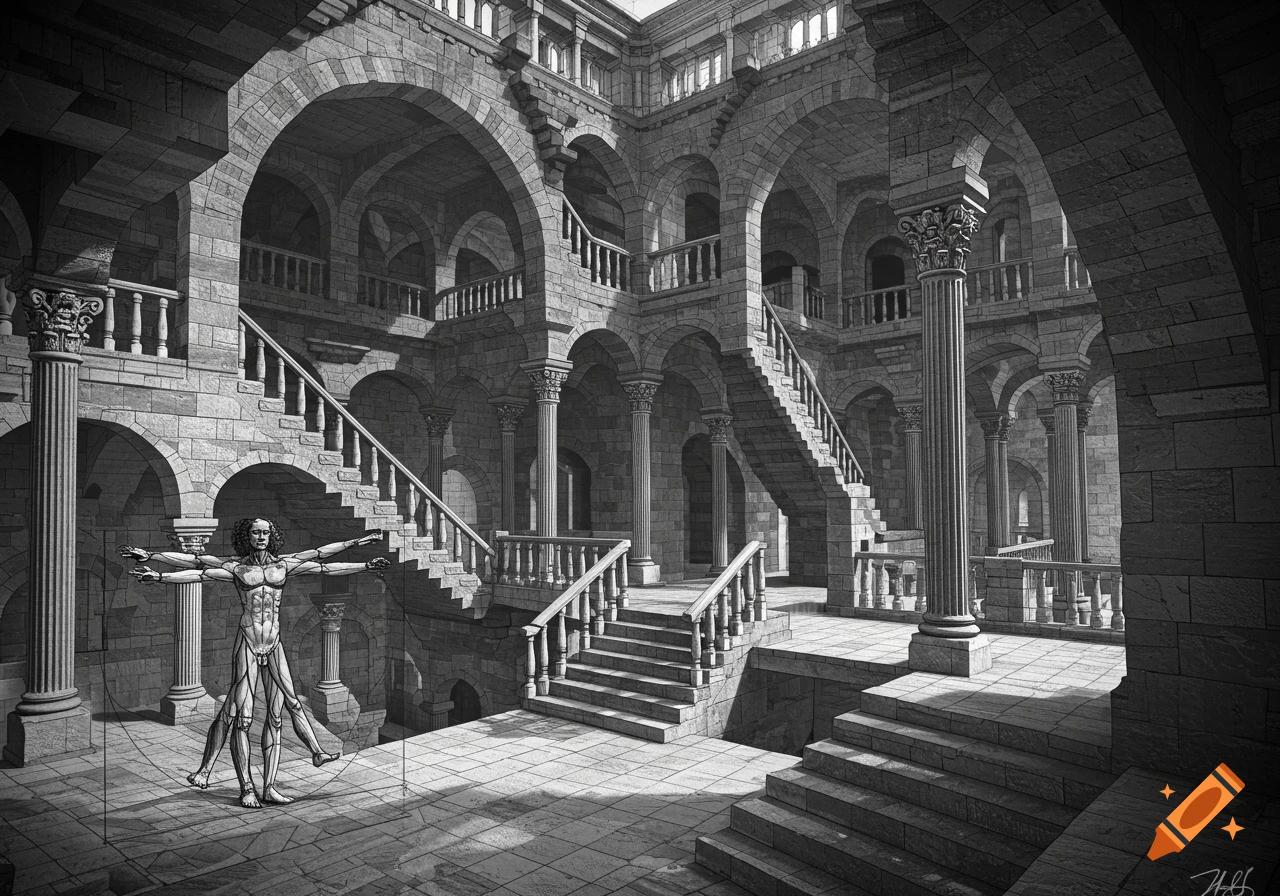
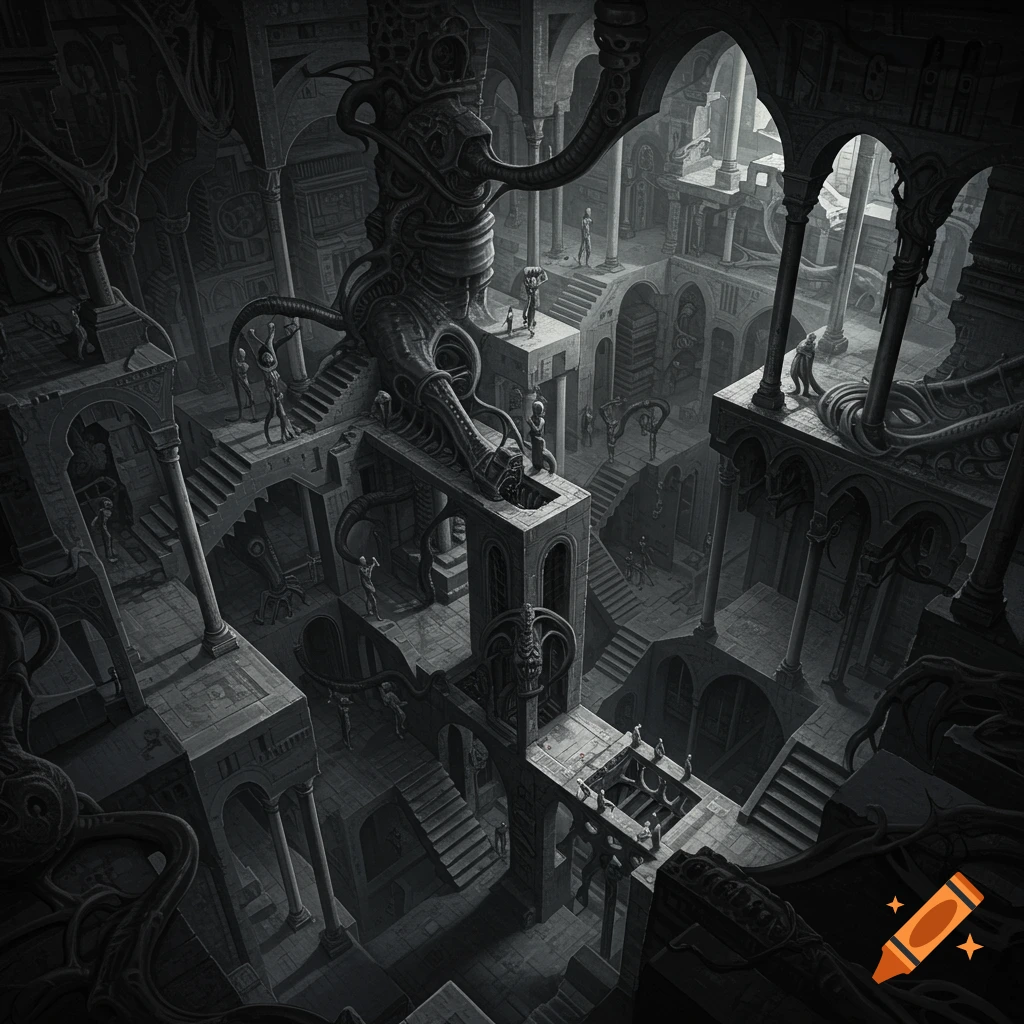
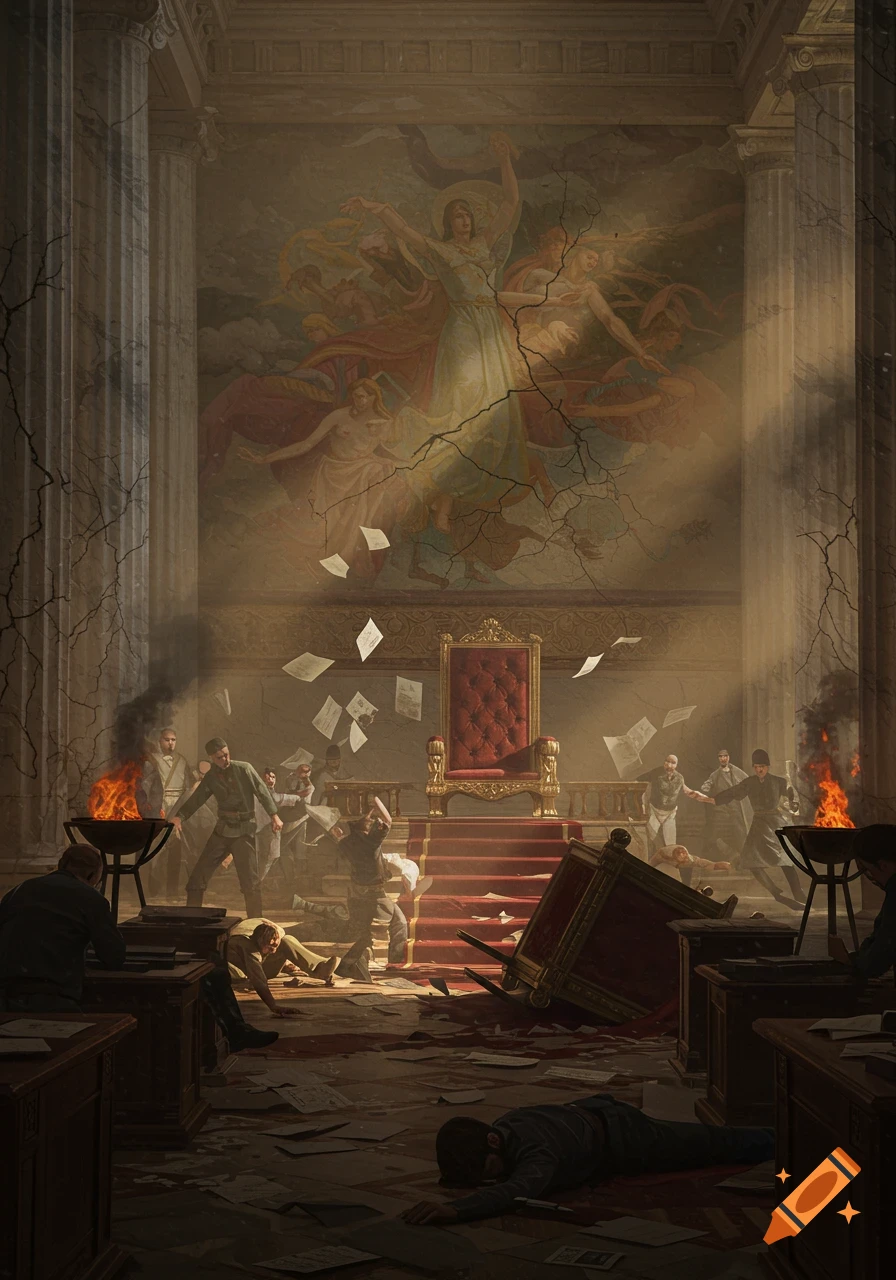
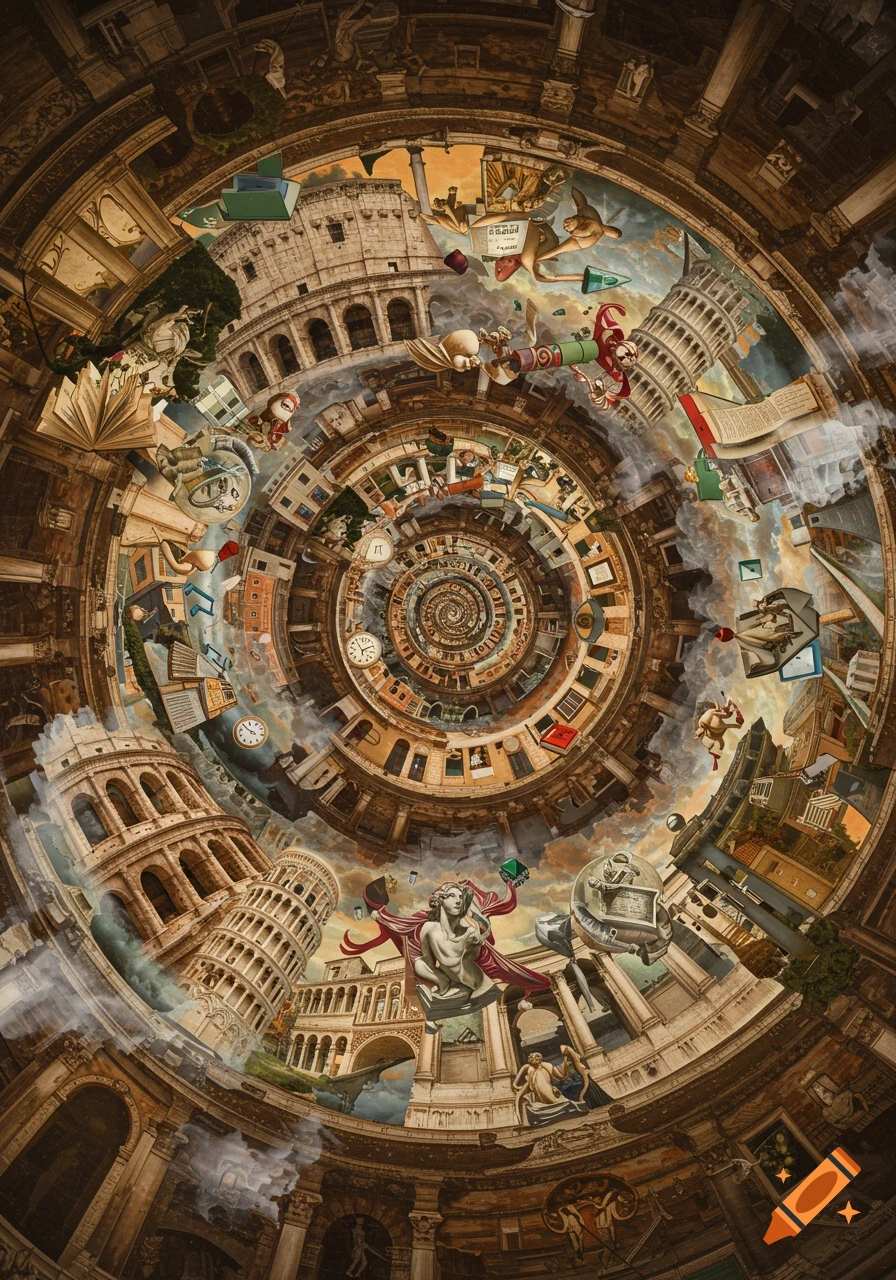
Surreal M.C. Escher style architectural paradox with robed judges holding stones and a central confused man, lithograph style.

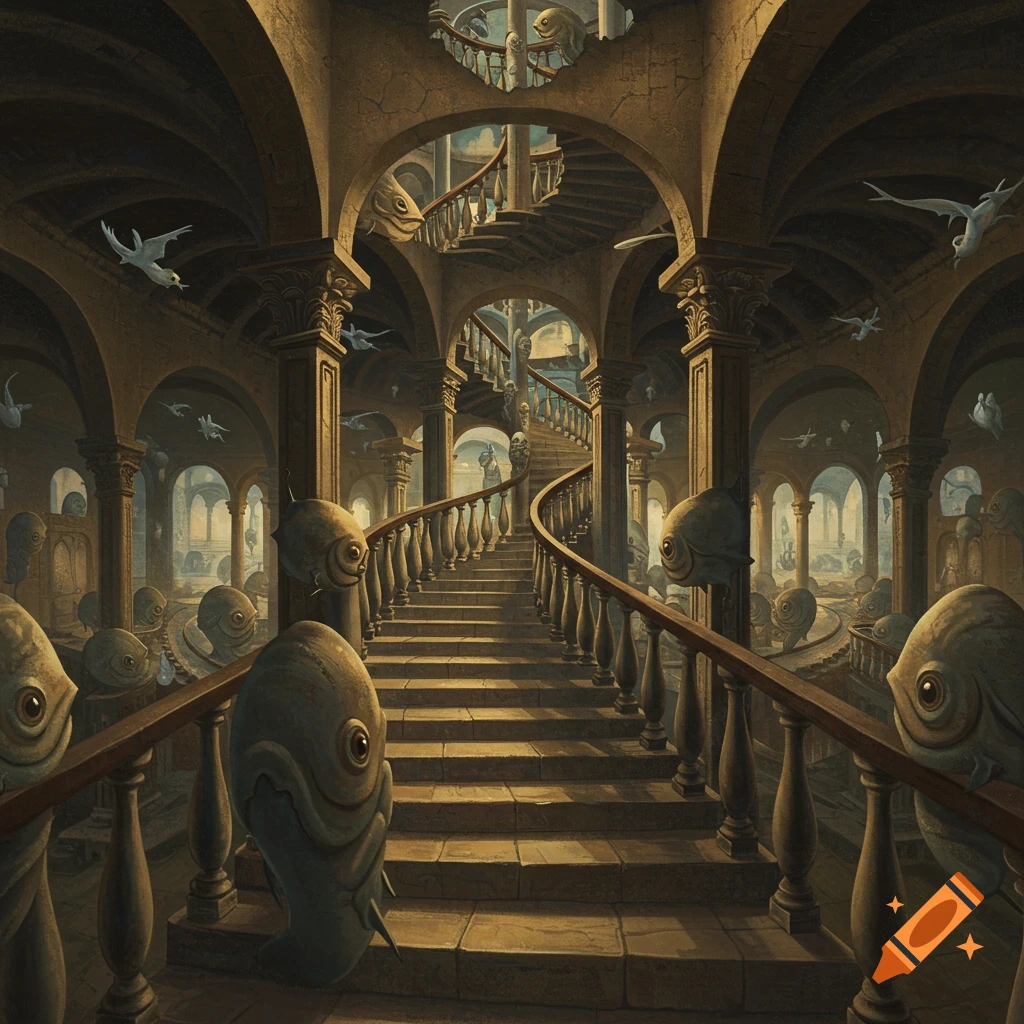
A surreal, architectural paradox in the style of M.C. Escher, where a vast, limestone courtyard folds into itself through a series of impossible Penrose stairs and interlocking archways. In the center of this geometric labyrinth, a crowd of austere, robed judges stands in a circular formation, their faces etched with severe judgment, each holding a heavy, jagged stone poised to be thrown. However, the spatial logic of the scene is fractured: the figures are positioned on opposing gravitational planes, meaning a stone thrown "downward" by one judge actually arcs "upward" to land at the feet of another. The focal point is a singular, confused man standing in a pool of dim, amber light at the heart of the loop; he is looking down at his feet, where he has accidentally worn one obsidian-black oxford and one deep-chocolate brown loafer. The lighting is a masterful play of chiaroscuro, where the shadows are so dense that the two shoes appear identical to everyone but the wearer, creating a visual metaphor for the fallibility of perception. The entire composition is rendered in a muted, lithographic palette of sepia, charcoal, and bone-white, with the intricate tessellations of the floor tiles slowly transforming from perfect squares into chaotic, organic shapes as they approach the man with the mismatched shoes. Ver más
More images like this