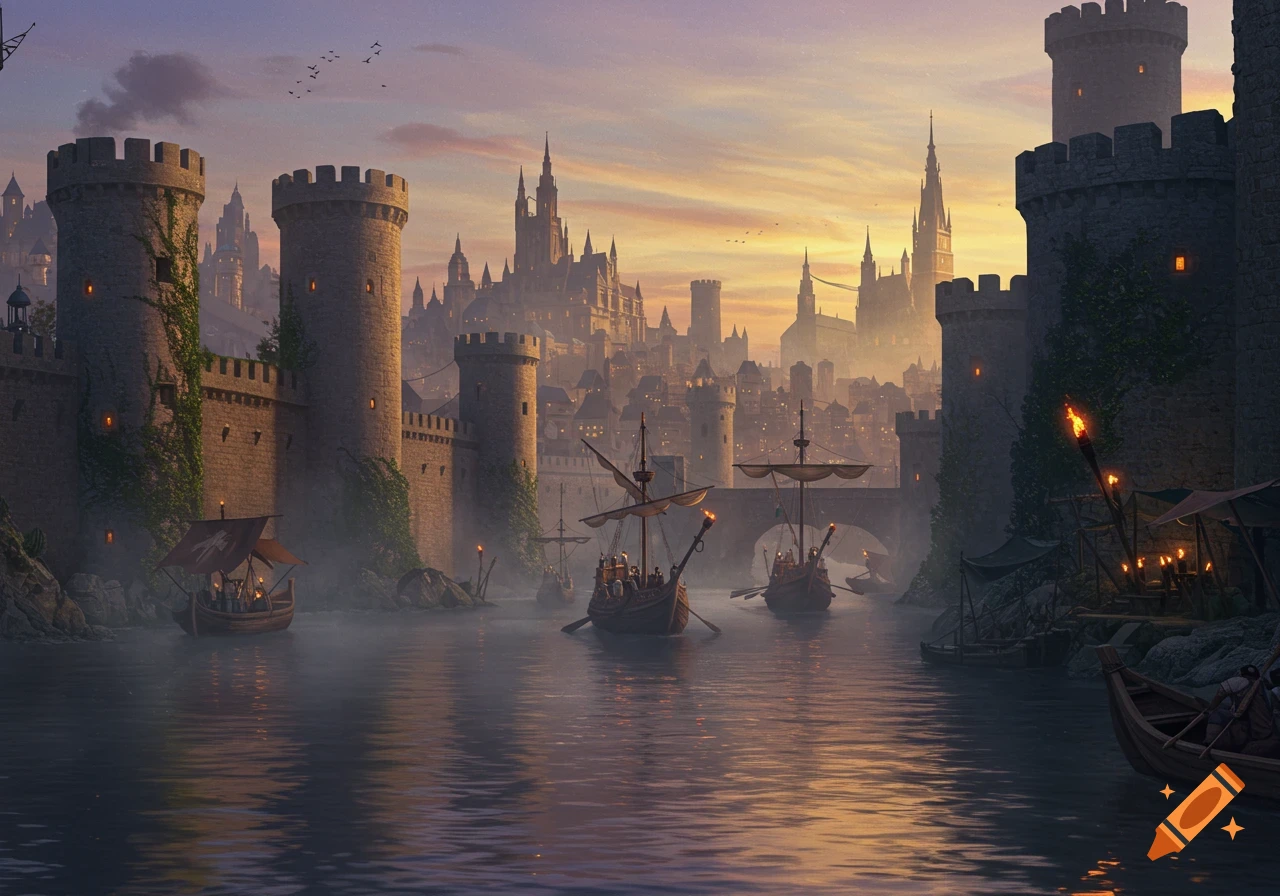
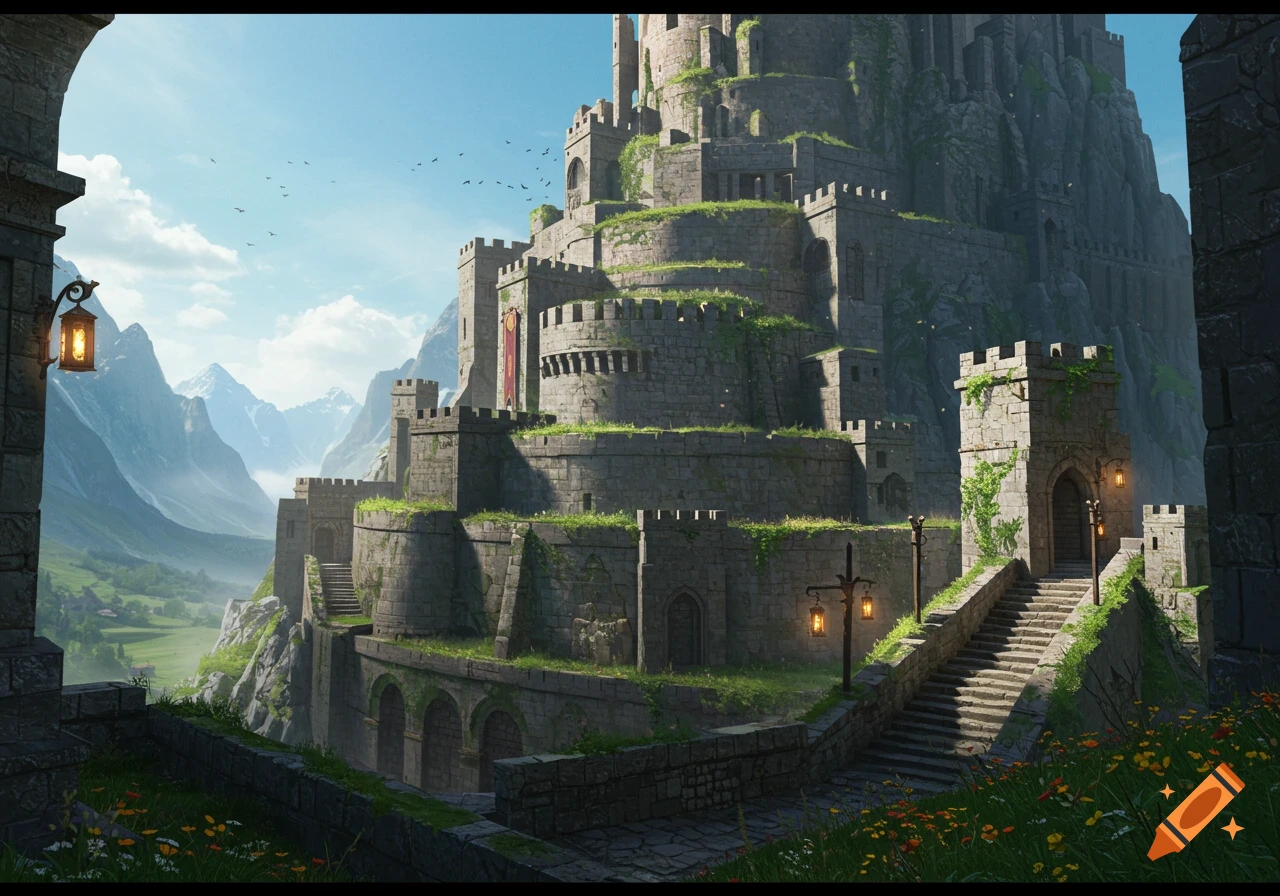
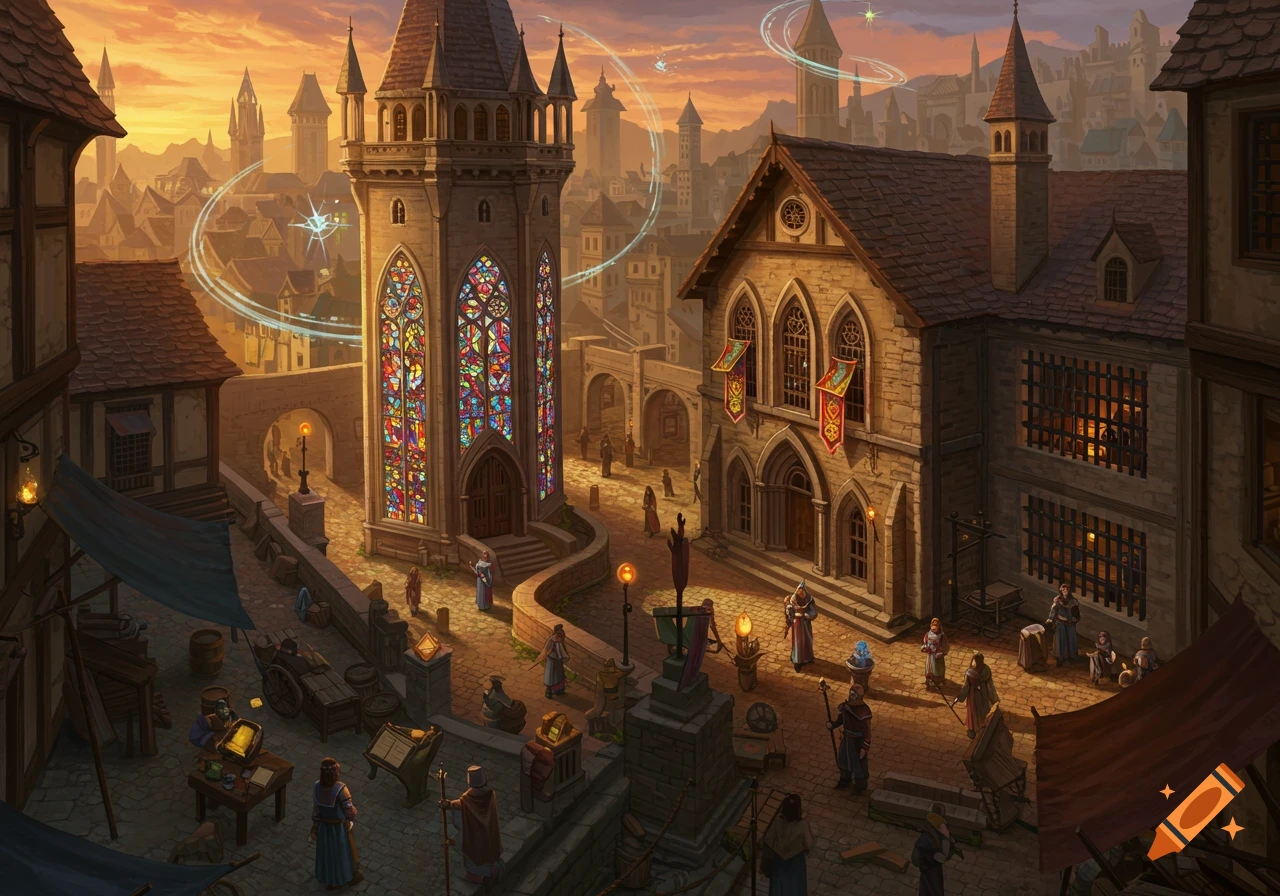
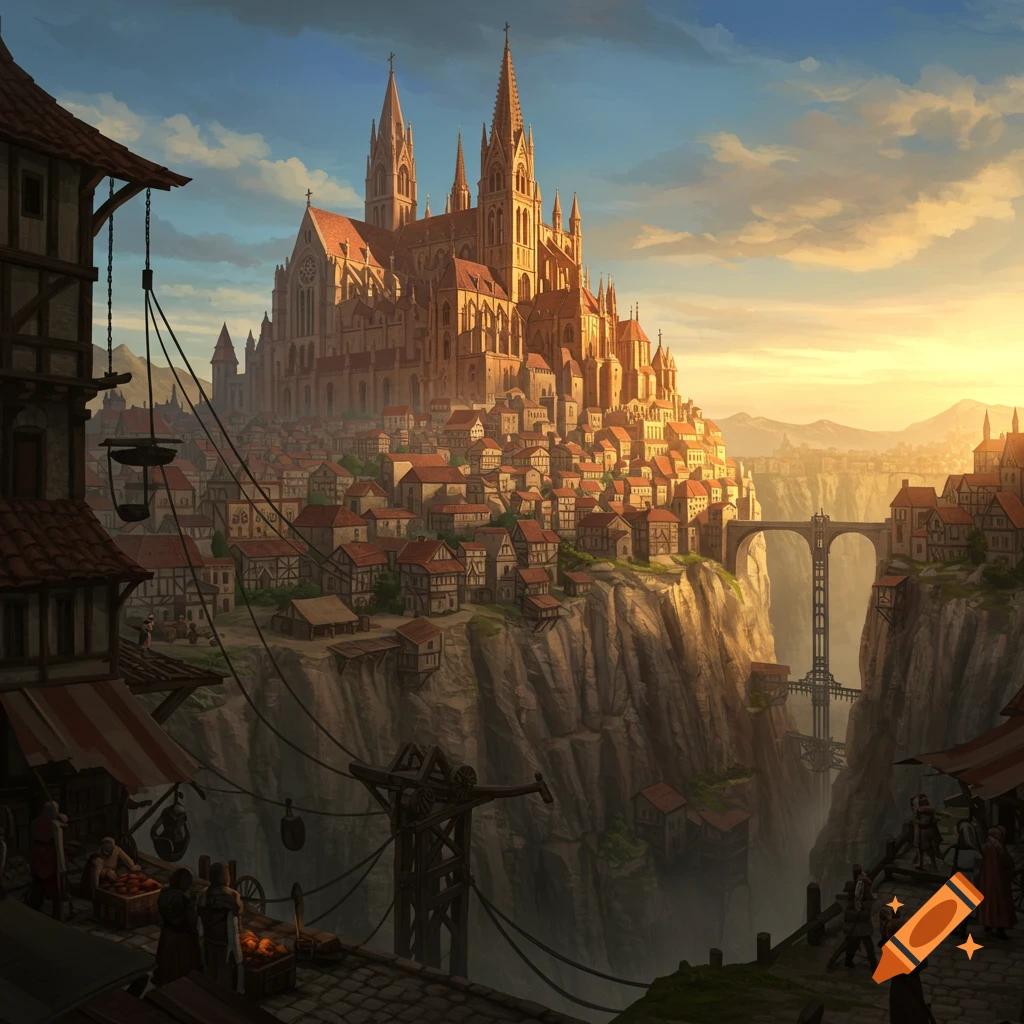
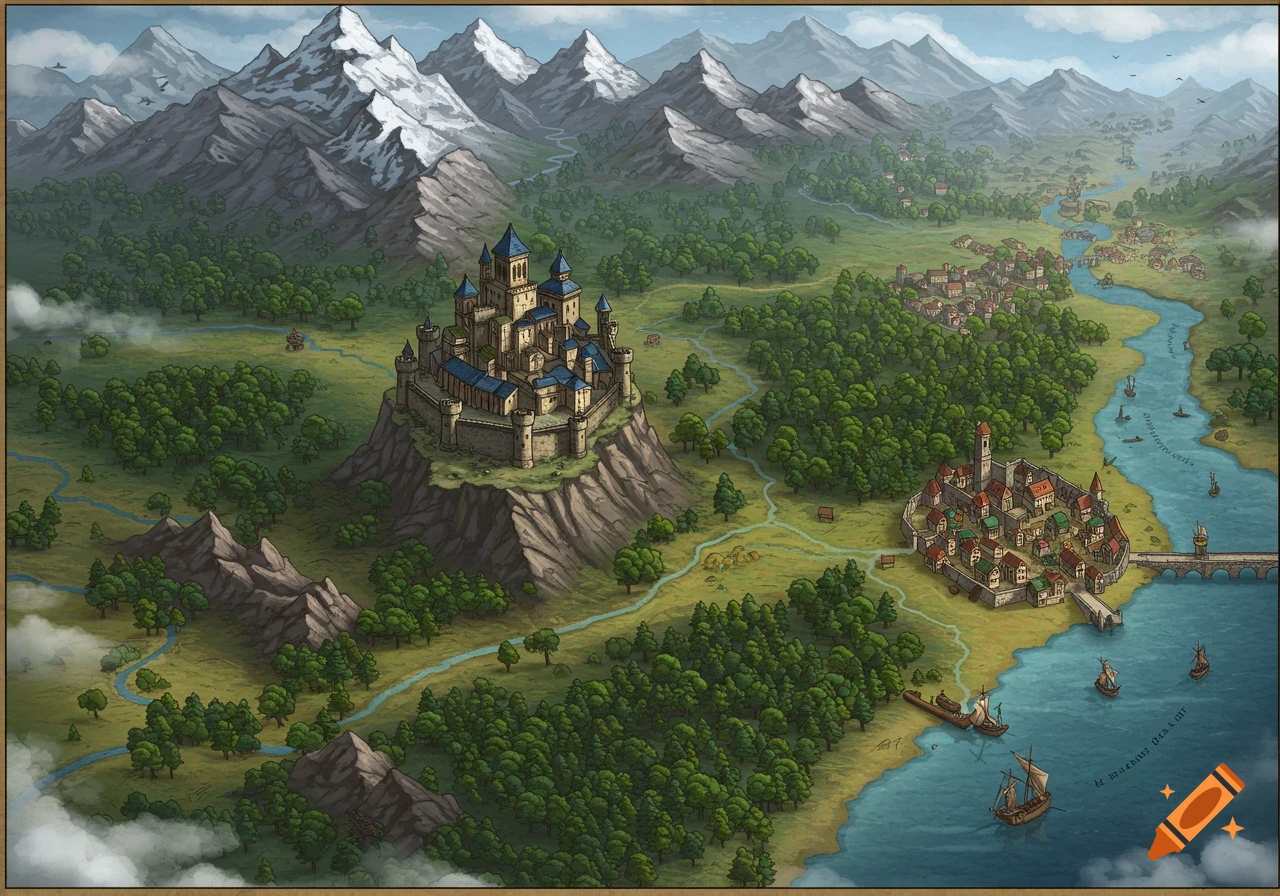
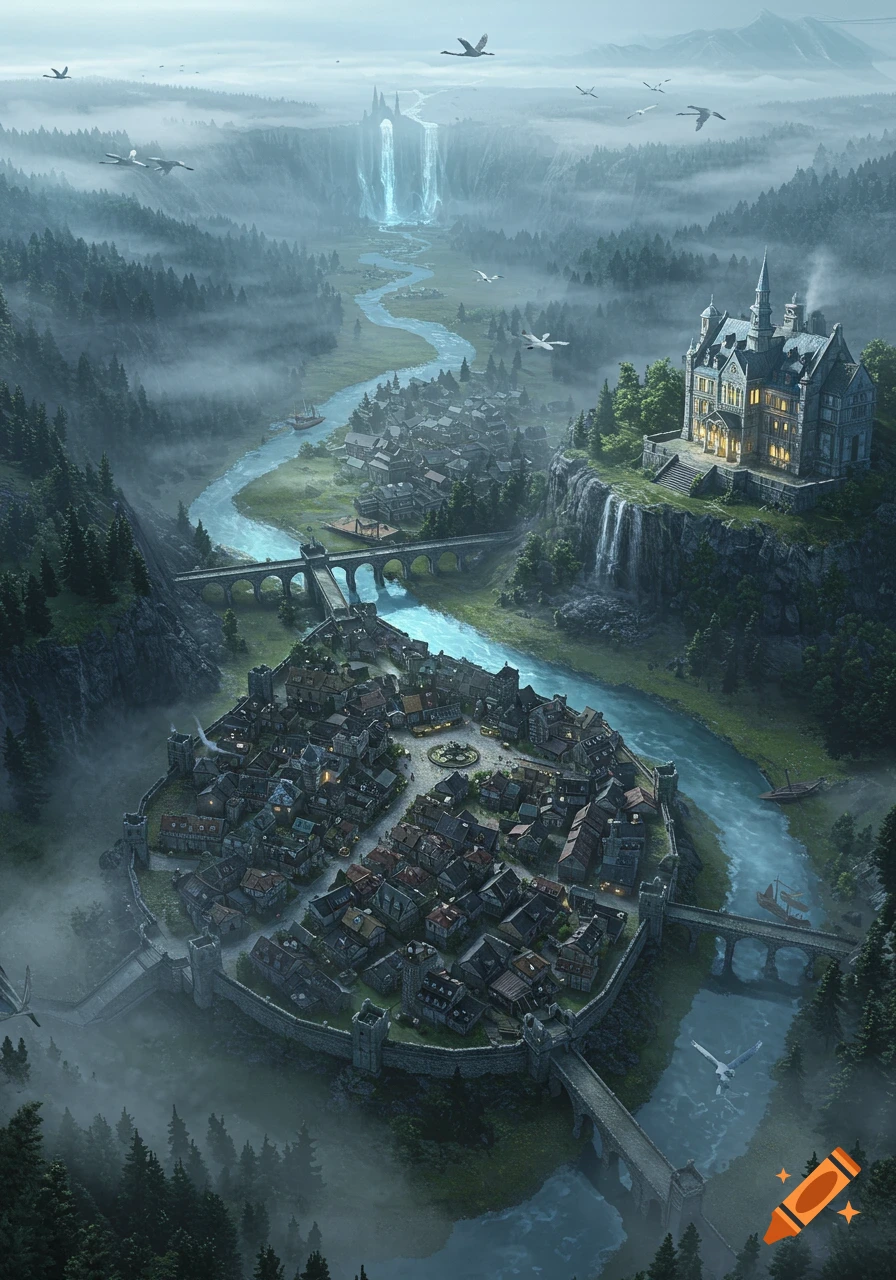
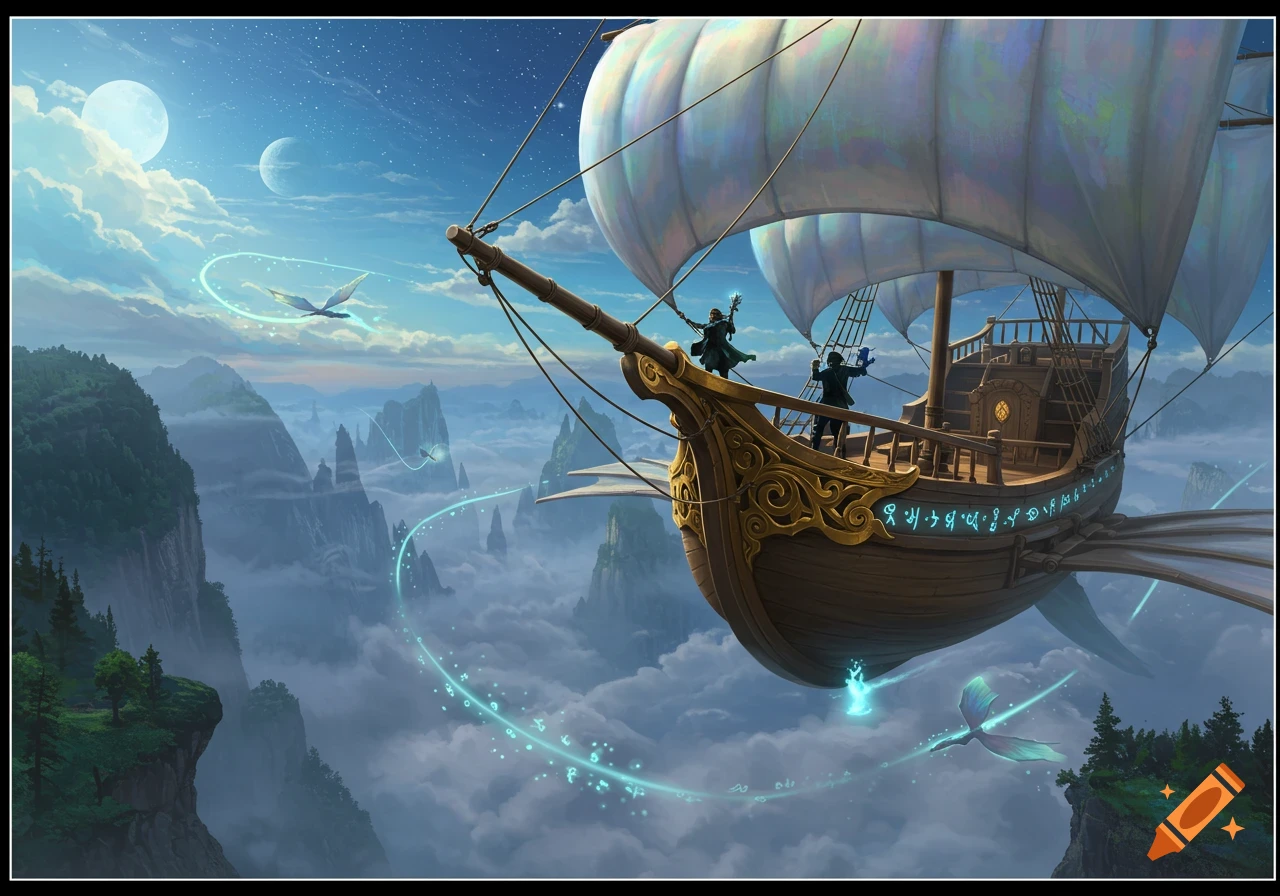
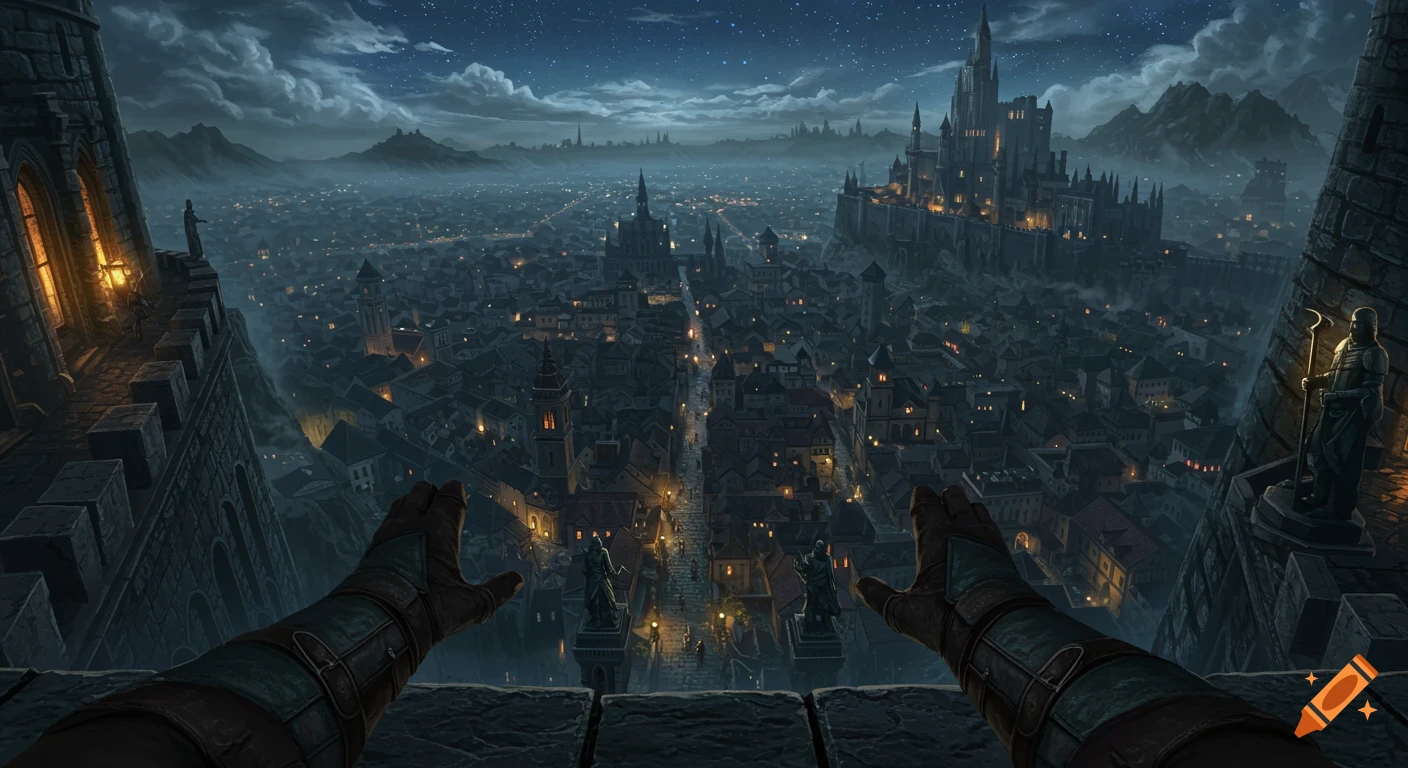
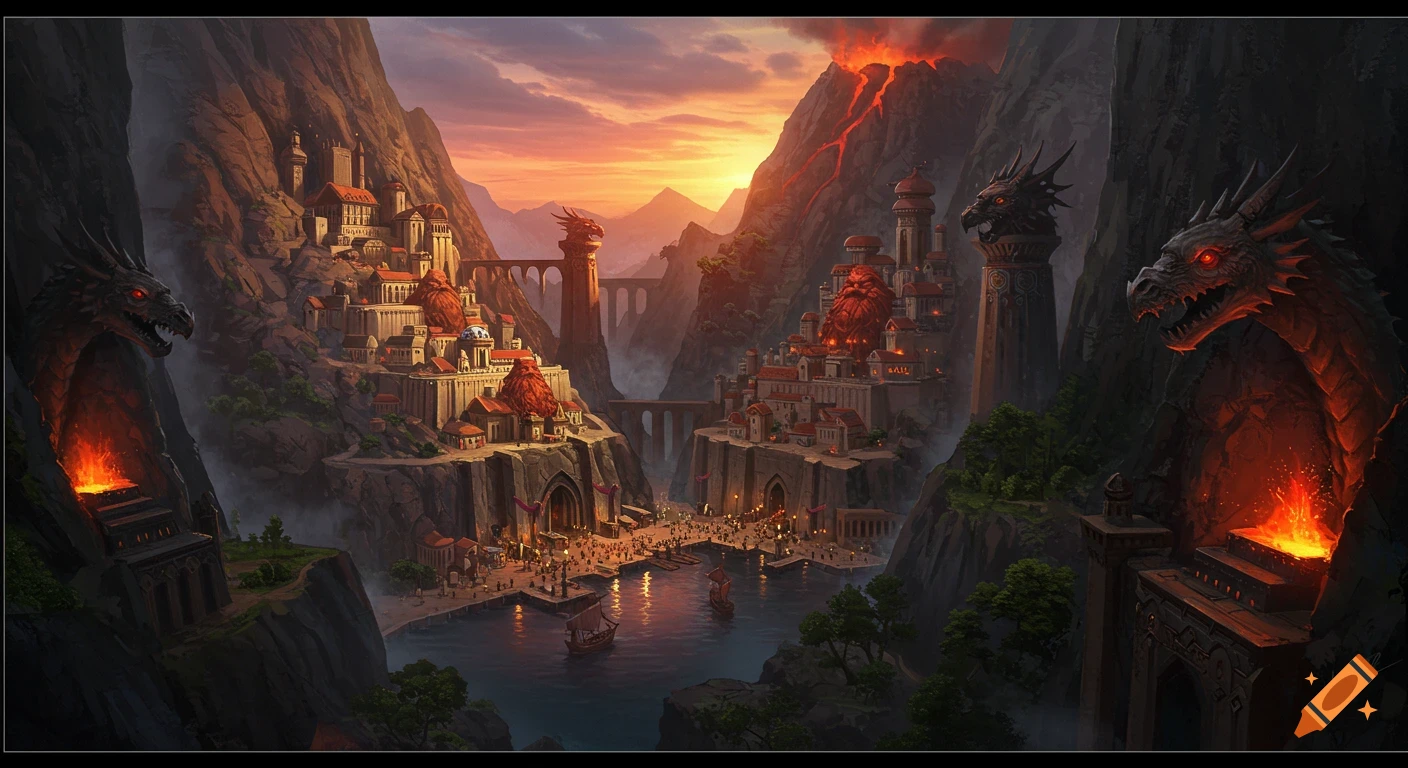
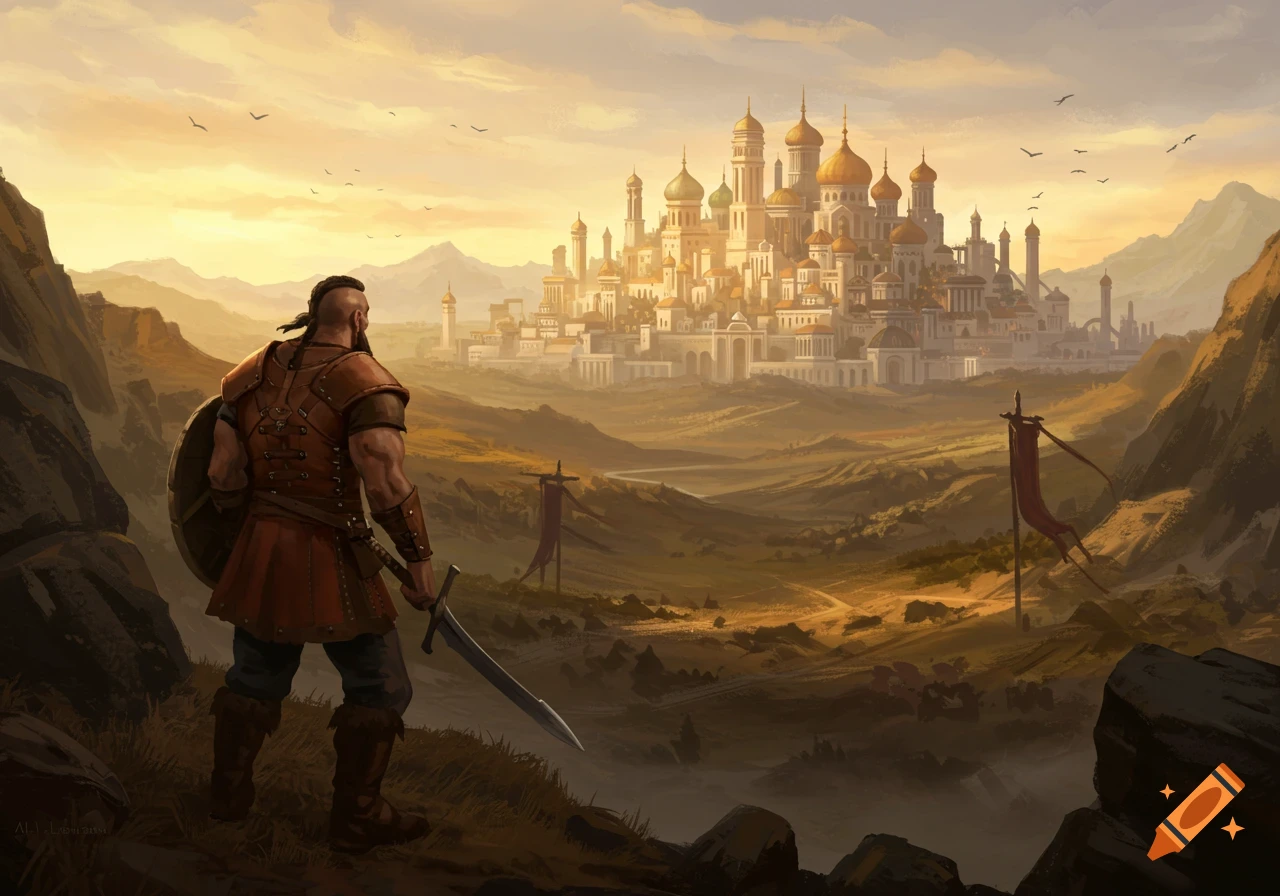
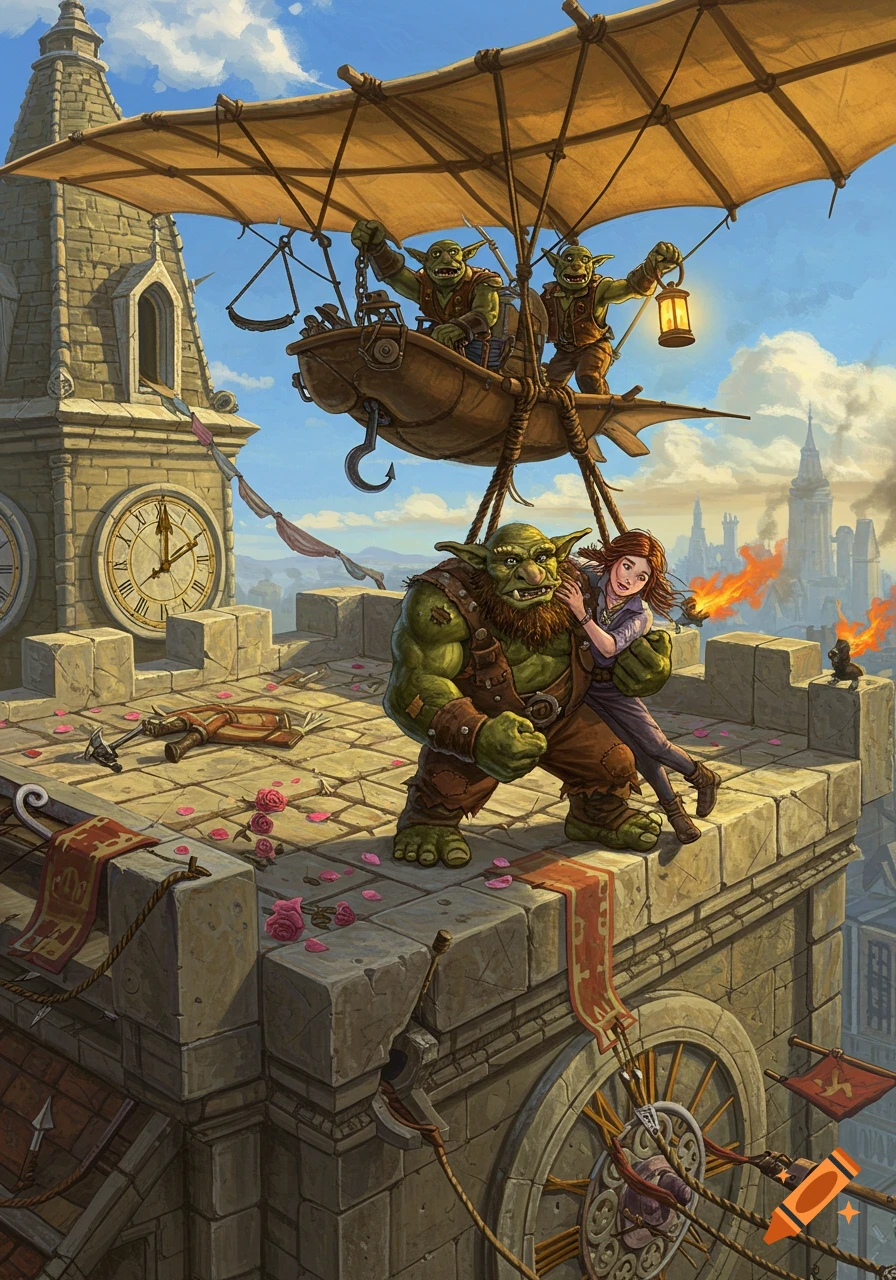
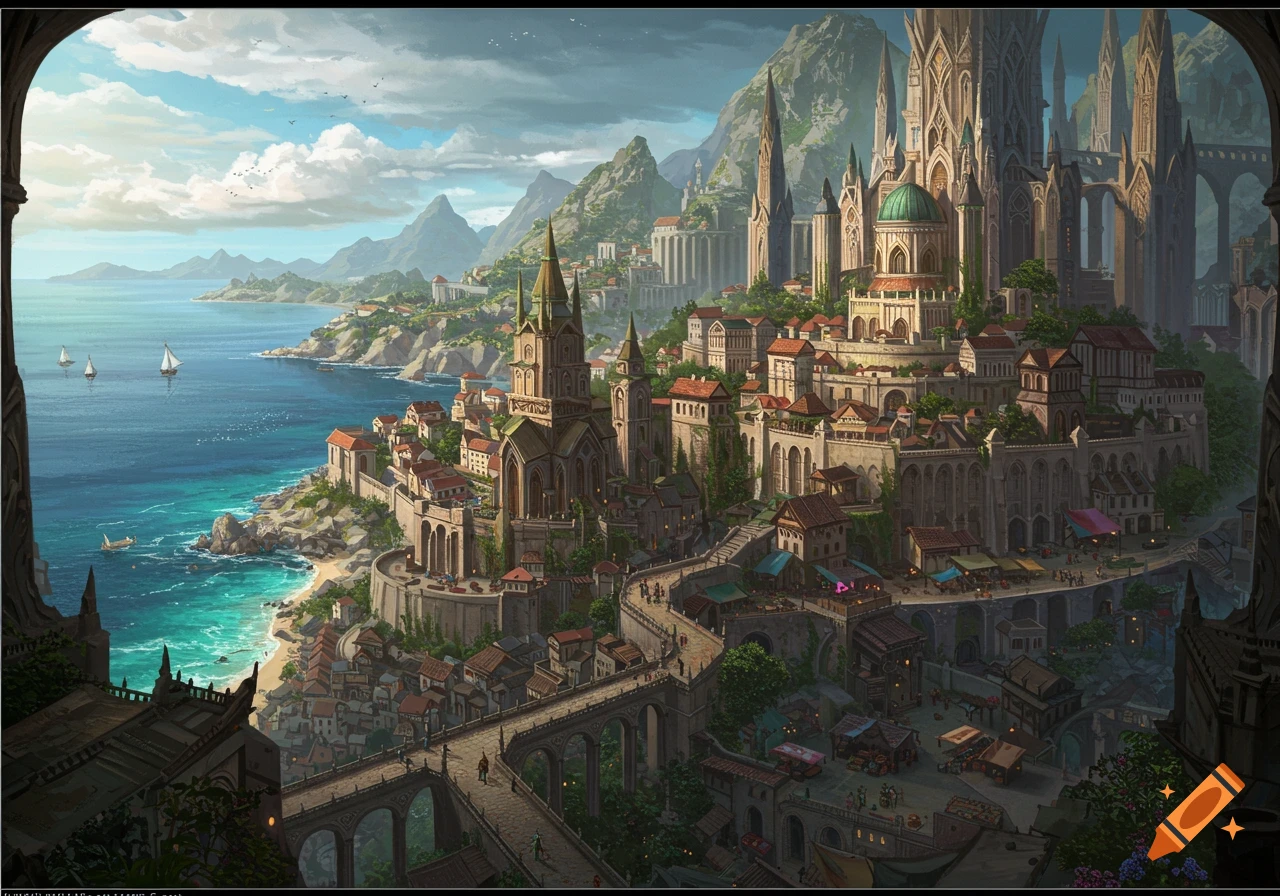
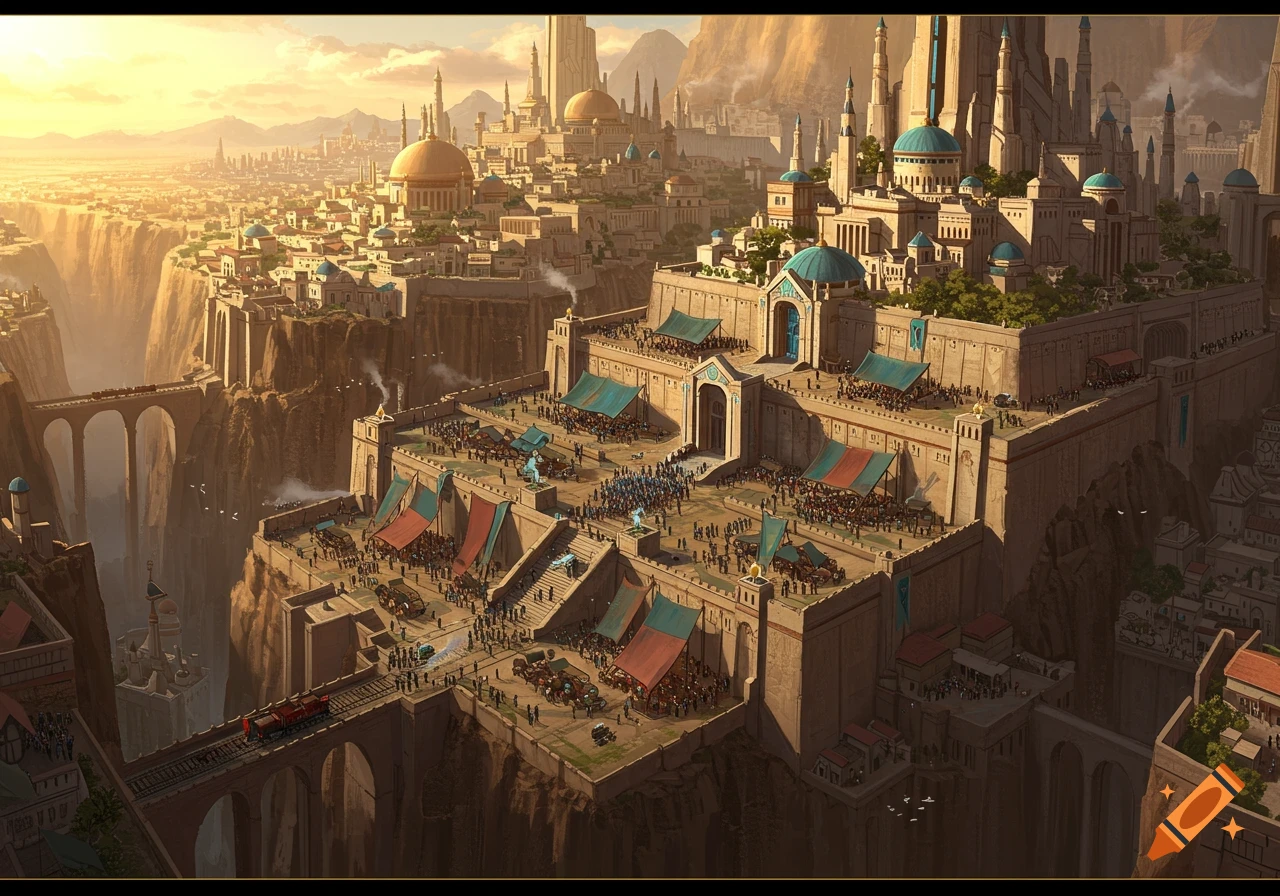
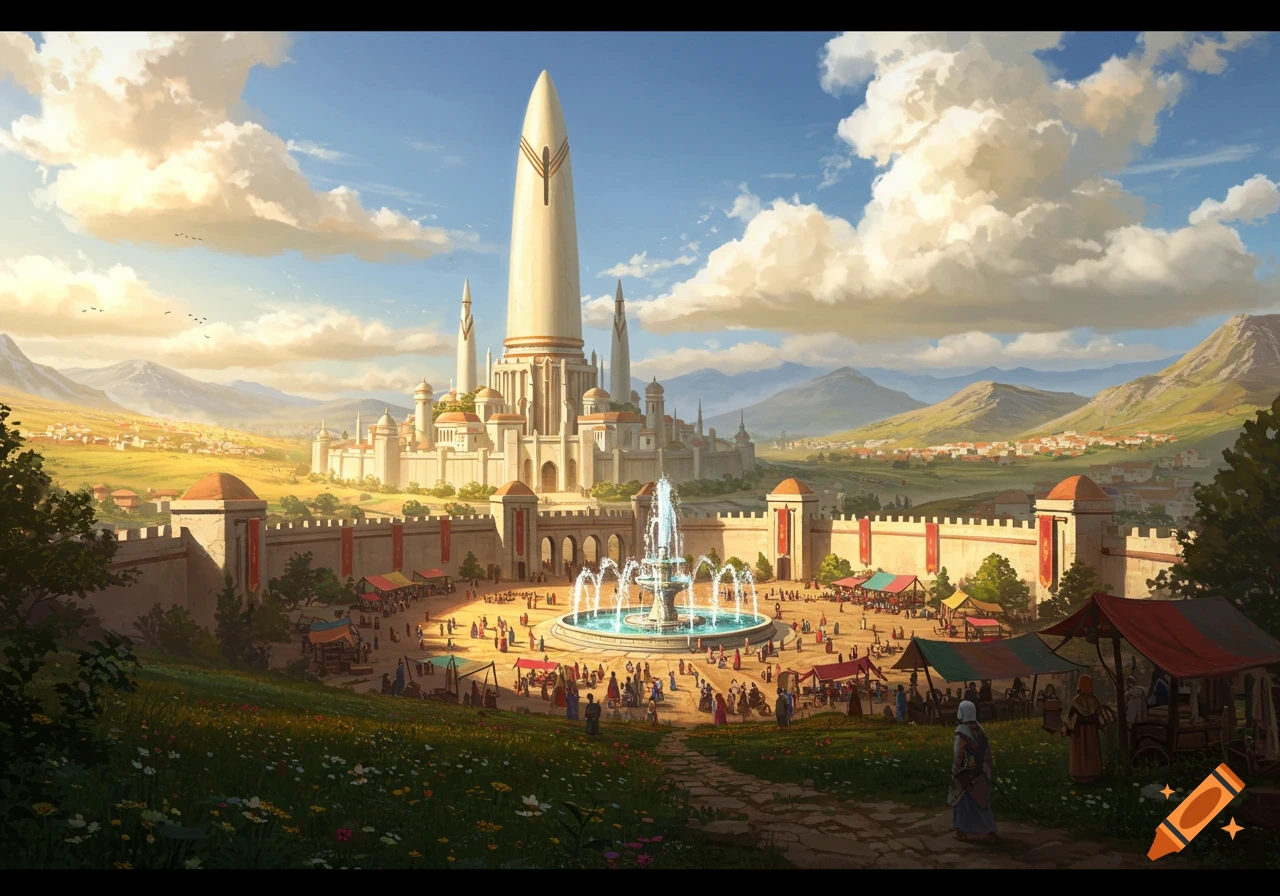
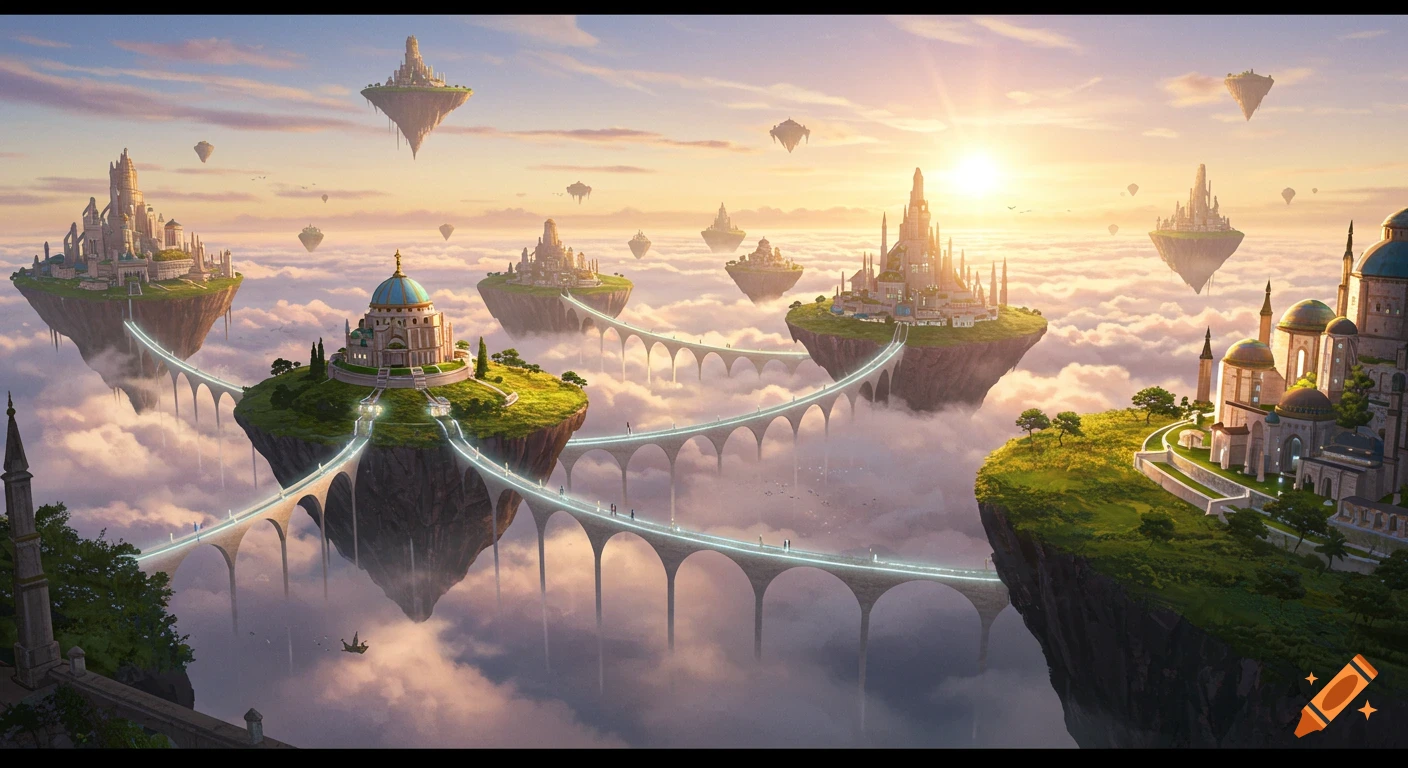
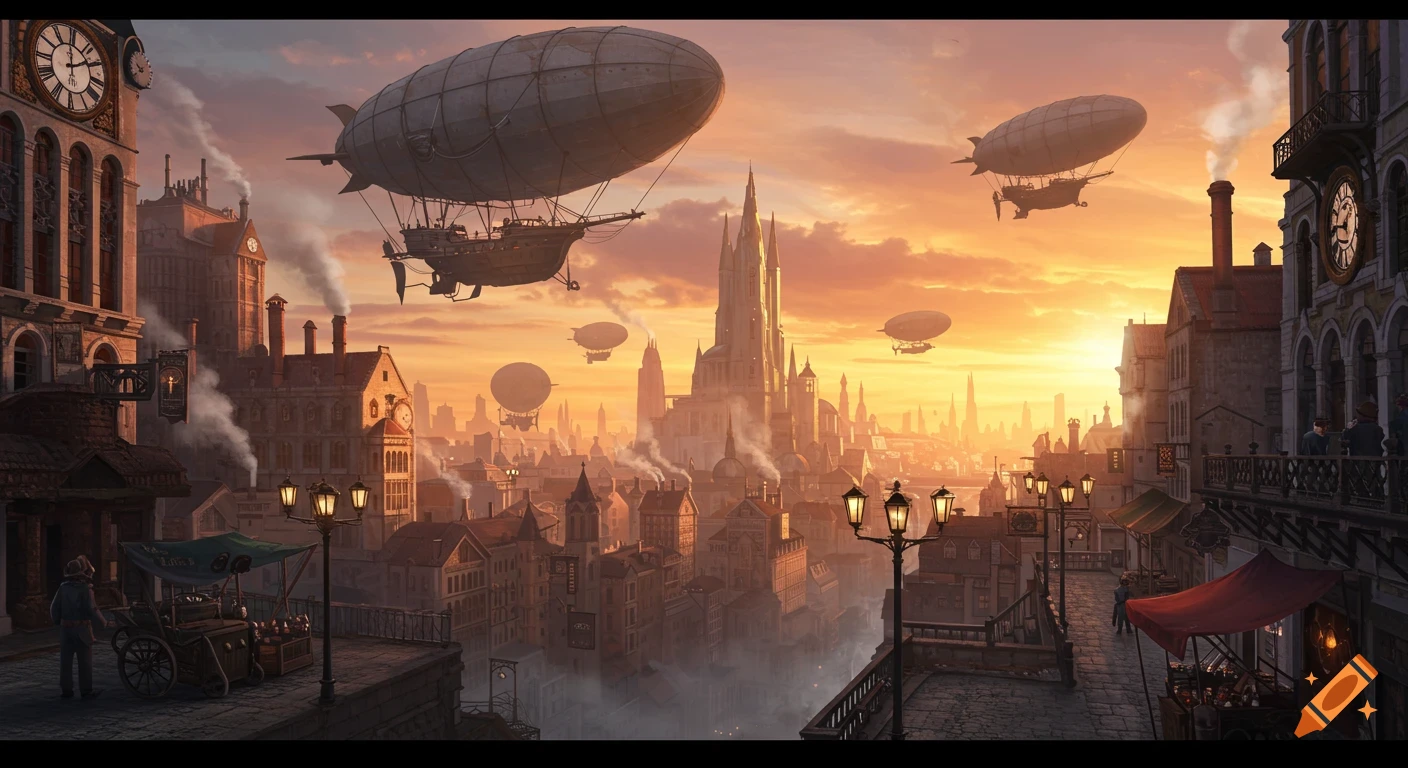
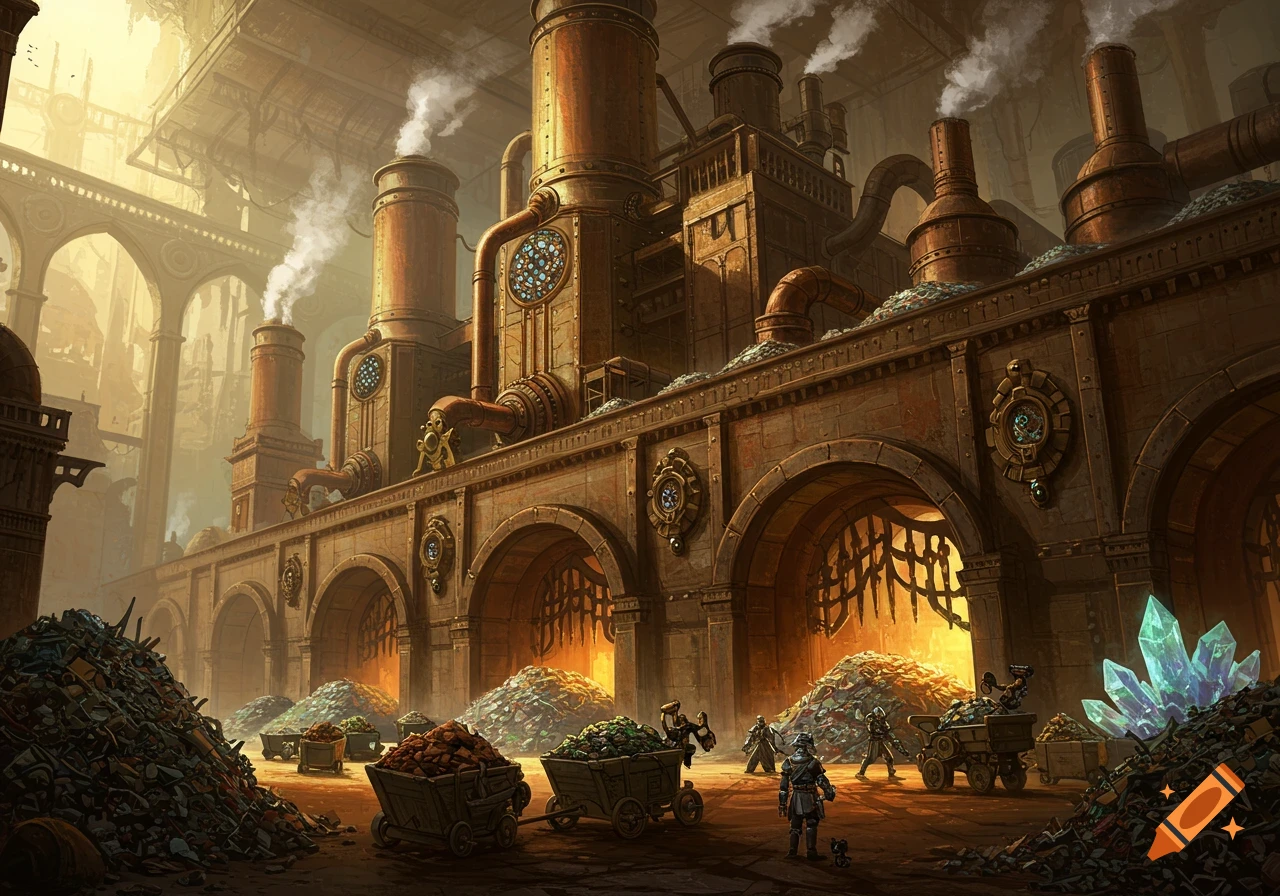
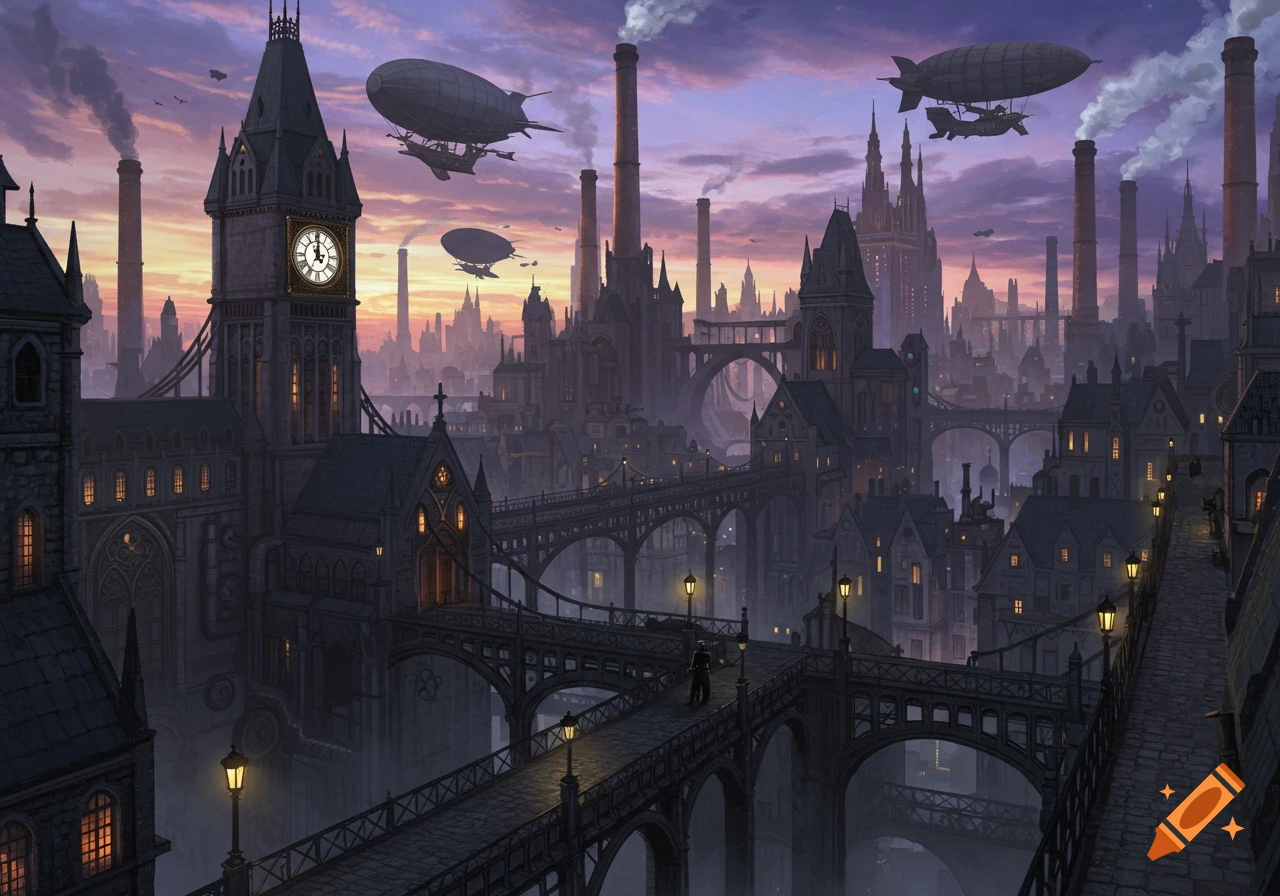
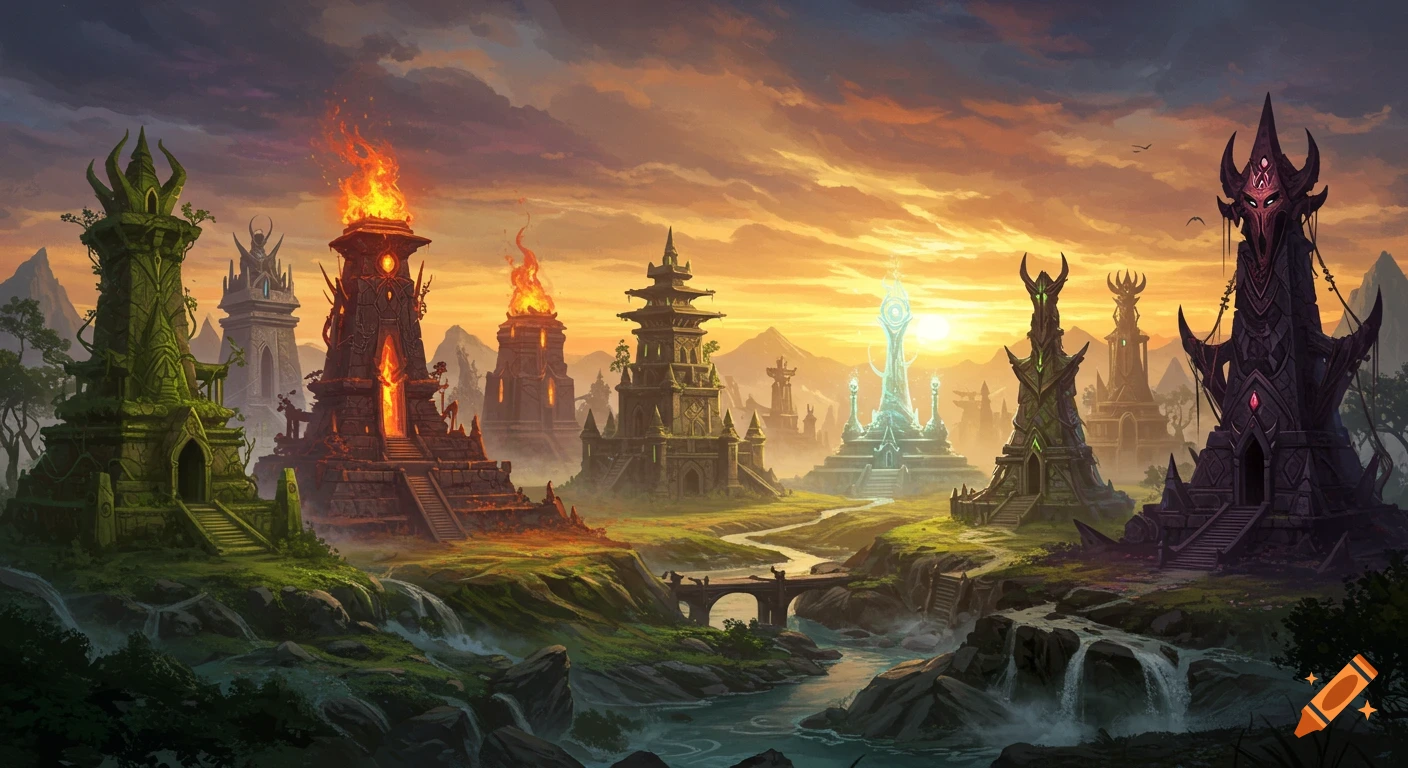
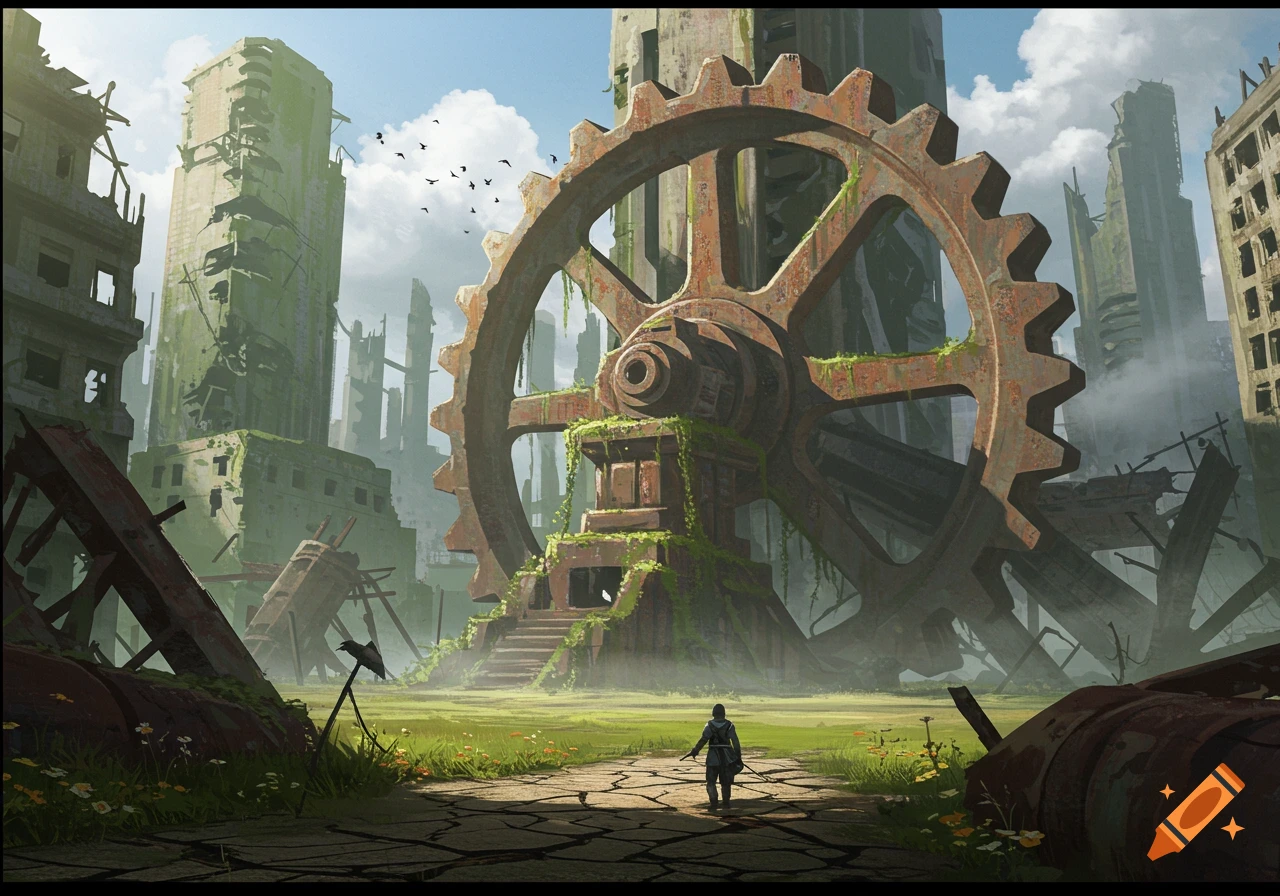
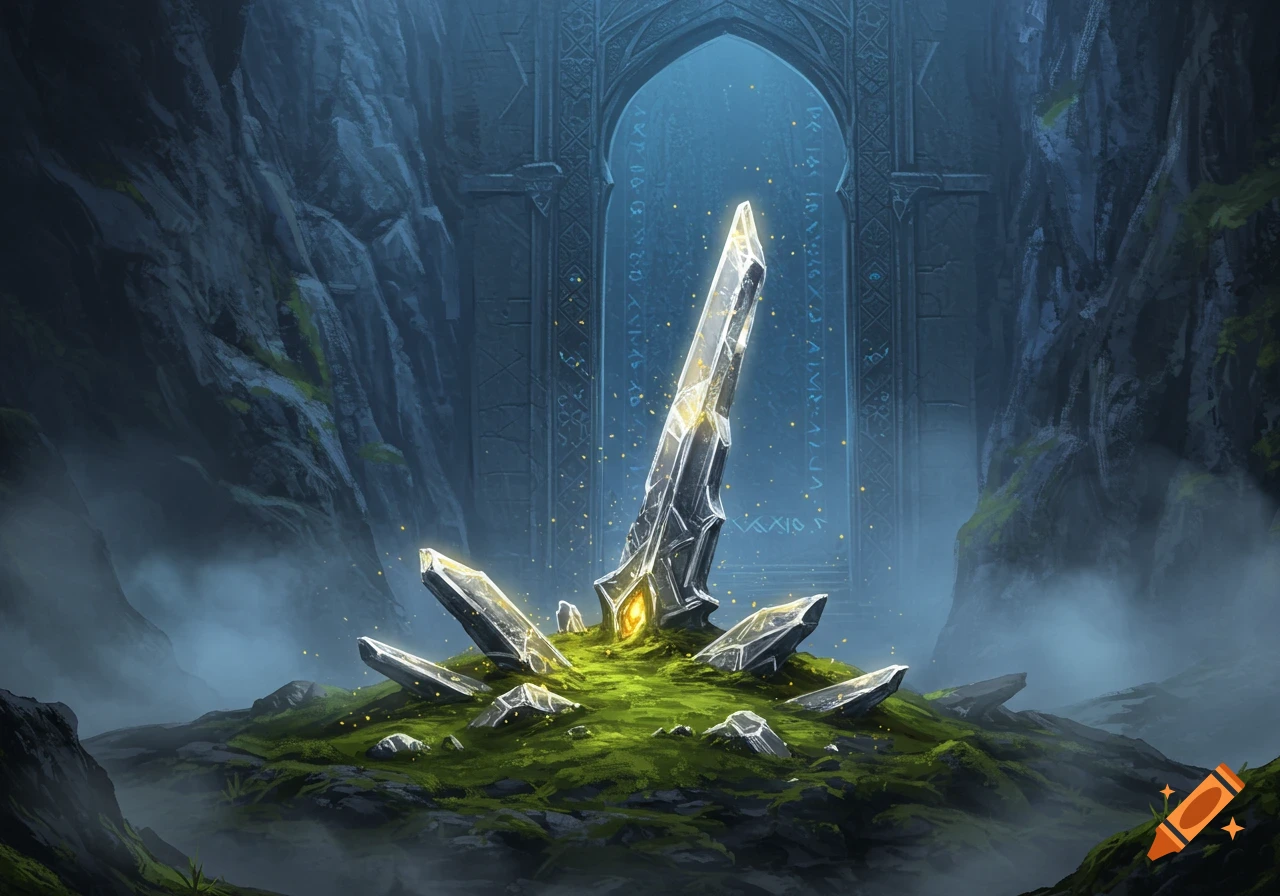
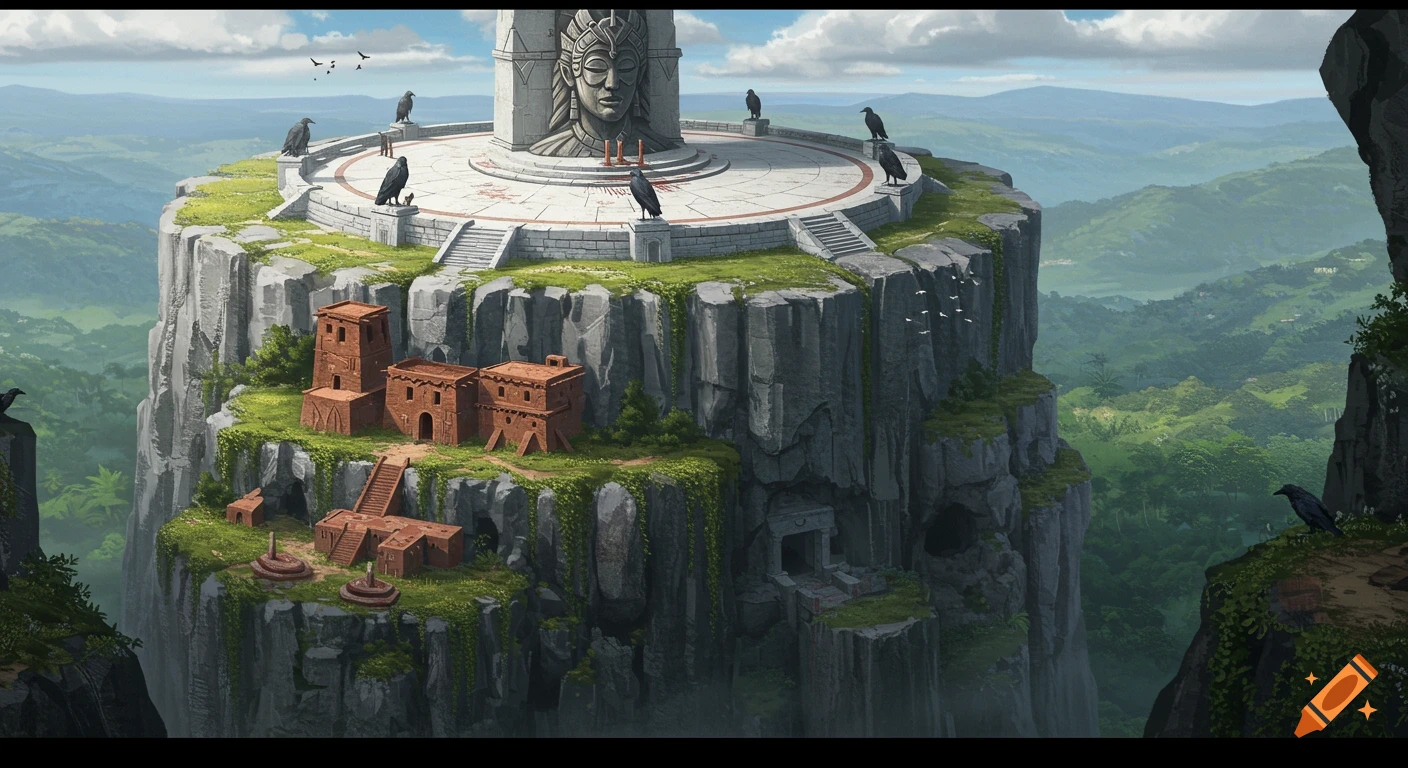
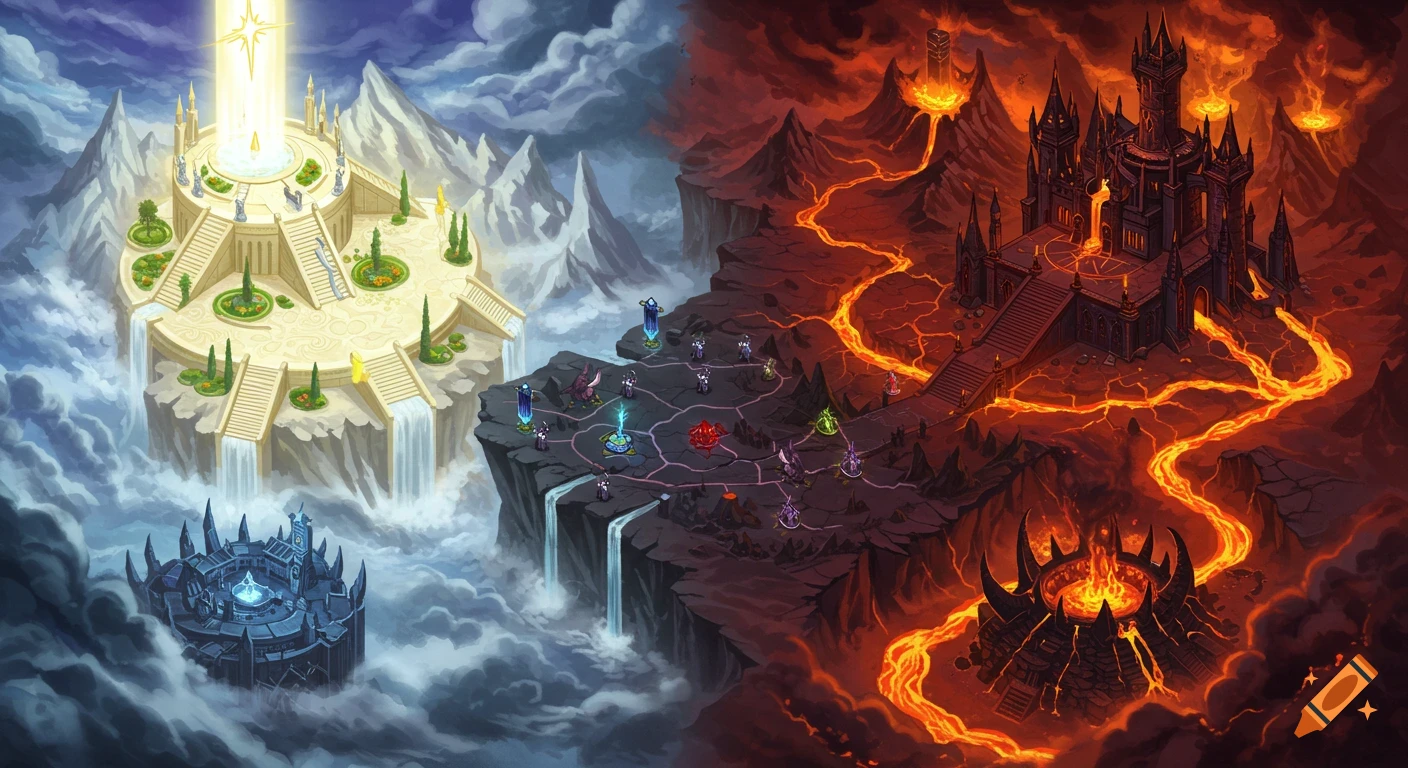
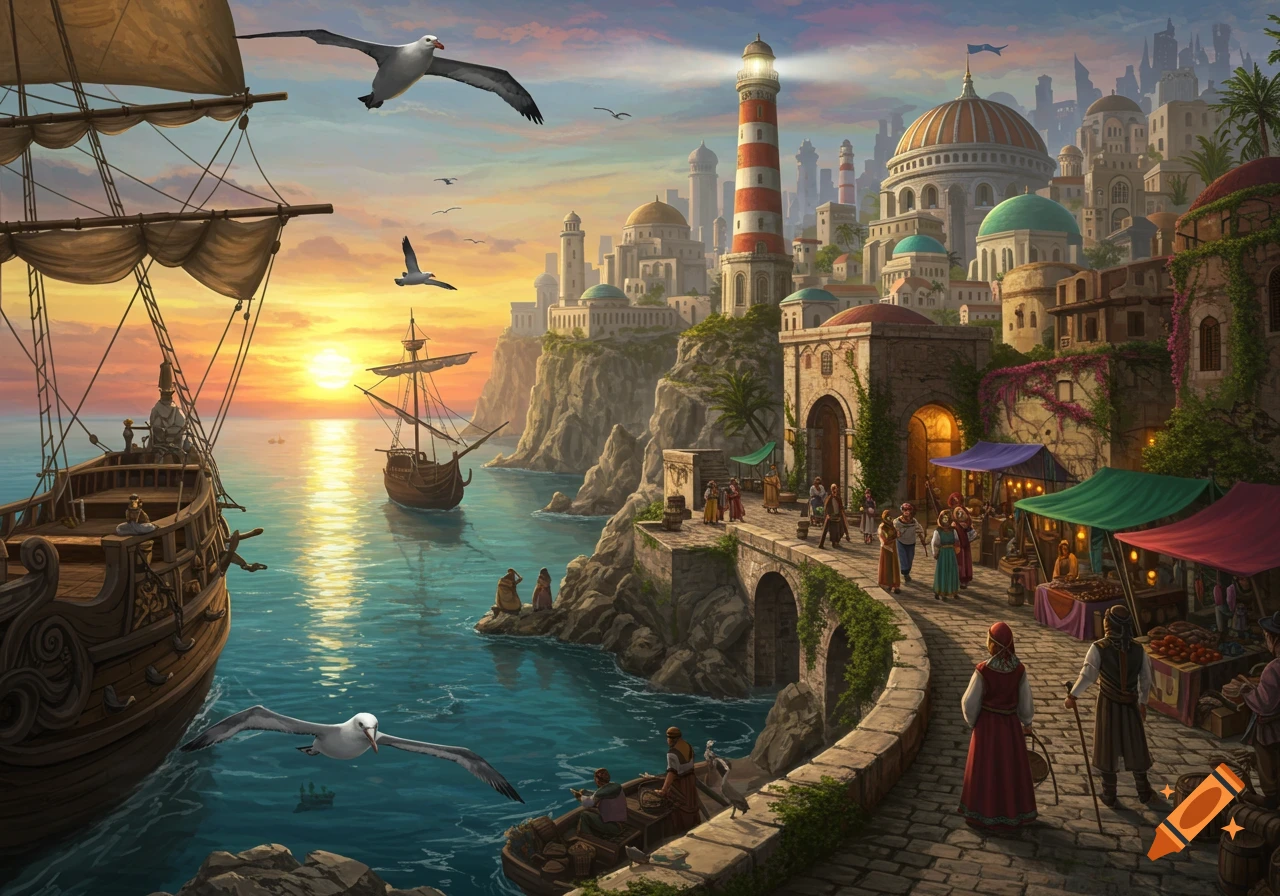
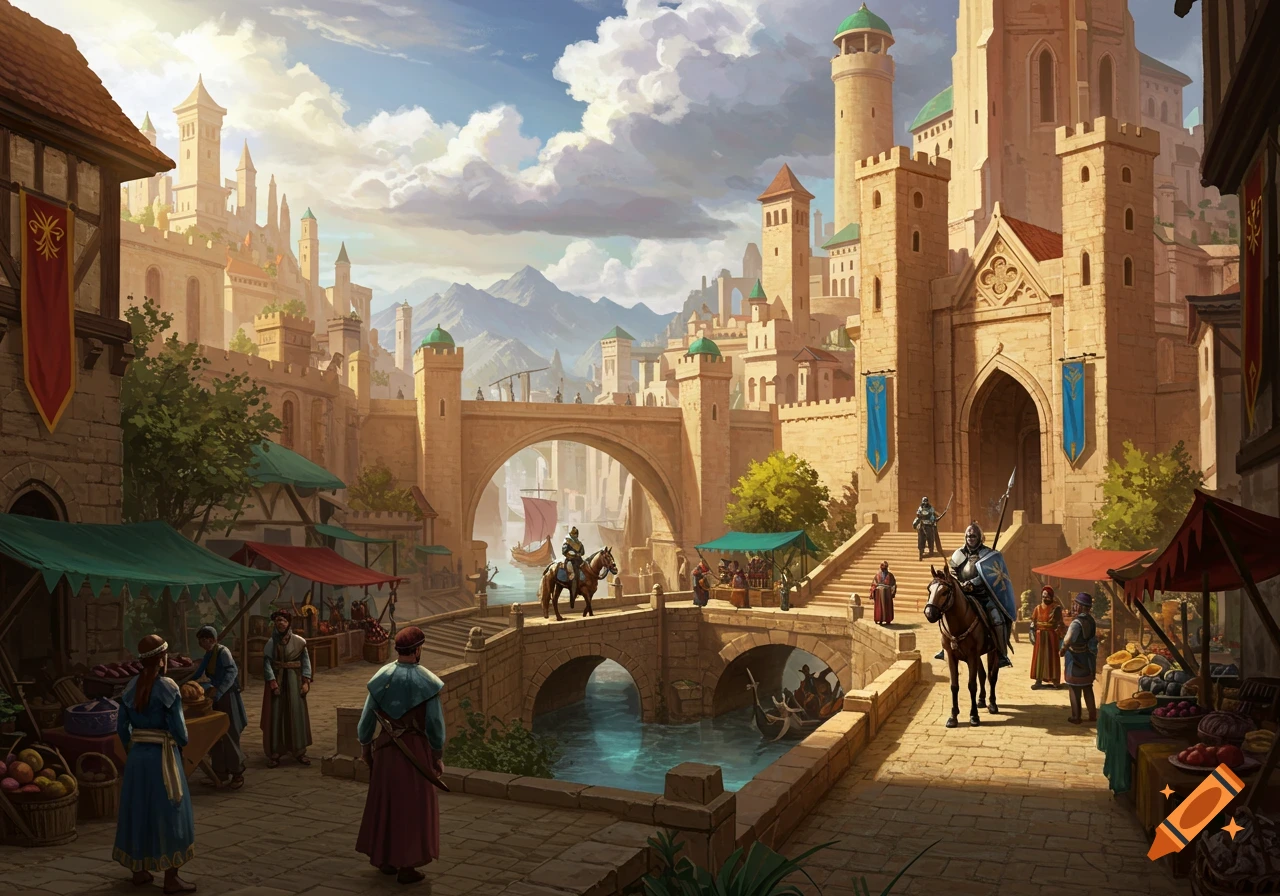
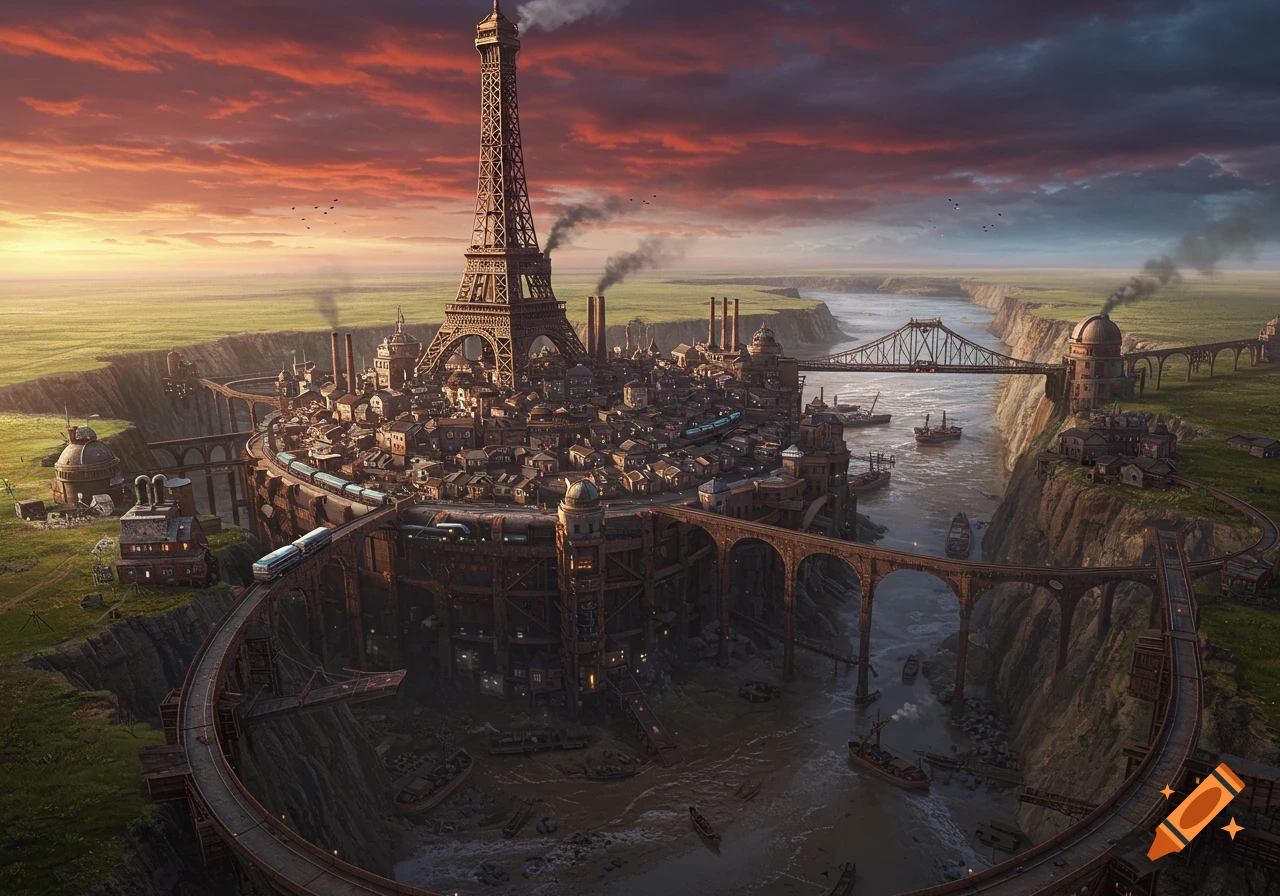
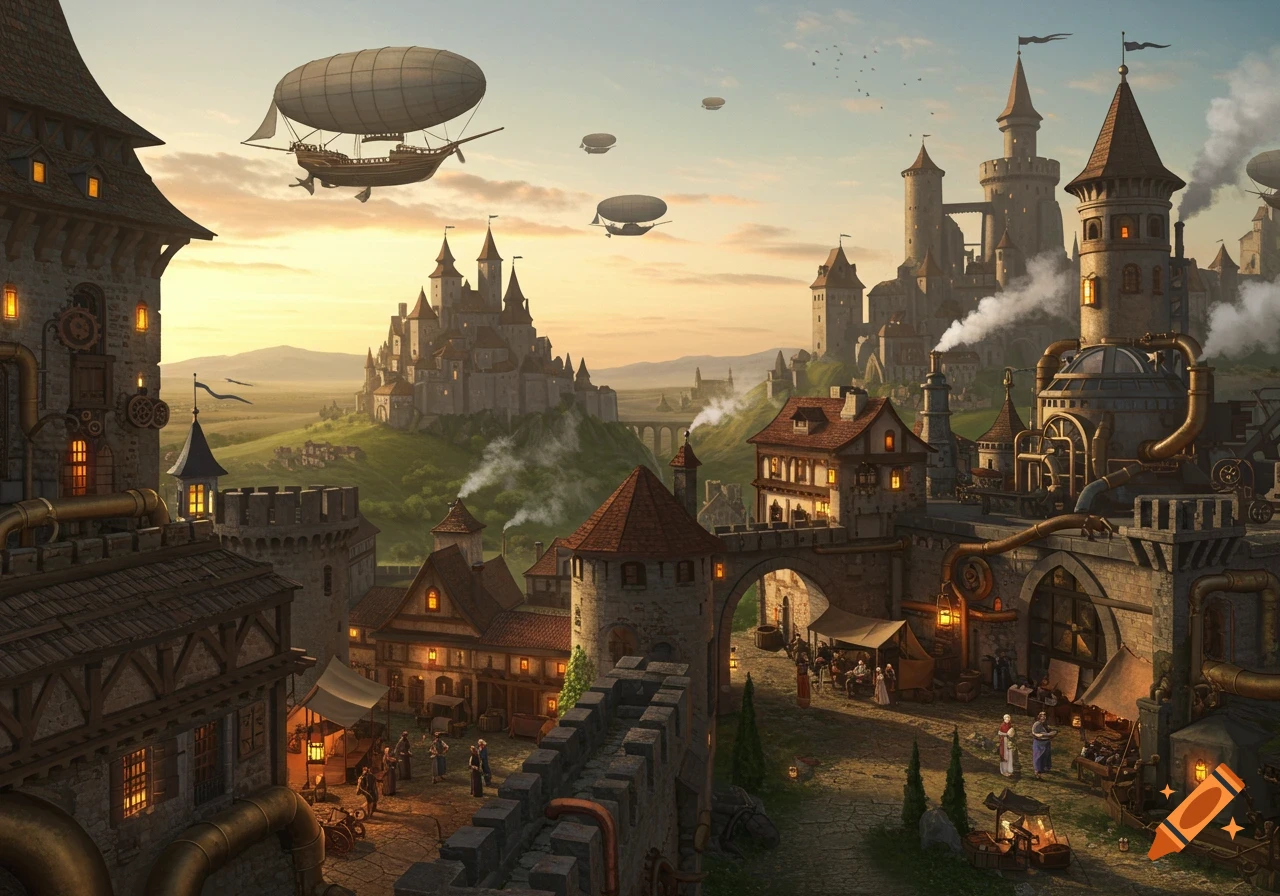
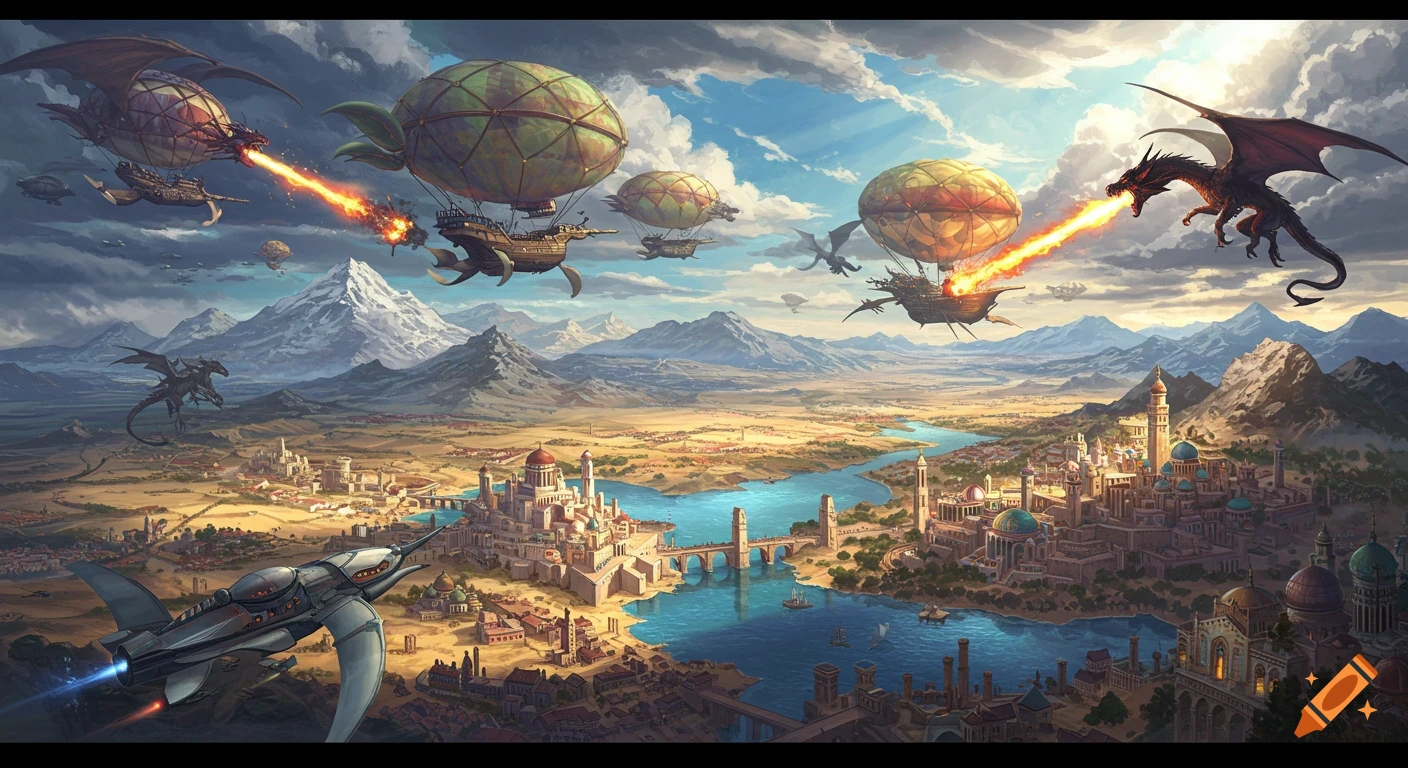
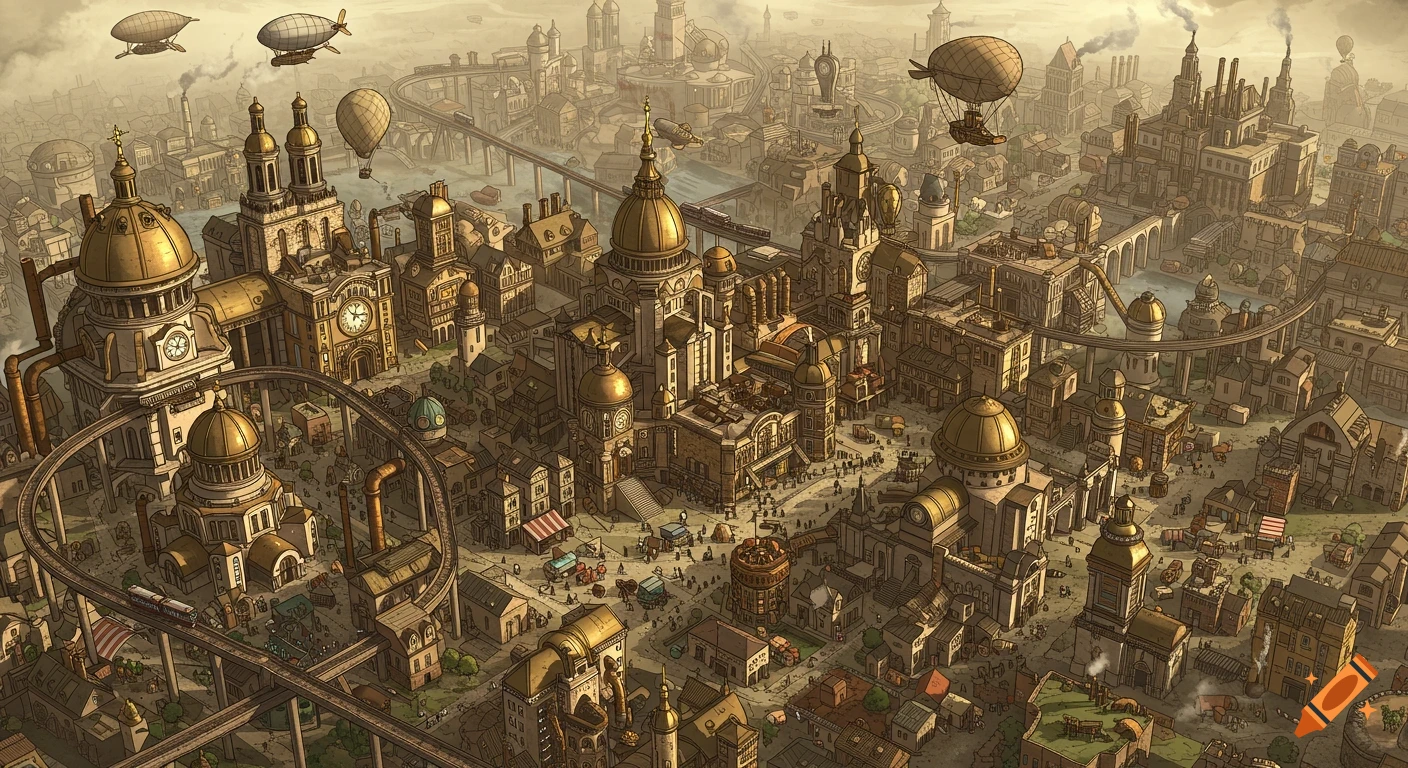
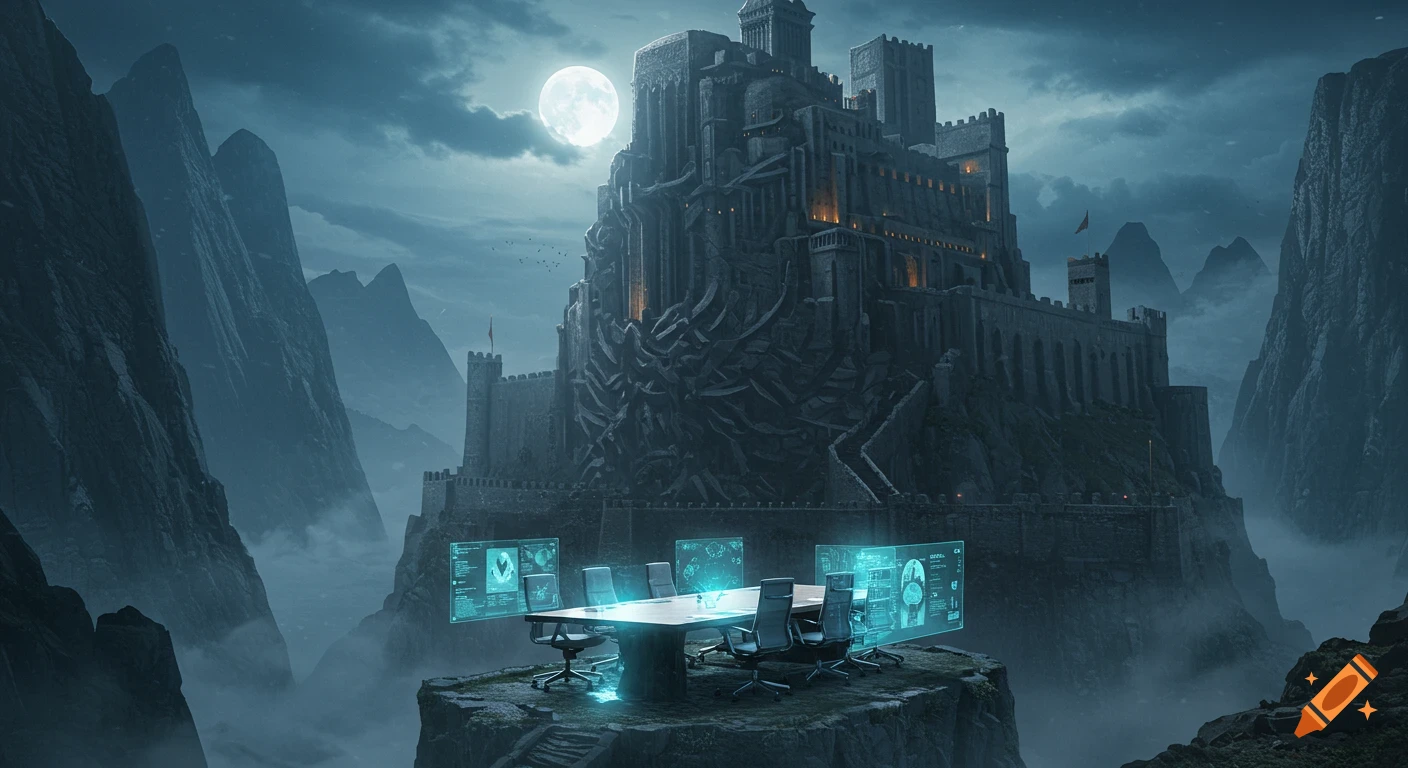
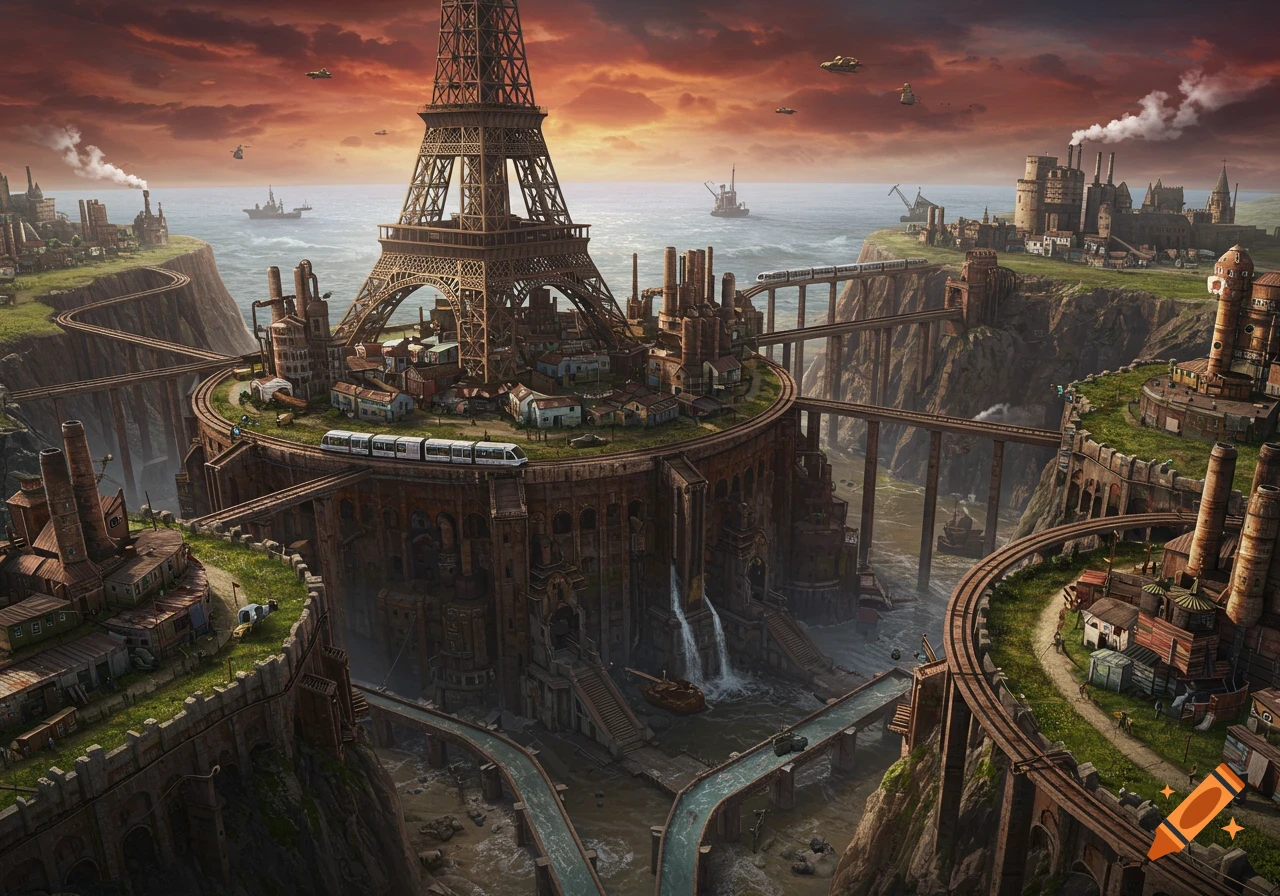
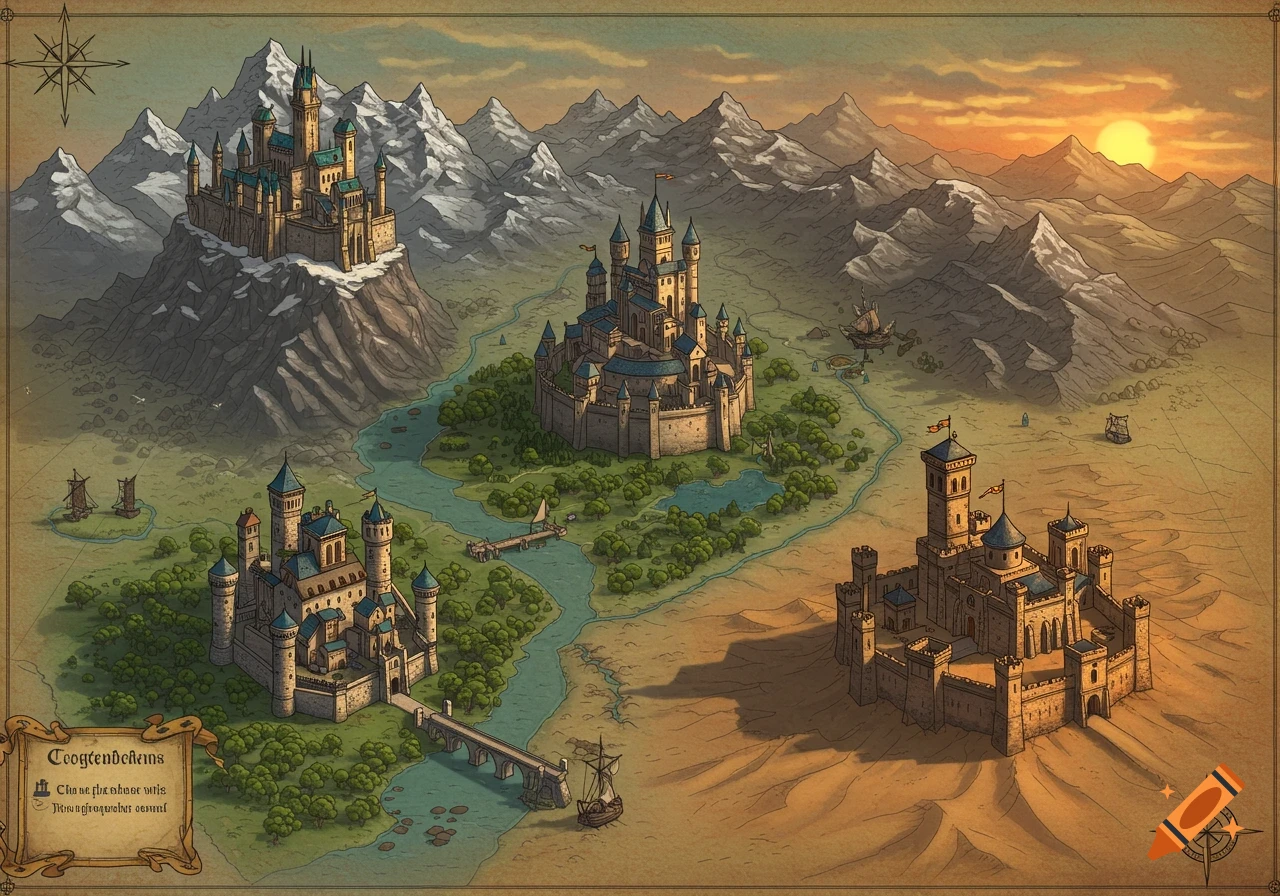
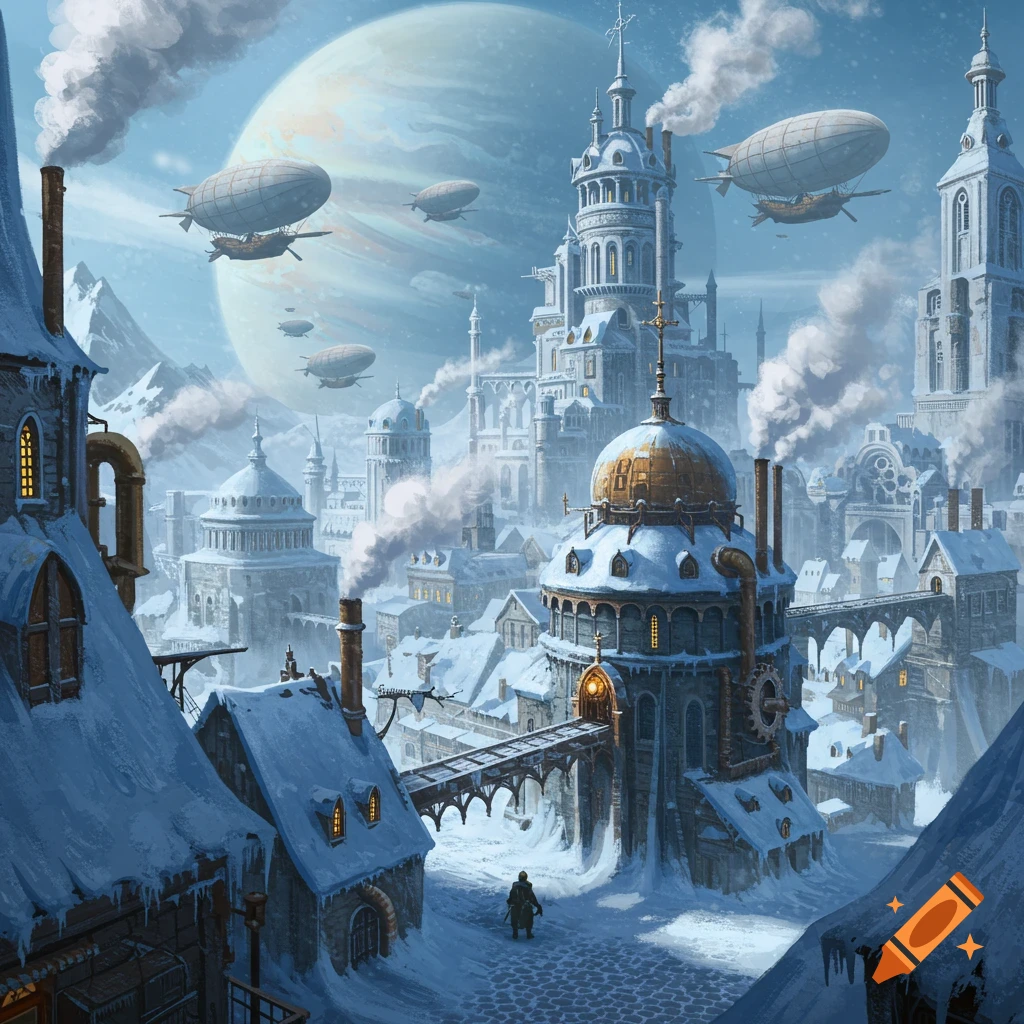
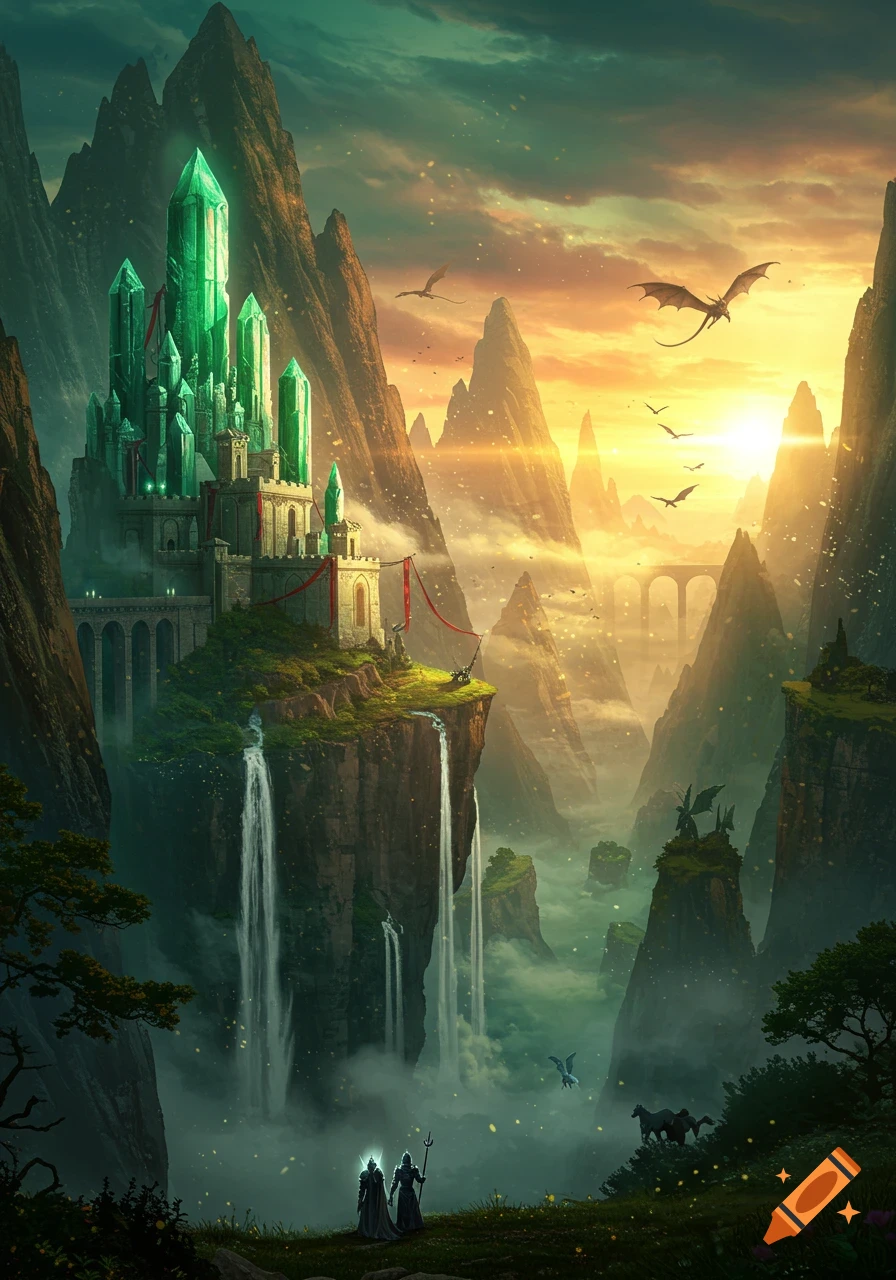
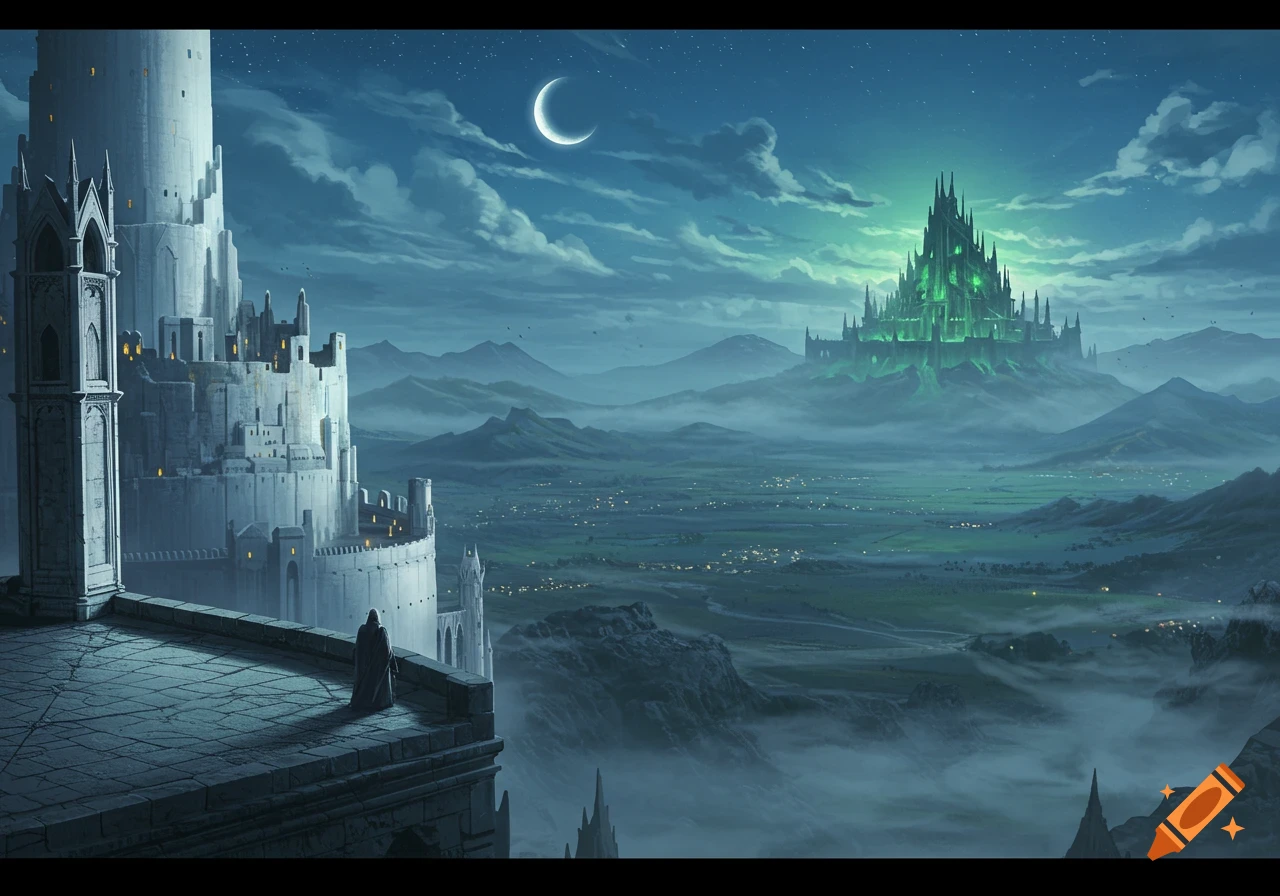
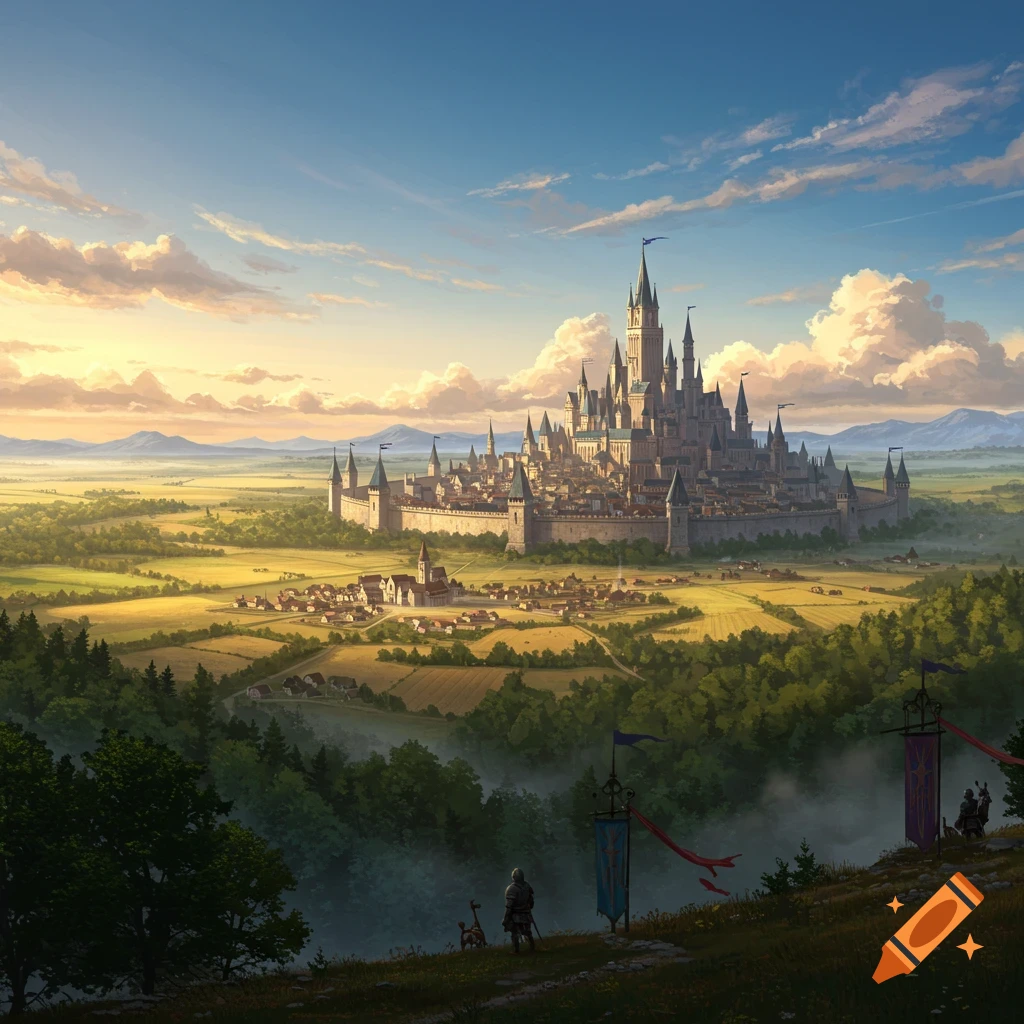
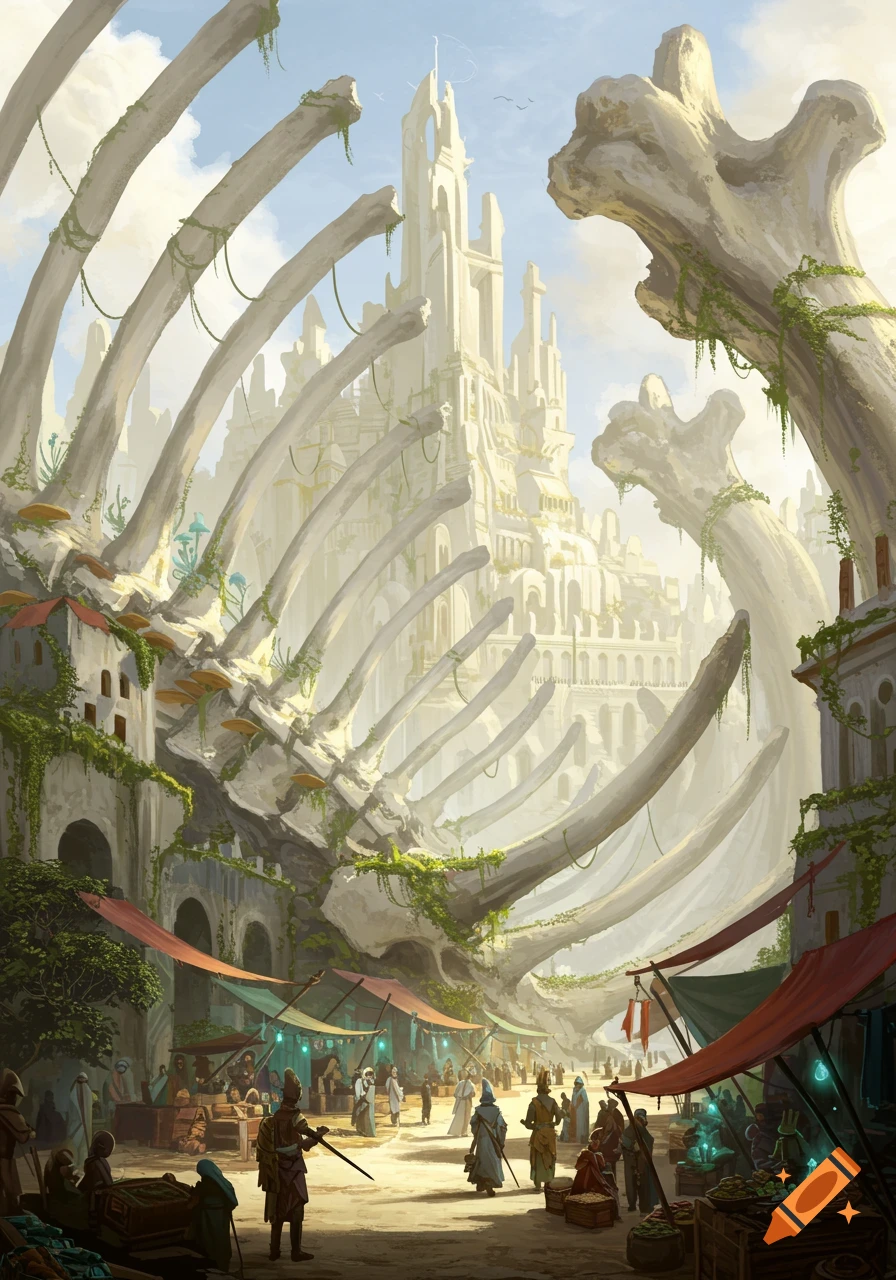
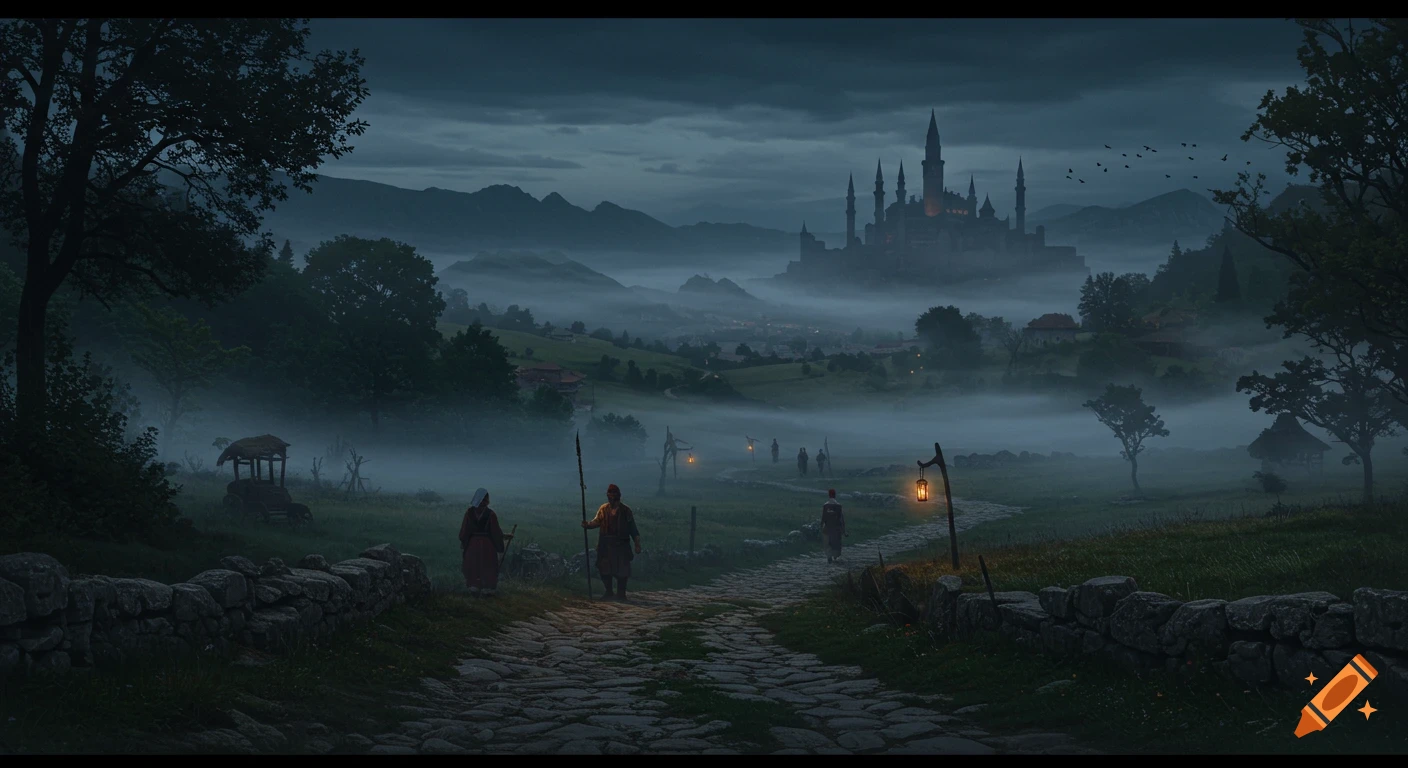
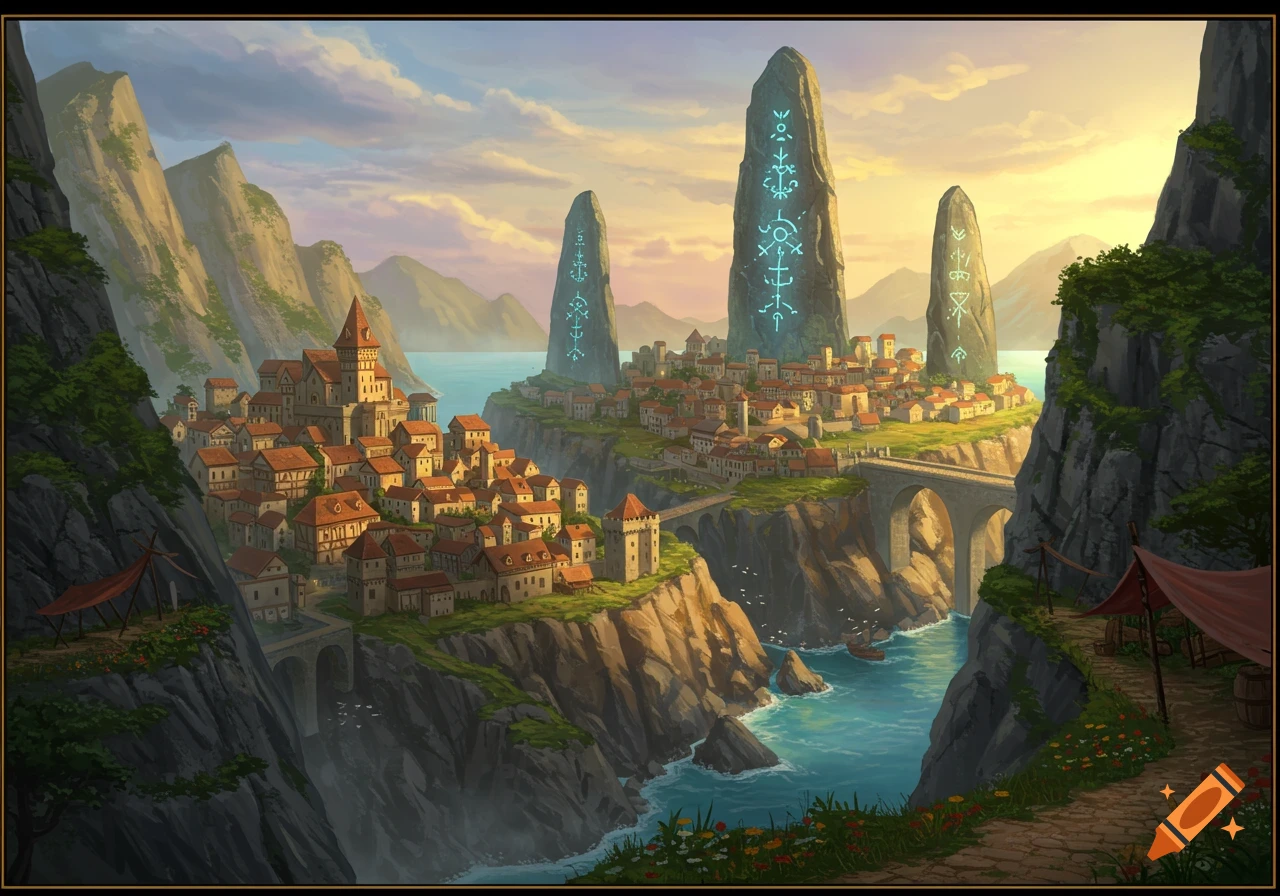
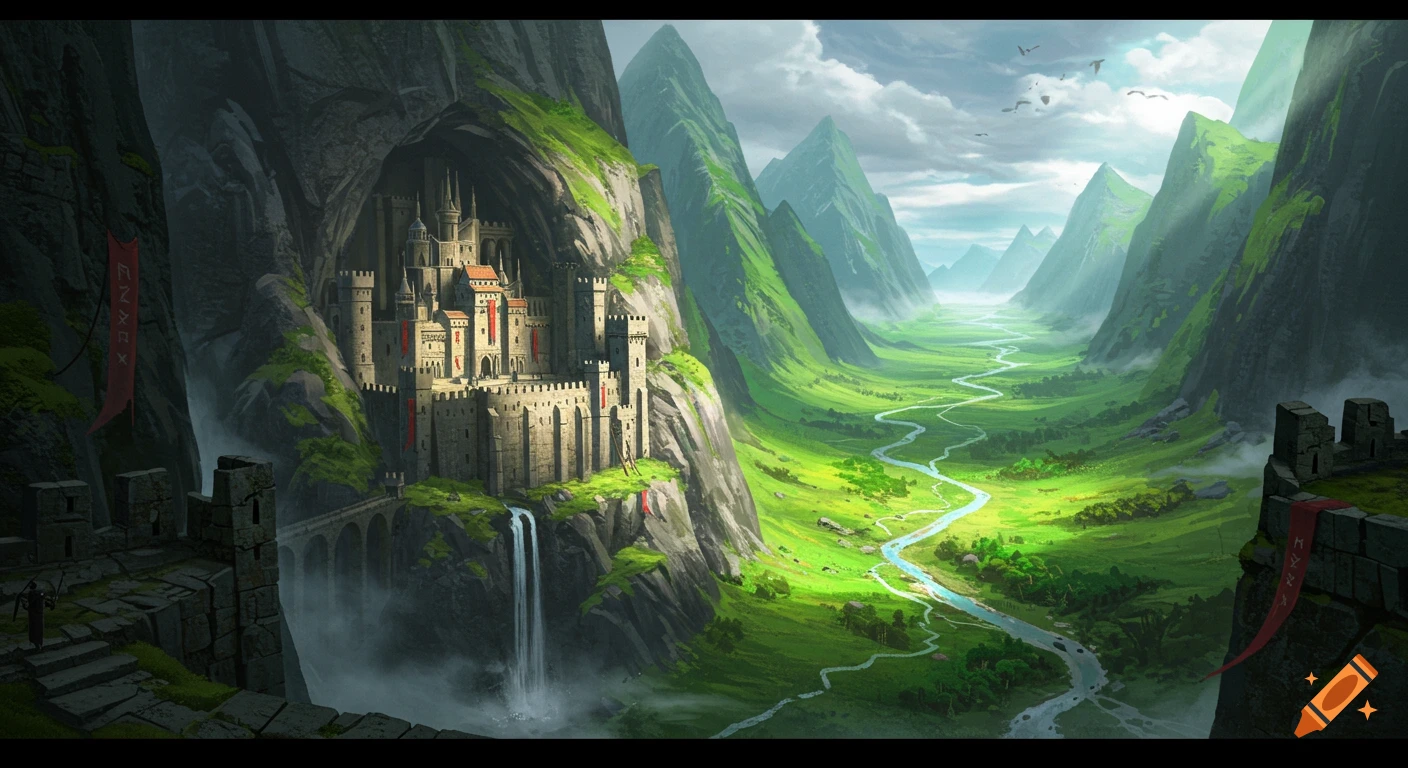
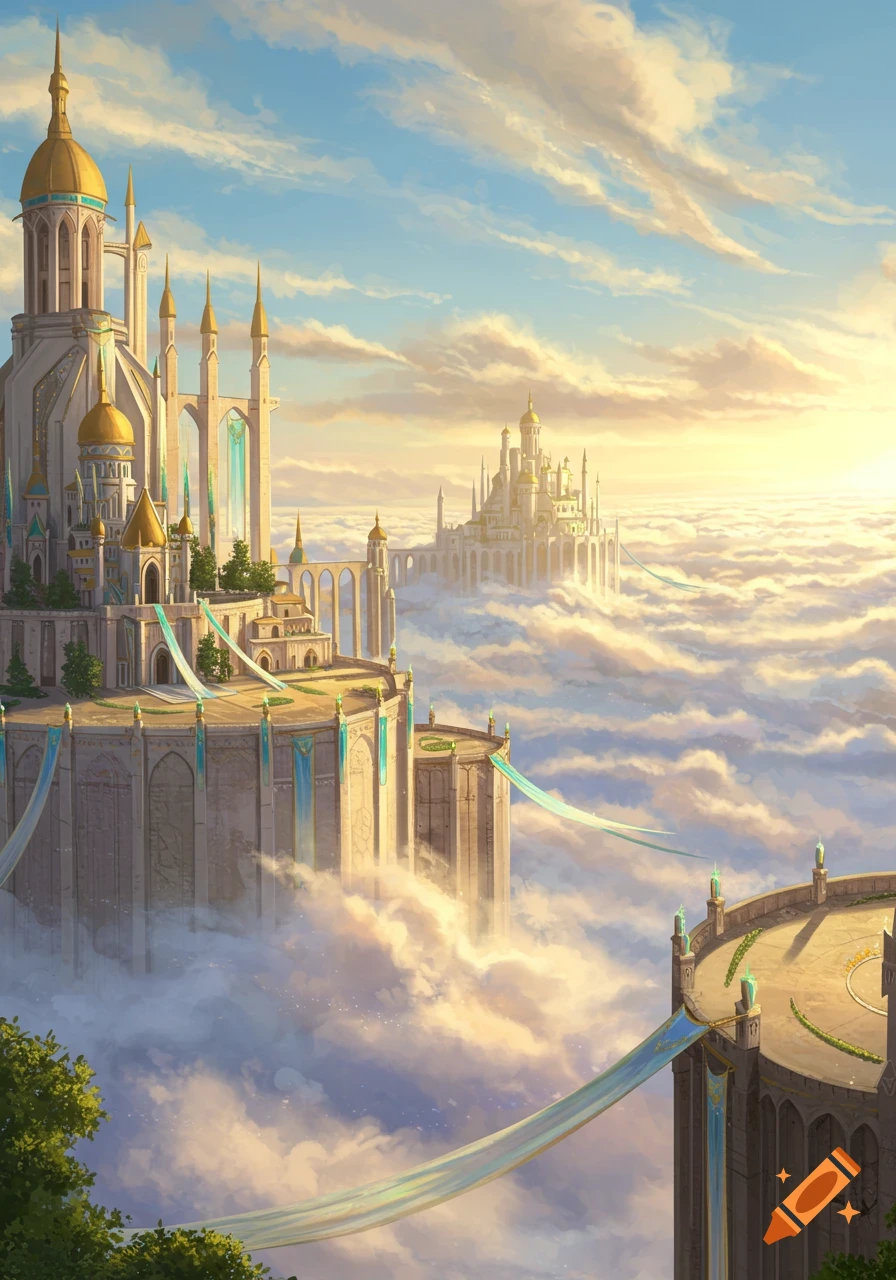
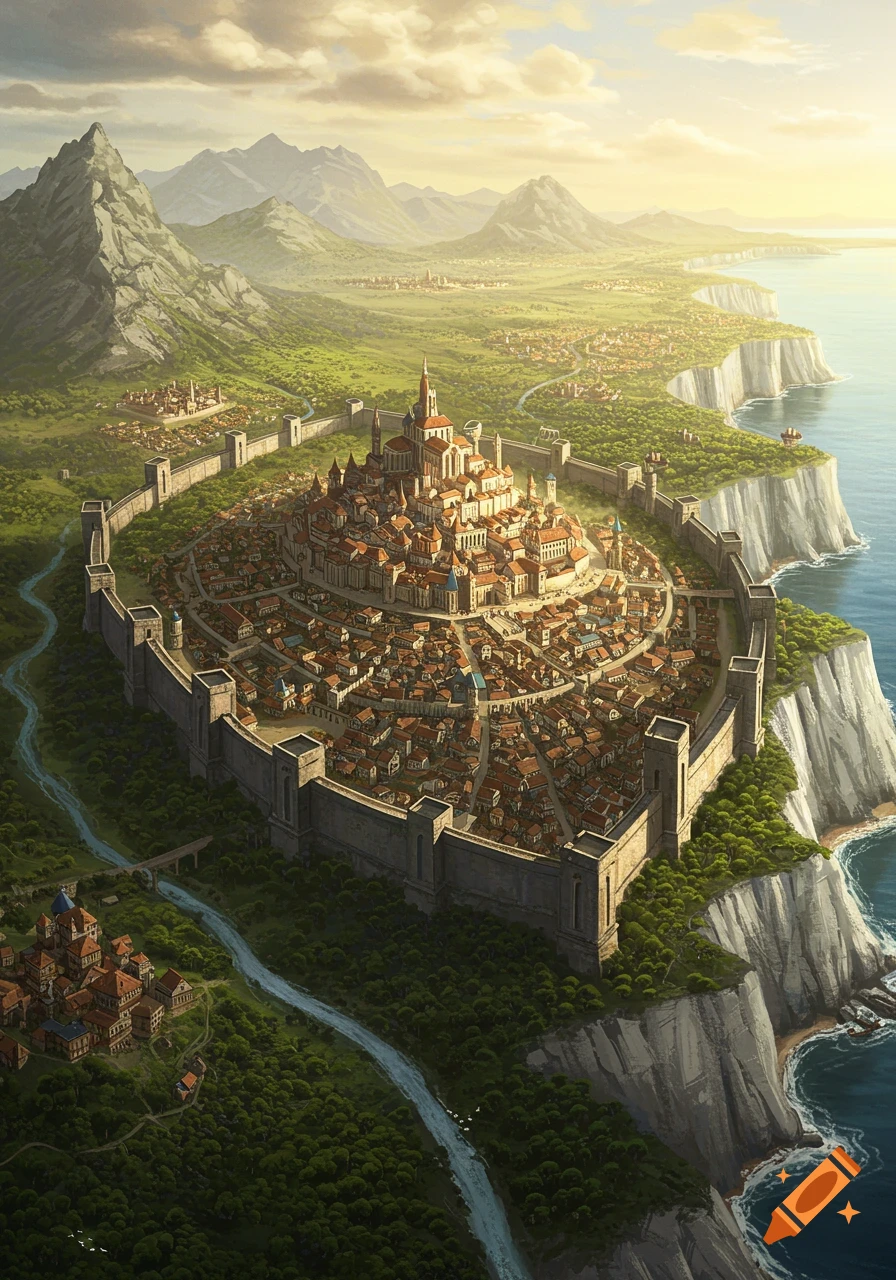
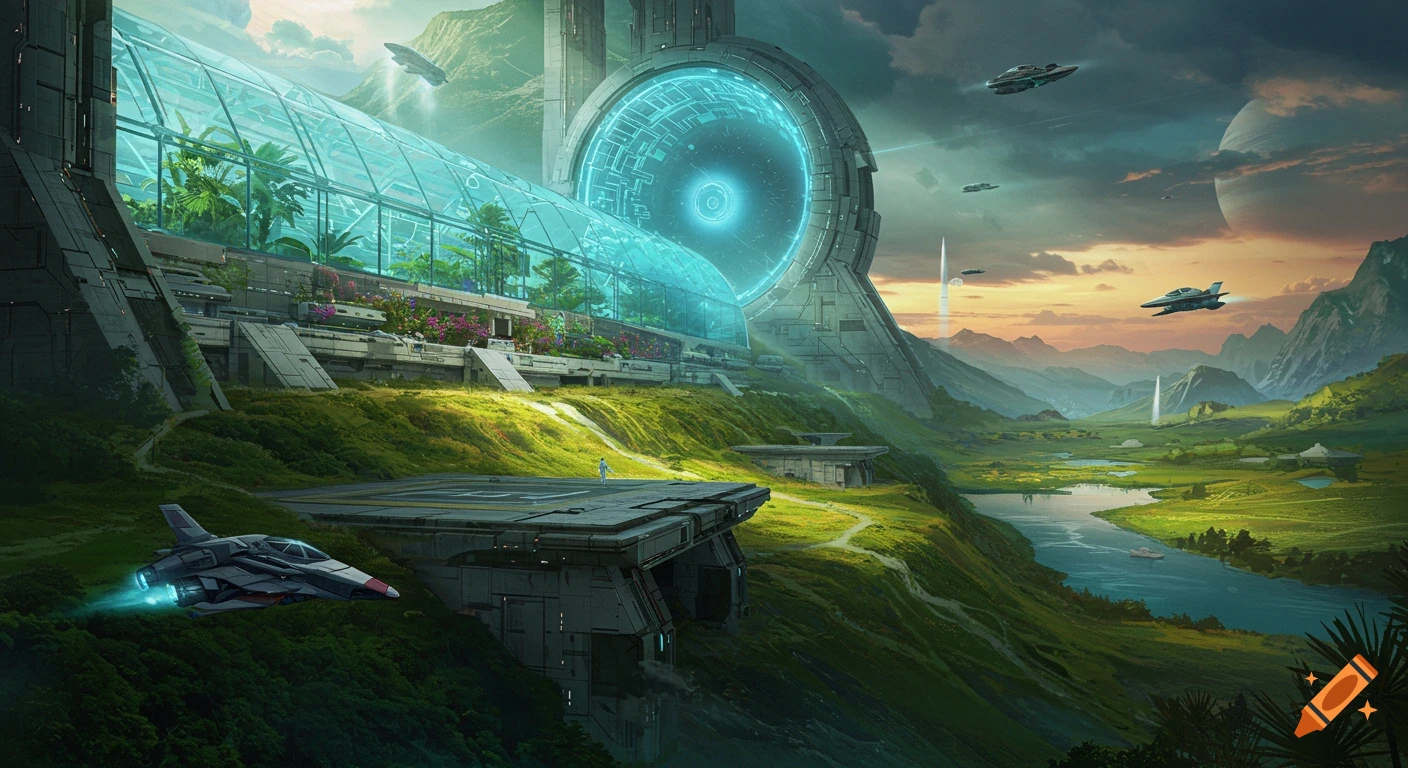
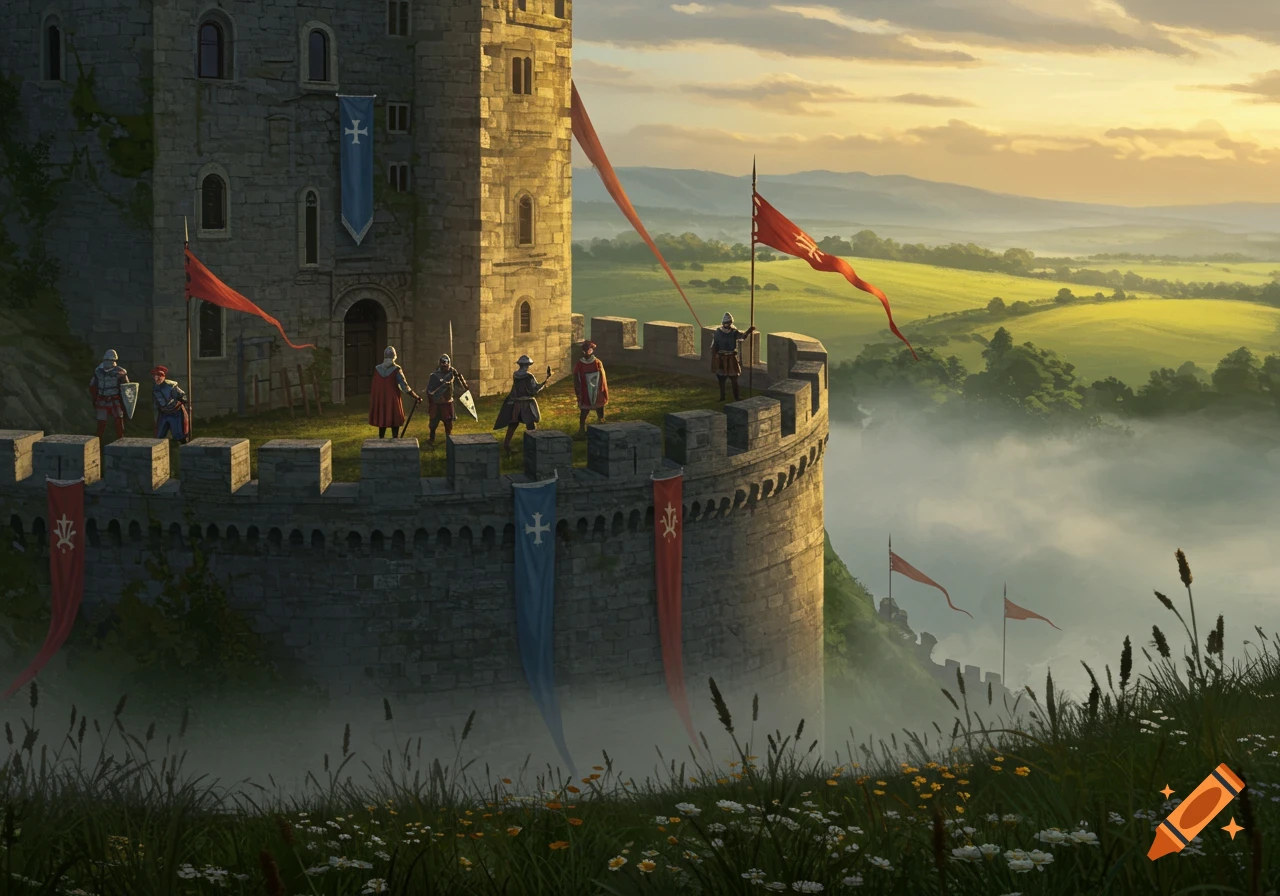
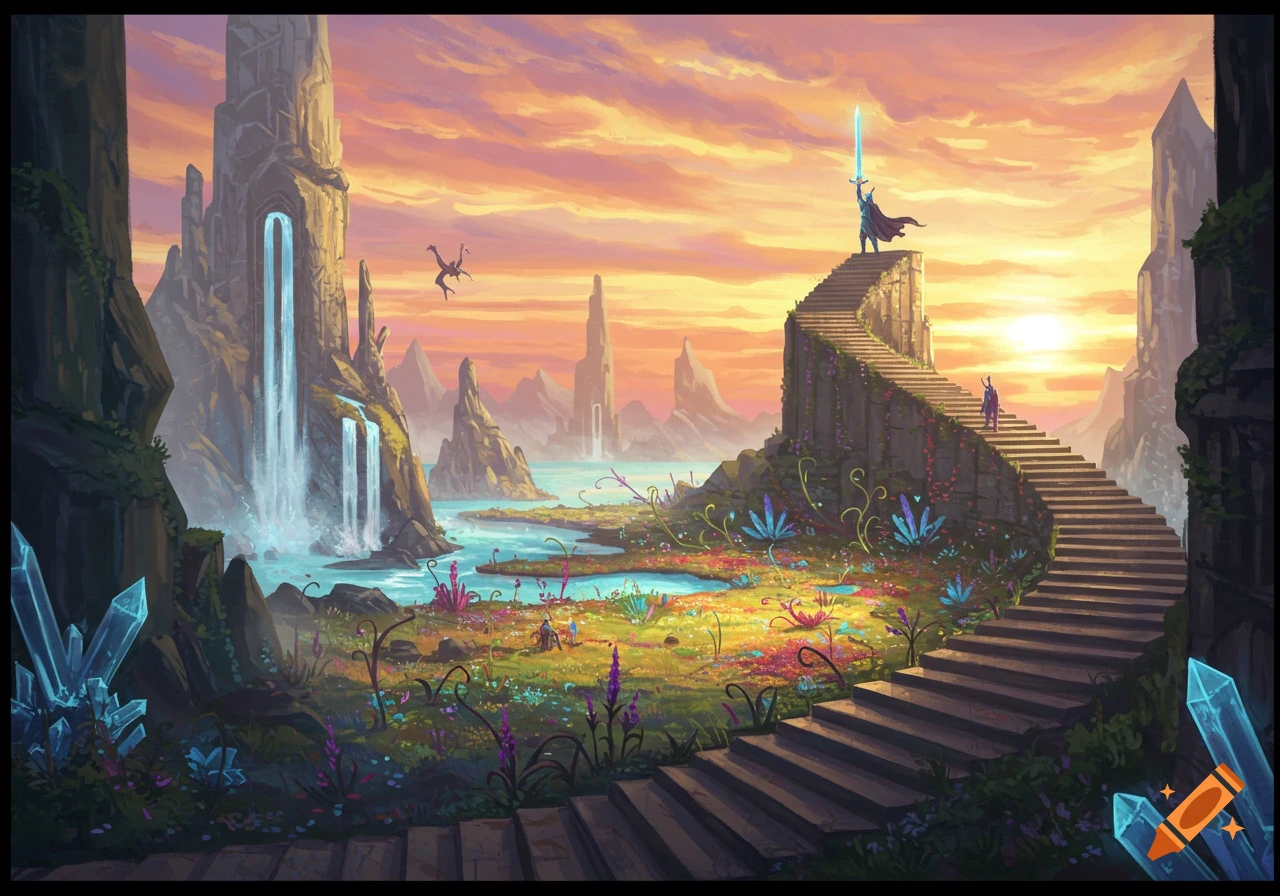
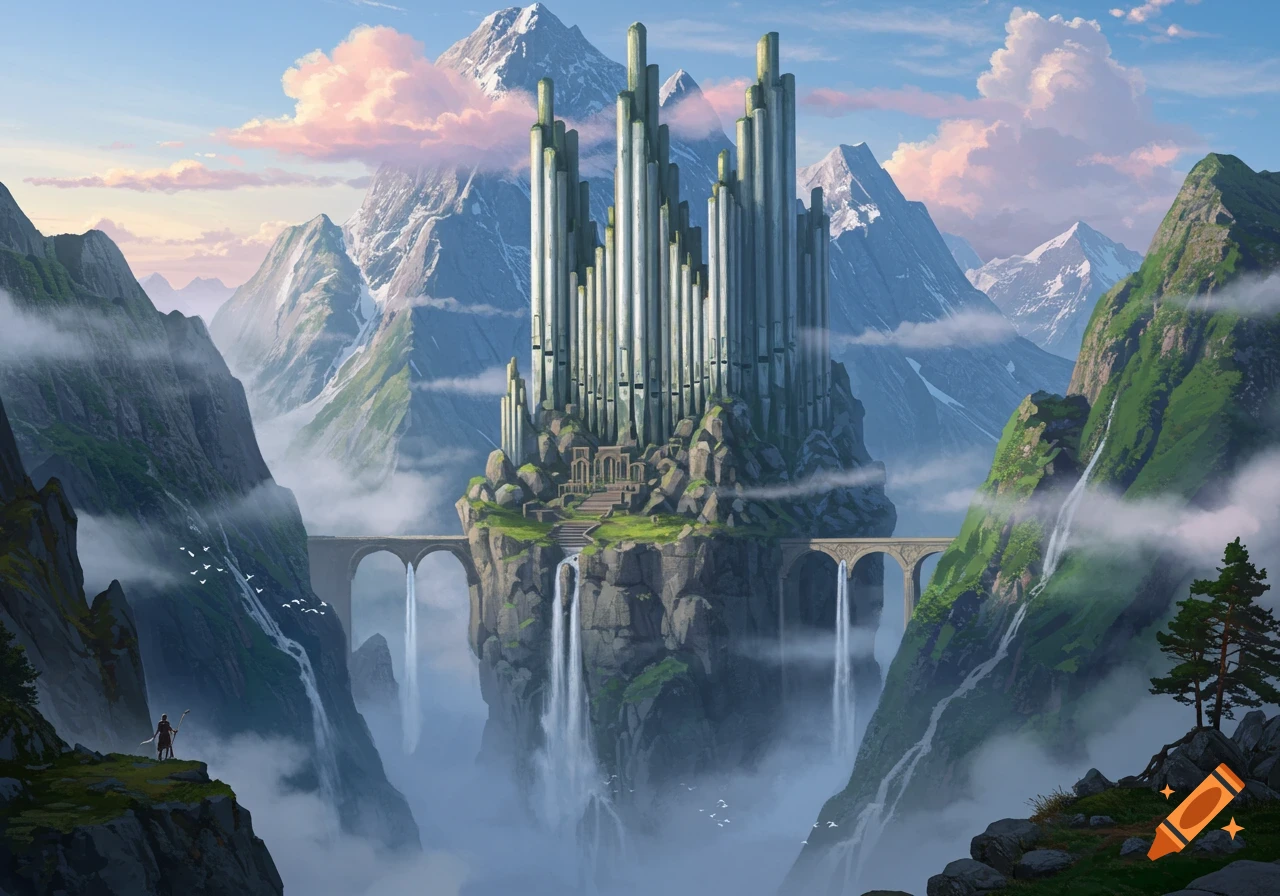
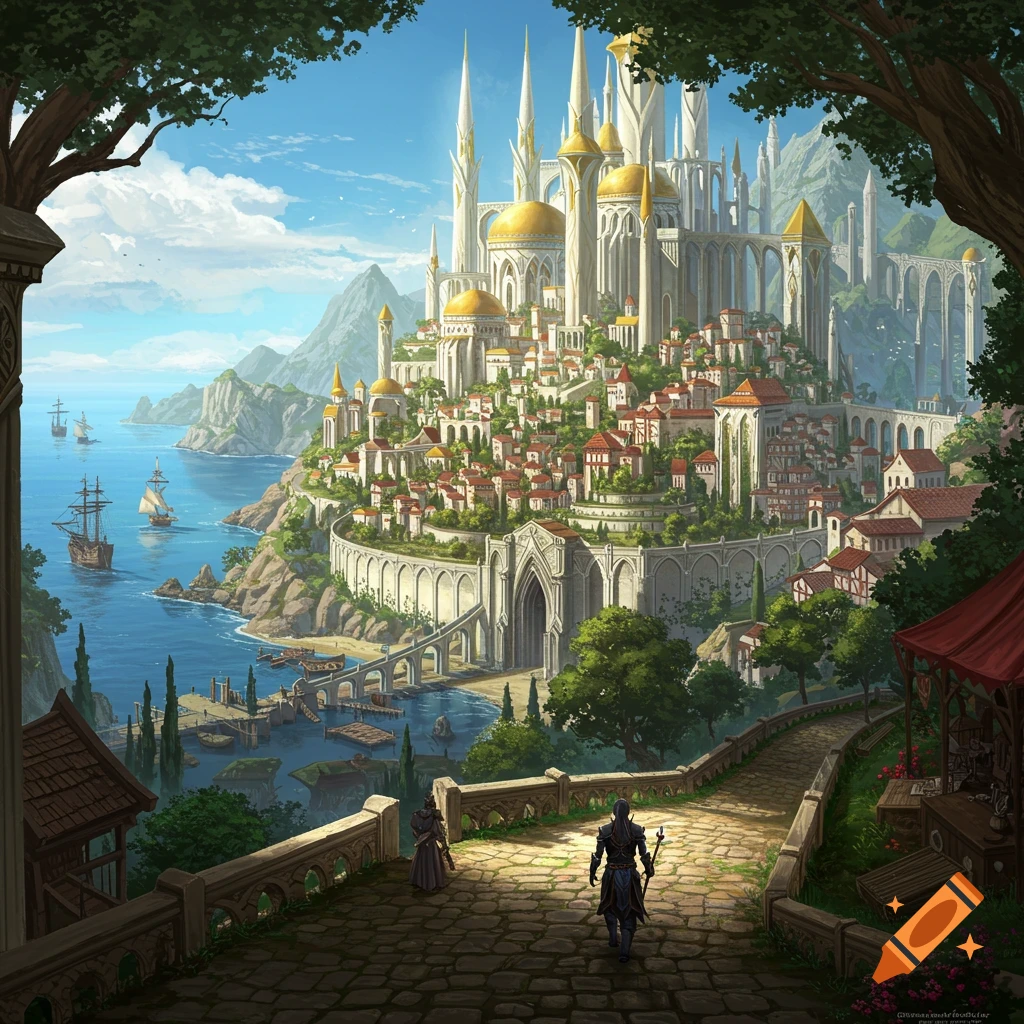
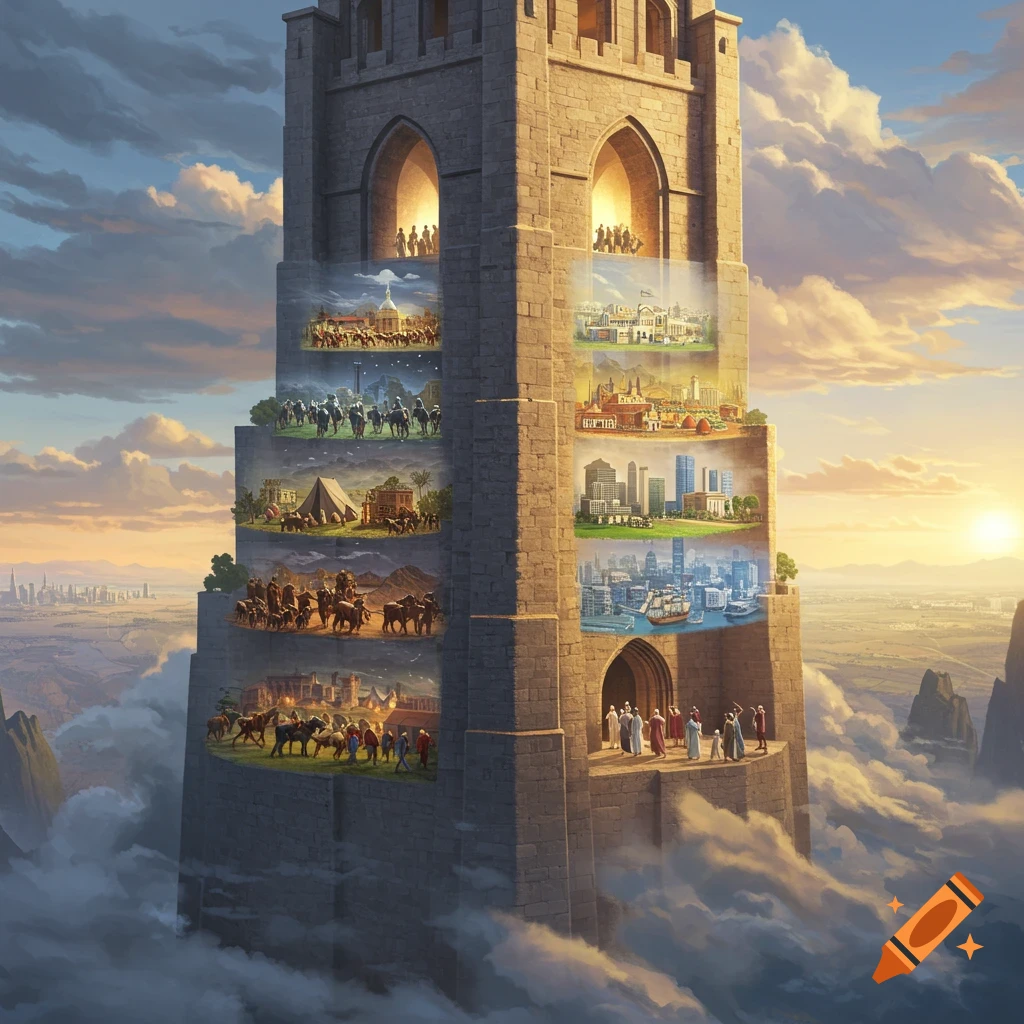
An aerial fantasy landscape of a medieval castle and village built atop massive industrial pipes floating in the clouds.

They are not a geological formation. They are accumulations of clay and soil — centuries of mineral deposit, plant death, and deliberate tillage — built up on the exterior surface of a cluster of horizontal pipe sections, each forty to sixty meters in diameter, running east to west through what was once the mid-atmospheric layer. The pipes are what the islands are. The soil is what the people put on top of them. At the island's edges, where the soil is thin or has eroded away, the pipe surface is visible: curved, sealed, warm to the touch. Below the pipe there is nothing. They have no floor in the conventional sense — only the machine they cling to, and then the void. The island has a castle, a town, farms, and a river fed from a high conduit tapped into the pipe network above the northern section. Eight perimeter towers mark the island's boundary — and, more practically, mark where the soil ends and the pipe begins to curve away into open air. See more
More images like this