A colorful mind map illustrating how human memory works, with branches for encoding, storage, rehearsal, retrieval, and different types of memory.

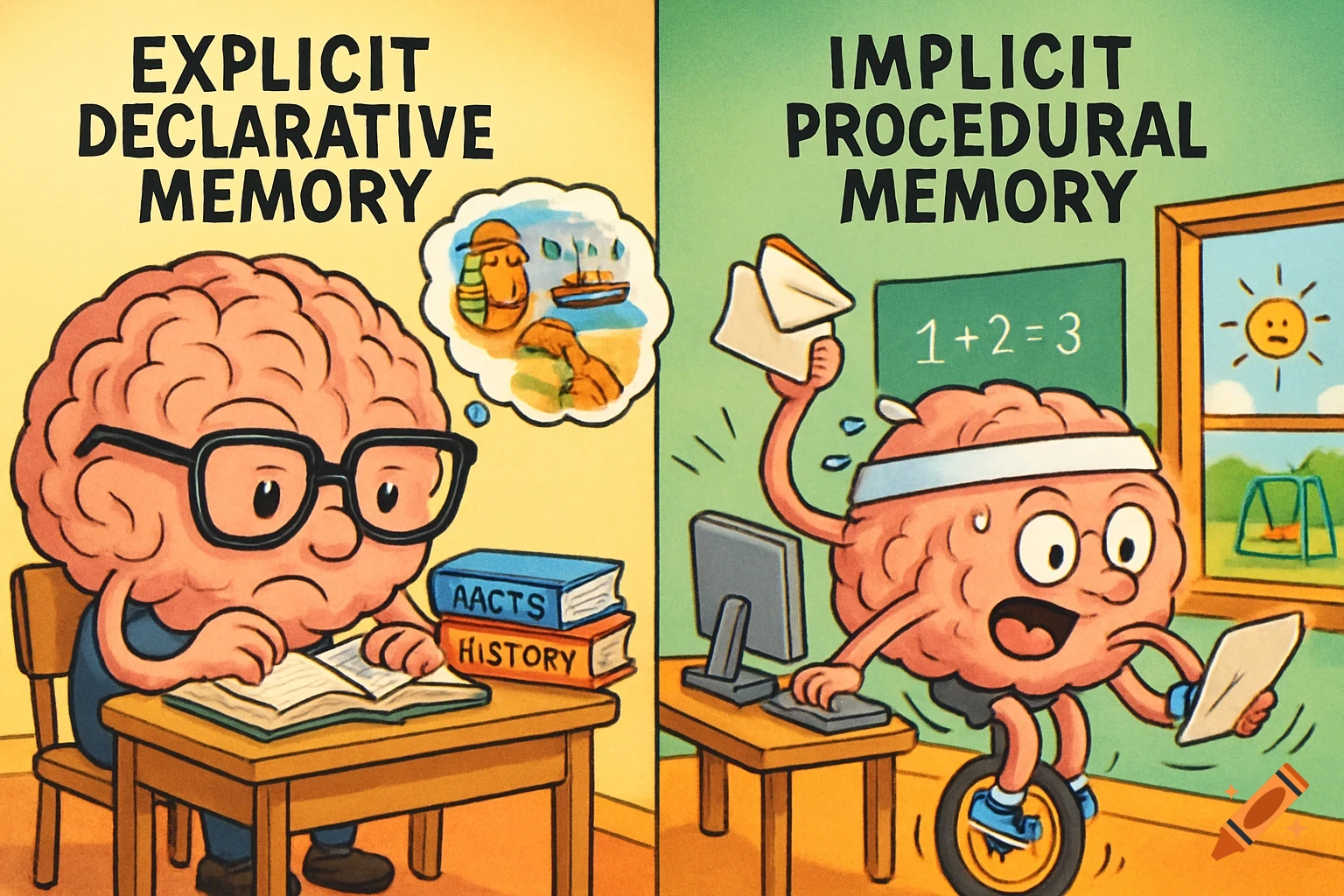
Create a colorful mind map titled “How Human Memory Works.” The center should contain the main idea, with branches showing the stages of memory from the information processing model and the three box model of memory. Include branches for Encoding, Storage, Short-Term Memory, Long-Term Memory, and Retrieval. From Encoding, branch out to automatic encoding and effortful encoding, and from effortful encoding connect visual encoding, acoustic encoding, and semantic encoding. From Storage, include sensory memory, which branches to iconic memory and echoic memory. Connect sensory memory to short-term memory, then connect short-term memory to rehearsal, and show that rehearsal helps move information into long-term memory. From long-term memory, branch to explicit memories and implicit memories, and connect long-term memory to retrieval. Label the lines between terms with short explanations showing how the concepts relate. Color-code the branches to represent different parts of the memory process (models, encoding, storage, short-term processing, and long-term memory). Include at least five relevant images for visual encoding, acoustic encoding, semantic encoding, iconic memory, and rehearsal, each with a short caption explaining the term. The mind map should be visually organized, easy to read, and designed to clearly show how information moves through the memory system. See more
More images like this