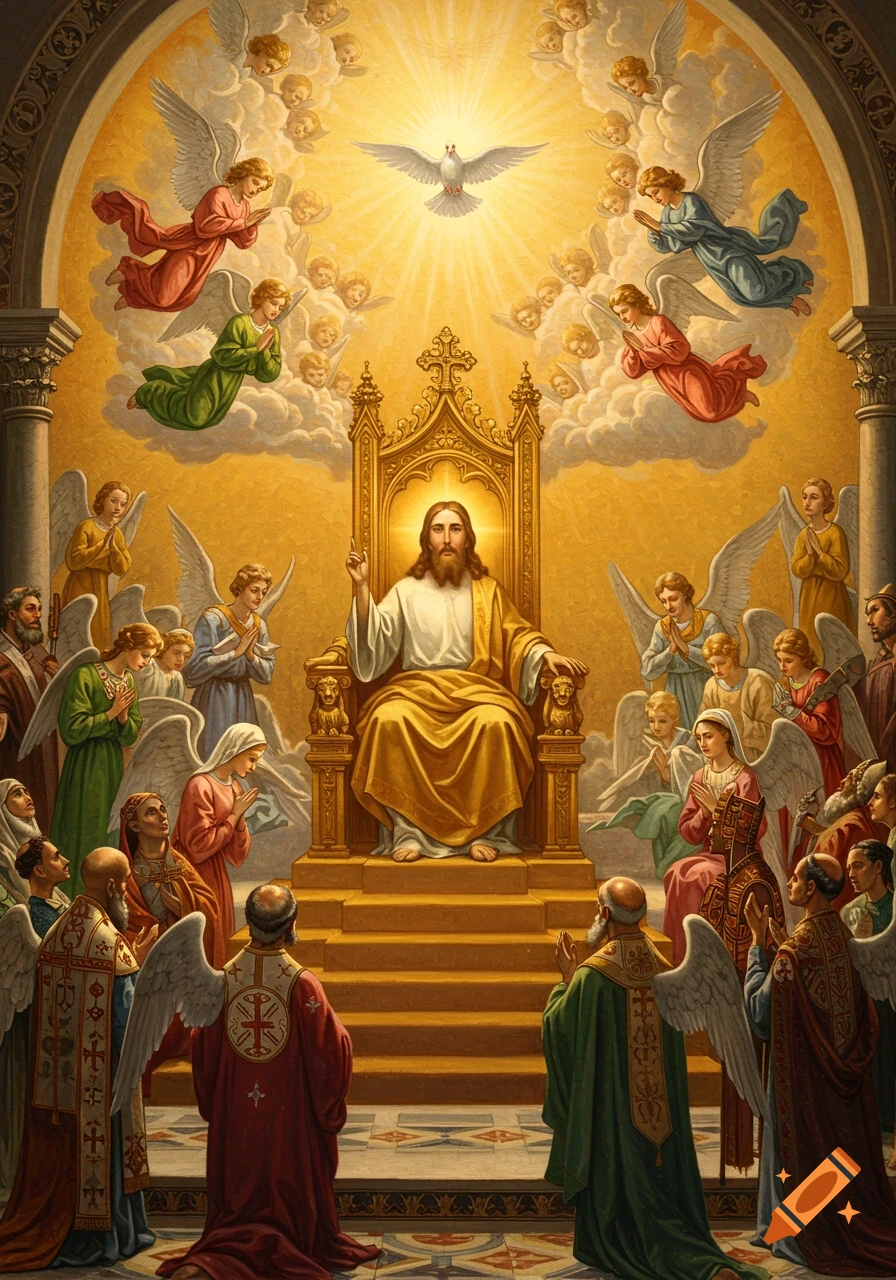
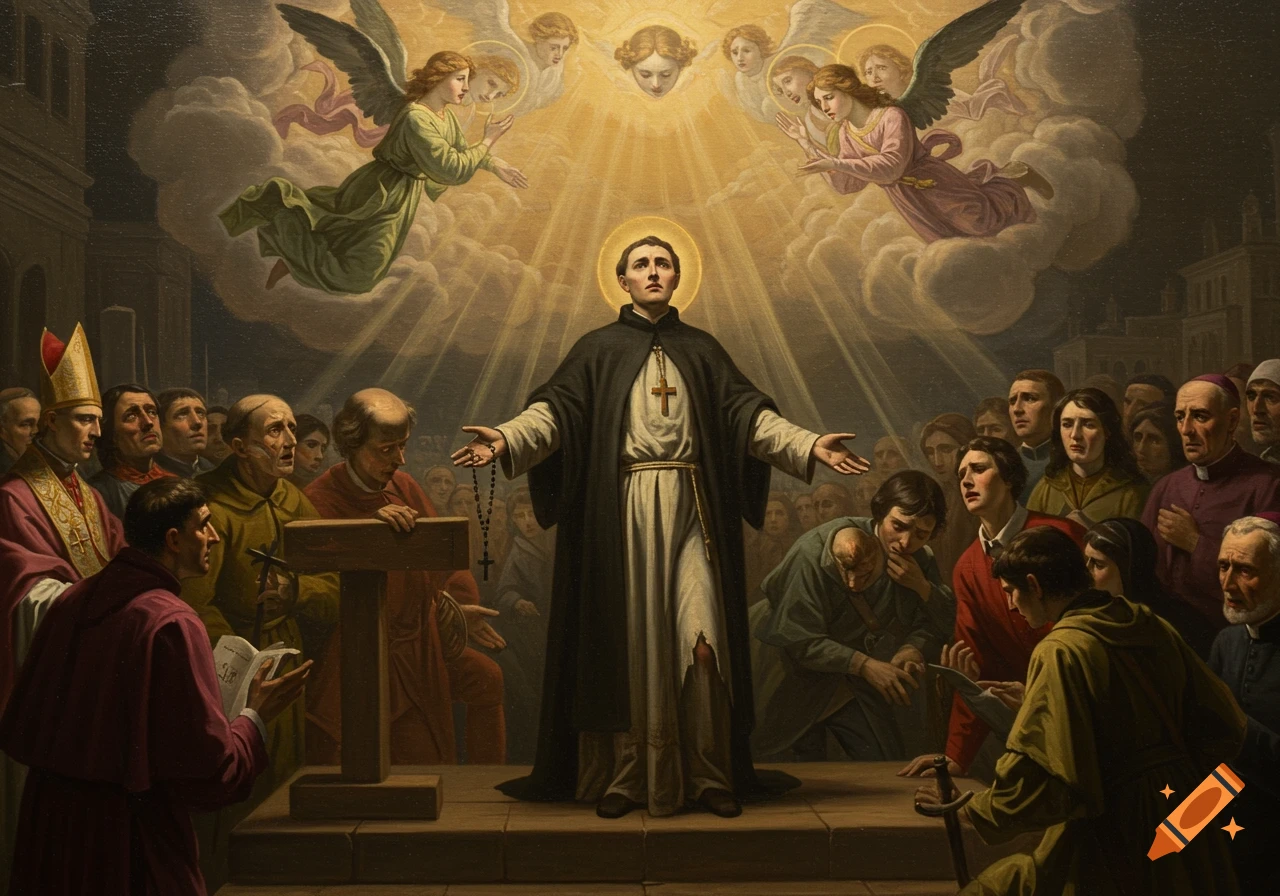
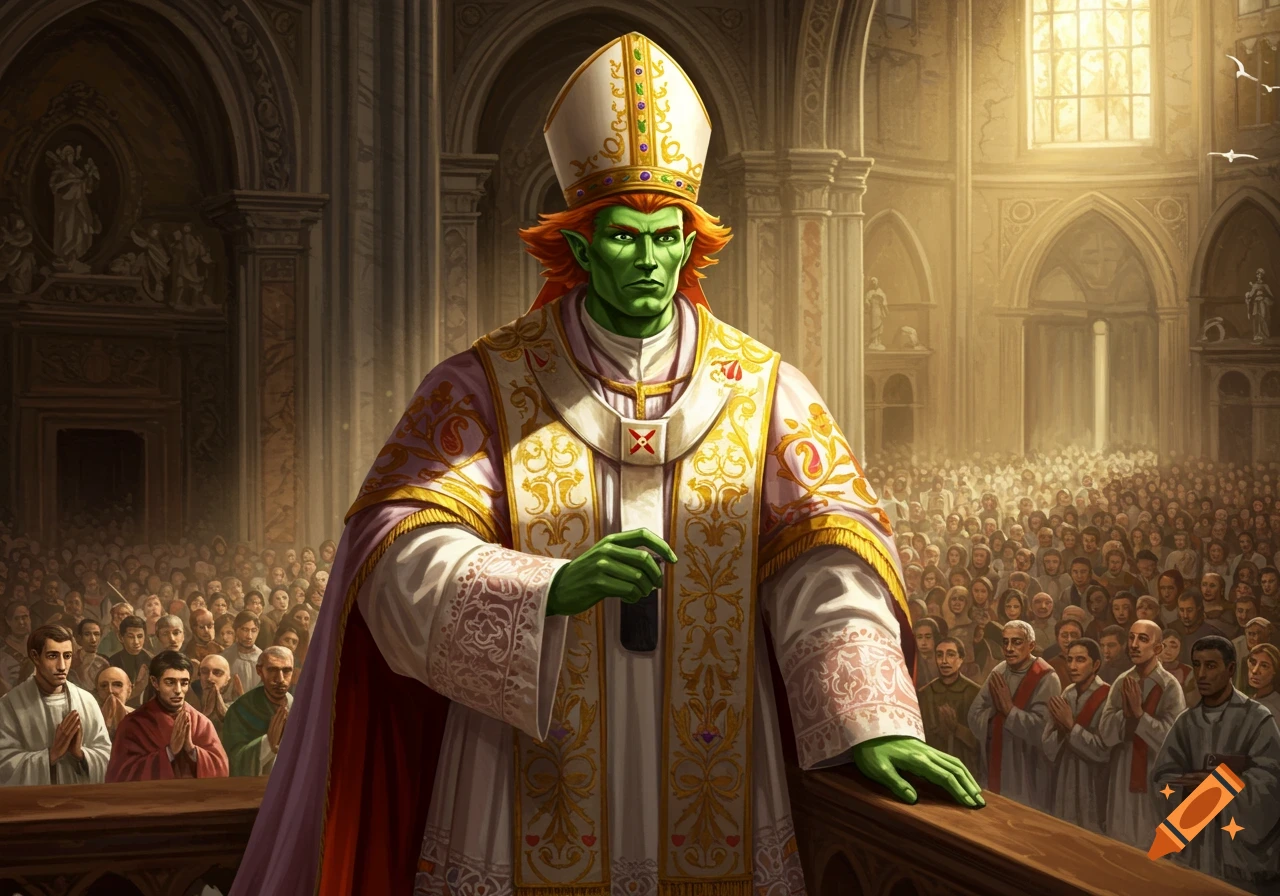
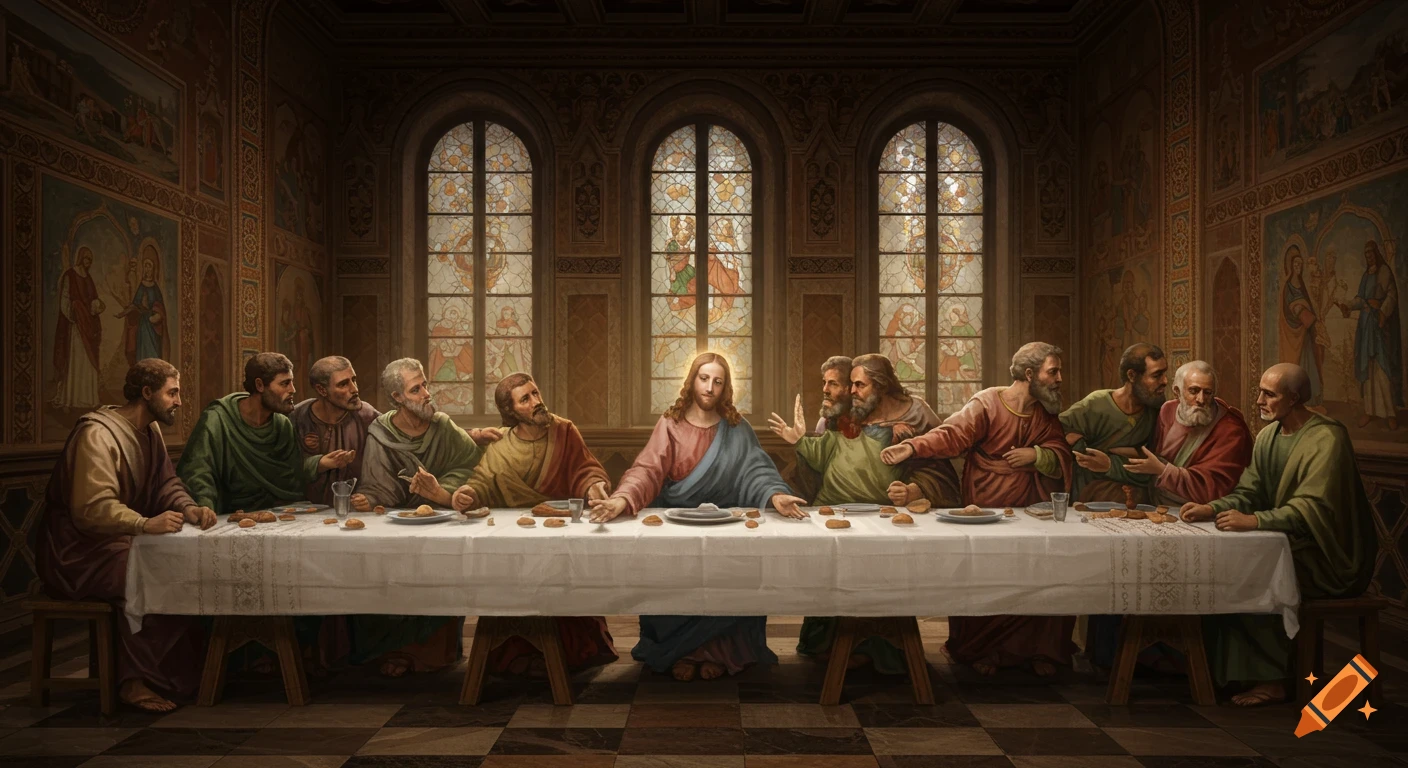
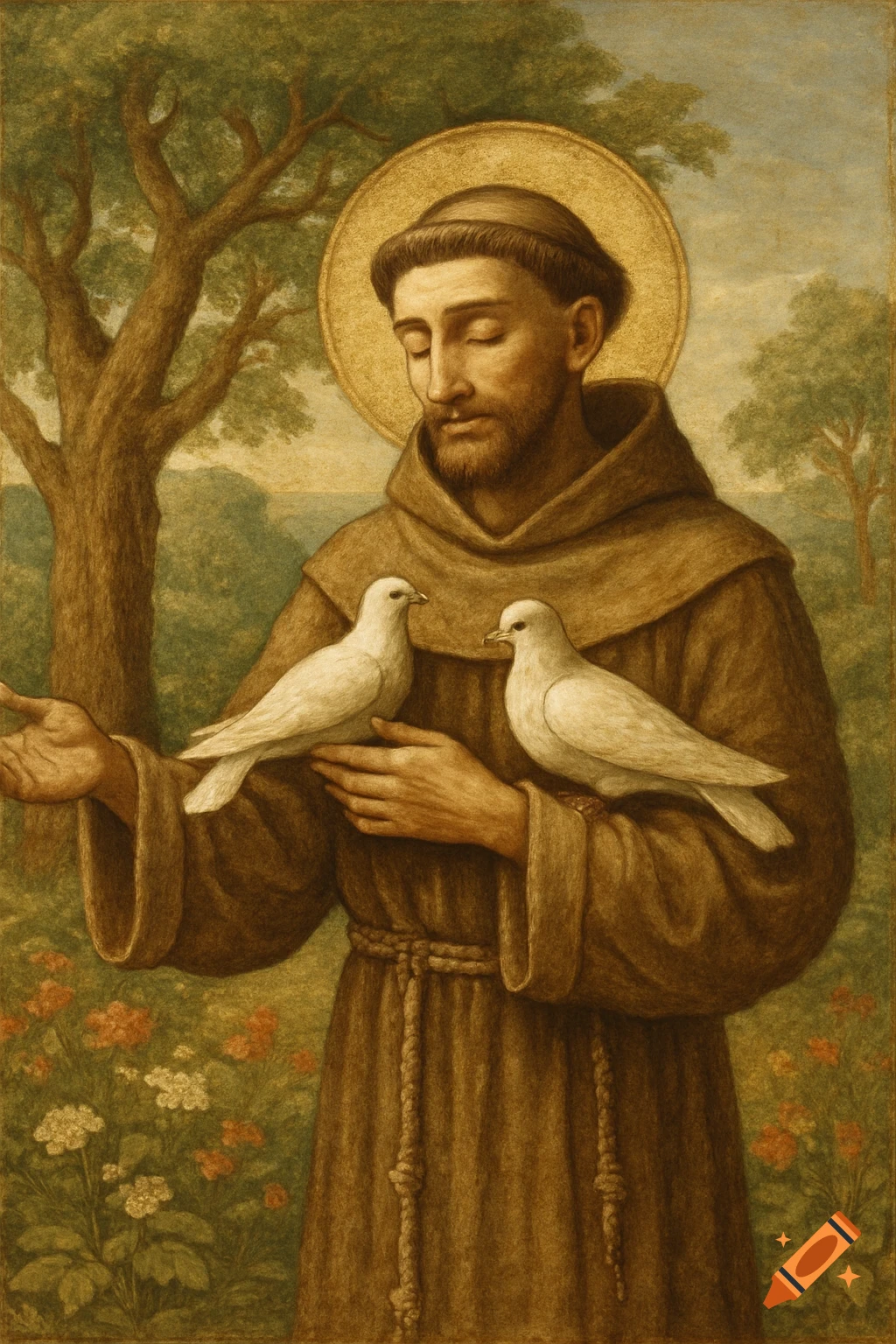
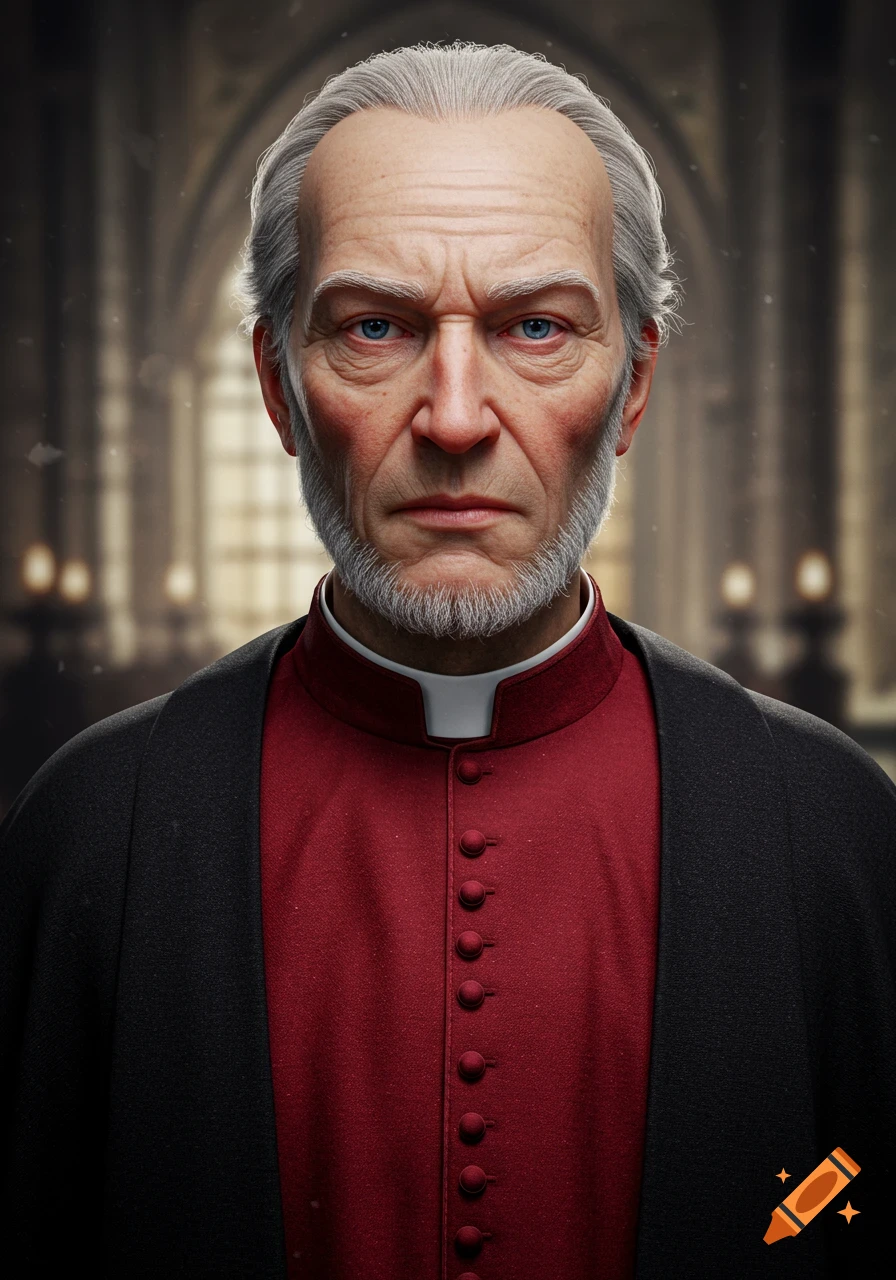
A Flemish Renaissance altarpiece painting featuring a man in a red friar's habit with a halo, flanked by a hopeful crowd and a dove on the left, and a broken smartphone screen with a man's face, riot police, barbed wire, and French flag on the right.

A 1520 Flemish Renaissance altarpiece oil painting, landscape format, wide composition on wood panel. The scene is expansive, with the political figure Jean-Luc Mélenchon positioned slightly left of center as the fulcrum between two opposing worlds — present but not dominating, a figure of weight rather than spectacle. He is a man in his early 70s with thick, swept-back silvery-white hair, expressive eyebrows, and thin-rimmed glasses. He wears a coarse undyed wool habit in deep madder red — the rough unadorned garment of a mendicant friar, heavy and plain, belted with a simple knotted rope at the waist, wide sleeves, a low hood hanging at the back, and a single worn wooden cross on a cord around his neck, with the faintest trace of faded embroidery at the hem. He stands in a three-quarter pose with both arms spread wide and low in a protective, sheltering gesture — like a shepherd bracing against wind, his body turned slightly toward the darkness as a shield. An off-center golden halo crowns his head. To his LEFT stretches a warm, luminous landscape: golden divine light, a white dove in flight, ochre rays breaking through clouds, and a crowd of humble common people — workers, elderly, children — looking toward him in quiet hope, rendered small against an open sky. To his RIGHT surges a darkening panorama: a cracked smartphone screen broadcasting a demagogue’s face, a barbed-wire fence draped in a tricolor, a snarling suited figure clutching a stack of banknotes, riot shields Mehr sehen
More images like this