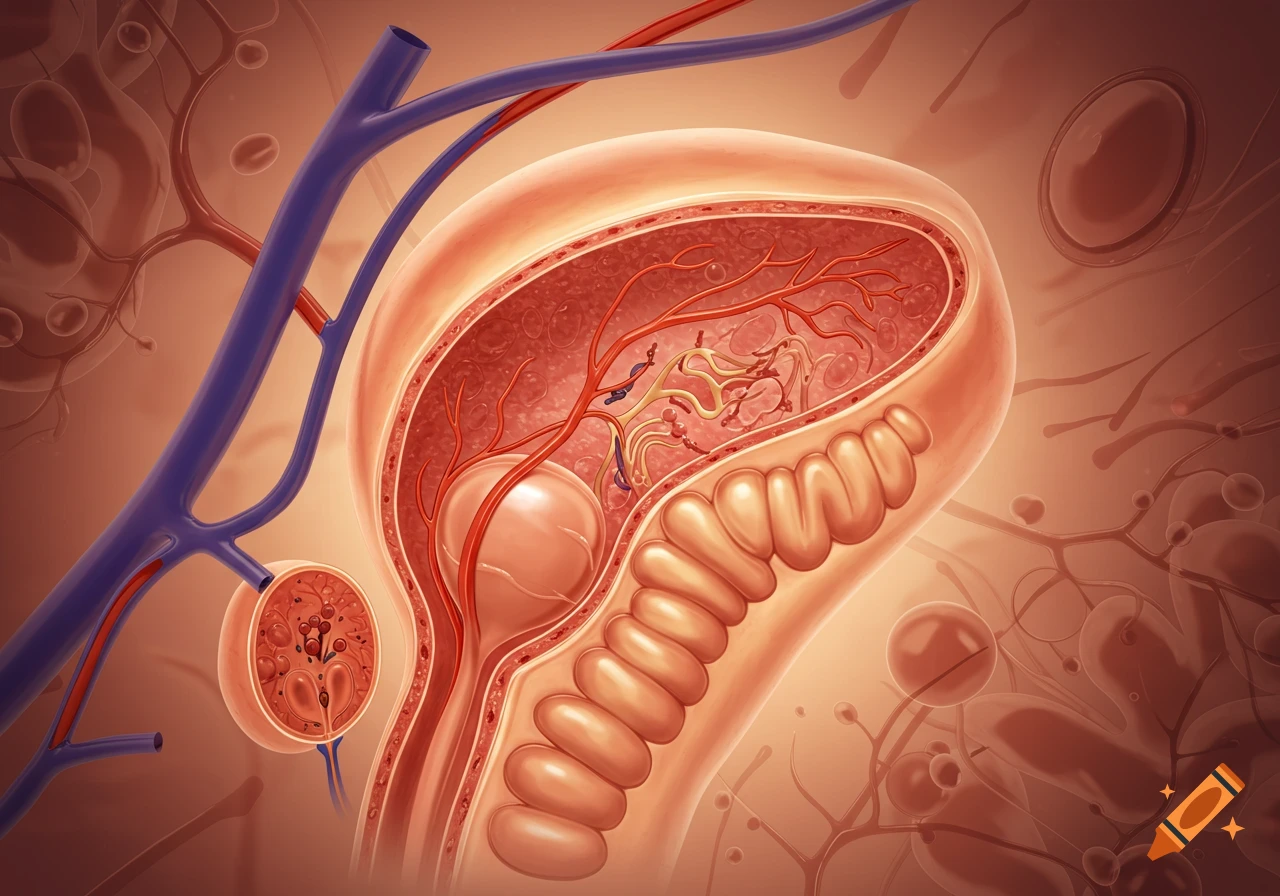
An illustration of three nurses with a smiling elderly patient, below which is an anatomical diagram of a stoma with labels like 'ischemia' and 'necrosis'.

A client 4 days post colostomy is preparing to be discharged home. Which findings are concerning and should be further investigated? After a colostomy, the stoma should be beefy red and edematous but will begin to shrink over the course of a few days as inflammation subsides (Option 5). There should be no mucocutaneous separation (eg, separation of the stoma from the abdominal wall), unusual bleeding (eg, moderate to large amounts of blood in the ostomy pouch), or signs of inadequate circulation, including stoma ischemia (eg, pale, dusky) and necrosis (eg, dark red, purple, black). Appliances should be resized during the first several weeks to ensure proper fit, preventing skin breakdown (eg, excoriation) due to stool coming into contact with the skin (Option 4). Within 24 hours of surgery, the client should demonstrate signs of returning gastrointestinal motility, including resolution of nausea, active bowel sounds, and flatus (Option 2). Nausea and absent bowel sounds may indicate postoperative ileus and should be reported to the health care provider (Option 3). Clients should change the pouch according to the manufacturer's instructions (every 5-10 days) and if the skin surrounding the stoma becomes irritated (eg, burning). The nurse should also assess the client with a new ostomy for body image disturbance and ineffective coping (eg, client unwilling to care for the ostomy) (Option 1). Educational objective: Careful assessment of clients with new ostomies should include Mehr sehen
More images like this