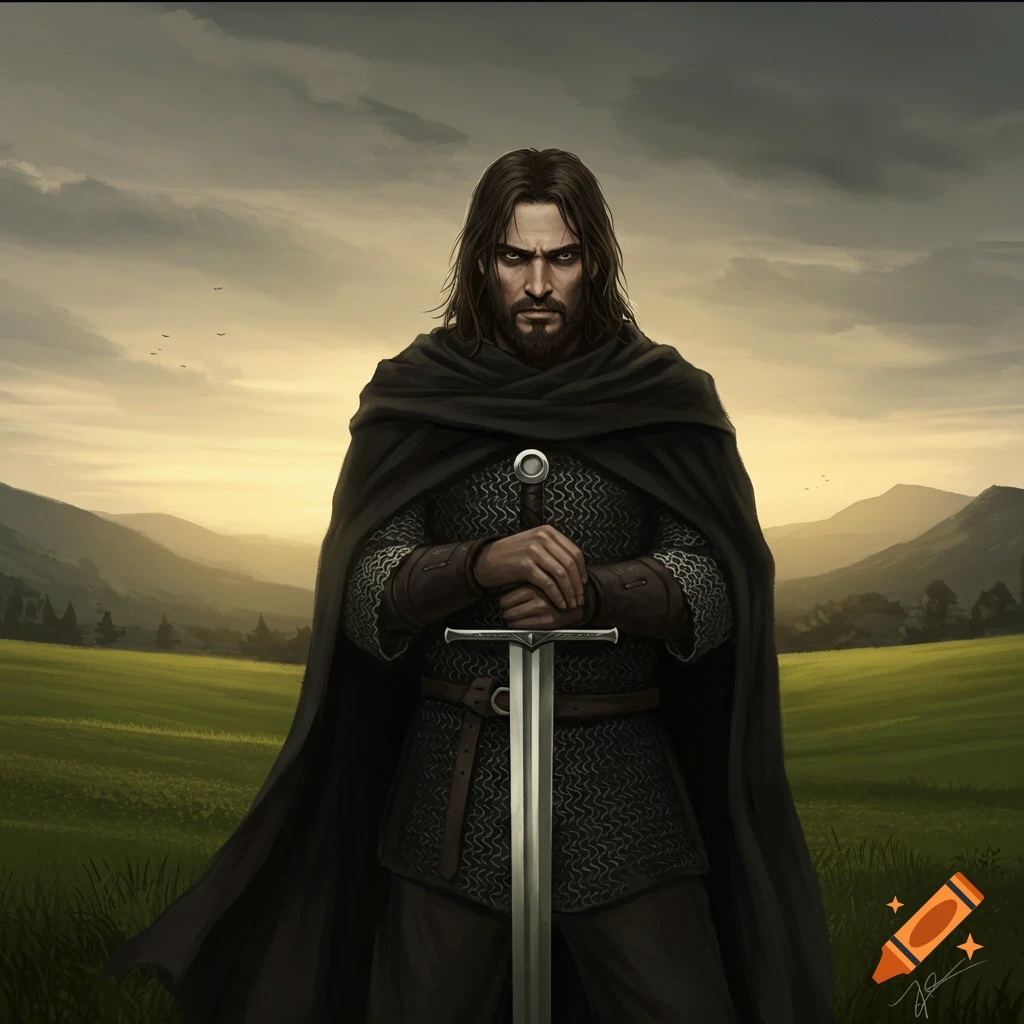
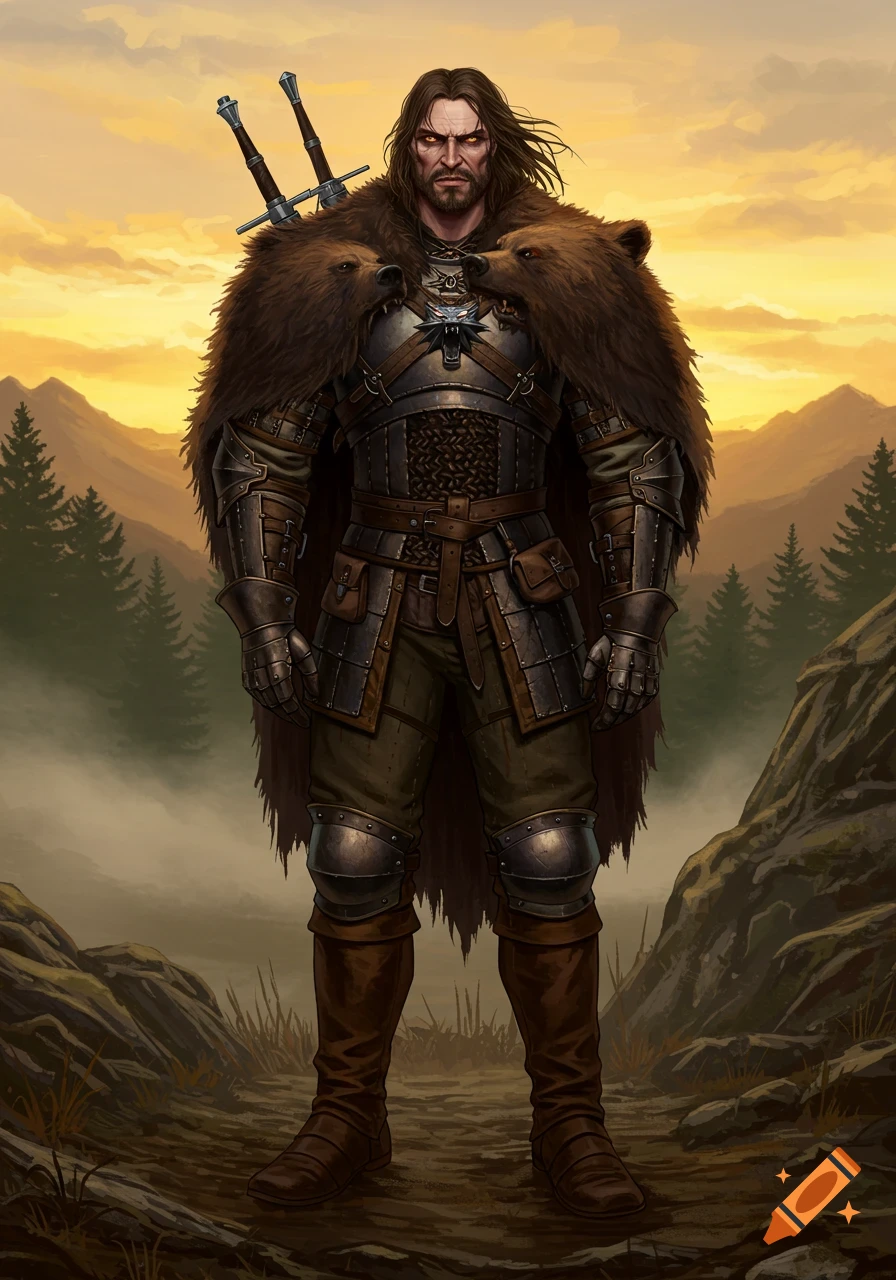
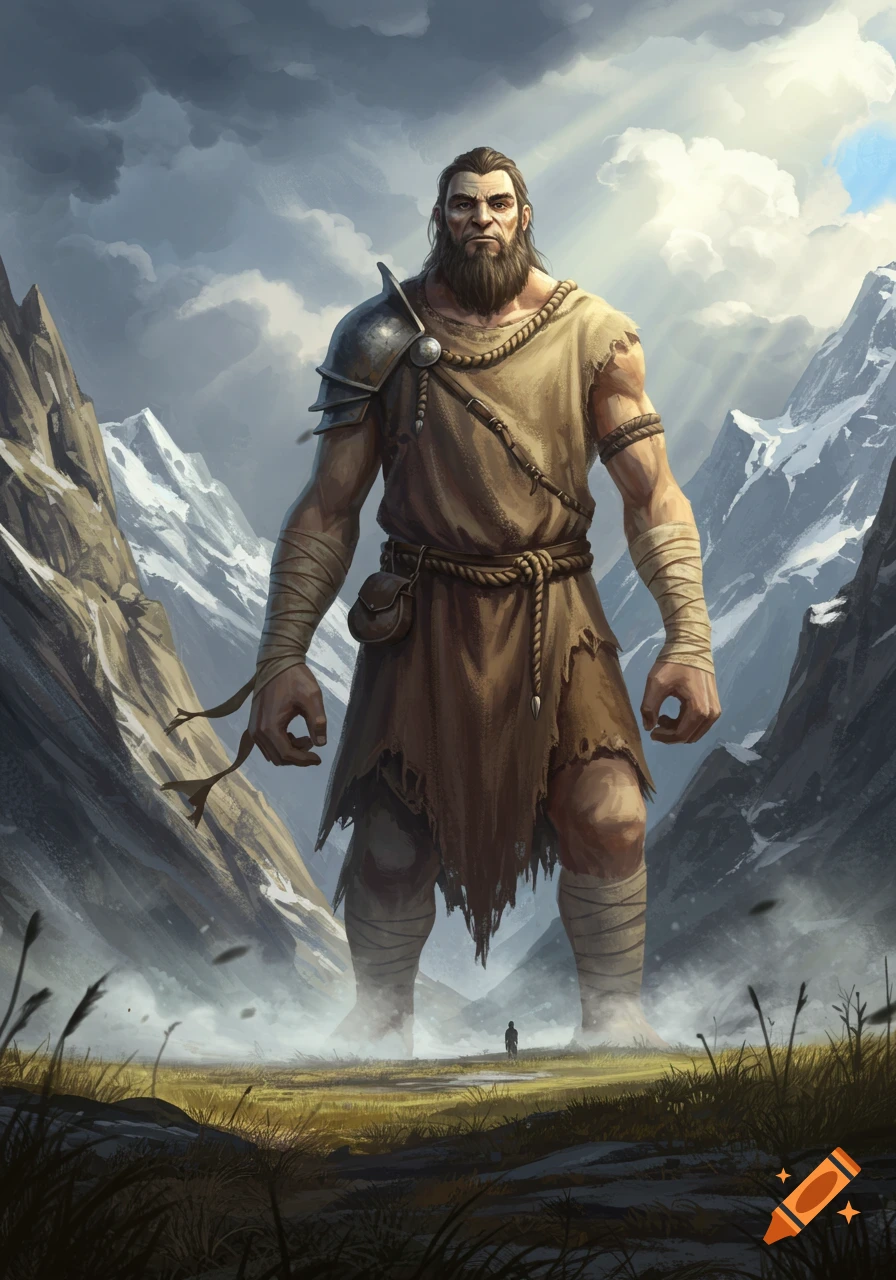
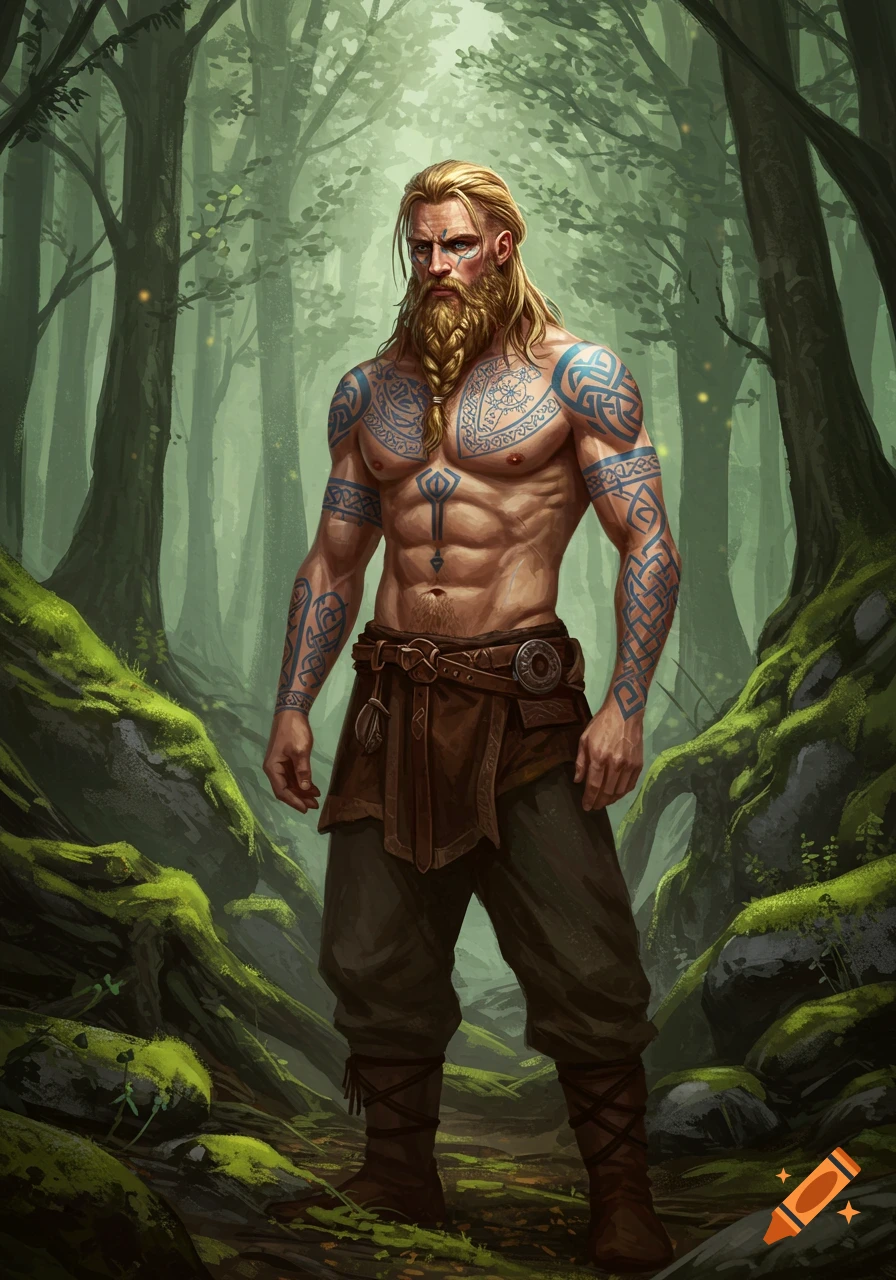
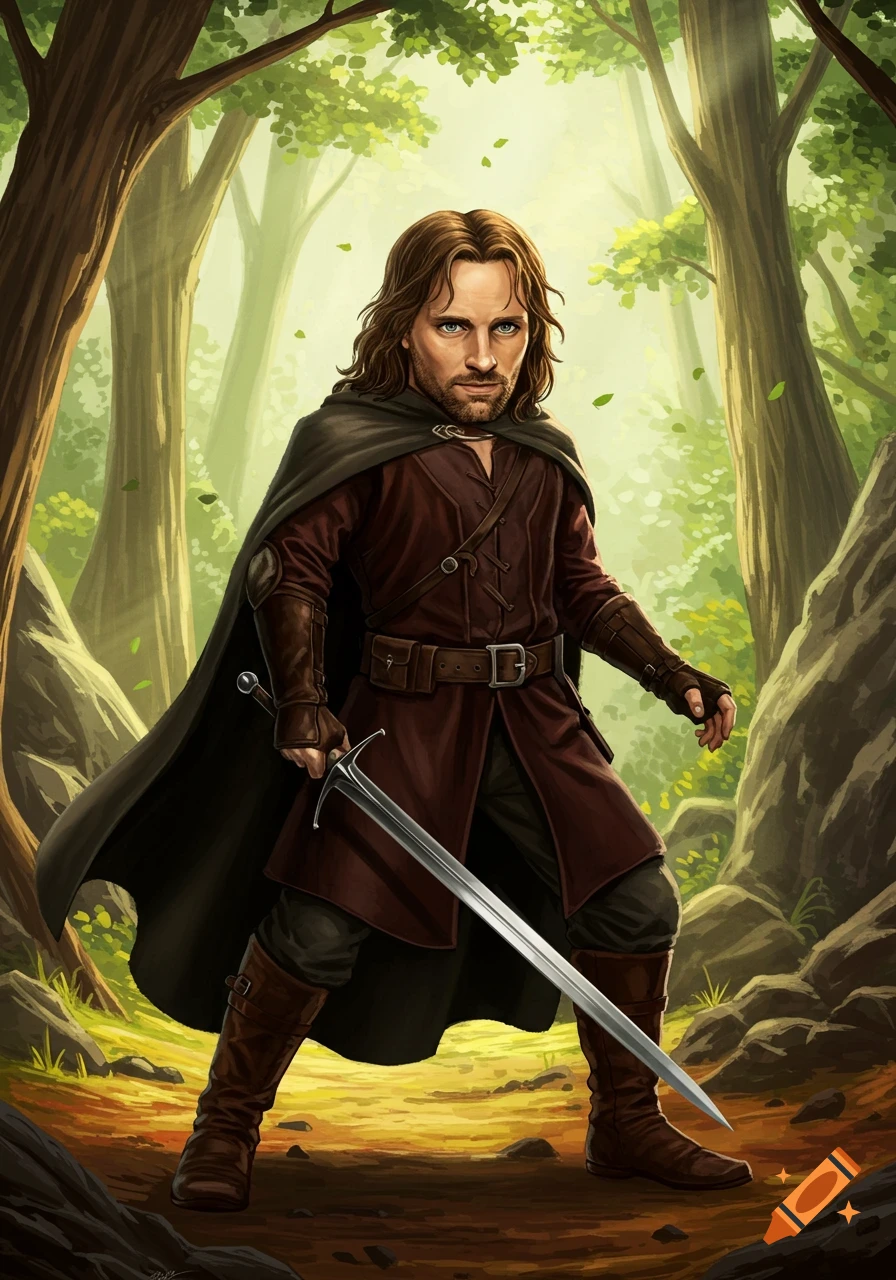
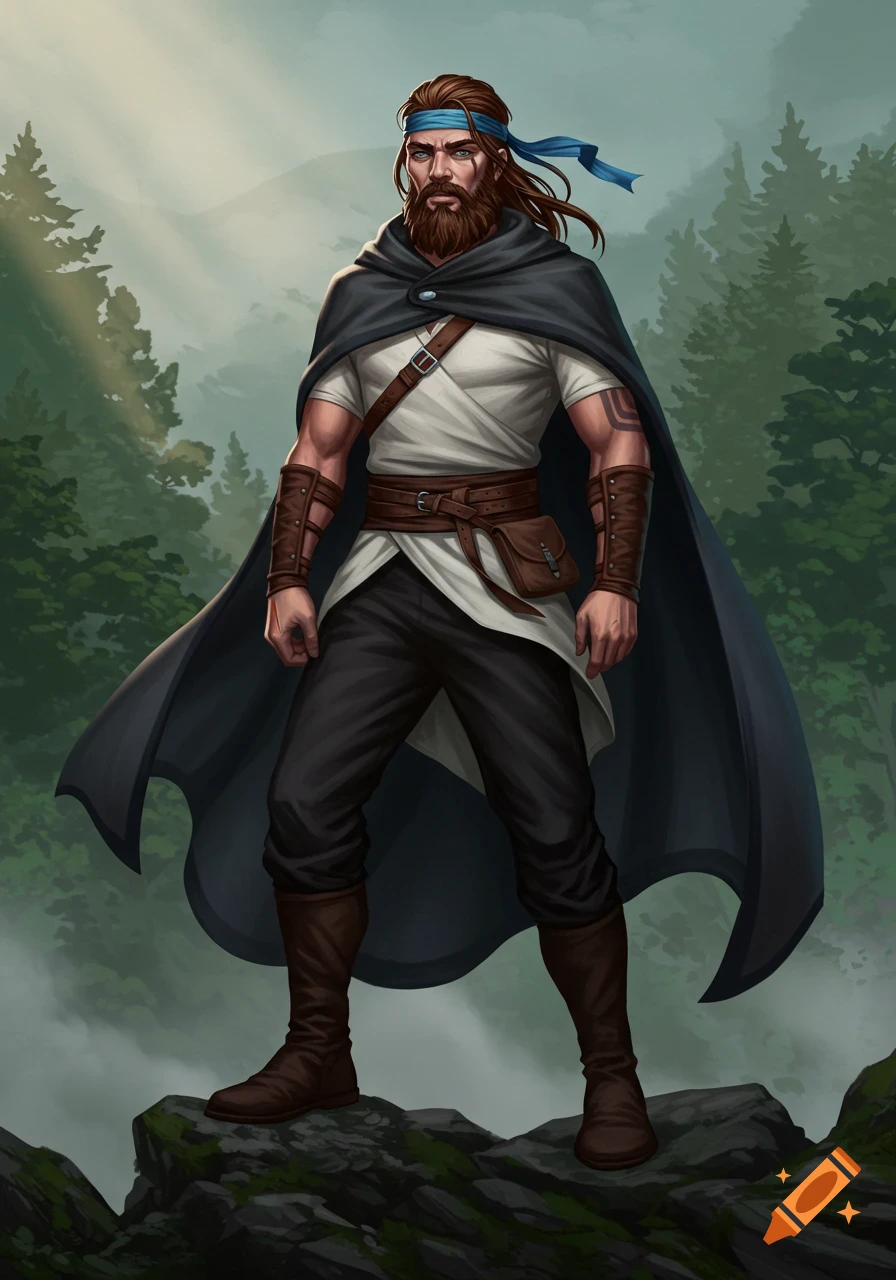
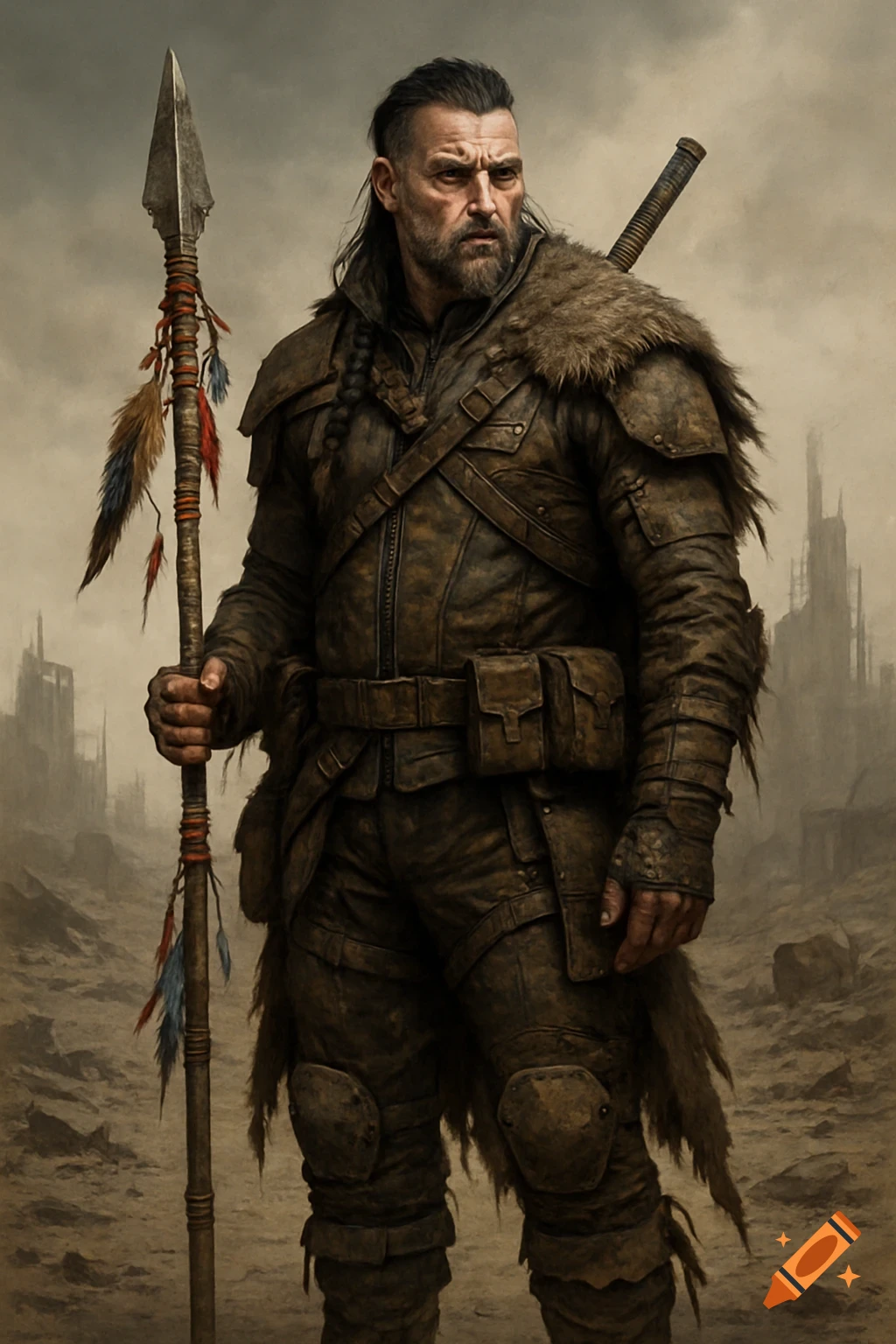
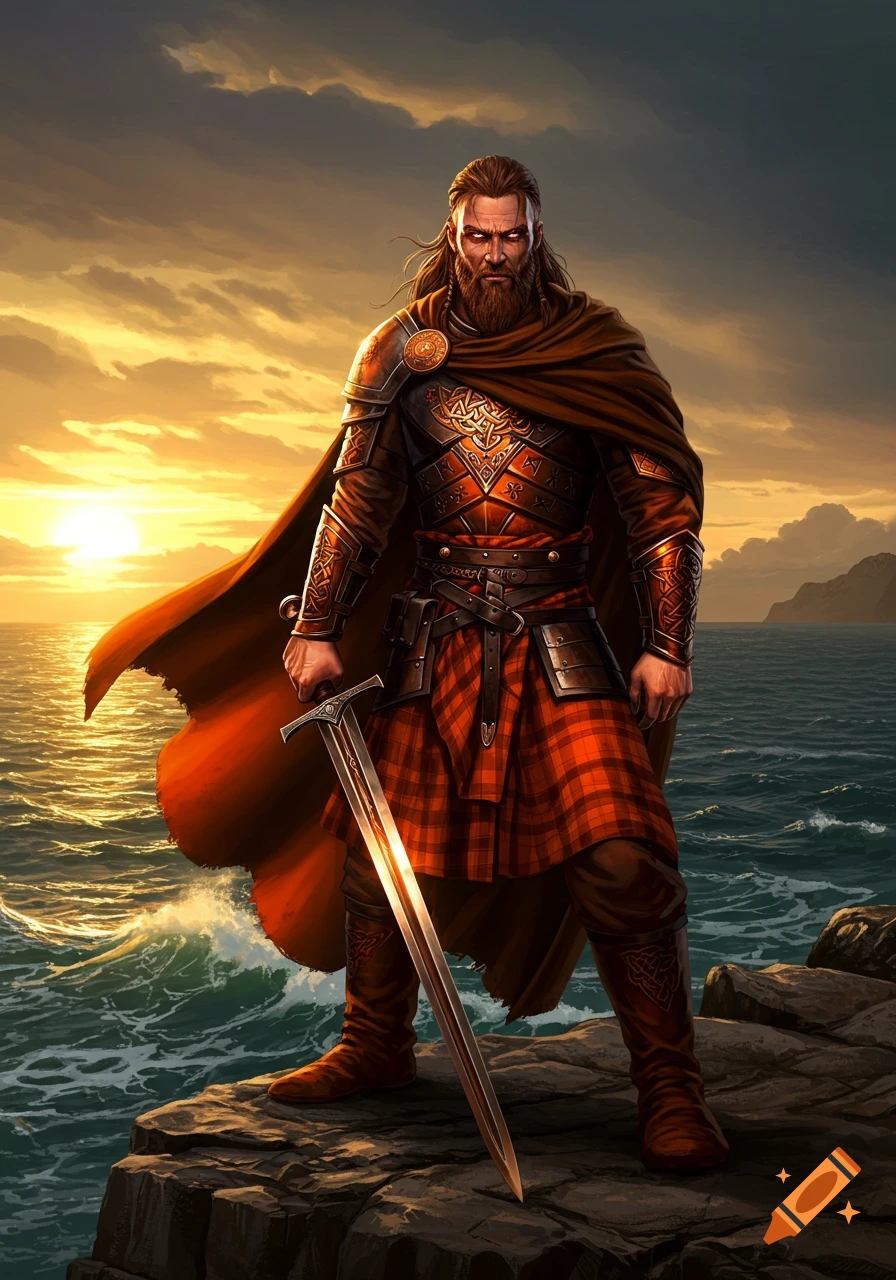
A long-haired man with a beard, dressed in a fantasy-style tunic and vest, stands on a rocky hill overlooking a green landscape at sunset.
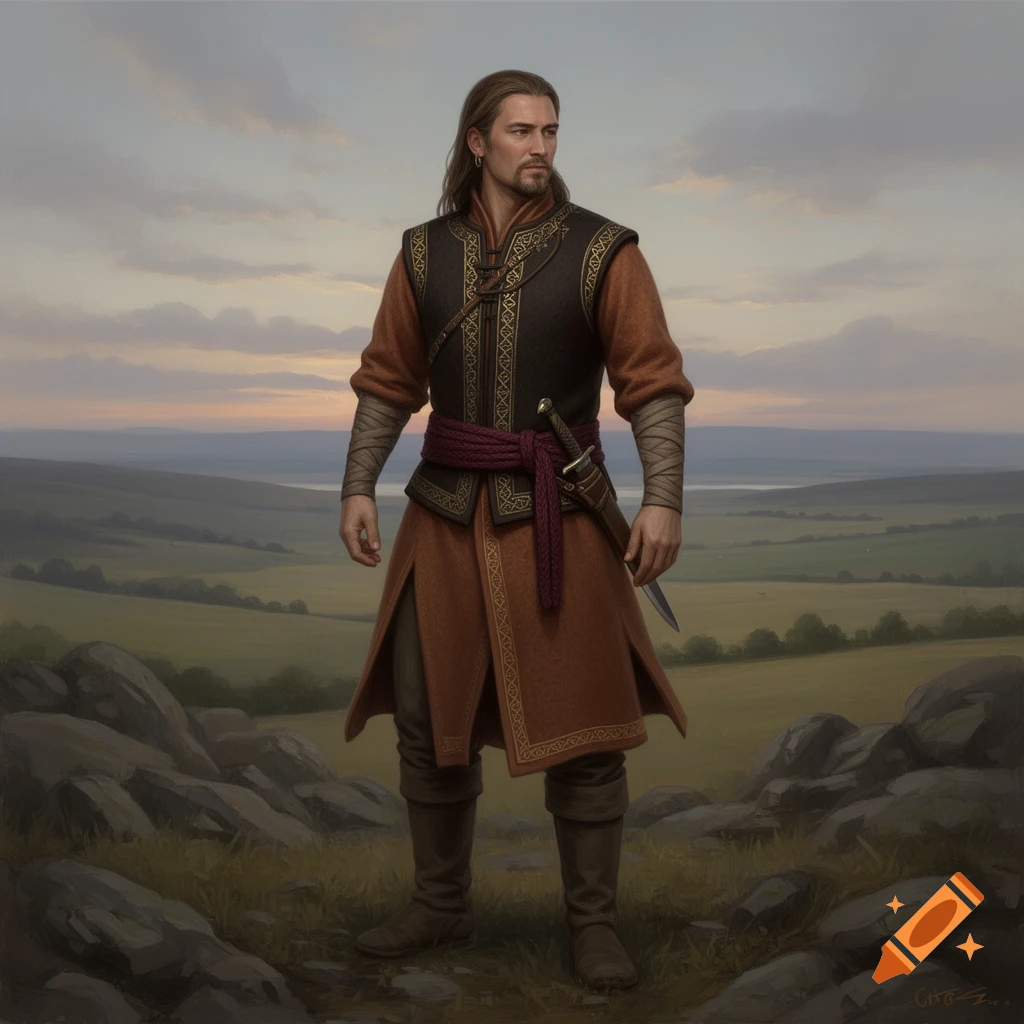
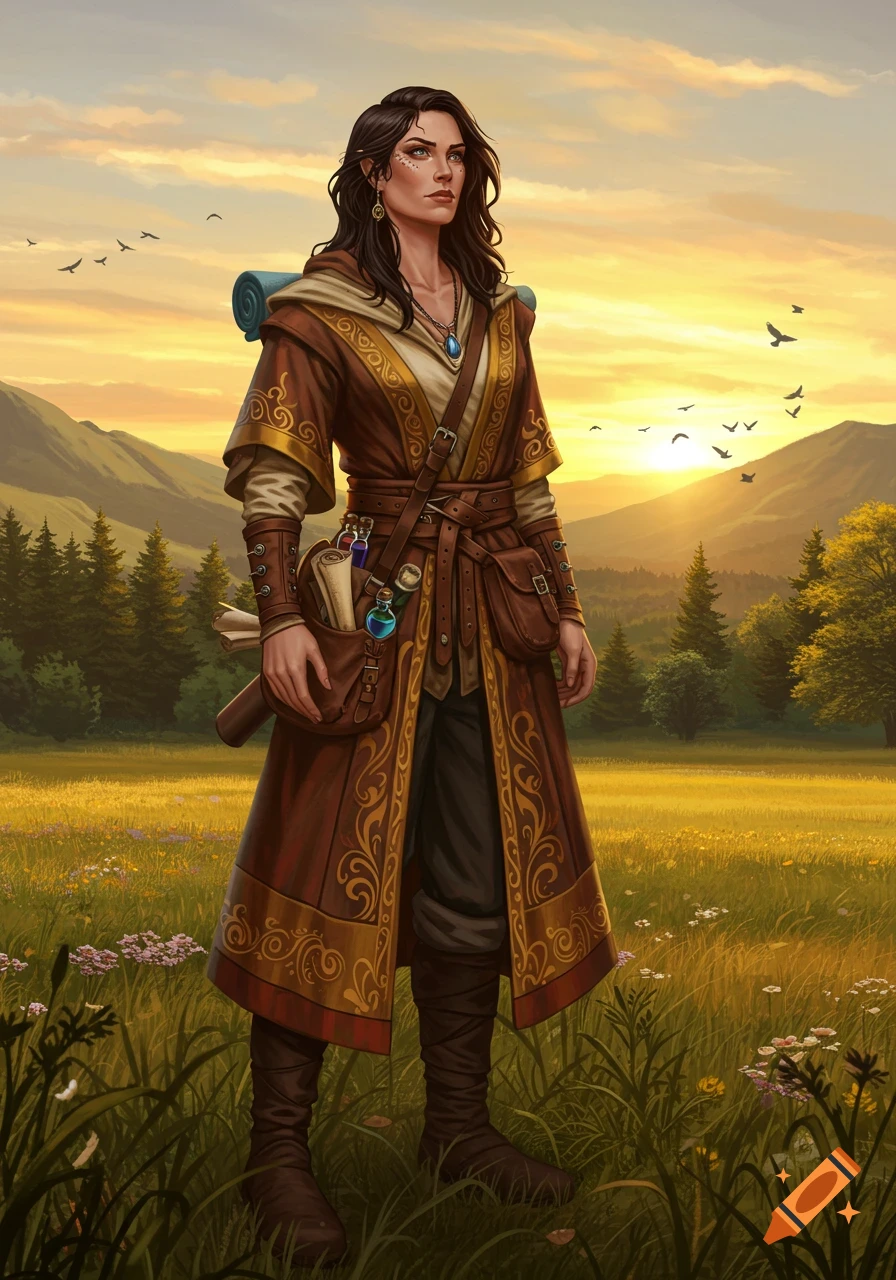
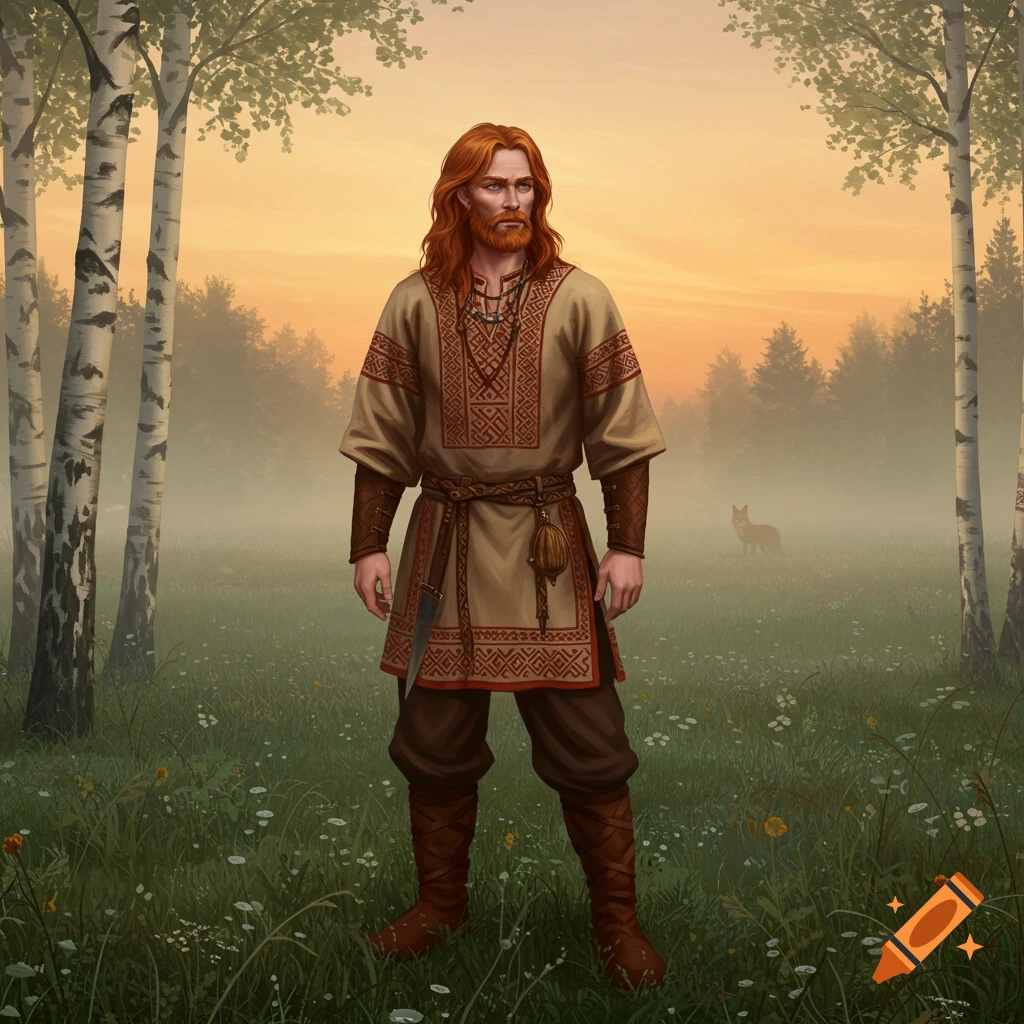
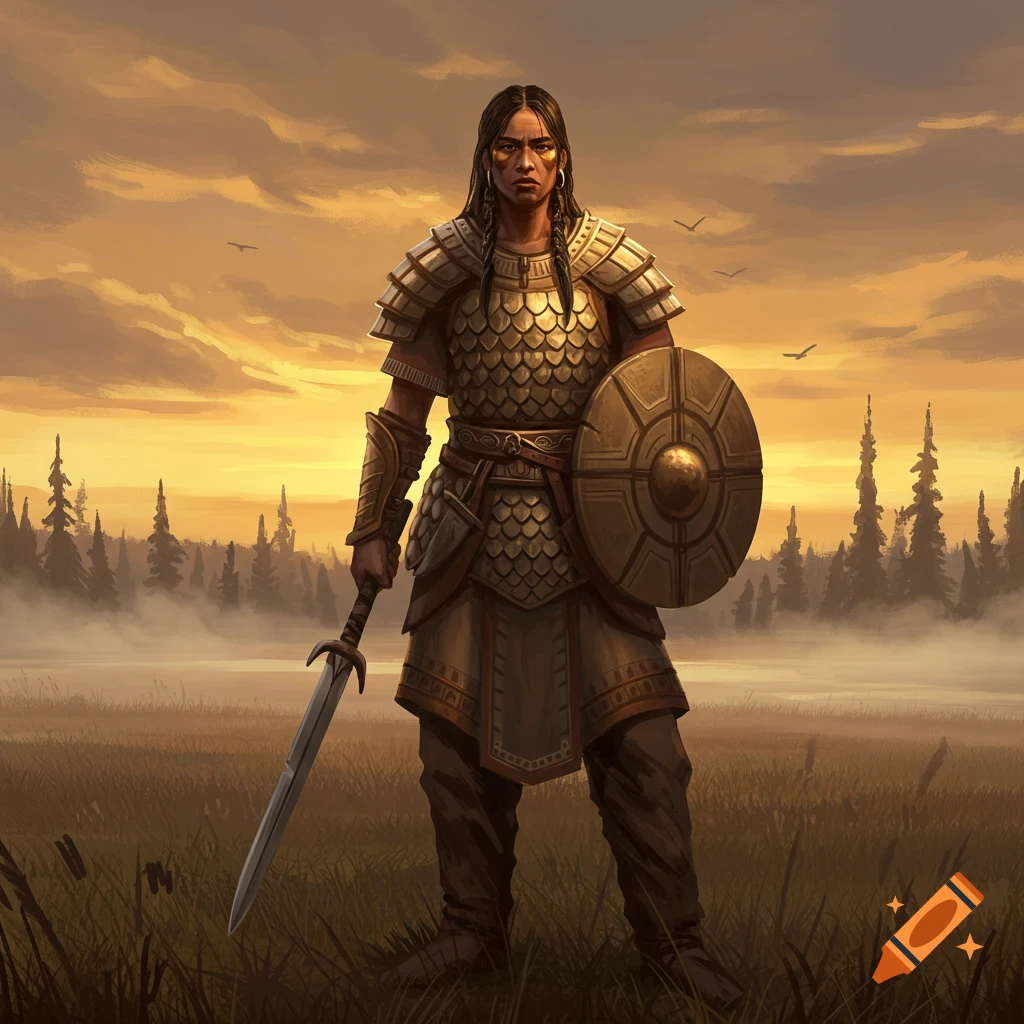
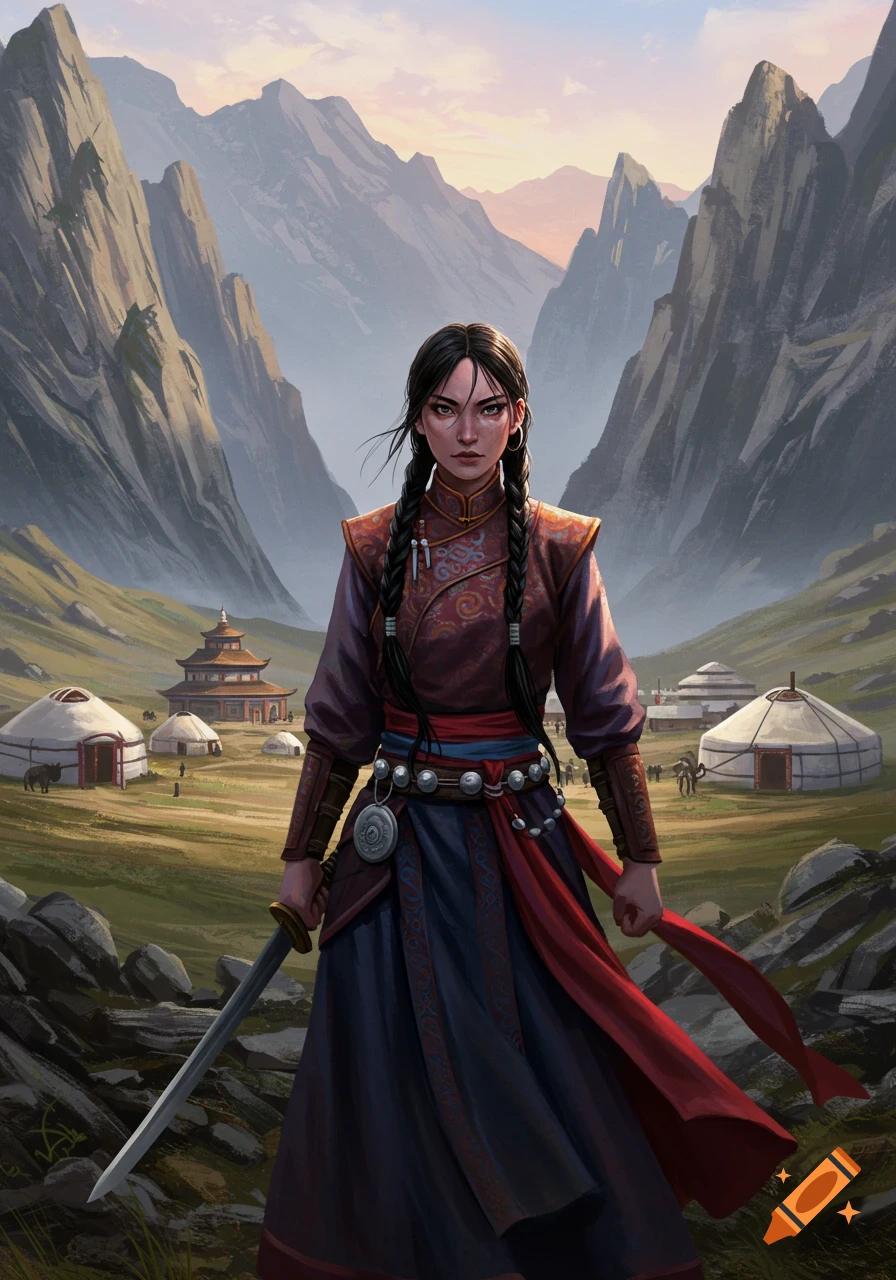
Base layer: tunic and trousers A knee-length tunic, split at the sides for ease of movement on horseback, worn over fitted trousers tucked into boots — this is the actual functional base of most historical steppe riding dress, rather than a full-length coat. Fabric: heavier wool or wool-linen blend in a muted rust or deep clay color. This immediately reads as more "working clothes" than any of the robe versions, which suits her Shepherd Druid side especially well — easier to move, crouch, ride, and work with animals in. Outer vest Layered over the tunic: a fitted, sleeveless vest that closes off-center (echoing the diagonal wrap-front from the coat versions, just scaled down) — this is where most of the Semphari gold embroidery lives now, concentrated onto a single smaller garment rather than spread across a full coat. Deep brown or black vest fabric with gold thread stitched in a tighter, more restrained geometric border along the vest's edges only, rather than covering large fabric panels. This keeps the "wealth signal" present but scaled to practicality — a working vest that happens to be well-made, not a display piece. Sash/belt A narrower woven sash sits at the waist over the vest, in a contrasting deep red or burgundy, tied simply rather than elaborately knotted — enough to hold a knife or small pouch, without the ceremonial bulk of the formal version. Sleeves Since the tunic itself is short-sleeved or sleeveless under the vest, add separate fitted forearm wraps or Mehr sehen
More images like this