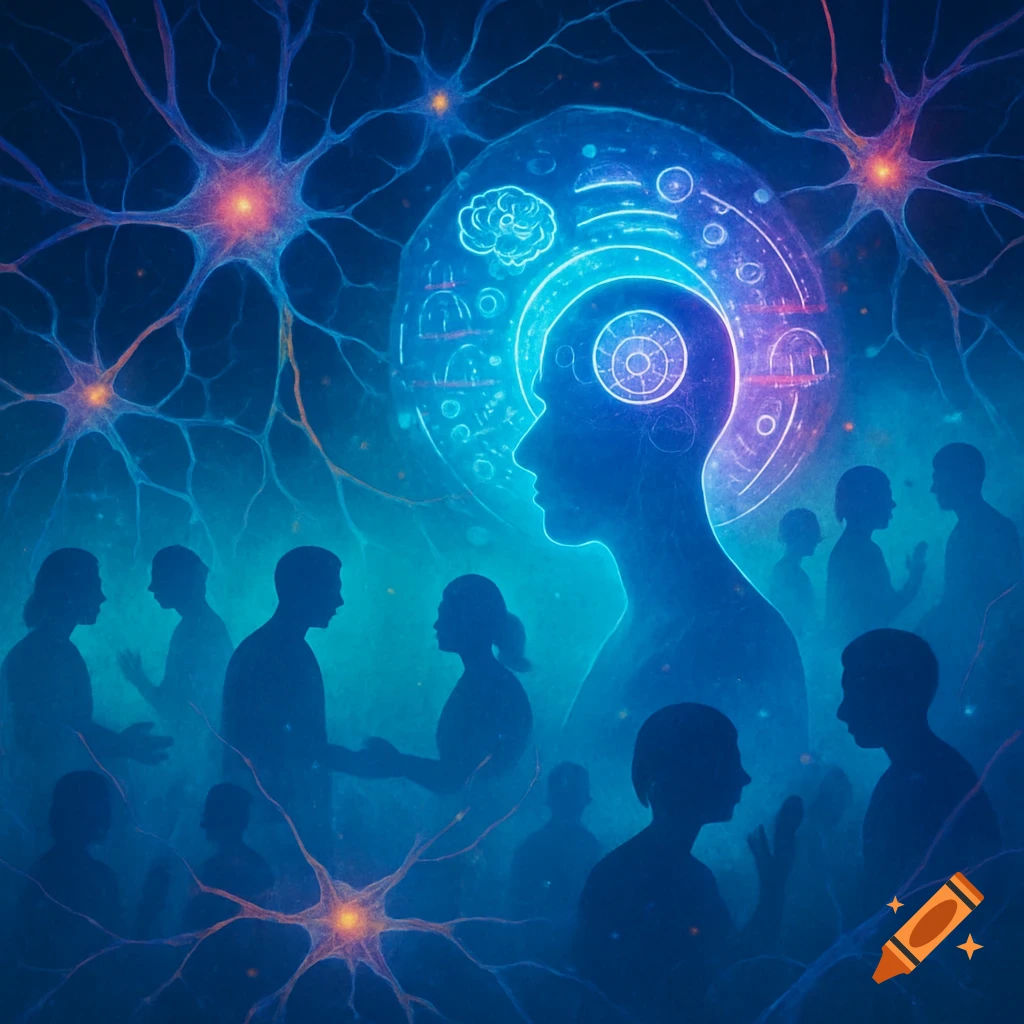
Abstract art of two figures, one glowing orange with reaching hands, one dark, linked to brain diagrams (NAcc, mPFC) by neural connections, with US flags.
The 2016 U.S. presidential election yielded distress among many individuals who identify with historically marginalized groups. We used functional magnetic resonance imaging and psychological measures to test the hypotheses that neural response to reward, probing the nucleus accumbens (NAcc) and medial prefrontal cortex (mPFC), and social support would ameliorate the effects of election distress among those who felt negatively affected by the result. Within 4 months of the 2016 U.S. presidential election, we tested human participants who felt affected by the election result (n = 40, Mage = 21.9 years, 28 female) and control participants (n = 20, Mage = 20.25 years, 12 female) who did not feel affected by the election result. Election-related distress significantly differed between the groups, and distress accounted for over half of the relationship between discrimination experiences and depression symptoms among affected individuals. NAcc activation, connectivity between the NAcc and mPFC, and family support moderated the associations between election distress and depression symptoms. Prior work has primarily investigated mesolimbic circuitry in reward and motivation contexts, but our findings extend the relevance of functioning in this circuitry to ameliorating psychological manifestations of acute distress after shifts in political climate. These findings highlight the psychological effects of this important historic event and identify neurobiological and social mechanisms Mehr sehen
More images like this