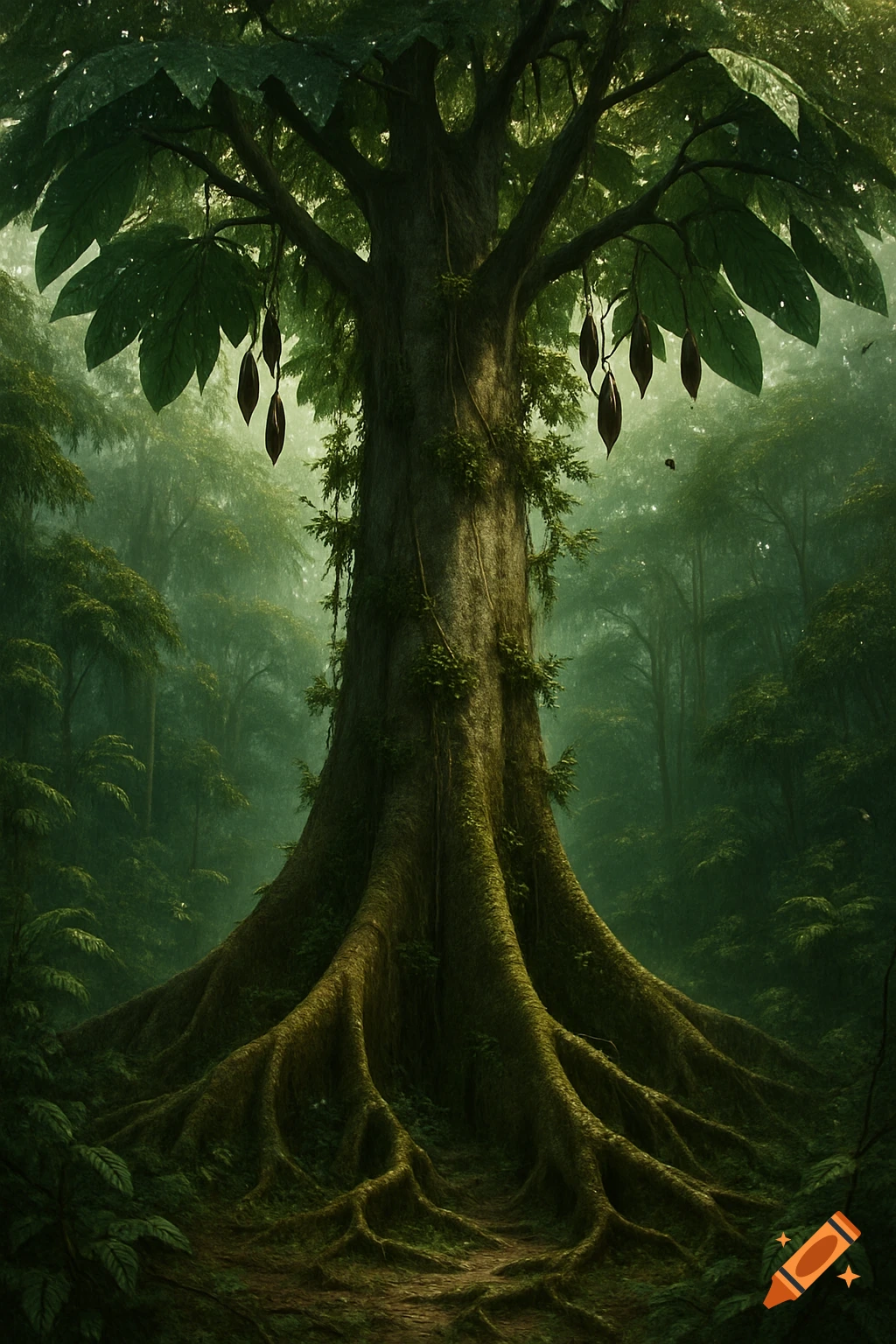
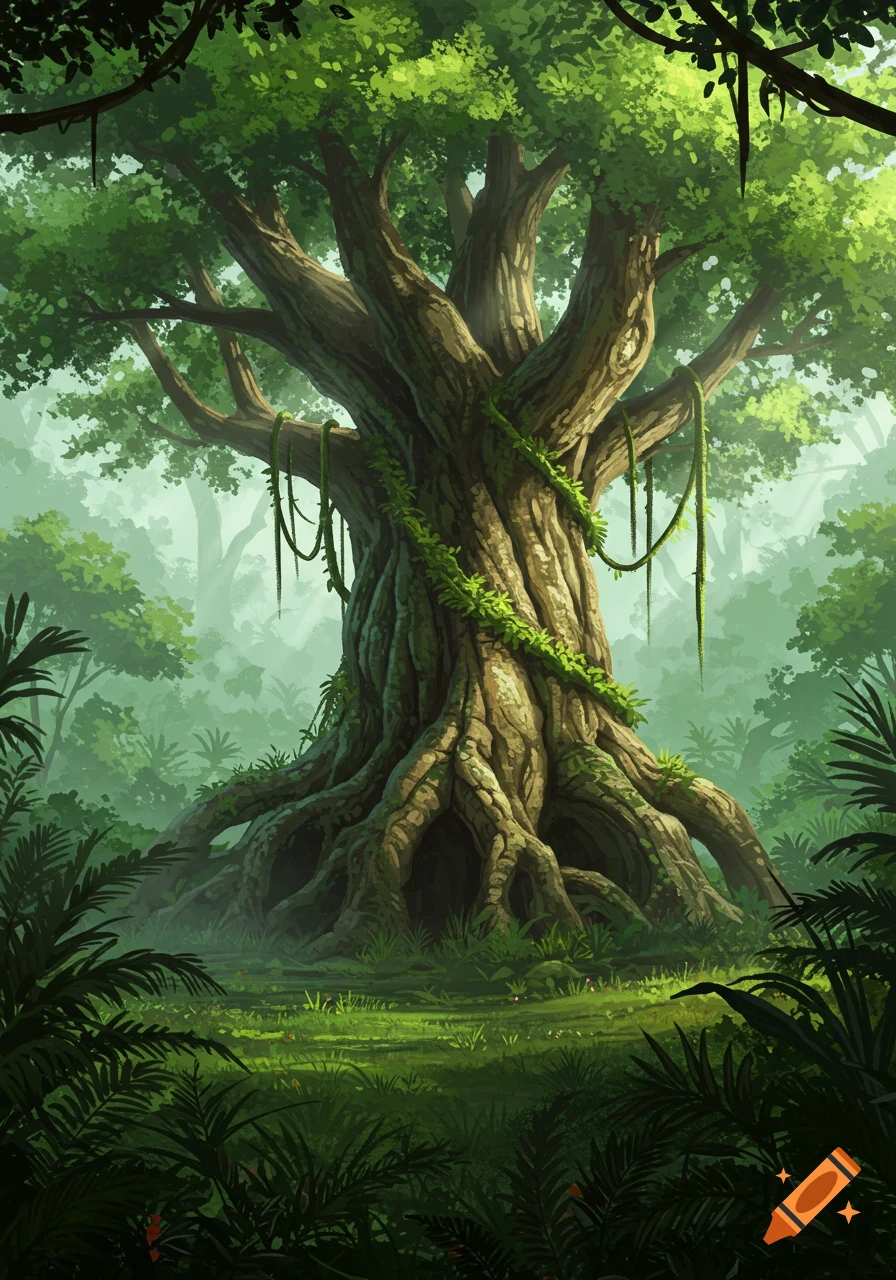
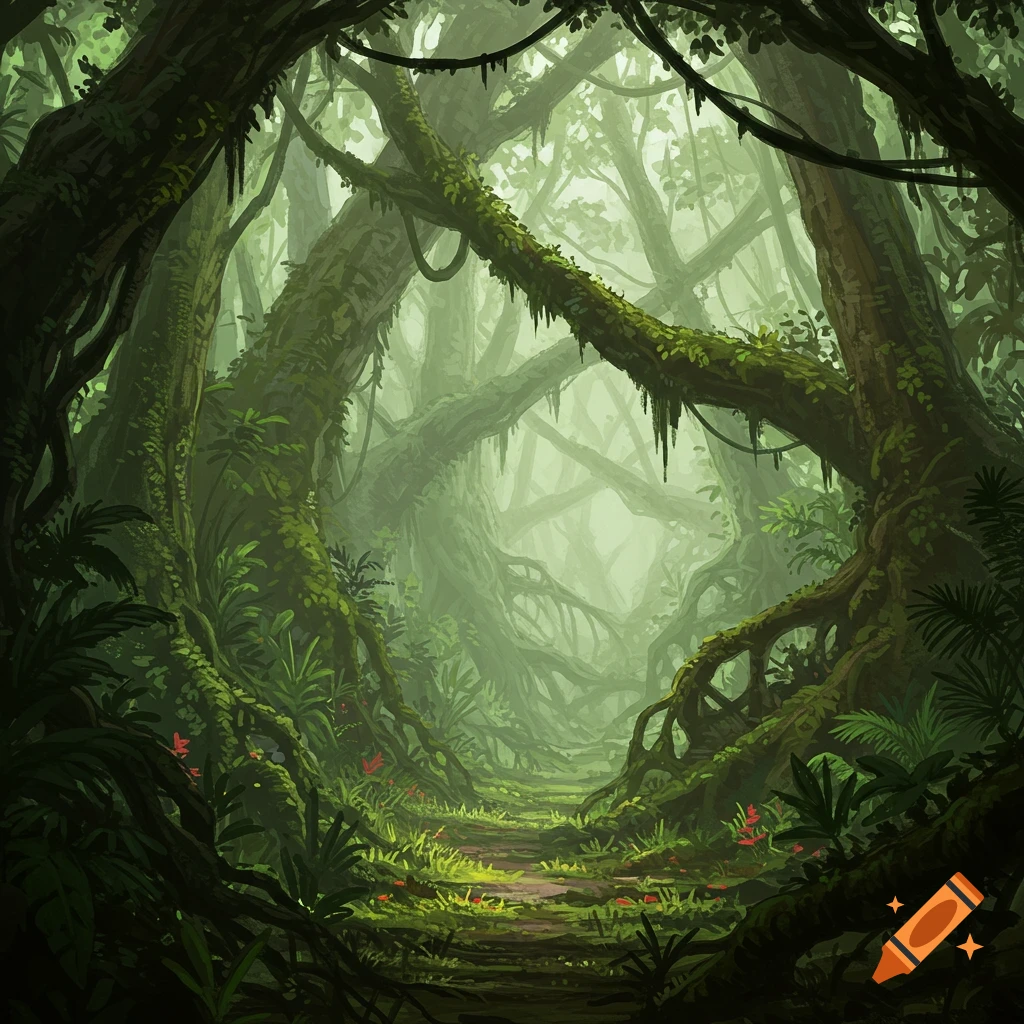
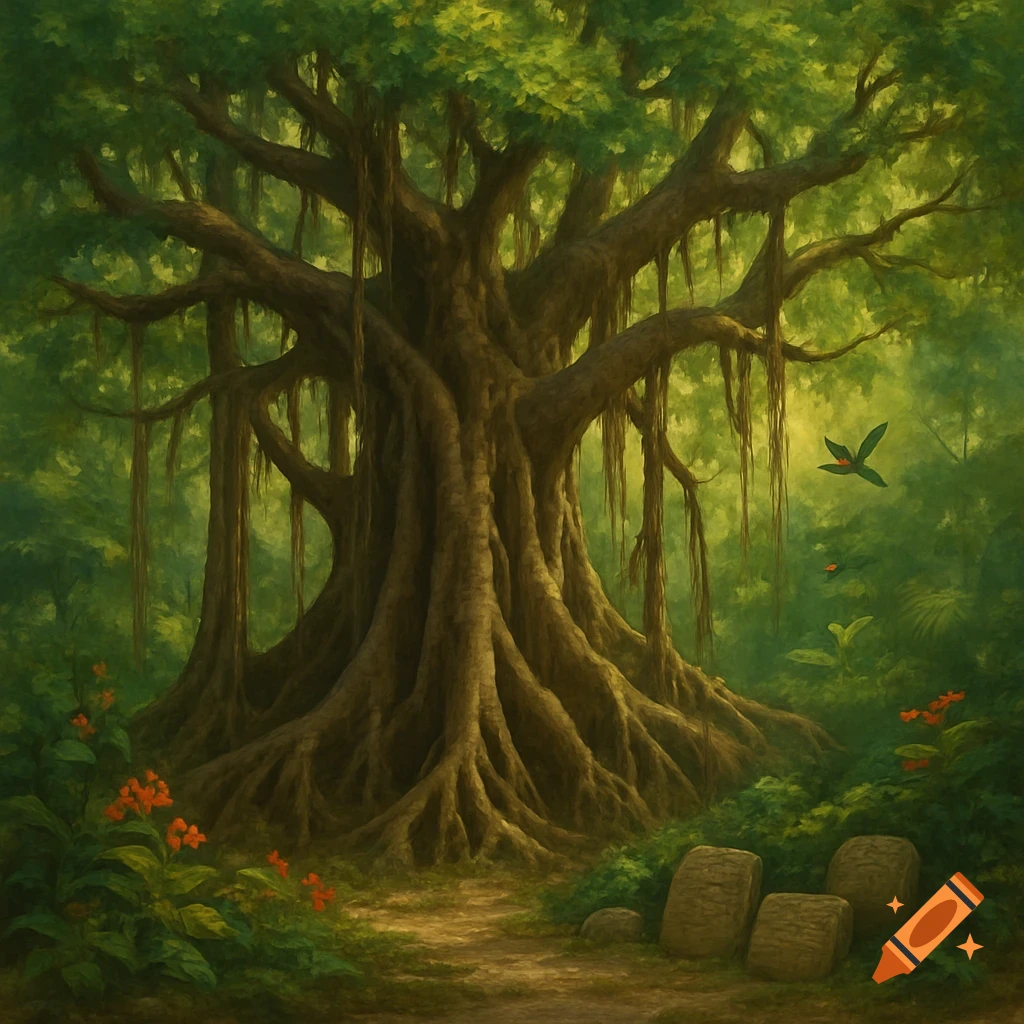
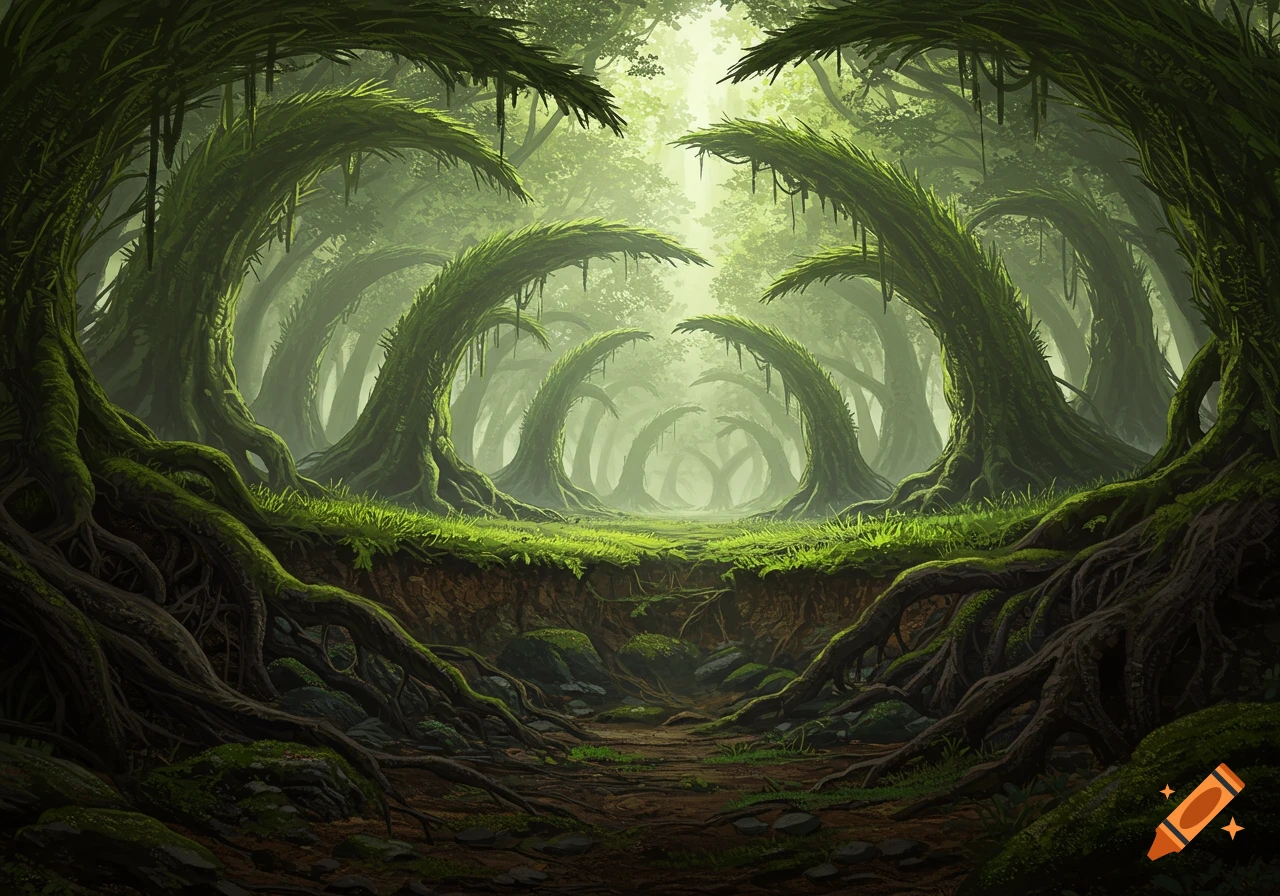
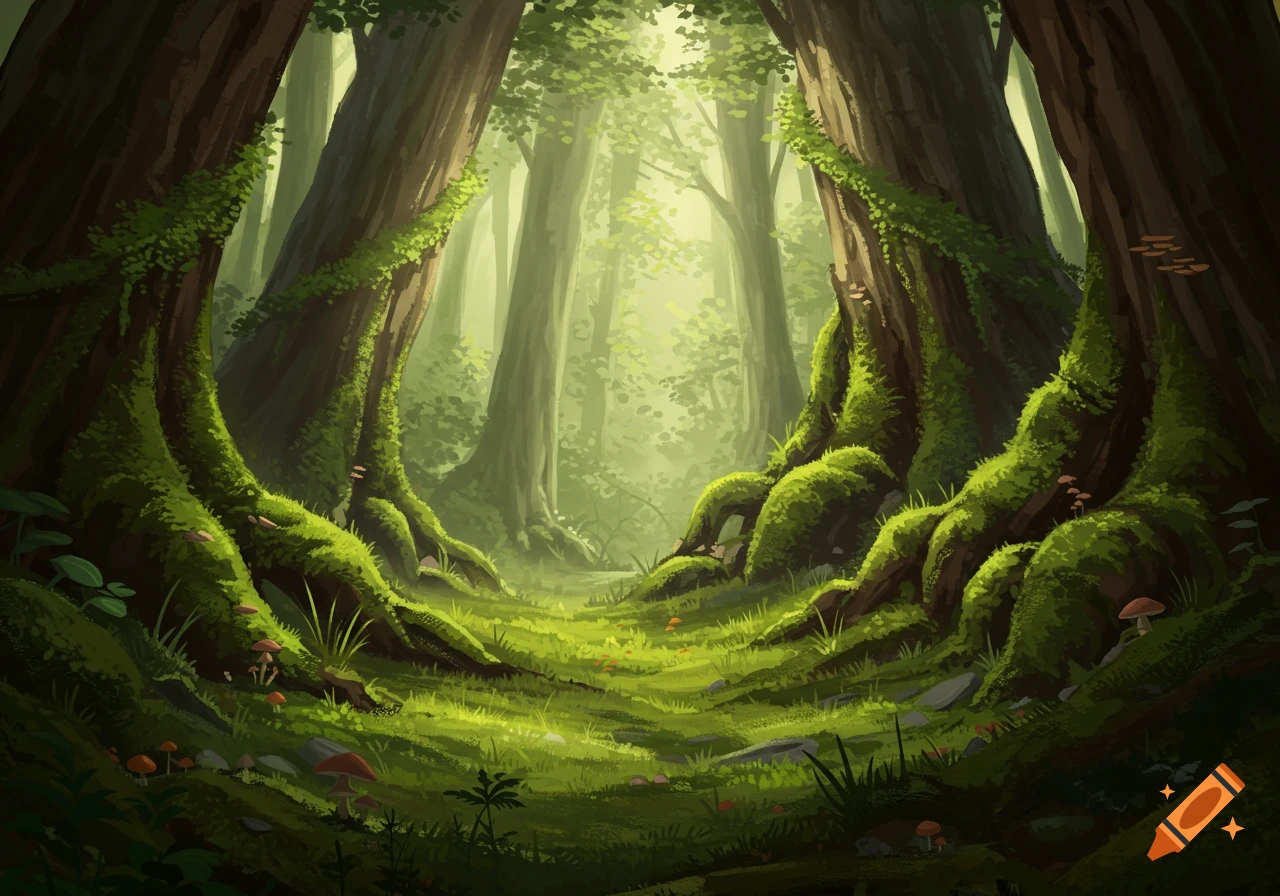
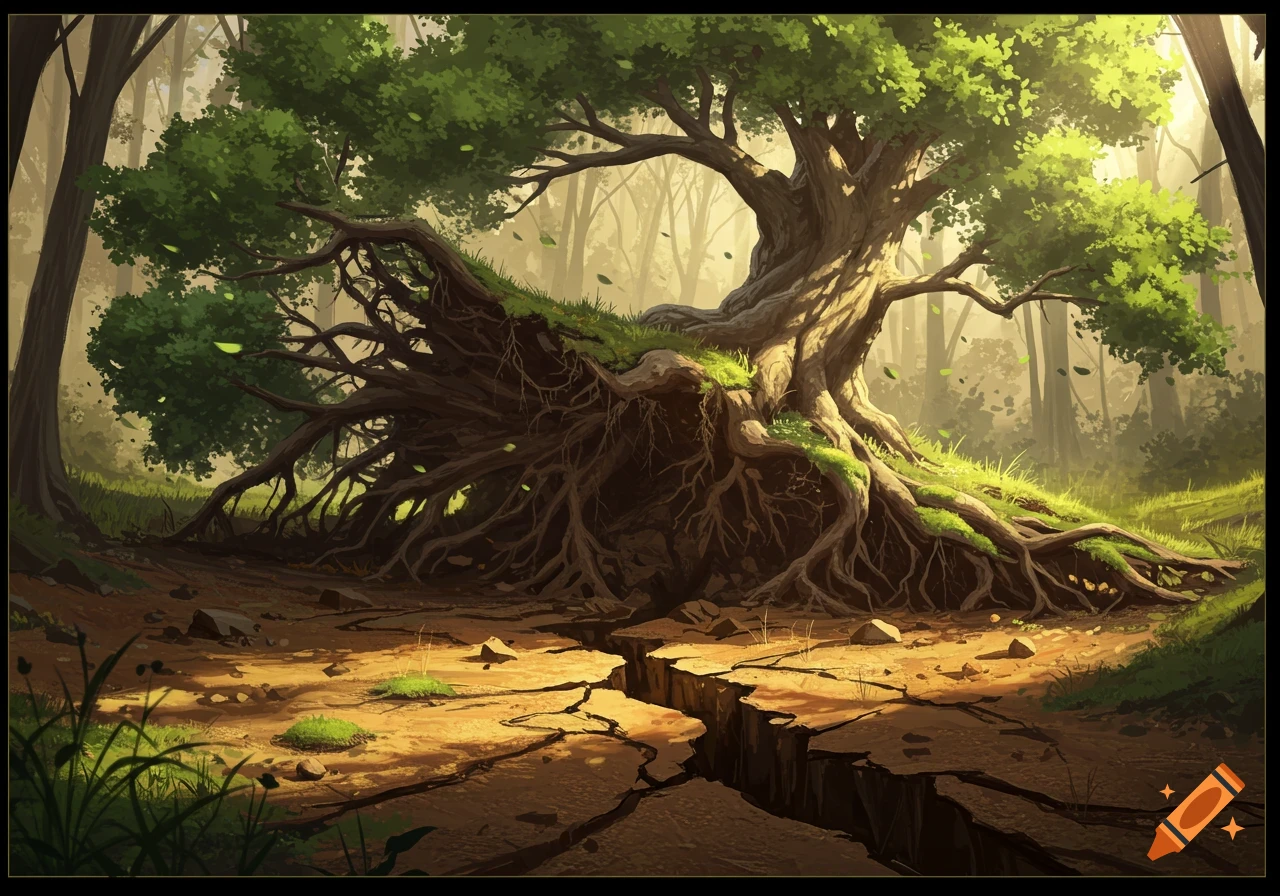
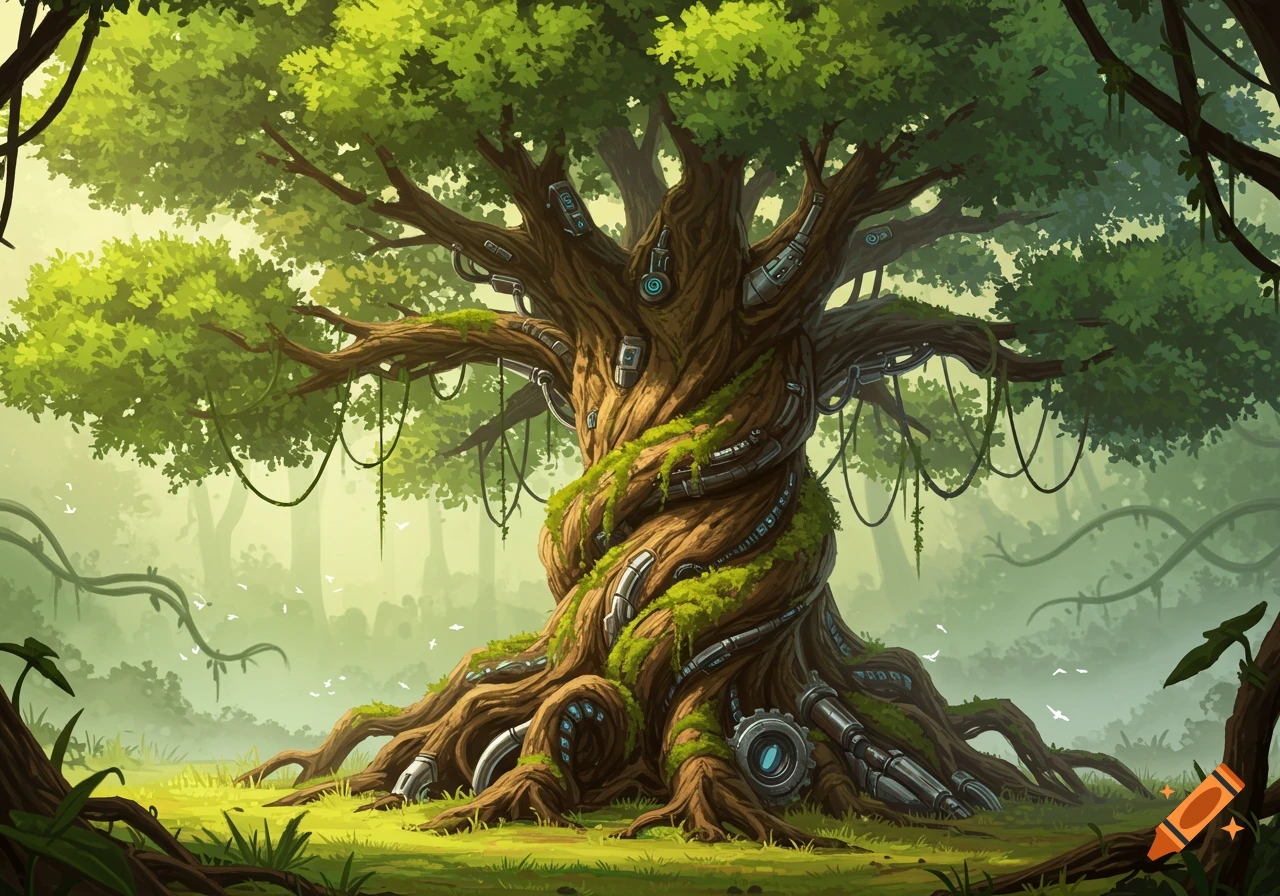
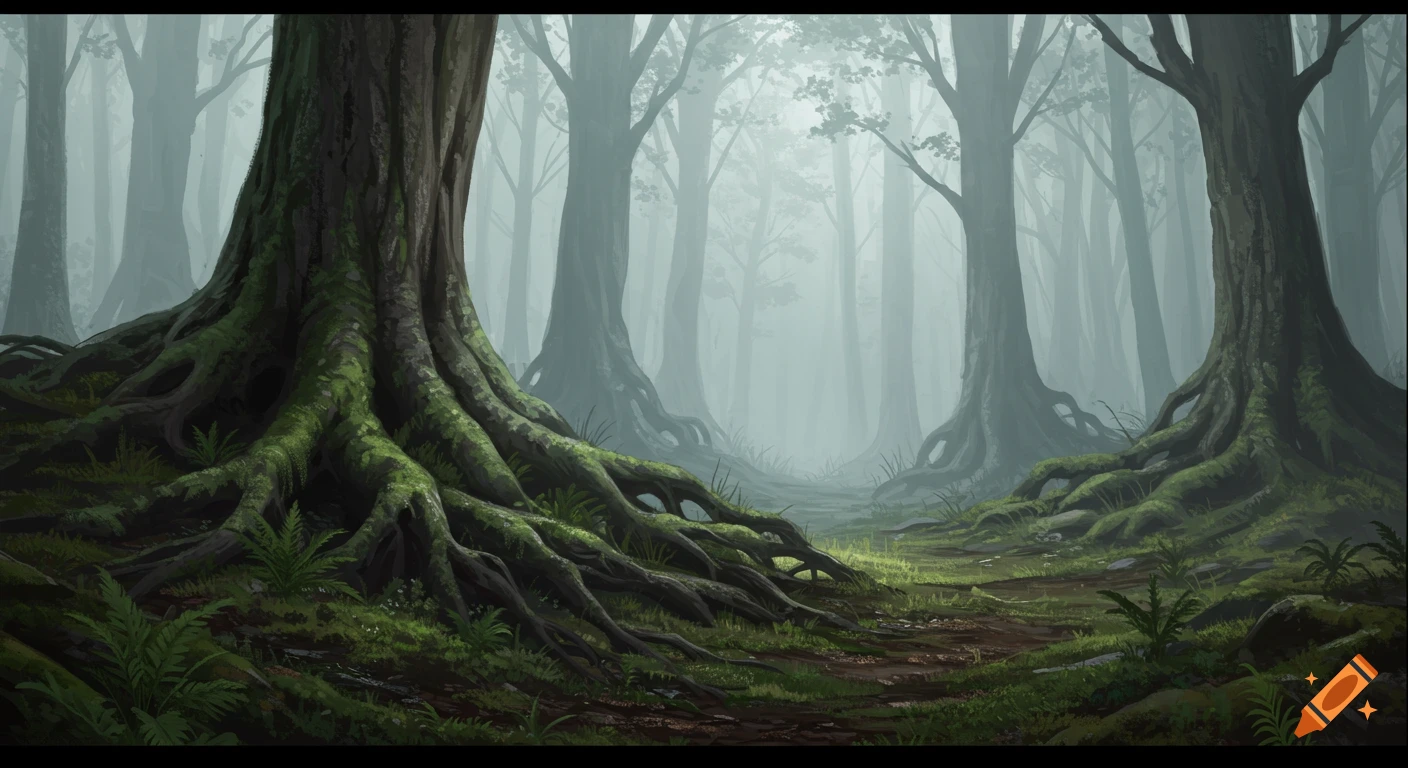
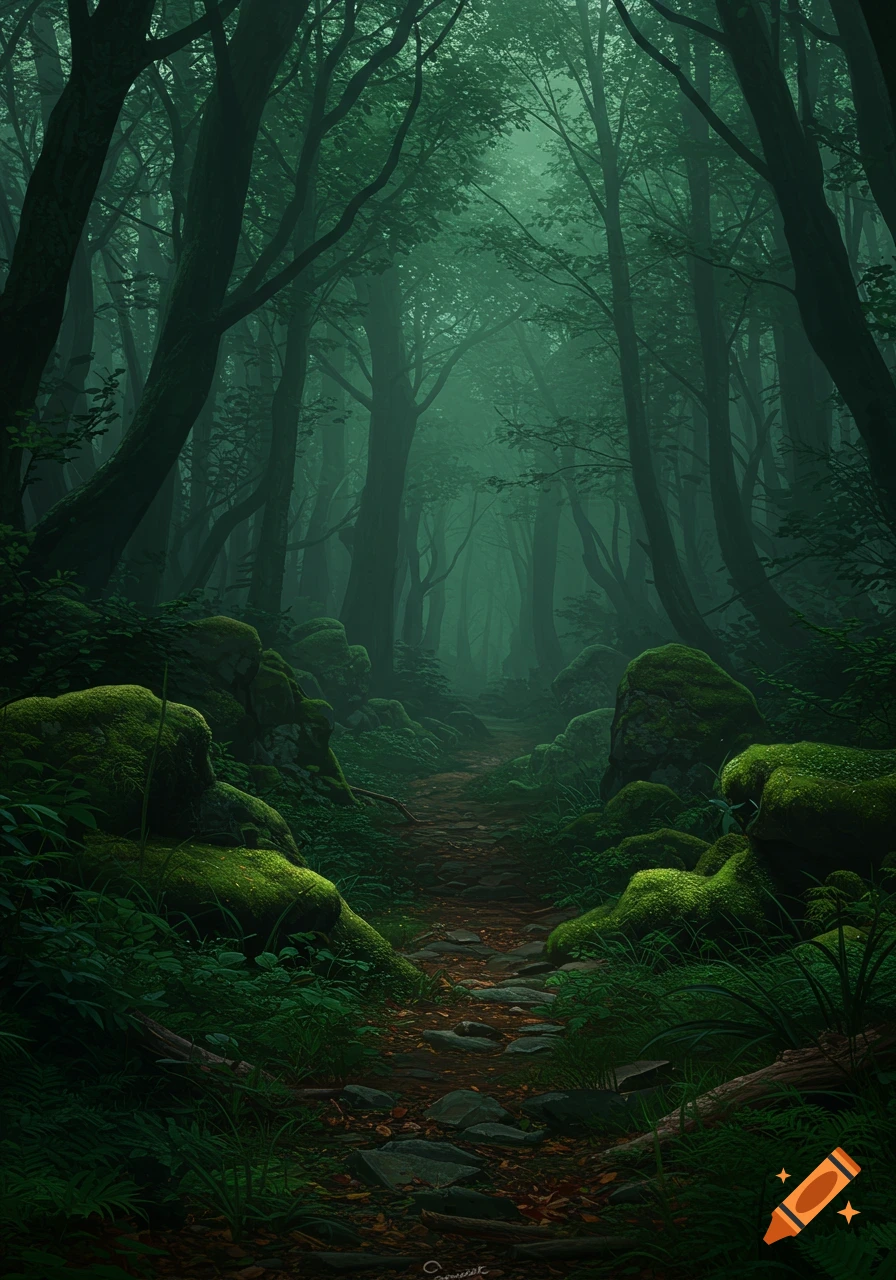
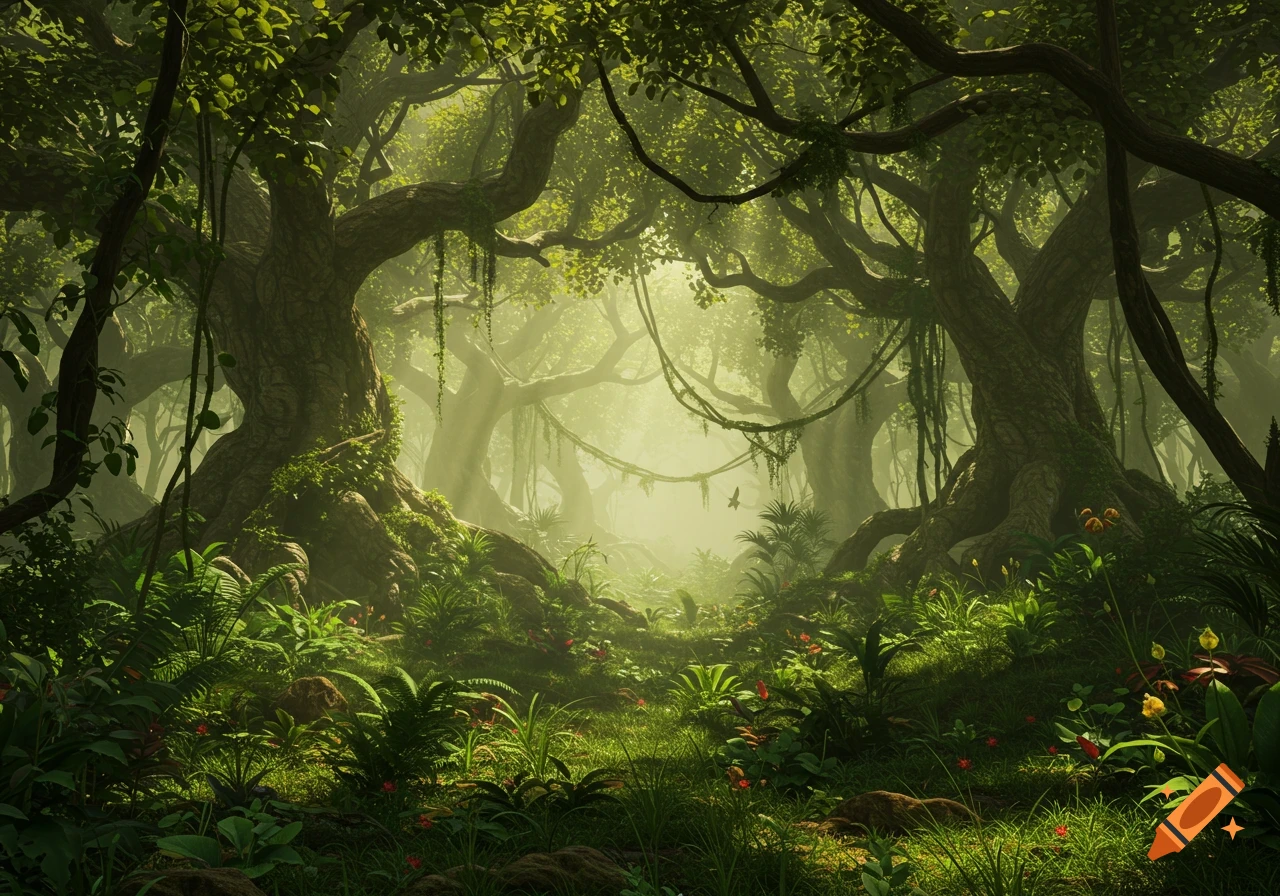
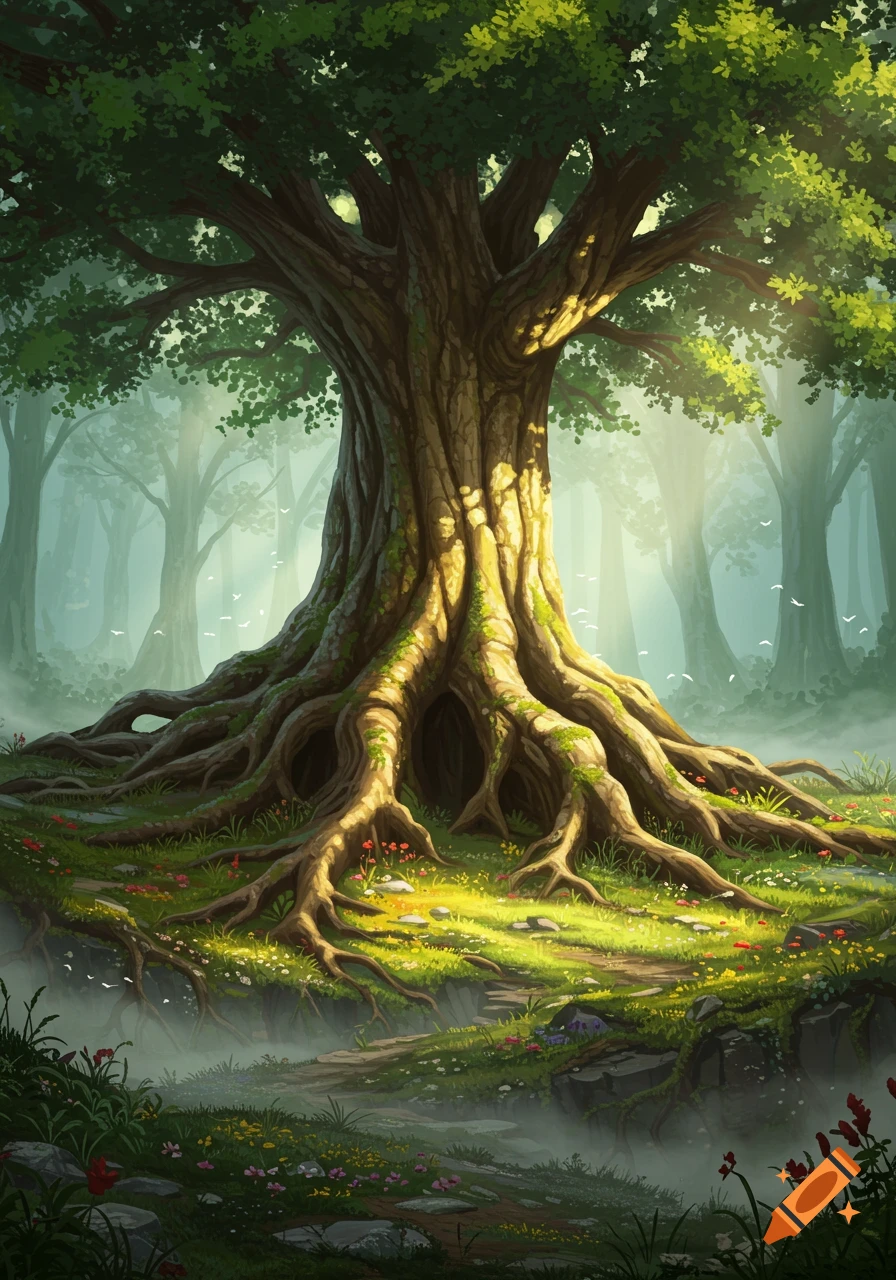
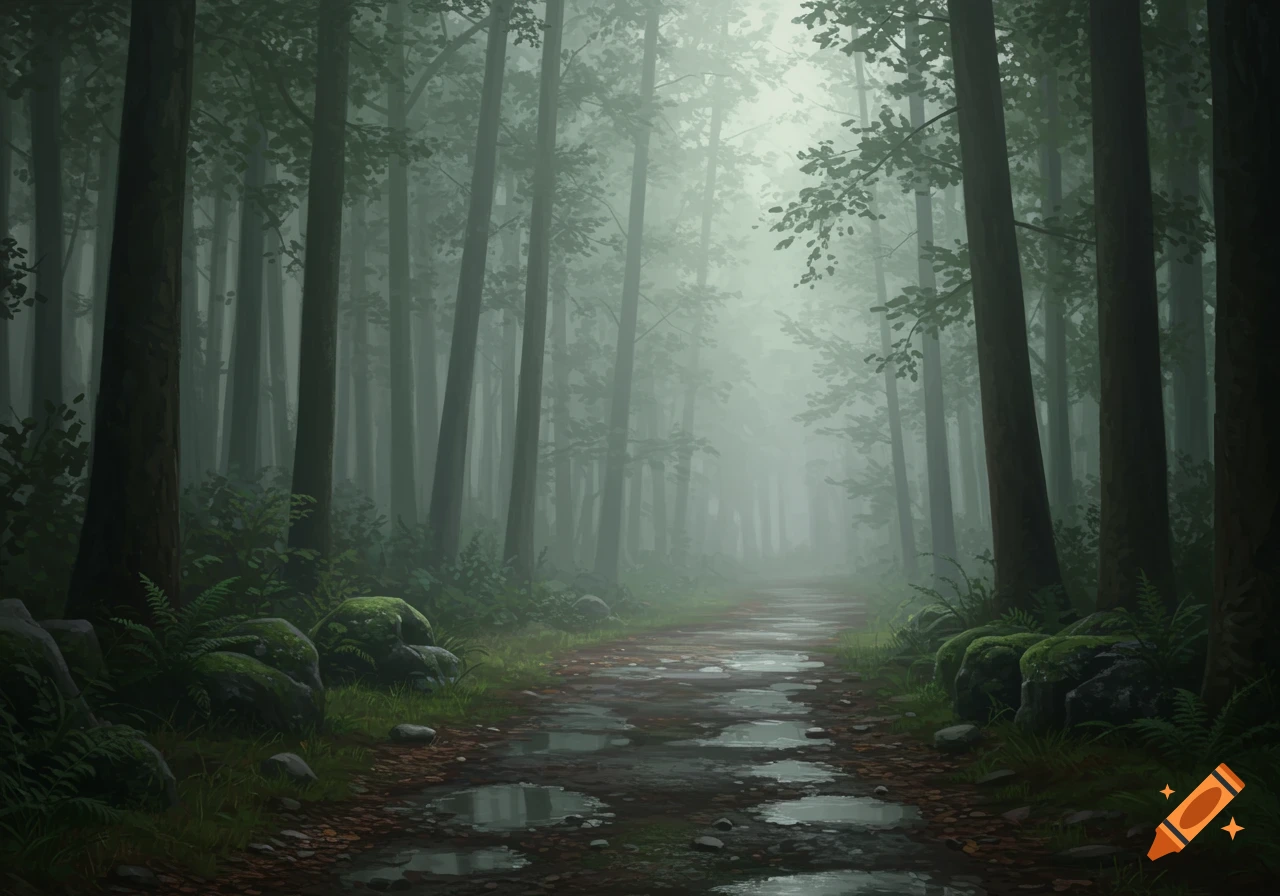
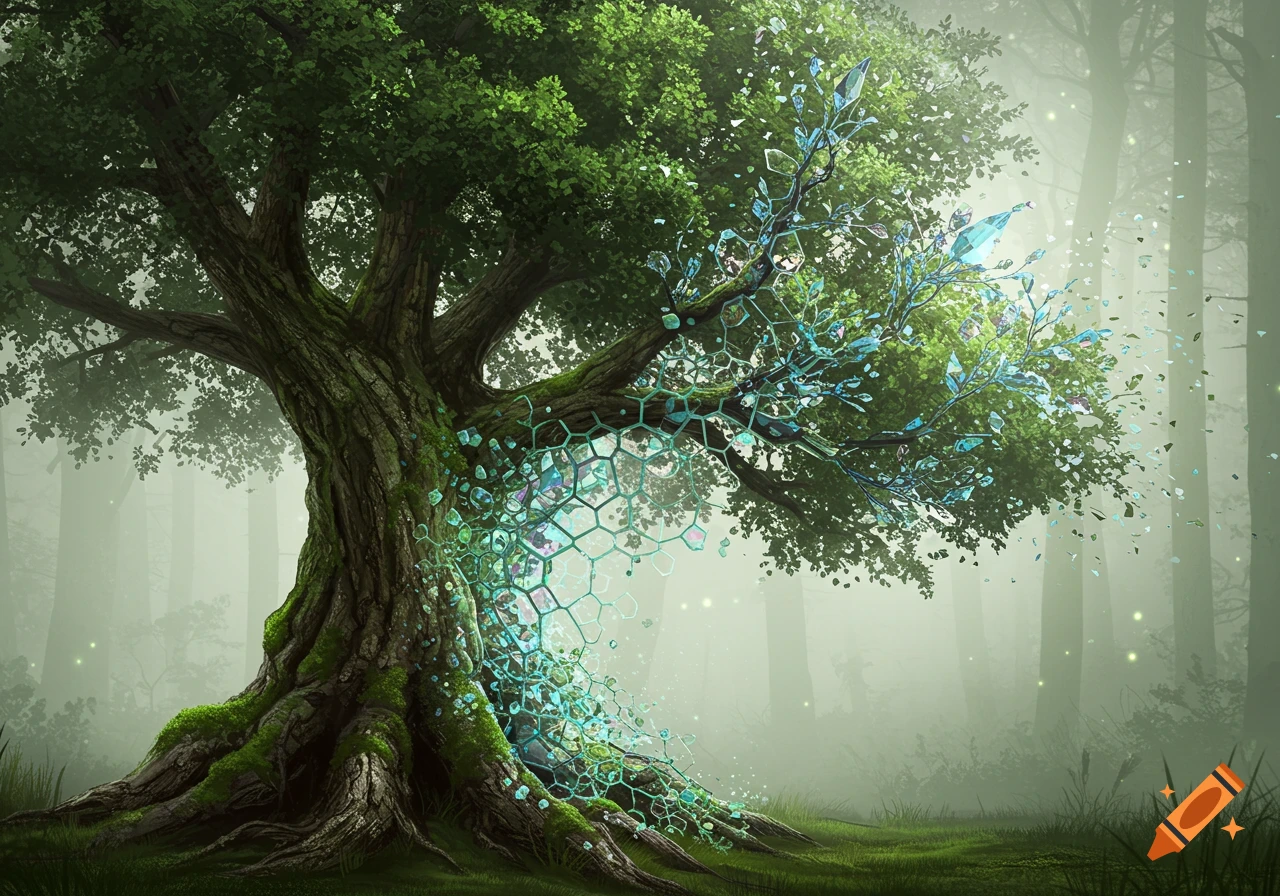
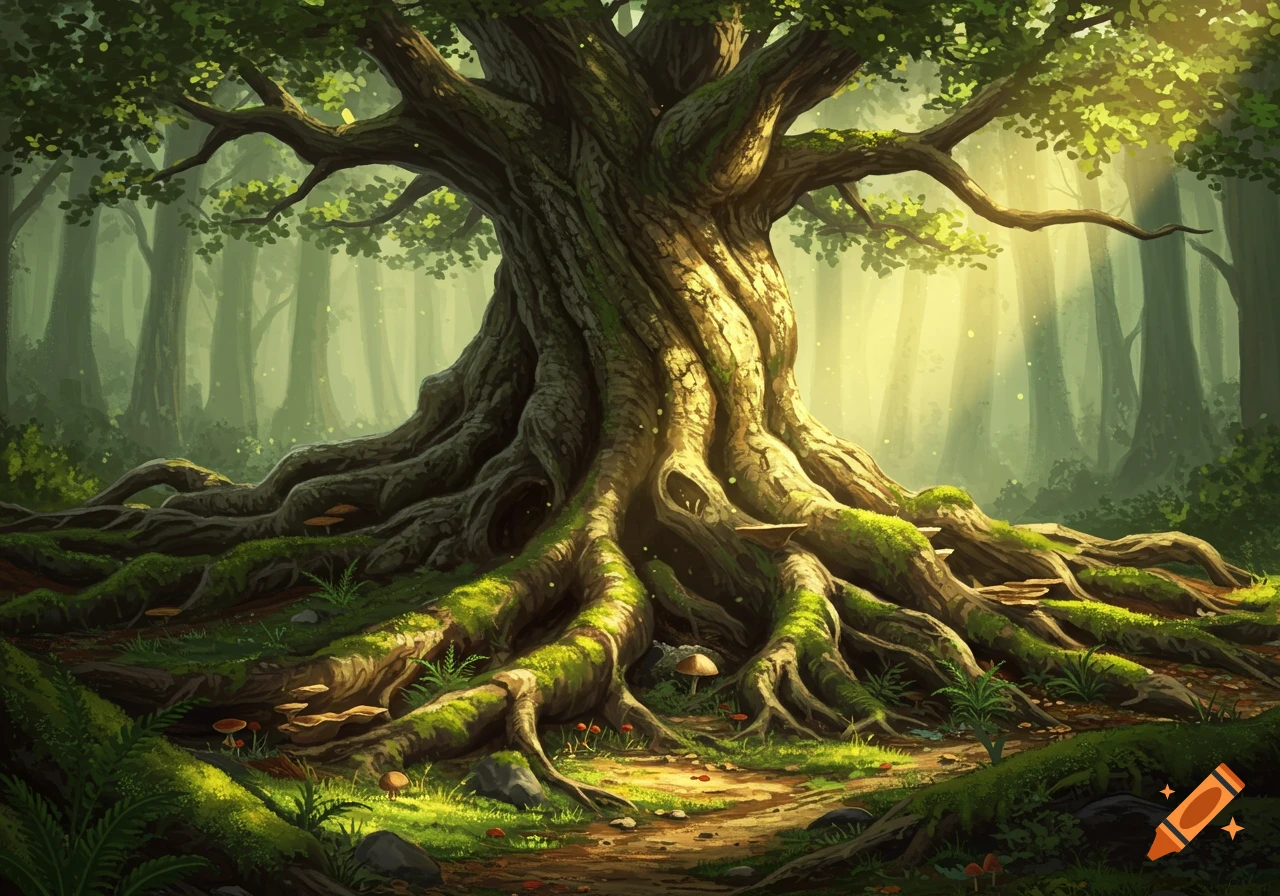
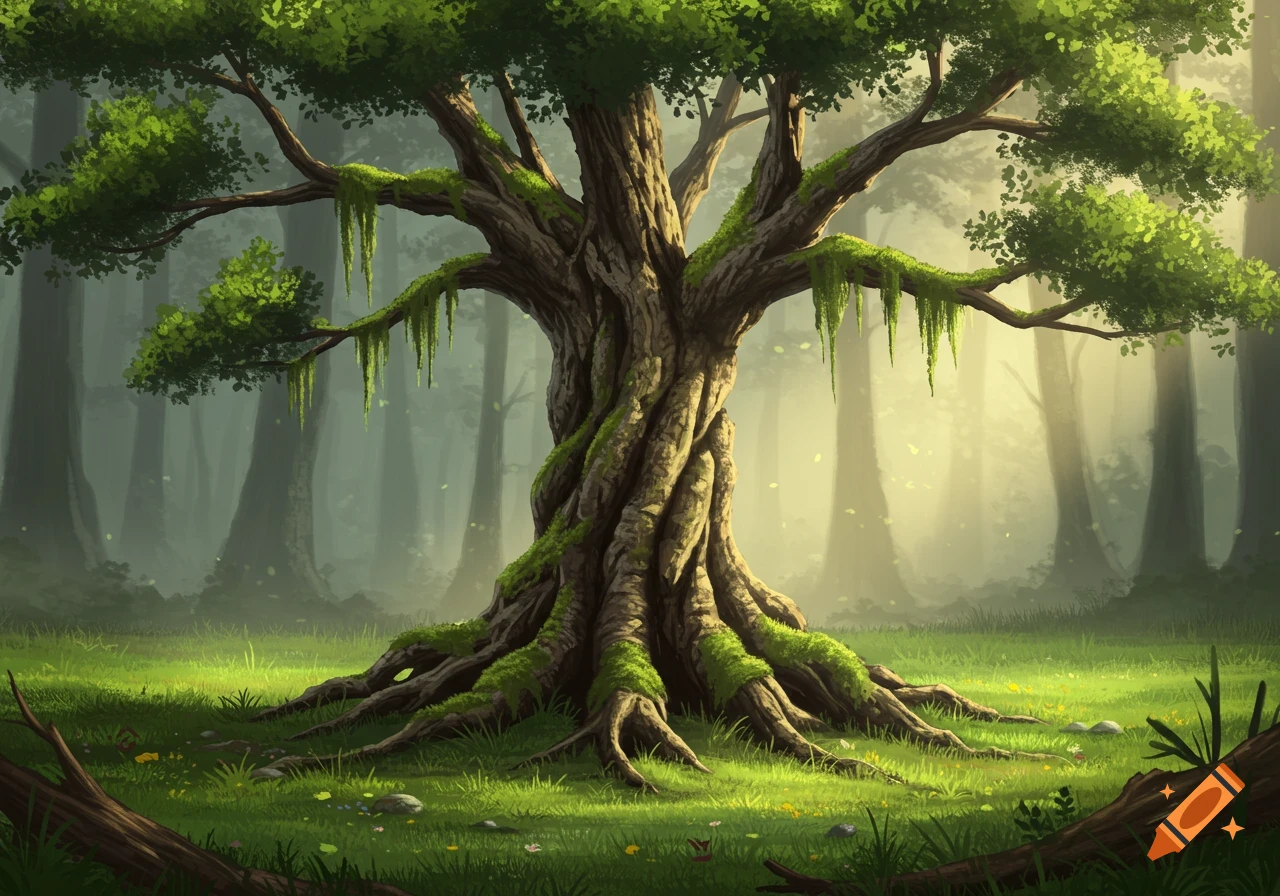
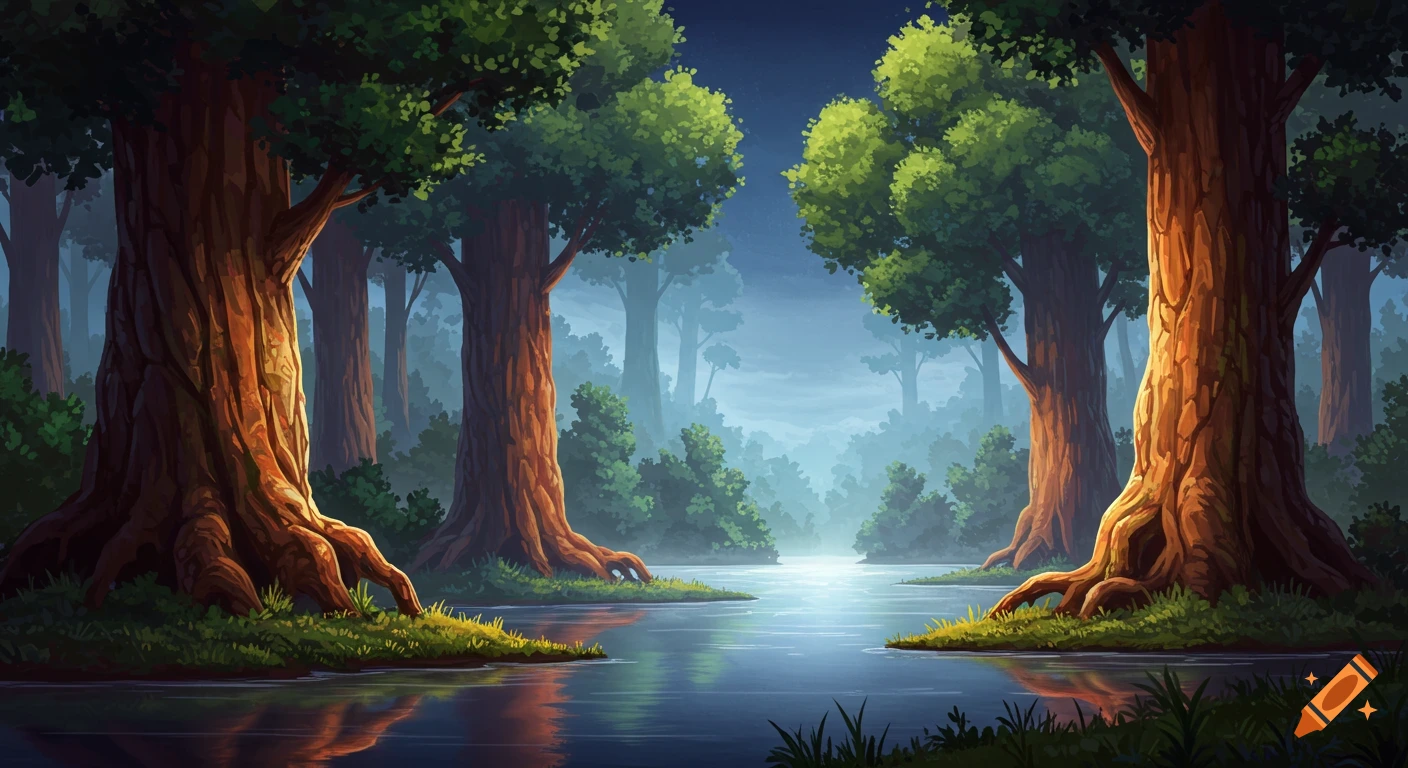
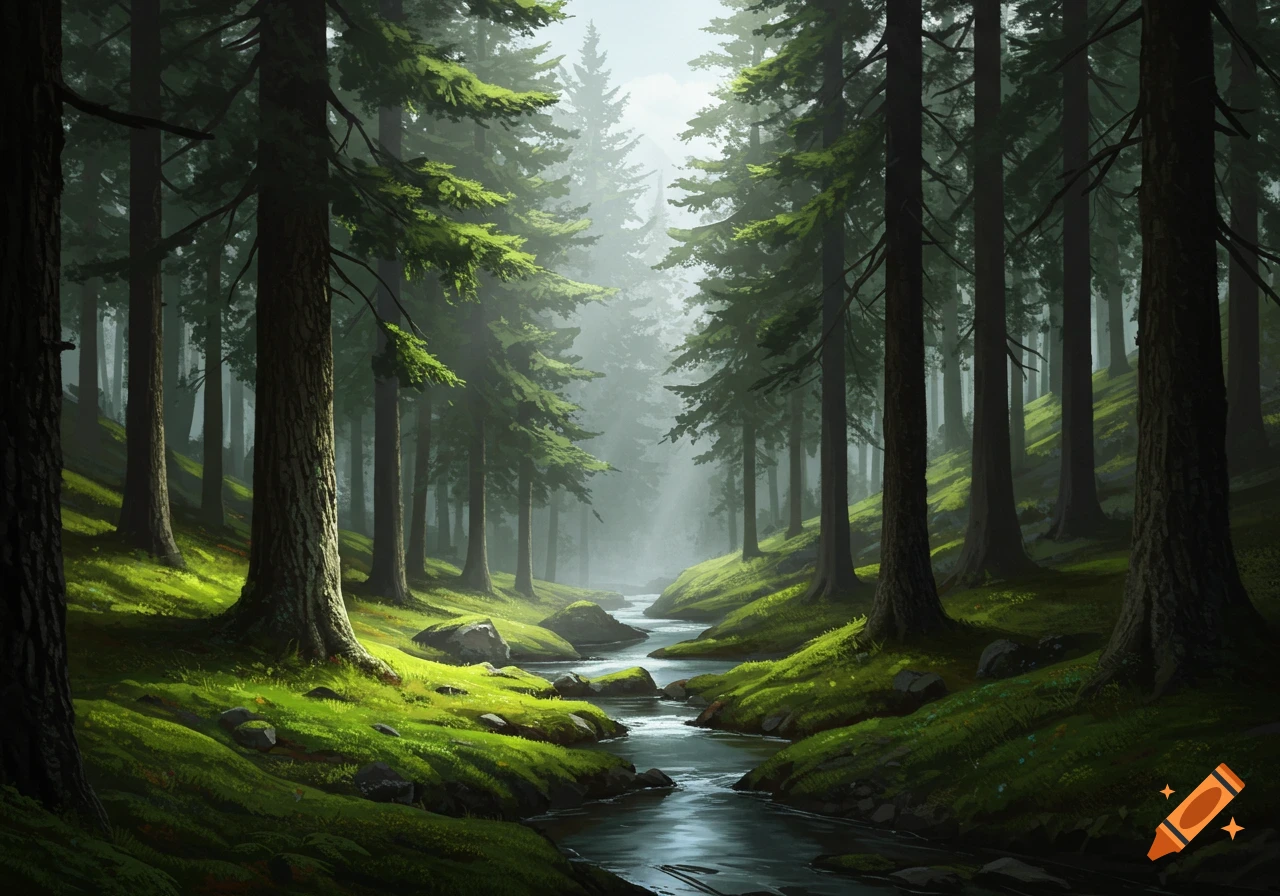
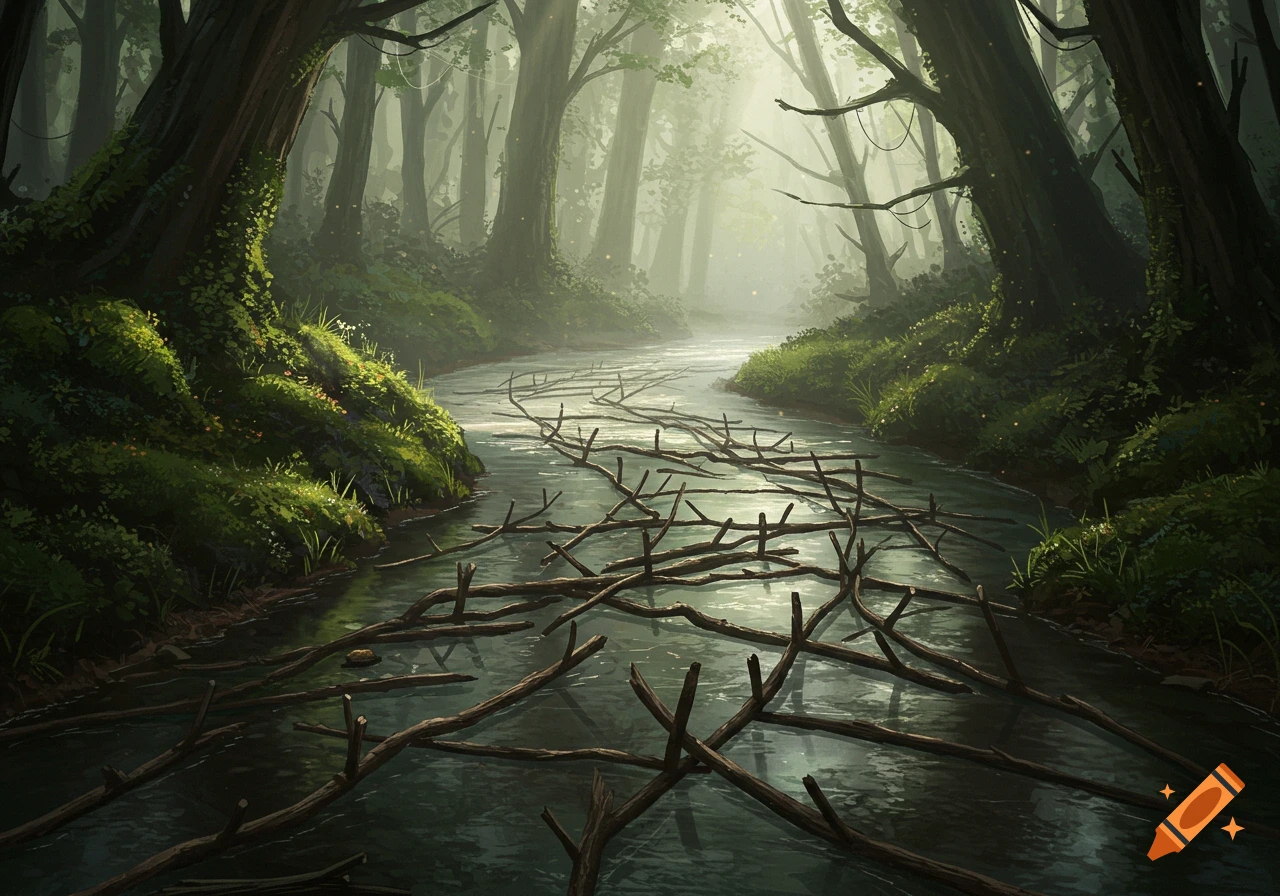
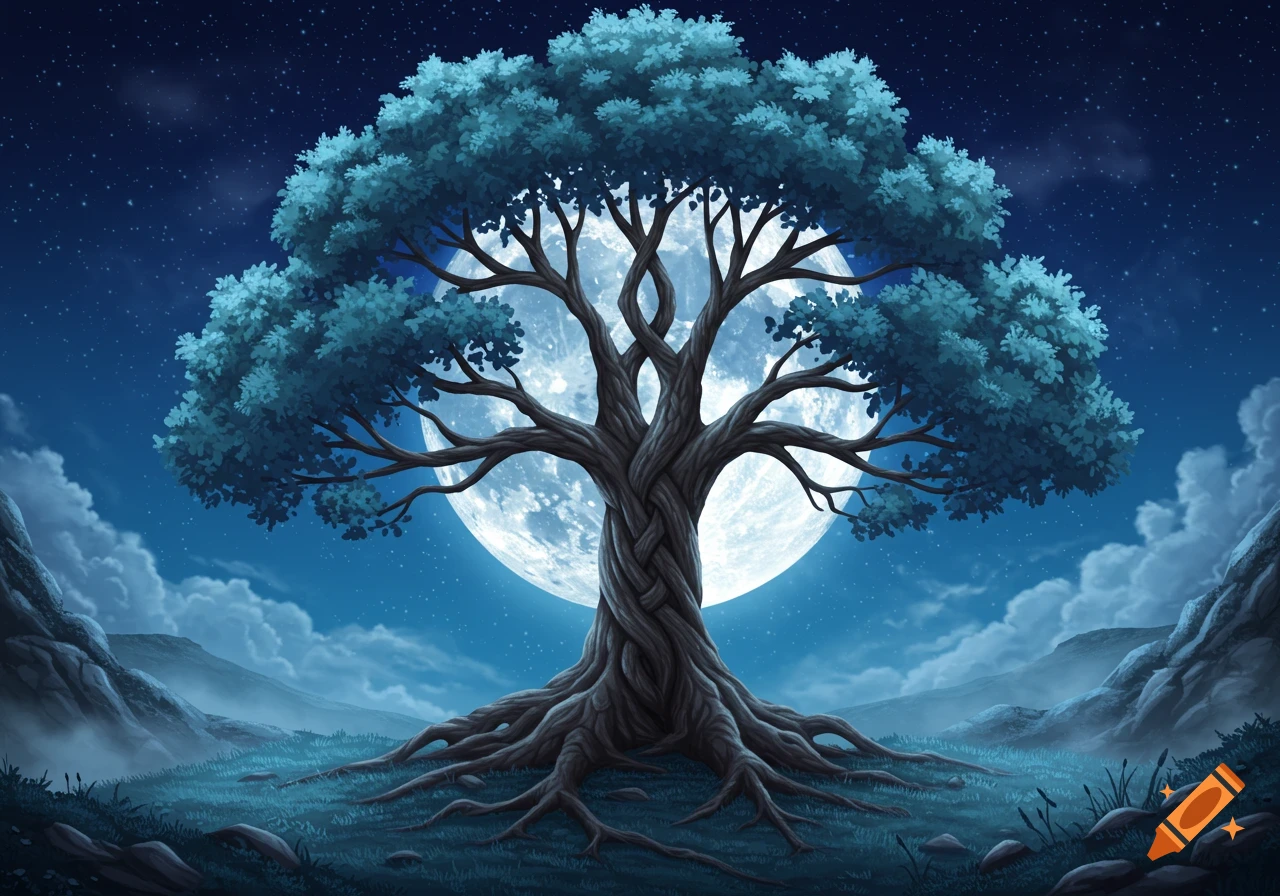
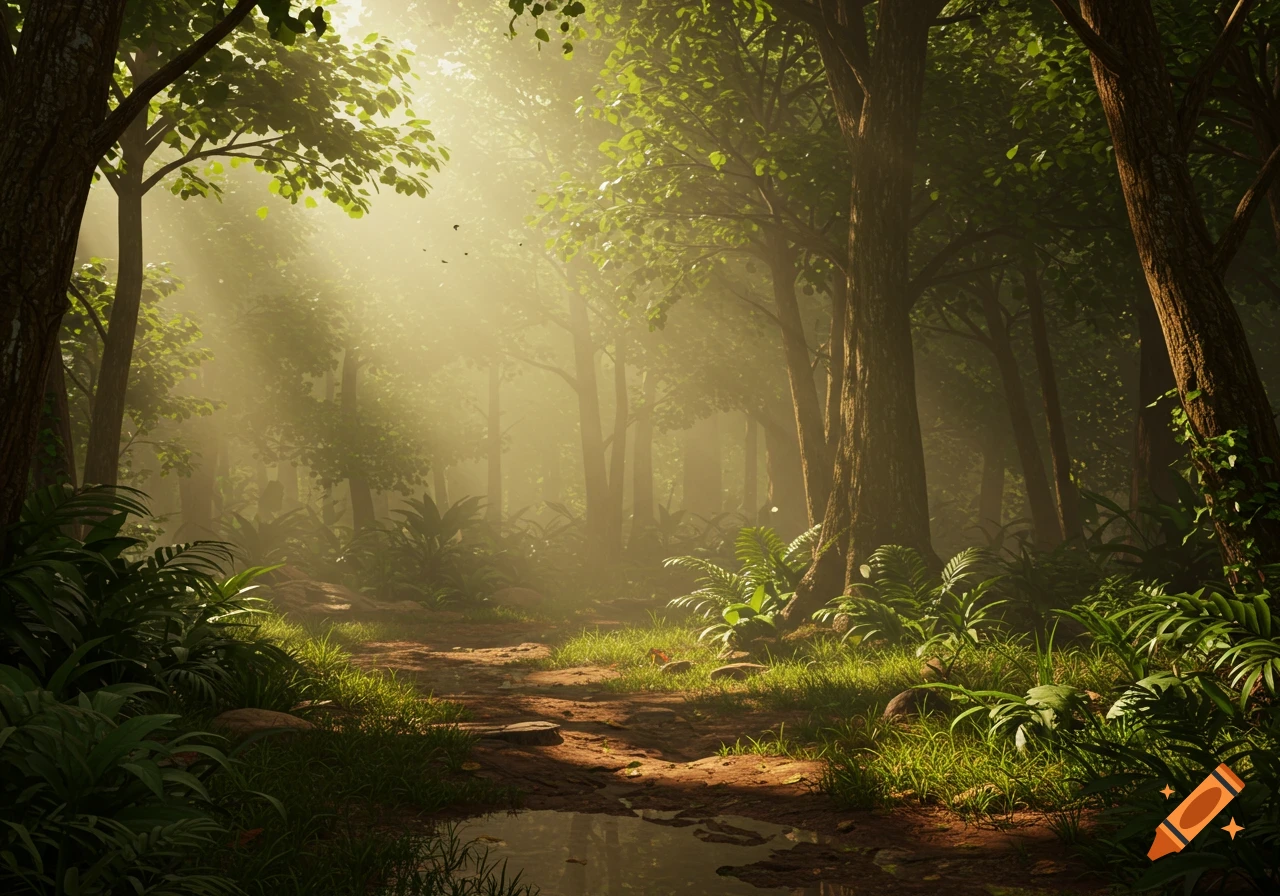
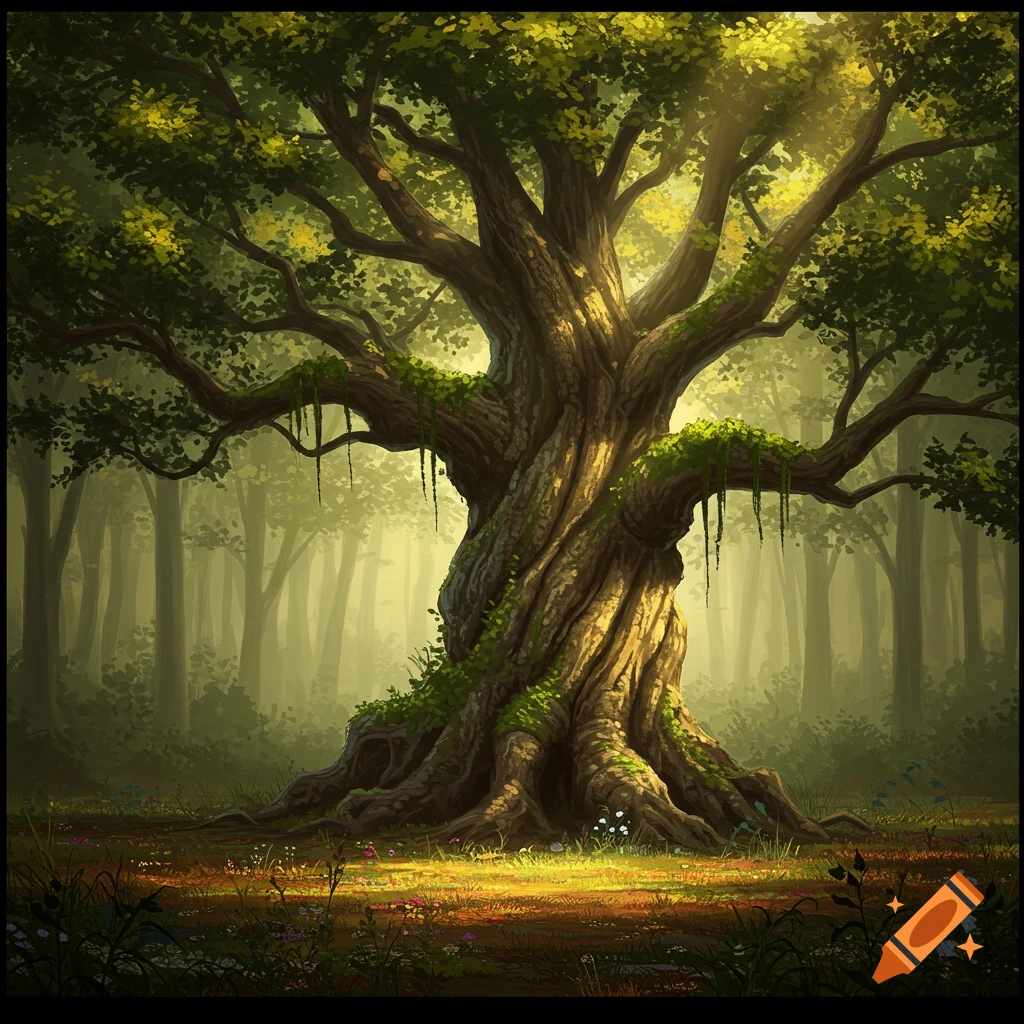
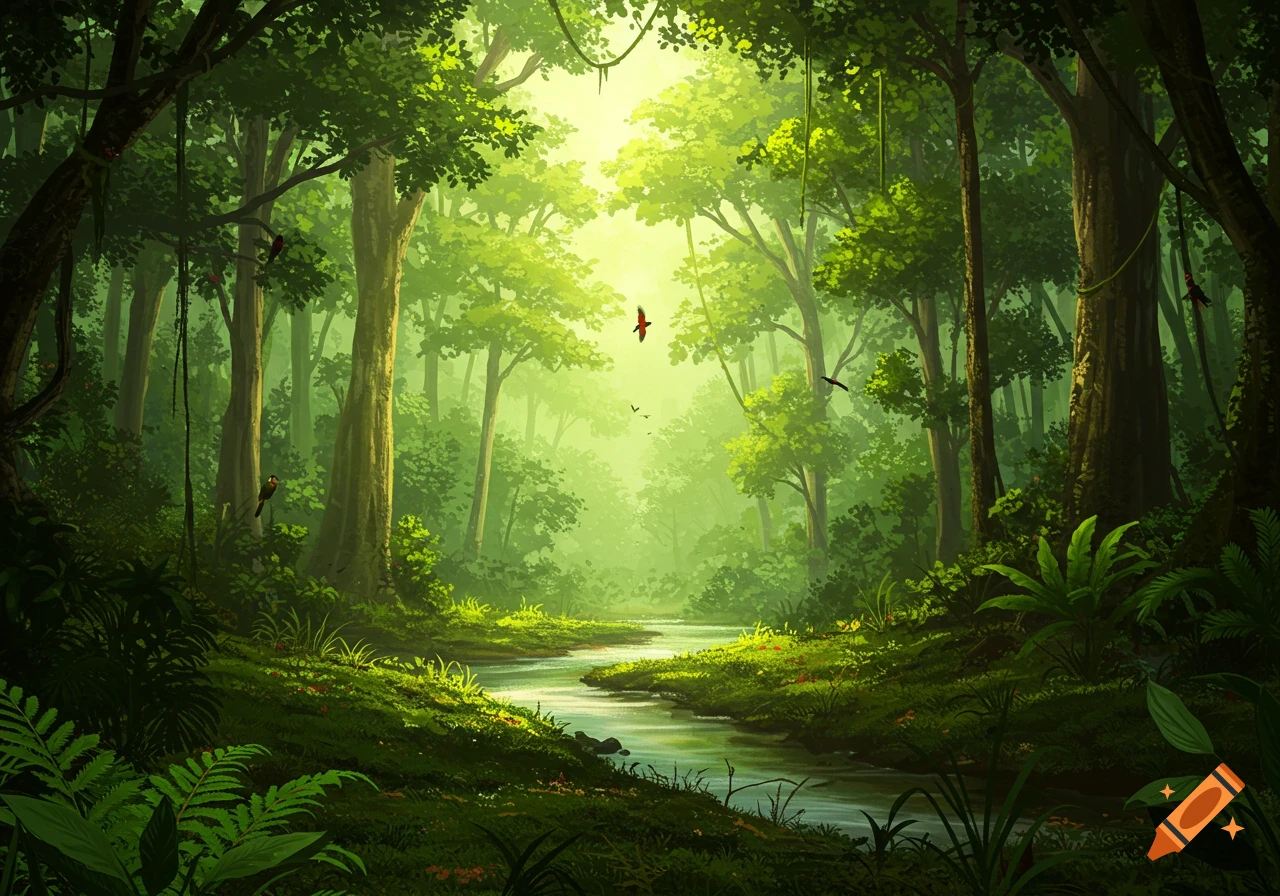
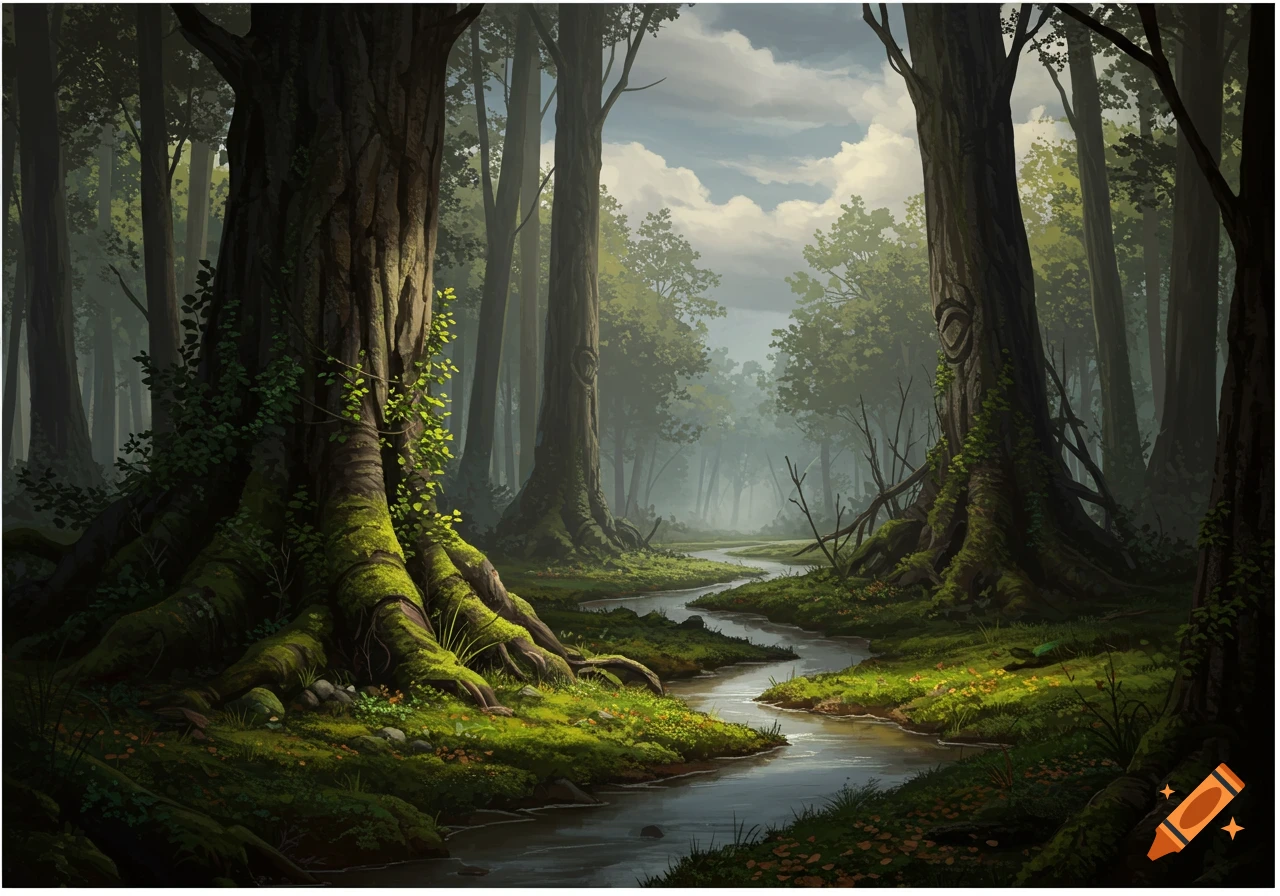
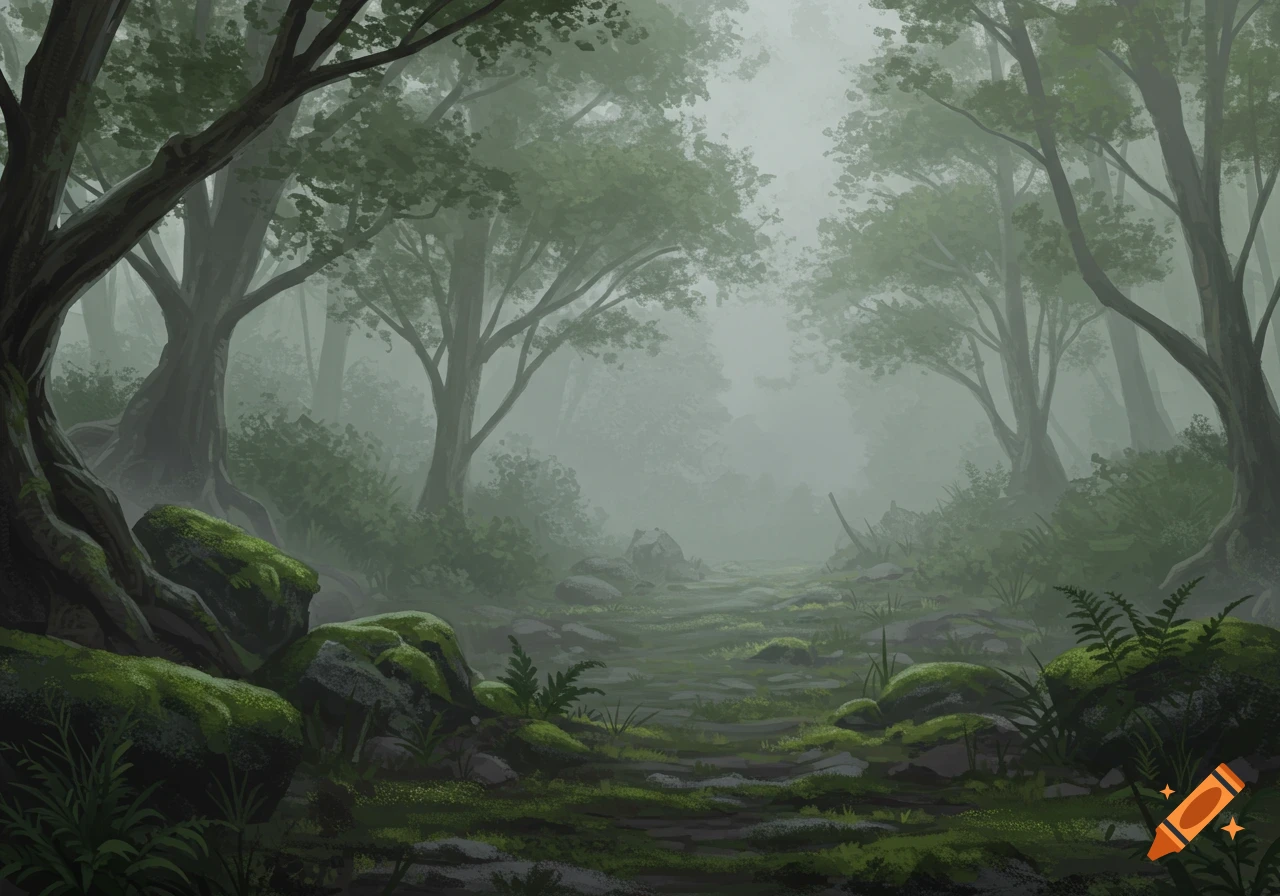
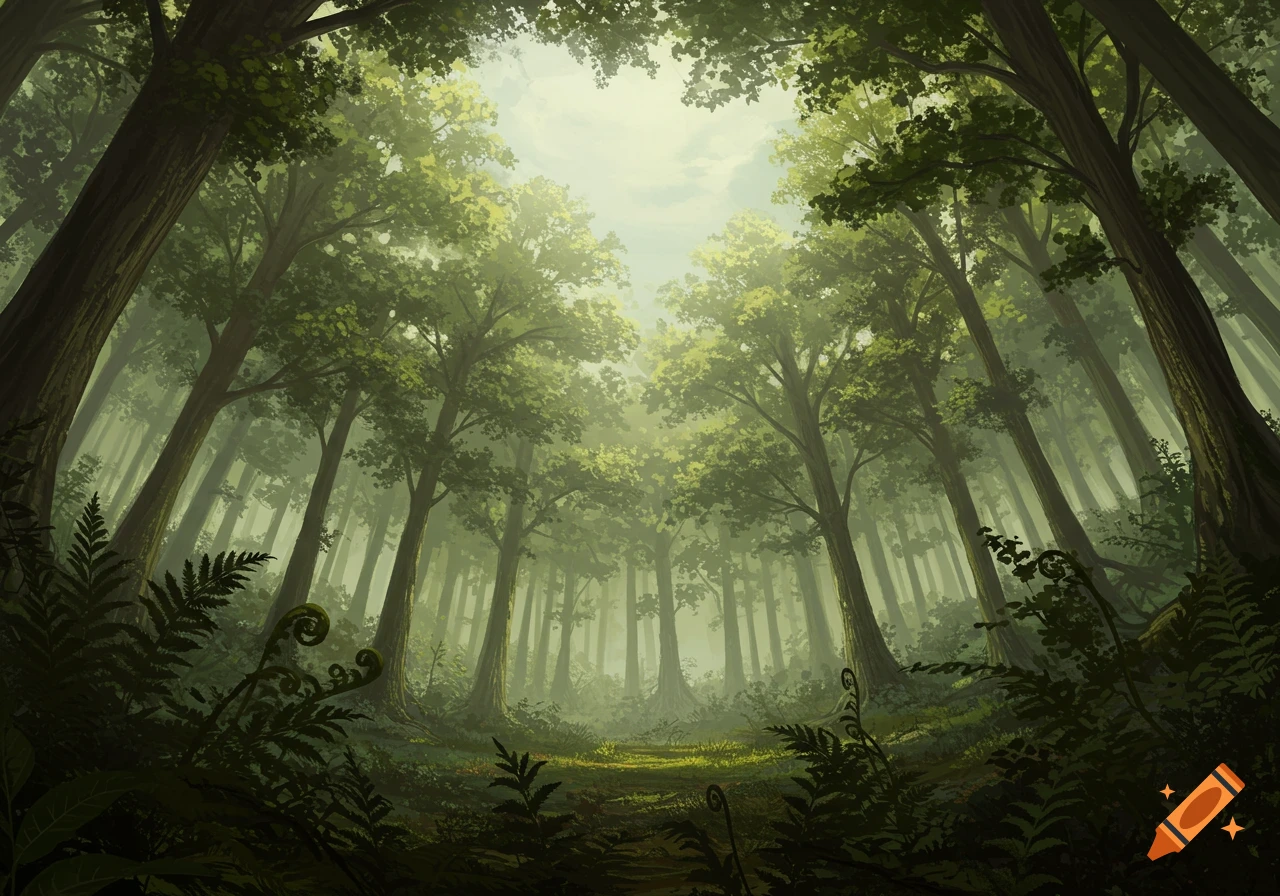
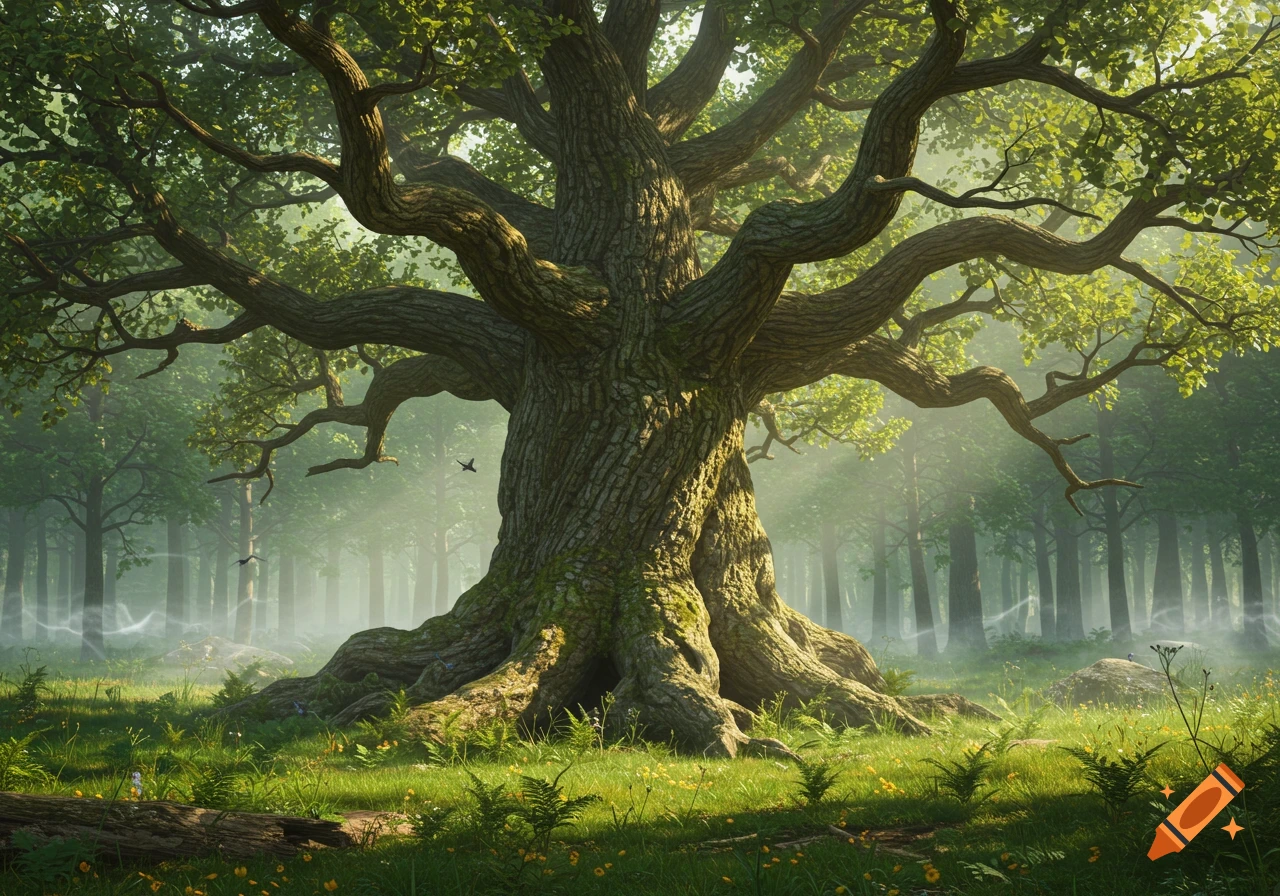
A massive, ancient-looking tree with extensive buttress roots and hanging vines dominates a misty, dense tropical rainforest.
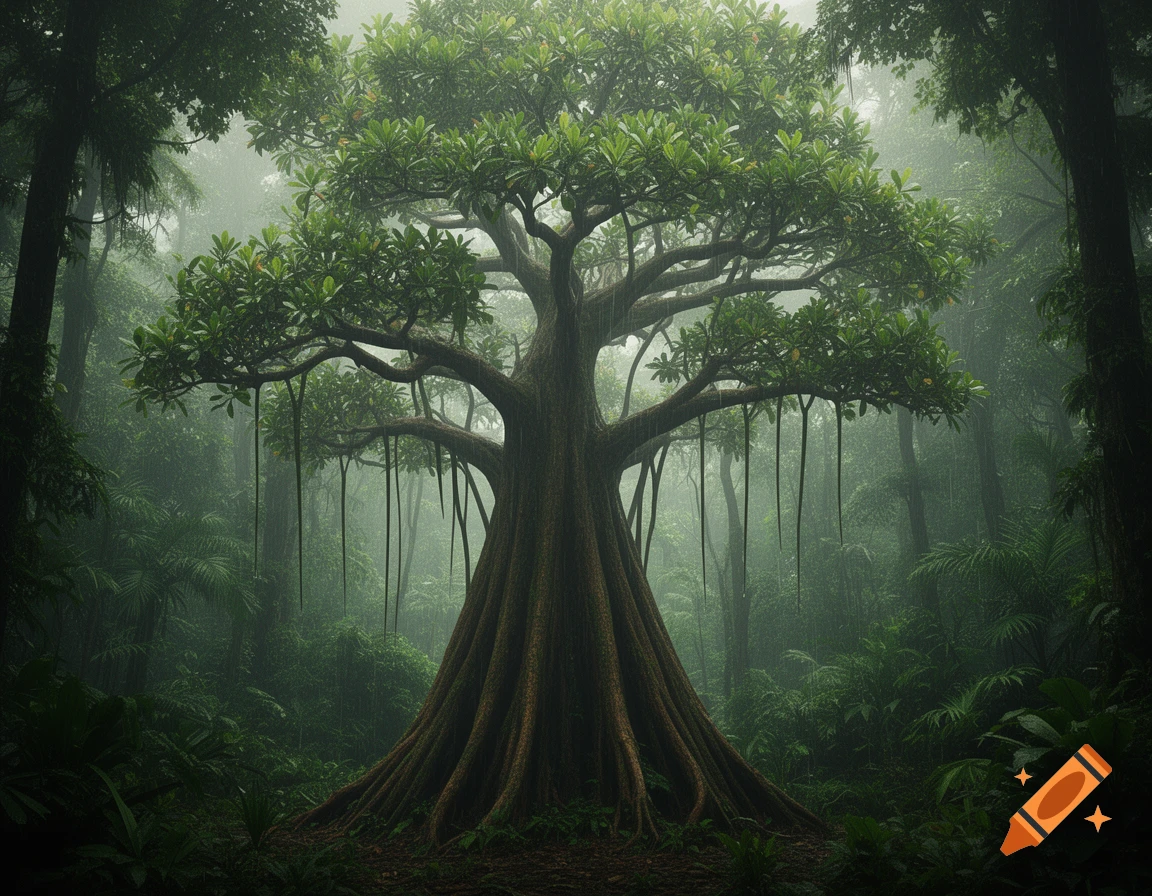
Tropical Rainforest Licania species but adapted to a 1.26 G gravity (higher gravity) and thicker atmosphere (20% thicker). Pseudo-Licania (The Ironwood of the Heavy World) The genus exhibits a high degree of adaptive radiation due to the selective pressures of high gravity and dense atmosphere. To survive in 1.26 *g*, structural integrity is paramount. Pseudo-Licania has abandoned the "tall and slender" canopy strategy common on Earth for a "wide and braced" architecture. The trunk is notably shorter and more conical than Earth trees. A defining feature is the presence of structural buttress roots that extend significantly further up the trunk (often 30-40% of total tree height) before merging into the bole. The wood is extremely dense (specific gravity > 1.1), heavily lignified with high concentrations of silica phytoliths to resist compression. Branches are thick, gnarled, and angle upwards steeply (plagiotropic) to reduce cantilever stress. The canopy is layered, with the upper leaves being smaller and thicker (sclerophyllous) to withstand the increased weight of water droplets in 1.2 atm pressure and the physical impact of high-density rainfall. Leaves are generally pinnate or simple, but exhibit drip-tip morphology that is exaggerated. Because water has higher surface tension relative to the denser air, leaves have deep, channeled veins and elongated "spouts" to shed water weight rapidly, preventing fungal growth and structural failure in the high gravity. The Mehr sehen
More images like this