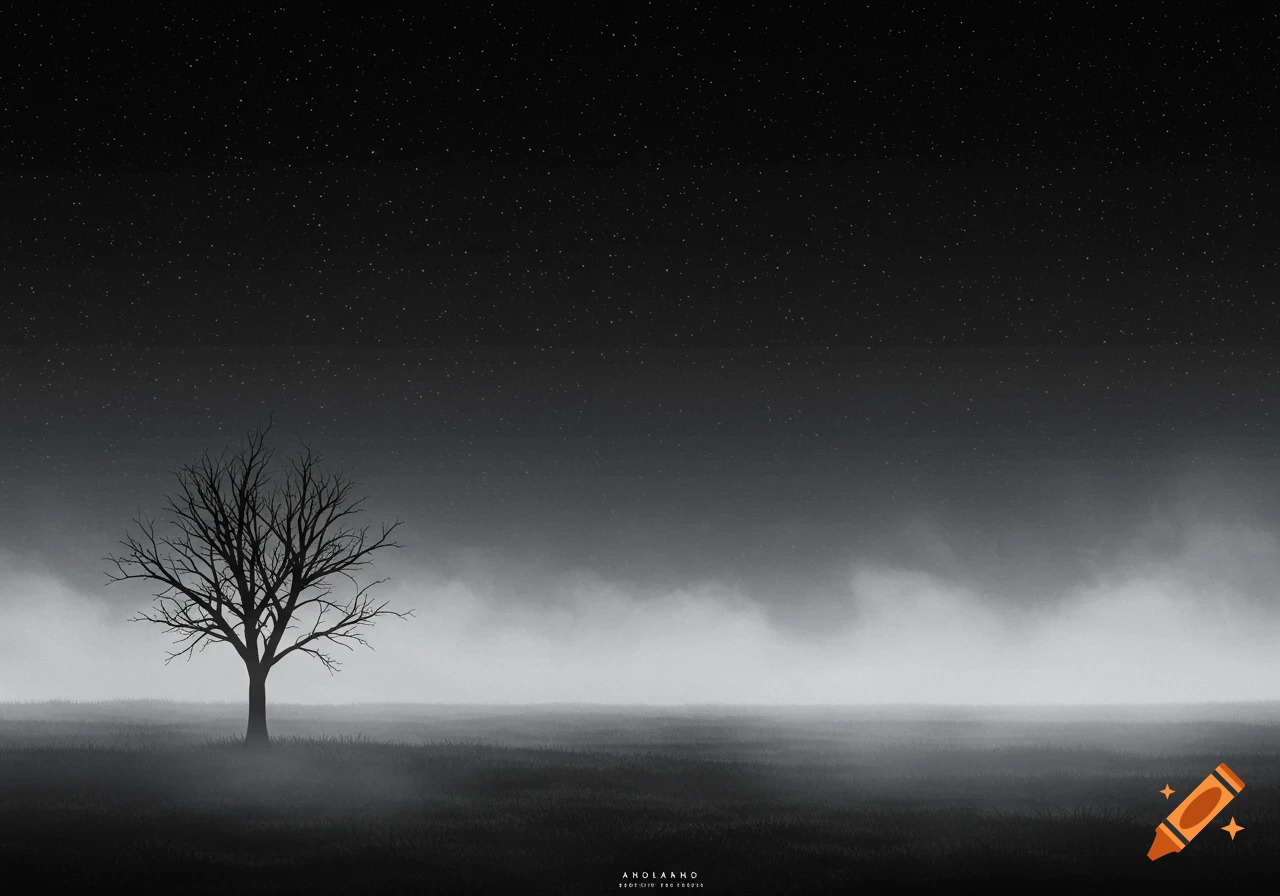
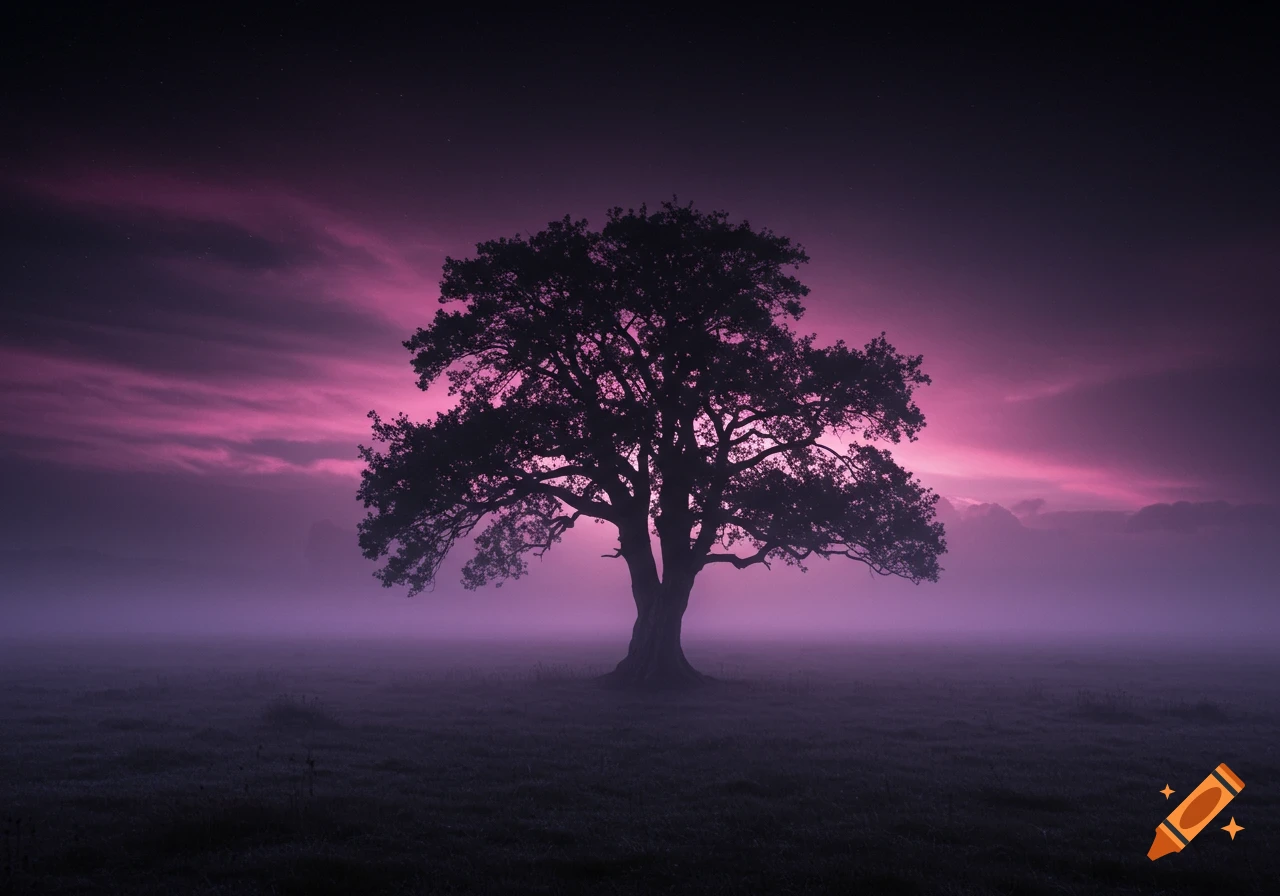
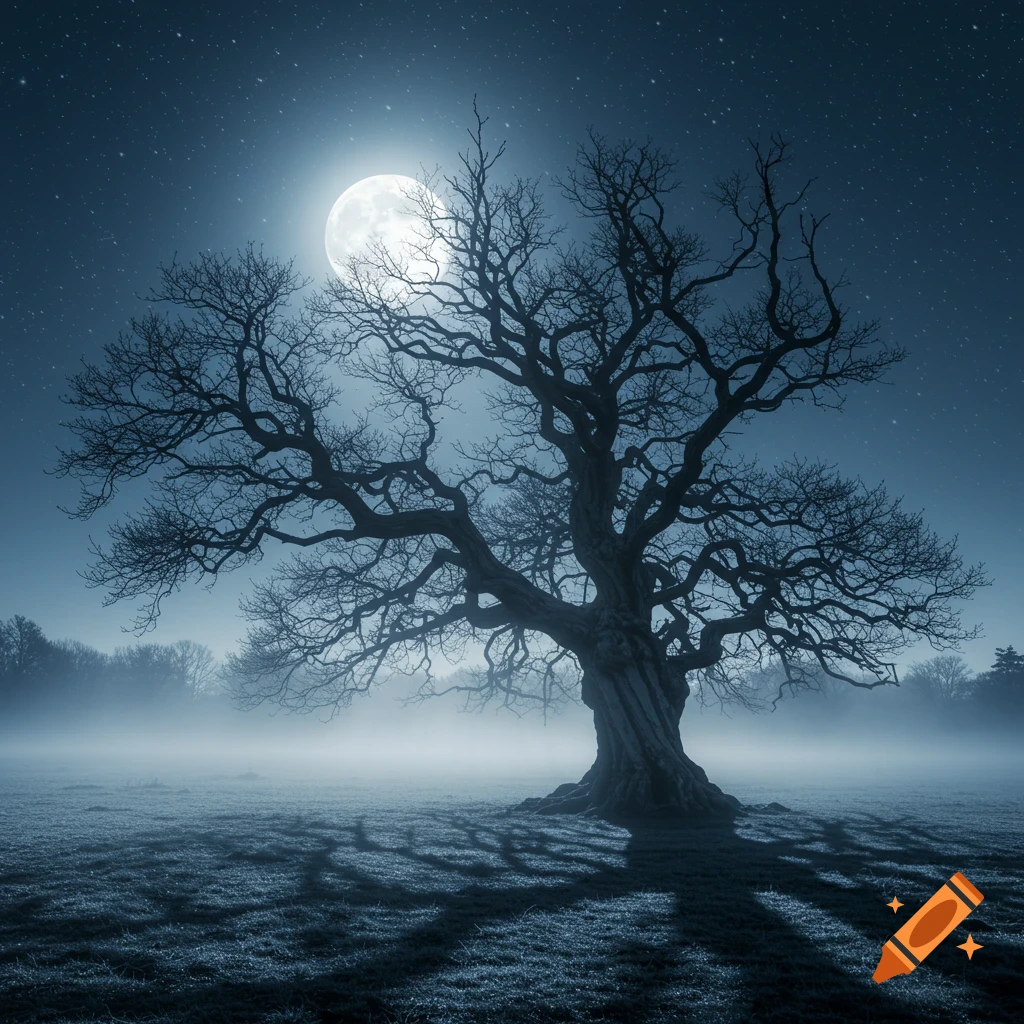
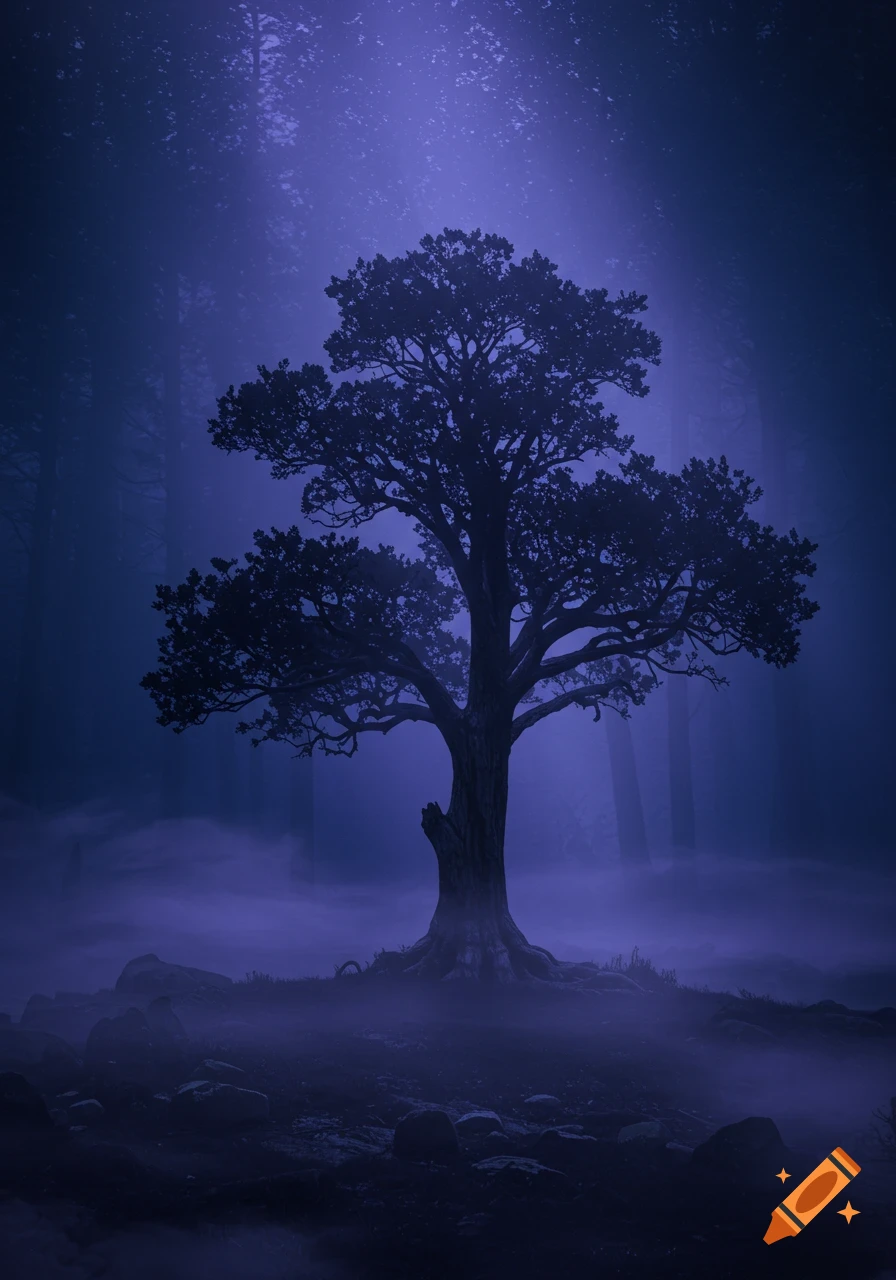
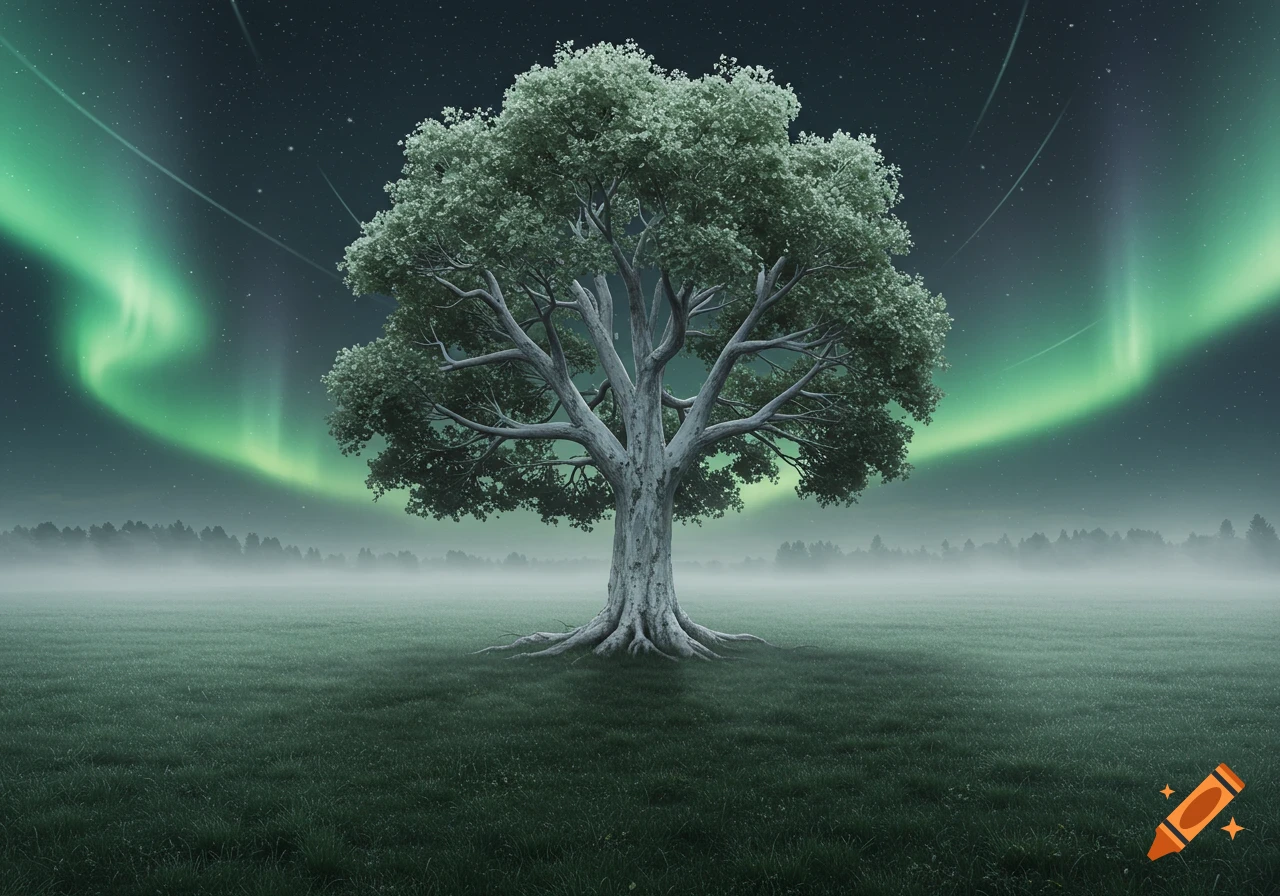
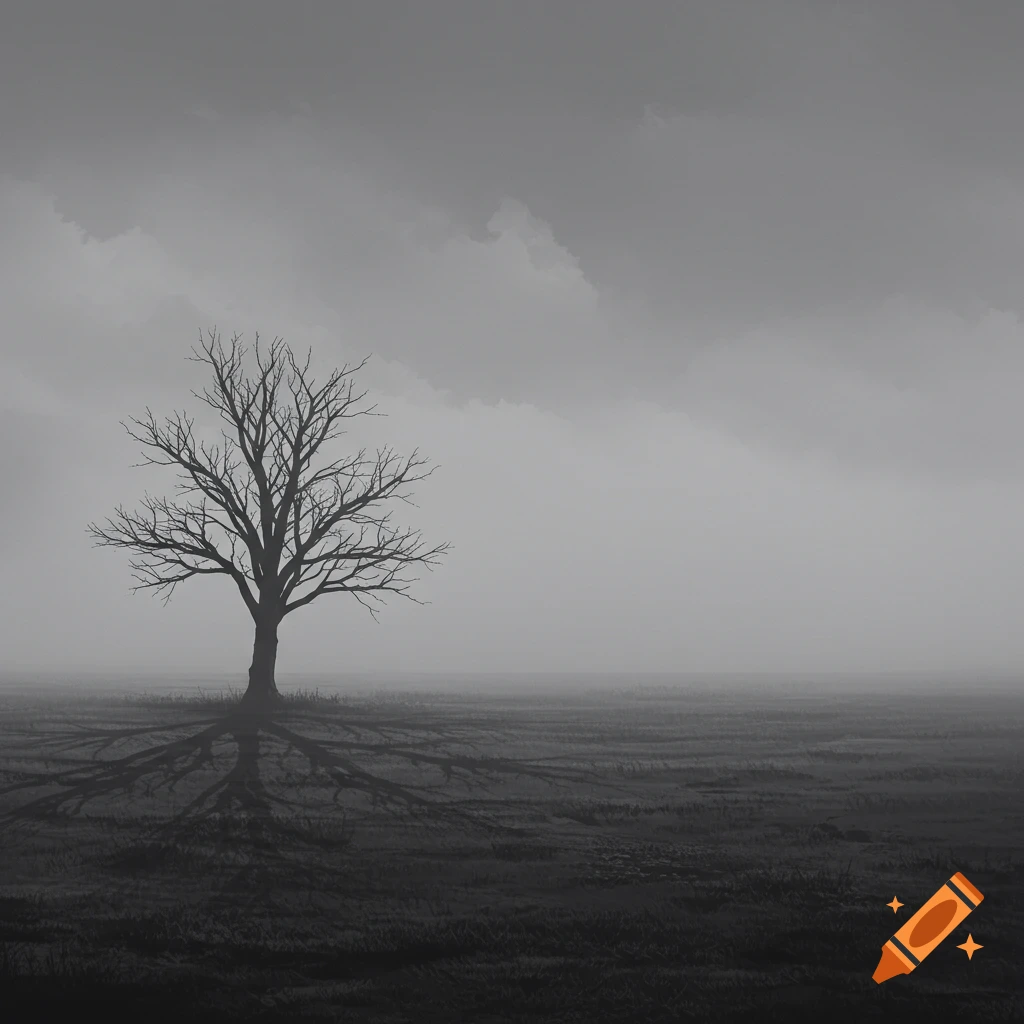
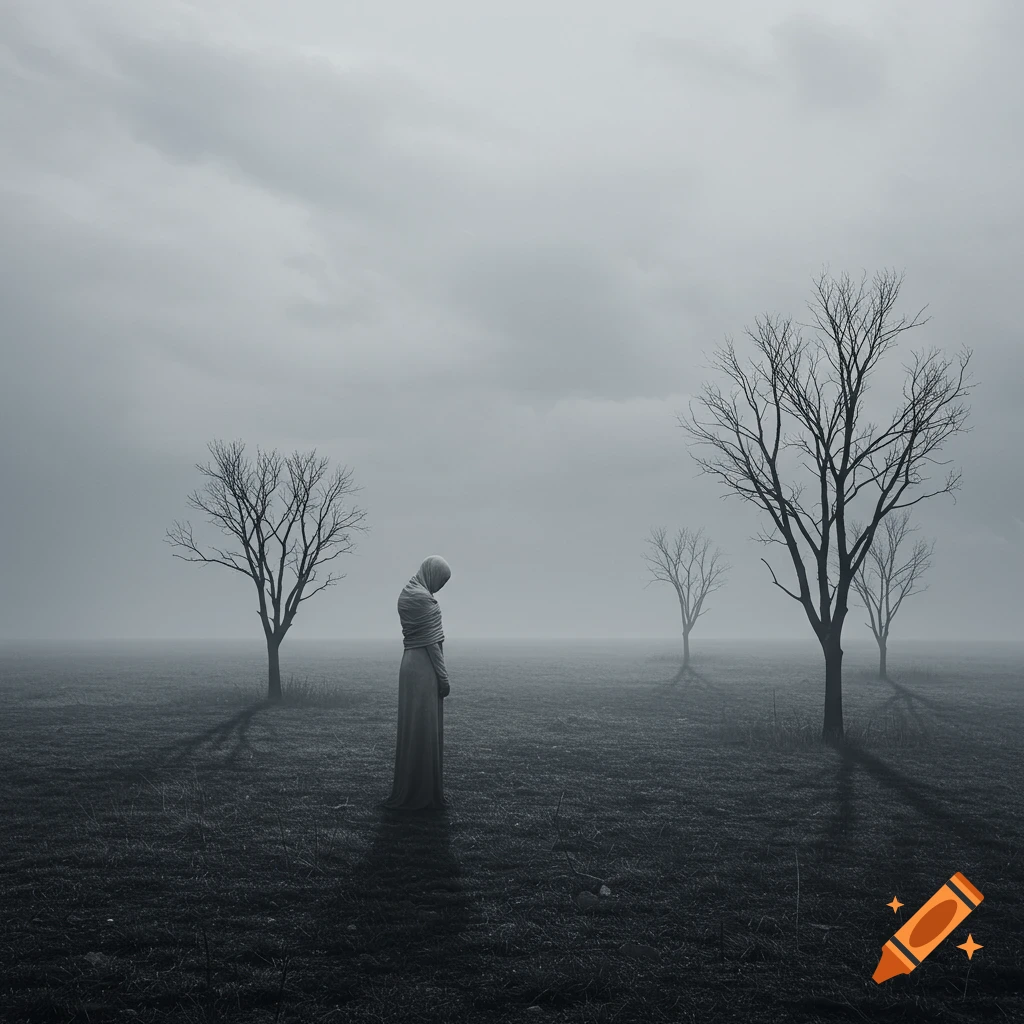
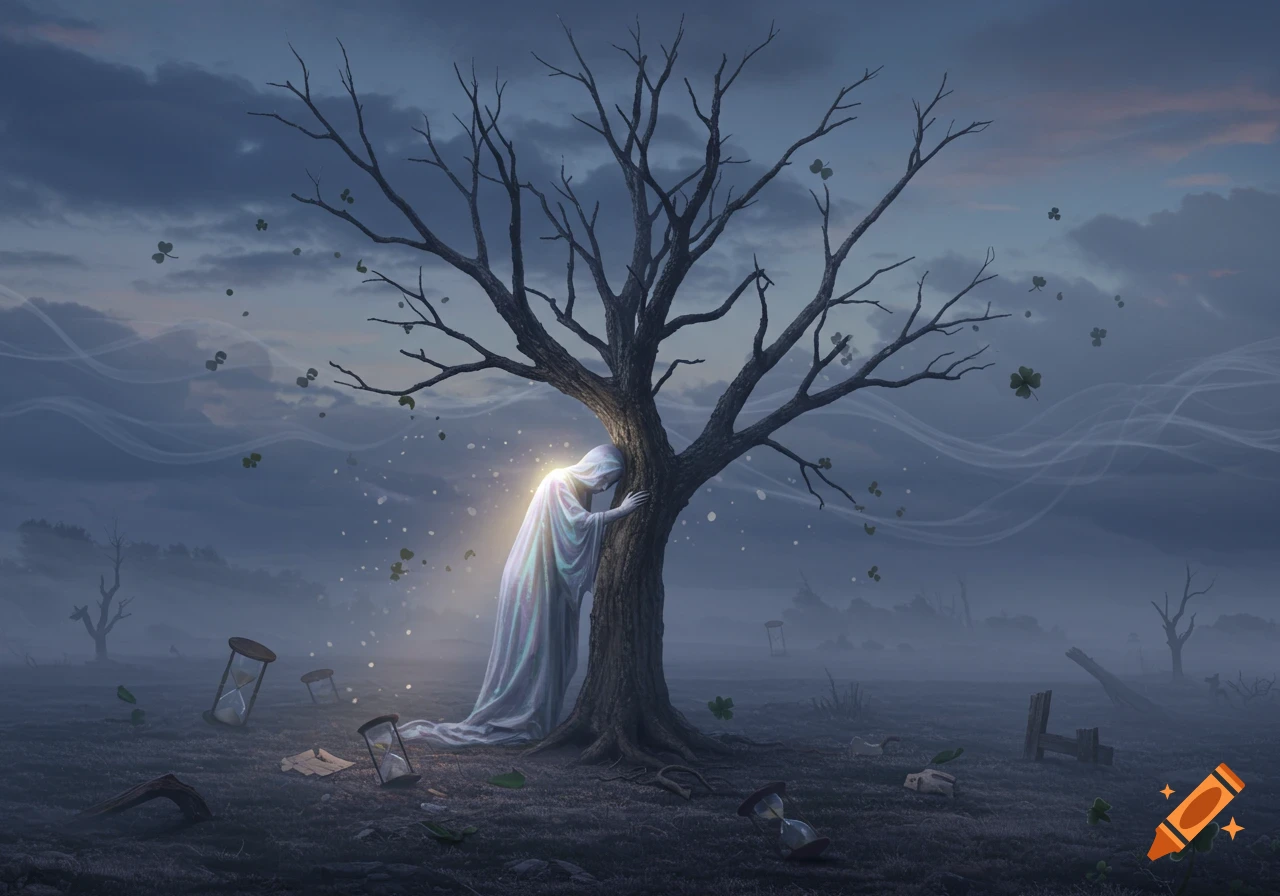
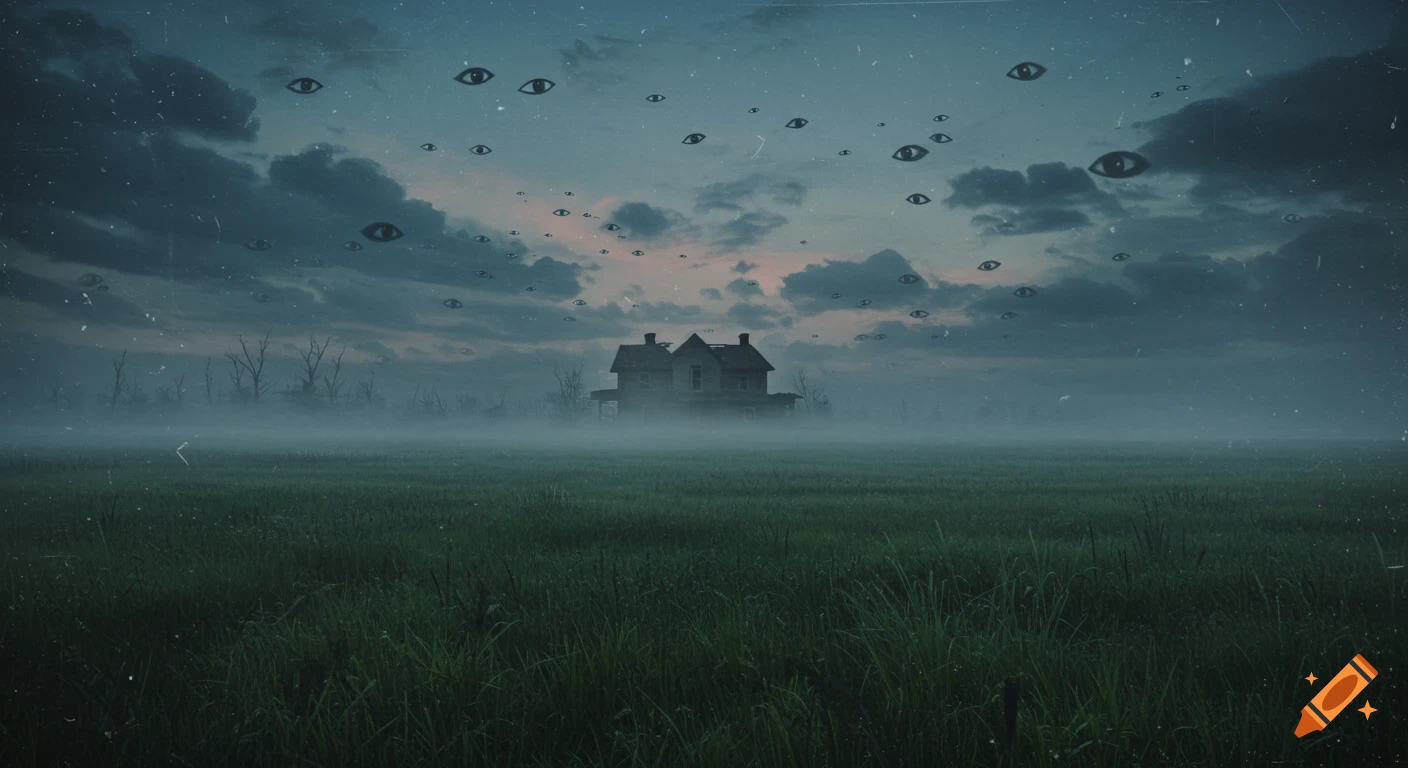
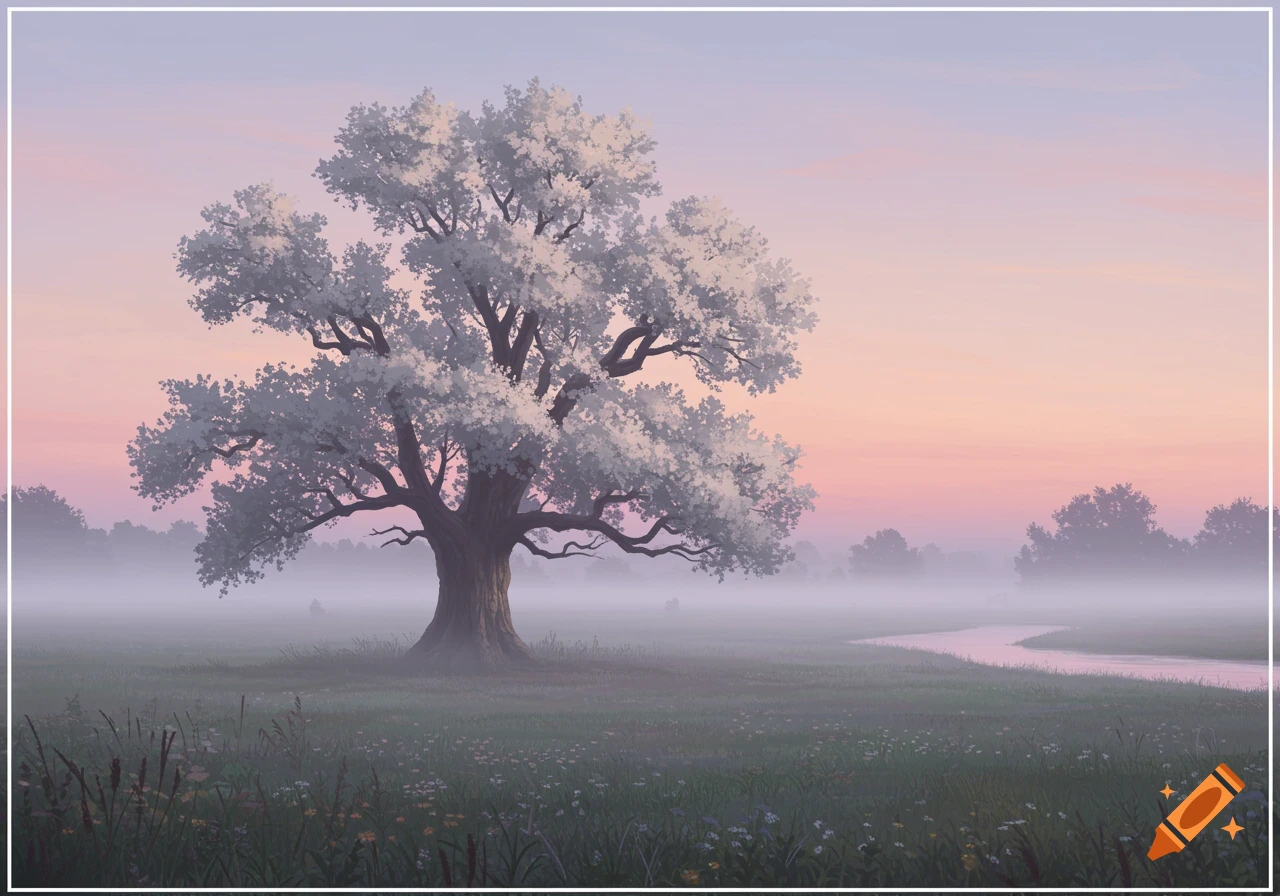
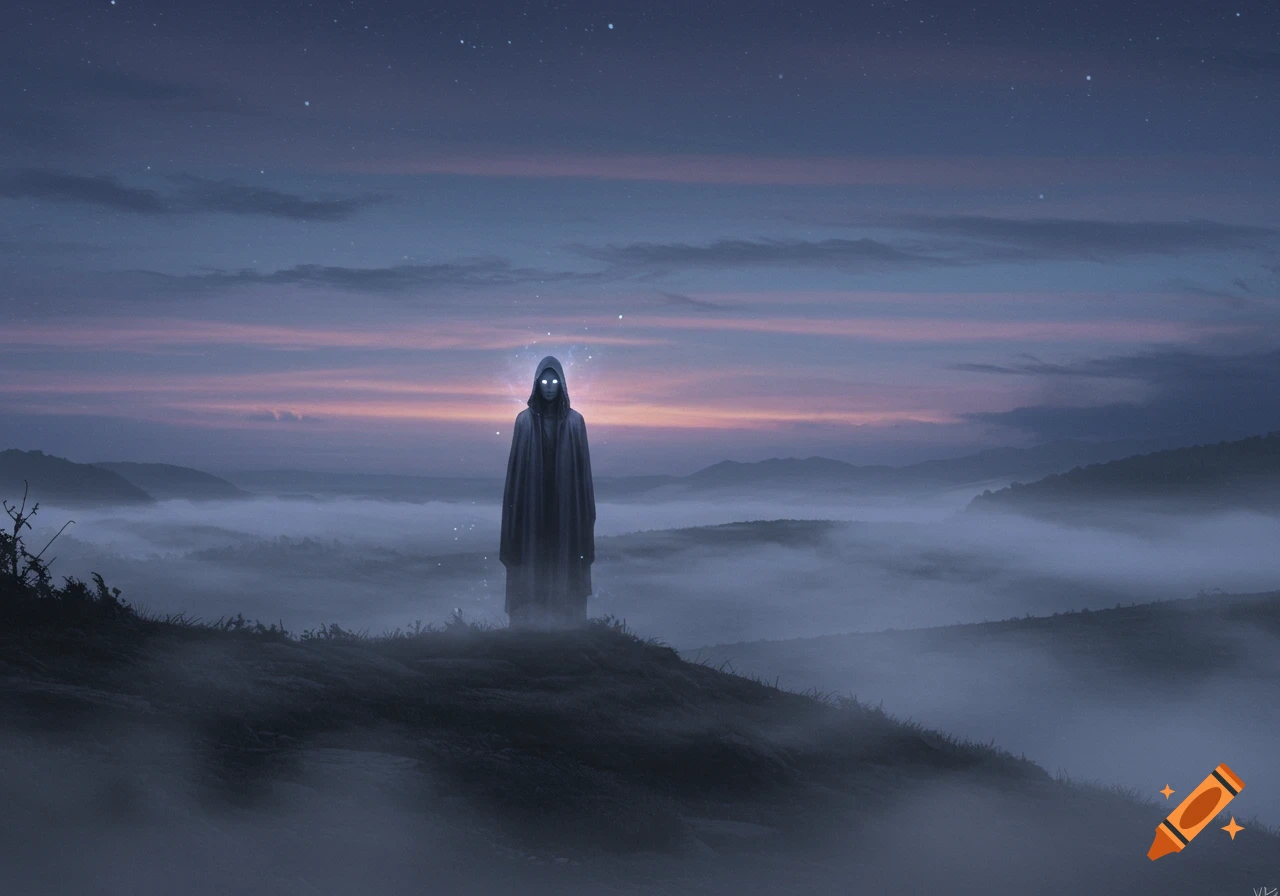
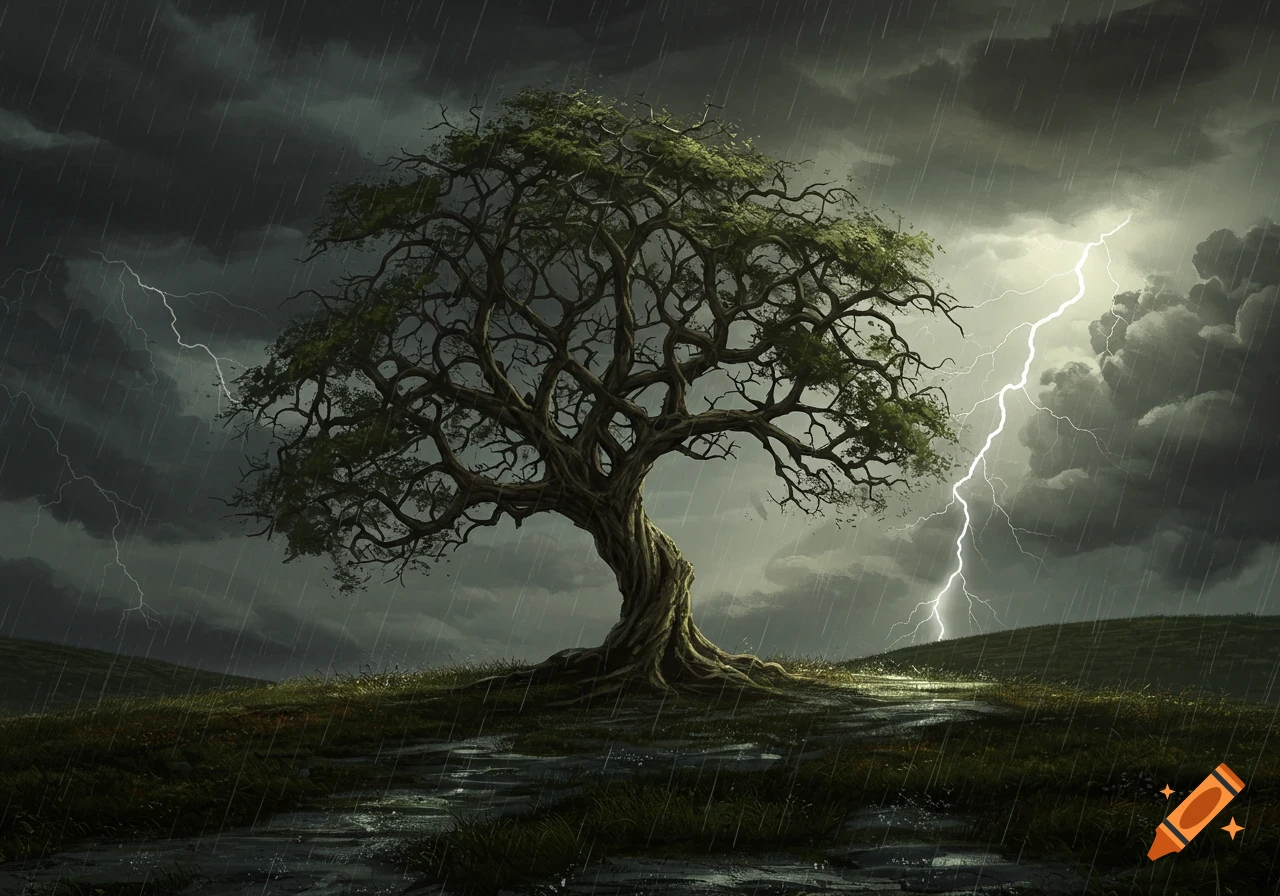
A hooded figure in a gray cloak sits at the base of a large, bare tree in a desolate, snowy field with glowing mist.
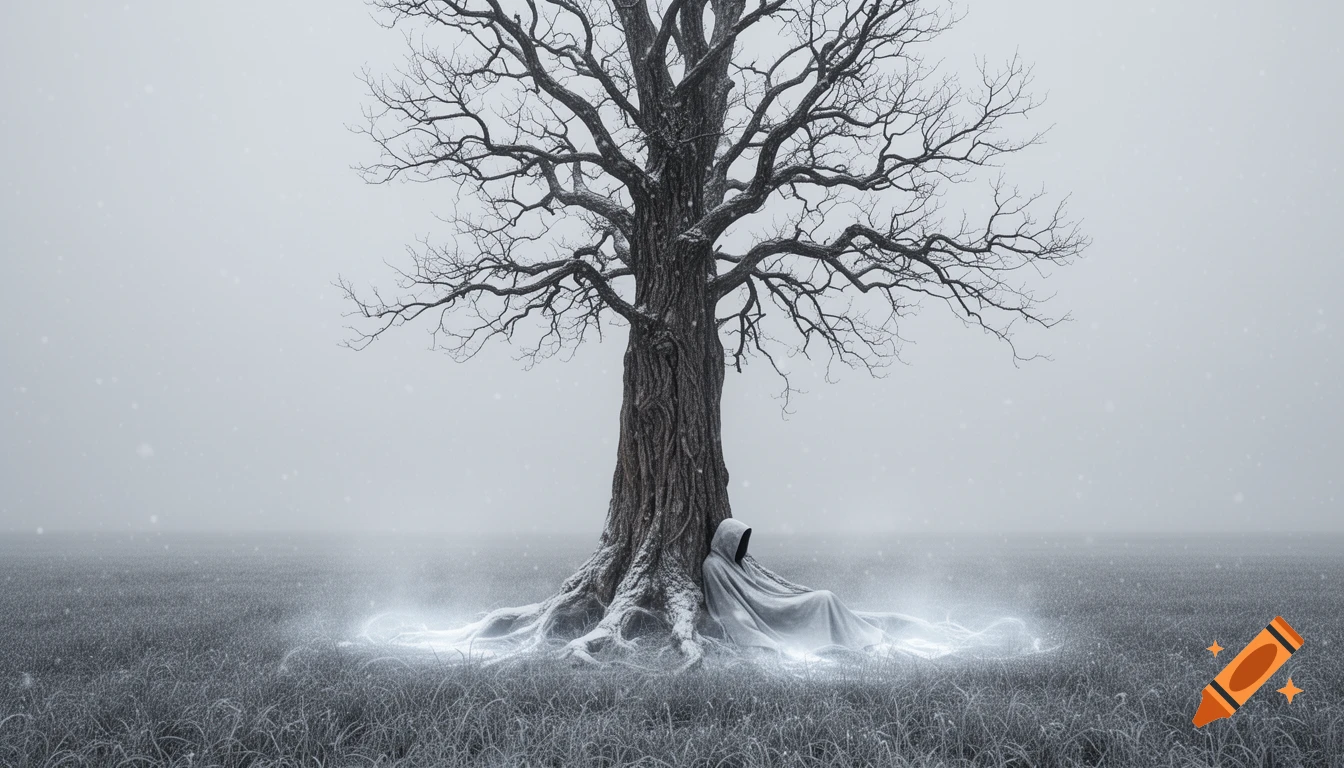
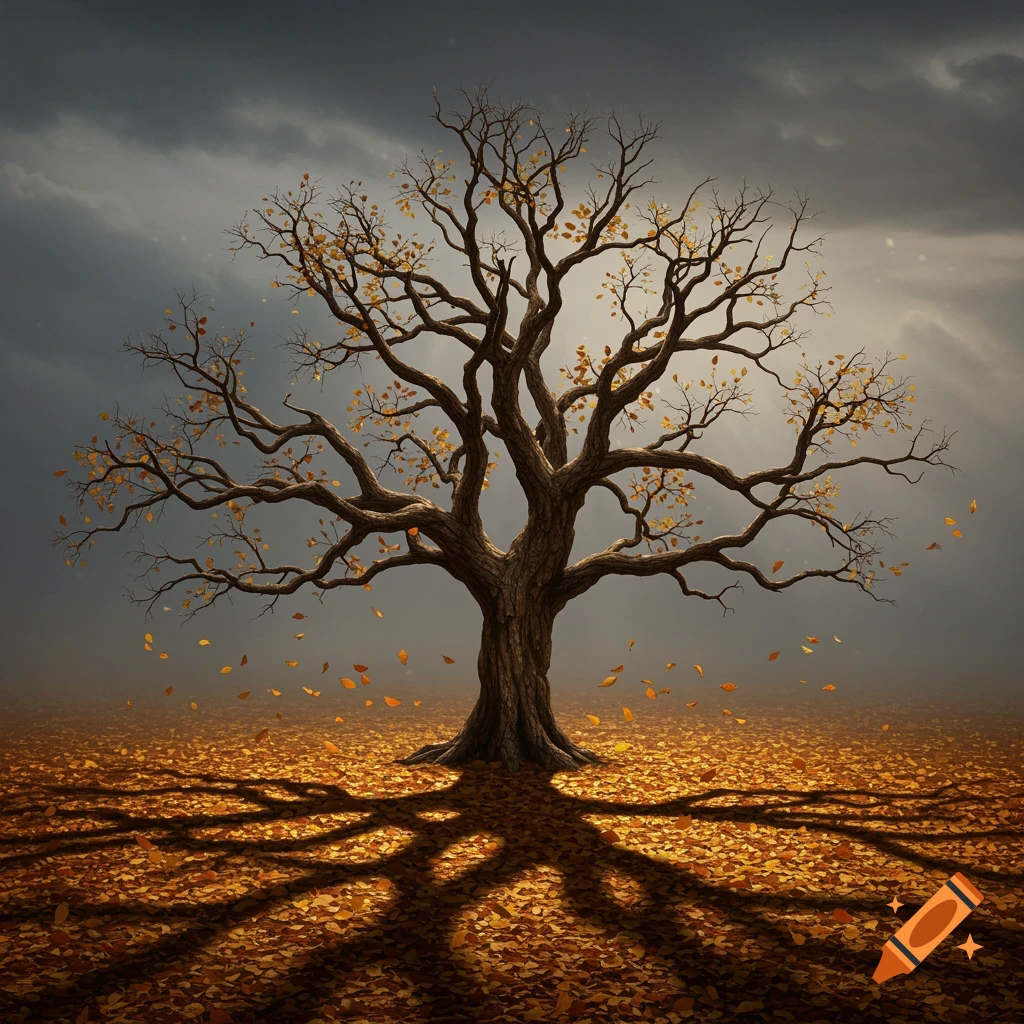
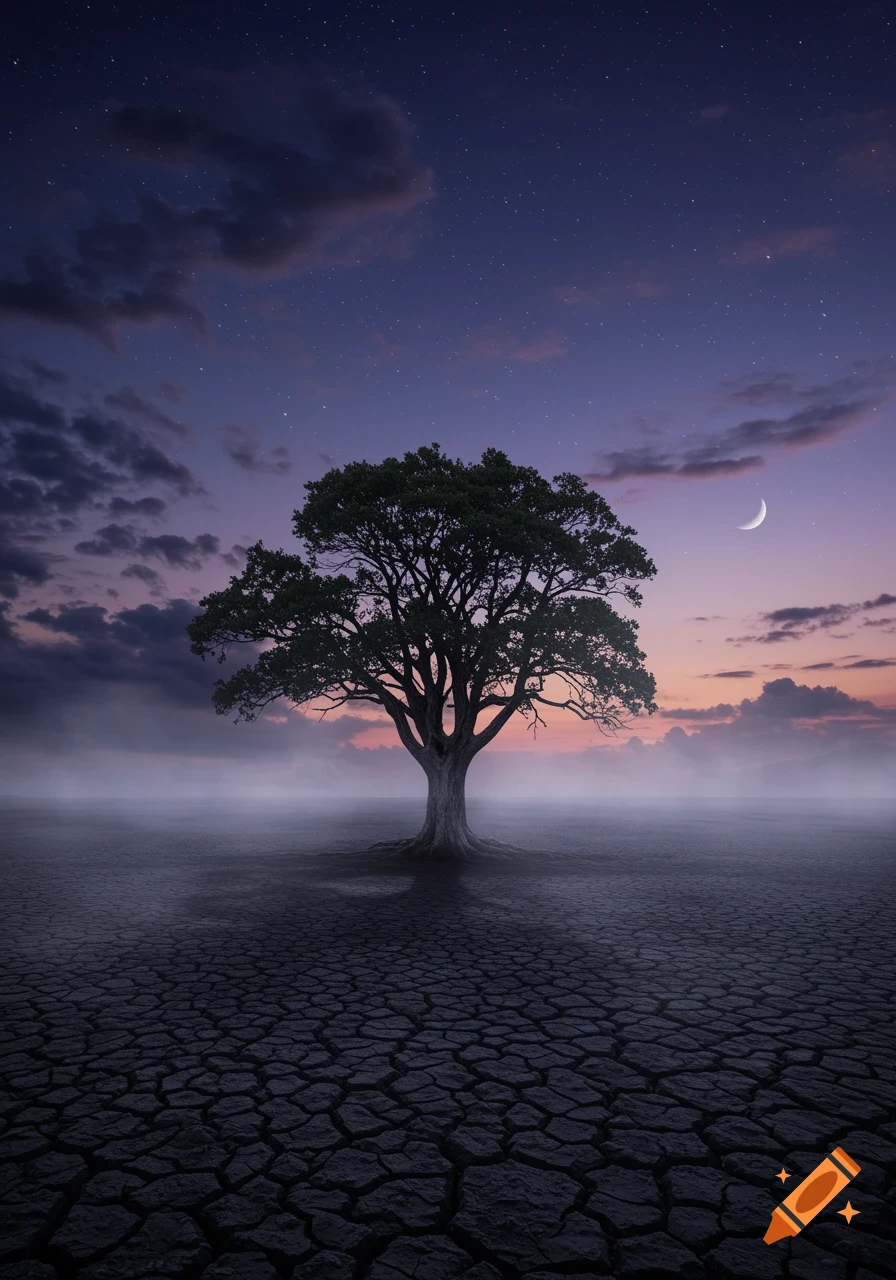
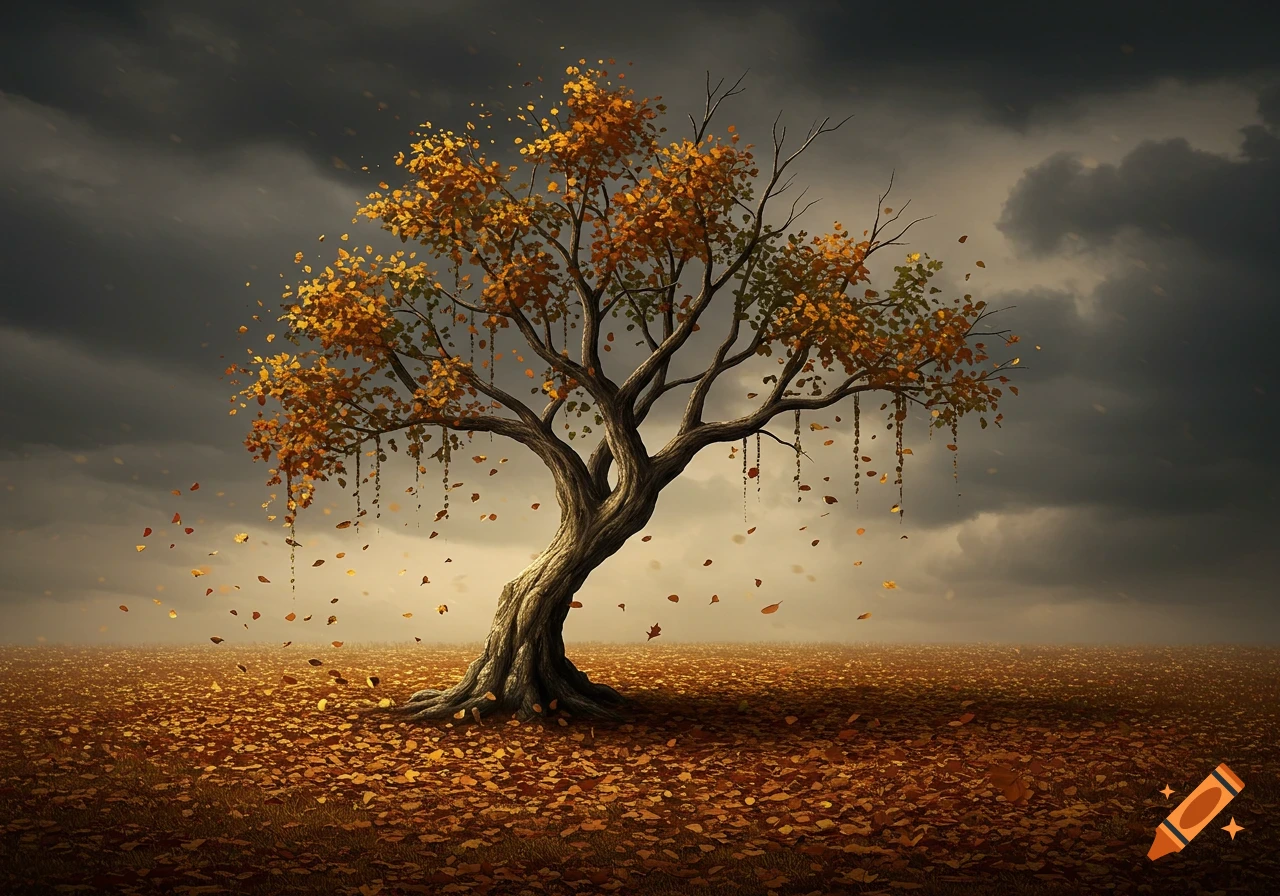
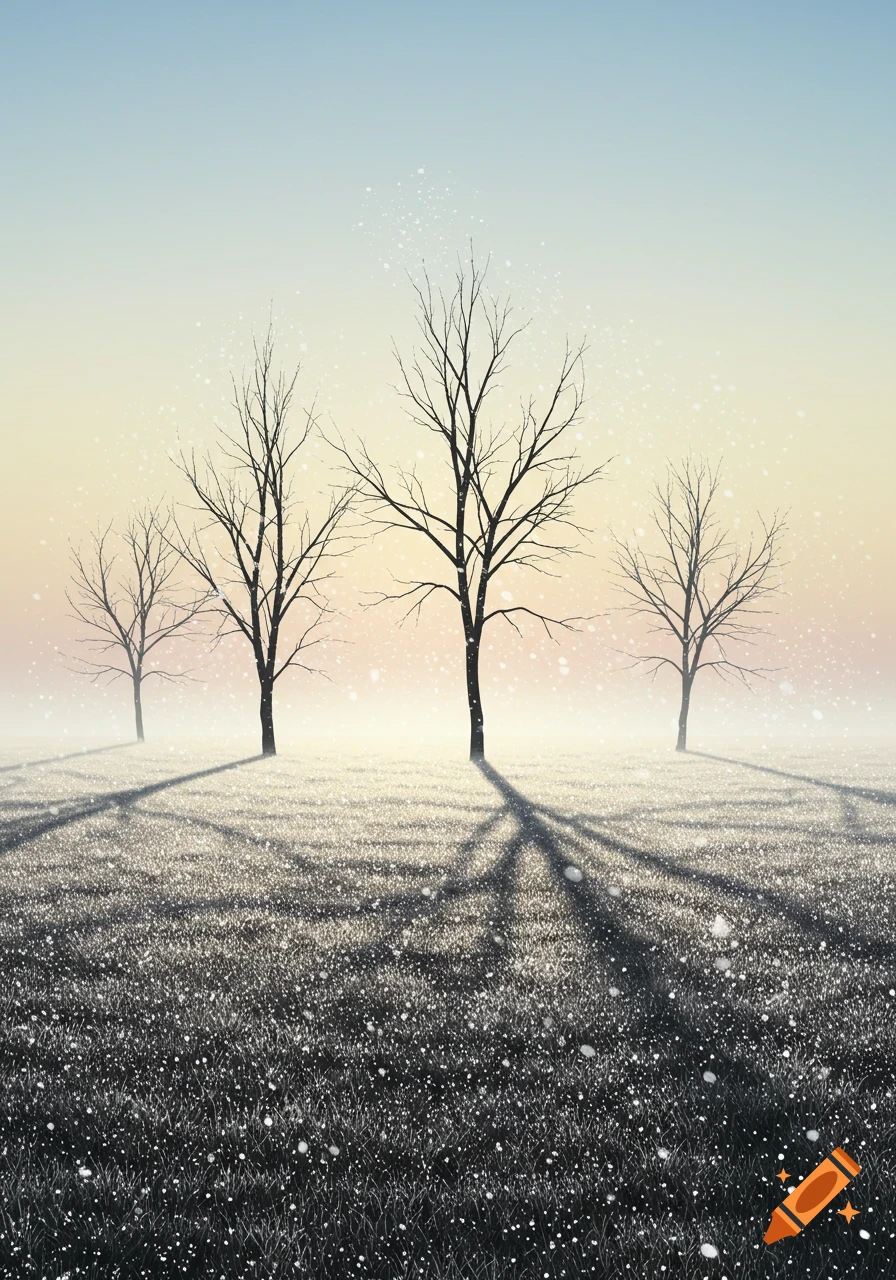
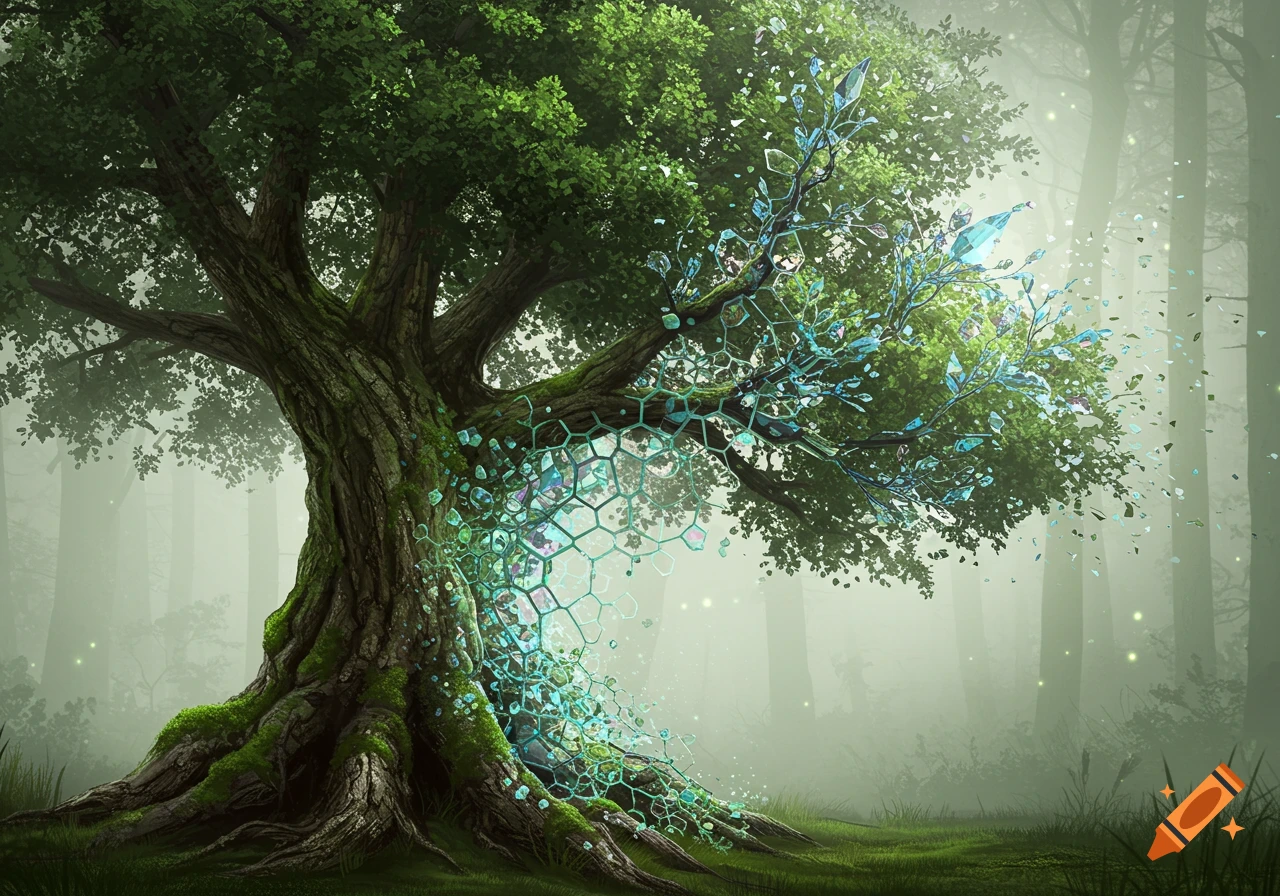
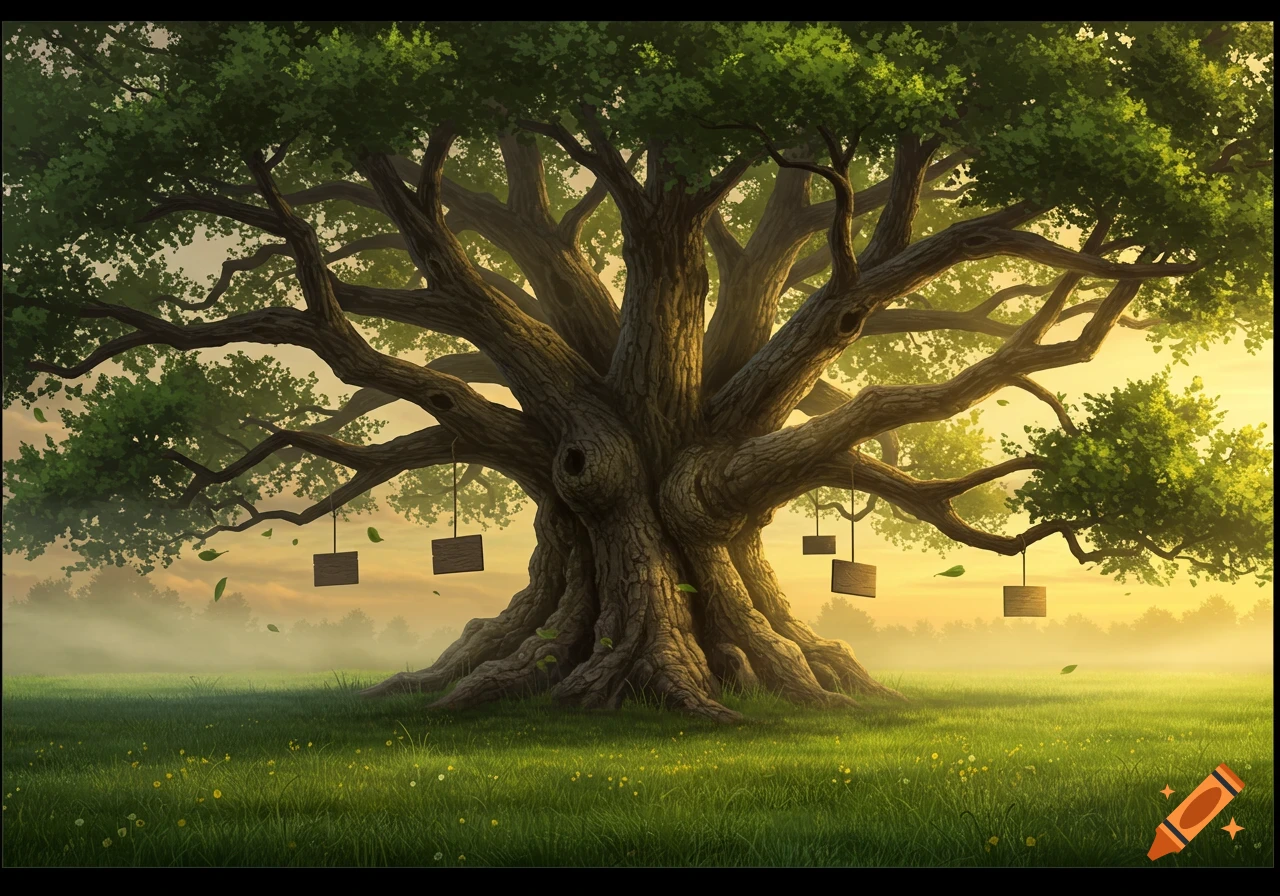
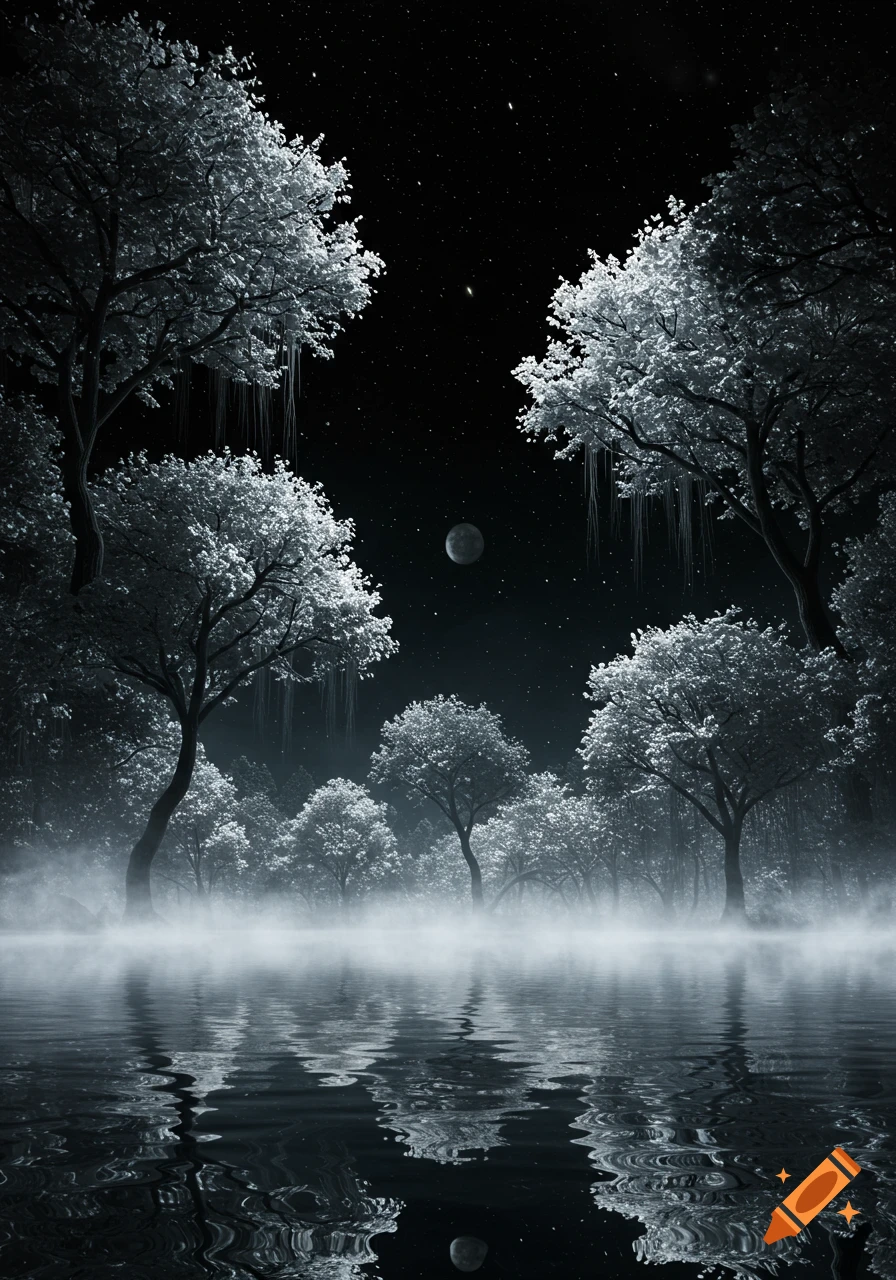
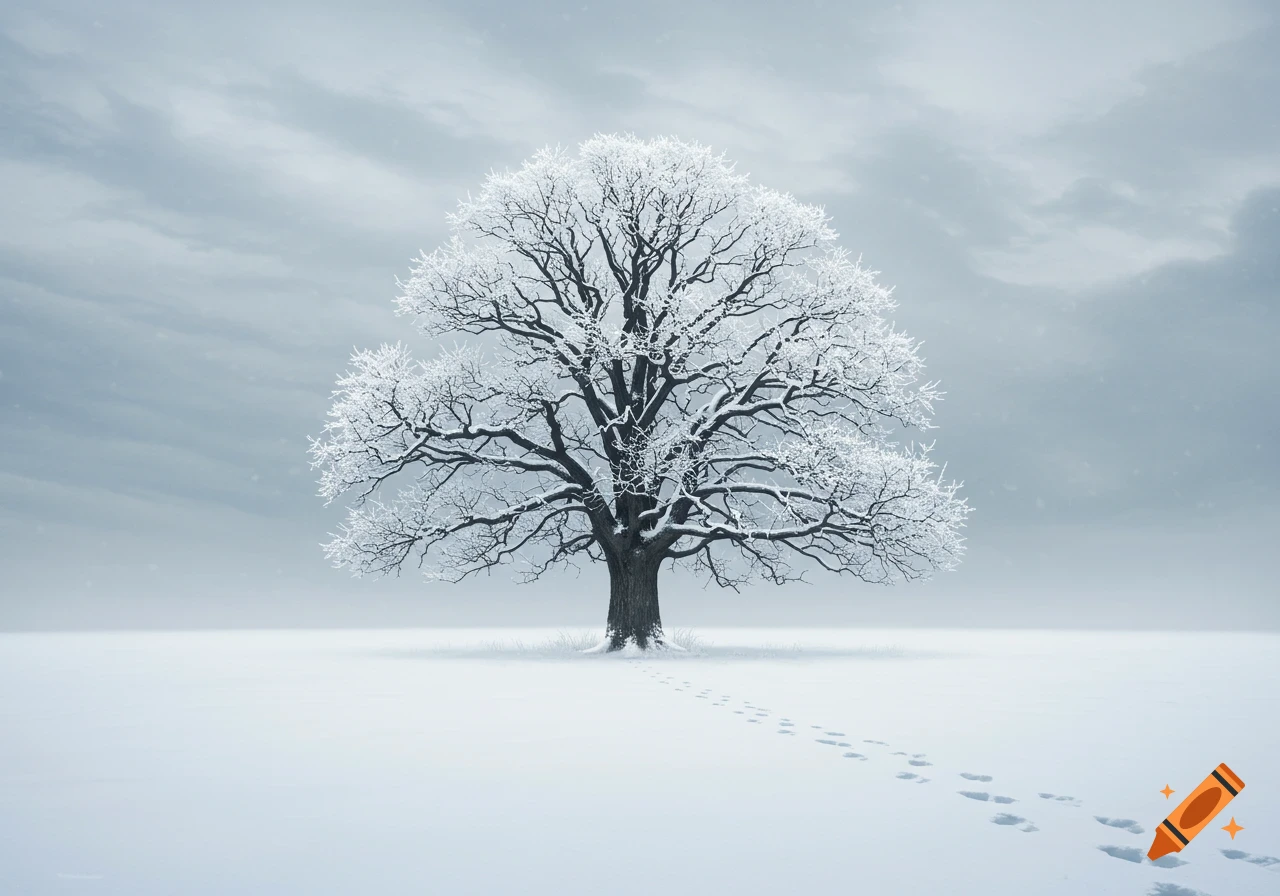
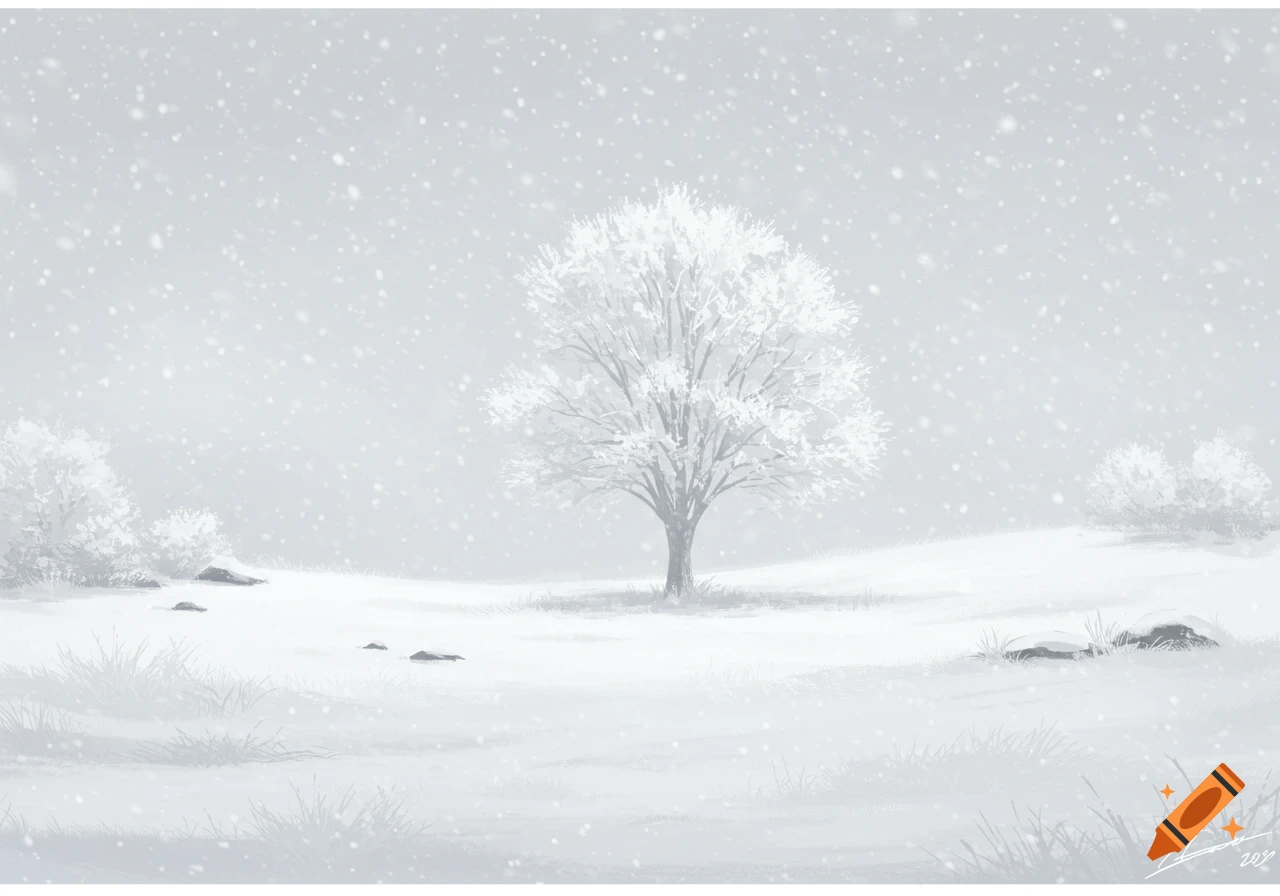
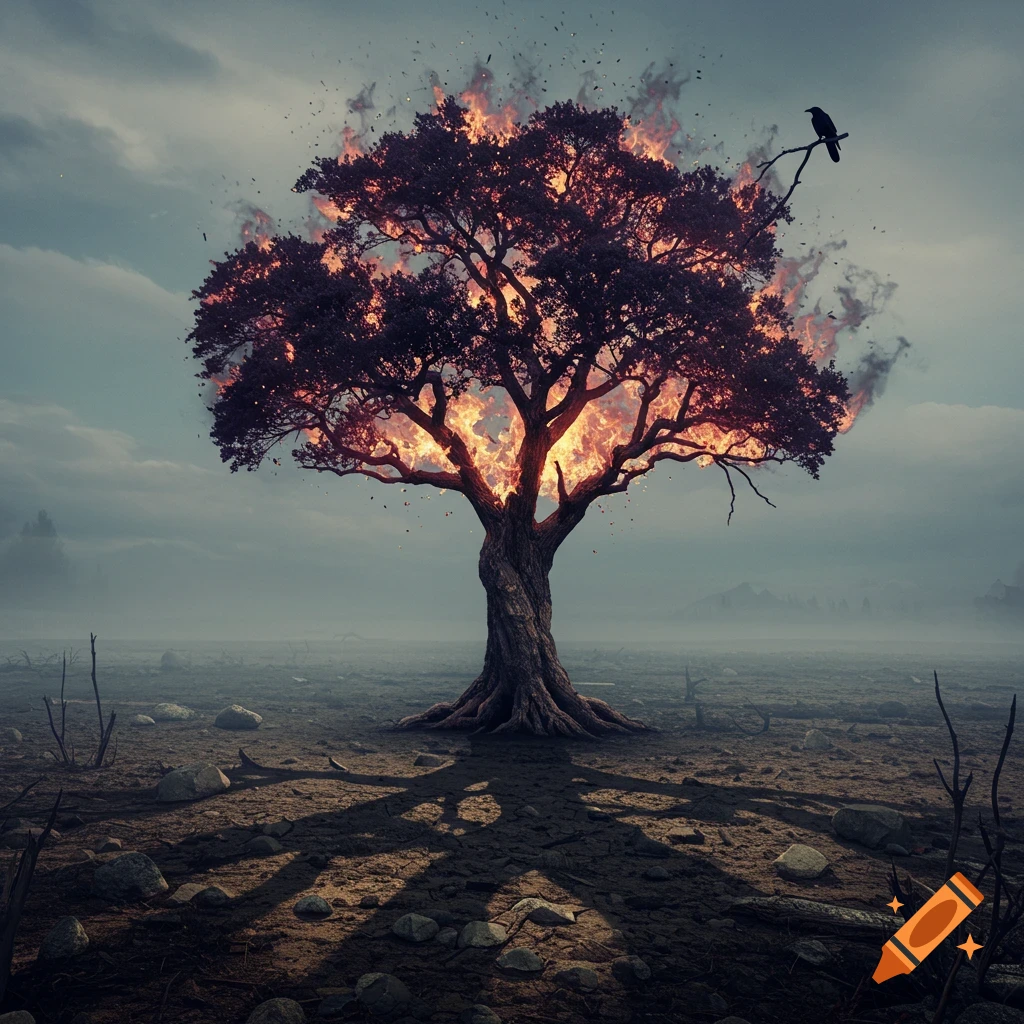
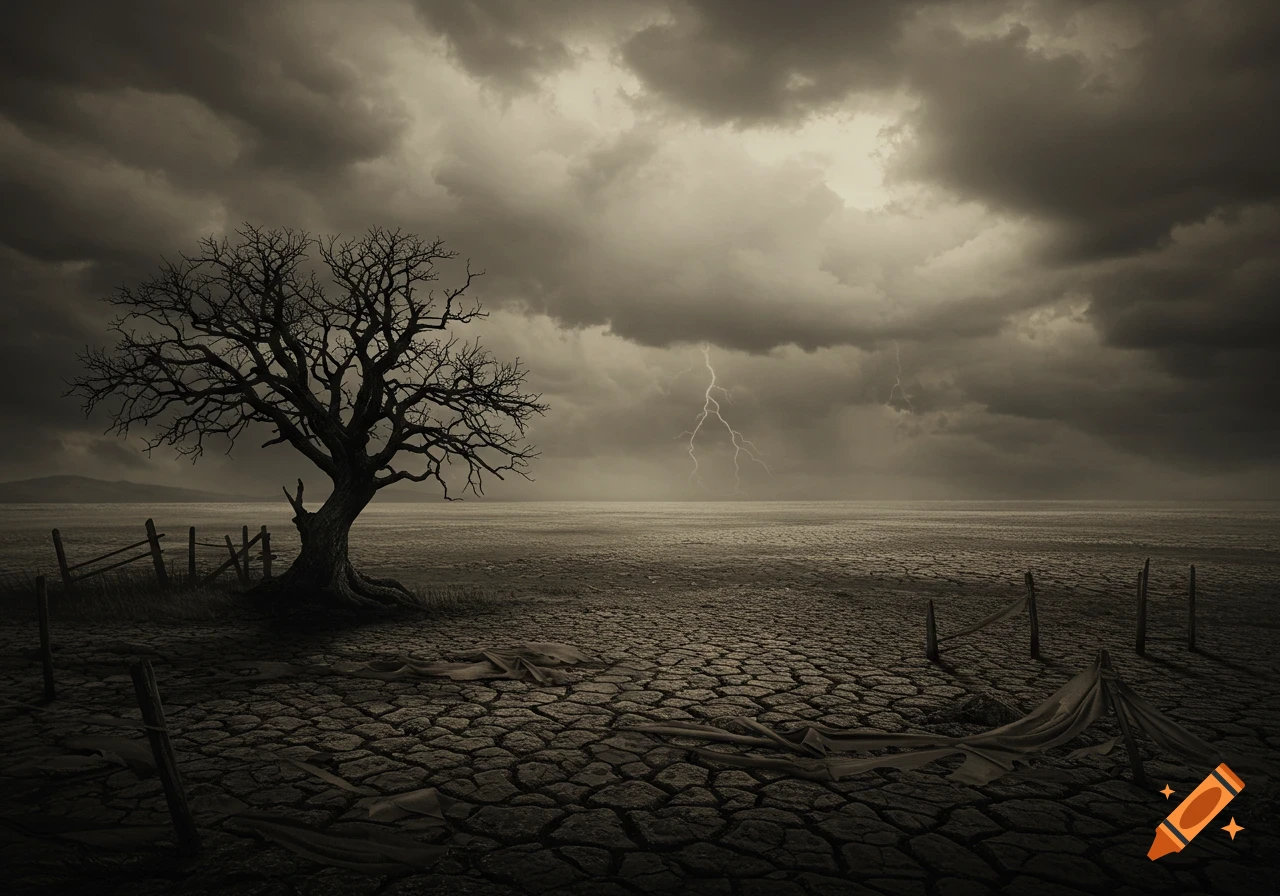
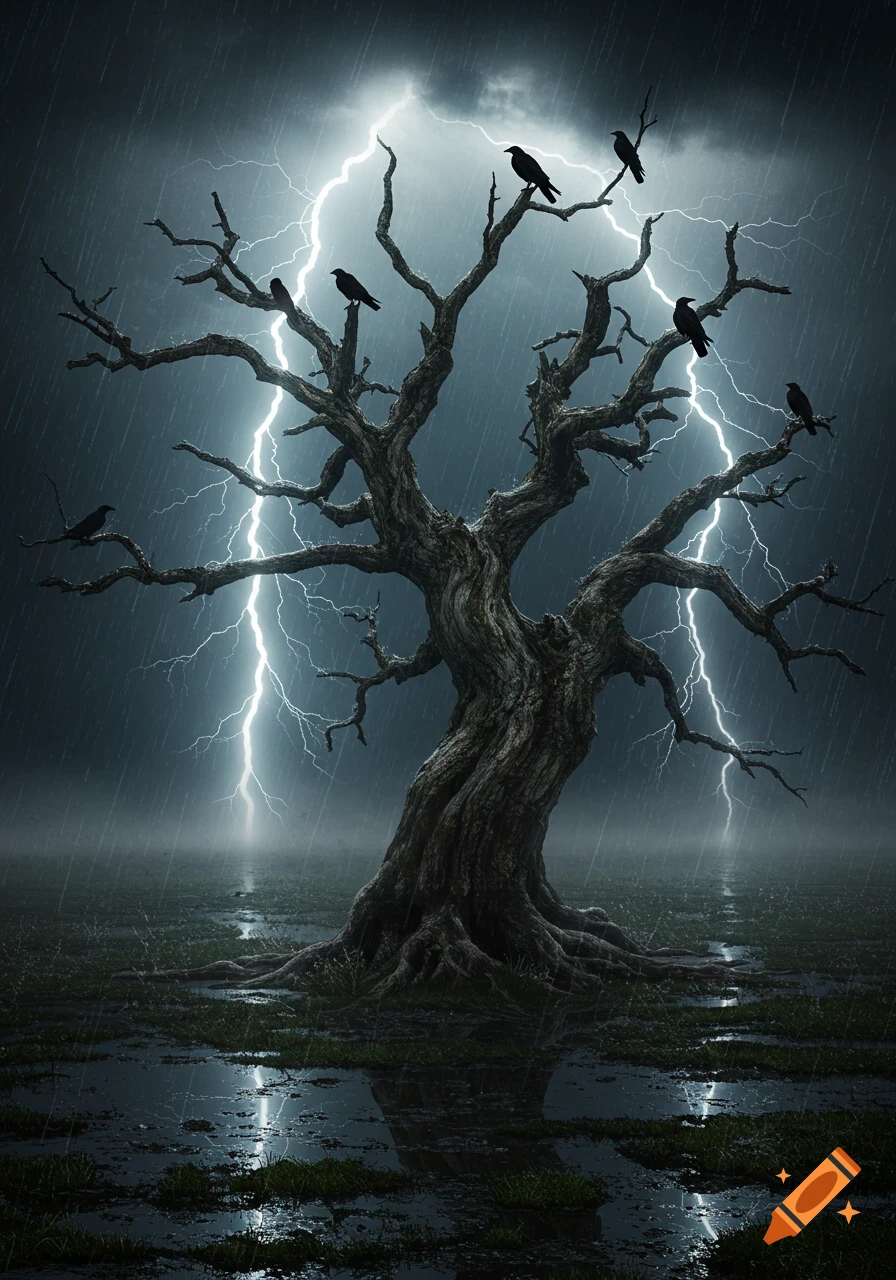
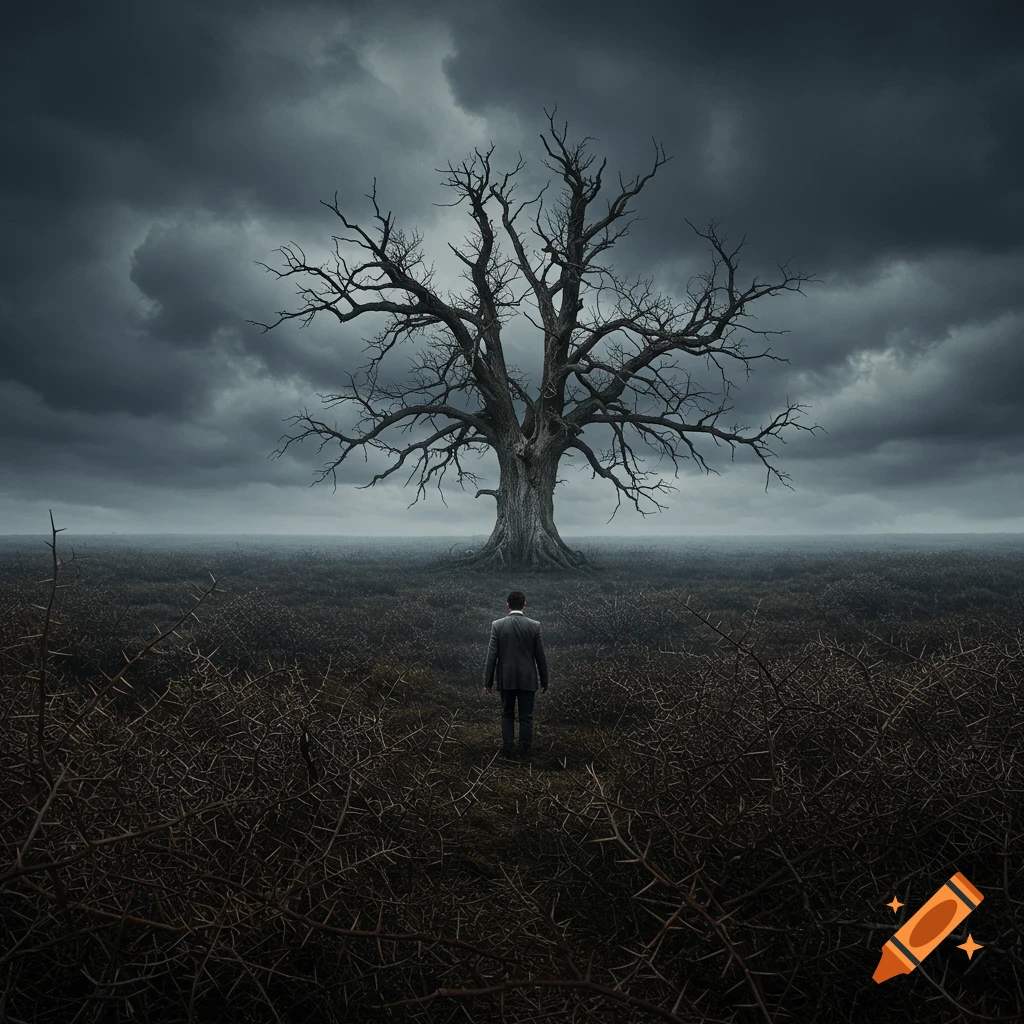
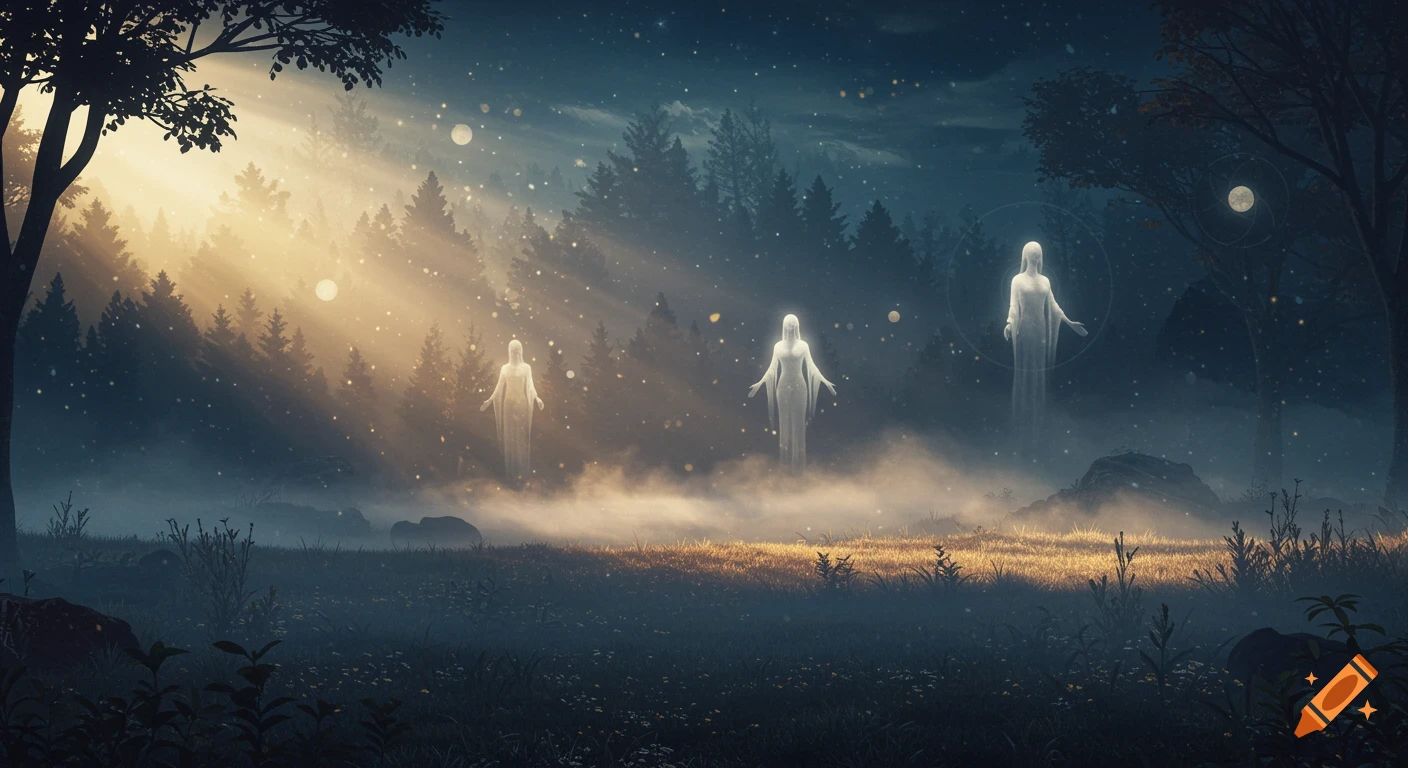
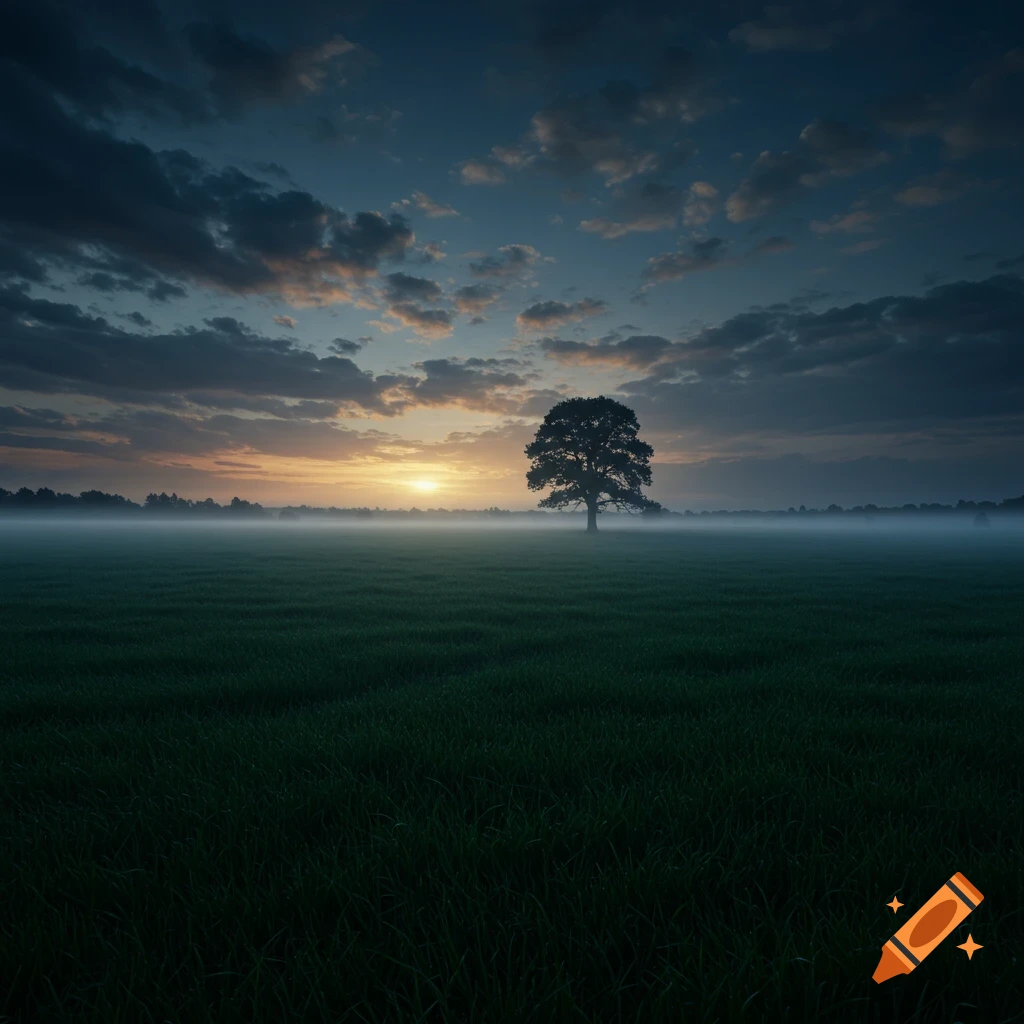
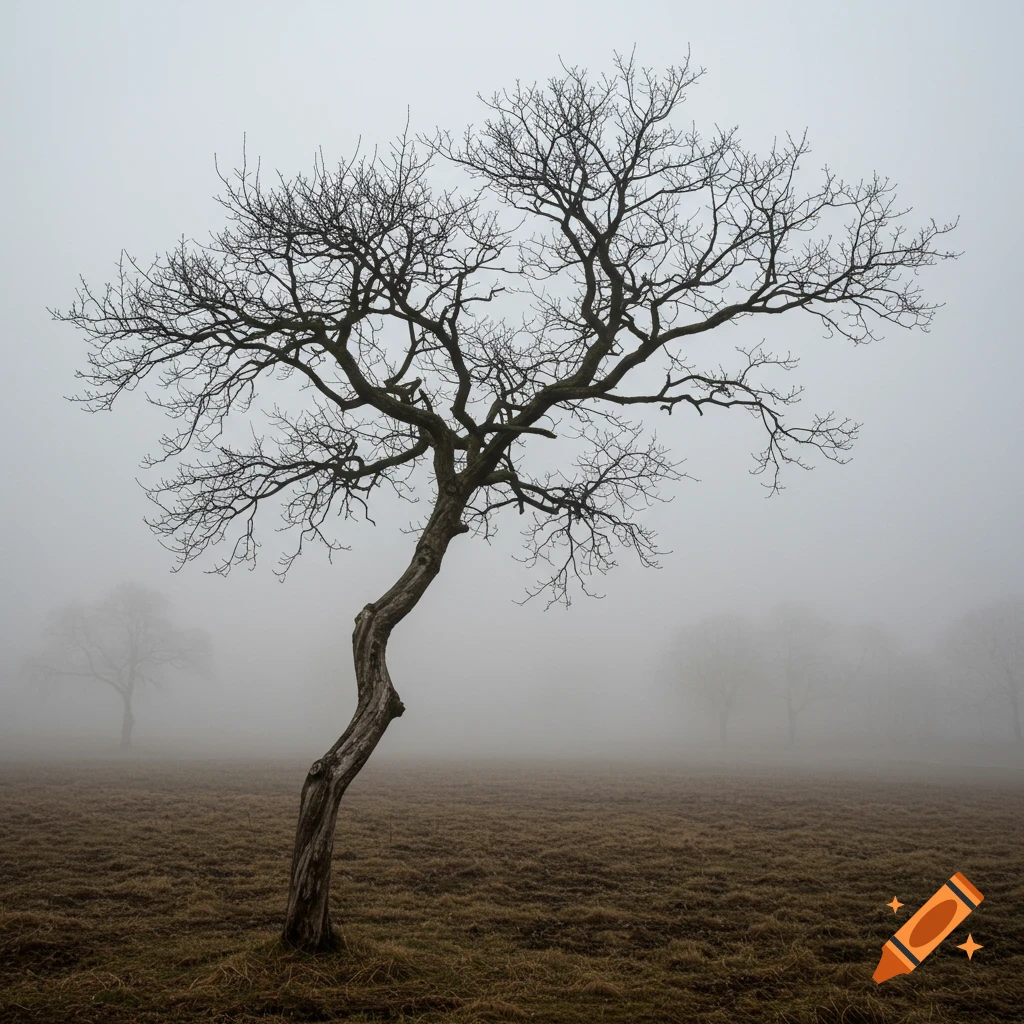
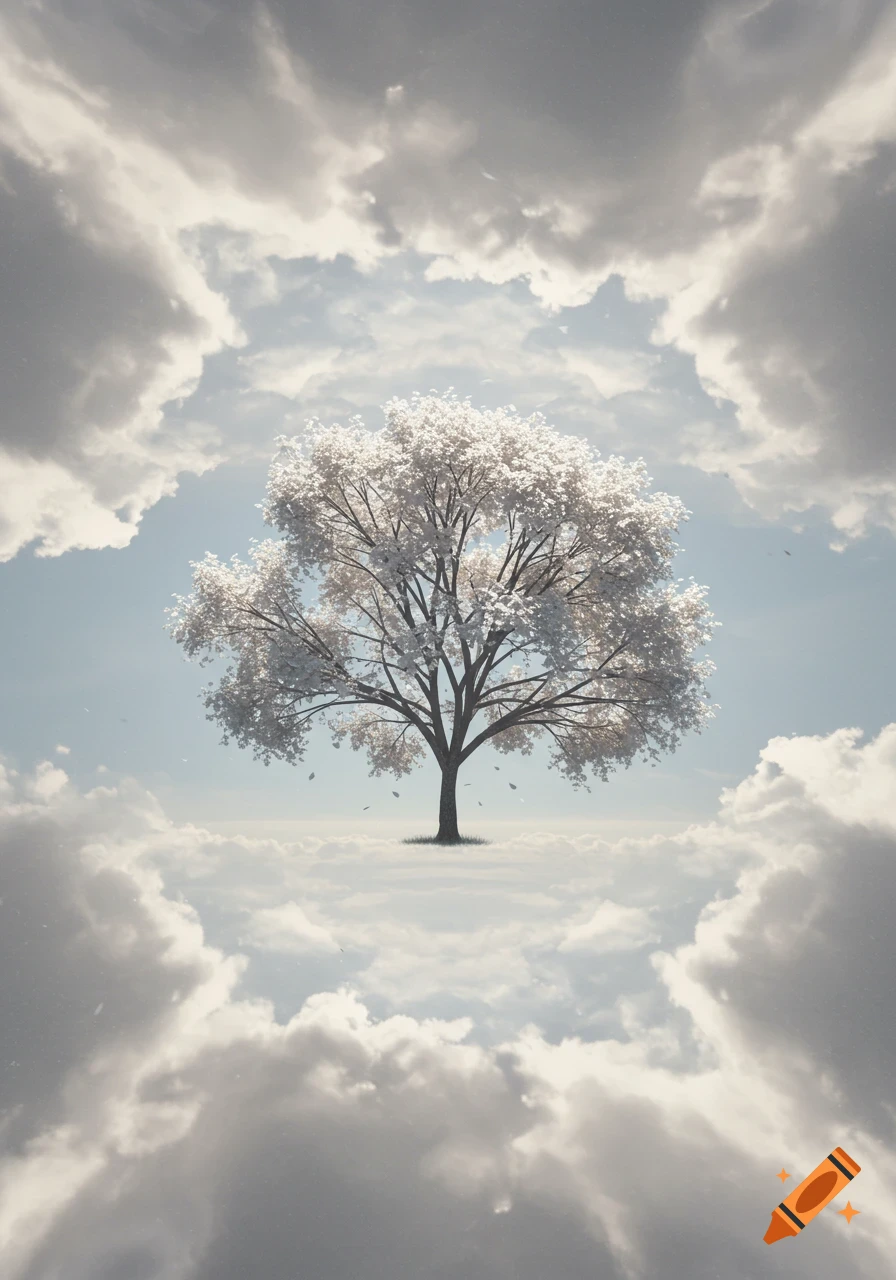
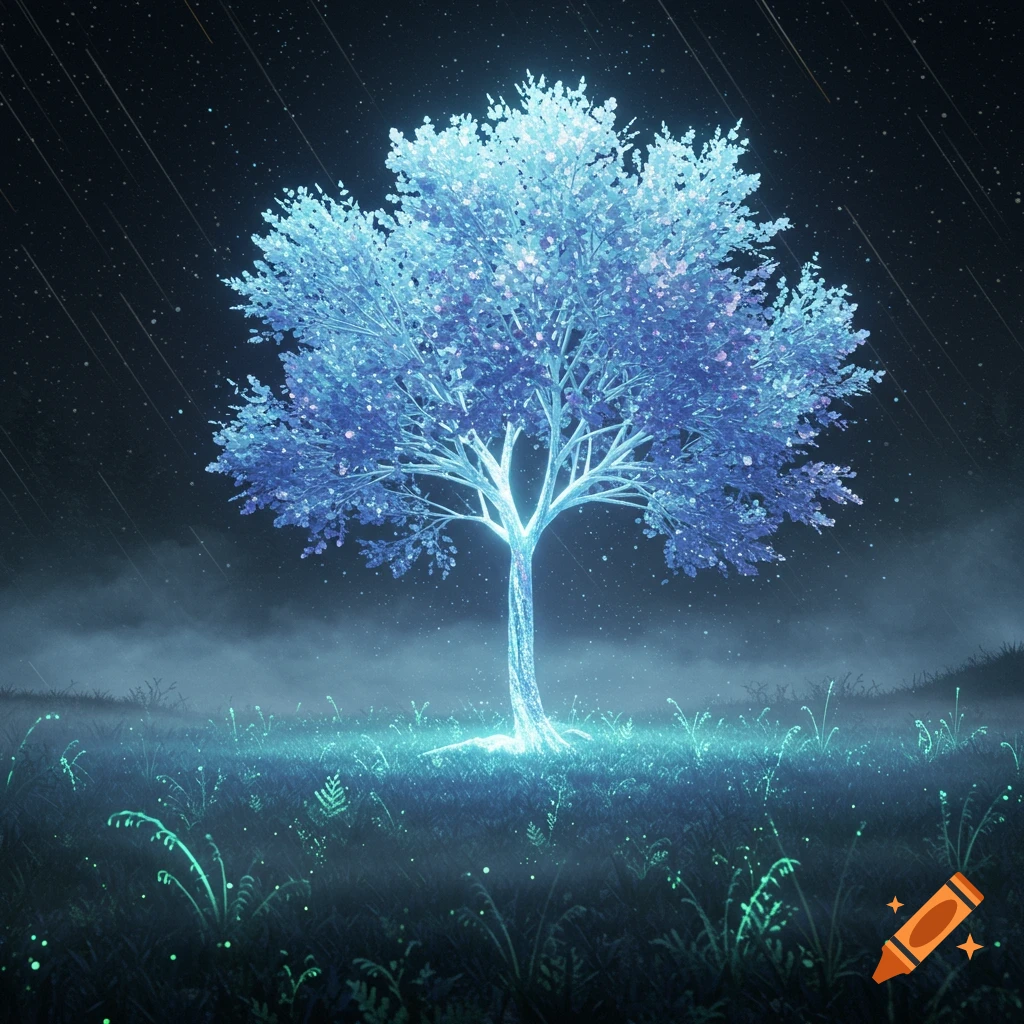
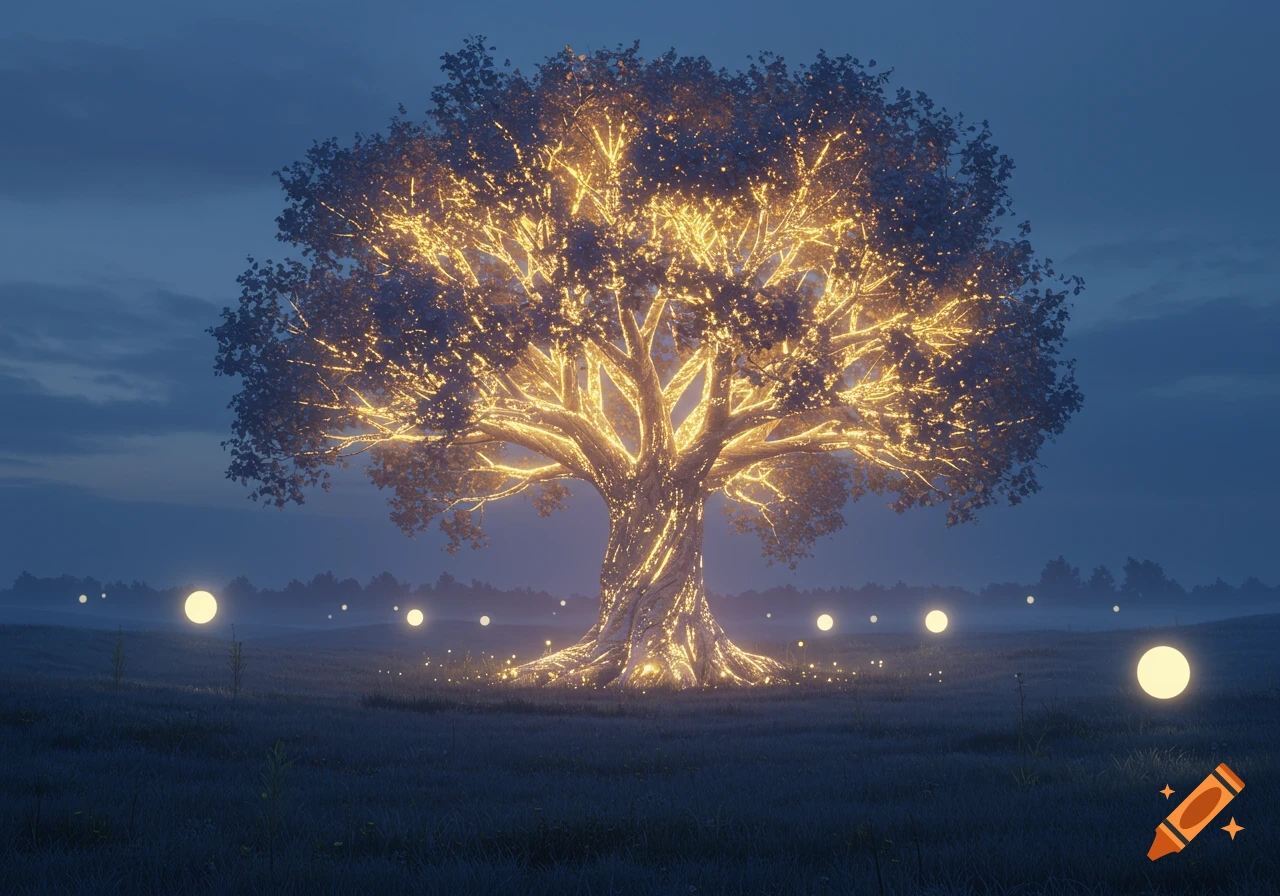
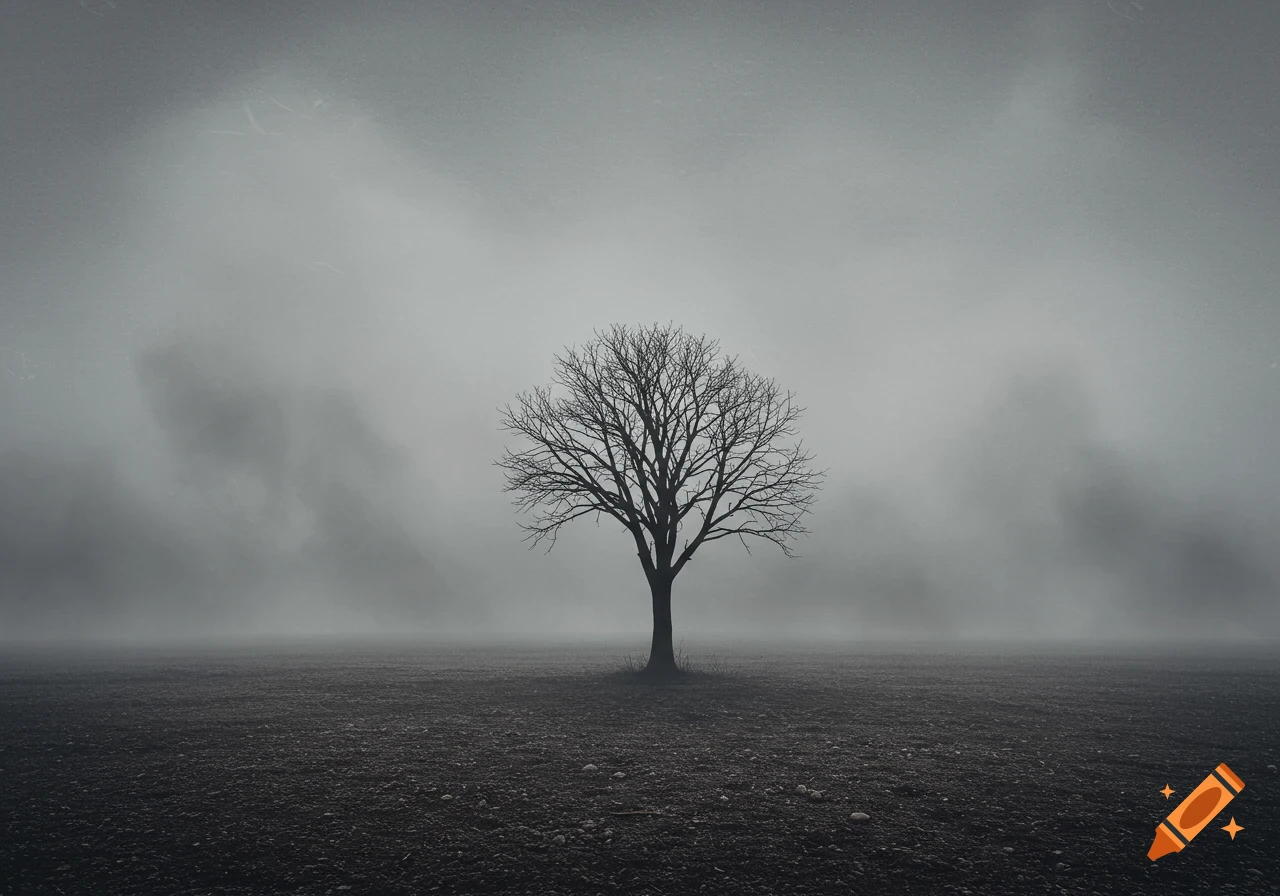
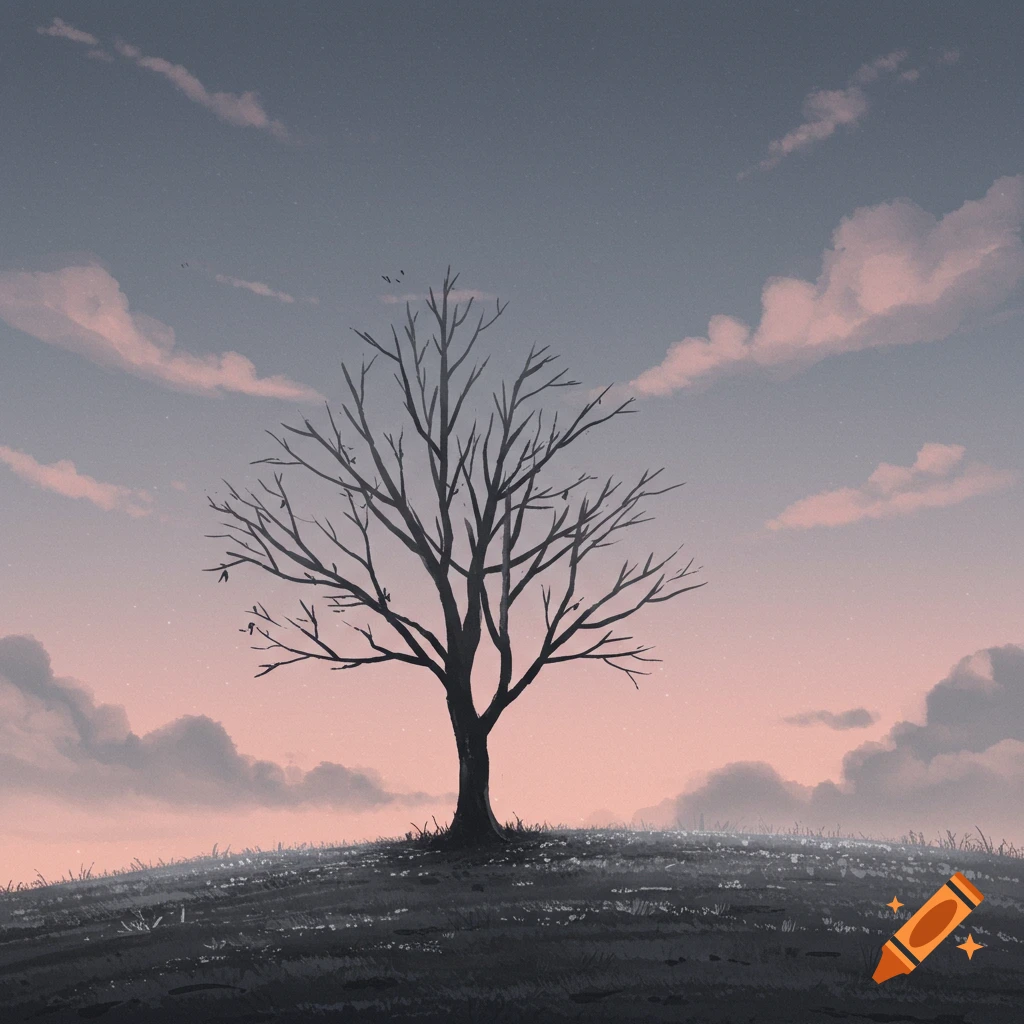
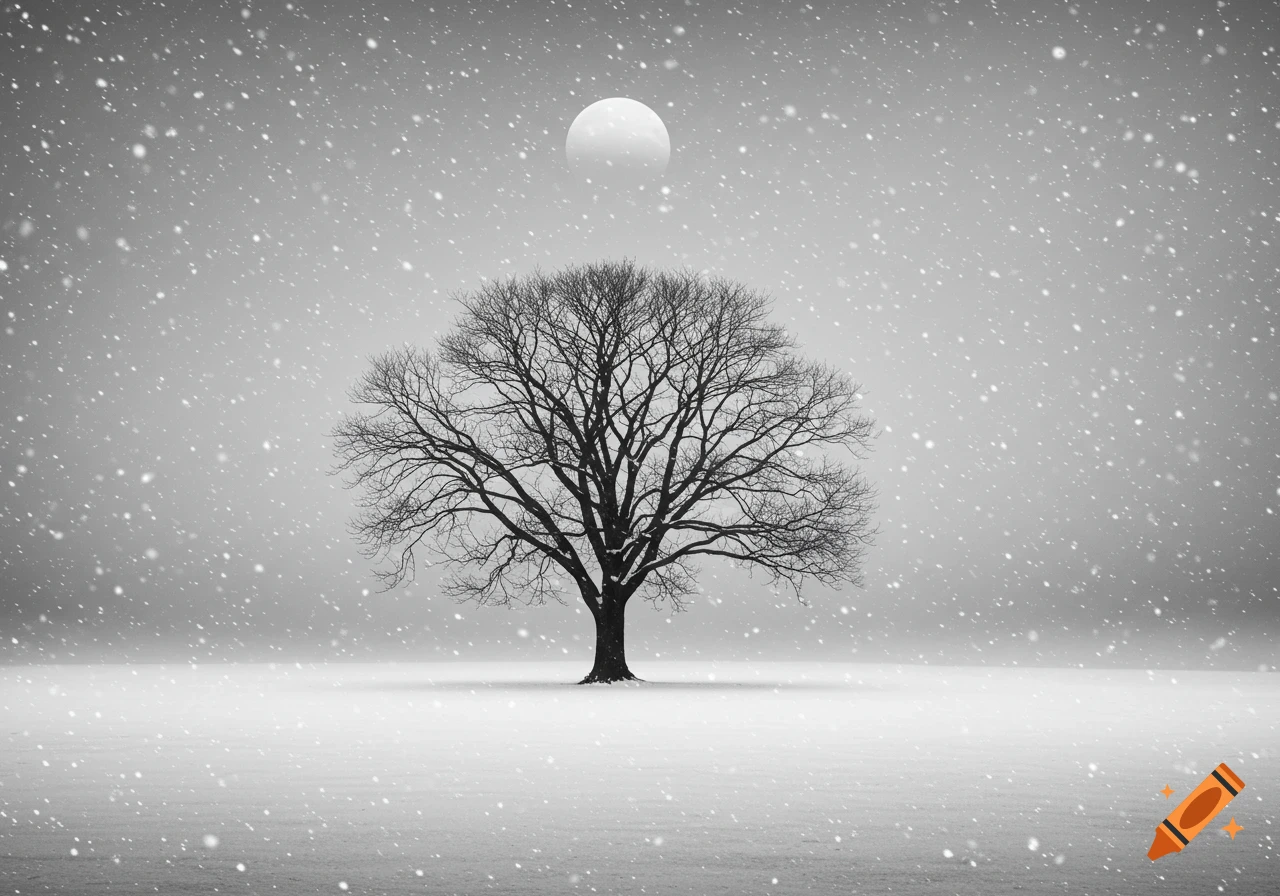
If I were to paint a picture of what I imagine death to be, it would look something like this: The scene is a vast, silent field at the very end of autumn, just as the first snow begins to fall. The sky is a soft, uniform pearl-gray, giving no indication of the time of day. The light is diffused, casting no shadows. In the center of the field is a single, immense tree. It is not dead, but it is fully bare. Its trunk is wide and sturdy, its bark ancient and deeply furrowed. Its branches are complex, reaching up and out like a thousand intertwined veins against the gray sky. They are completely still. Beneath the tree, the grass of the field is not brown and dead, but a pale, dusty silver. The first few snowflakes are falling, large and silent, but they do not accumulate on the ground. Instead, they seem to fade and disappear a few inches above the silver grass, as if the ground itself has a gentle warmth that absorbs them. And there, leaning against the trunk of the tree, is a figure. It’s not a skeleton or a grim reaper. It’s simply a shape wrapped in a cloak the color of the silver grass. The hood is up, so the face is in deep shadow, invisible. The figure is utterly still, its posture one of profound rest, not menace. From the base of the tree, wrapping around the roots and mingling with the silver grass, a soft, faint mist hugs the ground. It’s not cold or damp-looking; it glows with a very faint, inner light, like moonlight on water. There is no wind. No sound. Not even Mehr sehen
More images like this