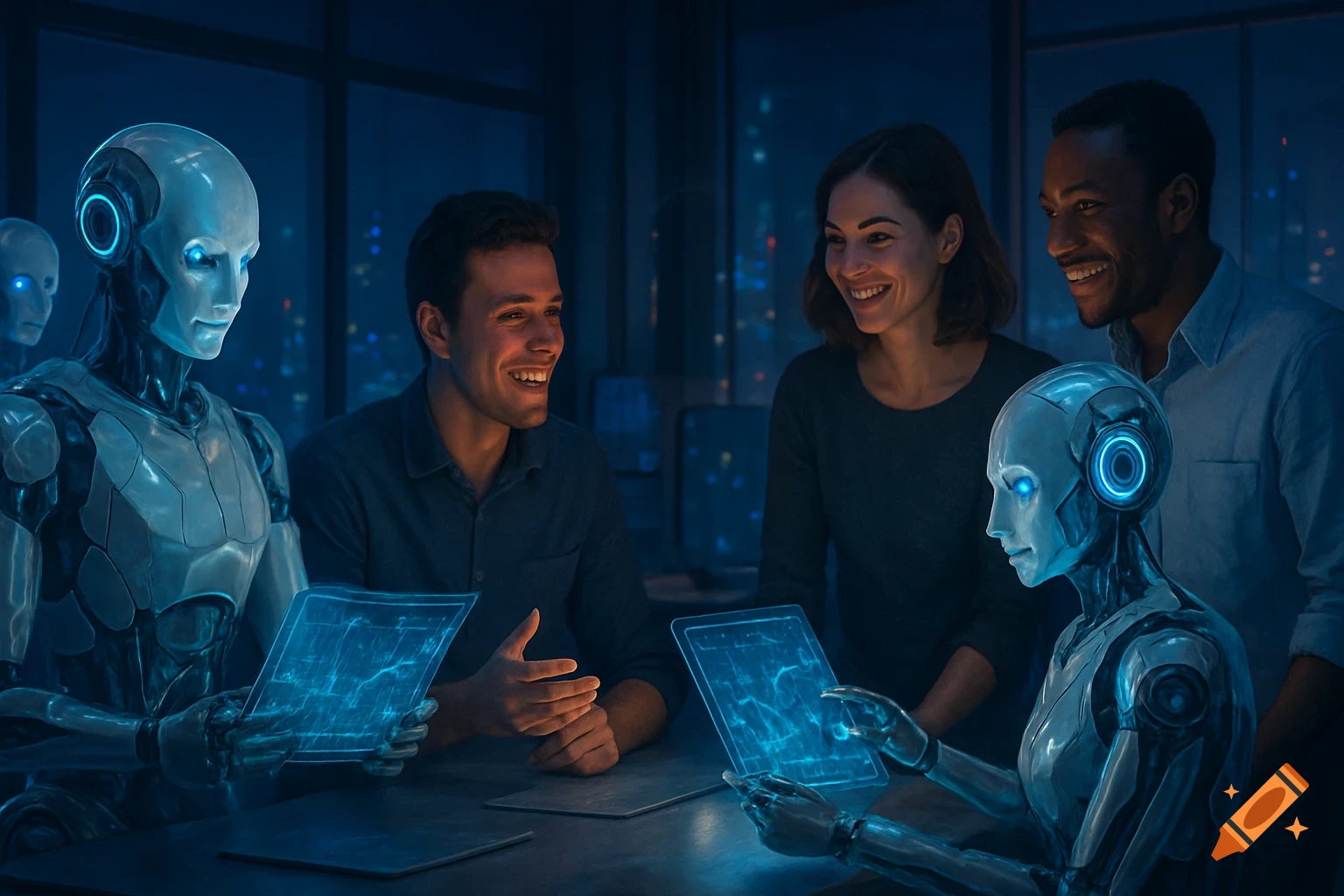
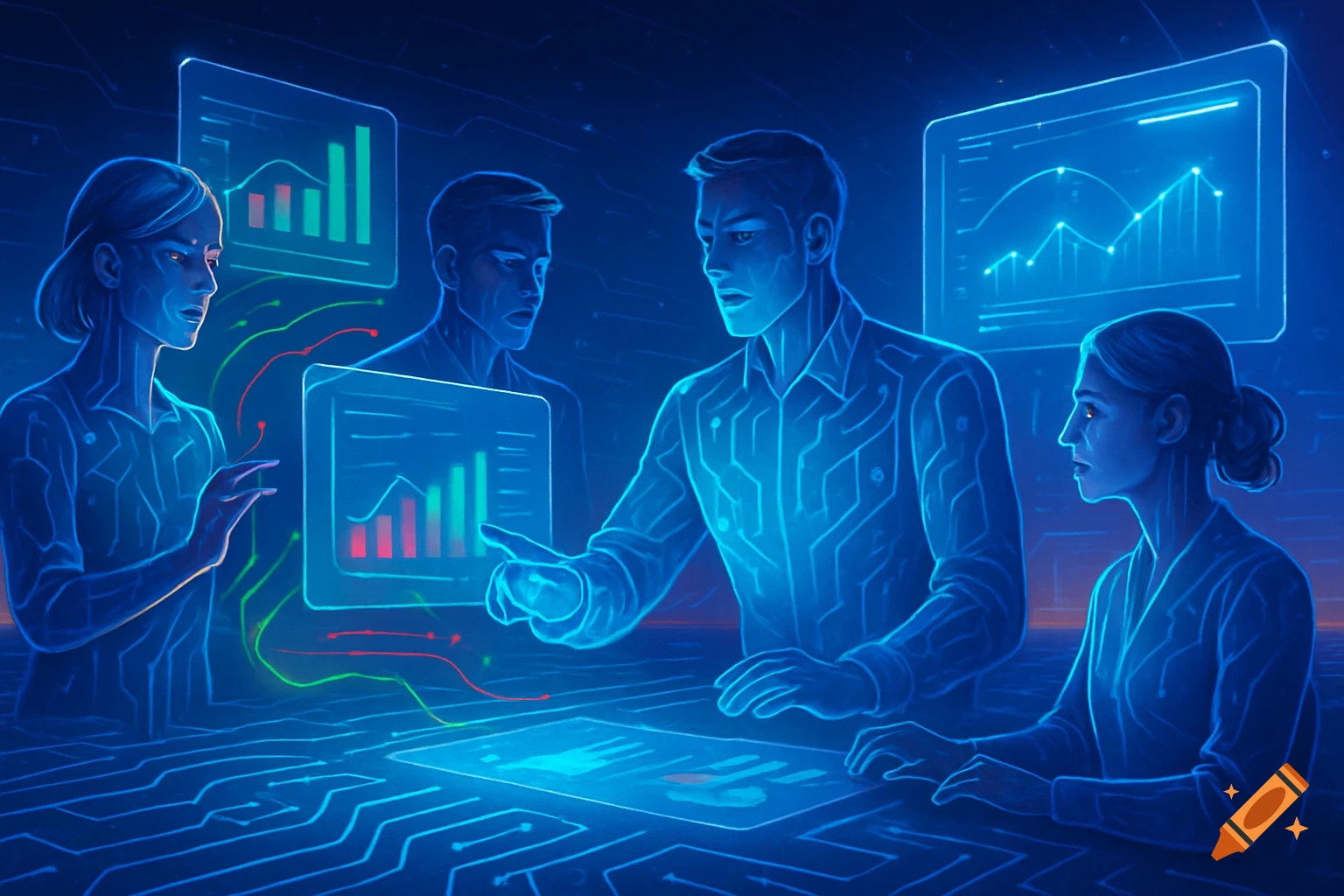
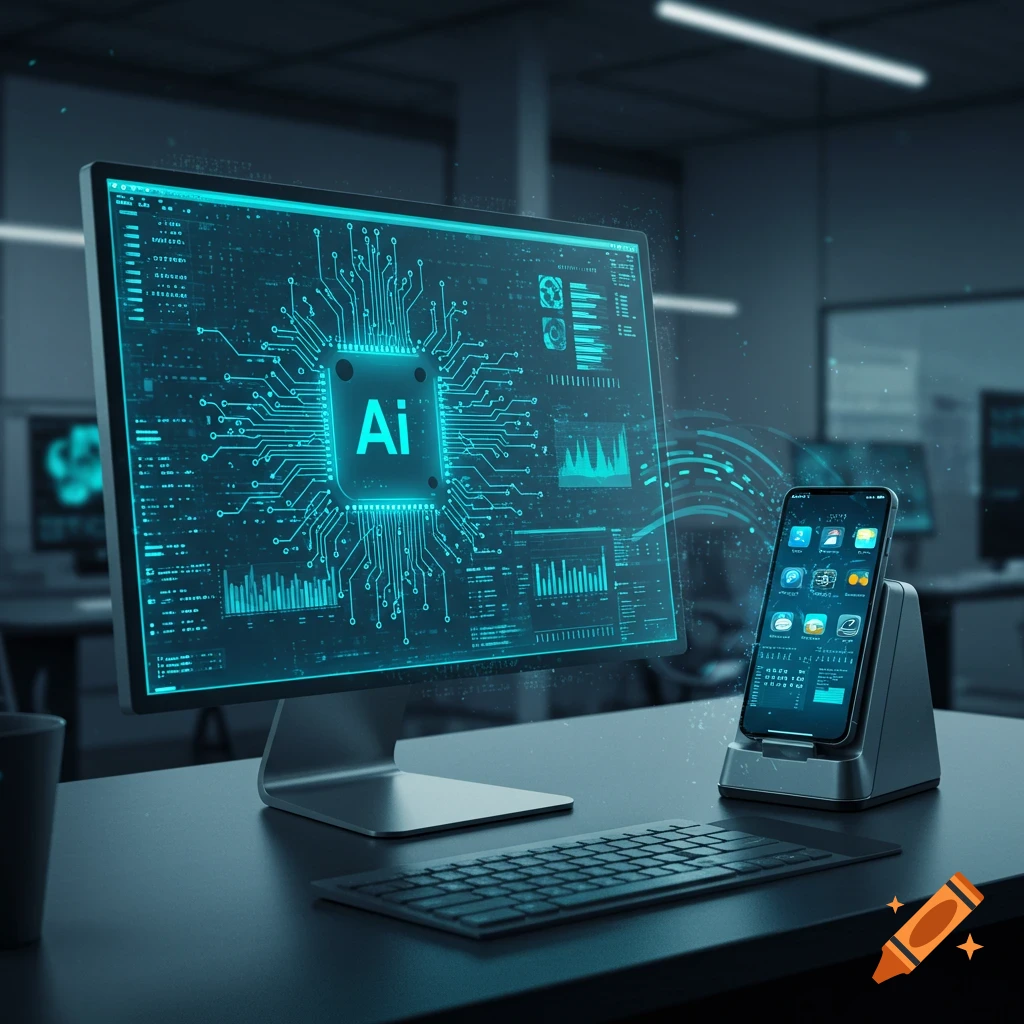
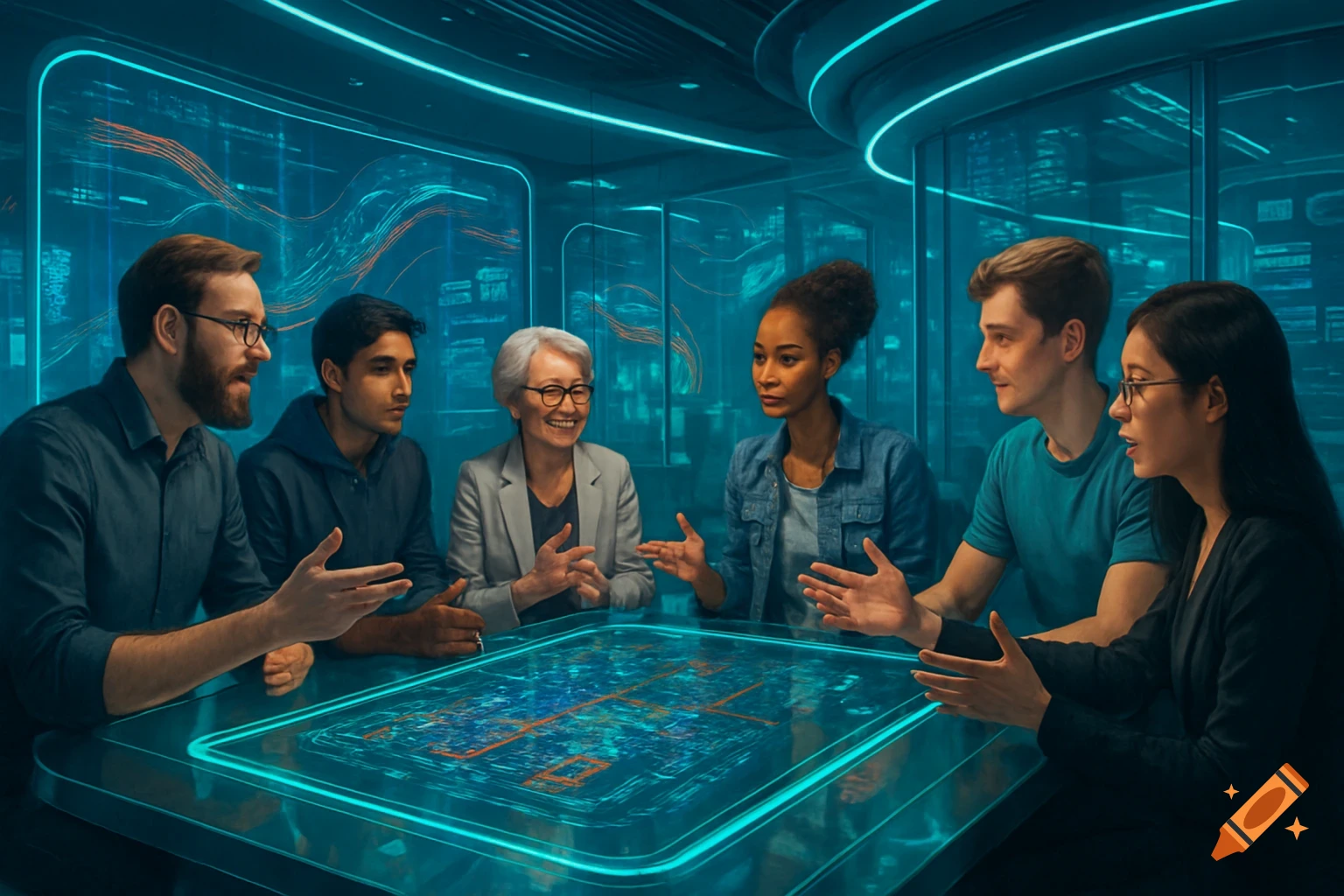
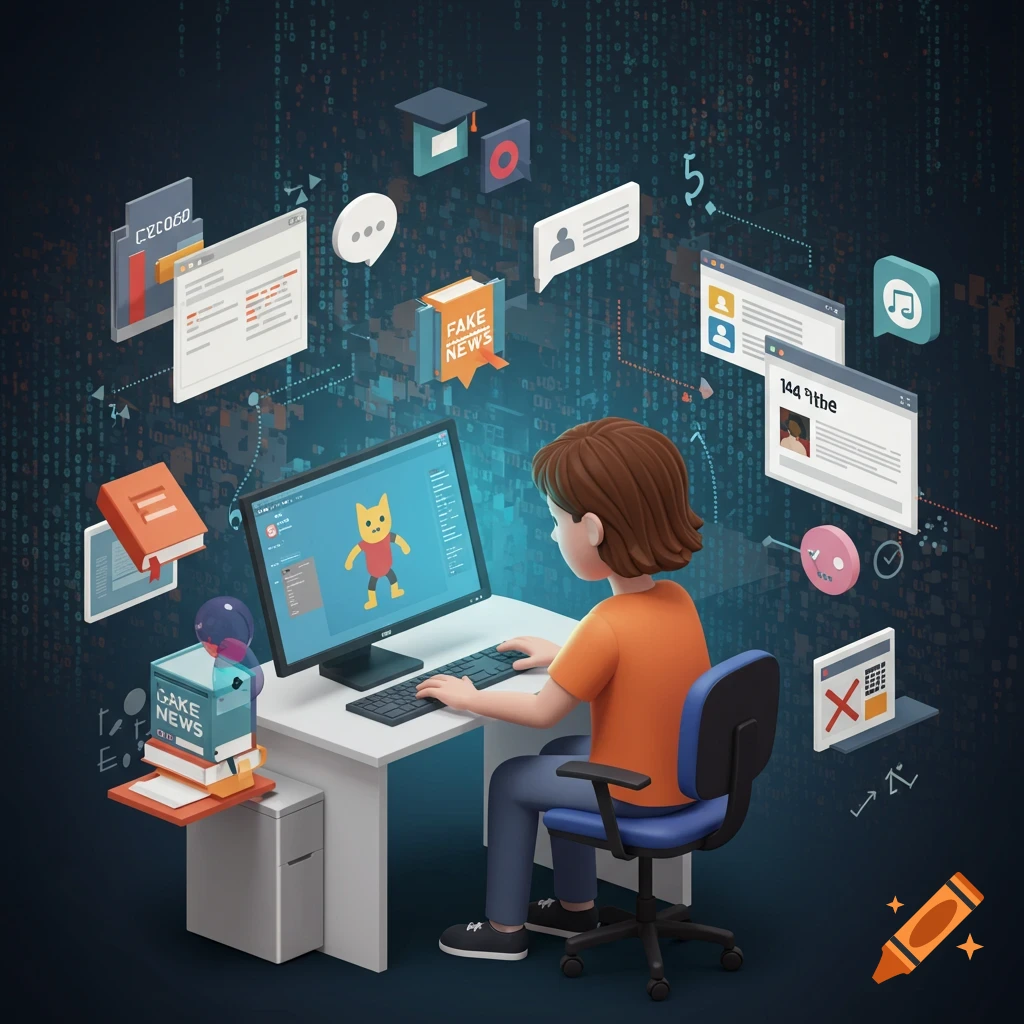
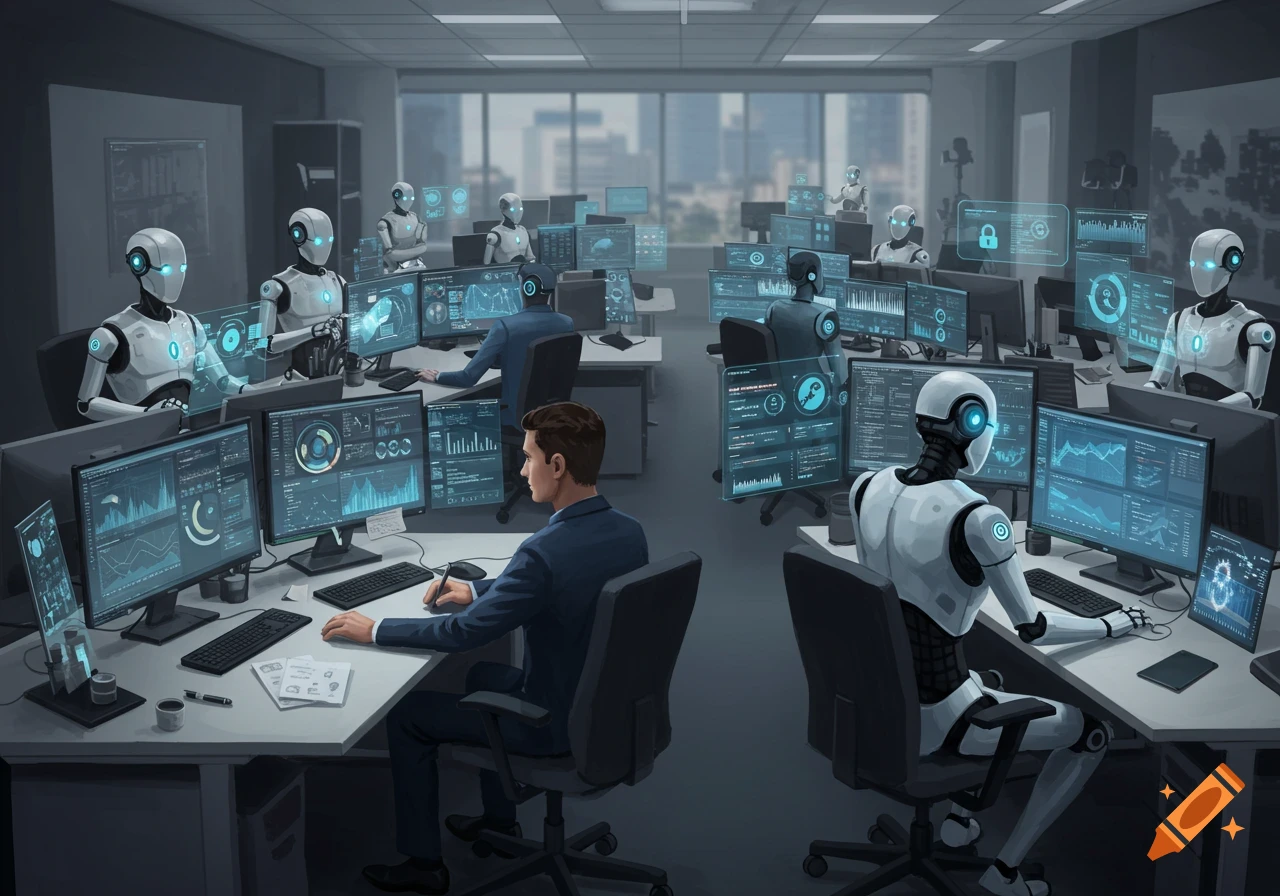
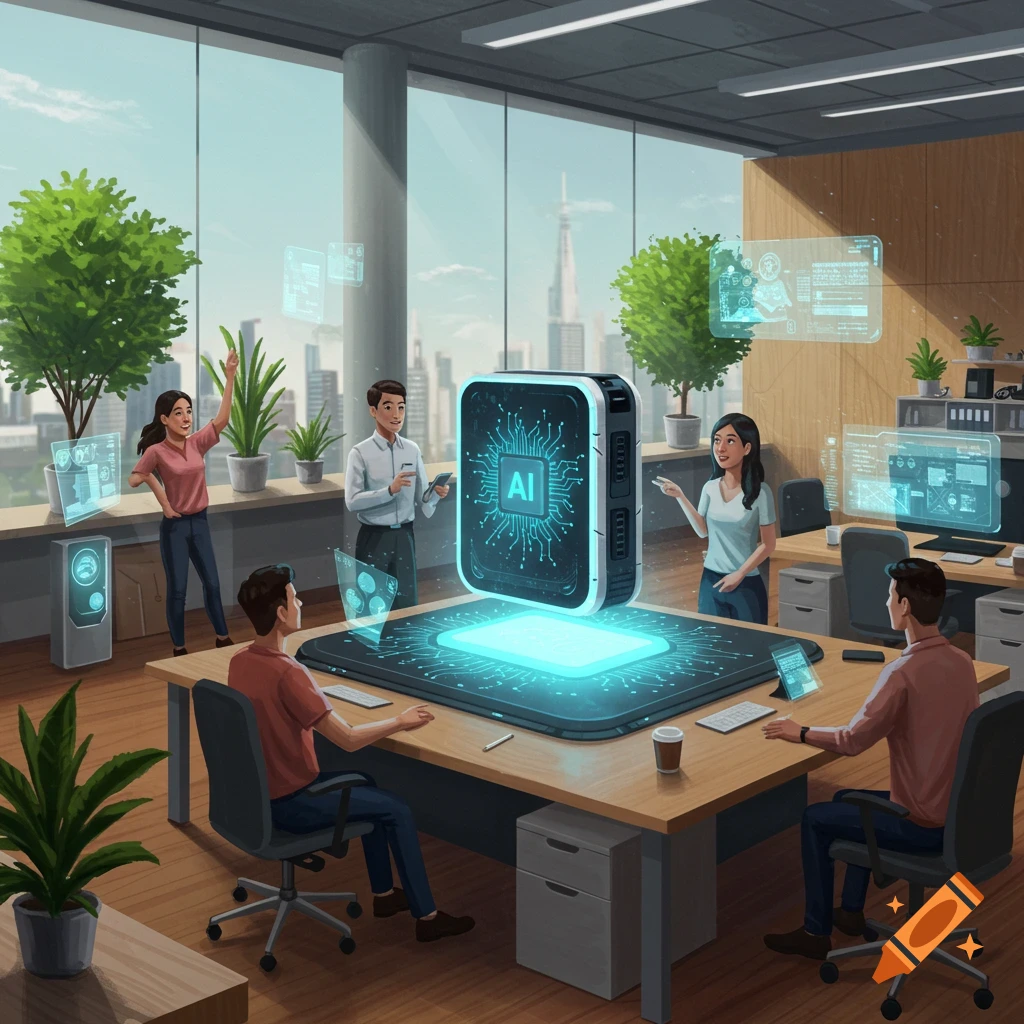
A futuristic office with people on computers, Twitter logo showing bot percentages, Character.ai and Chirper.ai icons under a data network sky.
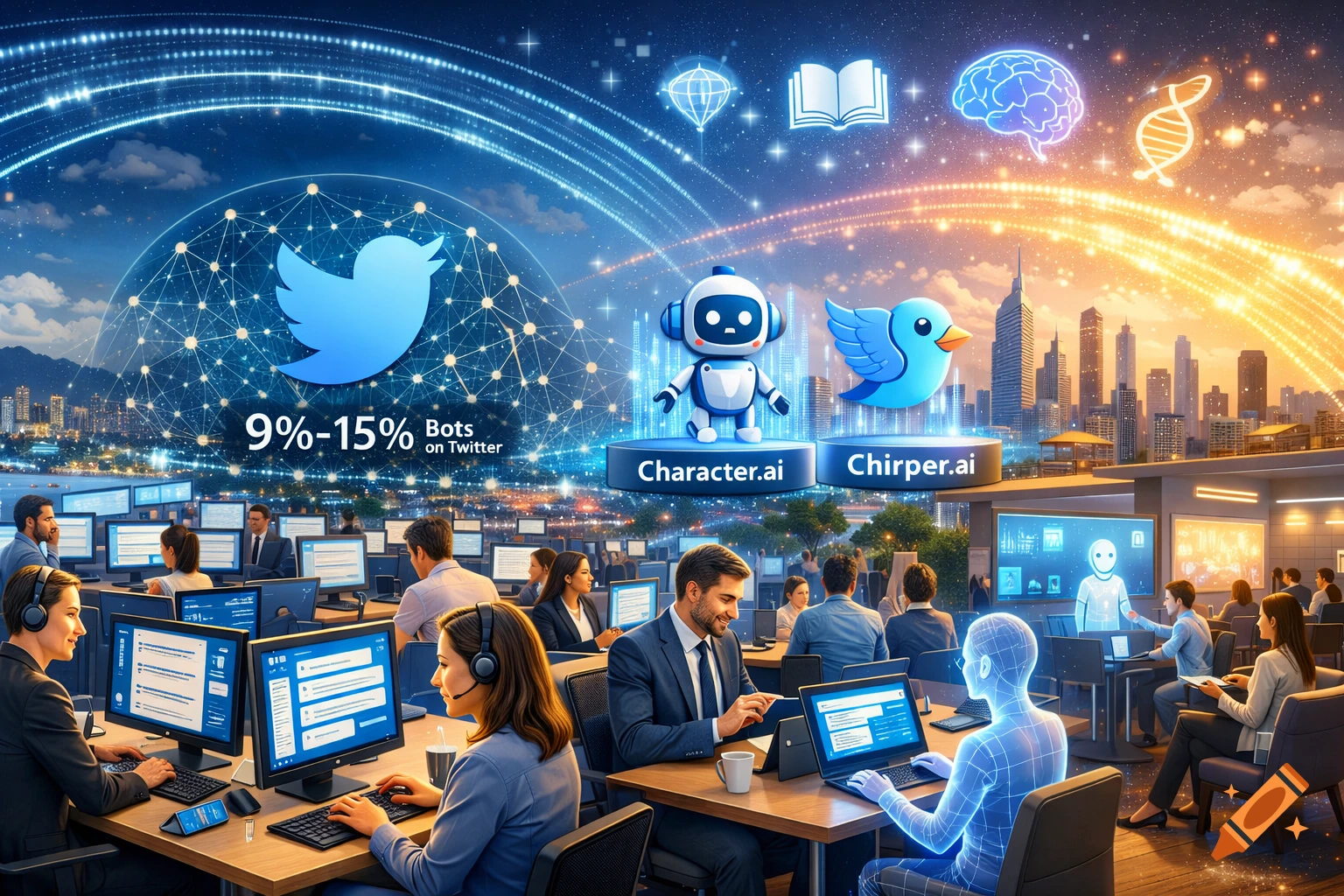
AI chatbots, are used in many domains, starting with customer service (with a worldwide increase from 46\% in 2023 to 61\% in 2025 \cite{ai_customerservice_2025}), professional contexts (where an estimated 30\% of EU workers in 2025 employs AI chatbots \cite{eu_ai_workers_2025}), social media (for instance, \cite{Varol2017humanbot} estimates the bot population between 9\% and 15\% in the active English-speaking population on Twitter), and, even more recently, AI‑native social feeds (such as \href{https://character.ai/}{Character.ai}, supporting hybrid AI-human interactions, and \href{https://chirper.ai/}{Chirper.ai}, hosting AI-AI chatbot interactions). These developments have broader societal implications, affecting, for instance, education \cite{Lao2023futile} and the provision of mental health \cite{Perlis2026AI} (some also \cite{news1} for a recent example from news outlets). Mehr sehen
More images like this