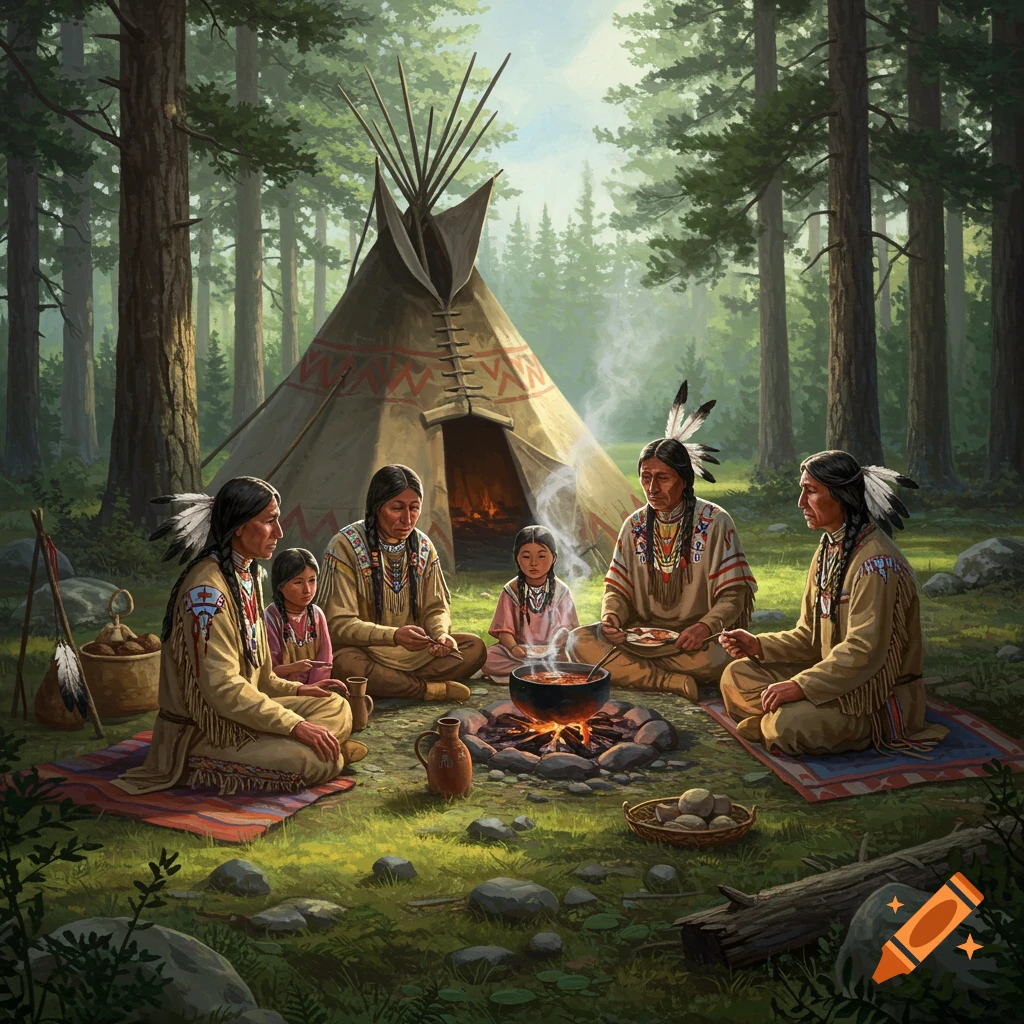
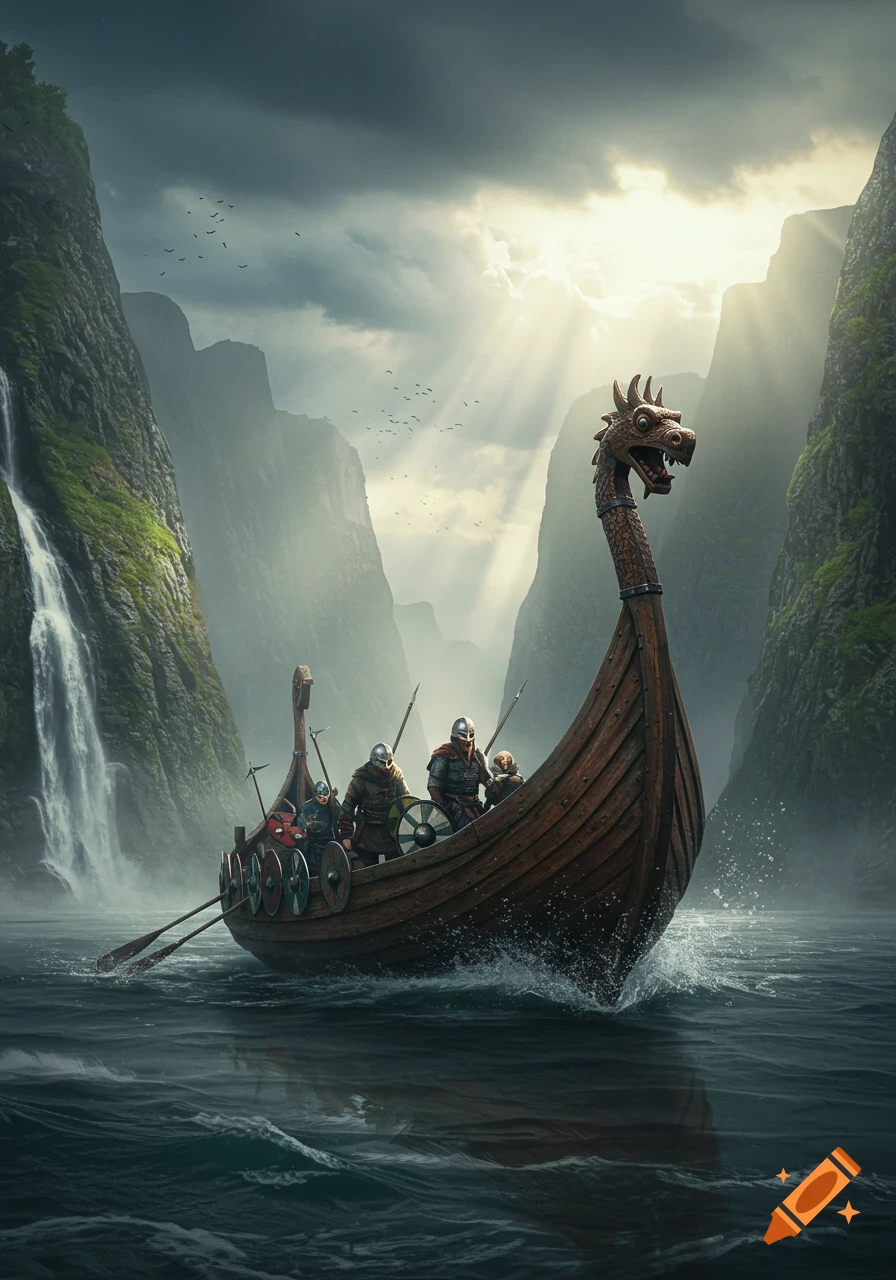
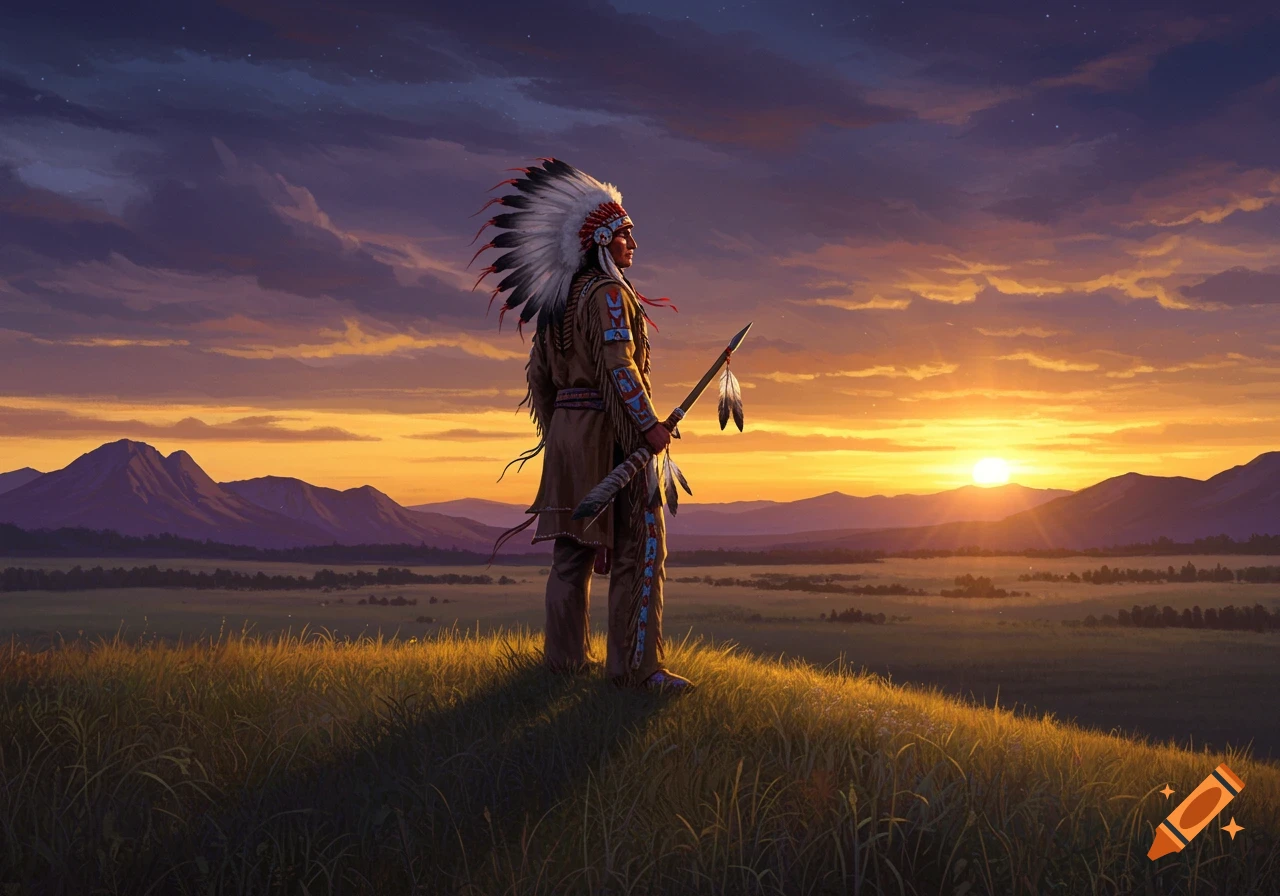
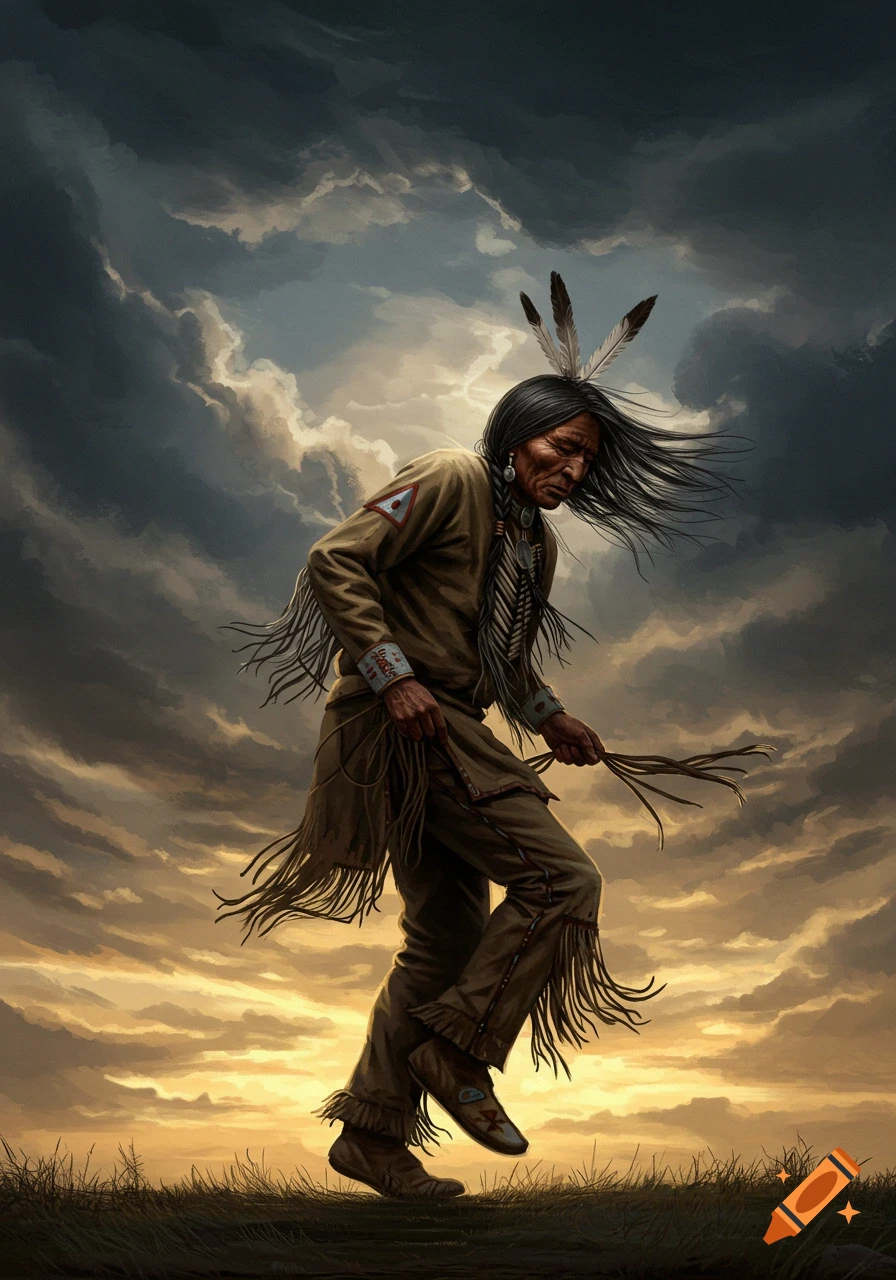
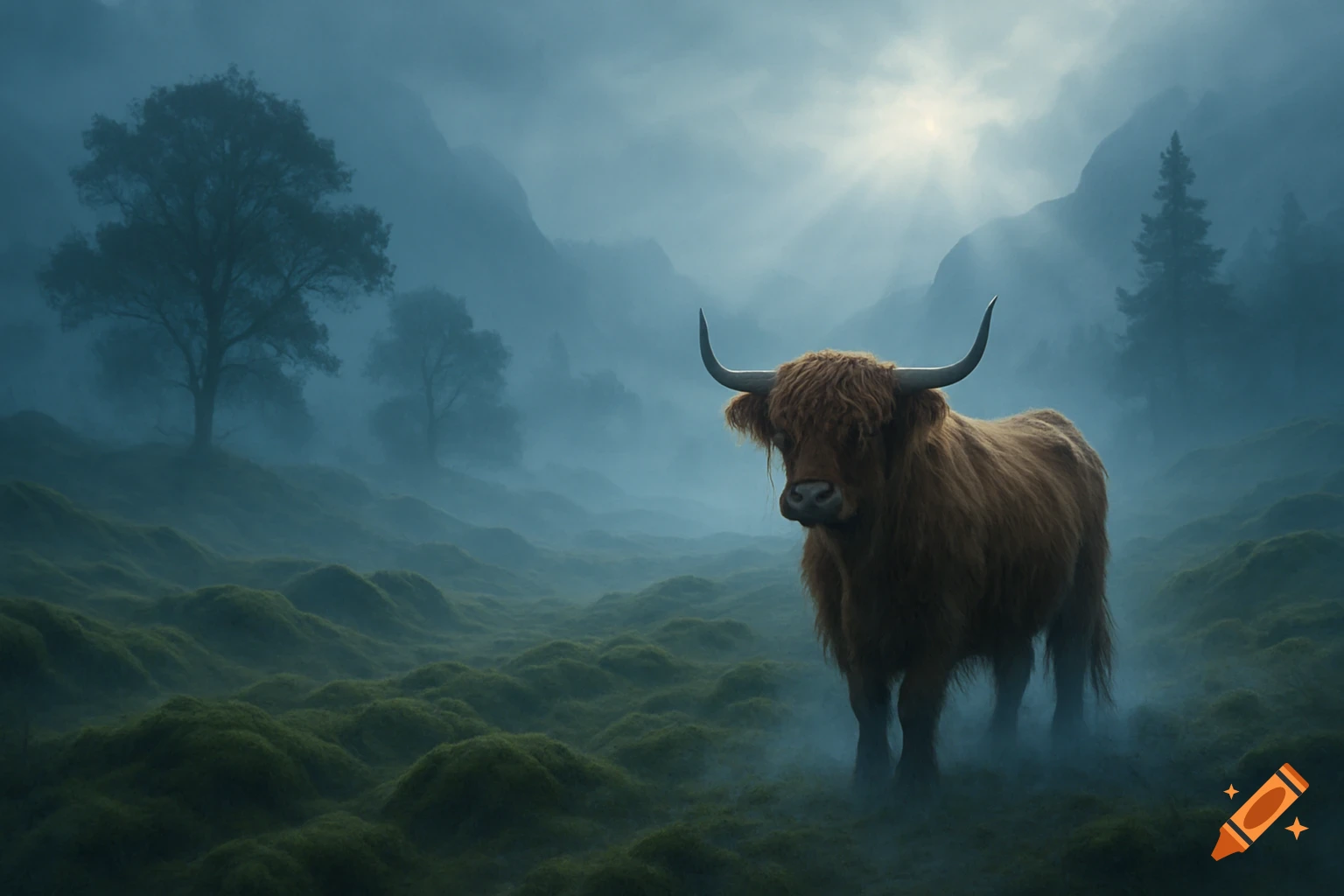
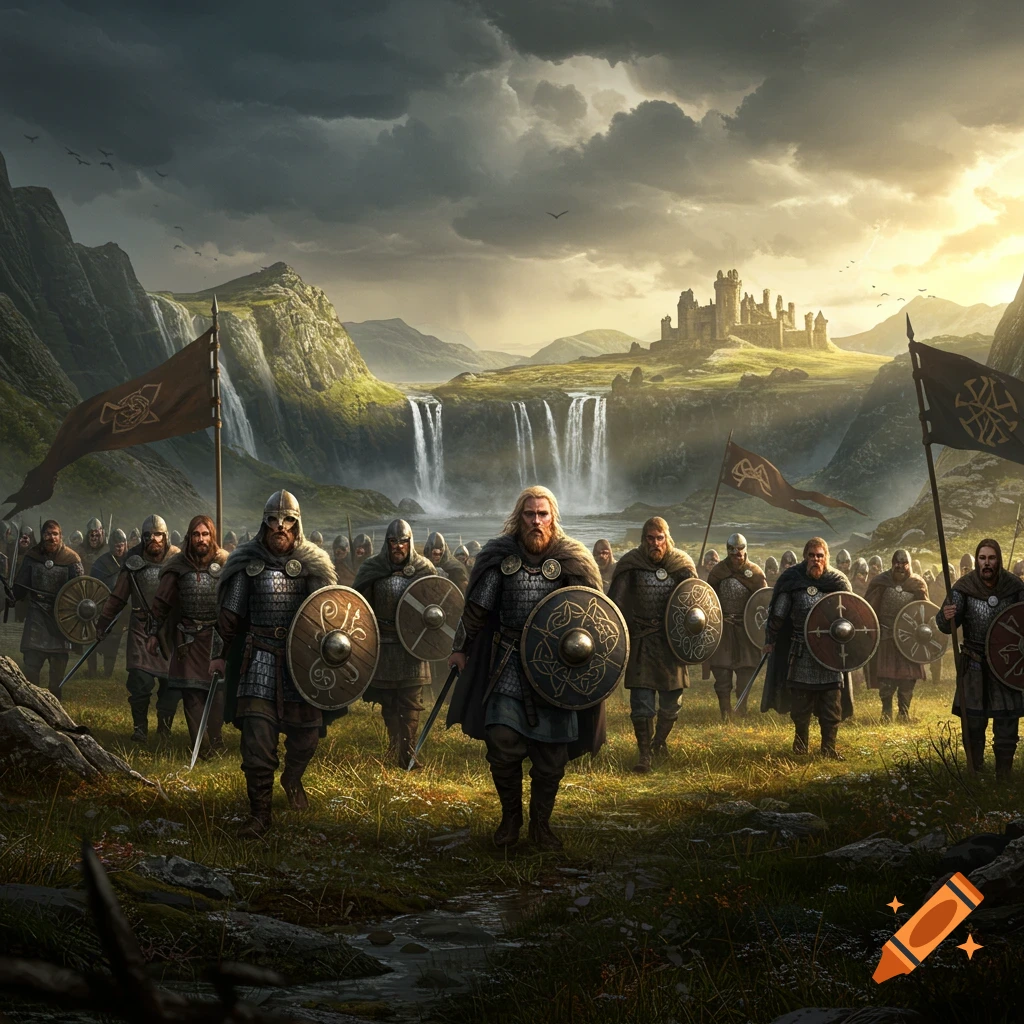
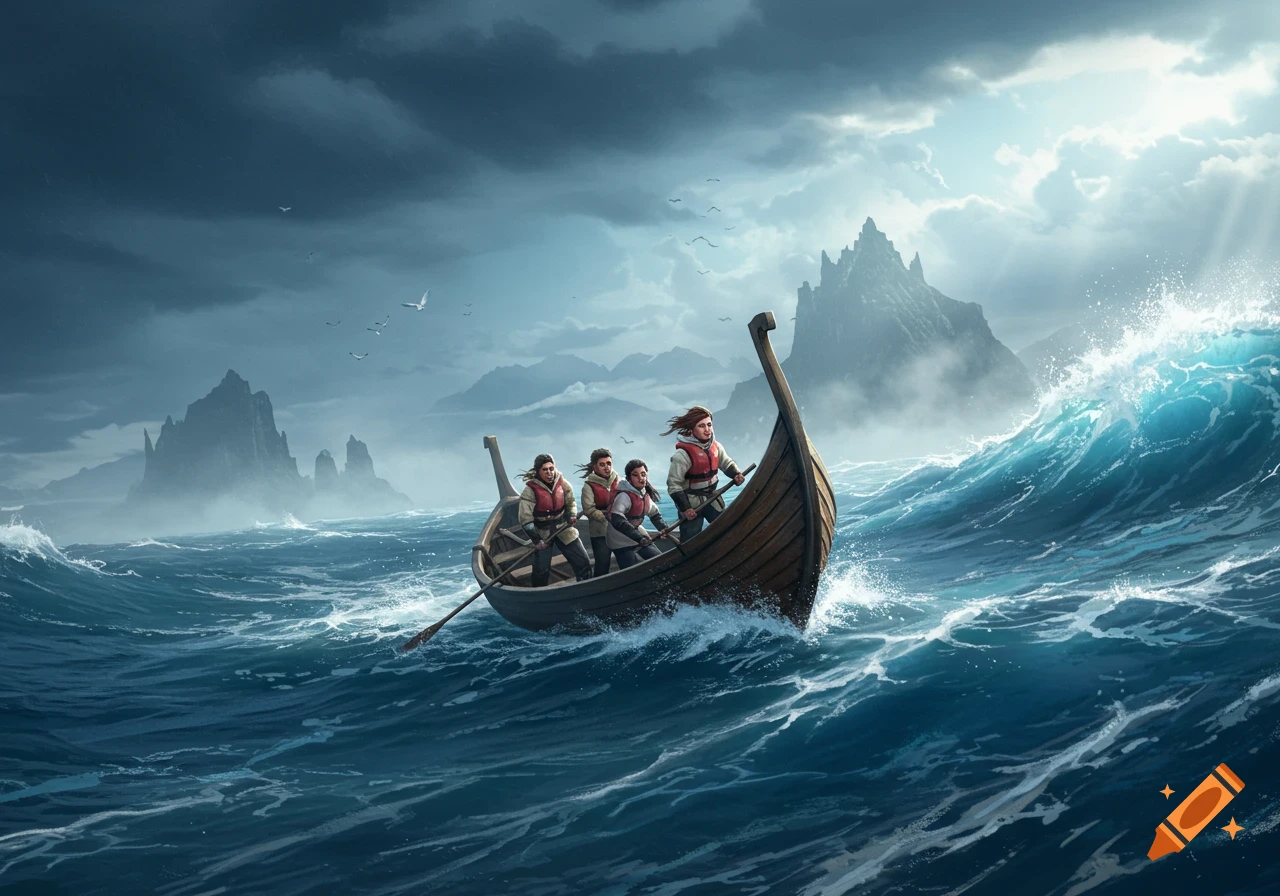
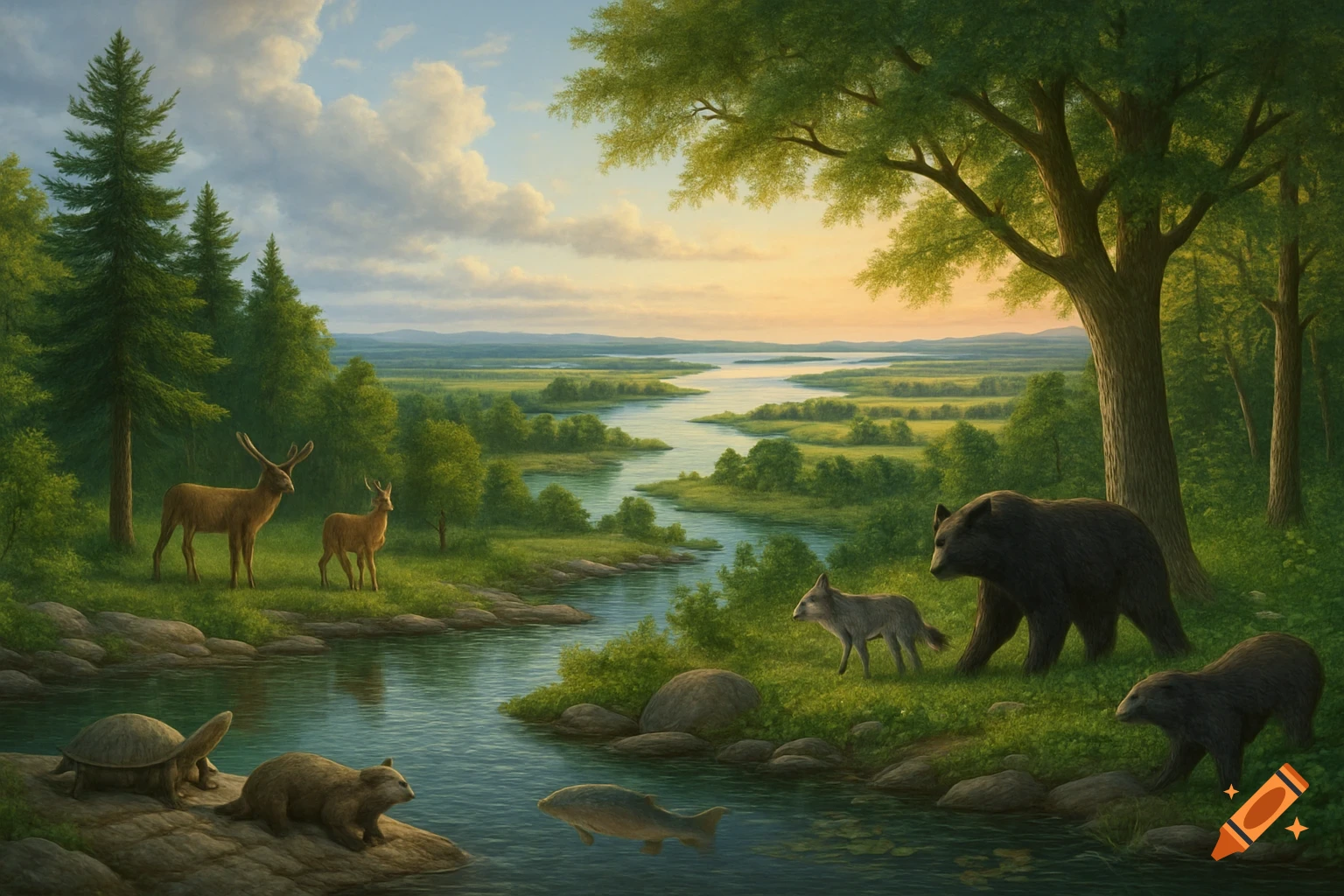
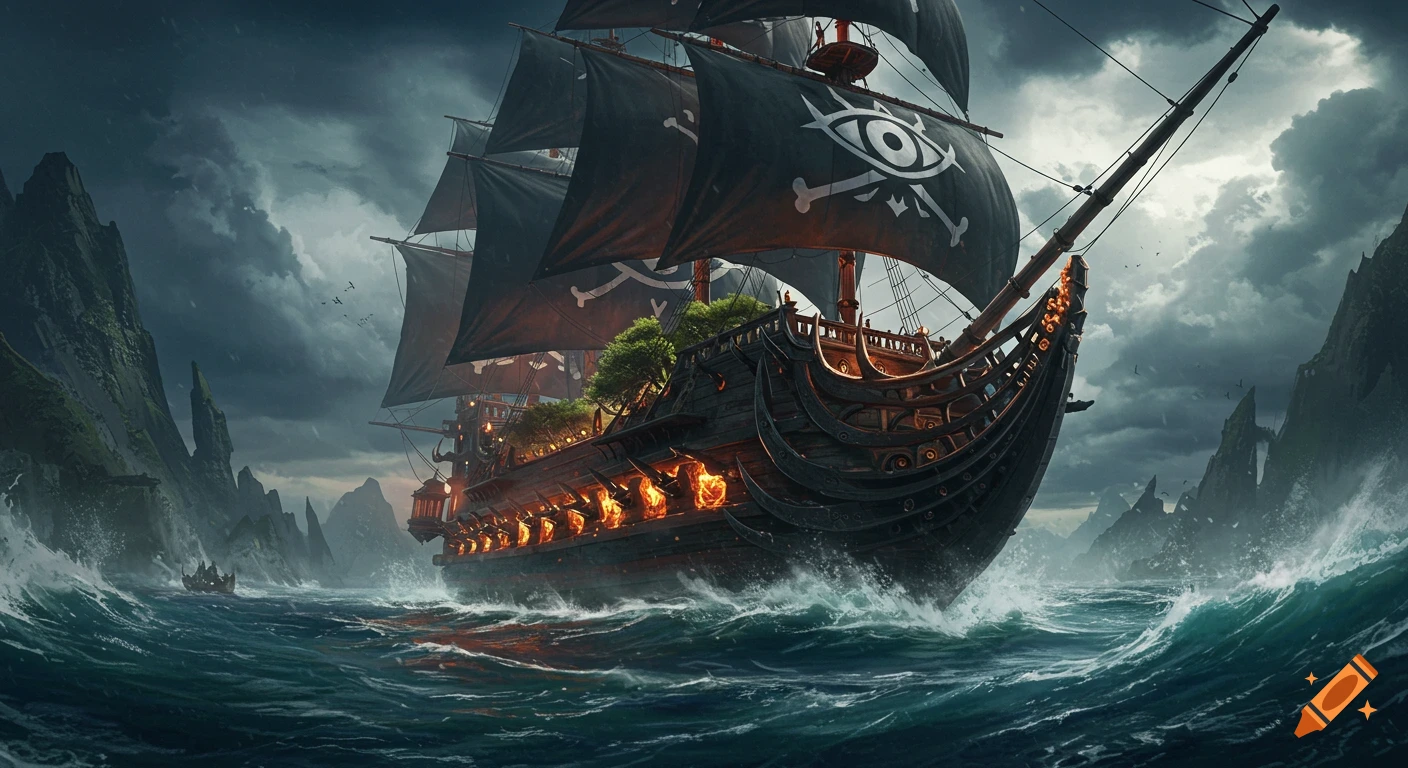
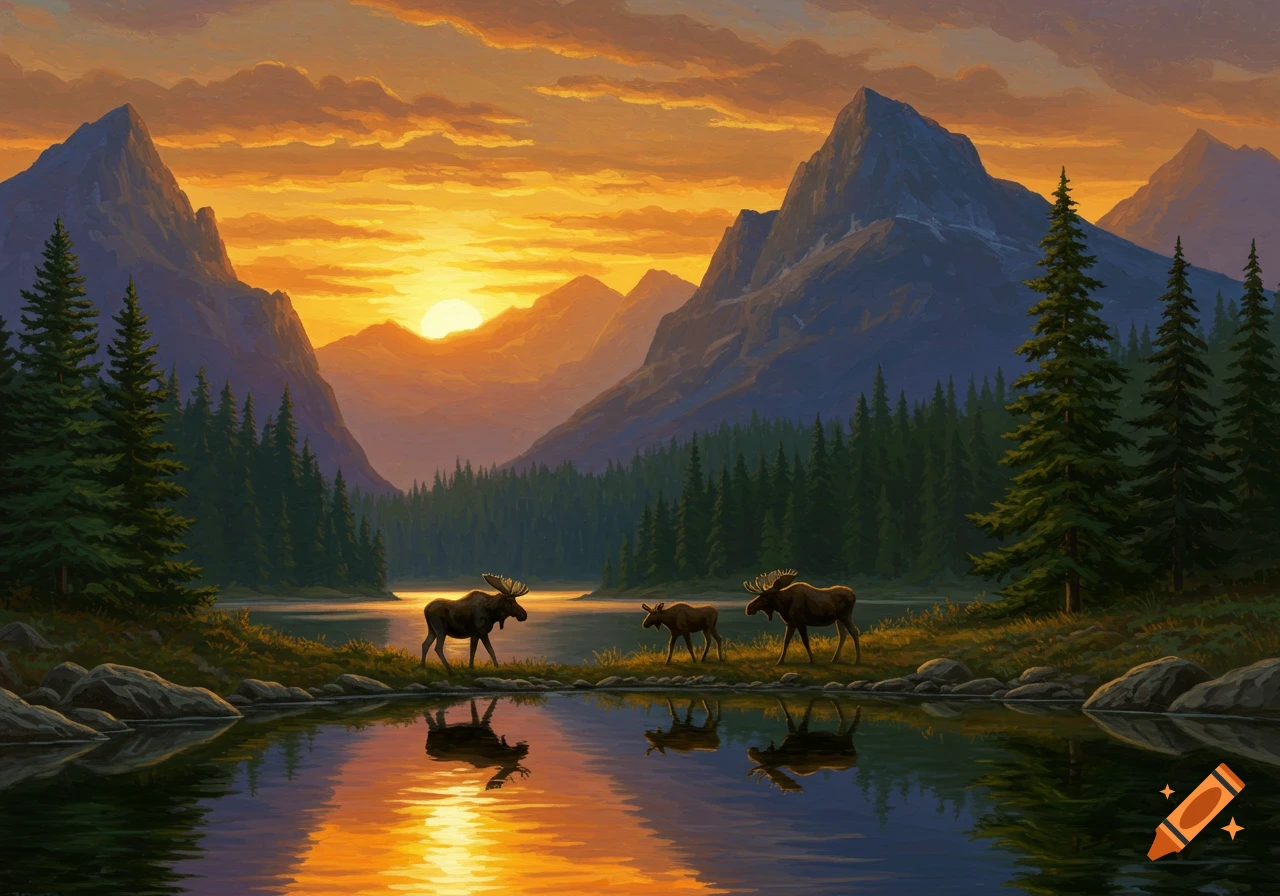
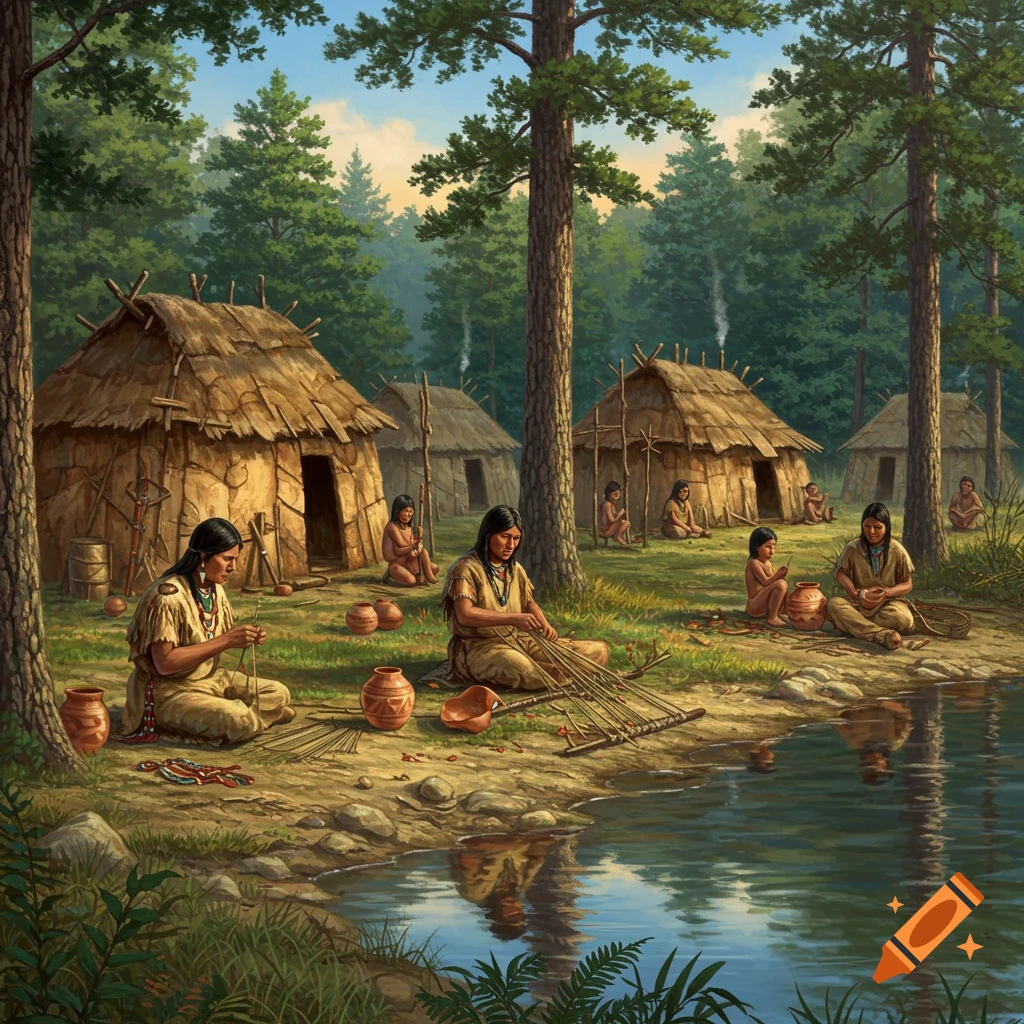
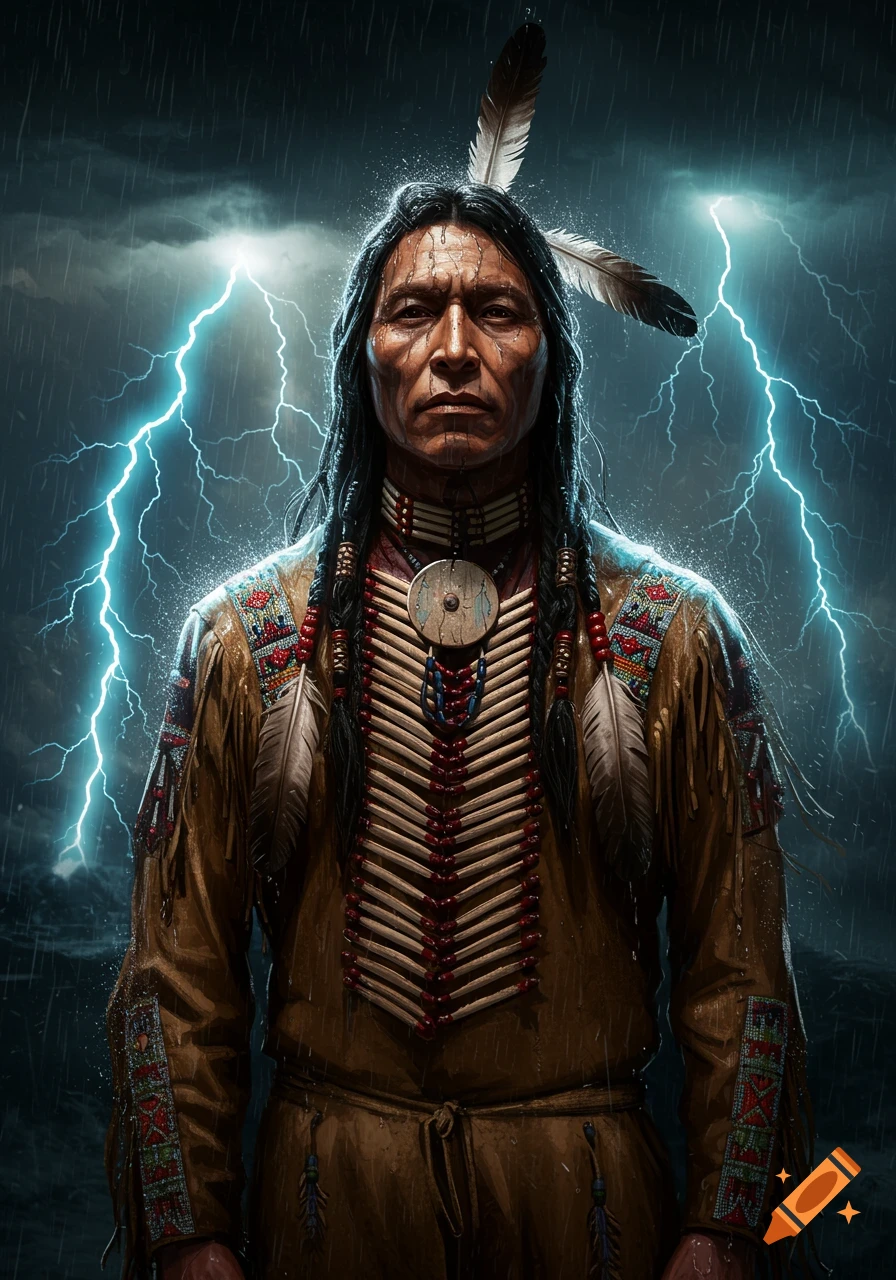
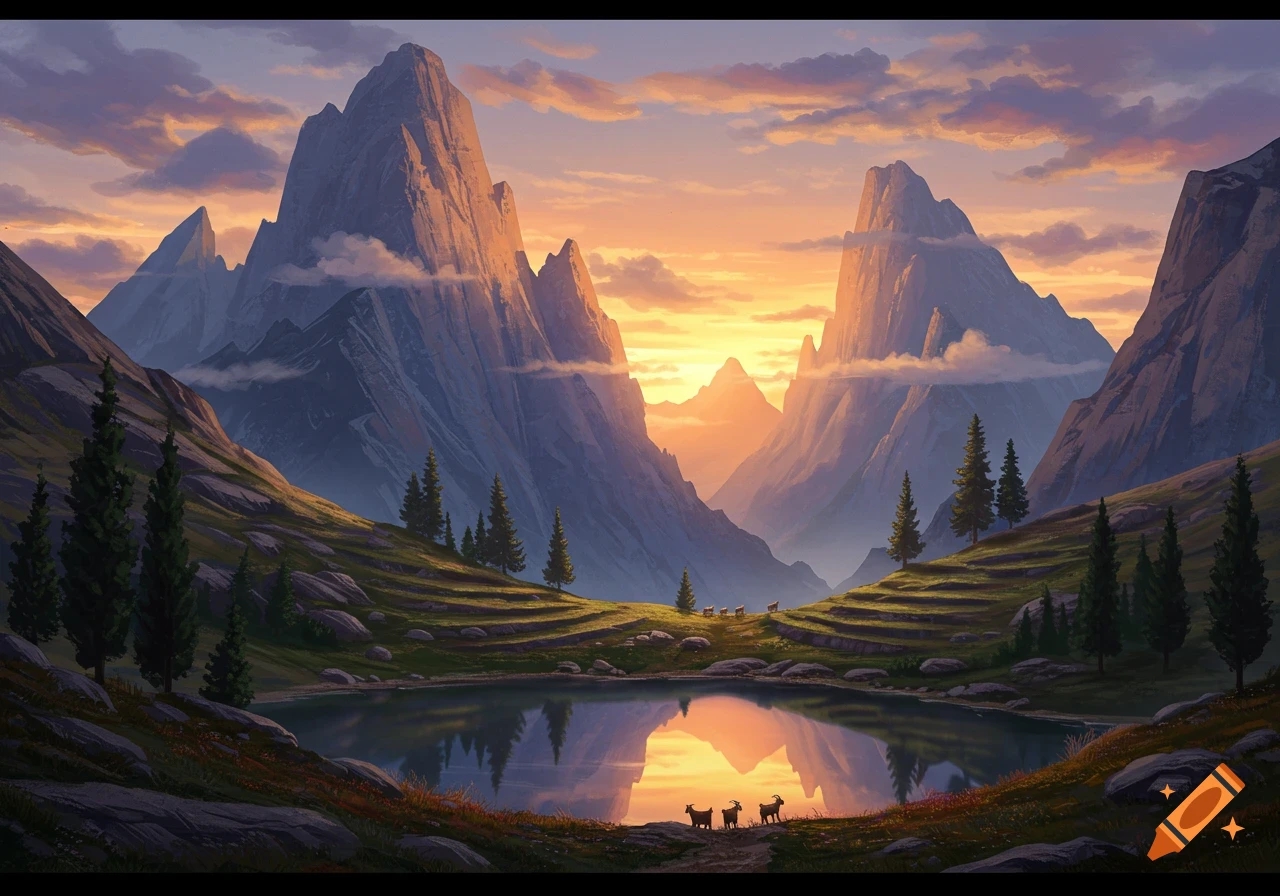
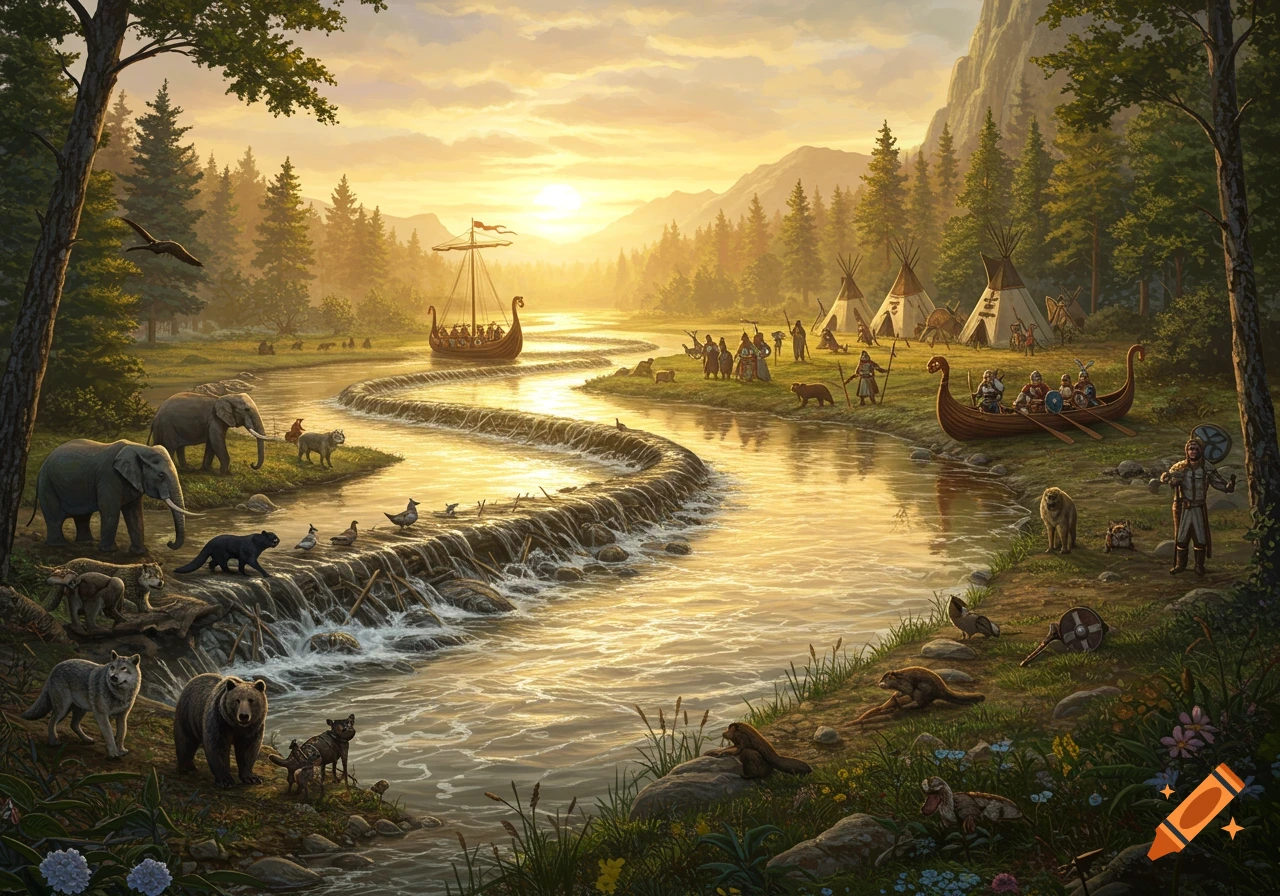
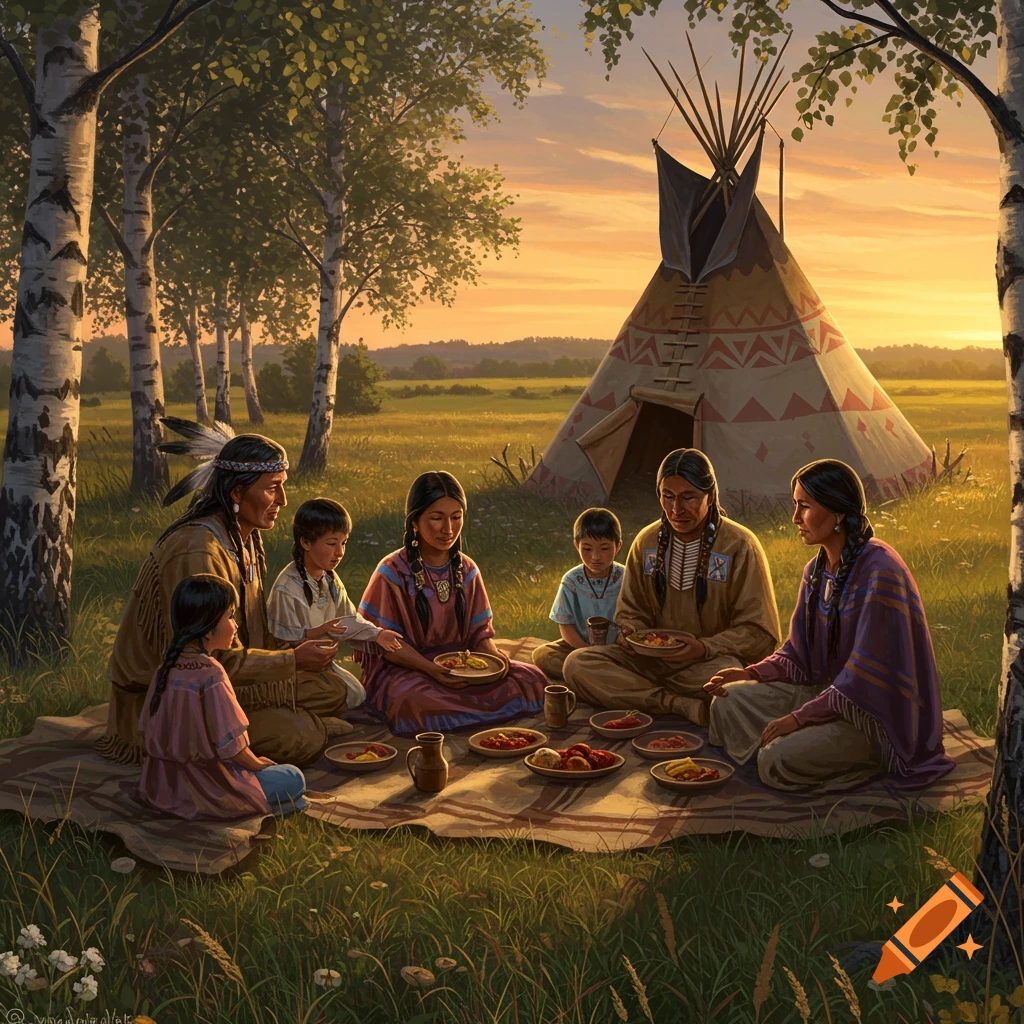
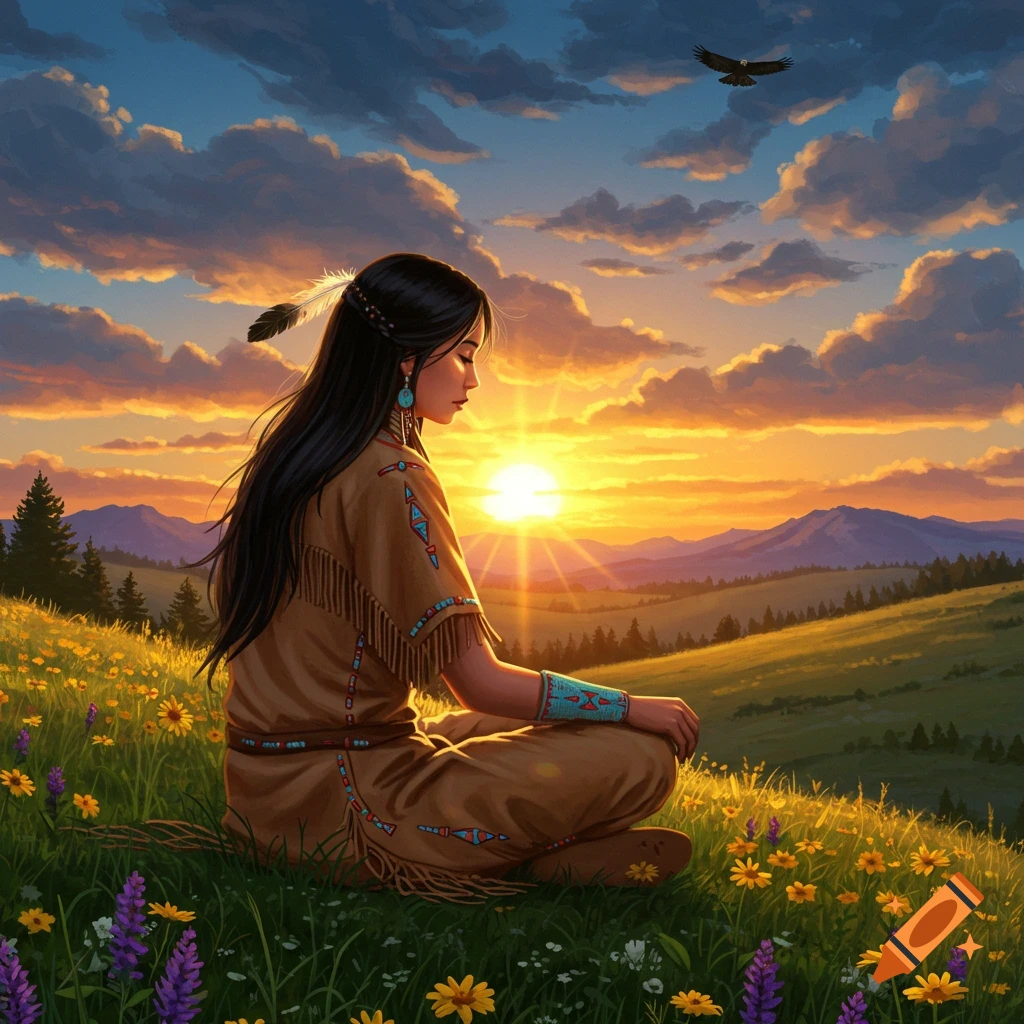
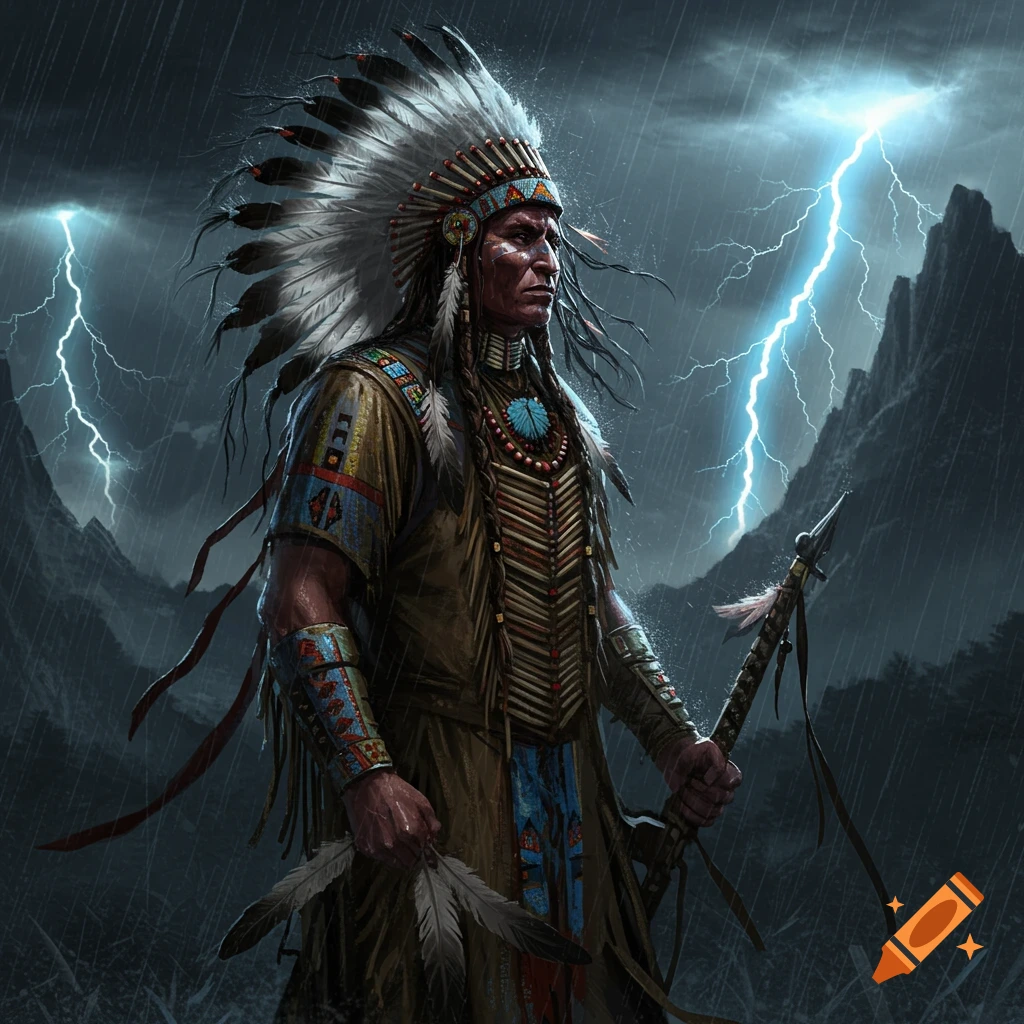
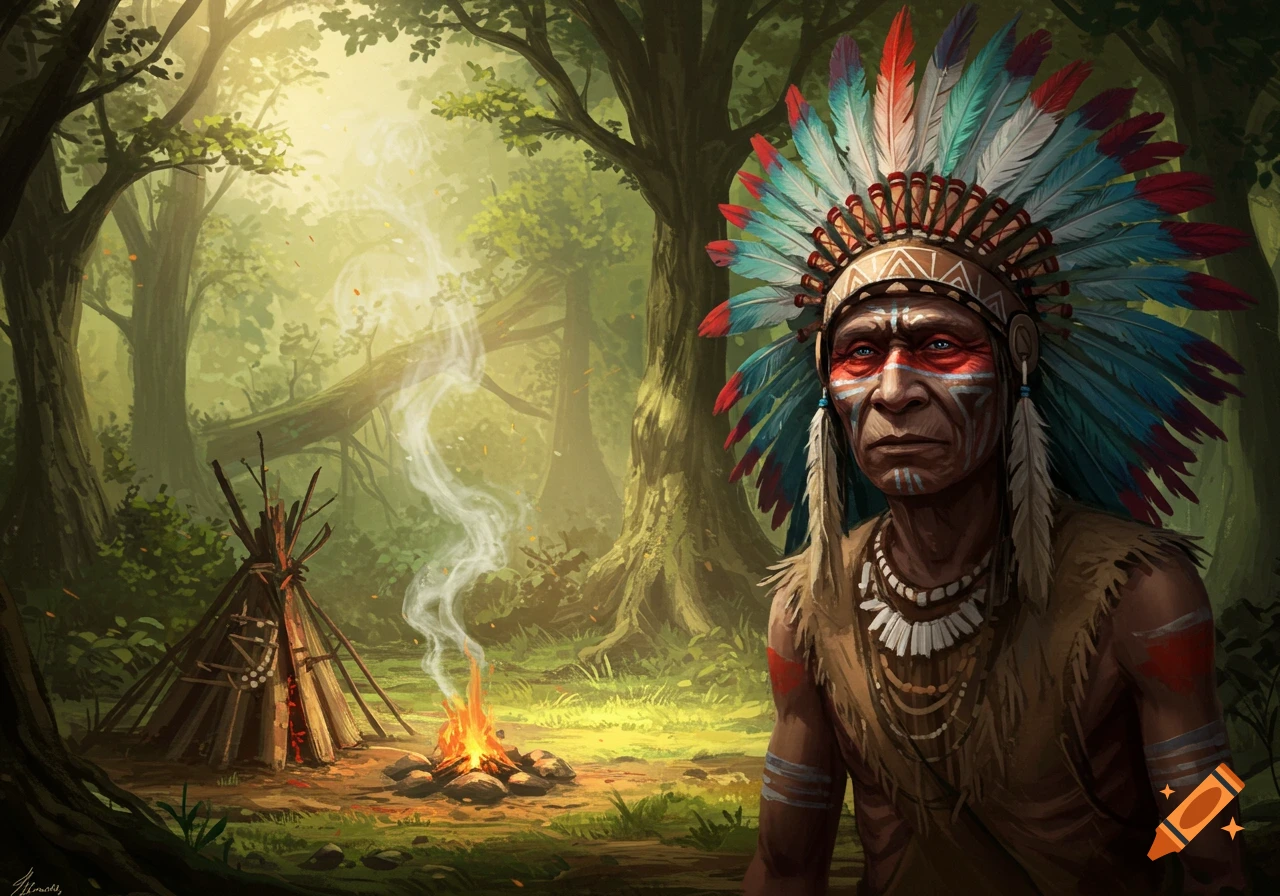
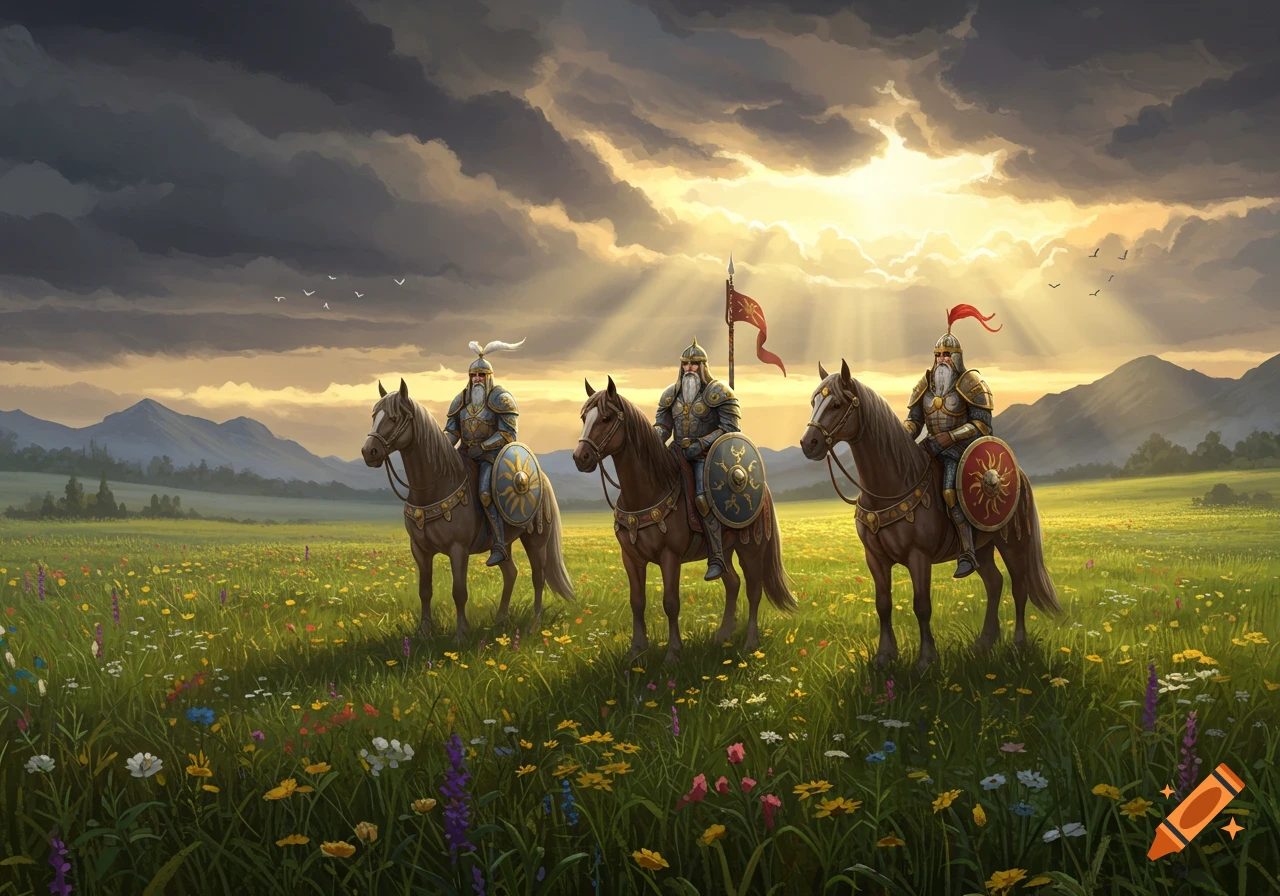
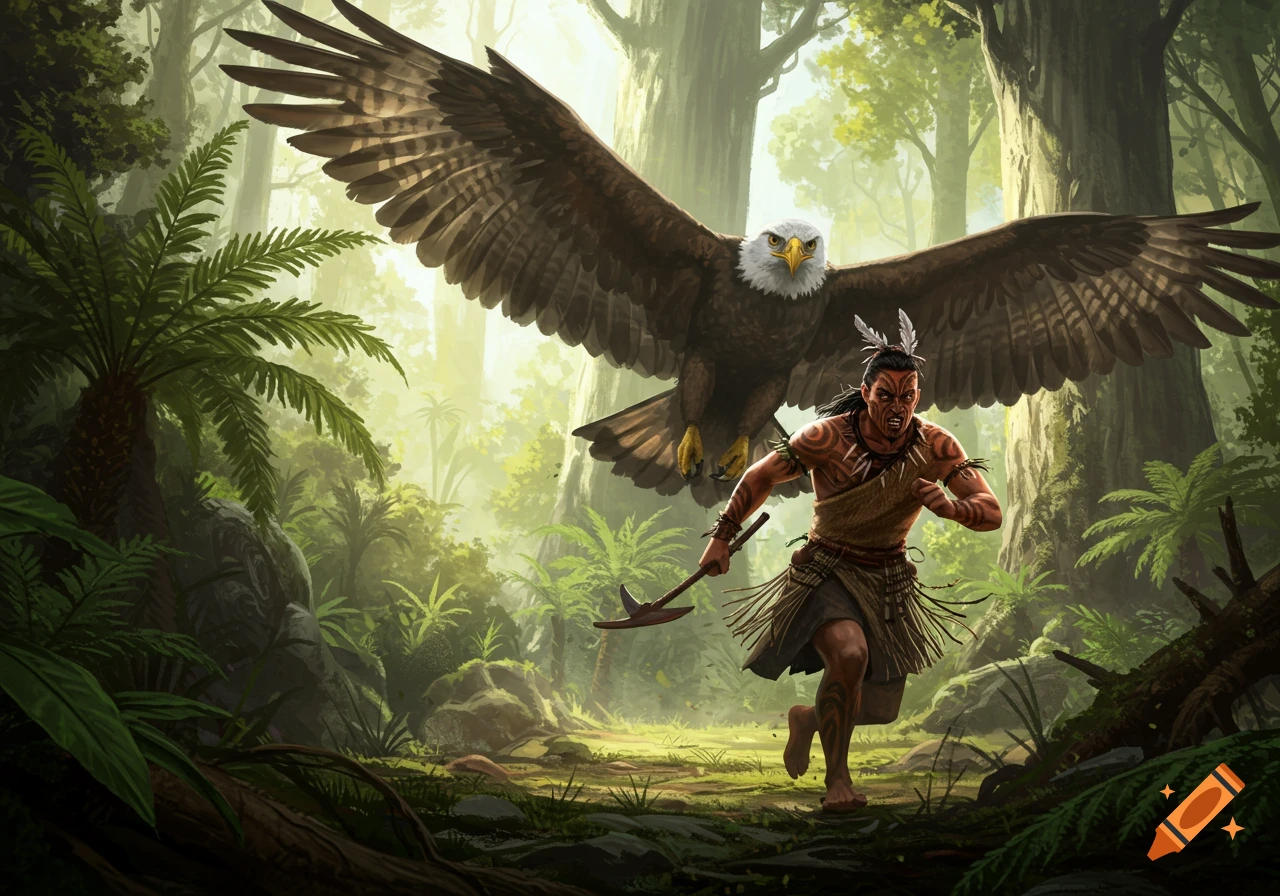
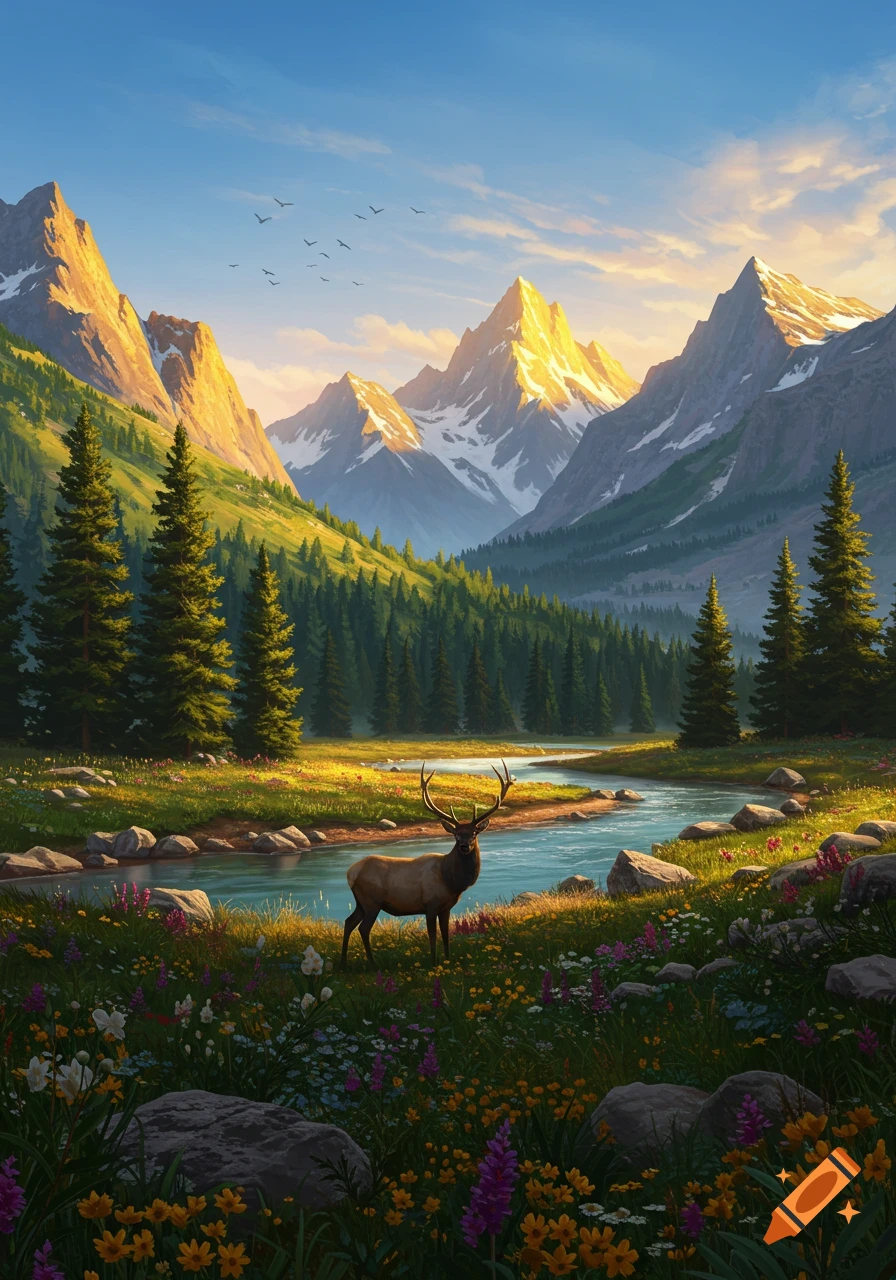
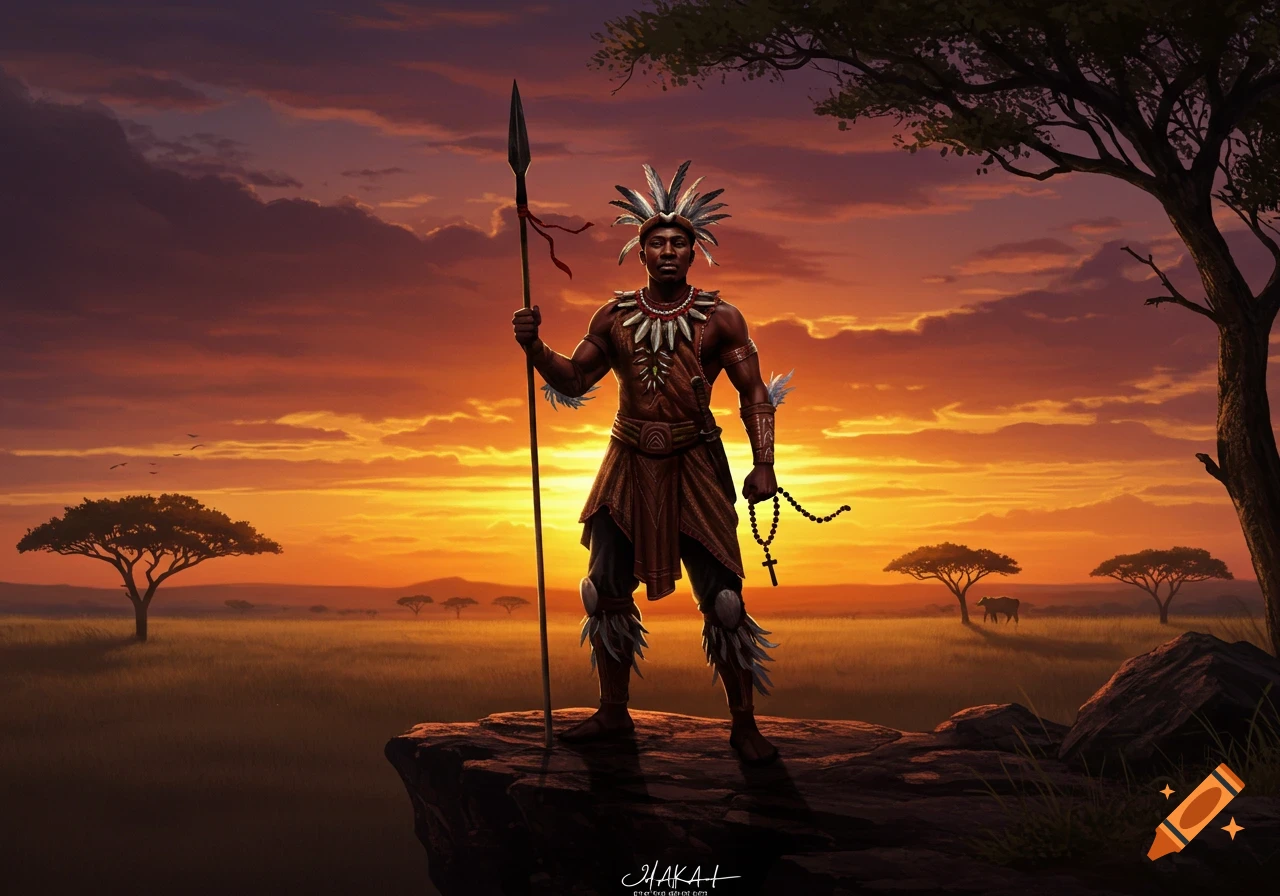
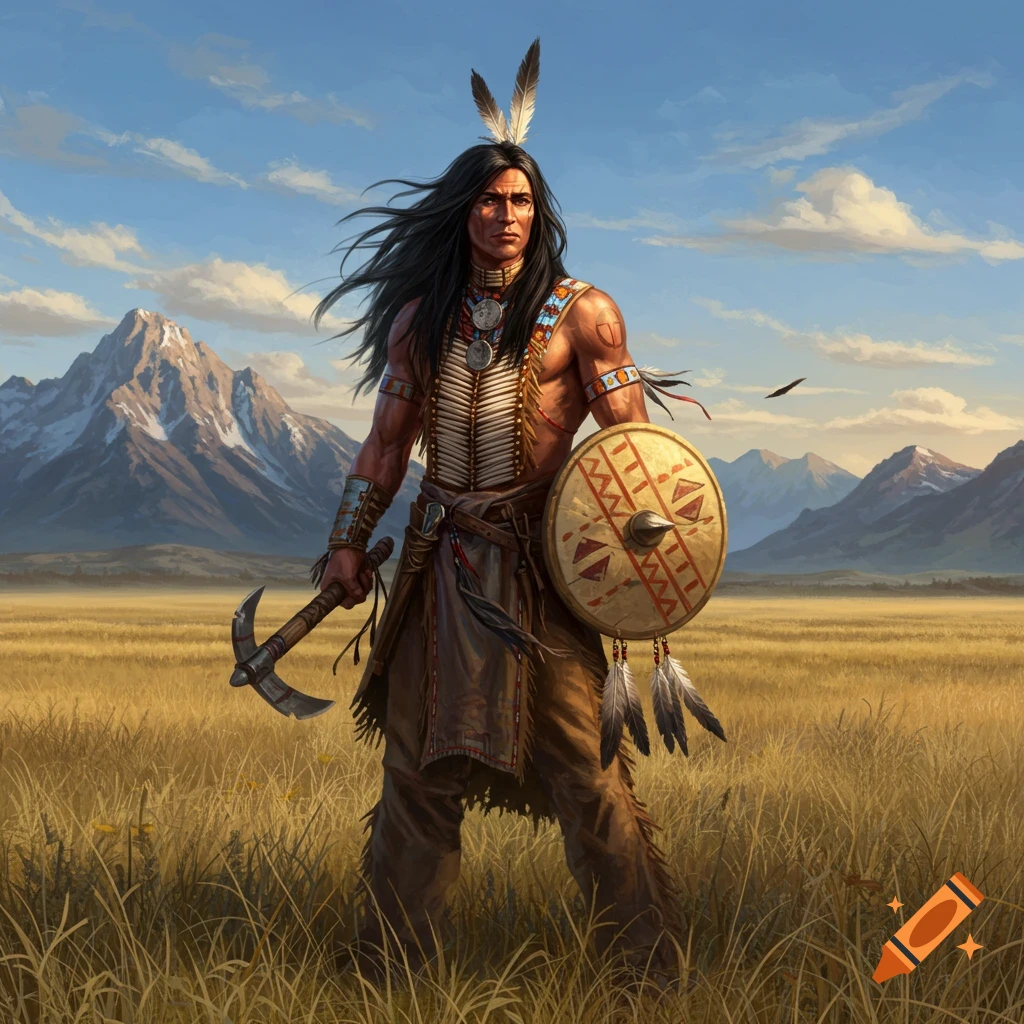
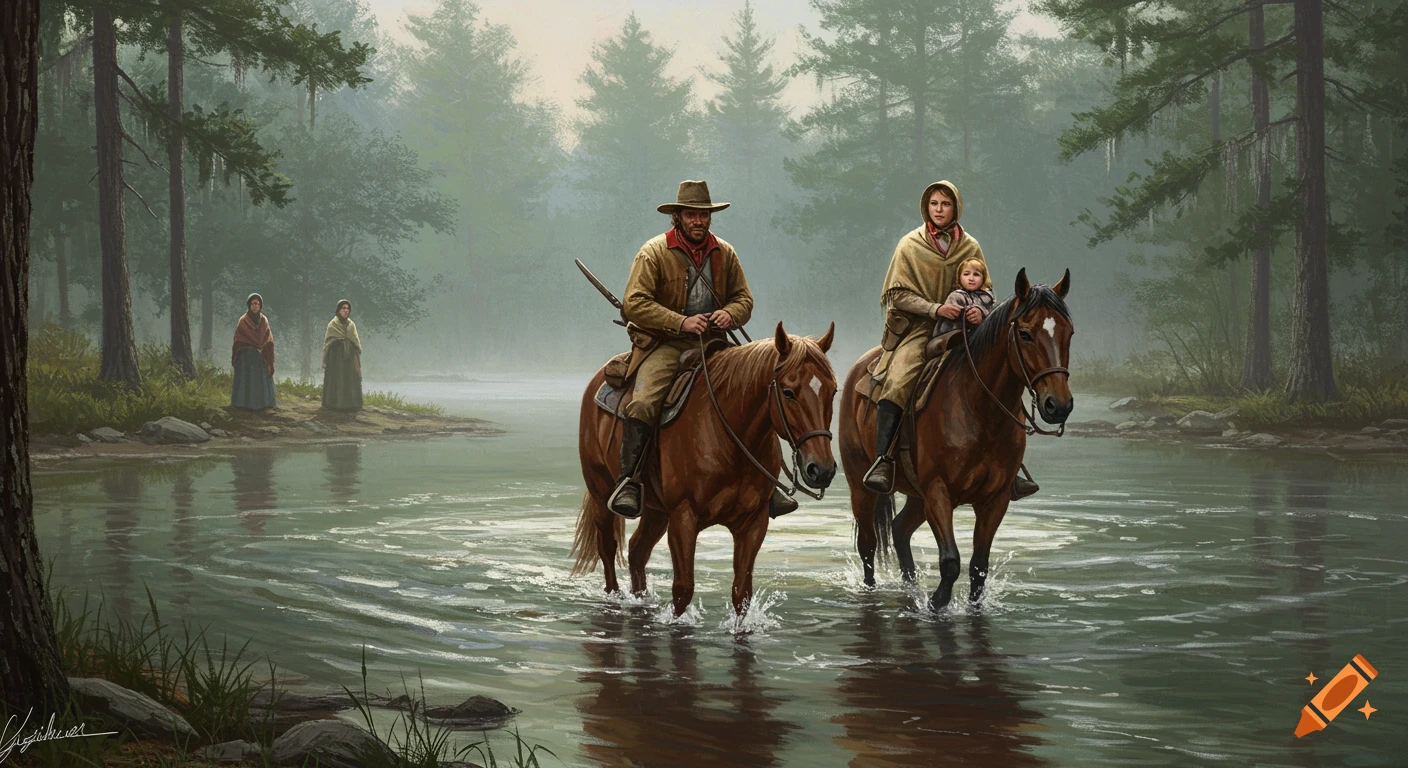
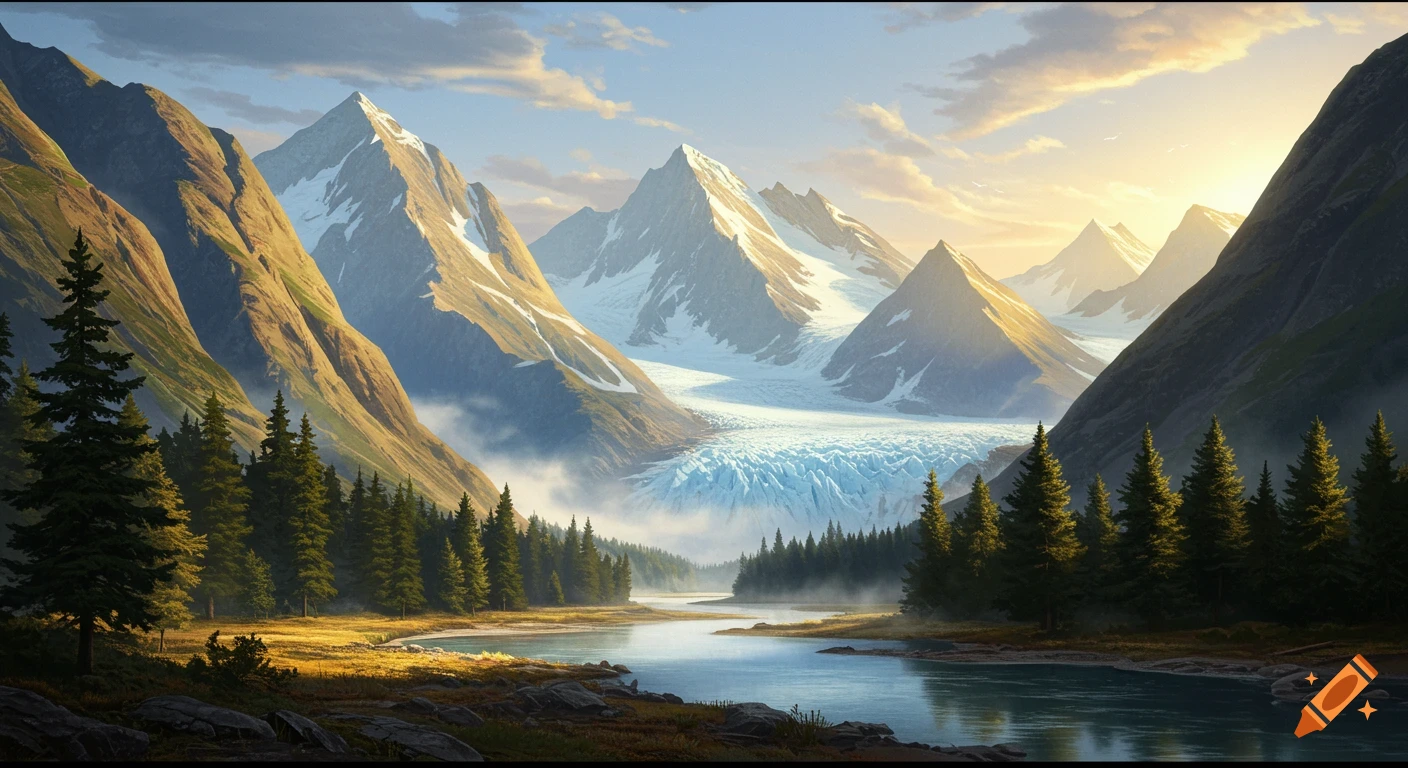
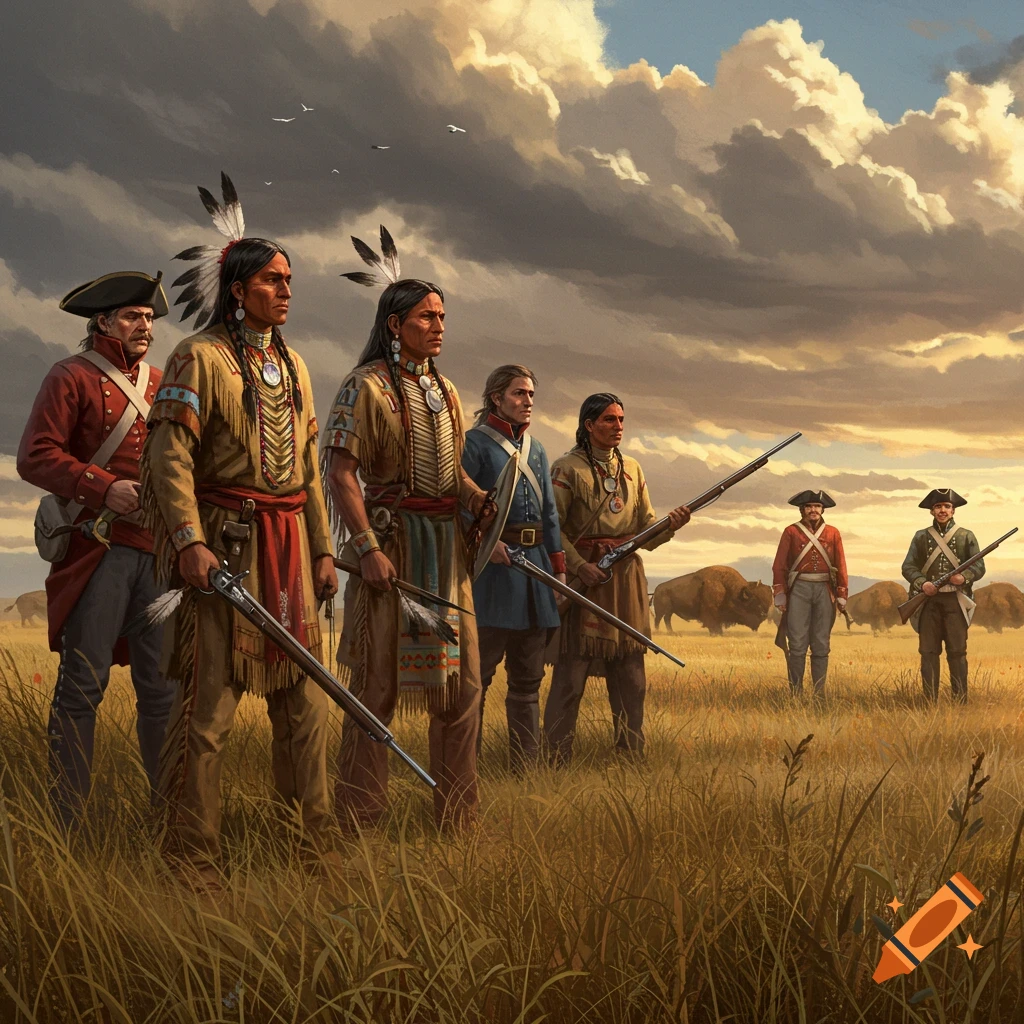
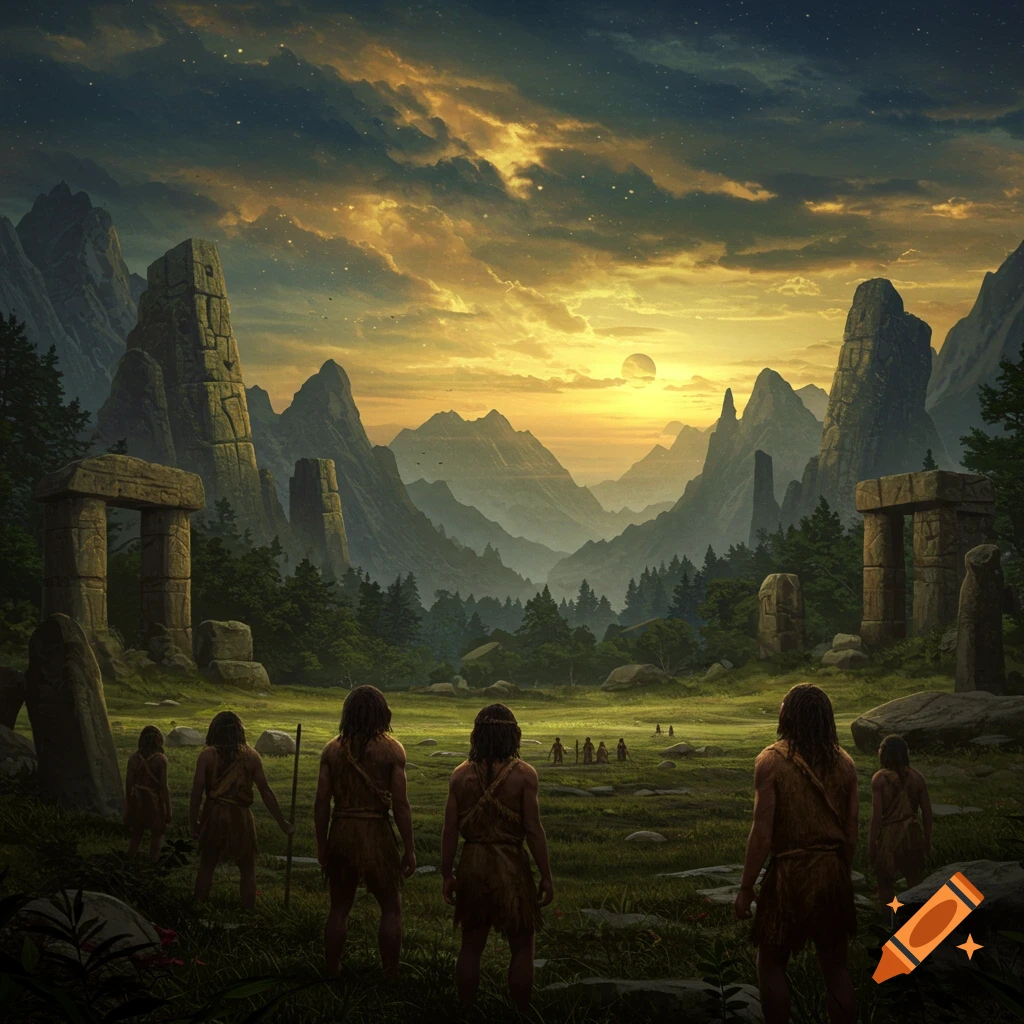
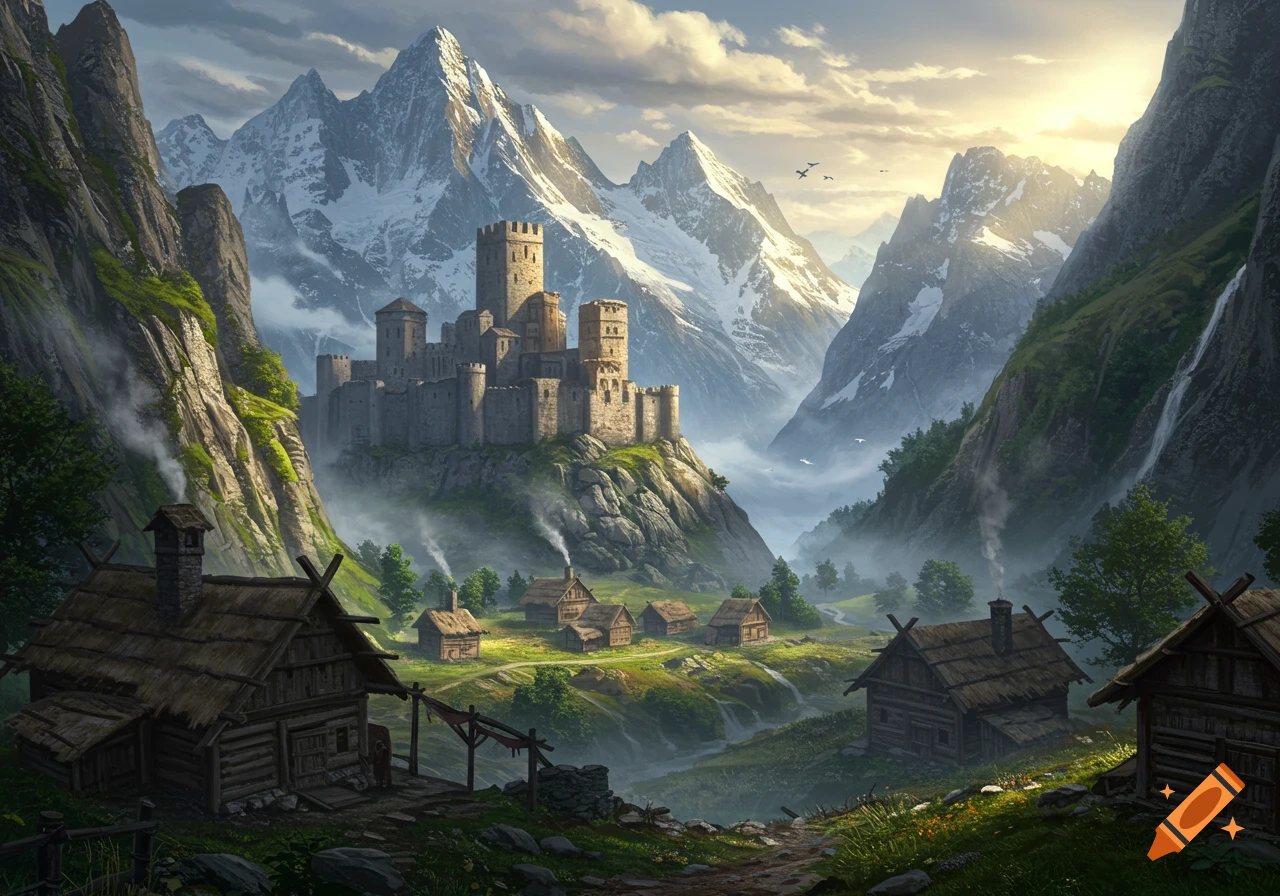
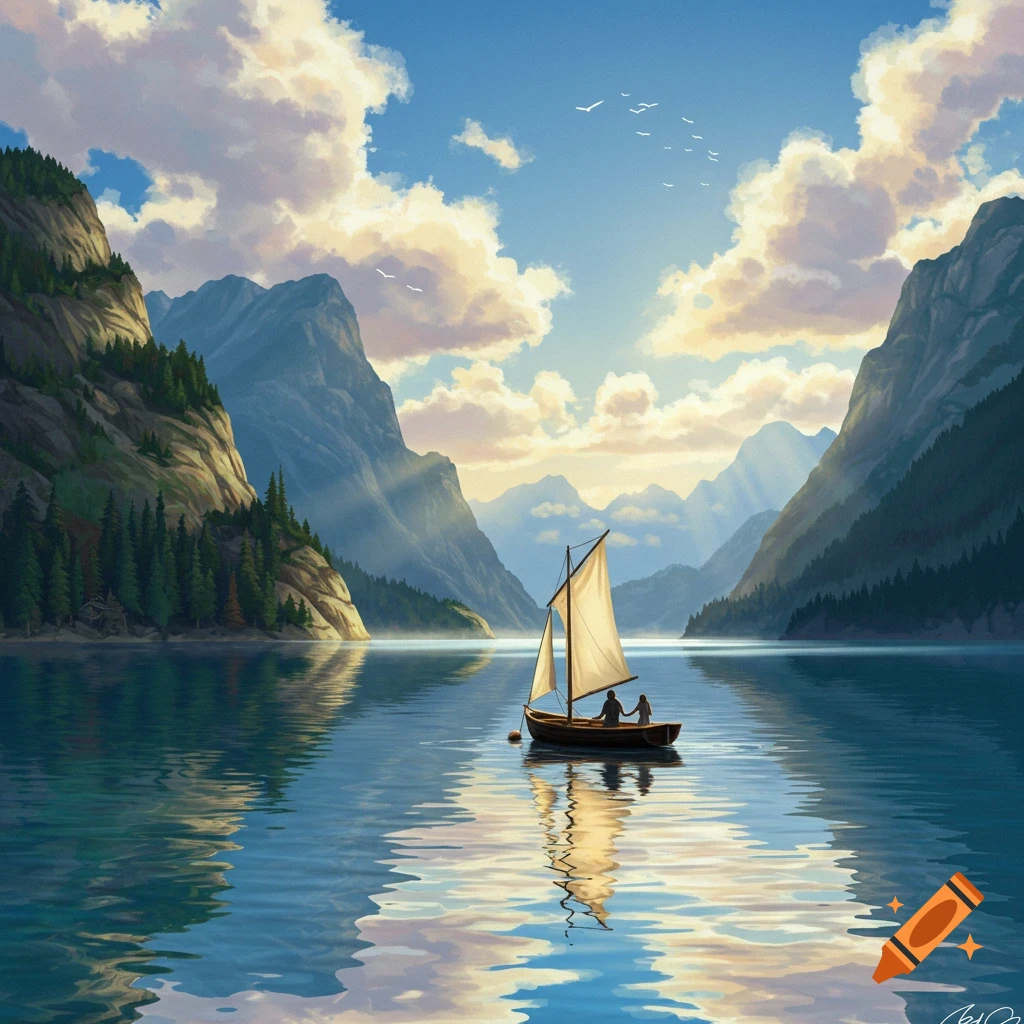
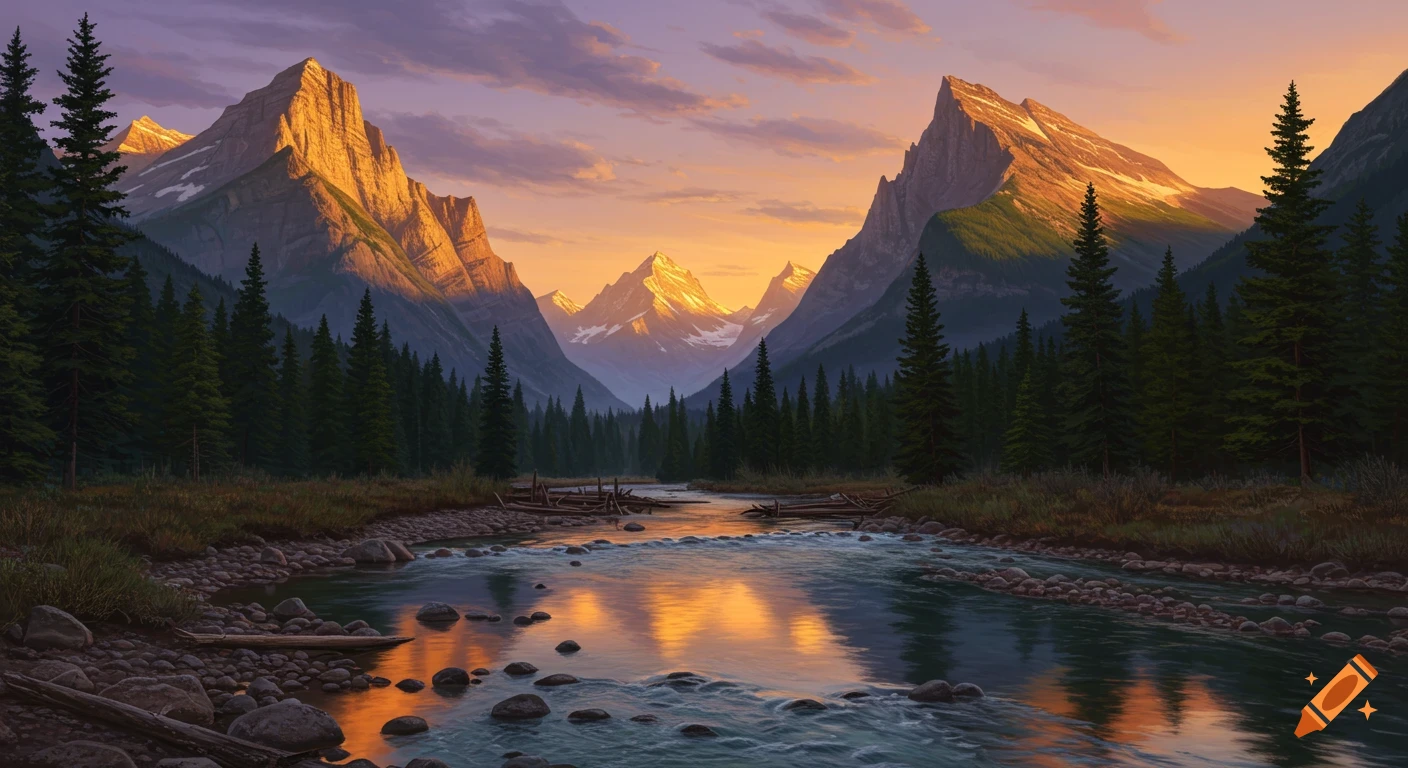
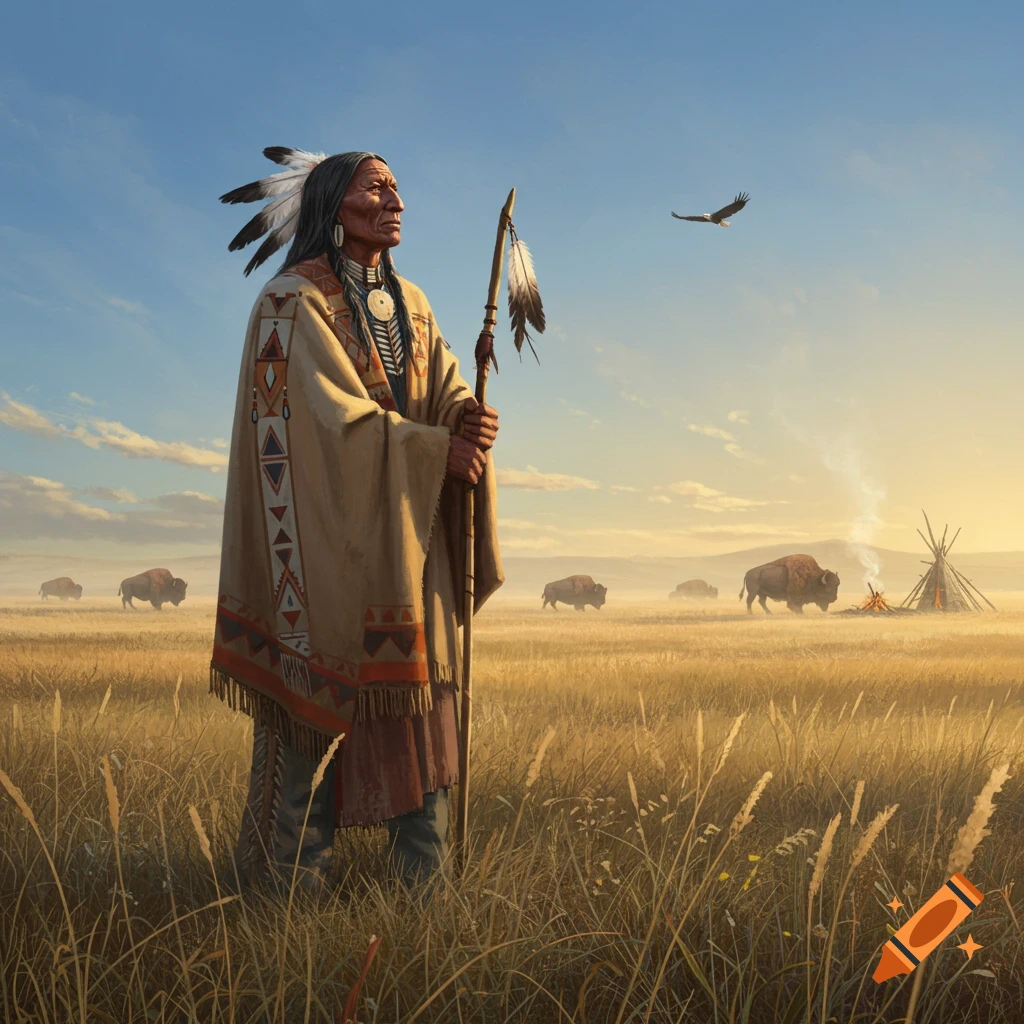
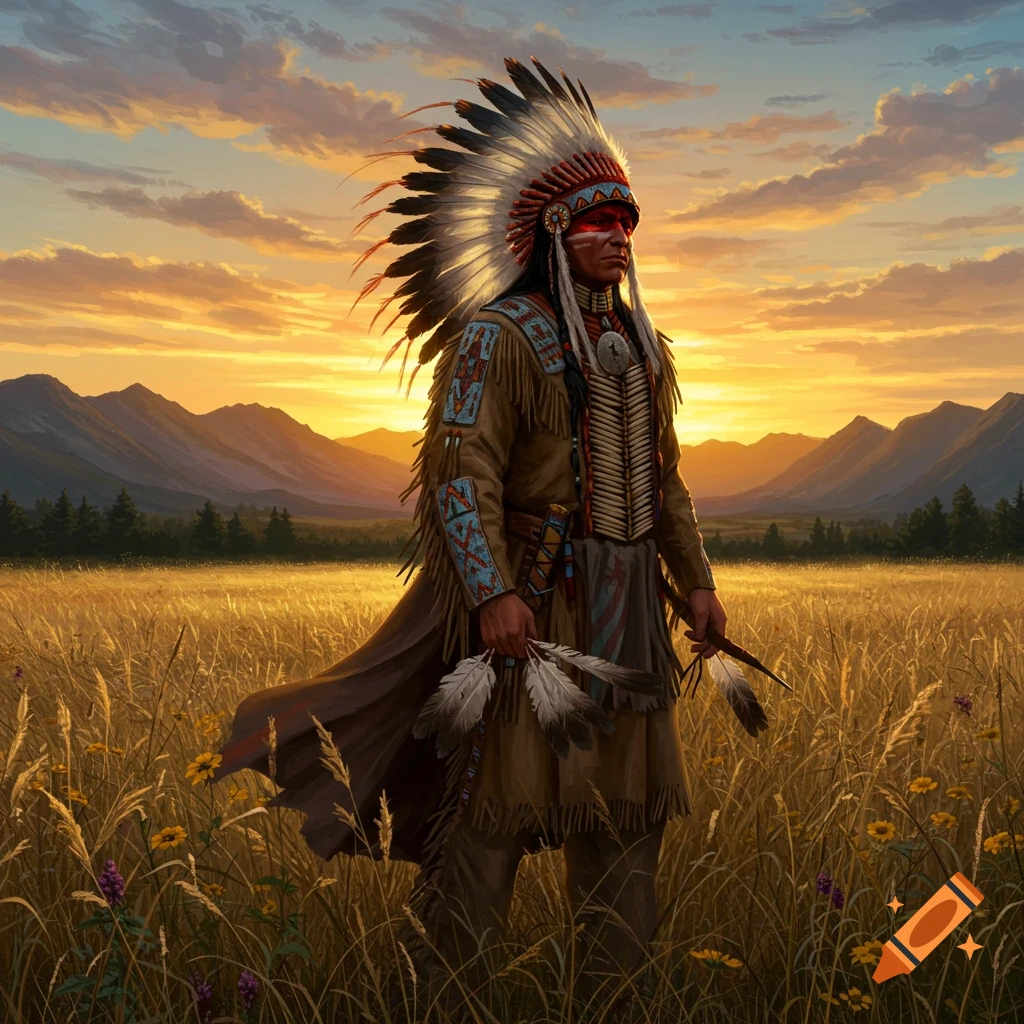
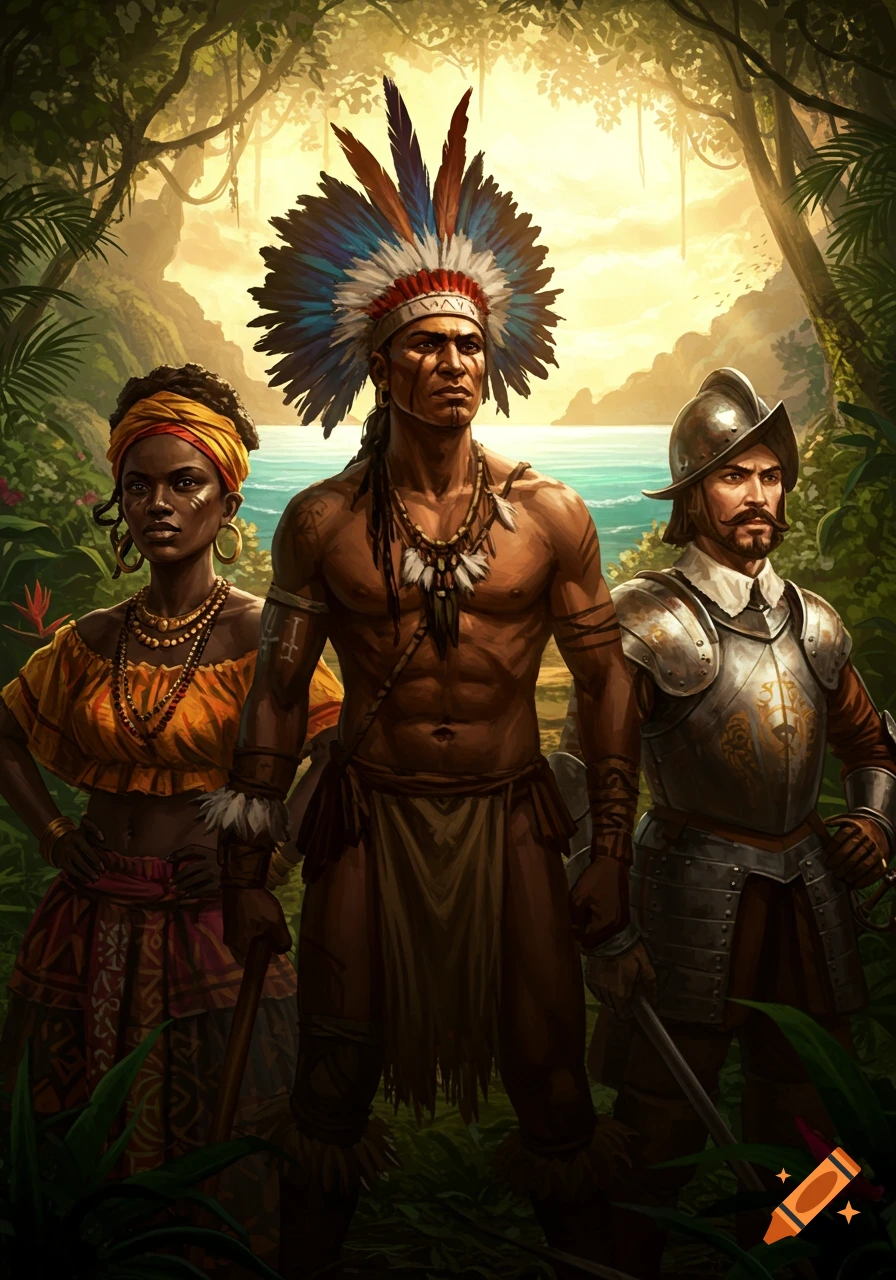
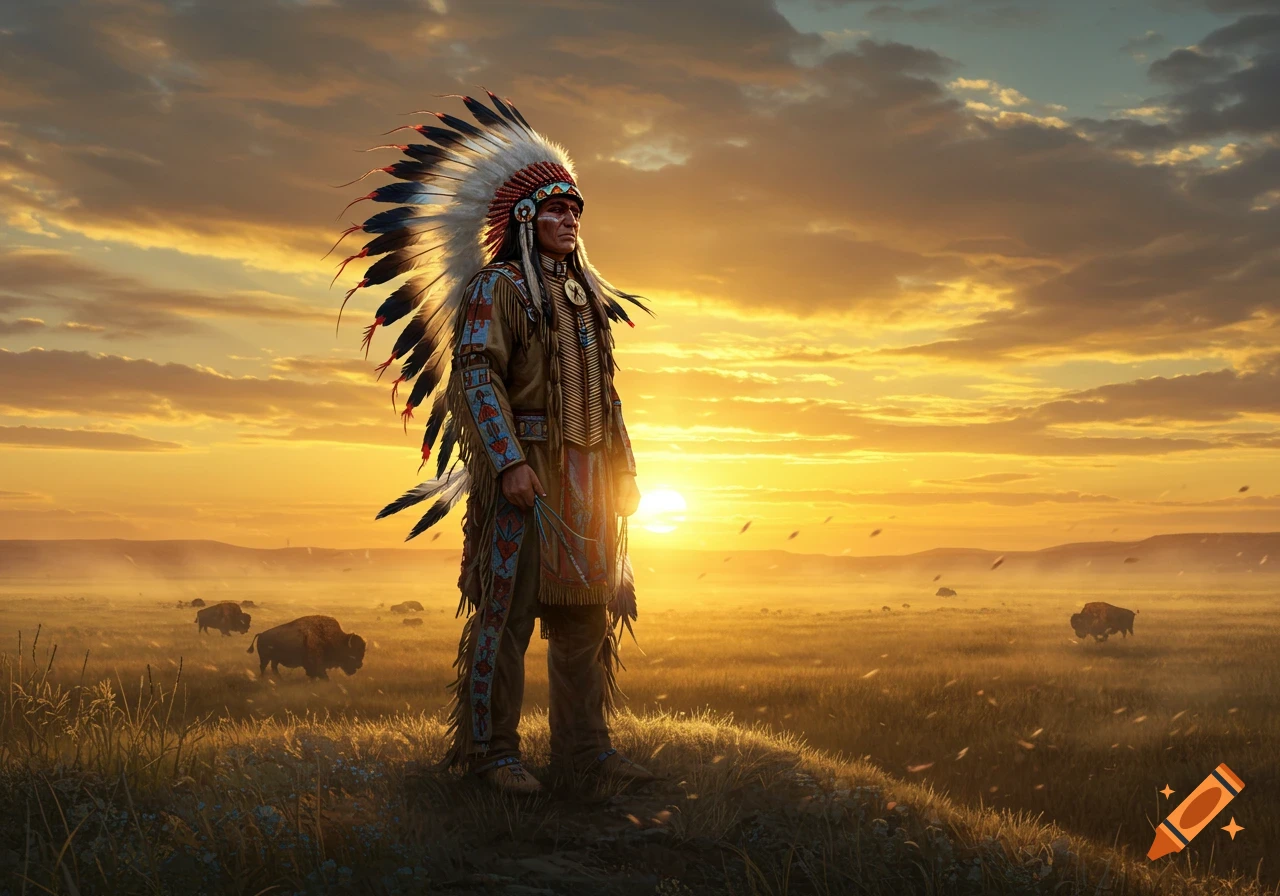
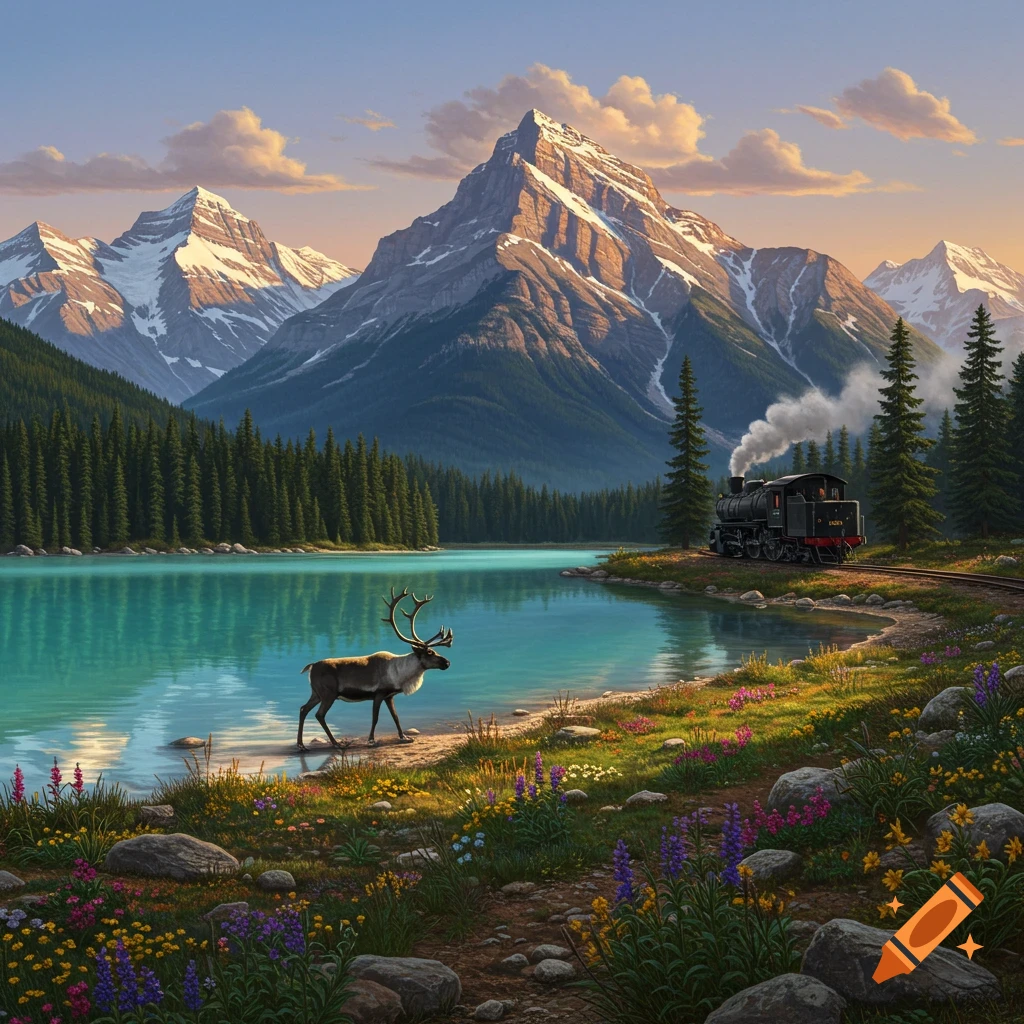
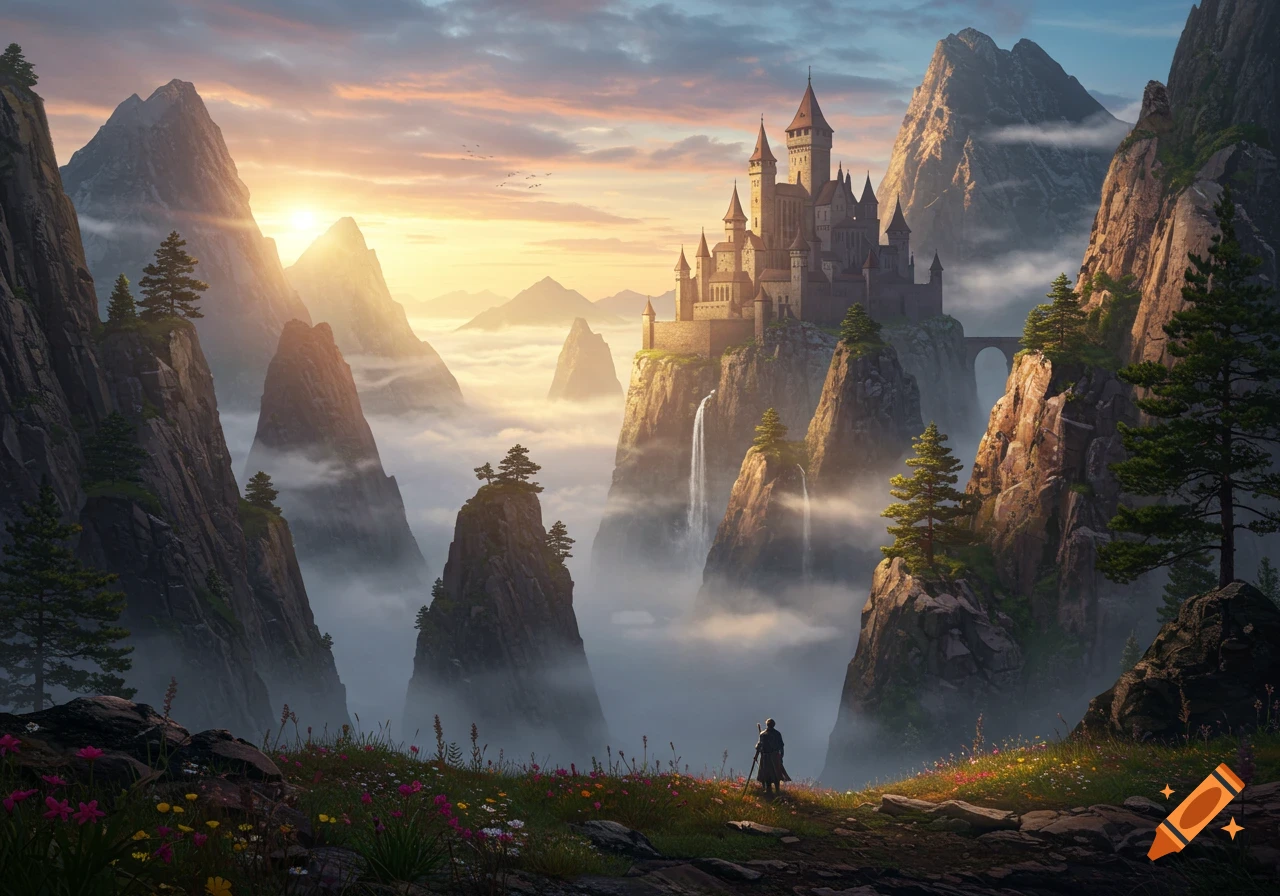
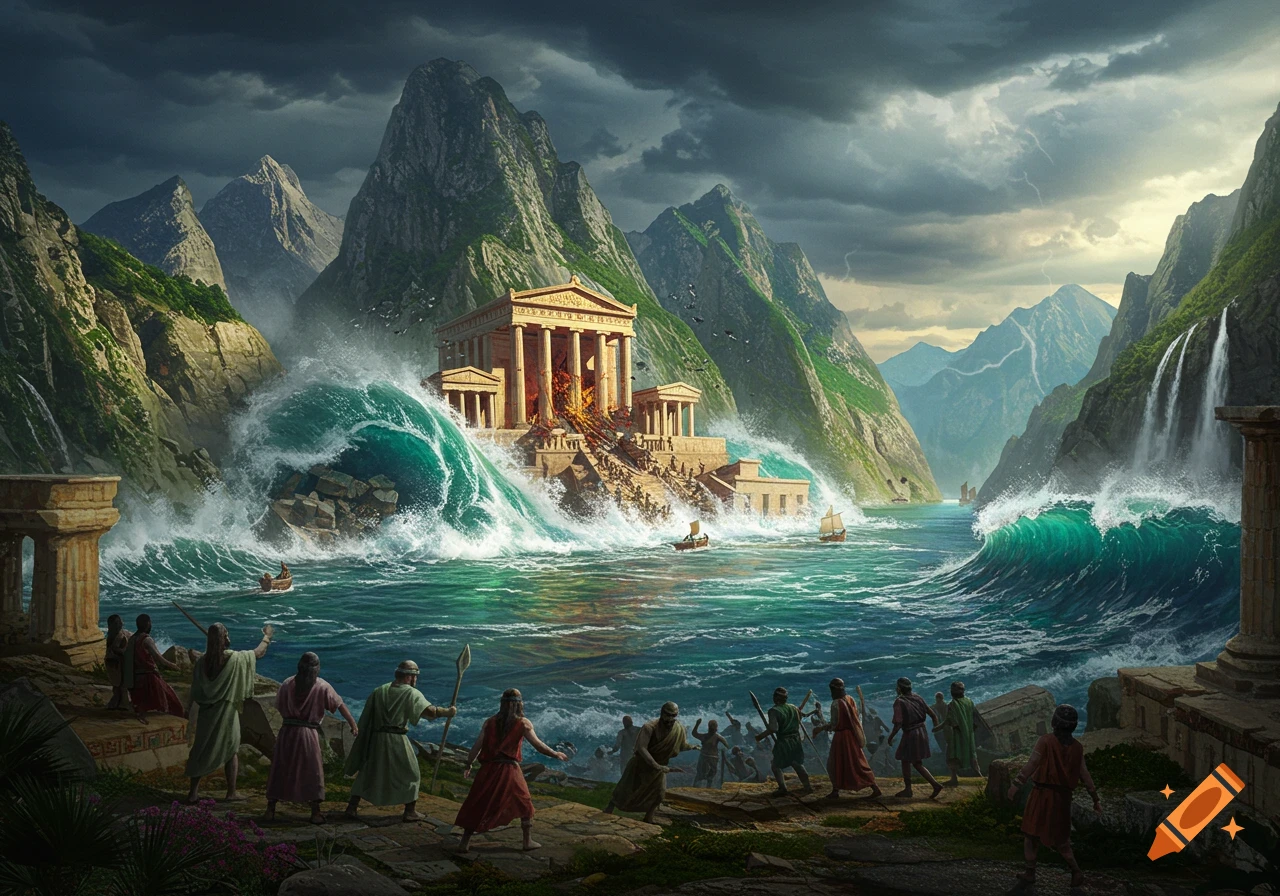
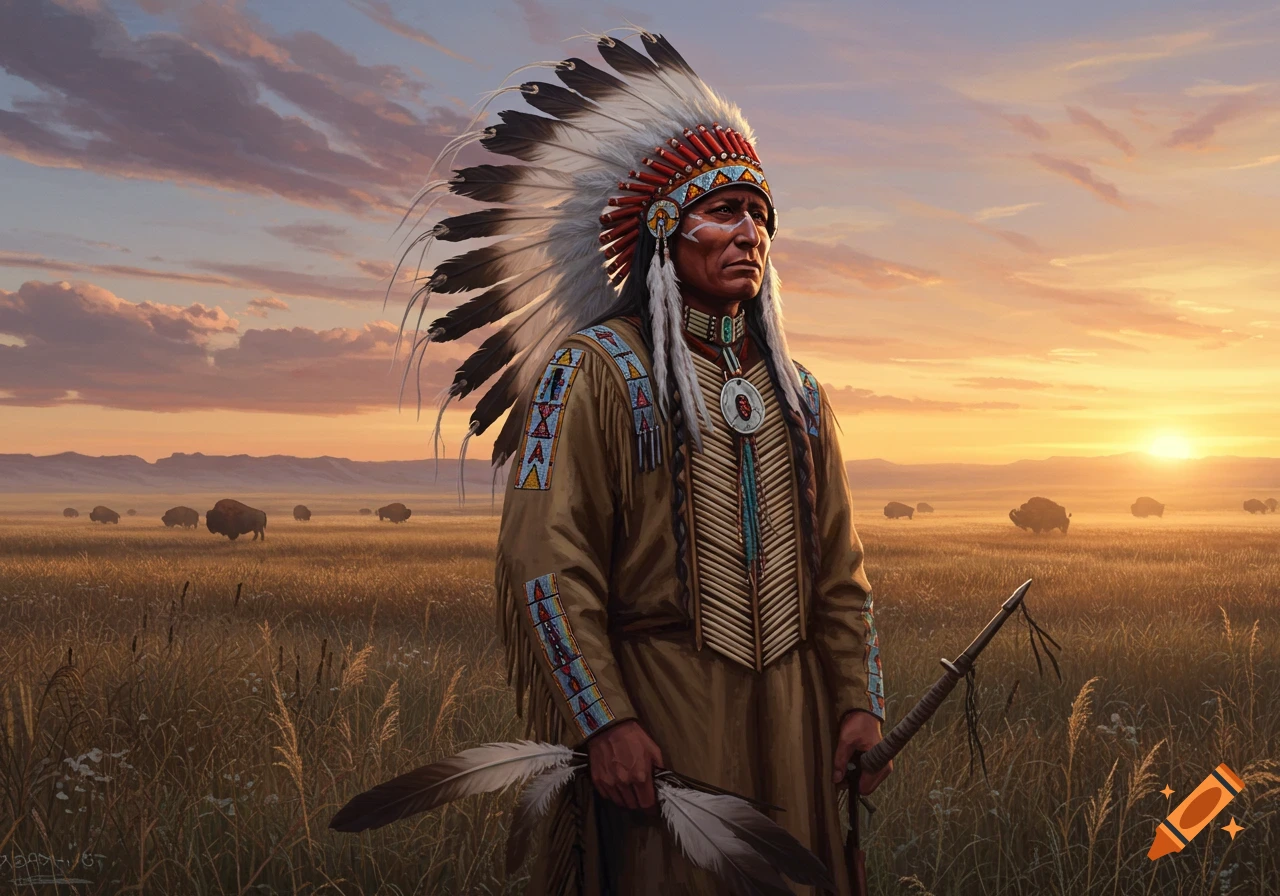
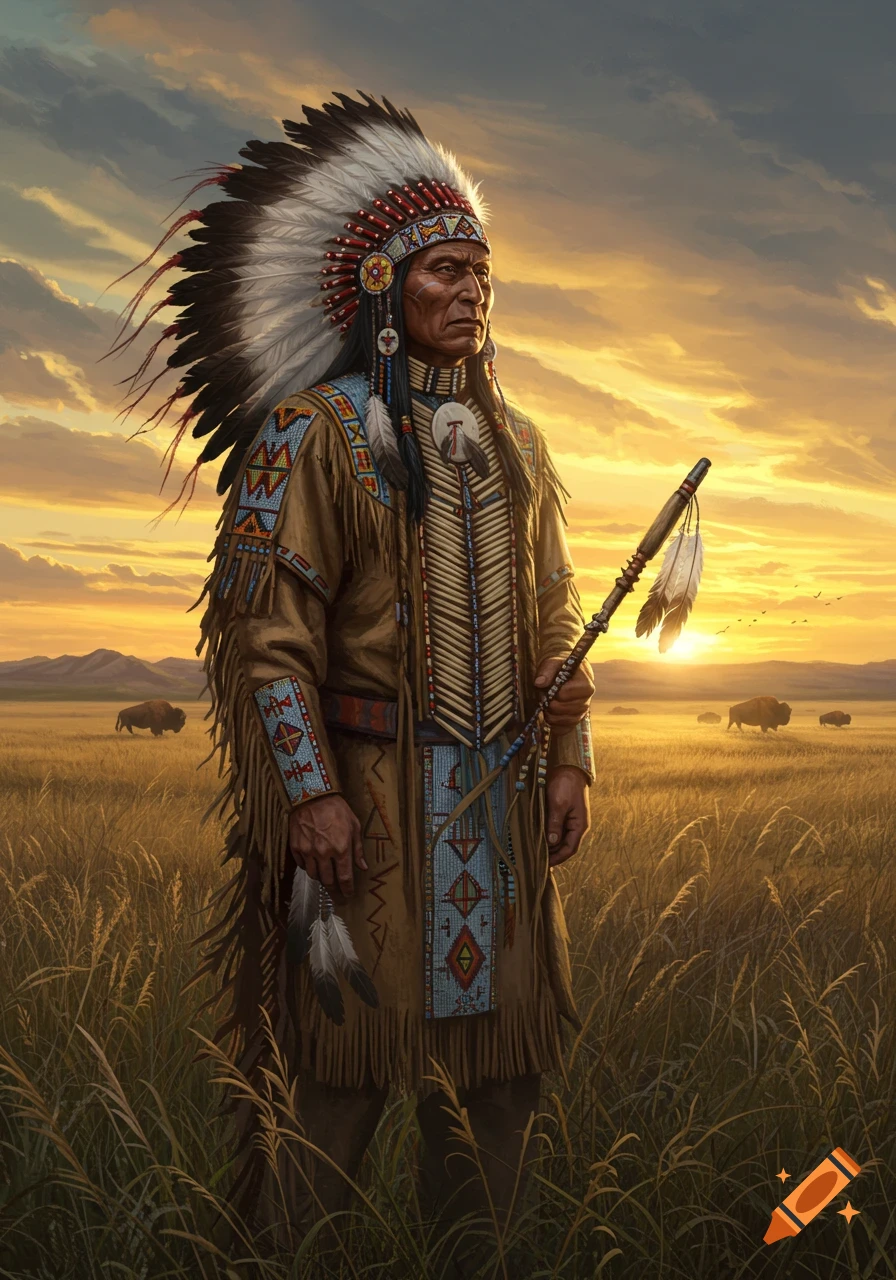
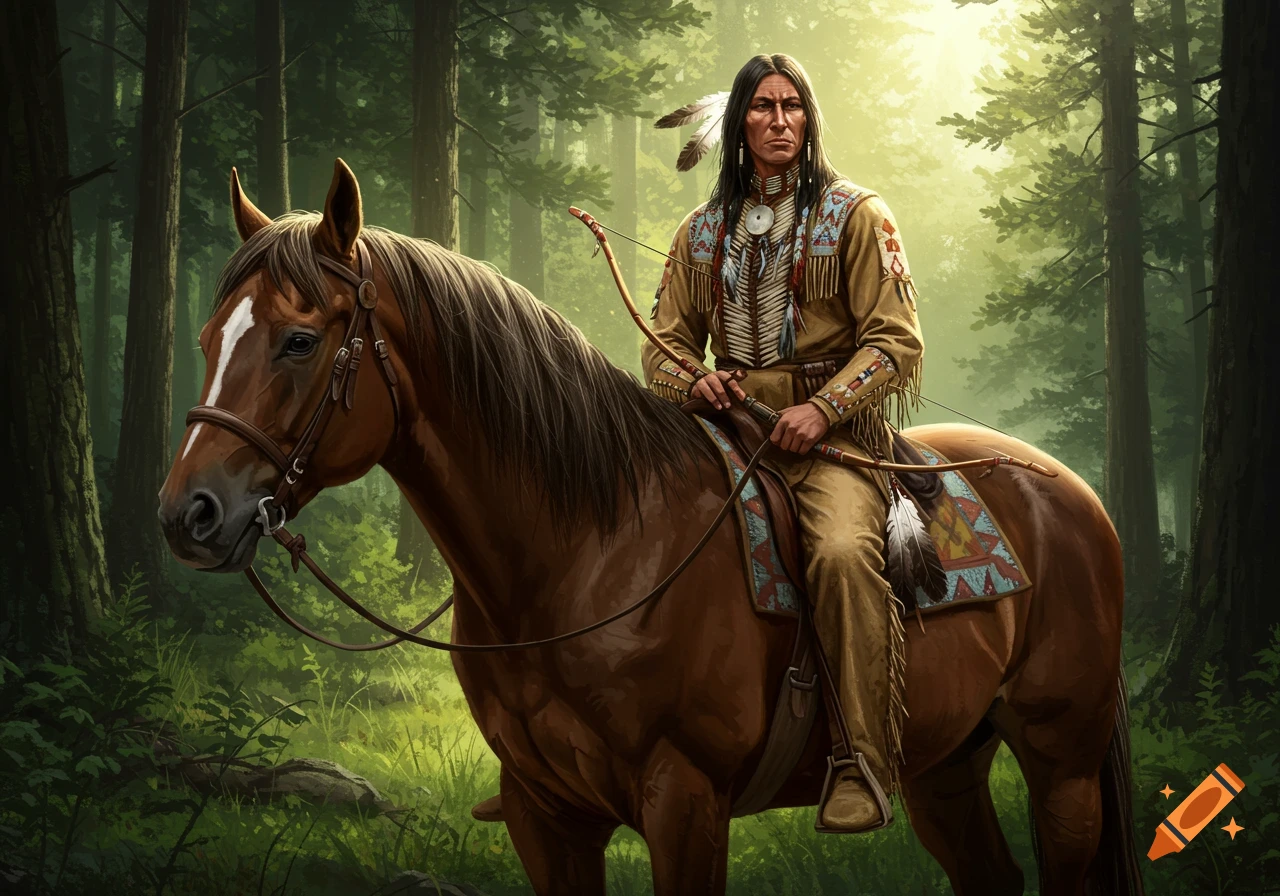
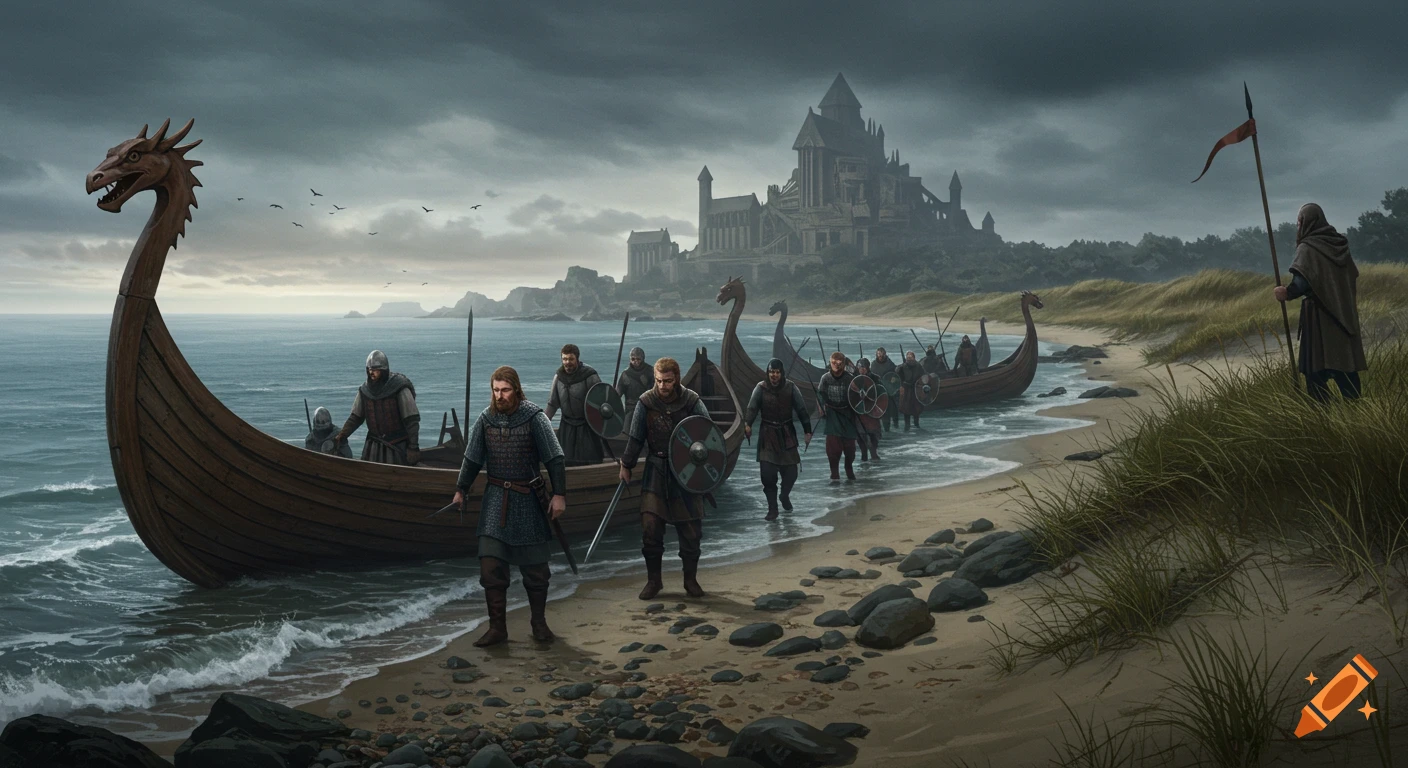
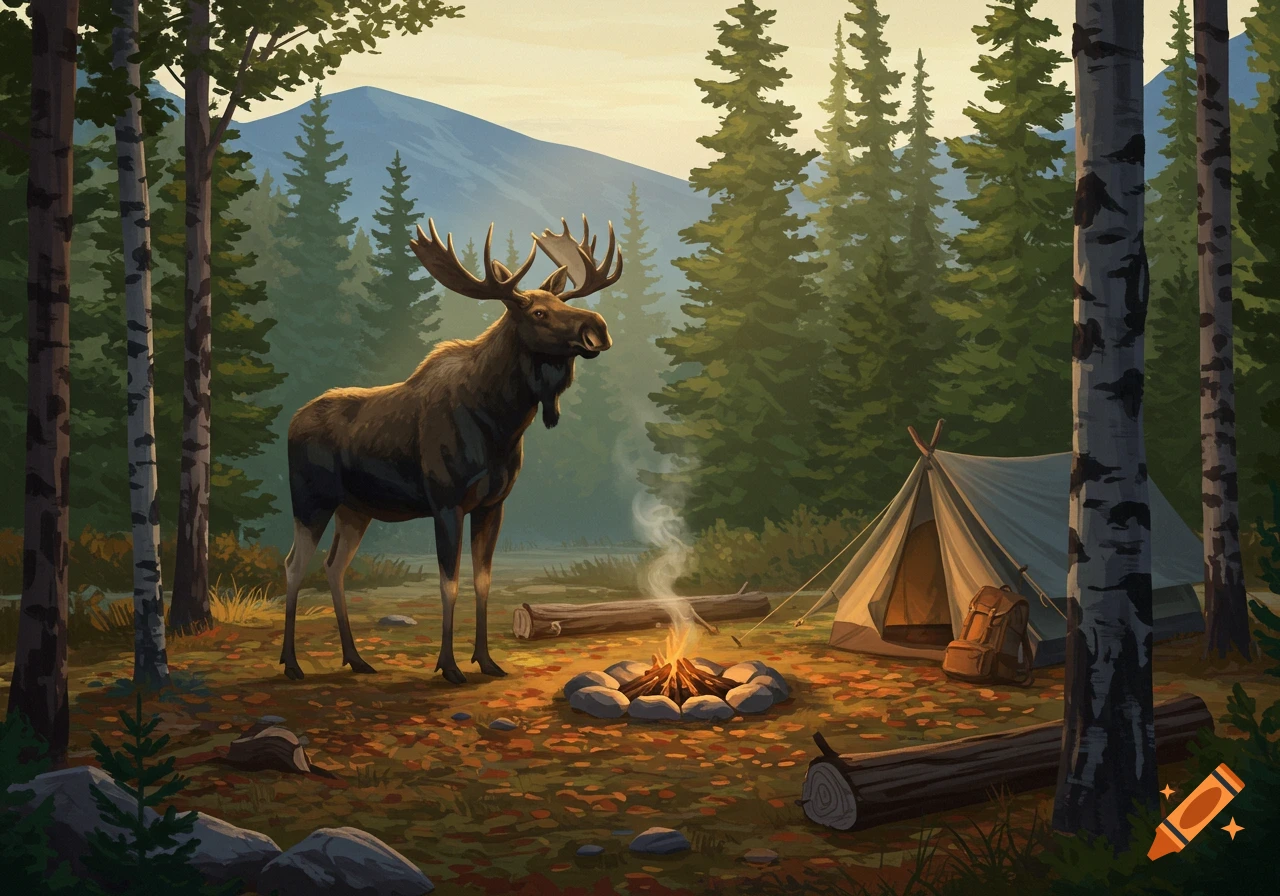
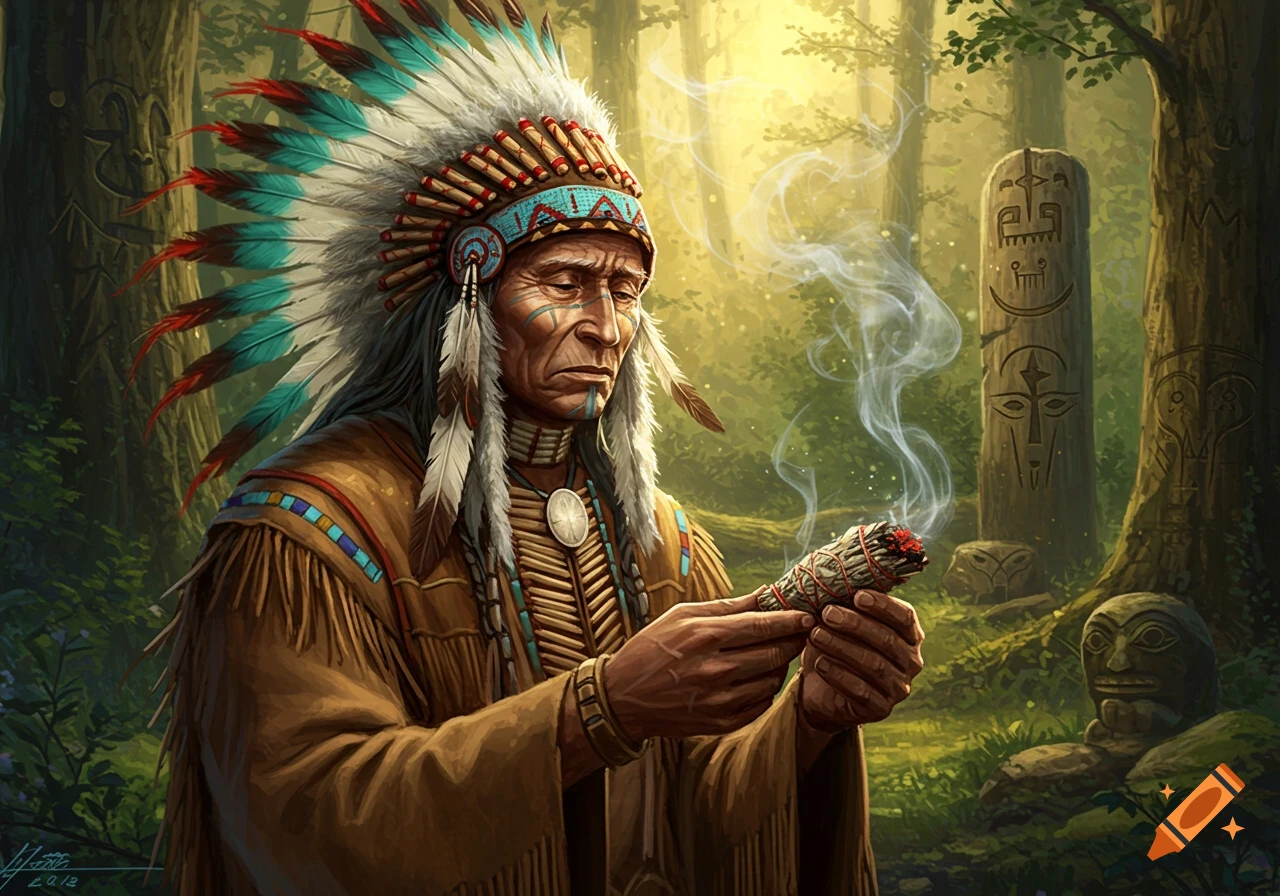
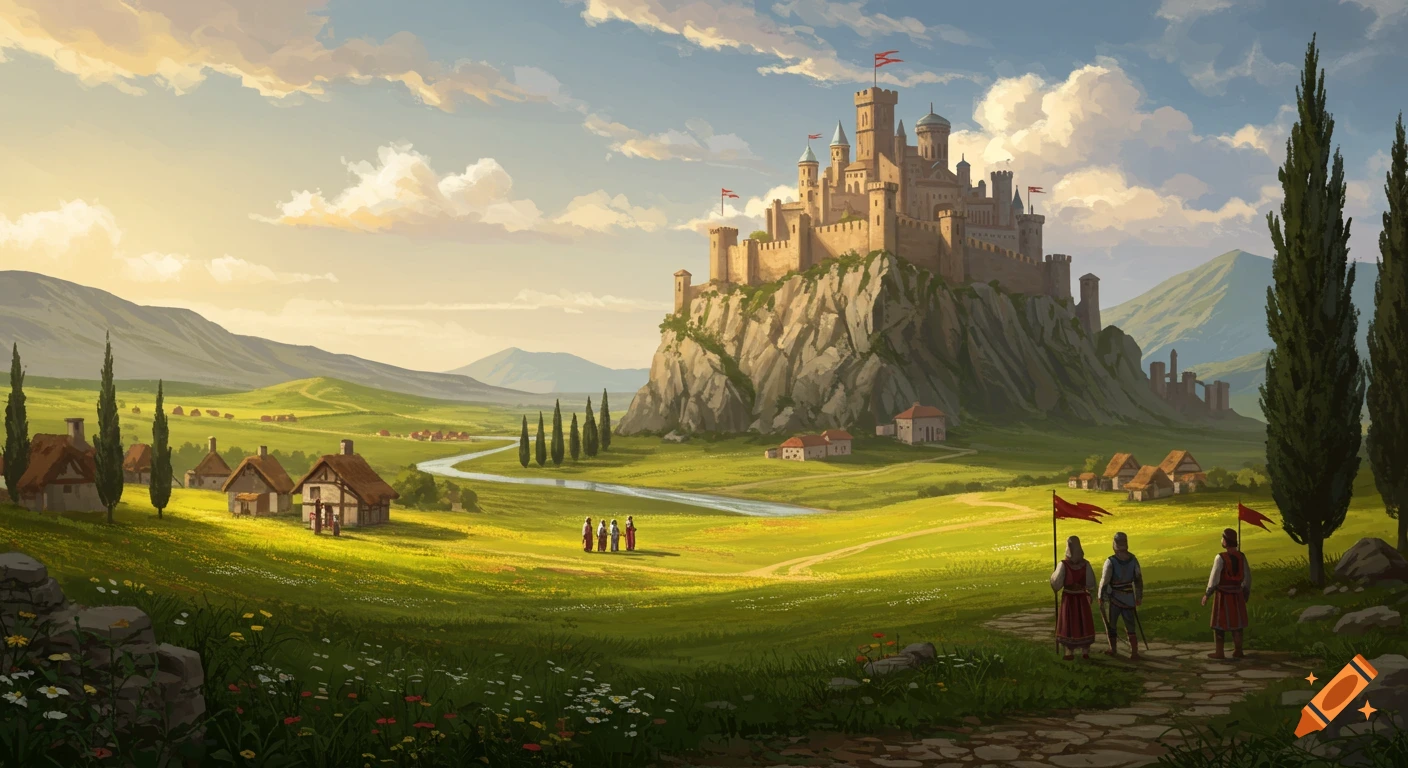
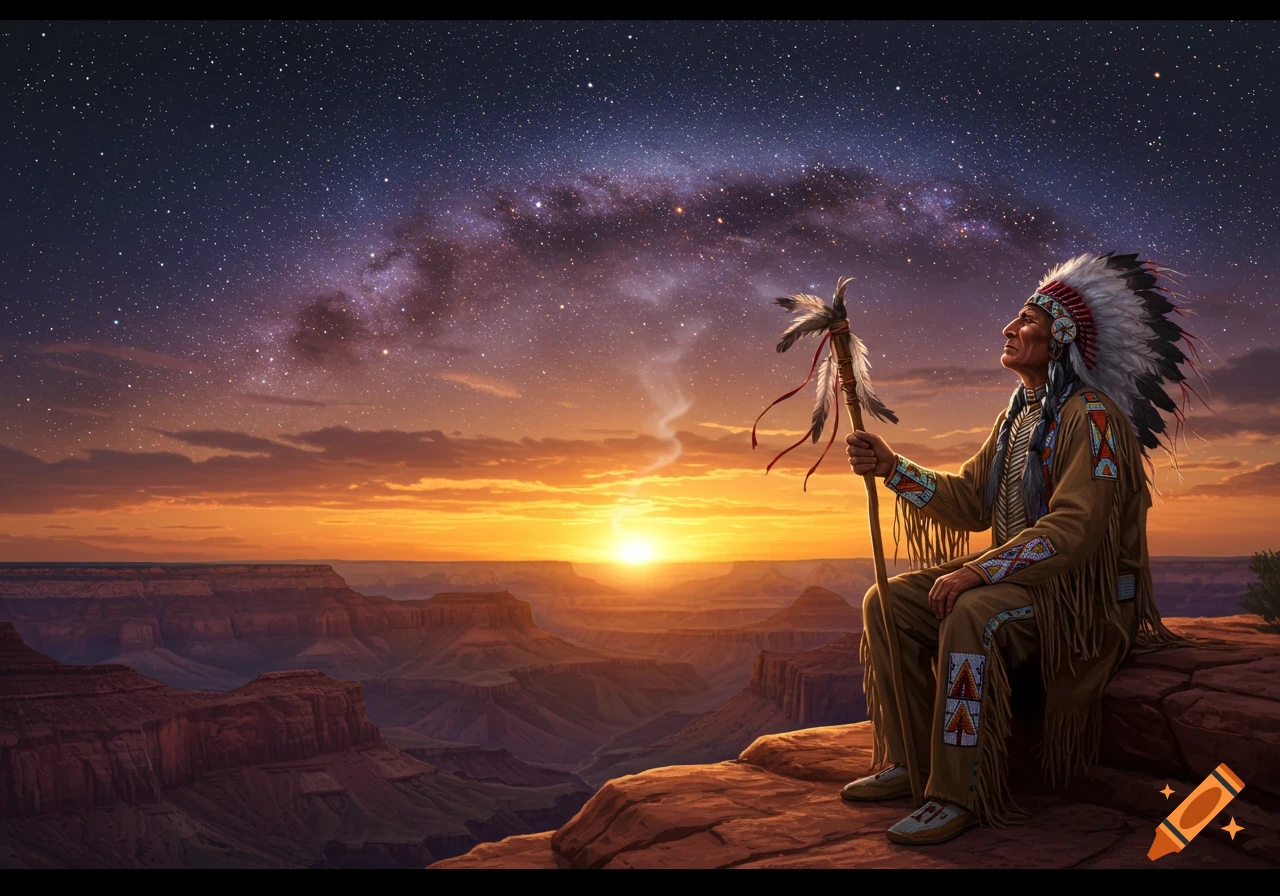
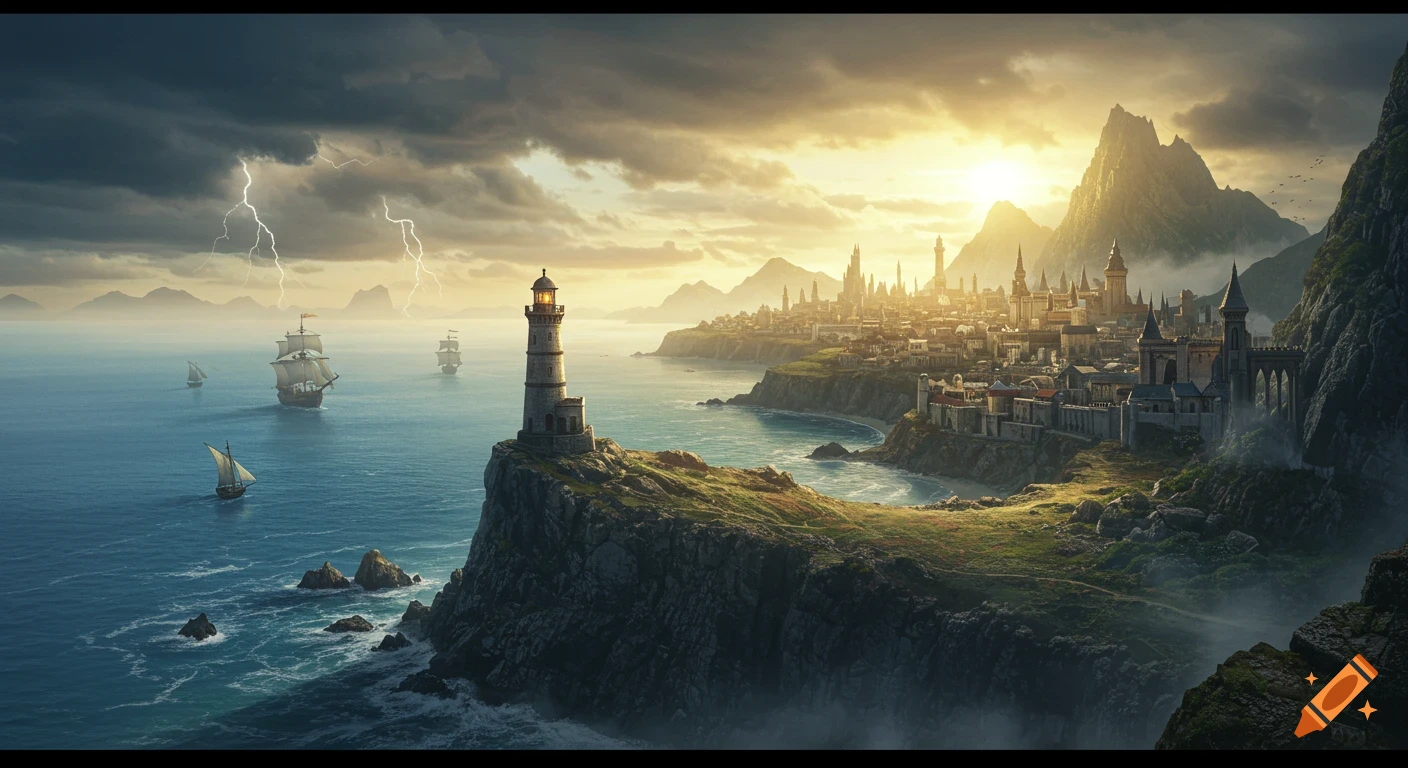
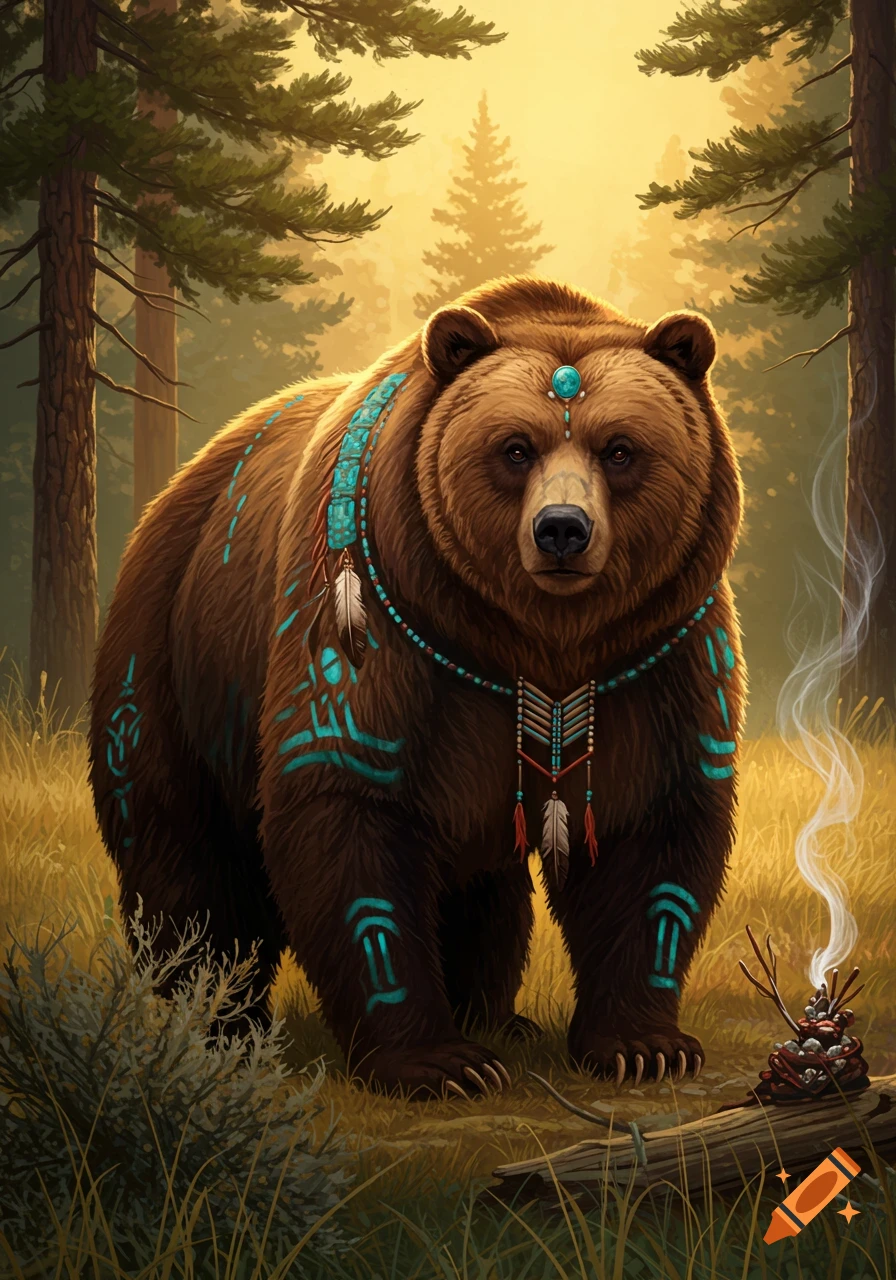
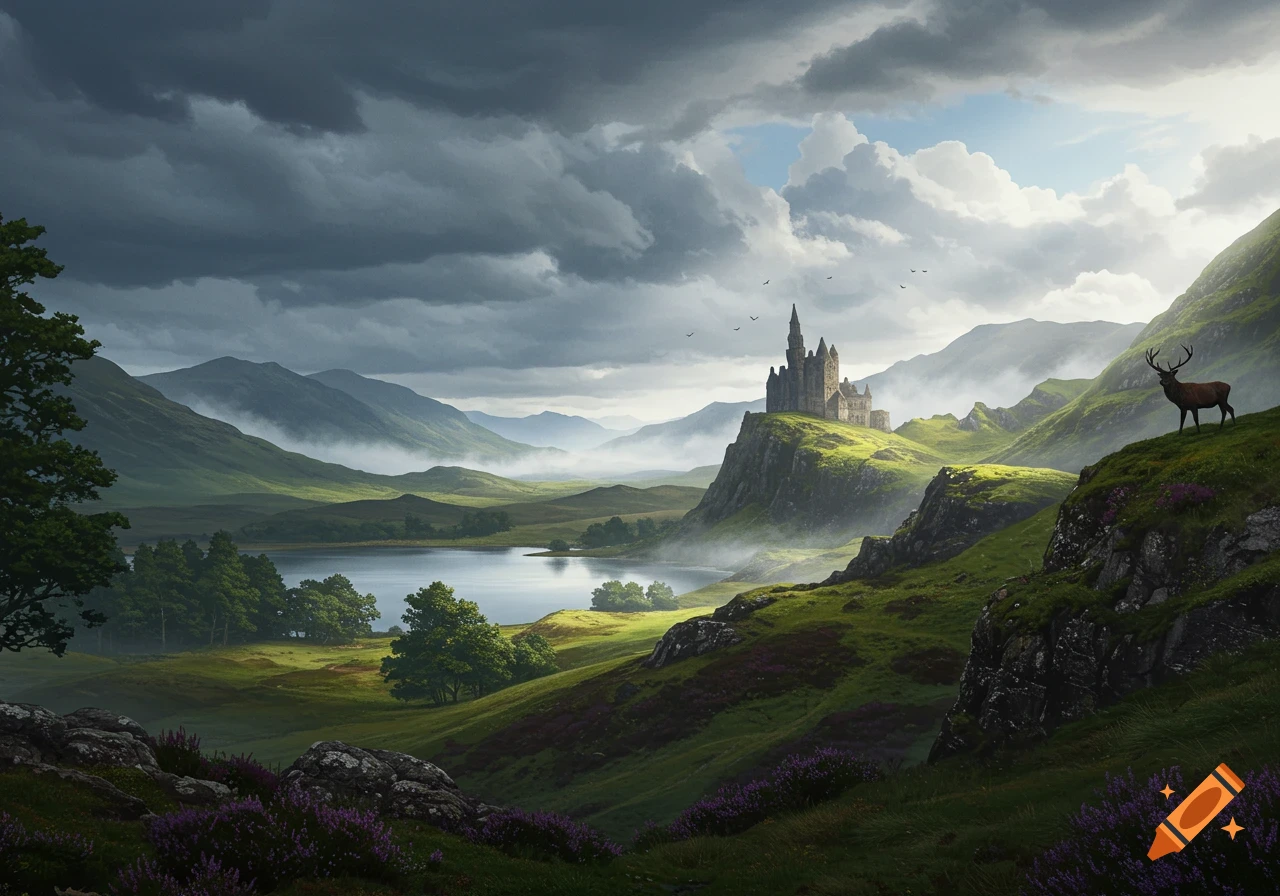
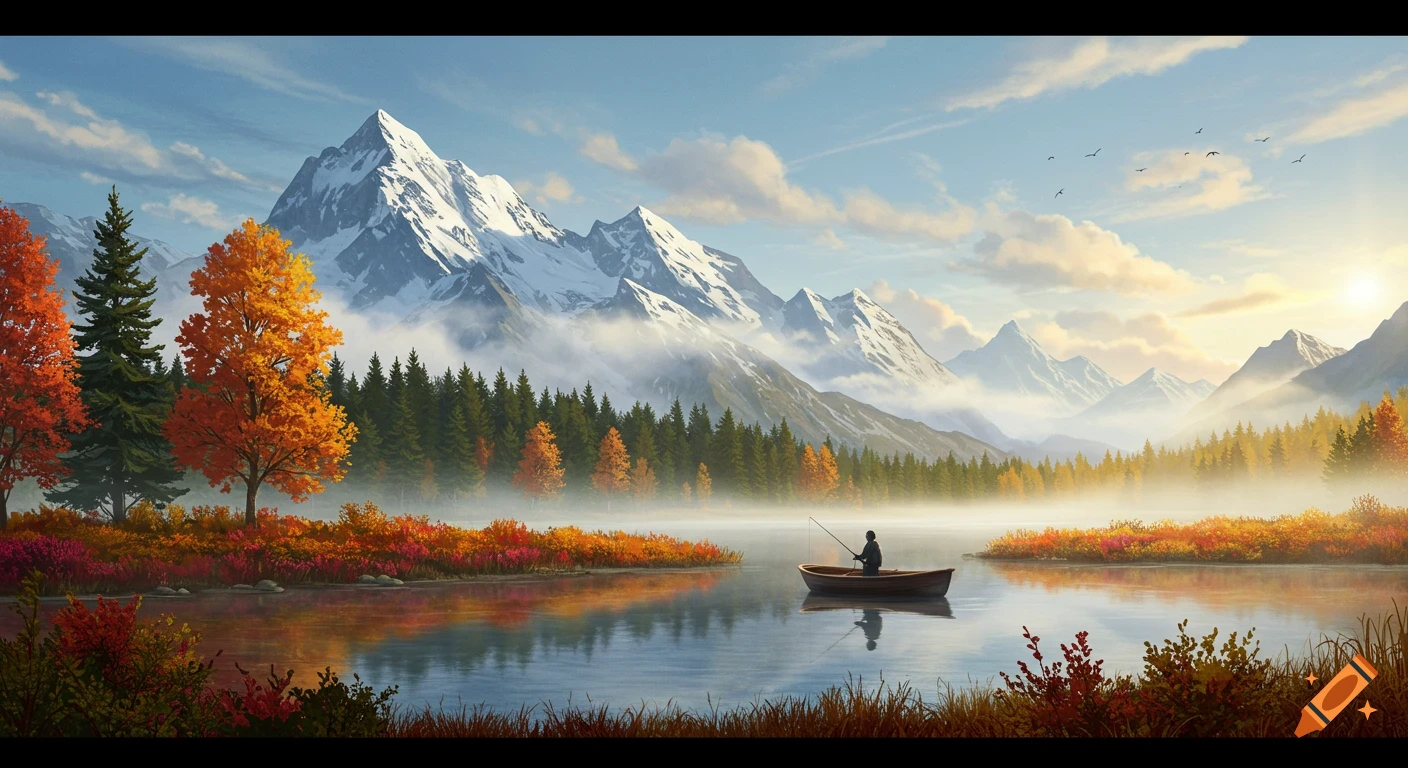
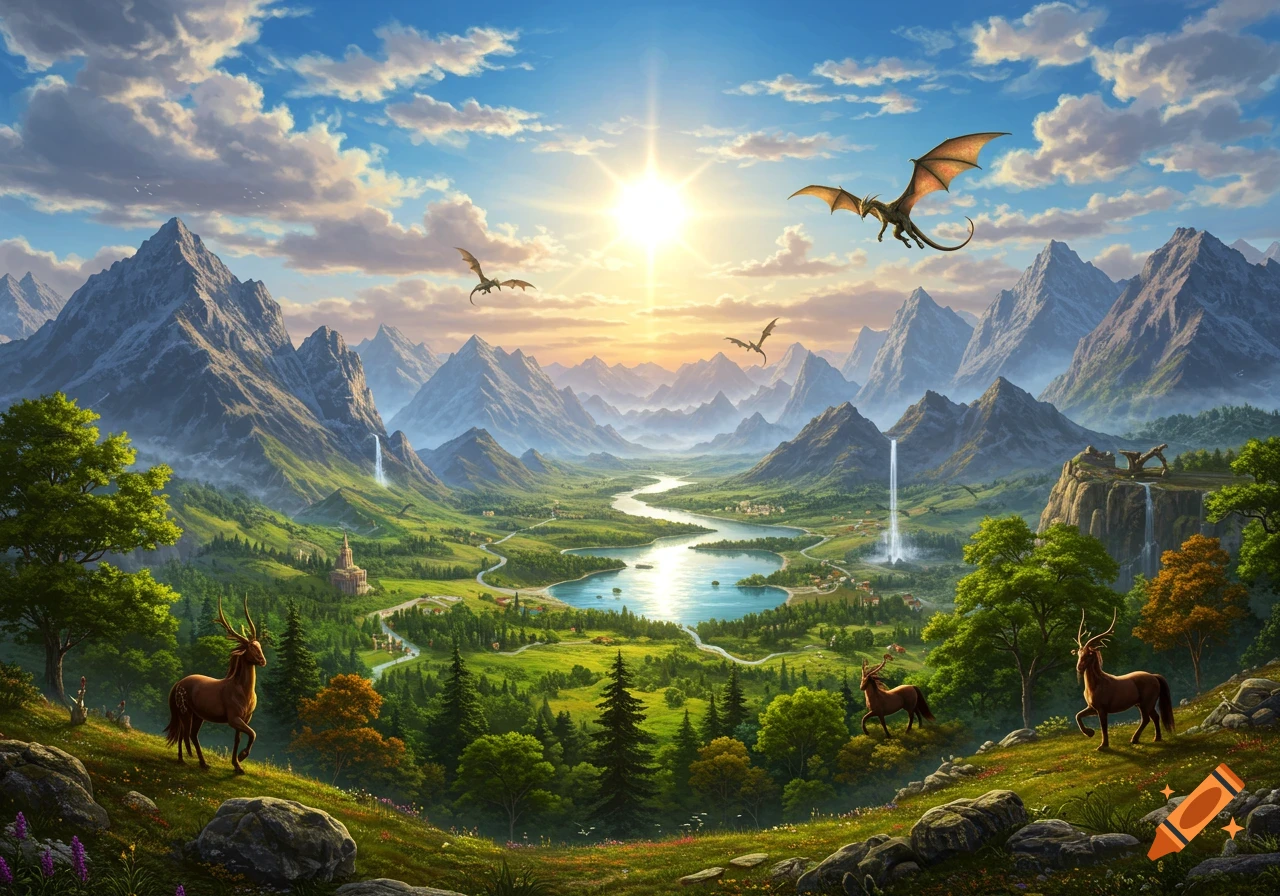
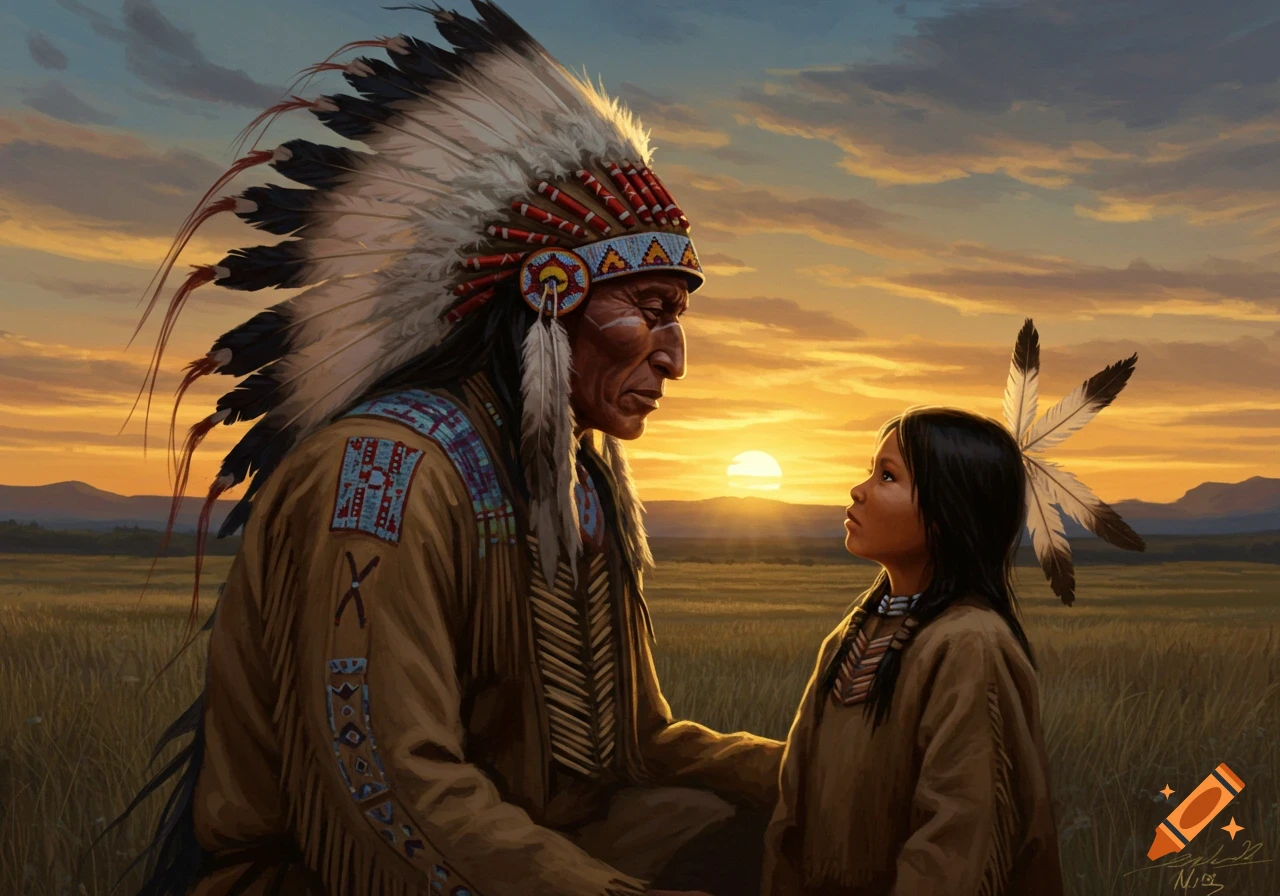
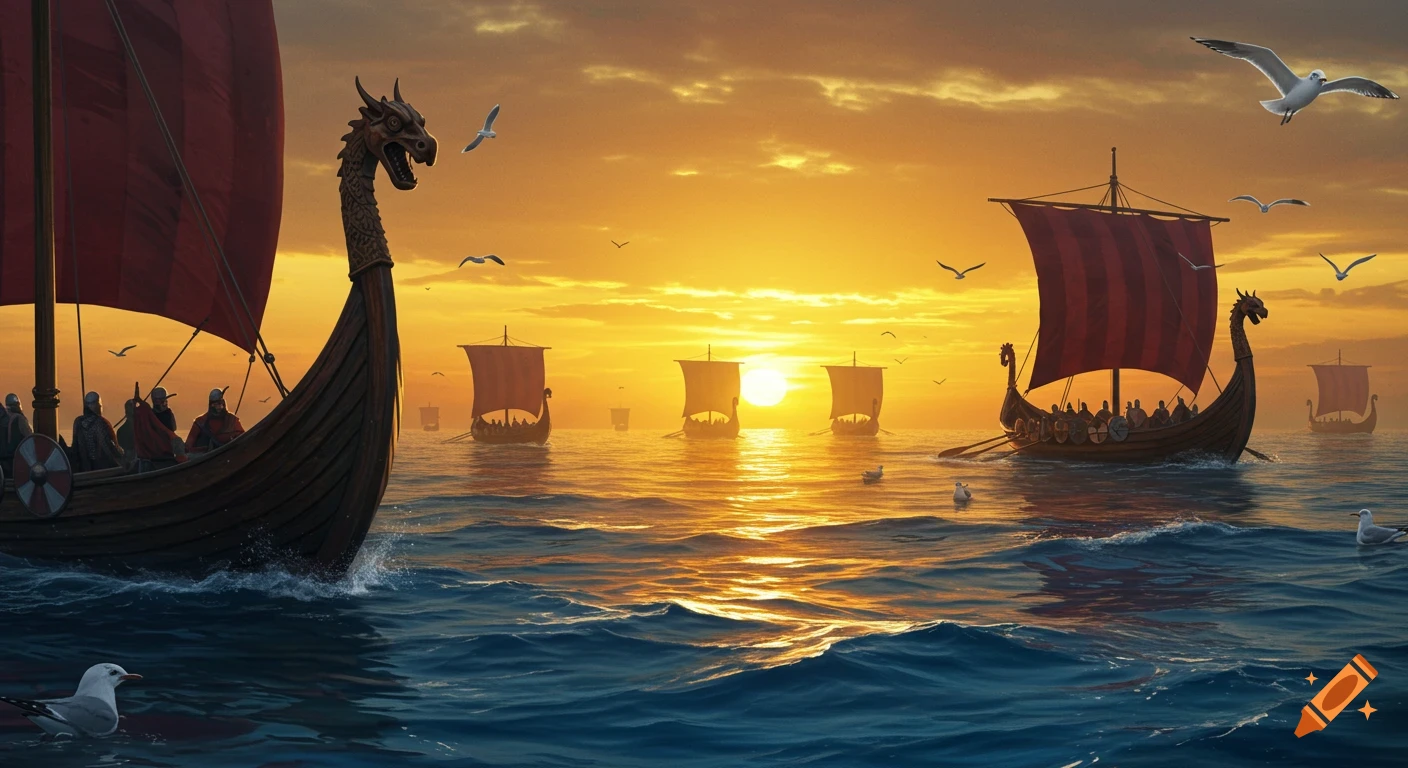
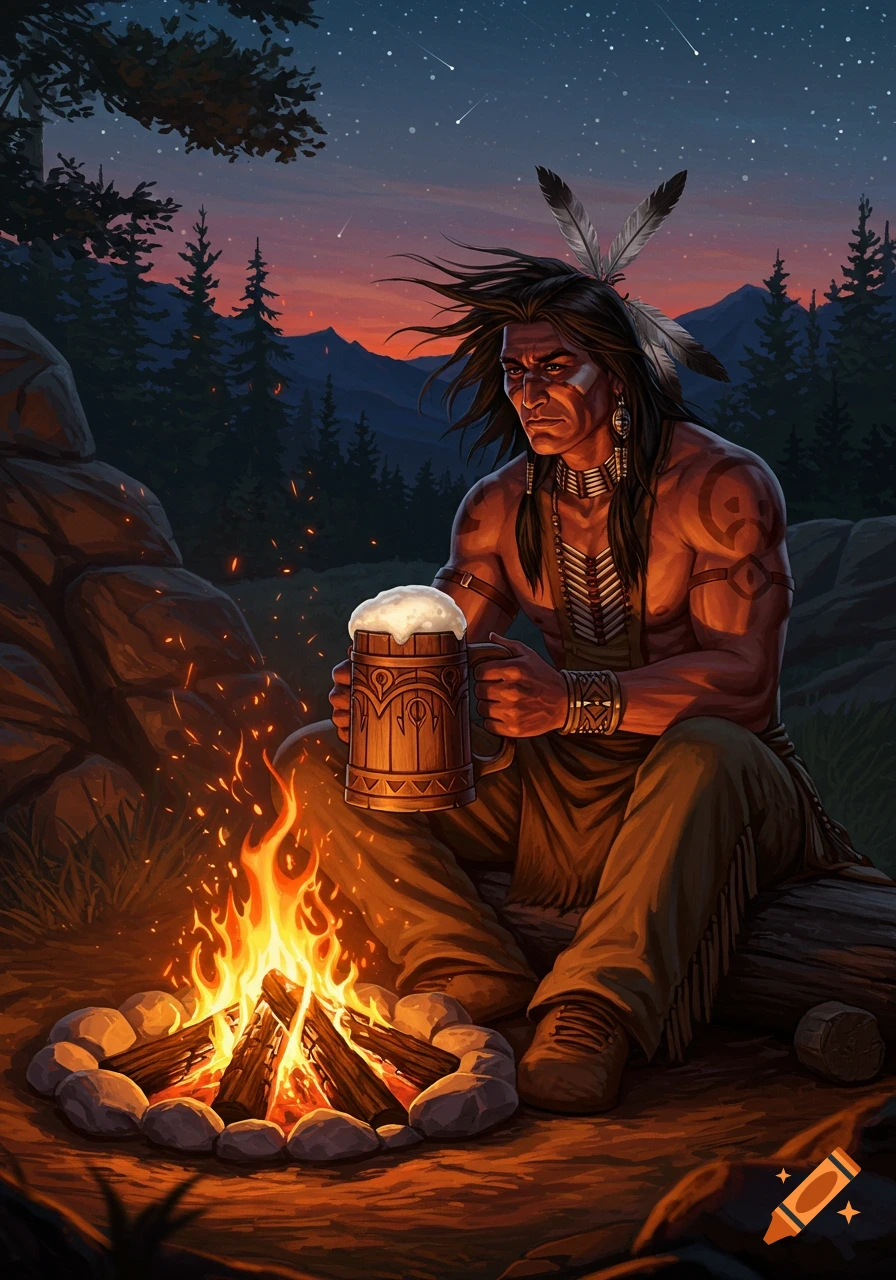
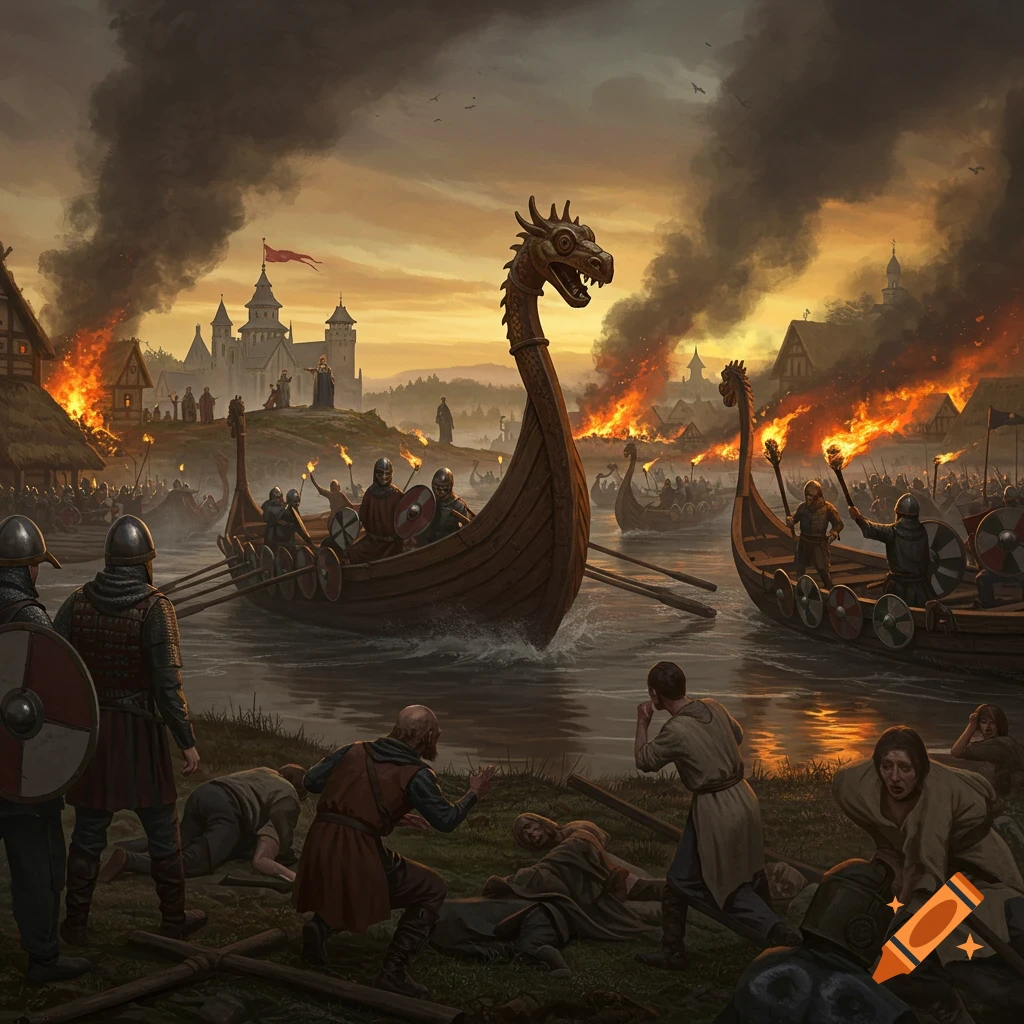
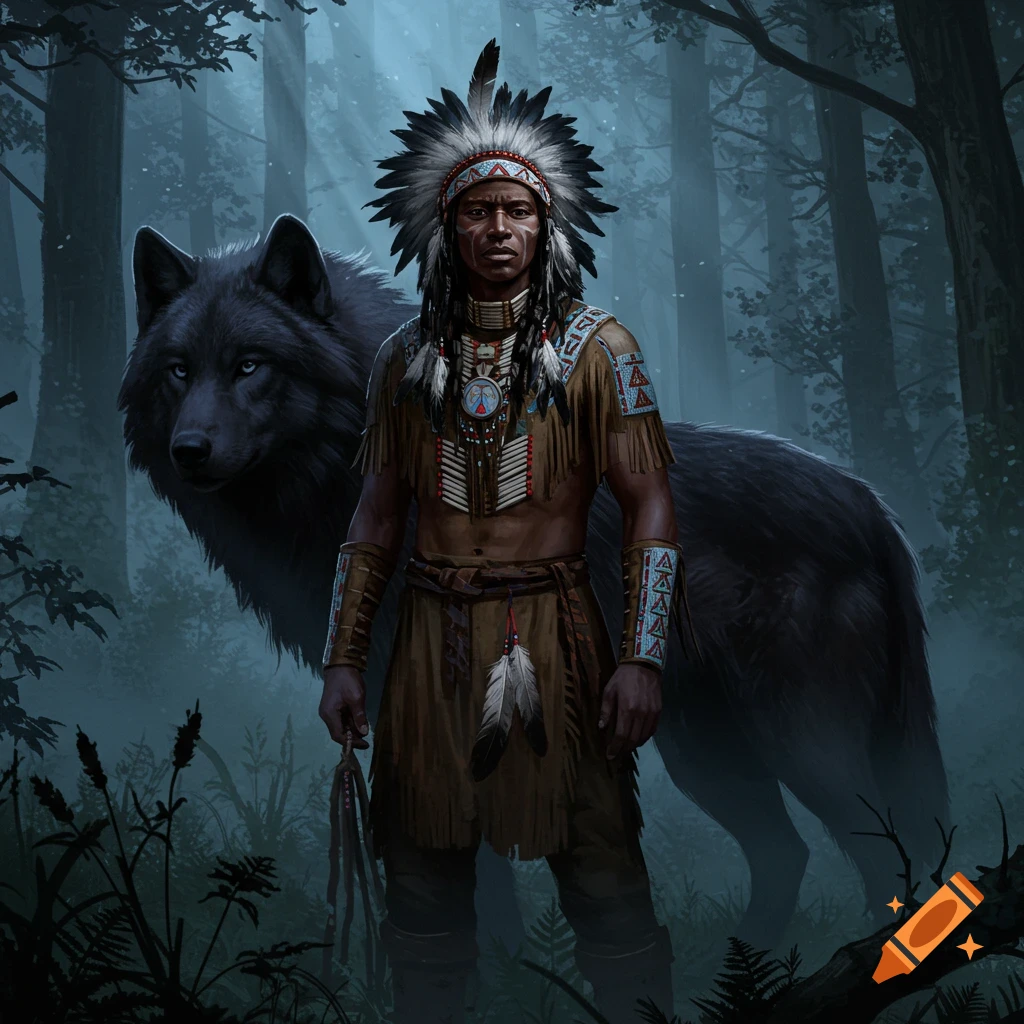
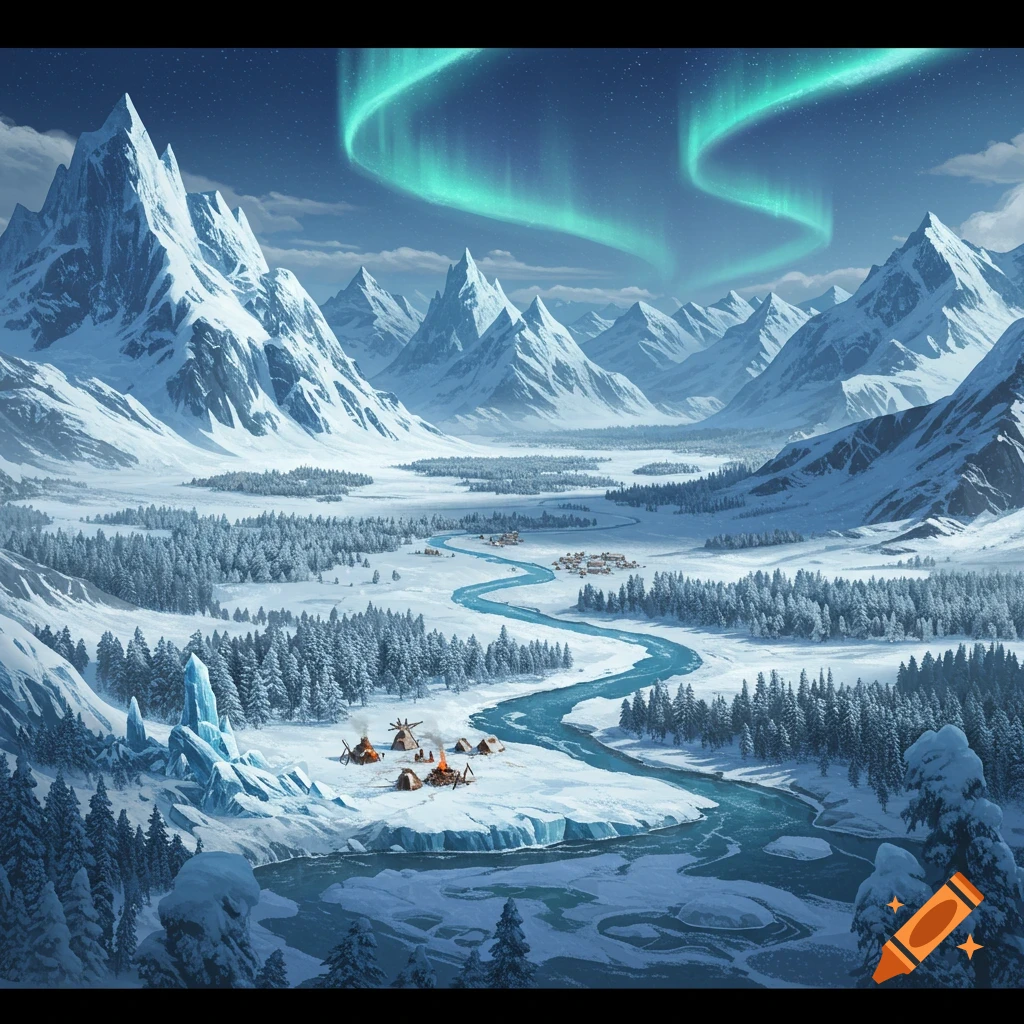
A historical montage depicting indigenous people, bison, Viking ships, European settlers, and a castle amidst diverse Canadian landscapes with 'kanata' in the sky.
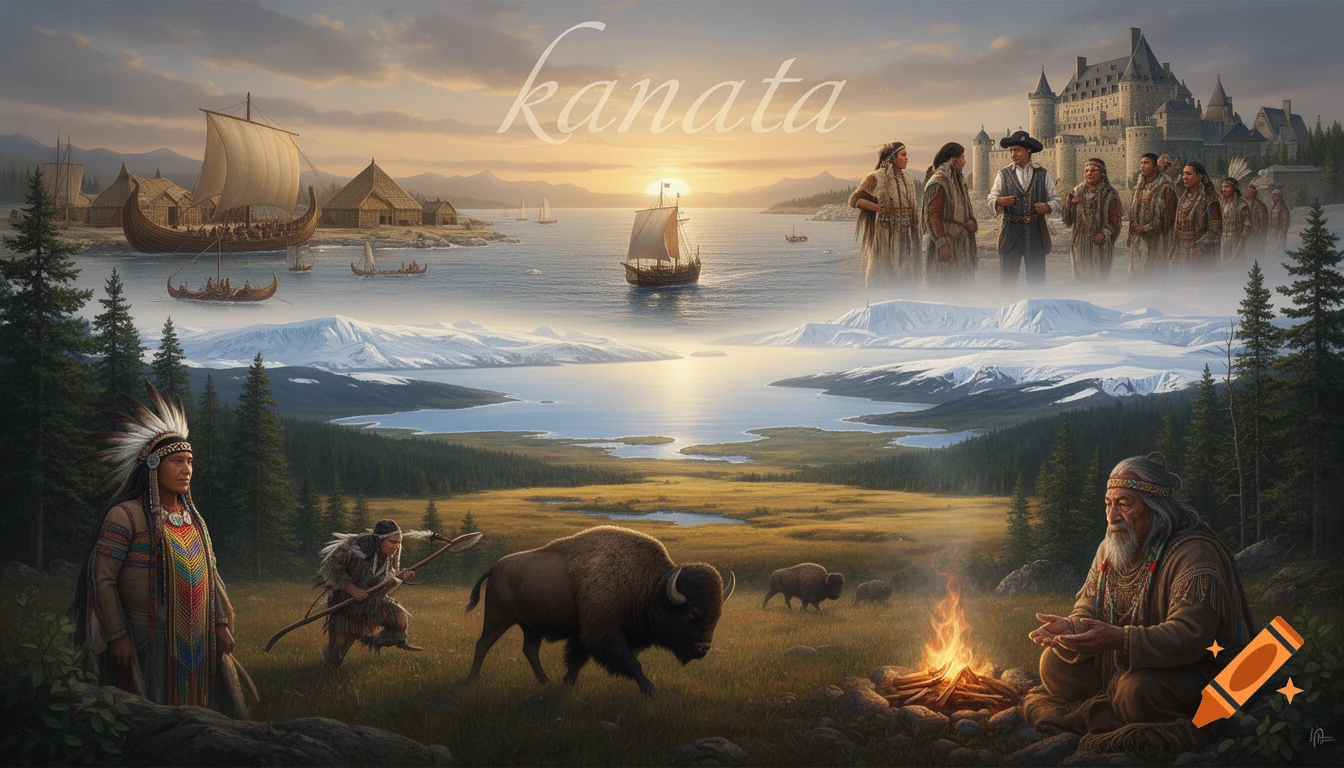
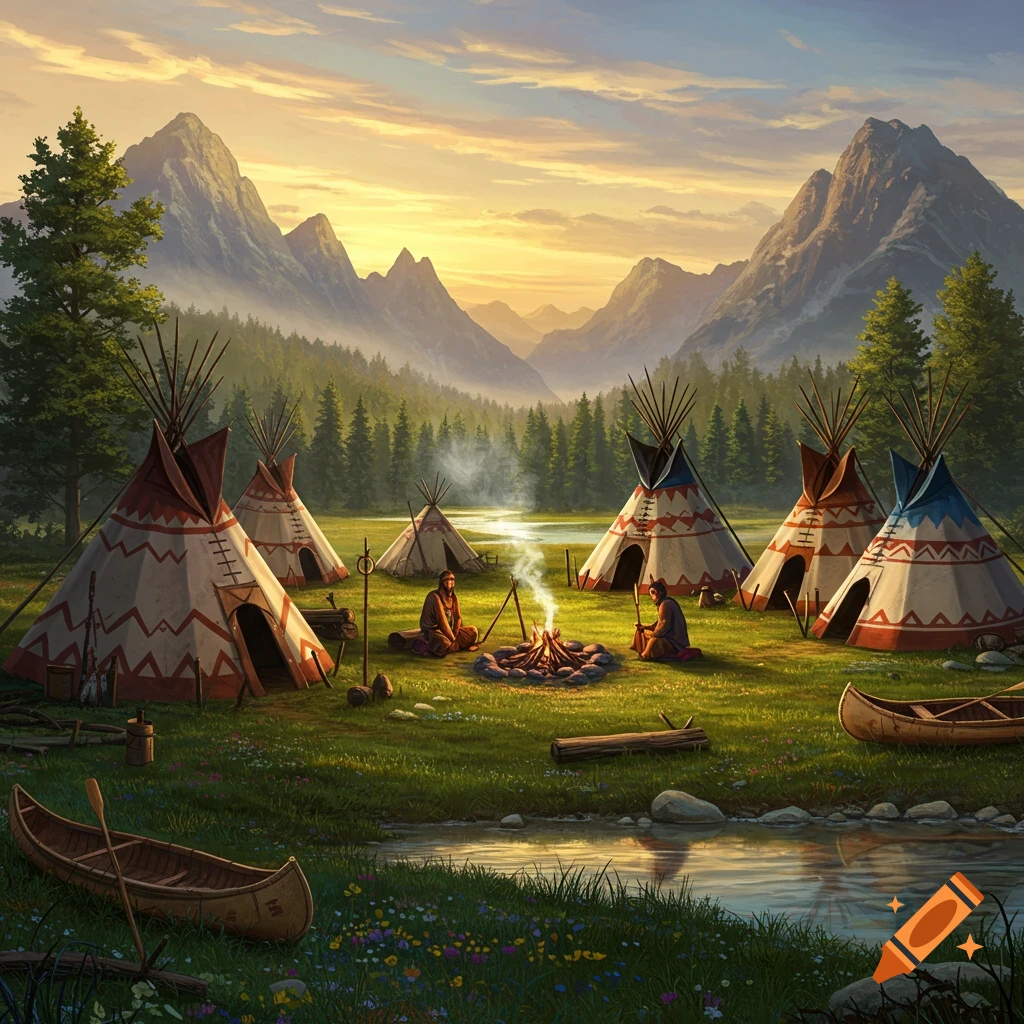
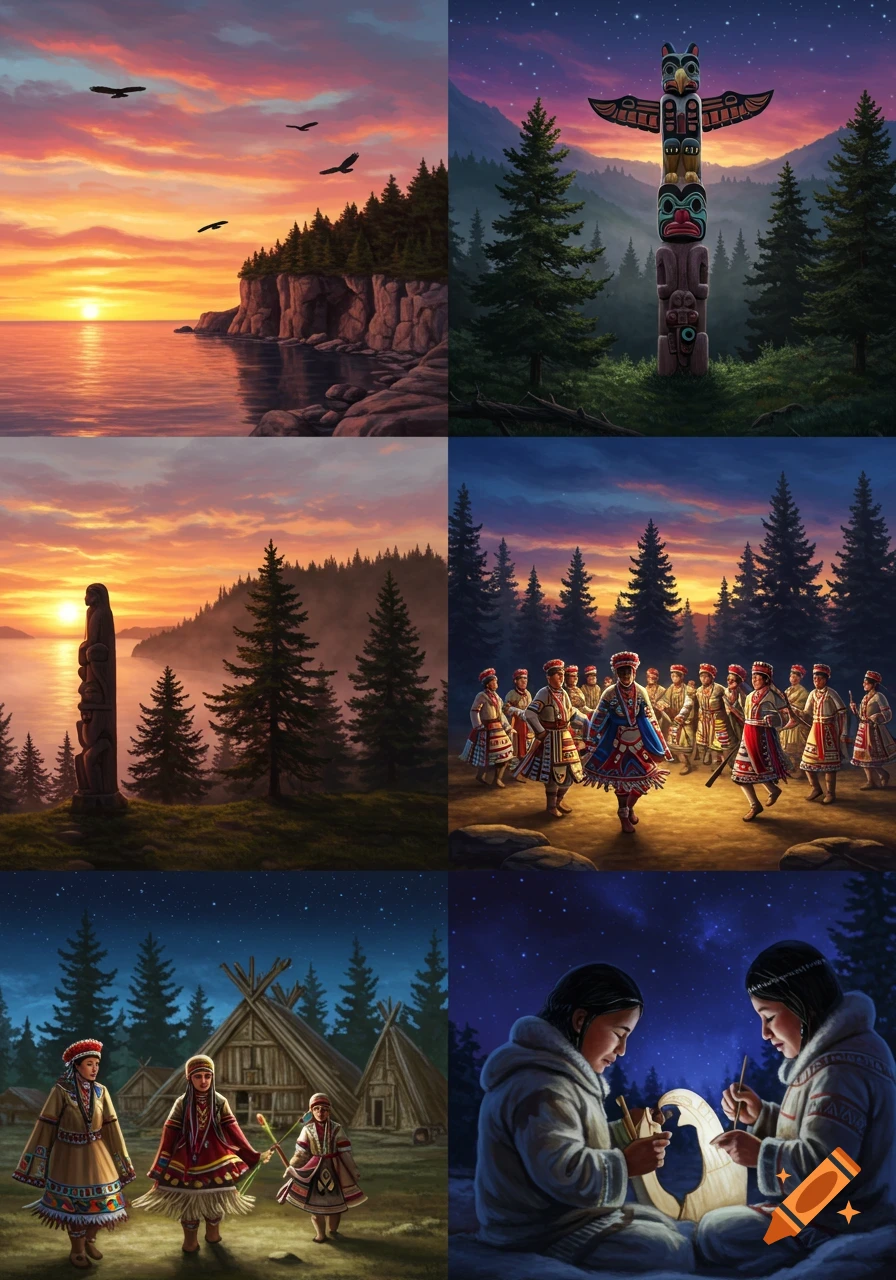
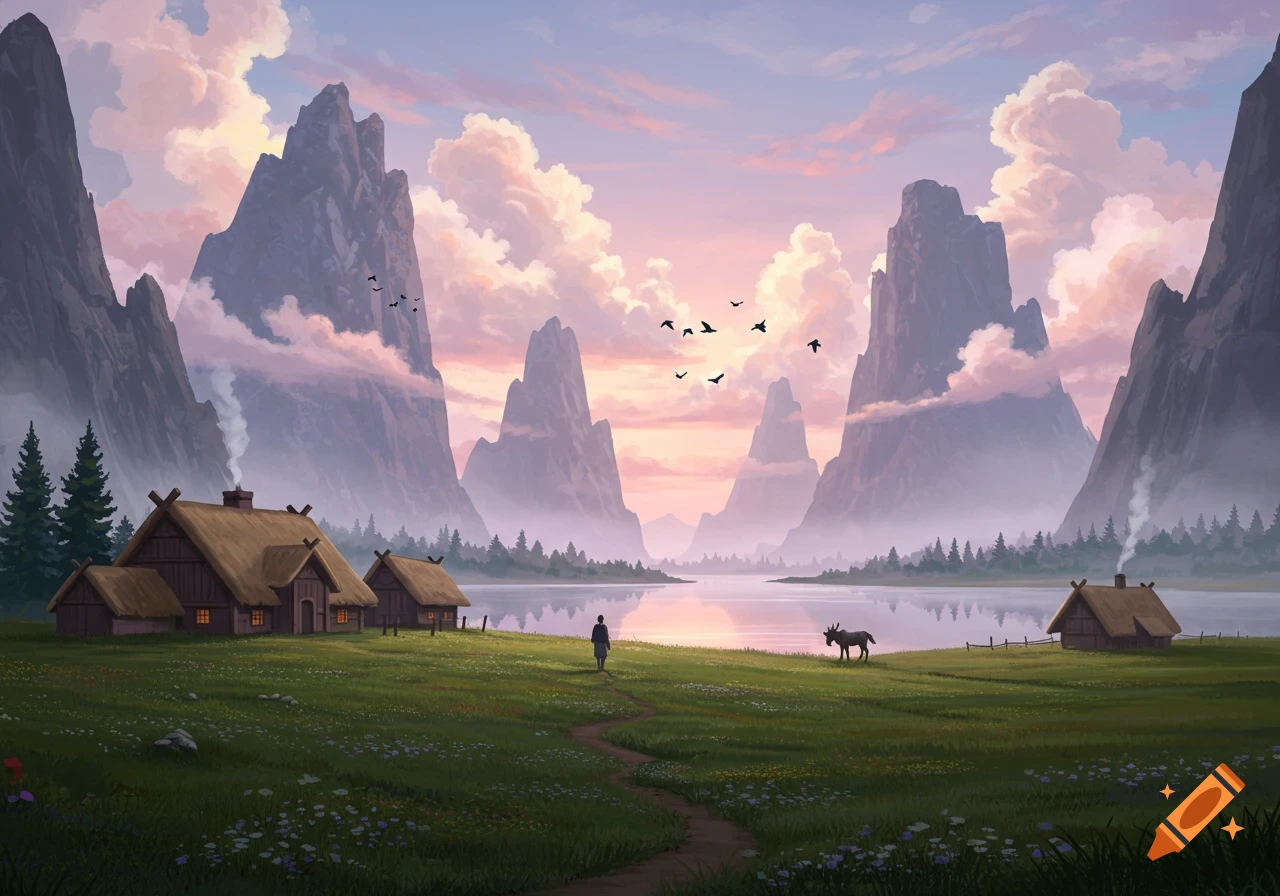
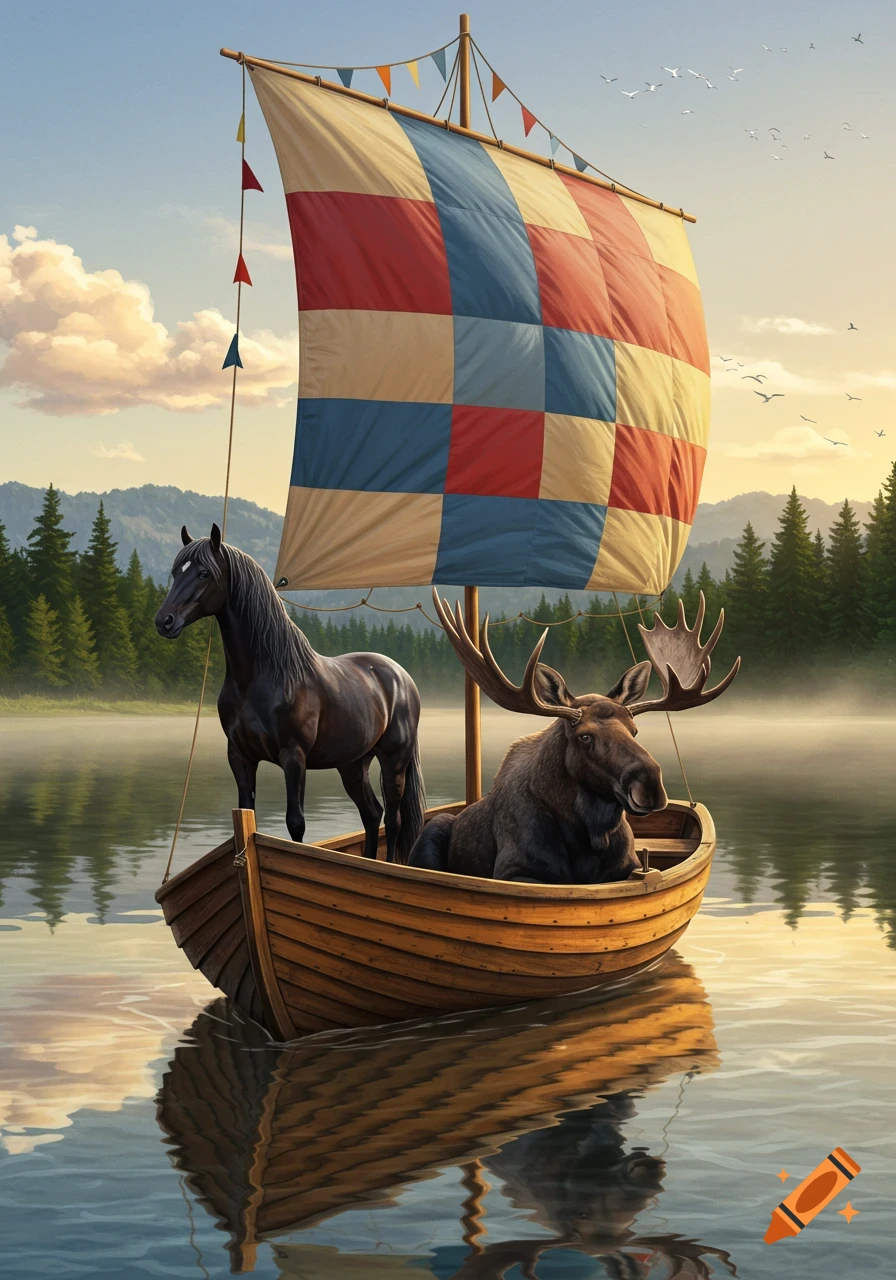
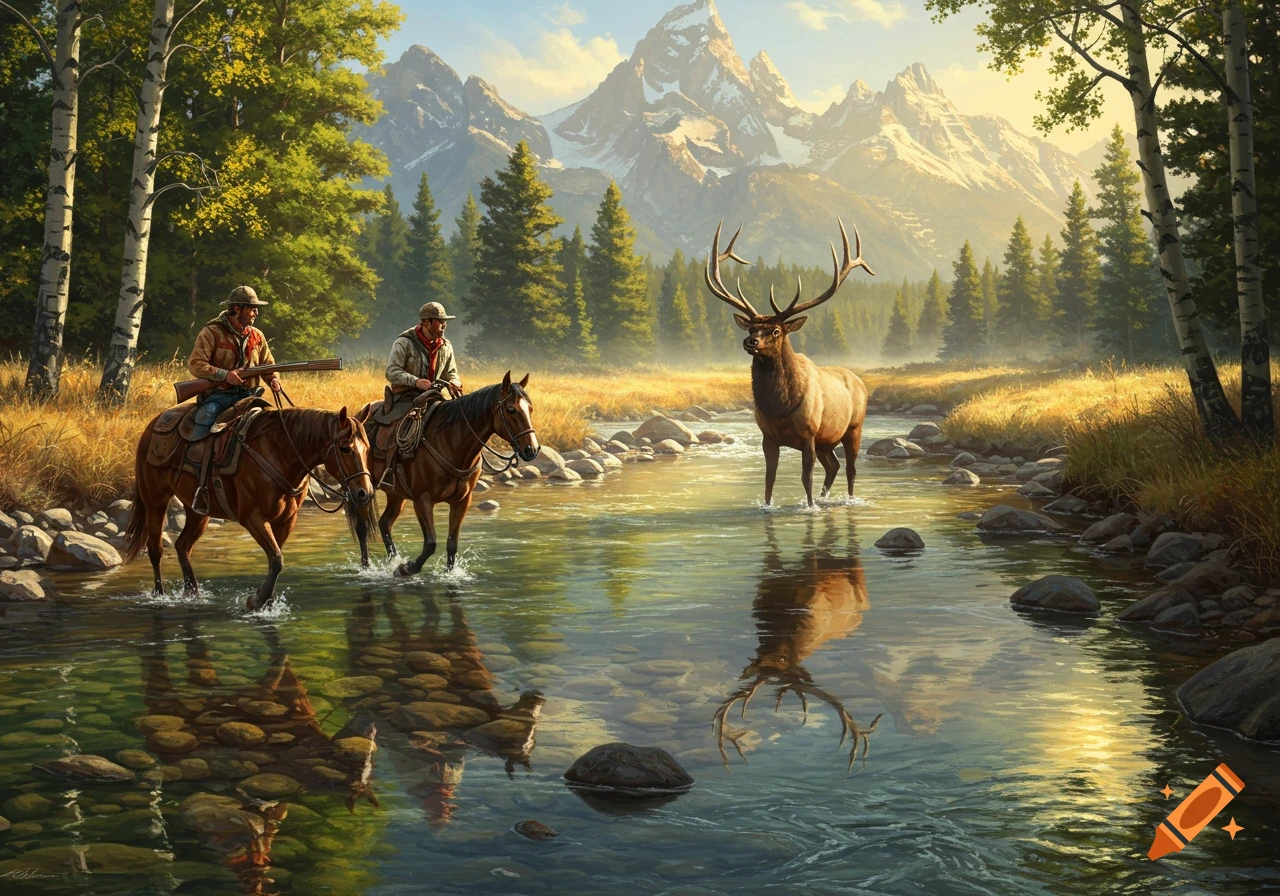
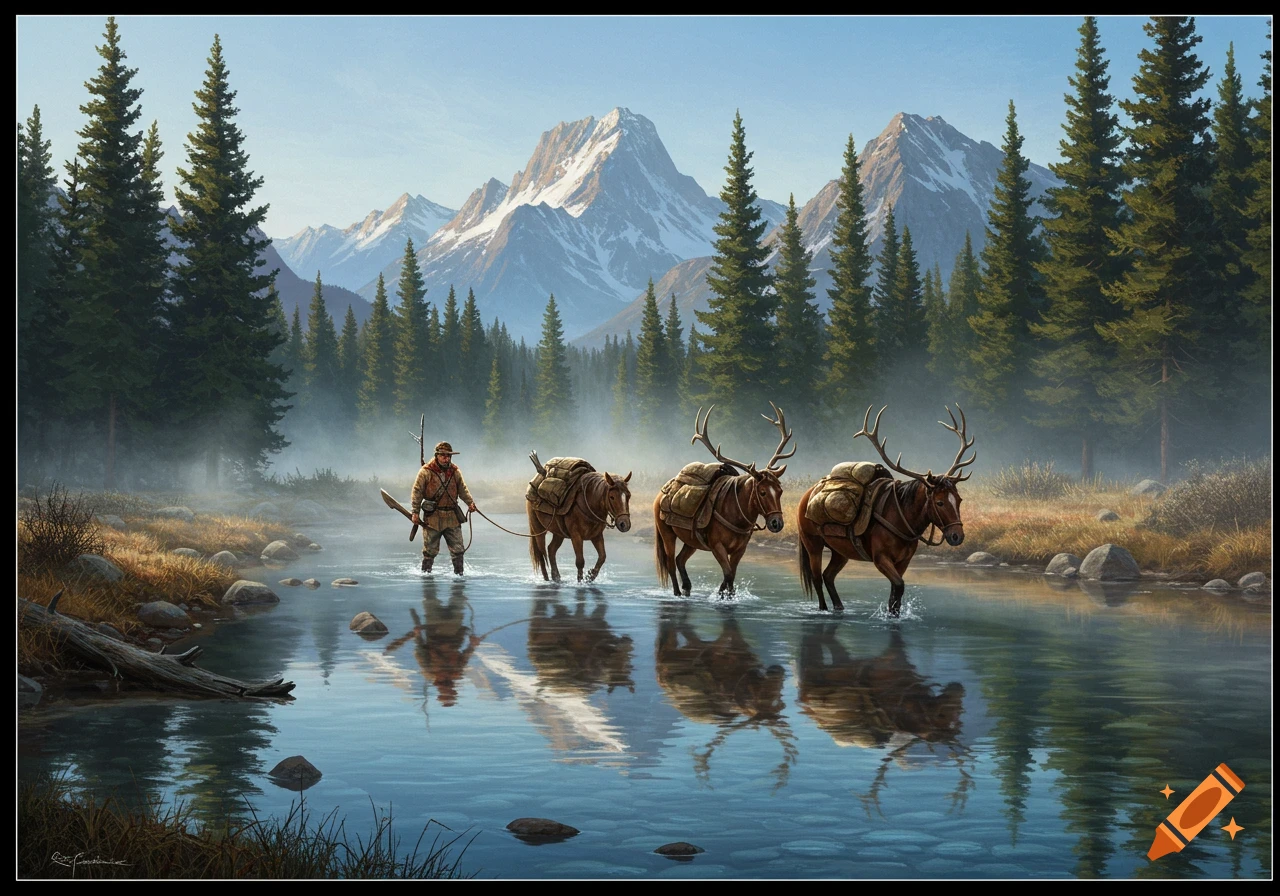
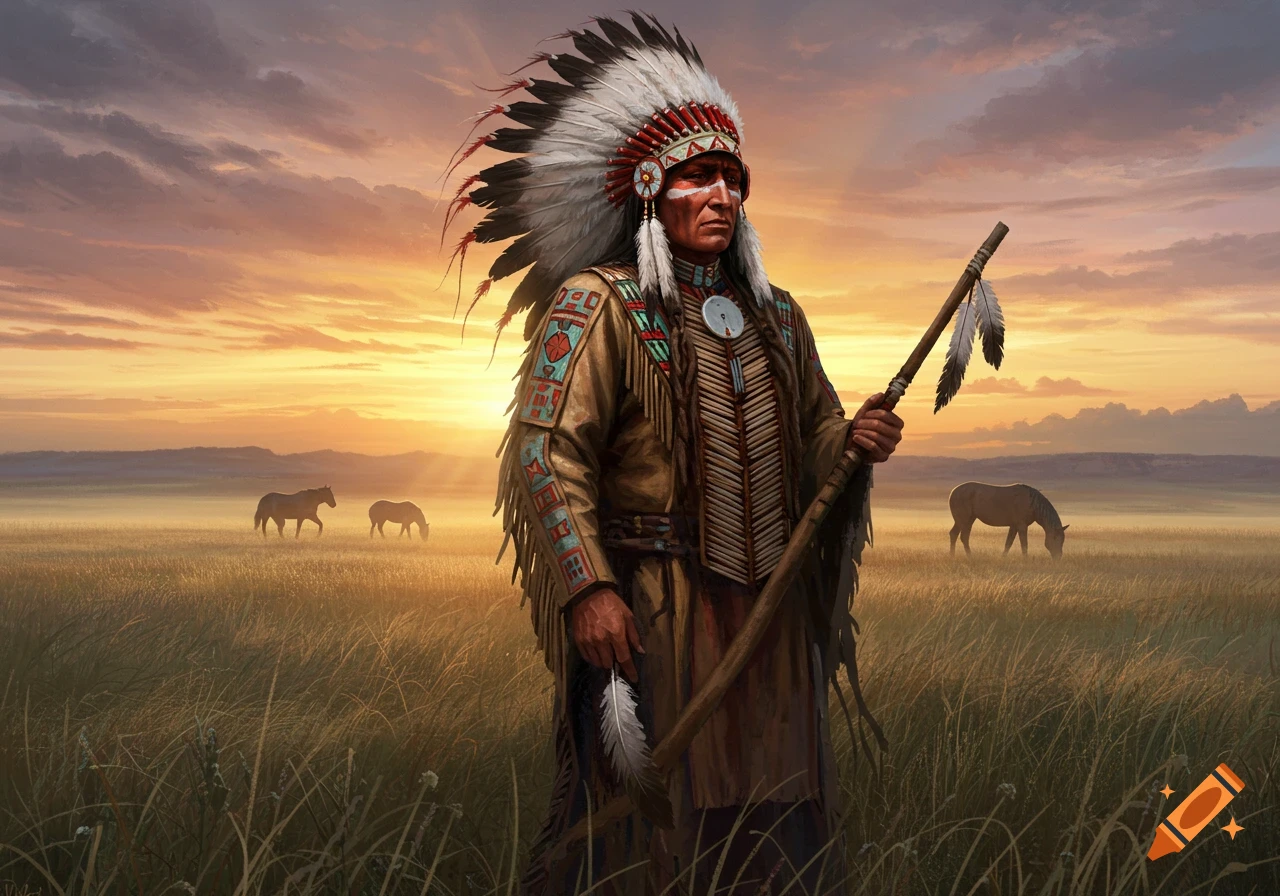
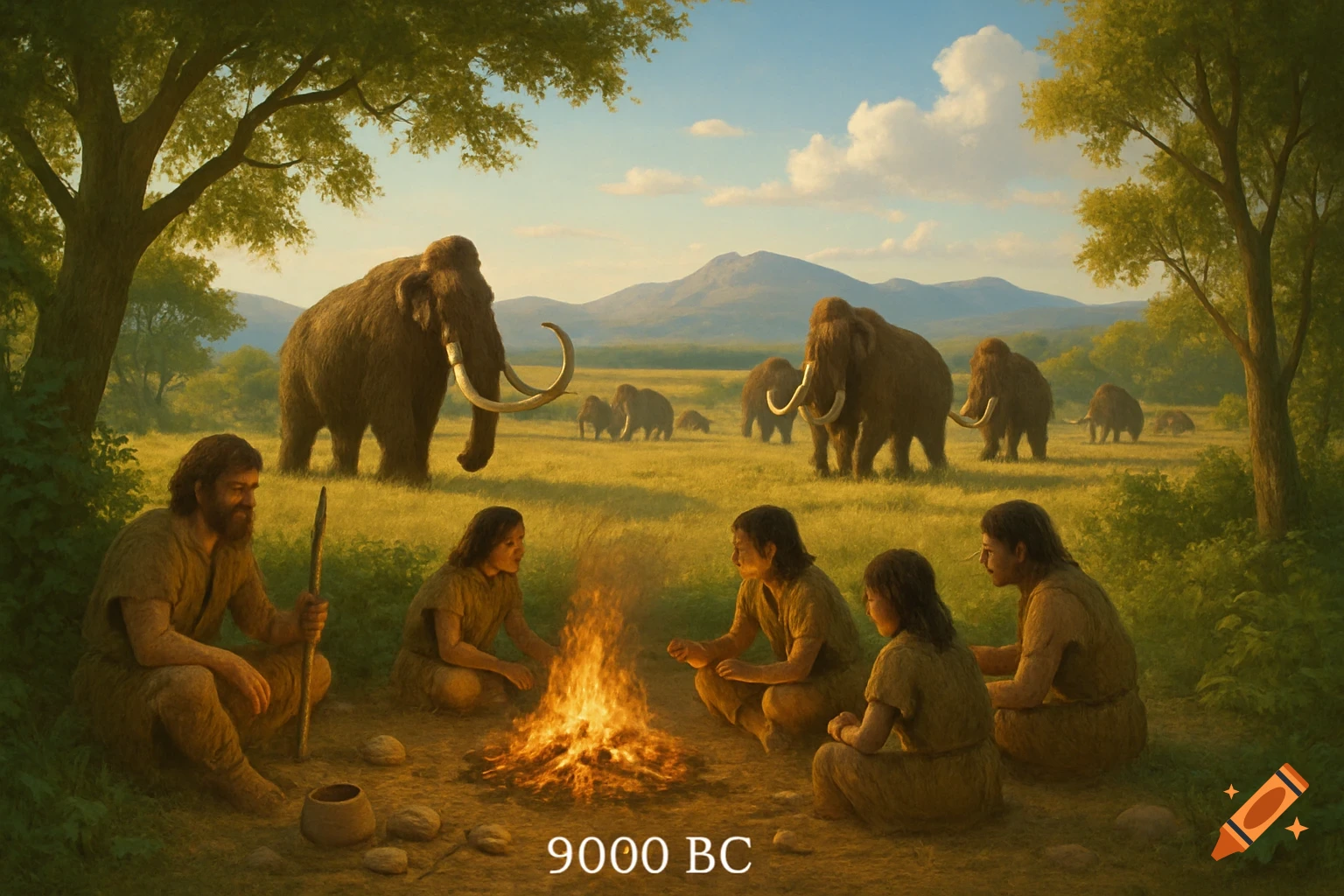
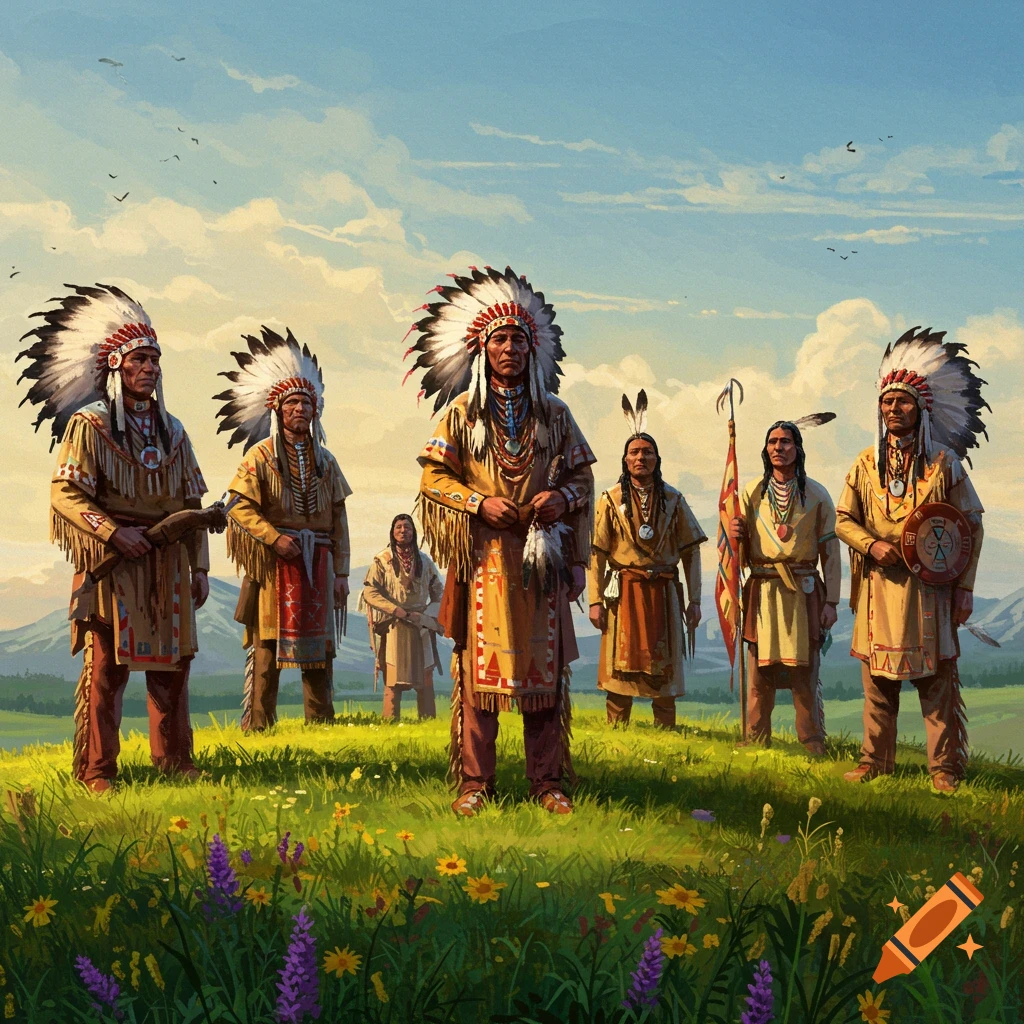
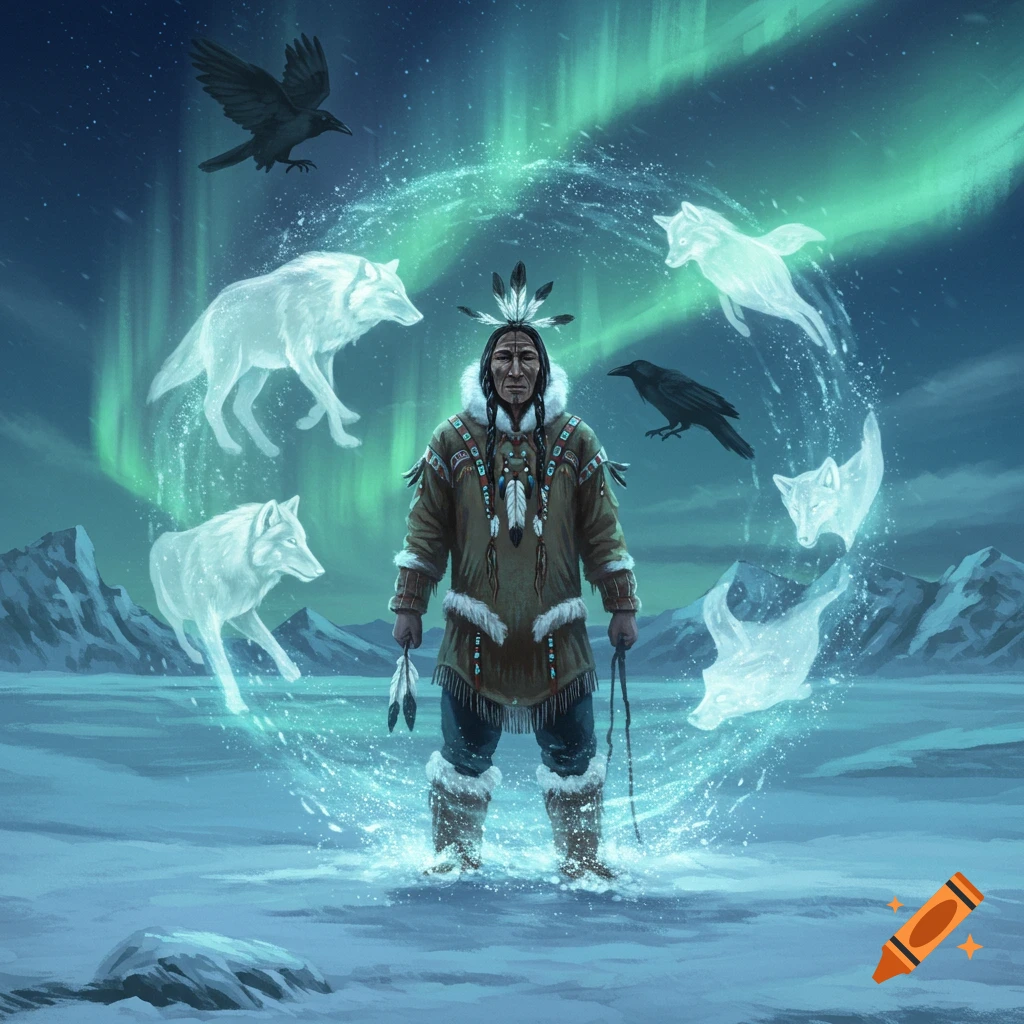
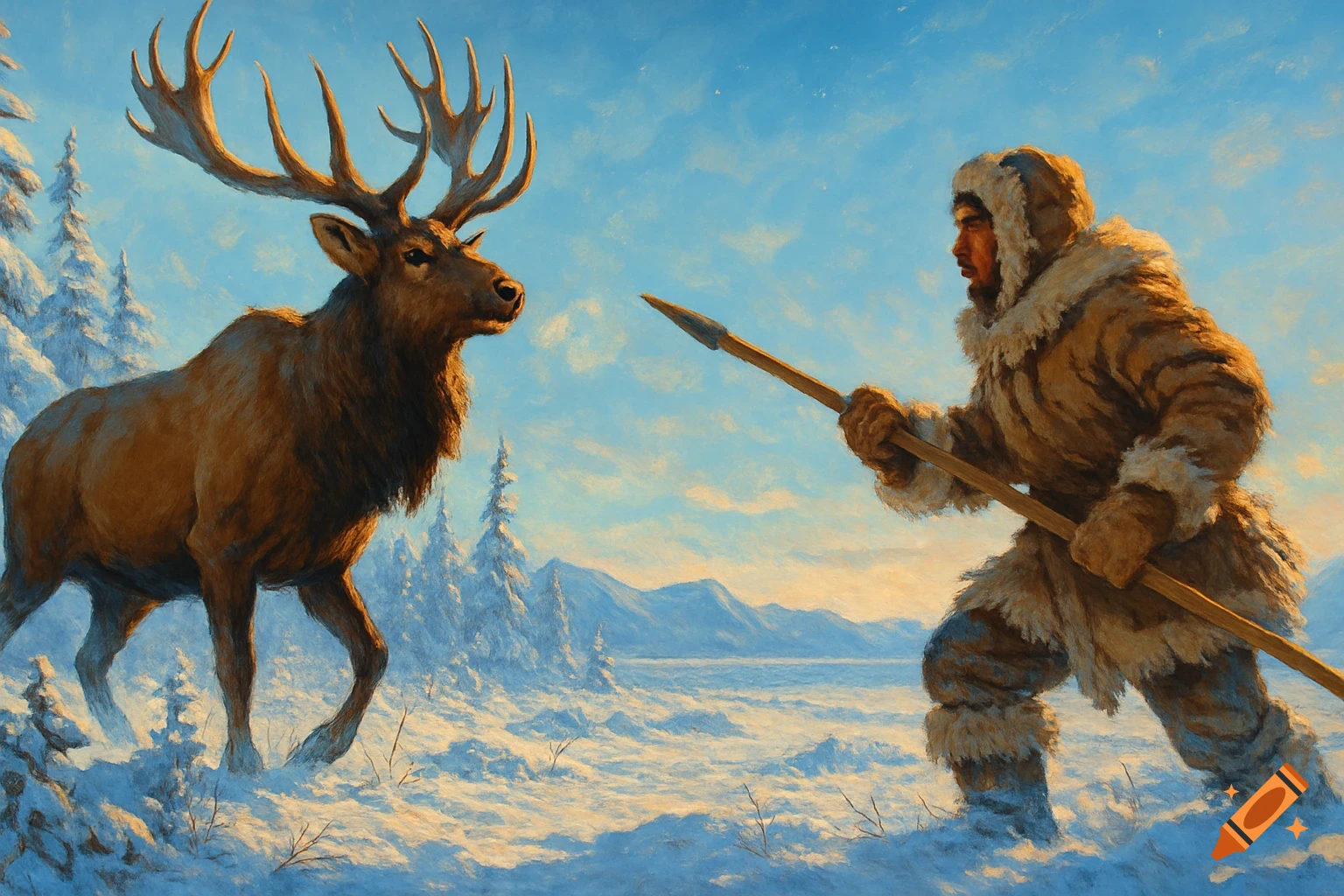
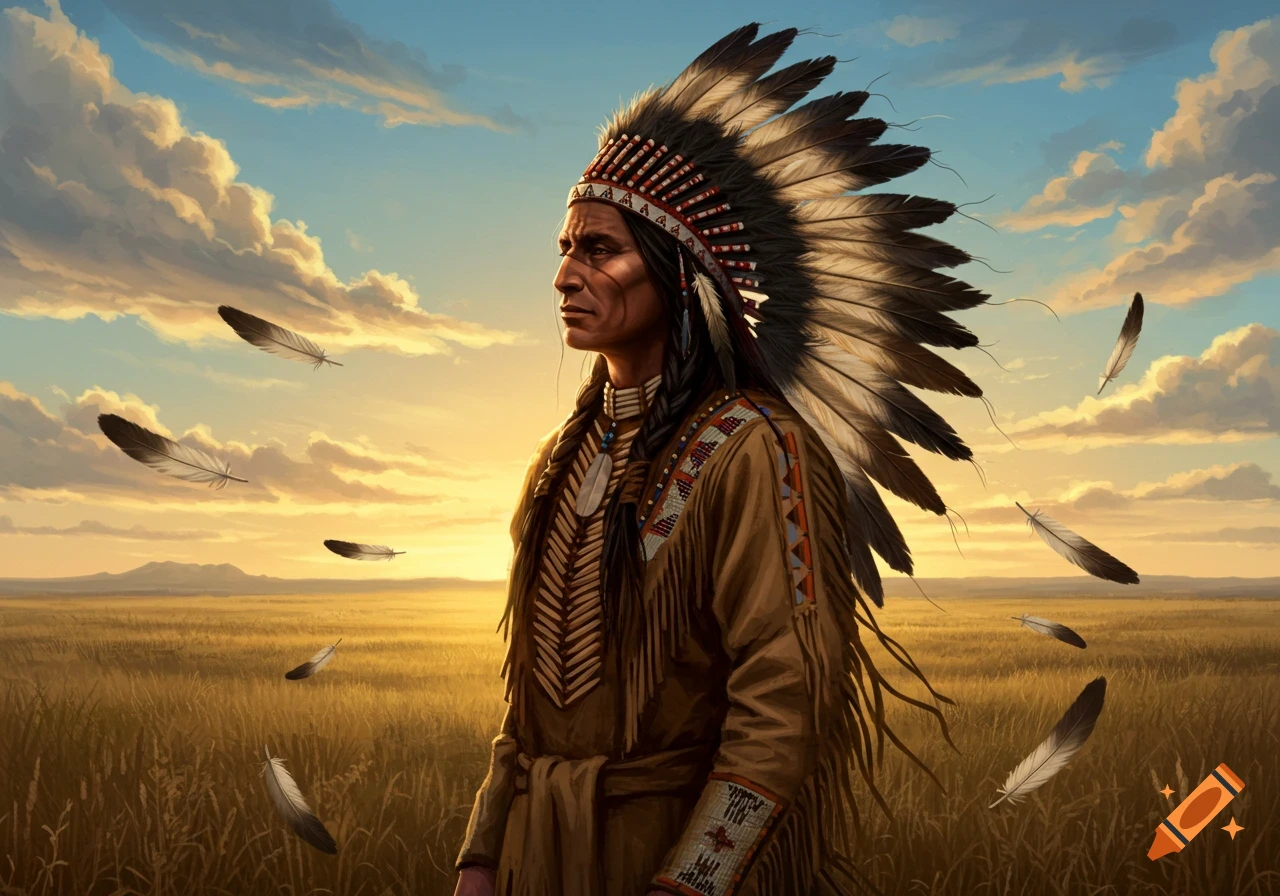
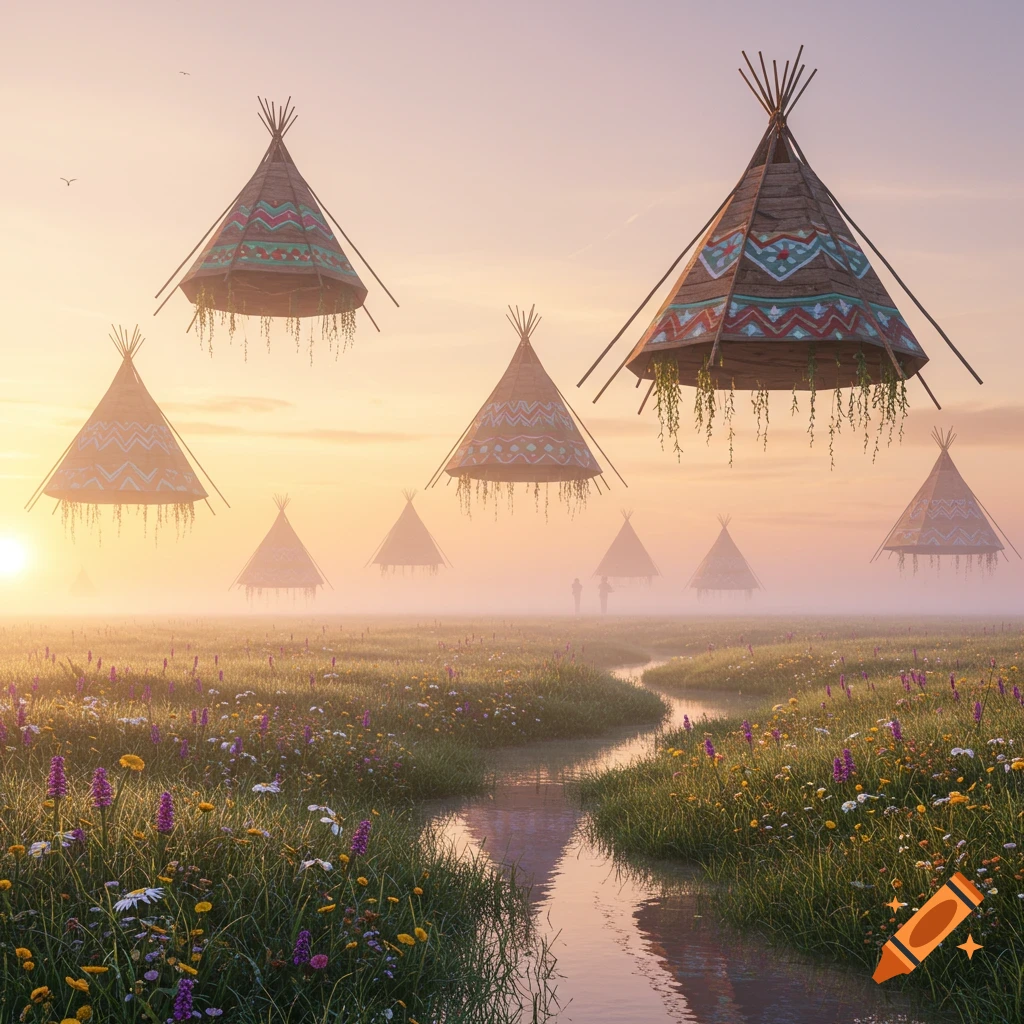
make a image telling this story:Canada’s story begins long before it was ever called Canada, in a land shaped by ice, forests, prairies, and the peoples who lived there for thousands of years. Indigenous nations — including the Haudenosaunee, Cree, Dene, Mi’kmaq, Blackfoot, Coast Salish, and Inuit — built complex societies with their own languages, political systems, and spiritual traditions. They traded across vast distances, farmed along the Great Lakes, followed bison herds across the Prairies, and thrived in the Arctic using knowledge passed down through generations. These civilizations formed the first chapters of the land’s history, long before Europeans arrived. The first outsiders to reach these shores were the Vikings around the year 1000, leaving a small settlement at L’Anse aux Meadows in Newfoundland. Centuries later, European exploration began in earnest. In 1497, John Cabot sailed along the Atlantic coast for England, and in 1534 Jacques Cartier claimed the land for France, recording the Iroquoian word kanata, meaning “village,” which eventually became the name of the entire country. France established permanent settlements in the early 1600s, with Samuel de Champlain founding Québec City in 1608. This marked the beginning of New France, a colony built on the fur trade and alliances with Indigenous nations. French explorers and traders traveled deep into the continent, mapping rivers and lakes while forming relationships — and conflicts — with Indigenous Mehr sehen
More images like this