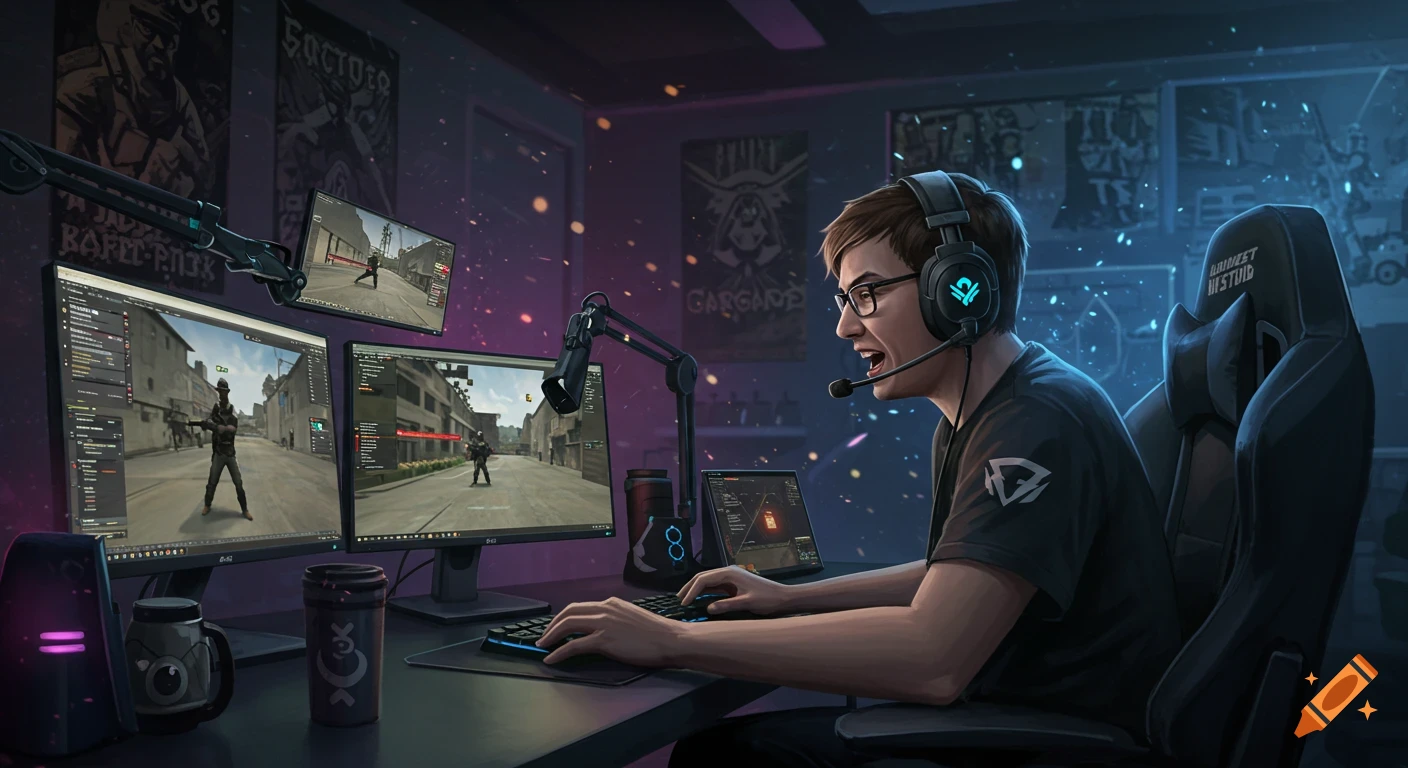
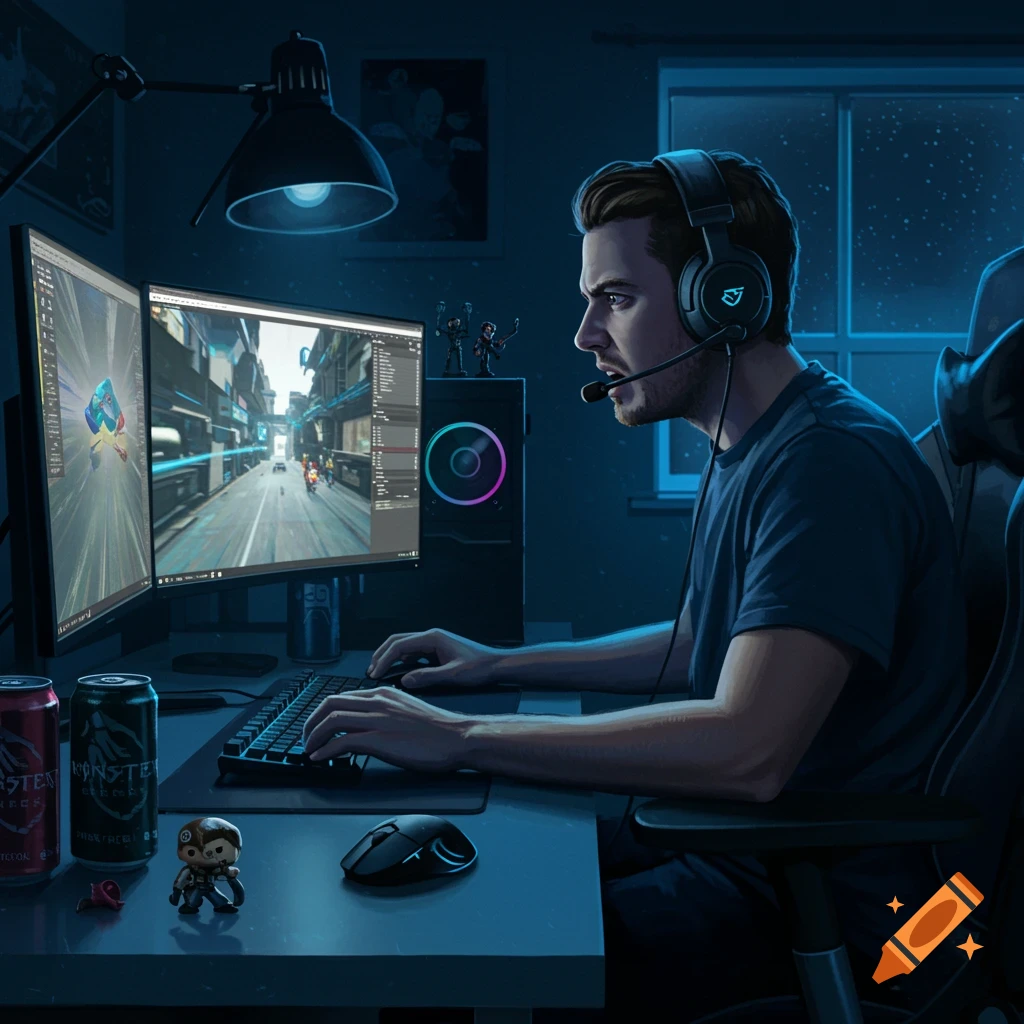
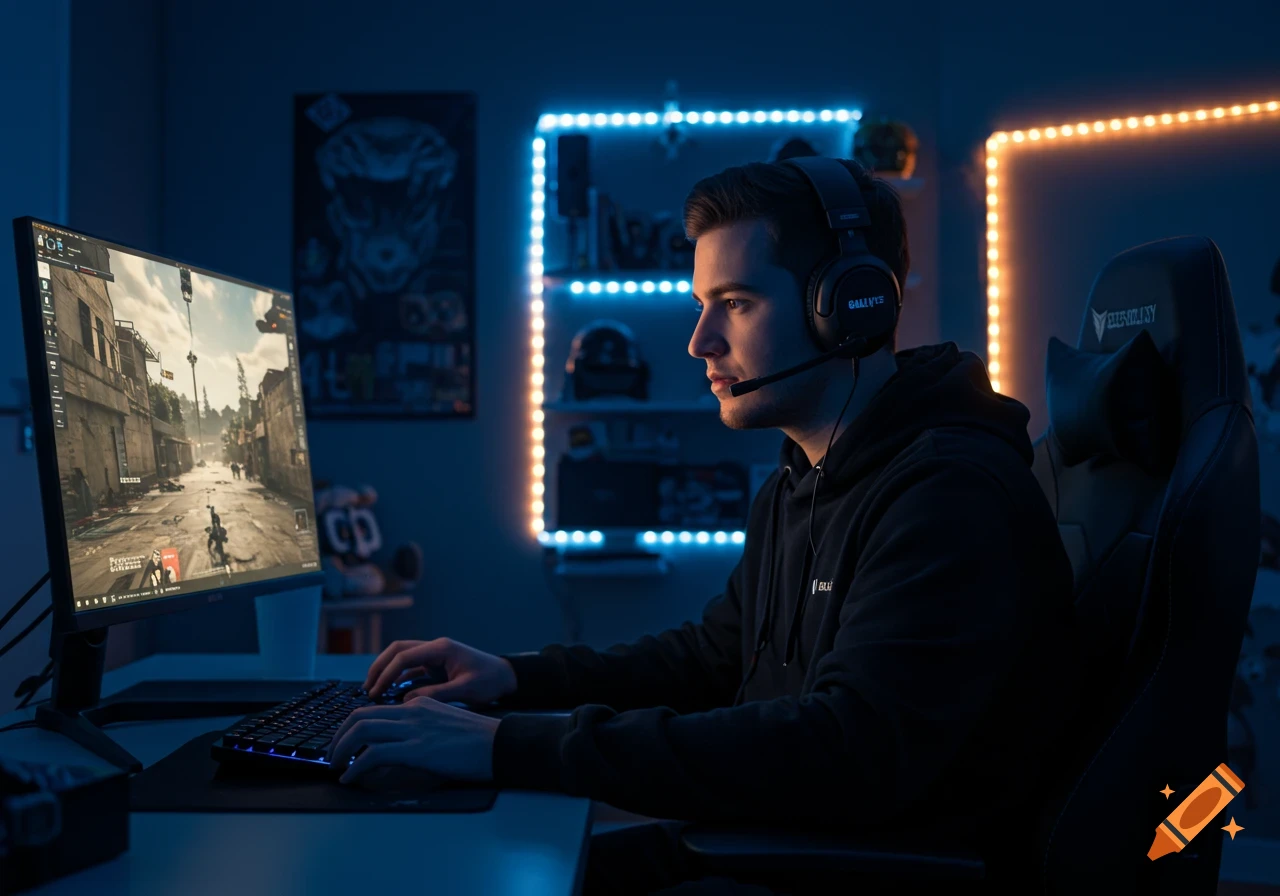
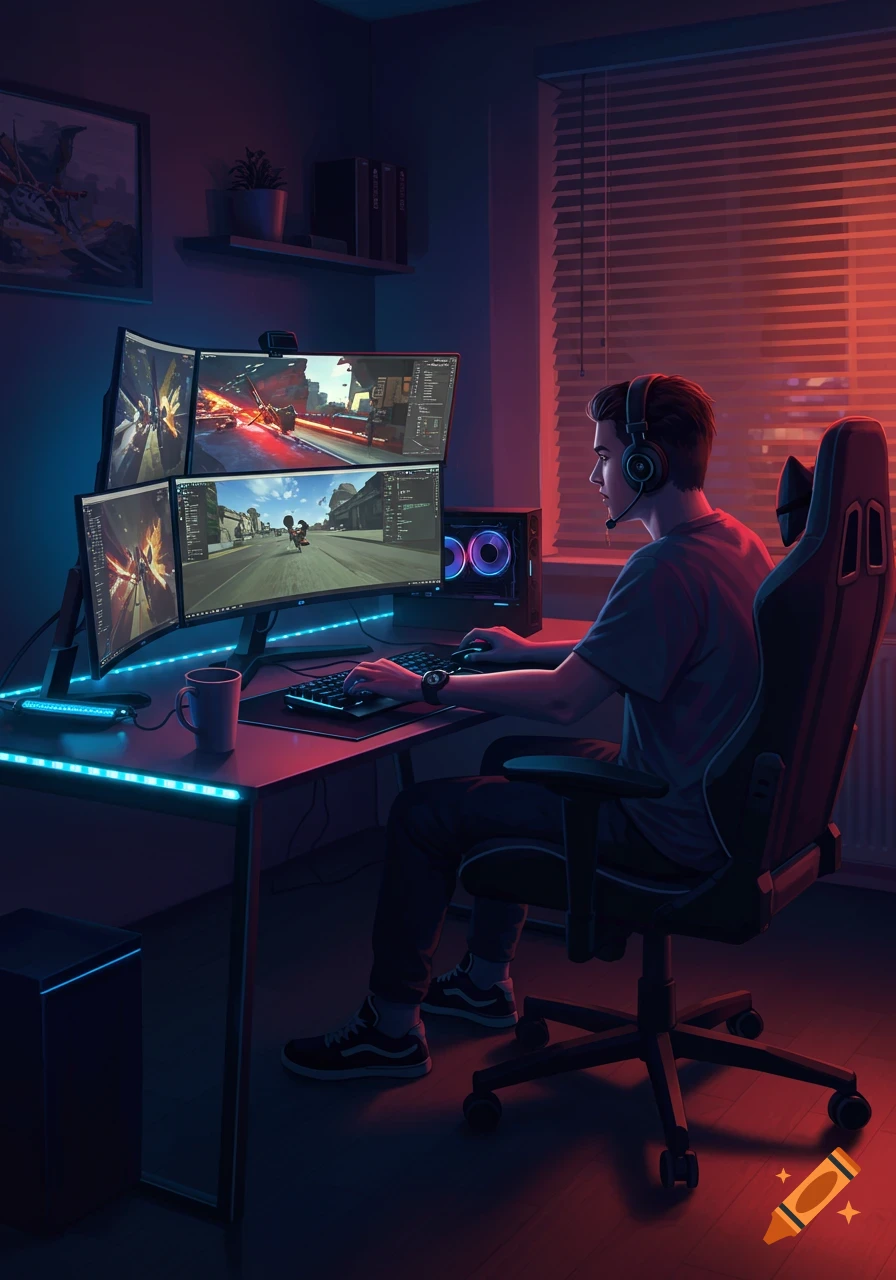
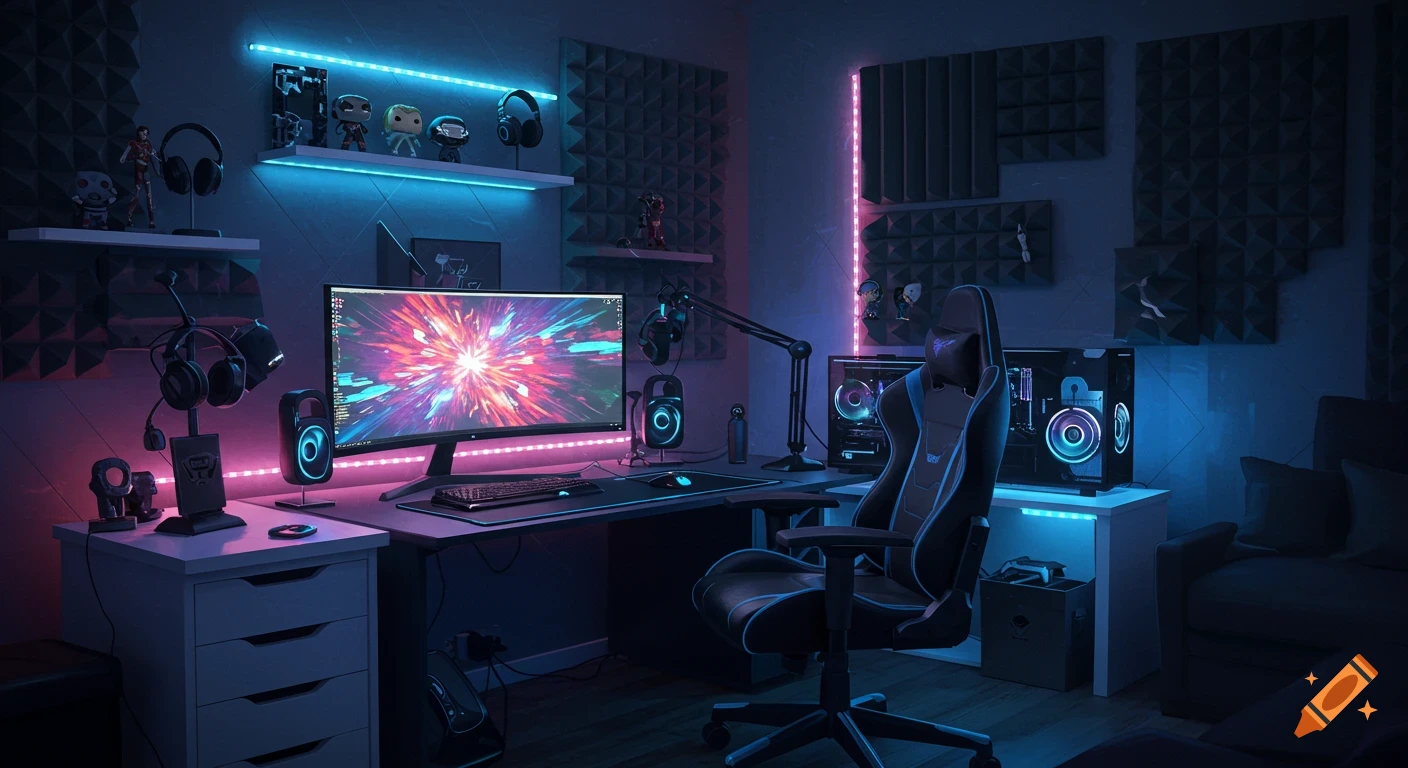
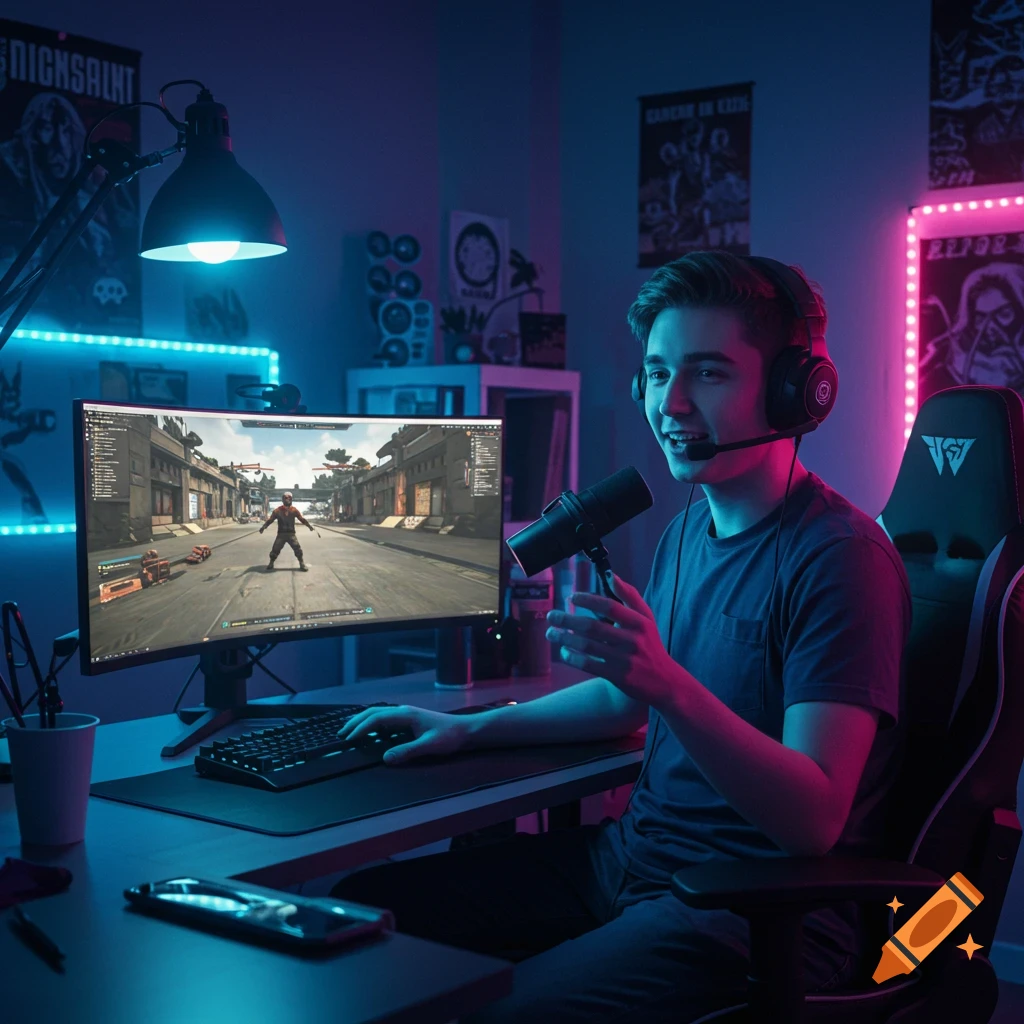
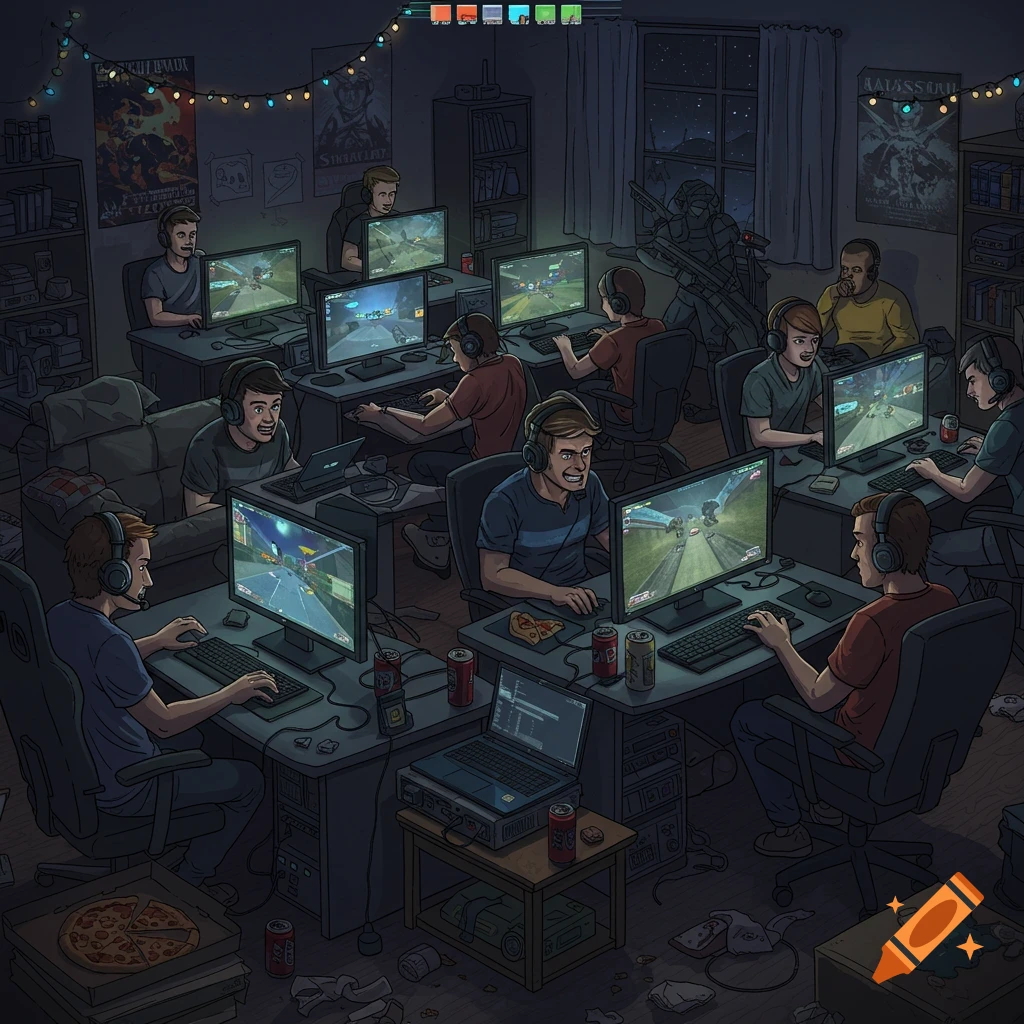
A young man with headphones plays video games on multiple monitors in a dark, messy basement room filled with snack containers, cans, and action figures.

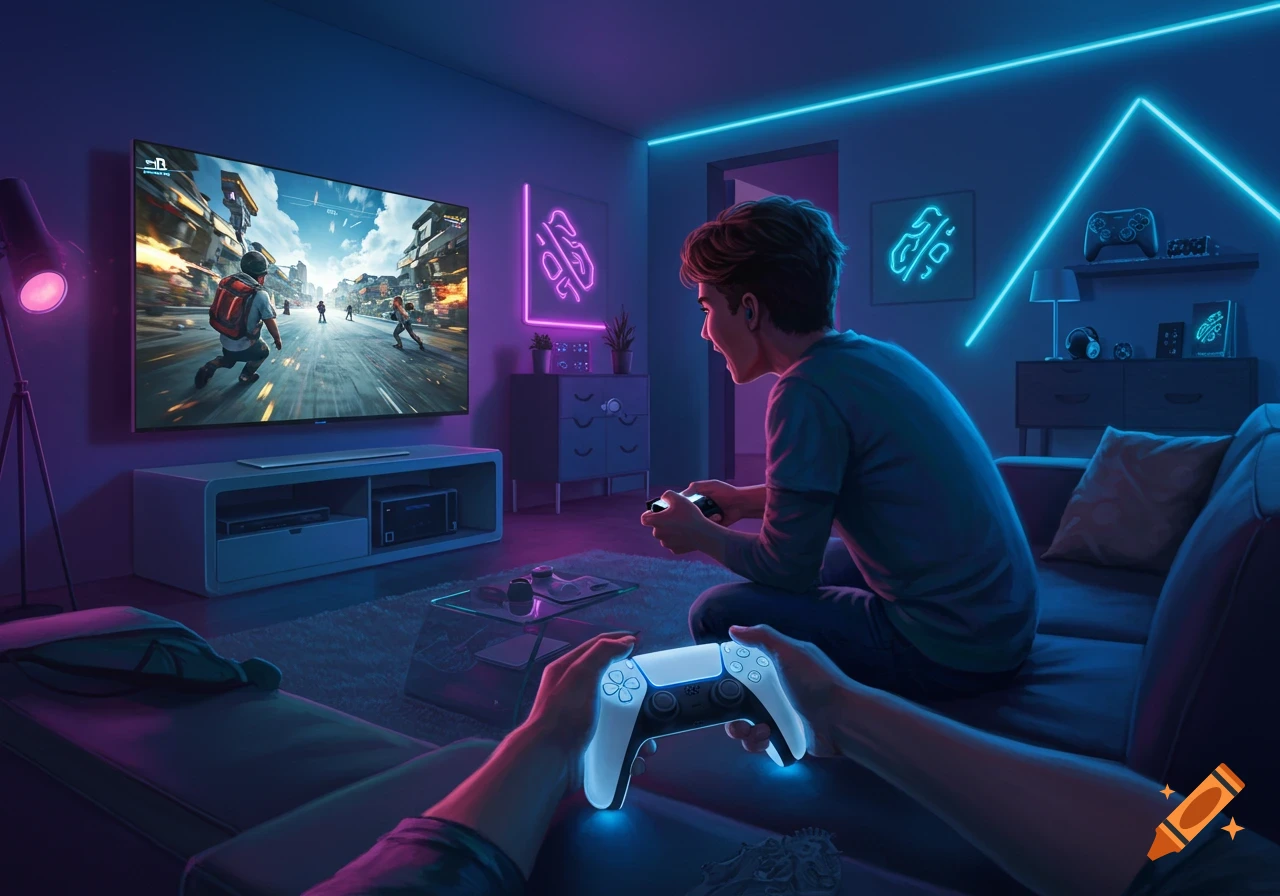
Make an image like the one attached for the article below There’s a young man I want you to picture. He’s 24 years old. He lives in his parents’ basement — not temporarily, not transitionally, but settled. His sleep schedule is inverted. His meals arrive at whatever hour he remembers to eat. He has friends, sort of — digital ones, scattered across time zones, who know his gamer tag but not his face. He has a girlfriend, sort of — a rotating cast of women on a screen who cannot reject him, cannot leave him, and cannot love him. He doesn’t think his life is a disaster. That’s the most alarming part. And he is not alone. Not even close. The Numbers Nobody Wants to Say Out Loud We have produced, in the span of one generation, a masculinity crisis so quiet and so comfortable that the men living inside it don’t even know they’re in trouble. Consider this: 97% of teen boys in the United States play video games. Not occasionally. Not casually. Sixty-one percent play every single day. Nearly half identify as gamers — meaning the game isn’t just something they do, it’s something they are. And when we look at gaming disorder specifically, the gender split becomes almost comical in its lopsidedness: 94% of all gaming addicts are male. Males develop gaming addiction at a rate 2.5 times higher than females. The World Health Organization didn’t classify Gaming Disorder in 2018 because it was a fringe concern. They classified it because the data demanded it. But gaming is only the entry Mehr sehen
More images like this