A photorealistic image of researchers in a library-like lab, a man in a lab coat points to data in an open notebook, with others working on computers nearby.
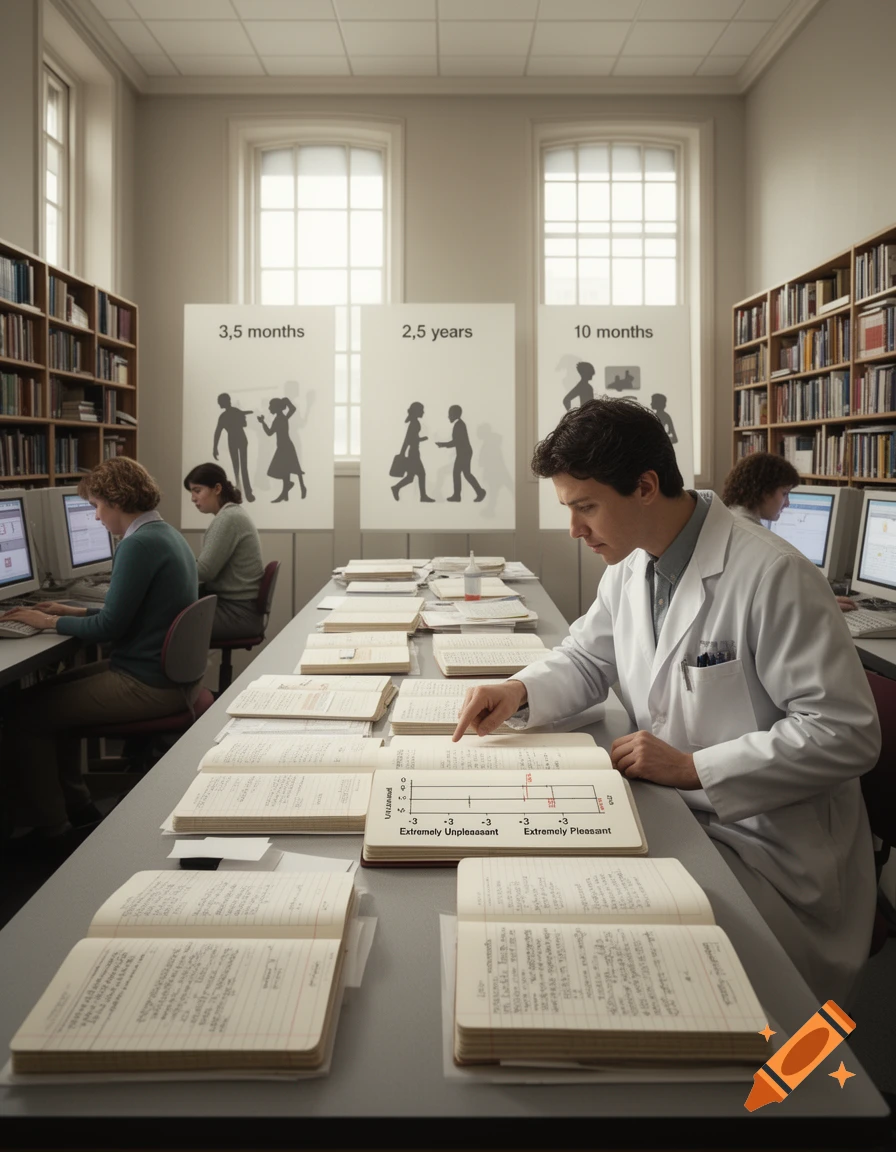
The ‘modern era’ of FAB research was ushered in by the initial publication of Walker et al. (1997). These researchers used a diary method, thereby avoiding retrospective bias. Participants in the three studies reported by Walker et al. kept a diary of unique events and provided pleasantness ratings for each event at the time it occurred. The diaries were collected each week during the recording portion of the studies (3.5 months in Study 1, 2.5 years in Study 2, 10 months in Study 3). At the end of the recording period, participants came to the laboratory where they responded to questions about the events listed in their diaries. Participants were asked to make many of the same ratings at test that they had made at the time the event occurred, including a current pleasantness rating. Participants used a 7-point scale ranging from 3 (Extremely Unpleasant) to þ3 (Extremely Pleasant), with 0 being Neutral. 1 1One of the methodological concerns that might be raised is whether the bipolar rating scales used in these studies might inadvertently bias the results, perhaps creating an illusion of change where none exists. We have employed several different rating methods, including bipolar scales (with 7, 11 and 21 points), unipolar scales that independently assess positive and negative emotions and manipulations involve having participants provide verbal descriptions of their initial and pleasant affect. All of the methodologies have resulted in a consistent set of findings. Mehr sehen
More images like this