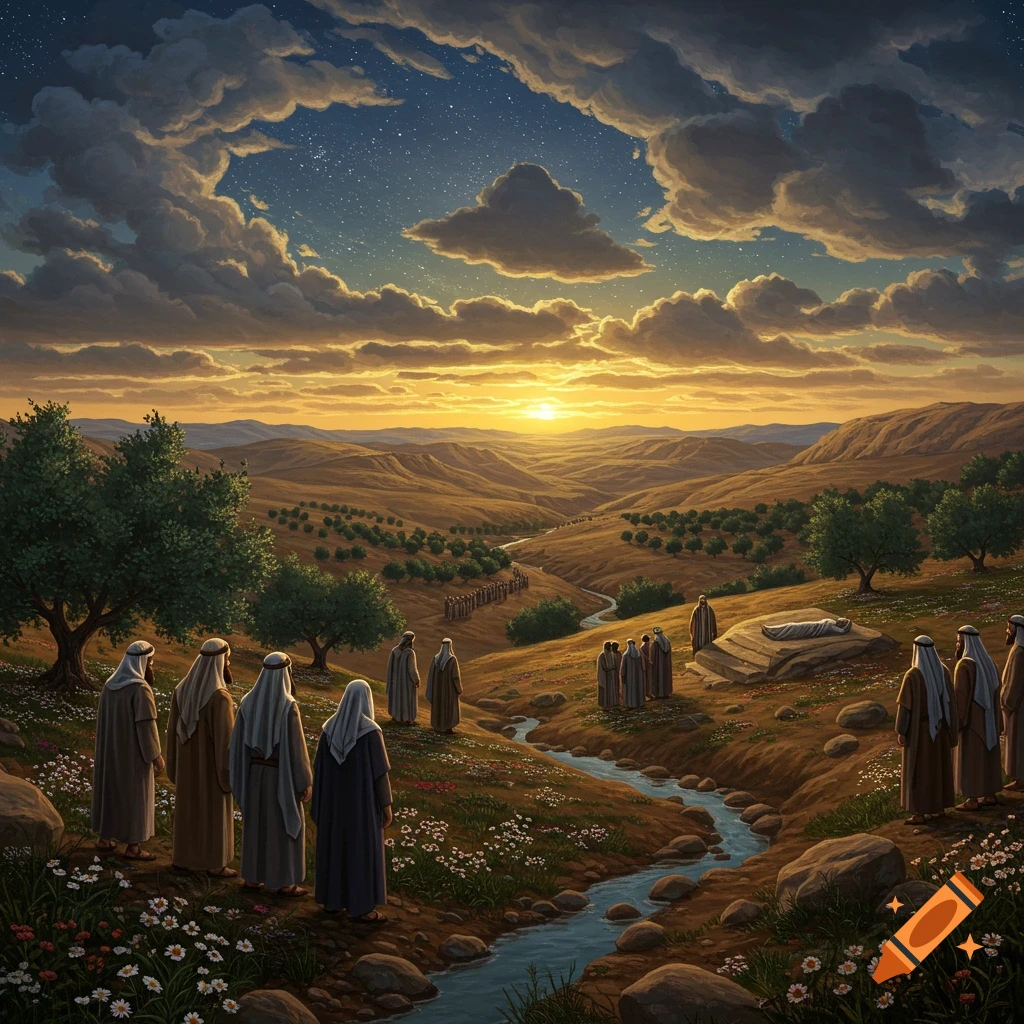
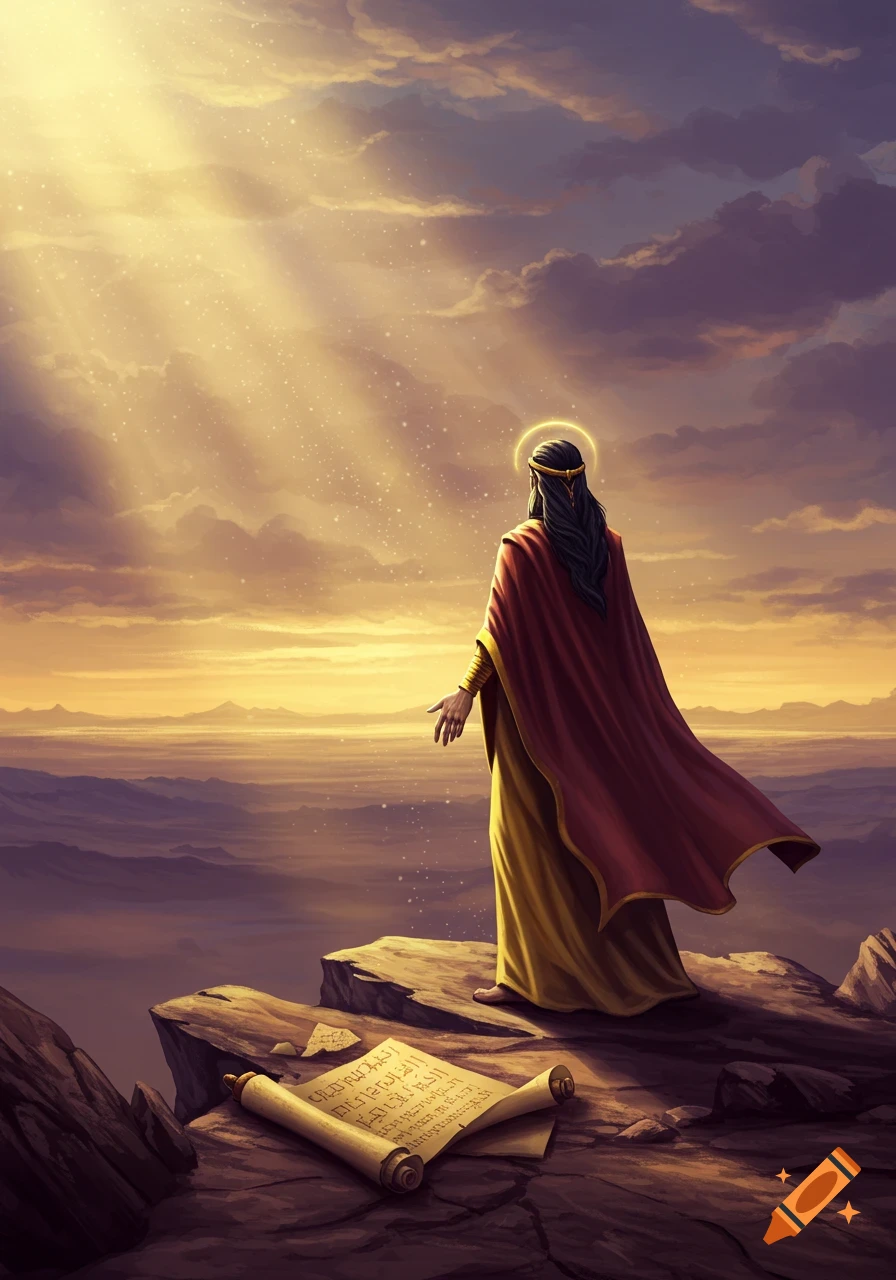
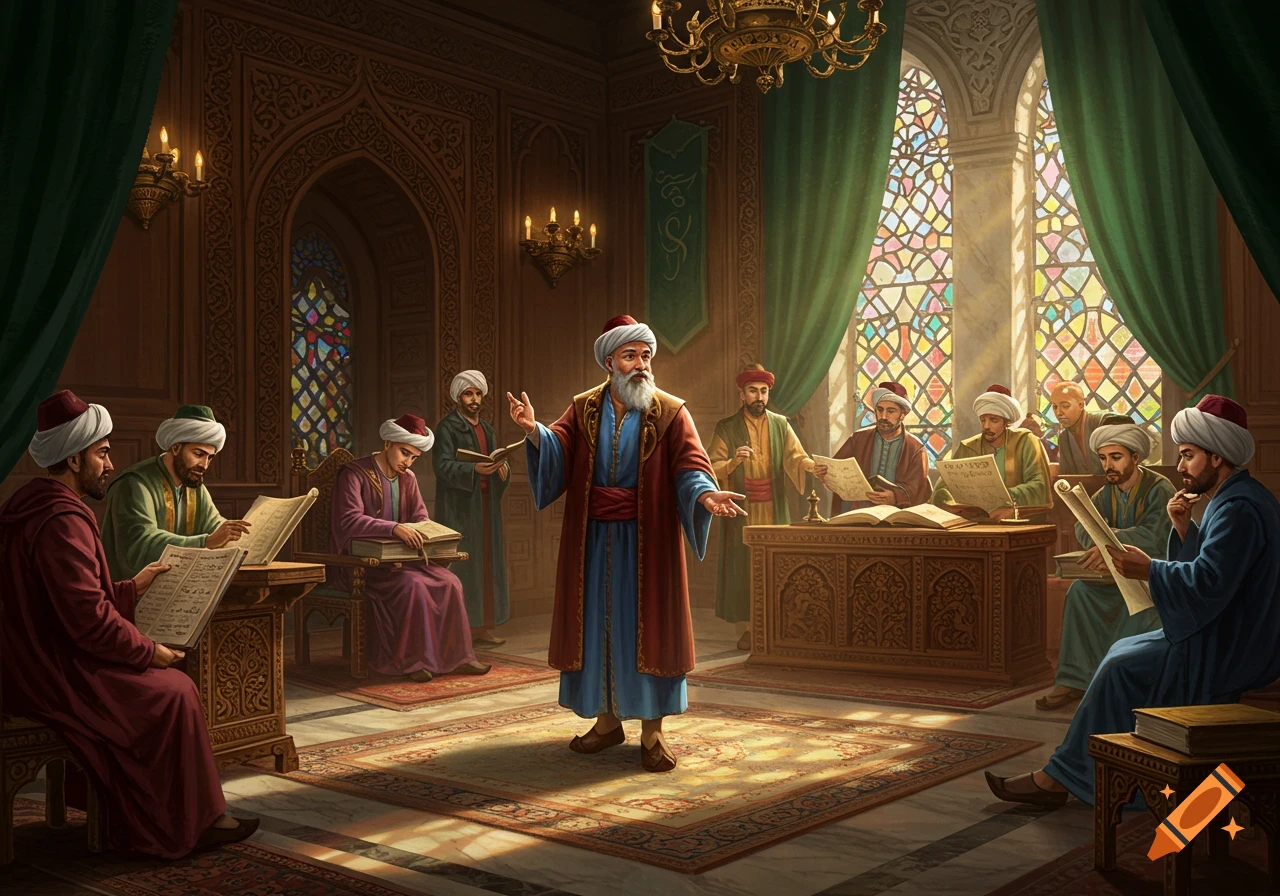
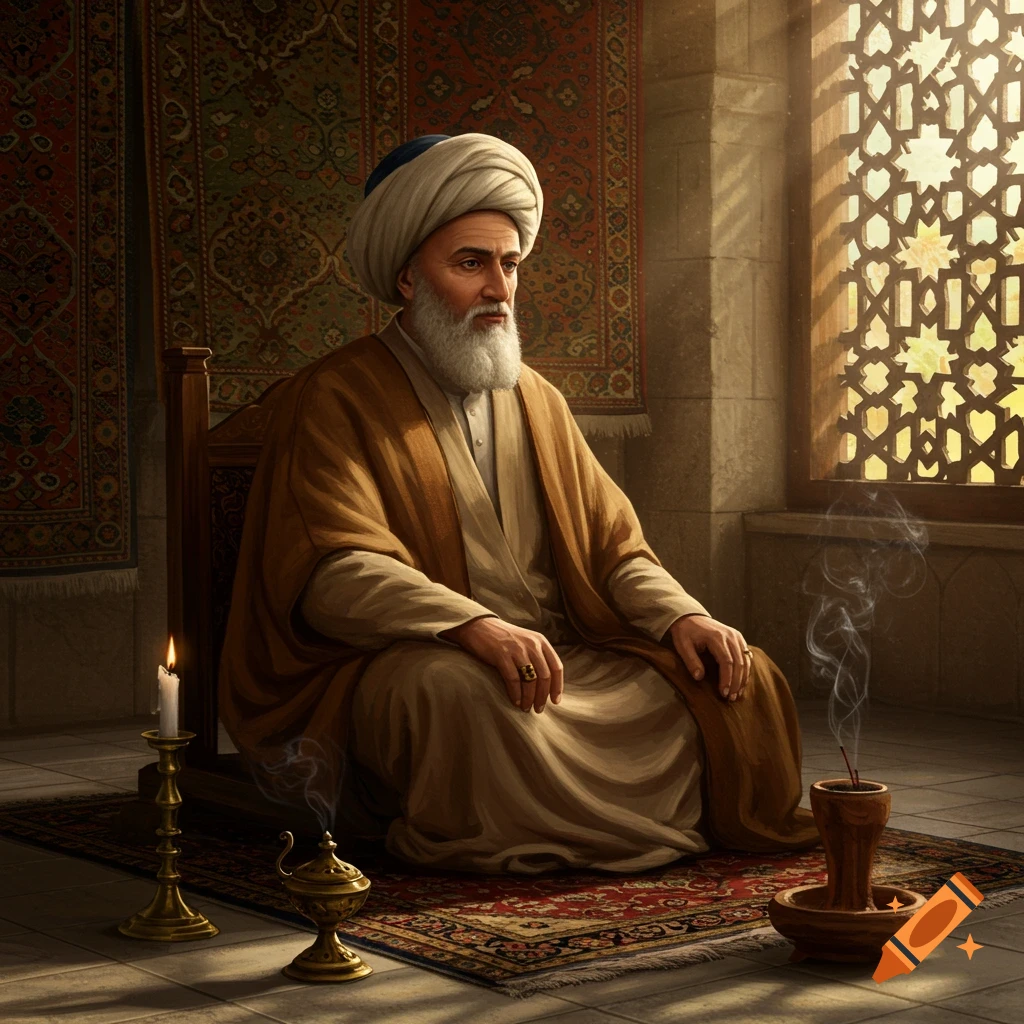
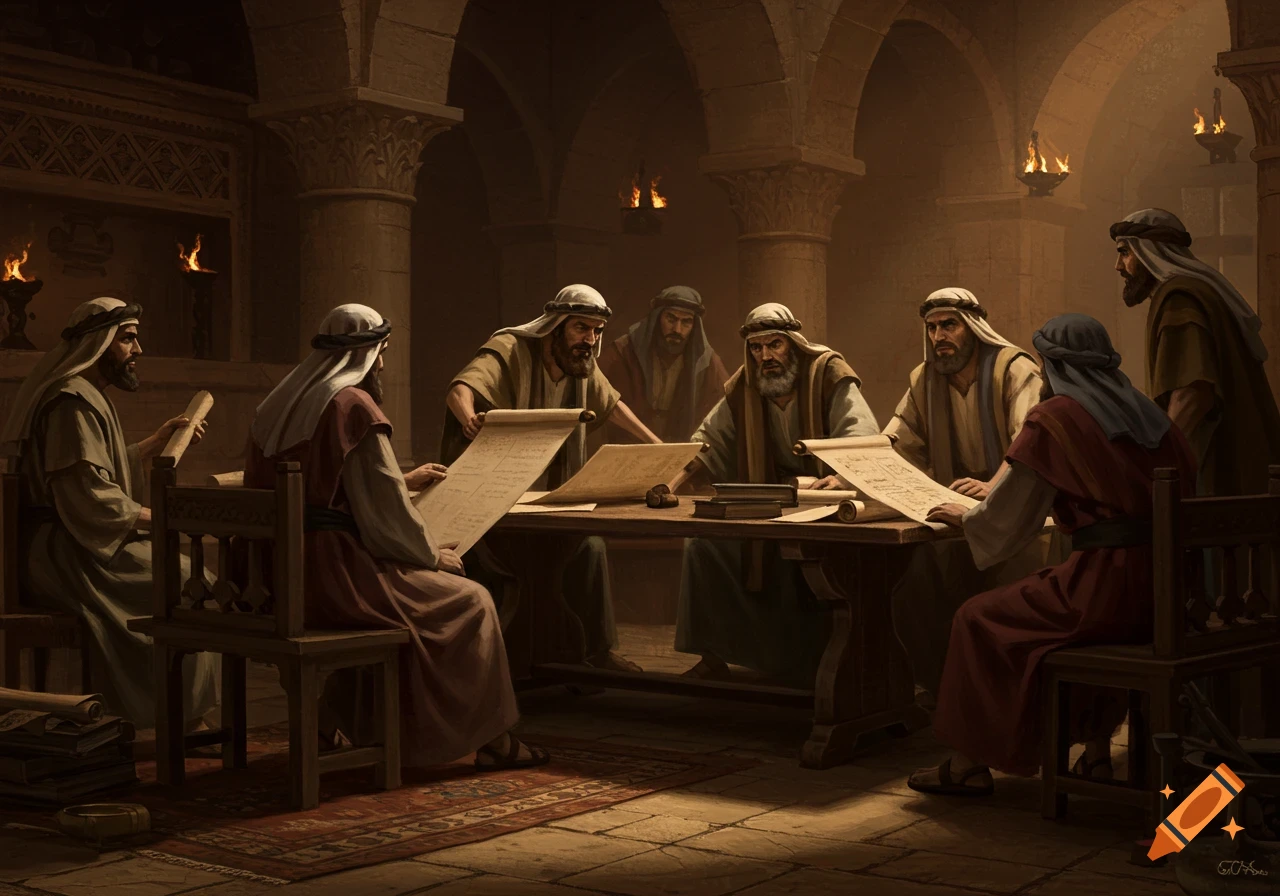
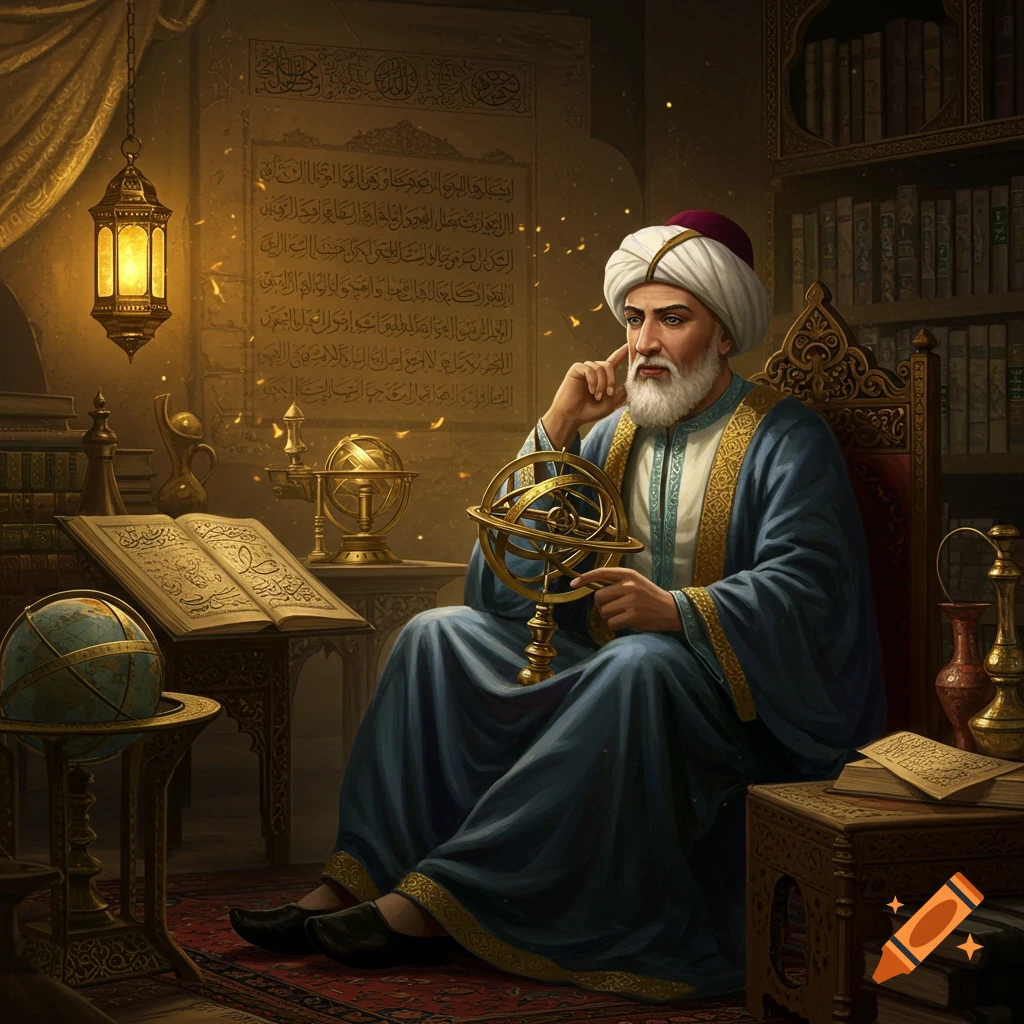
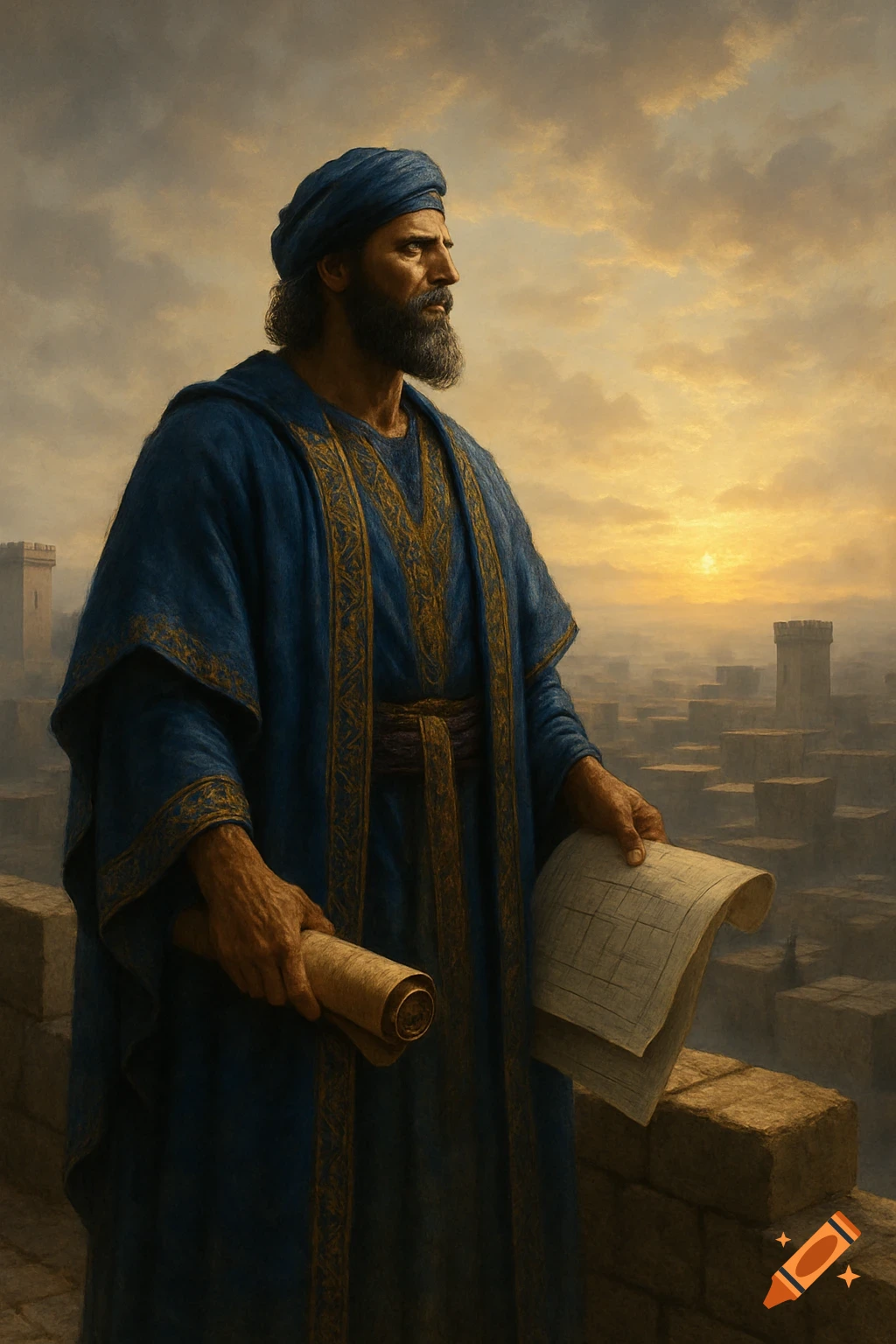
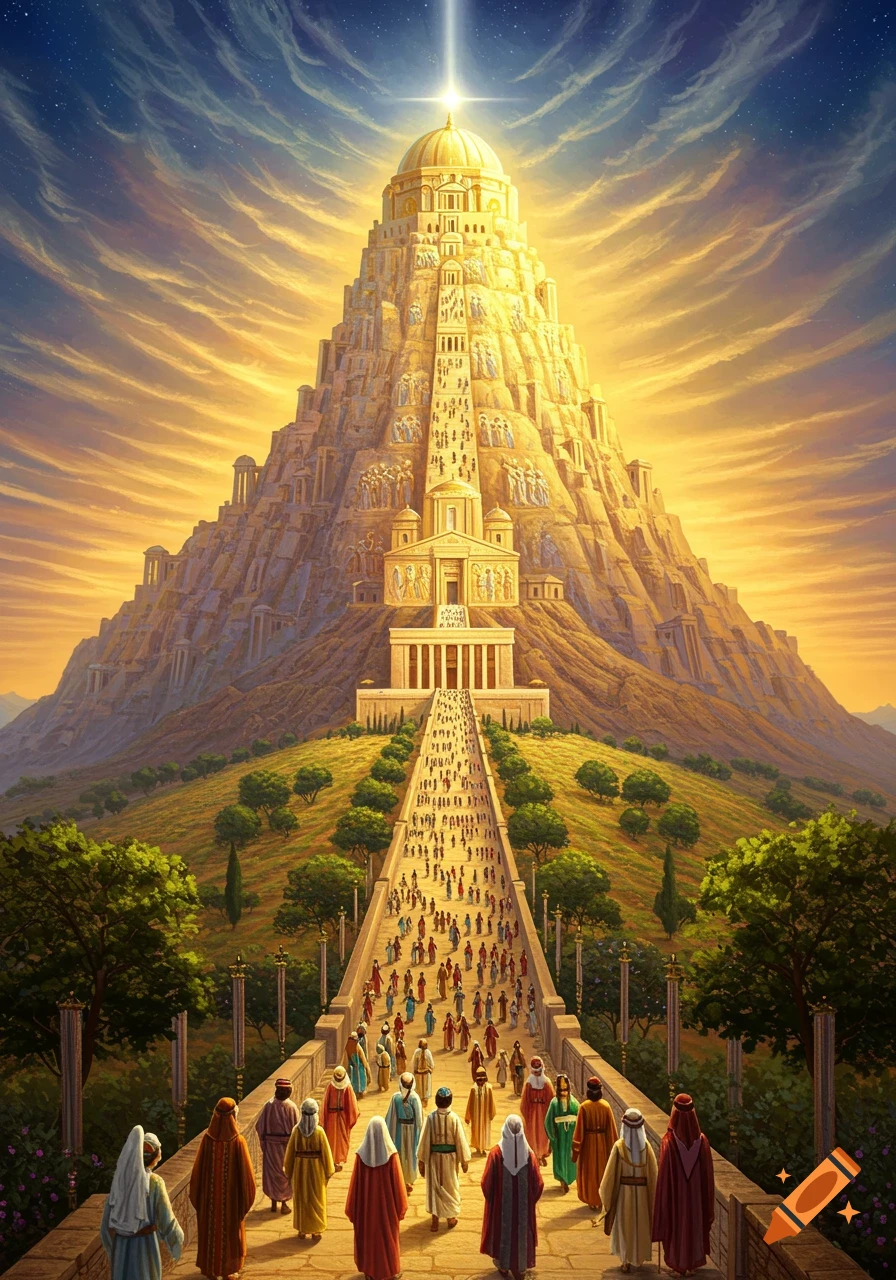
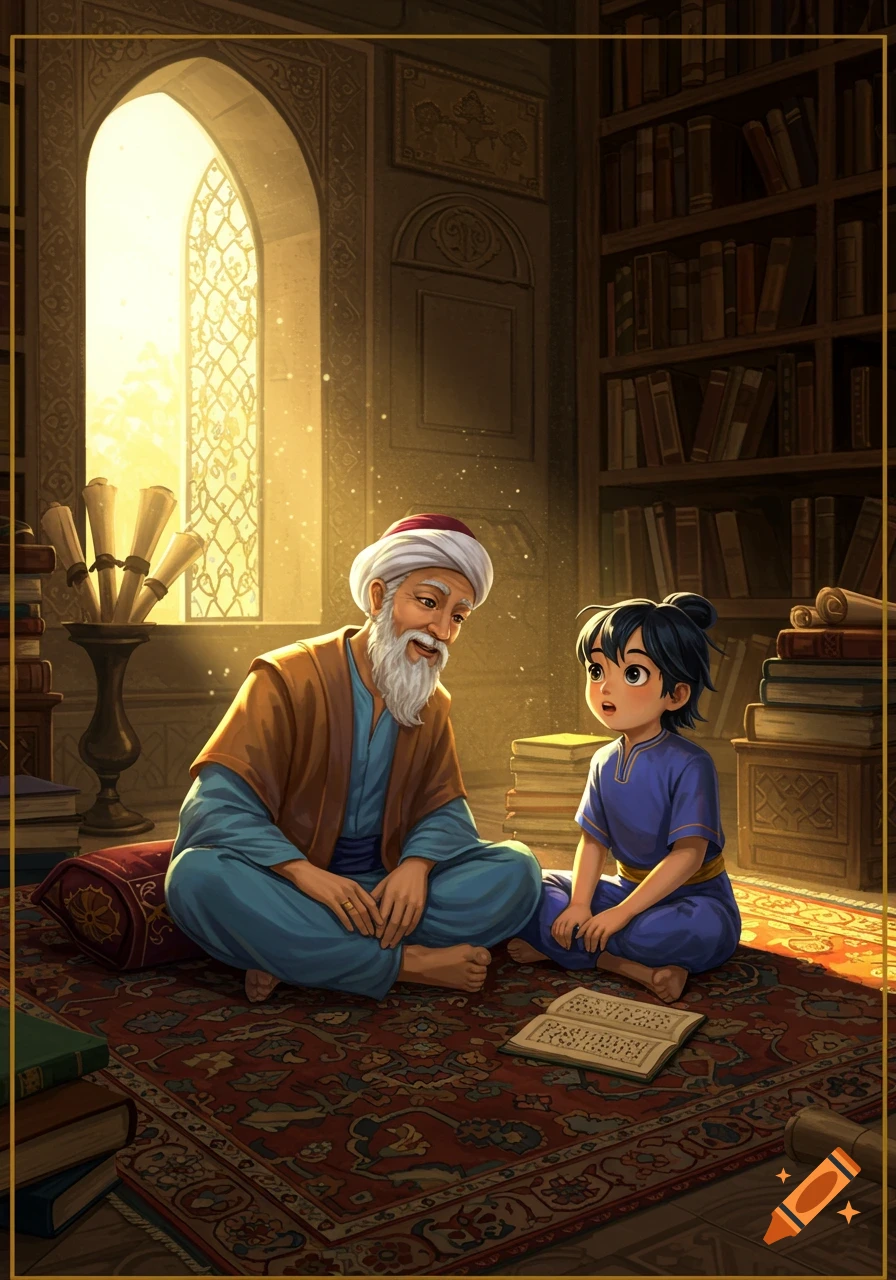
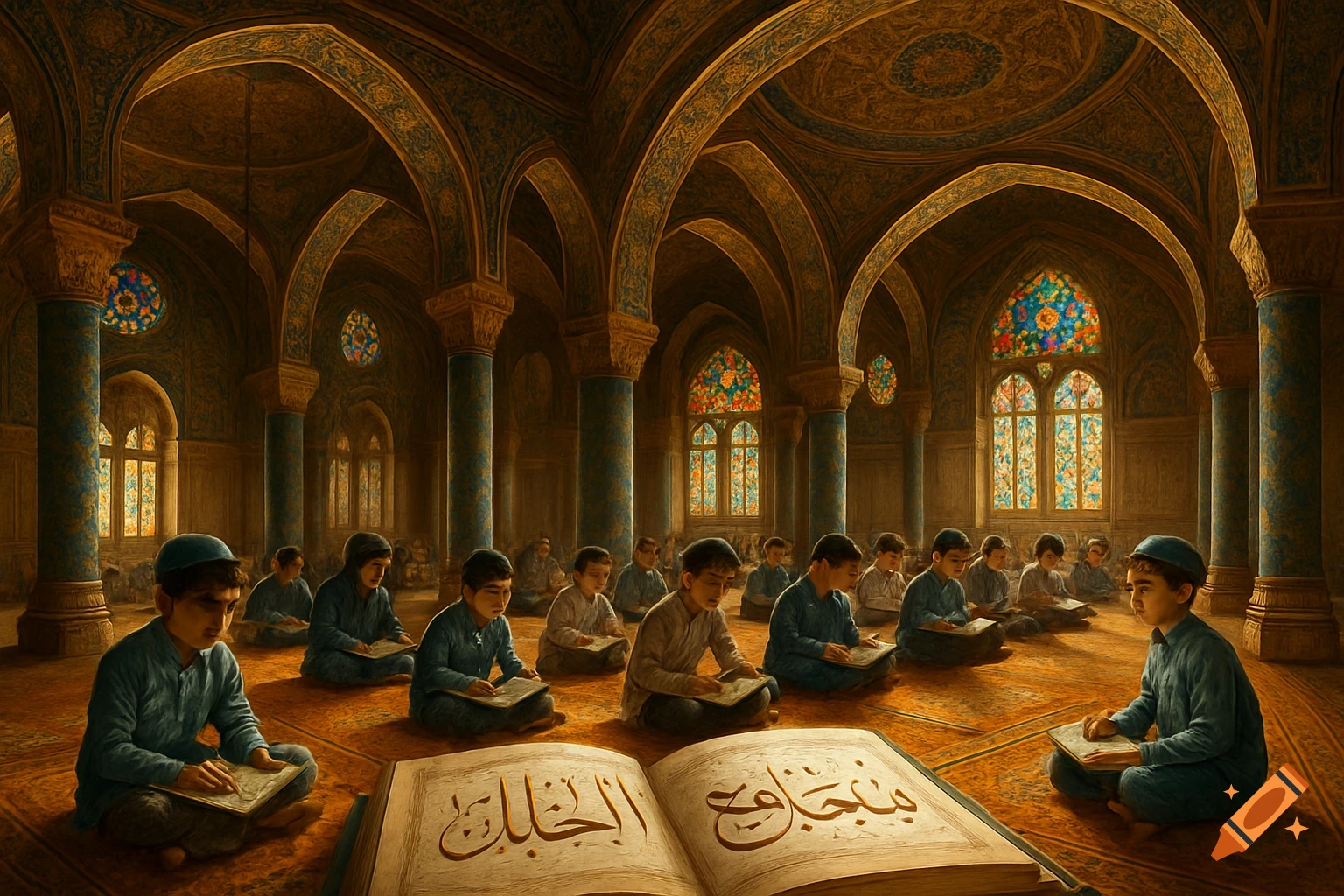
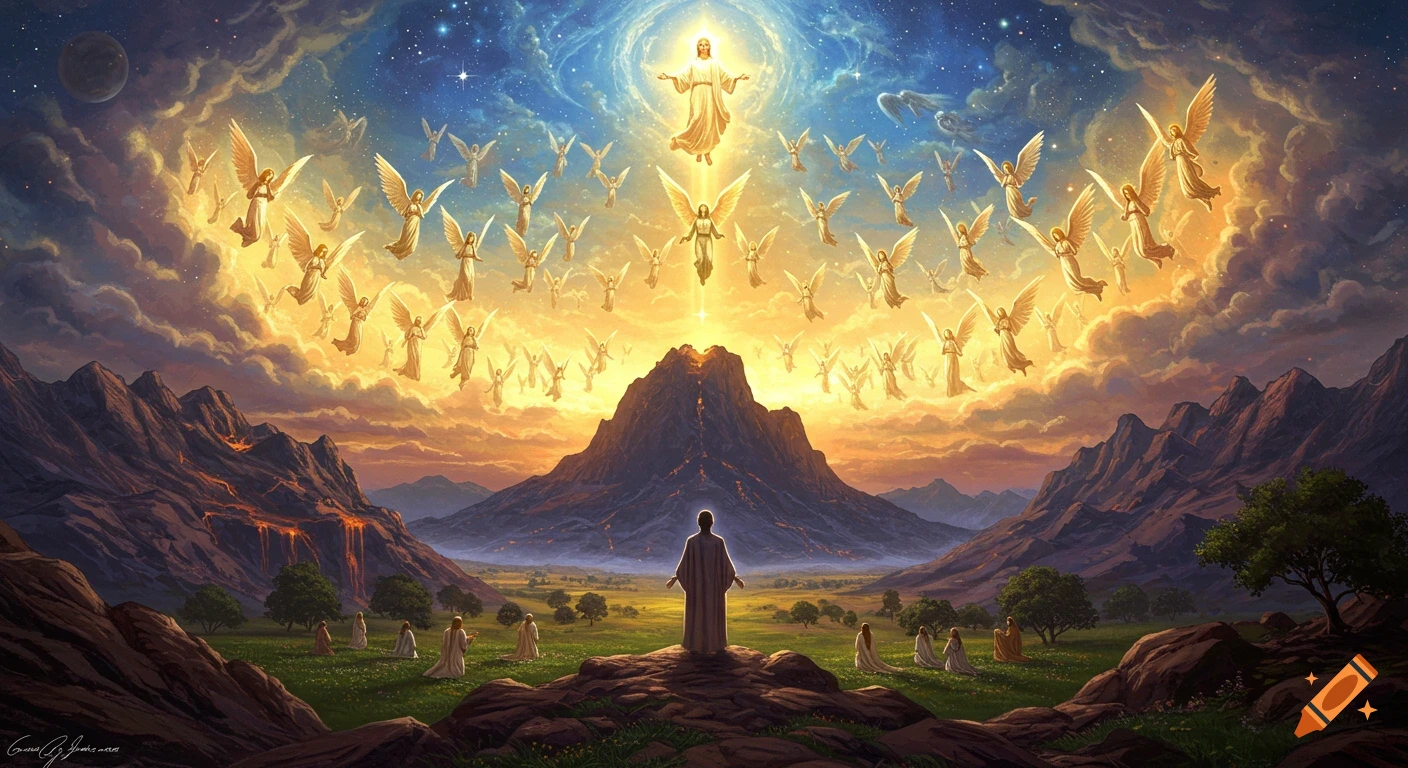
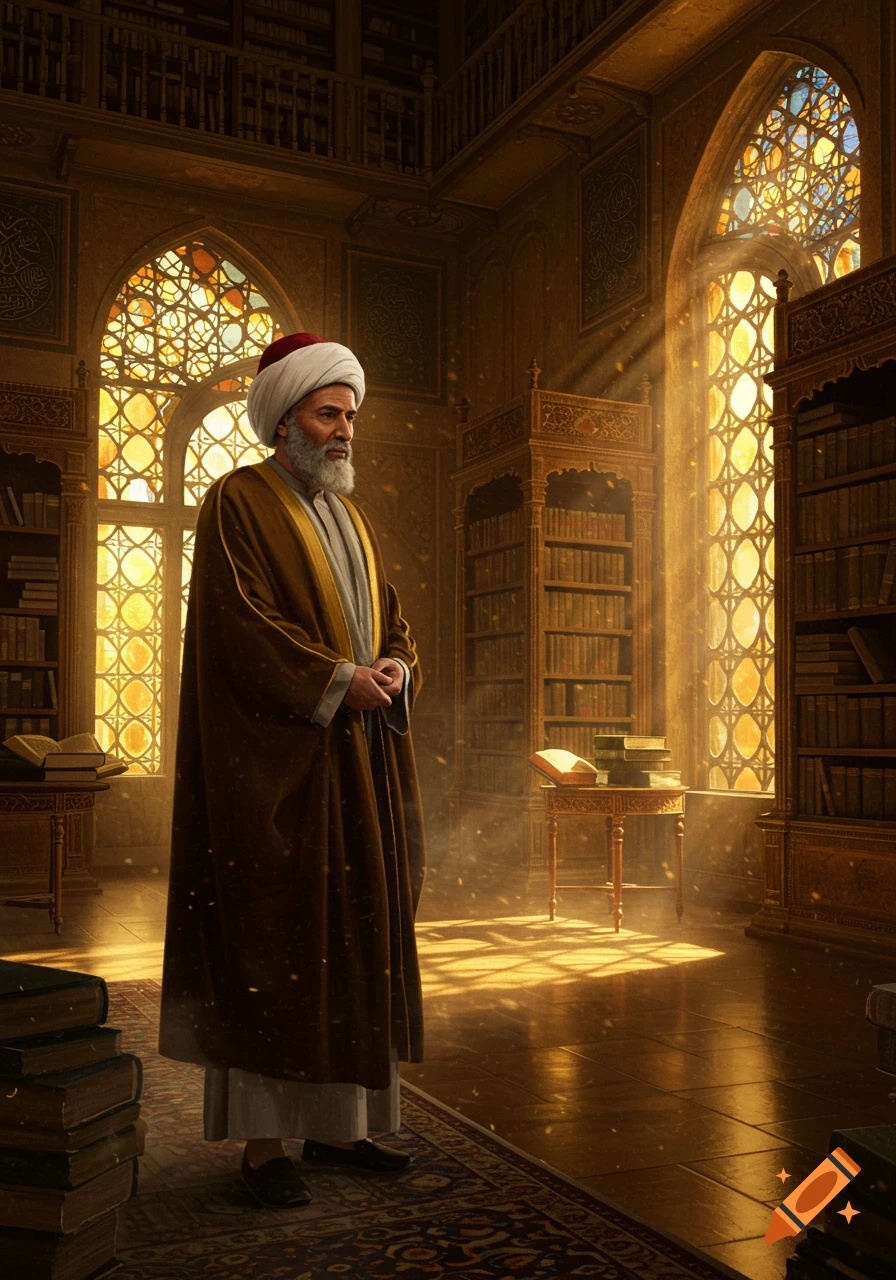
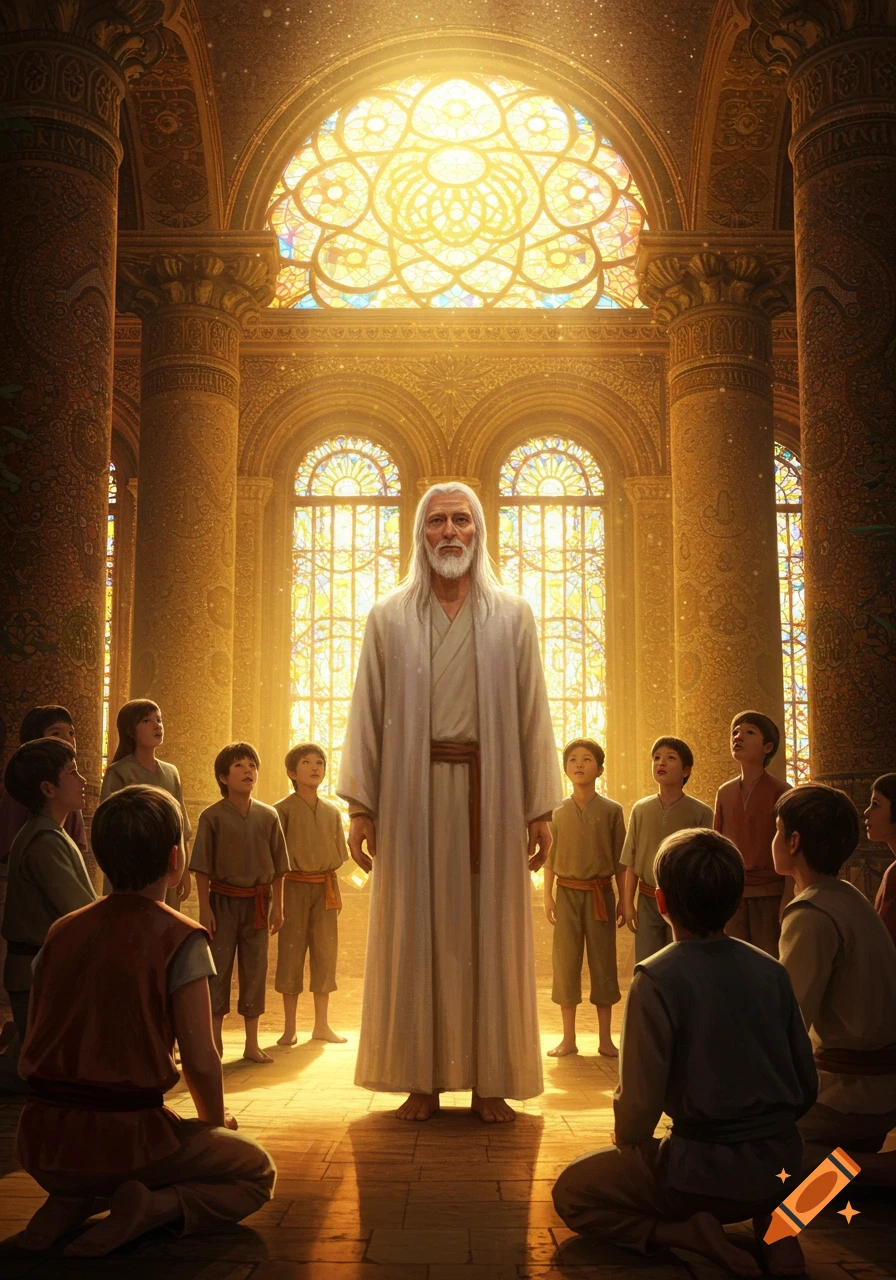
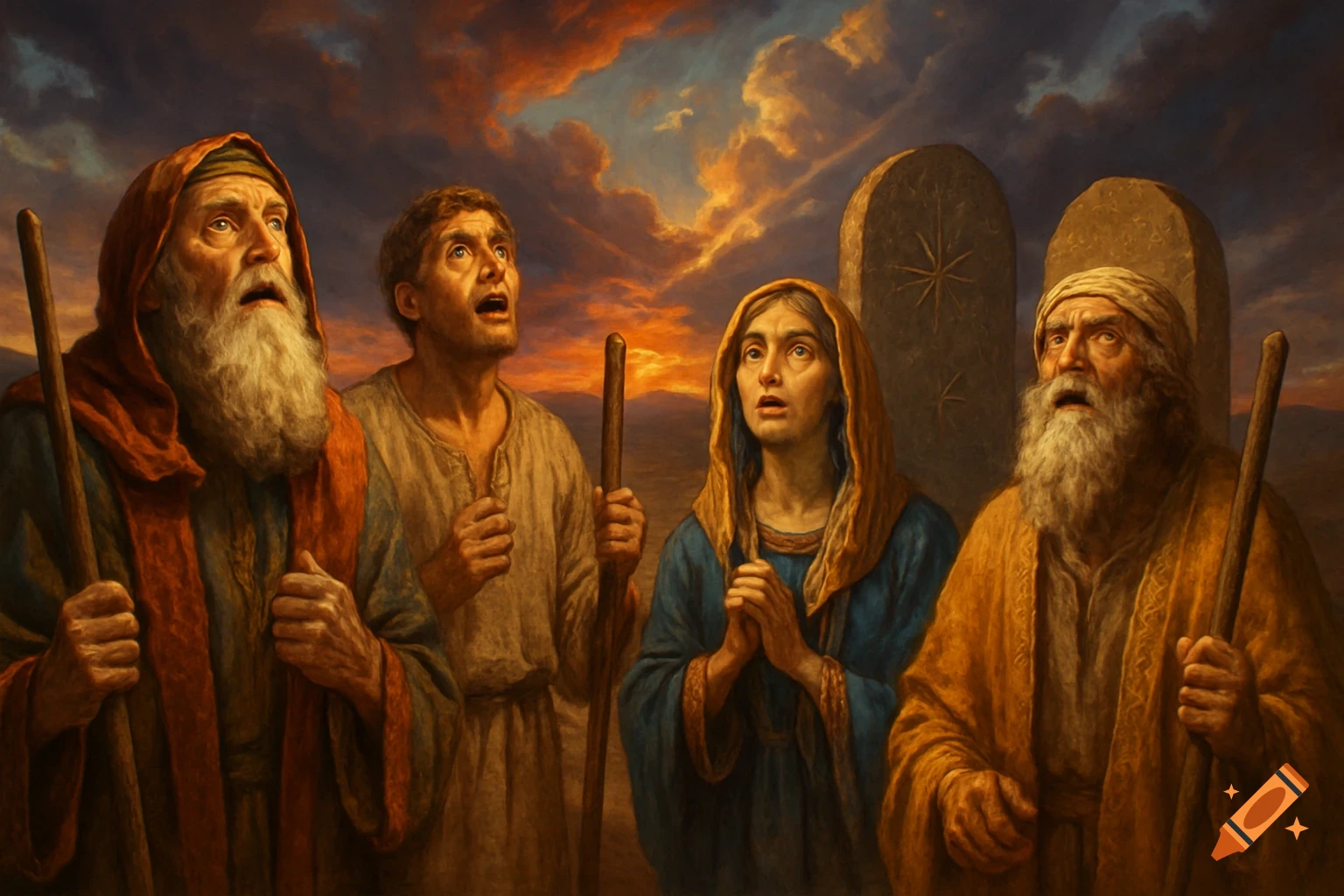
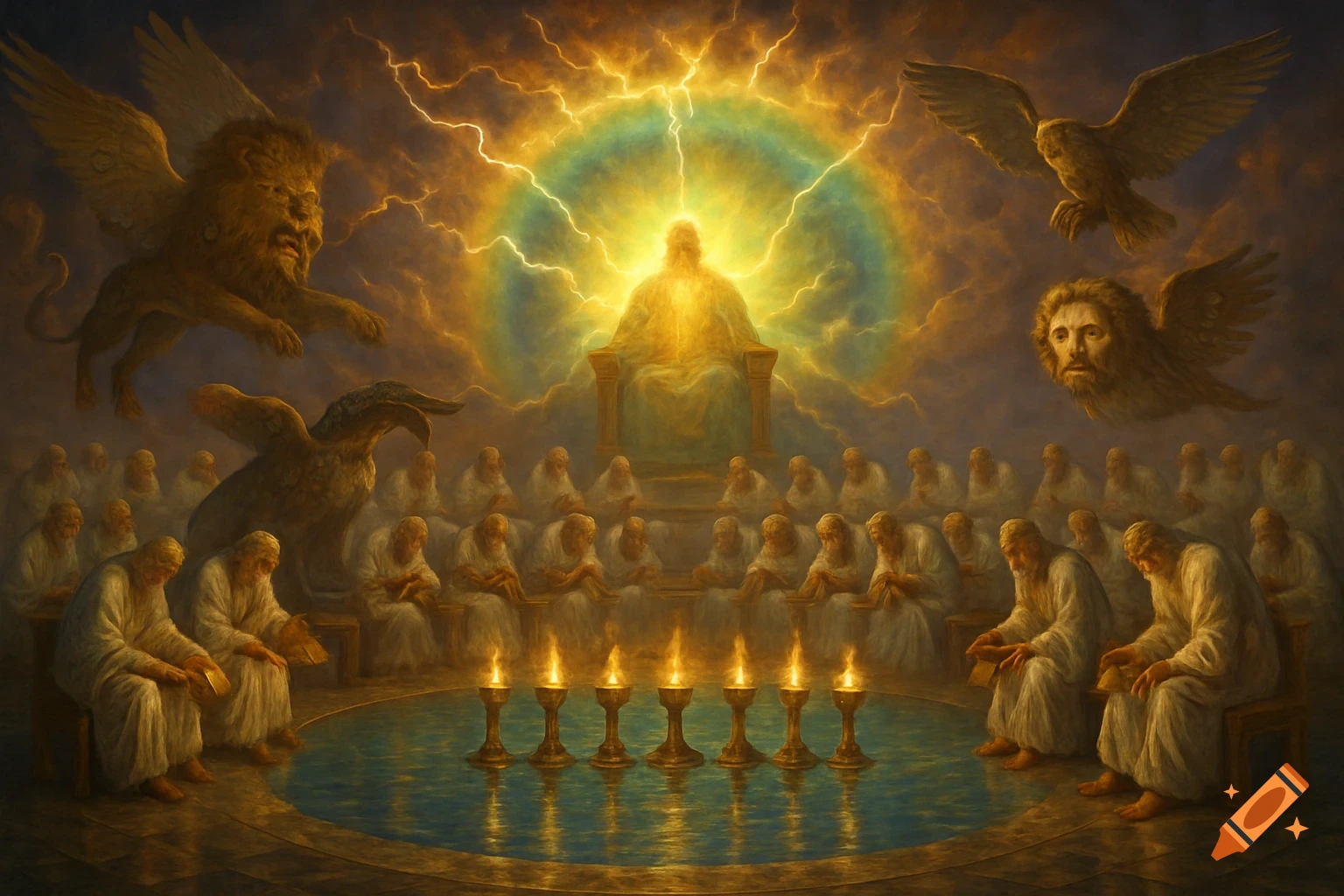
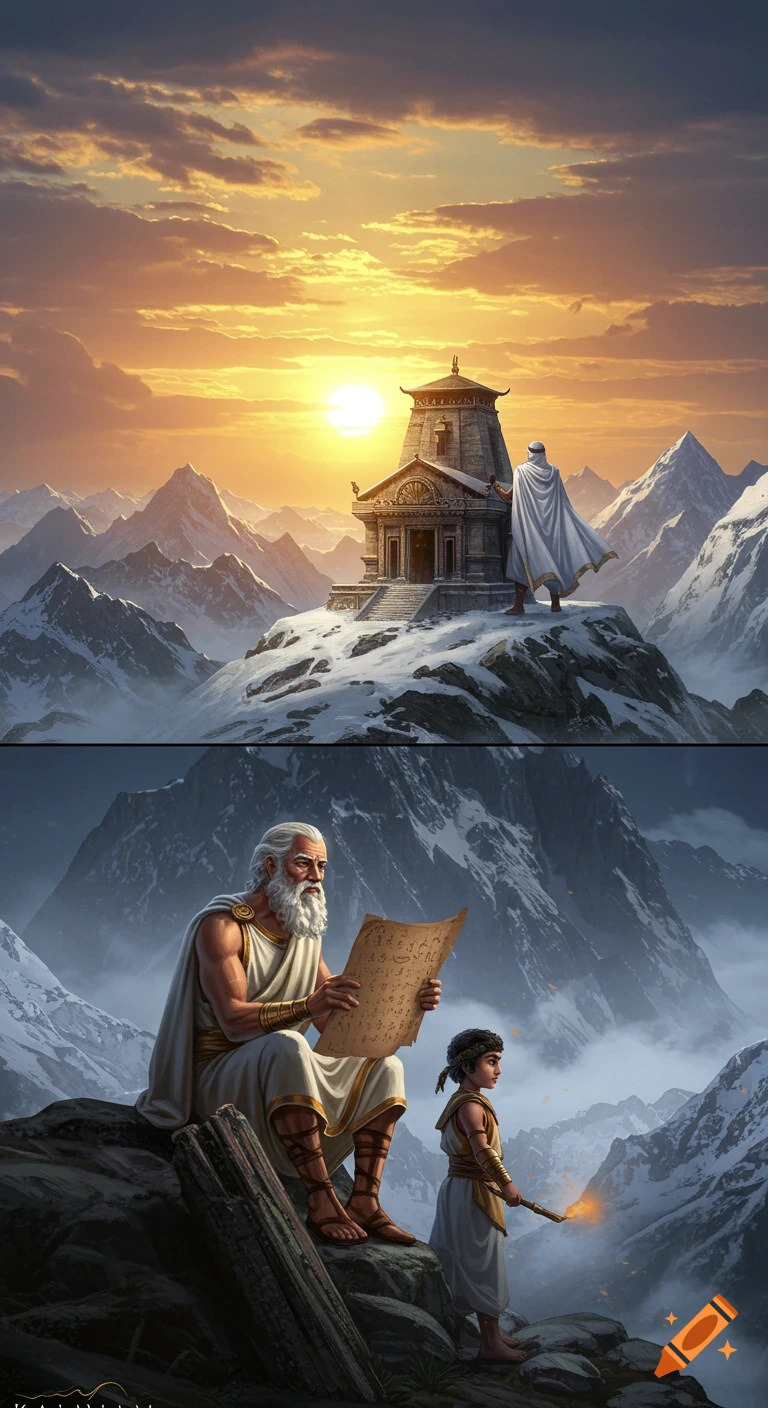
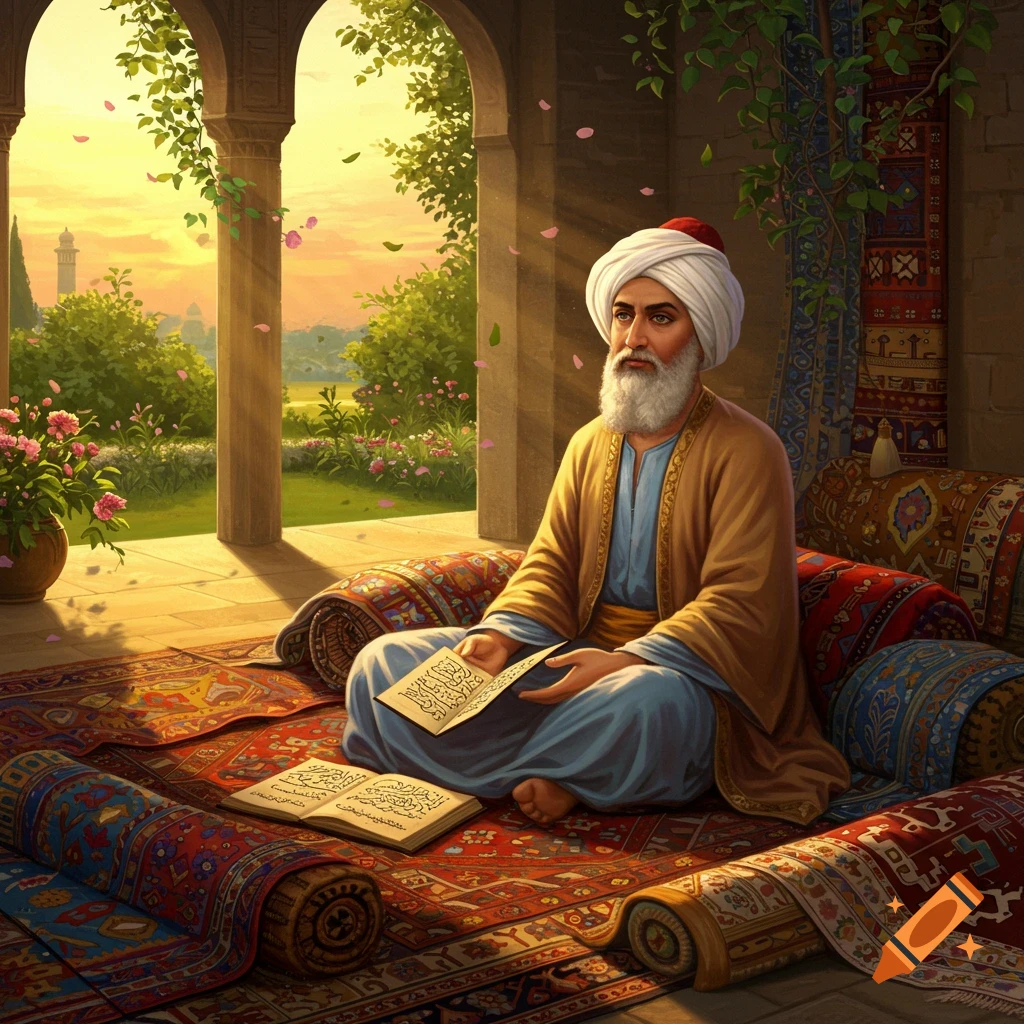
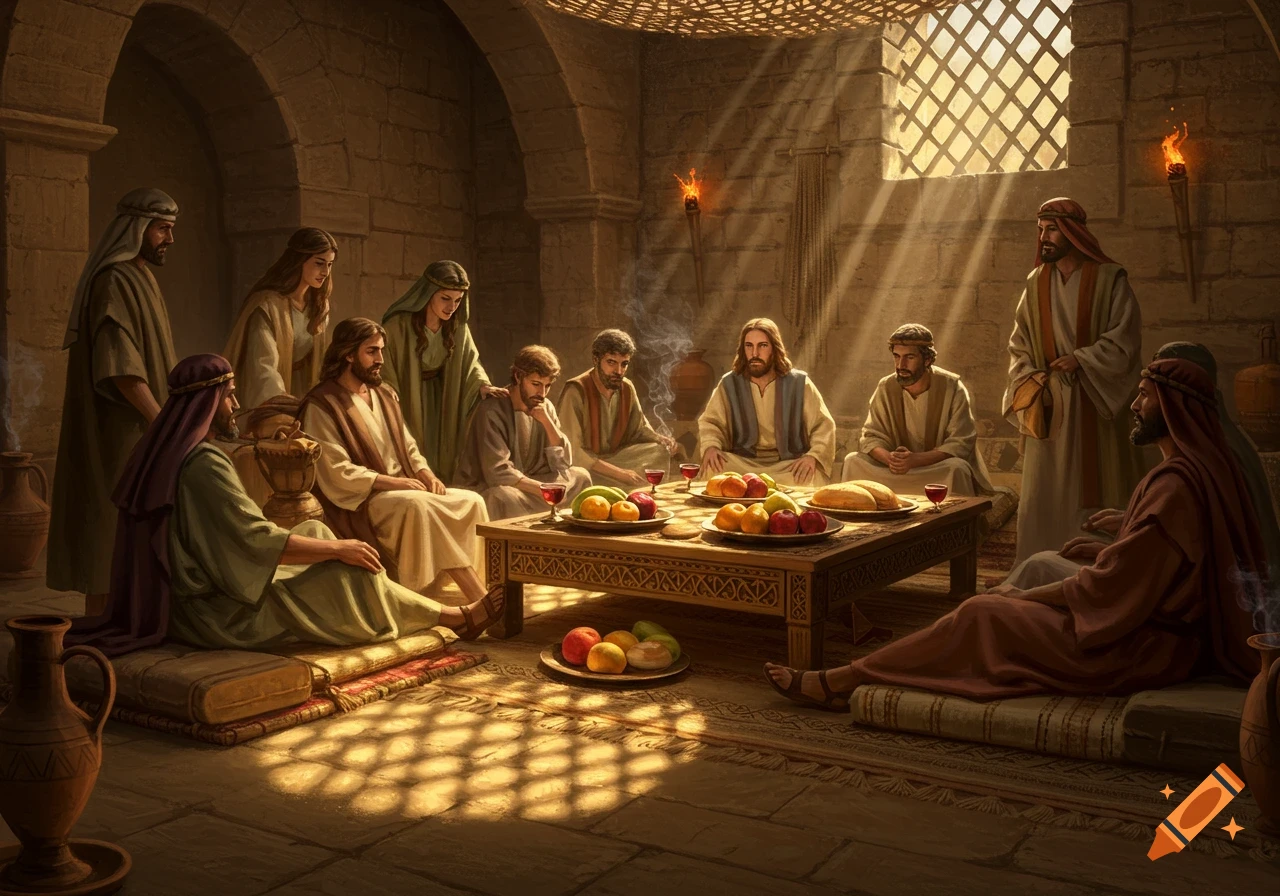
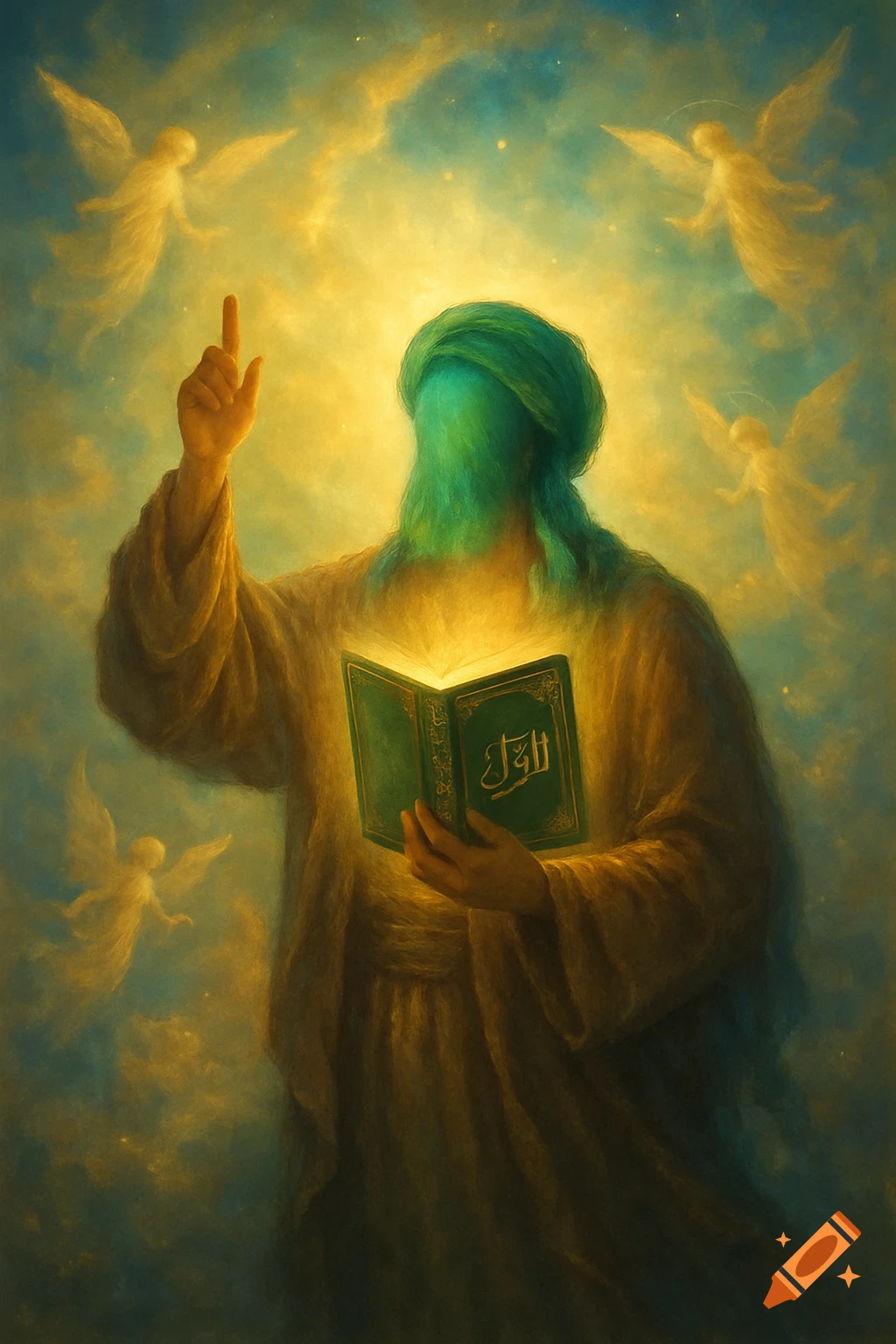
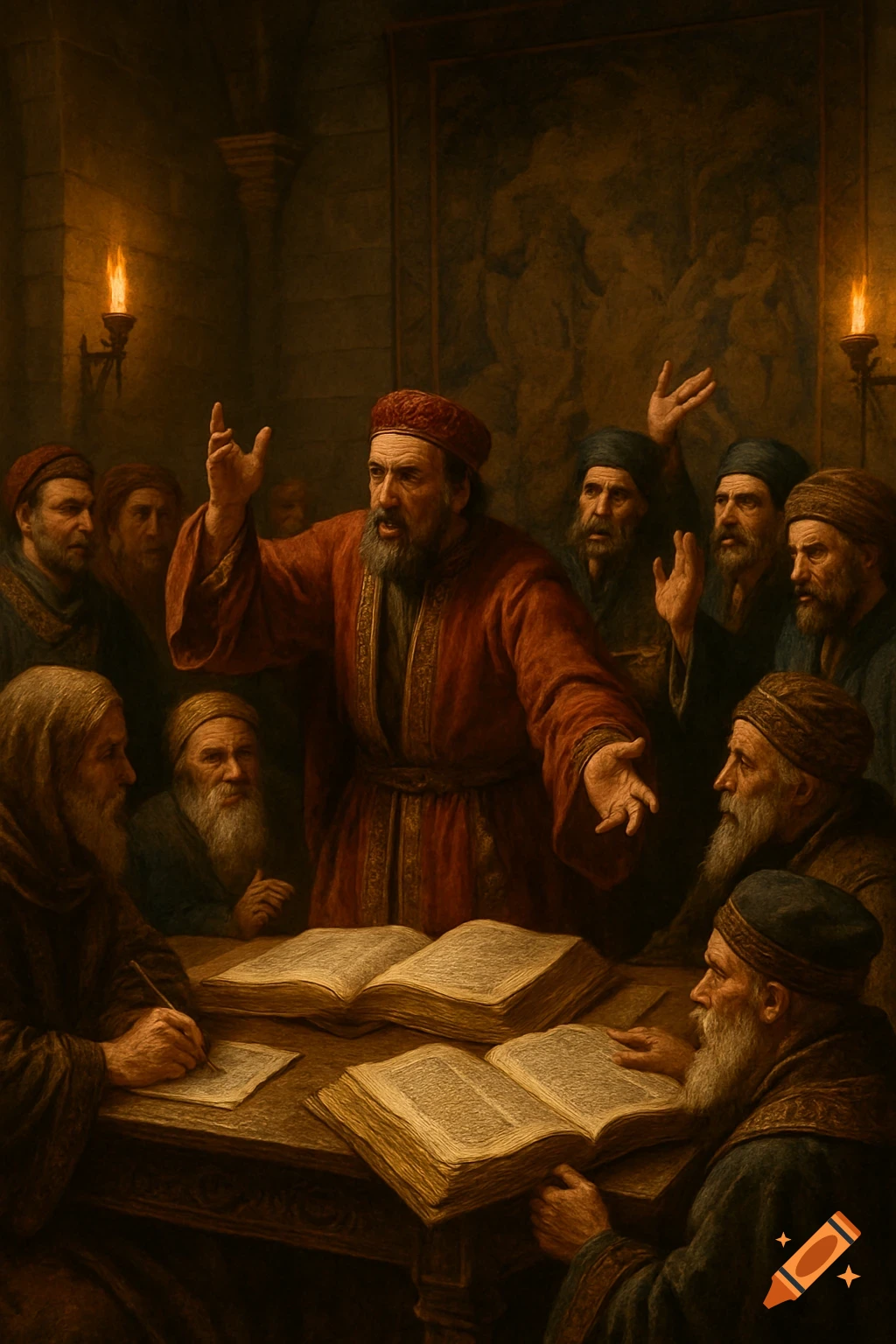
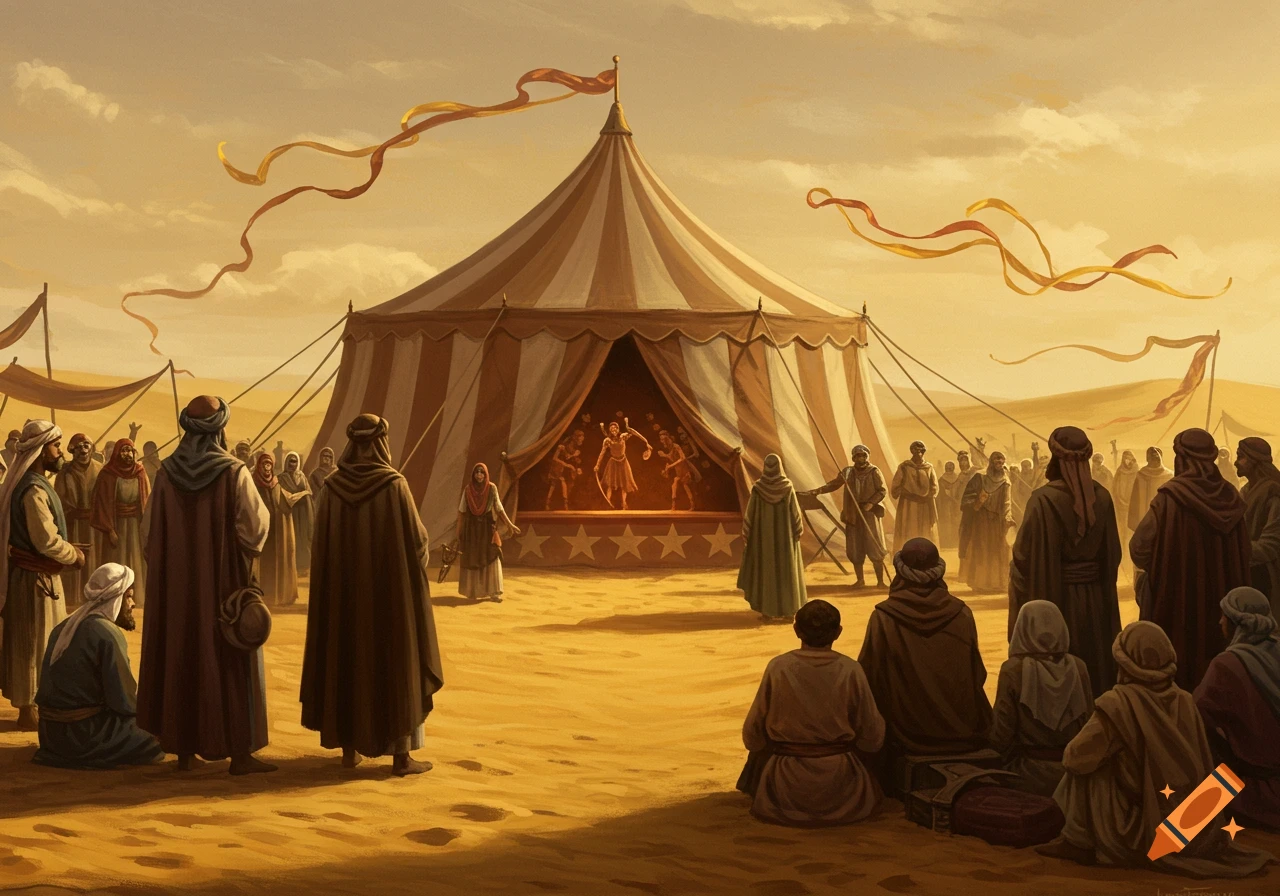
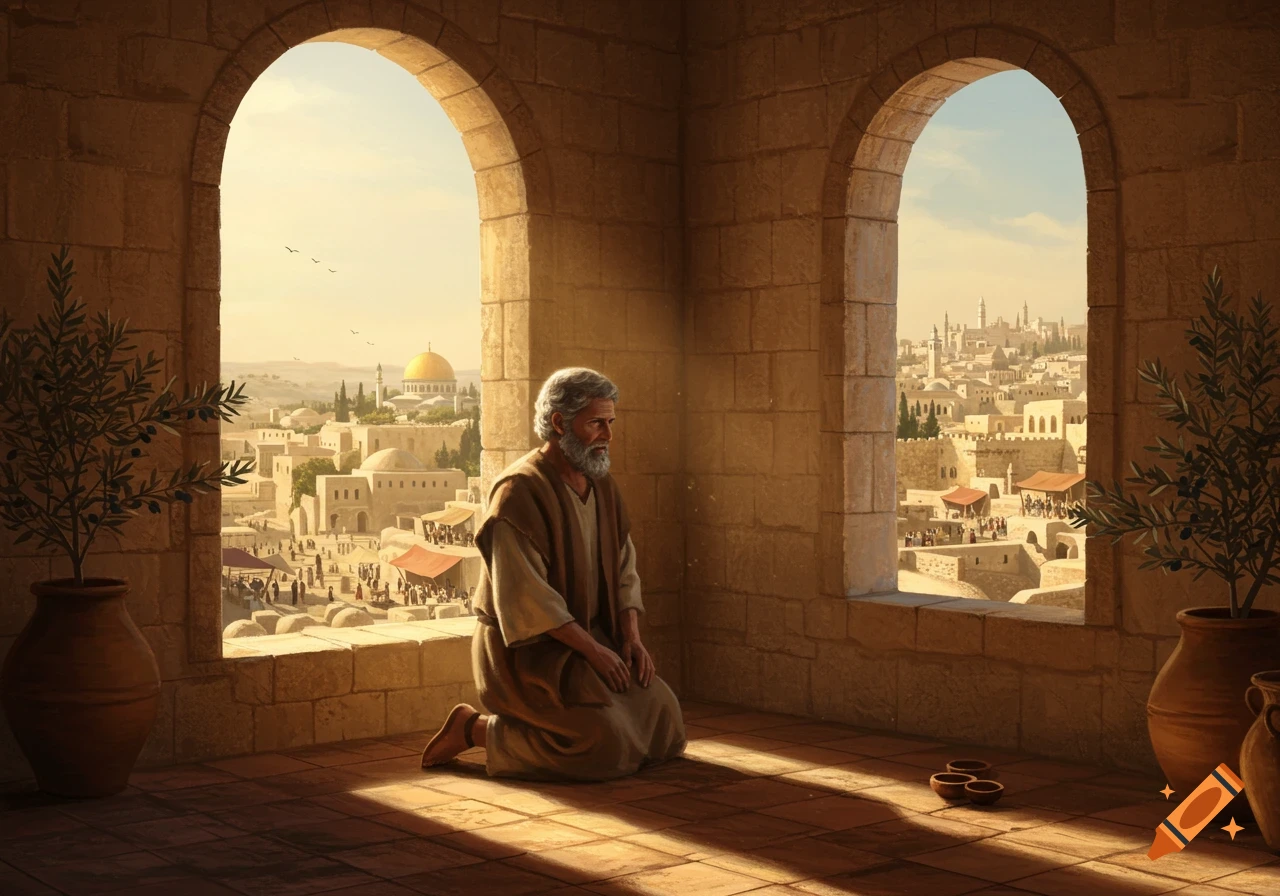
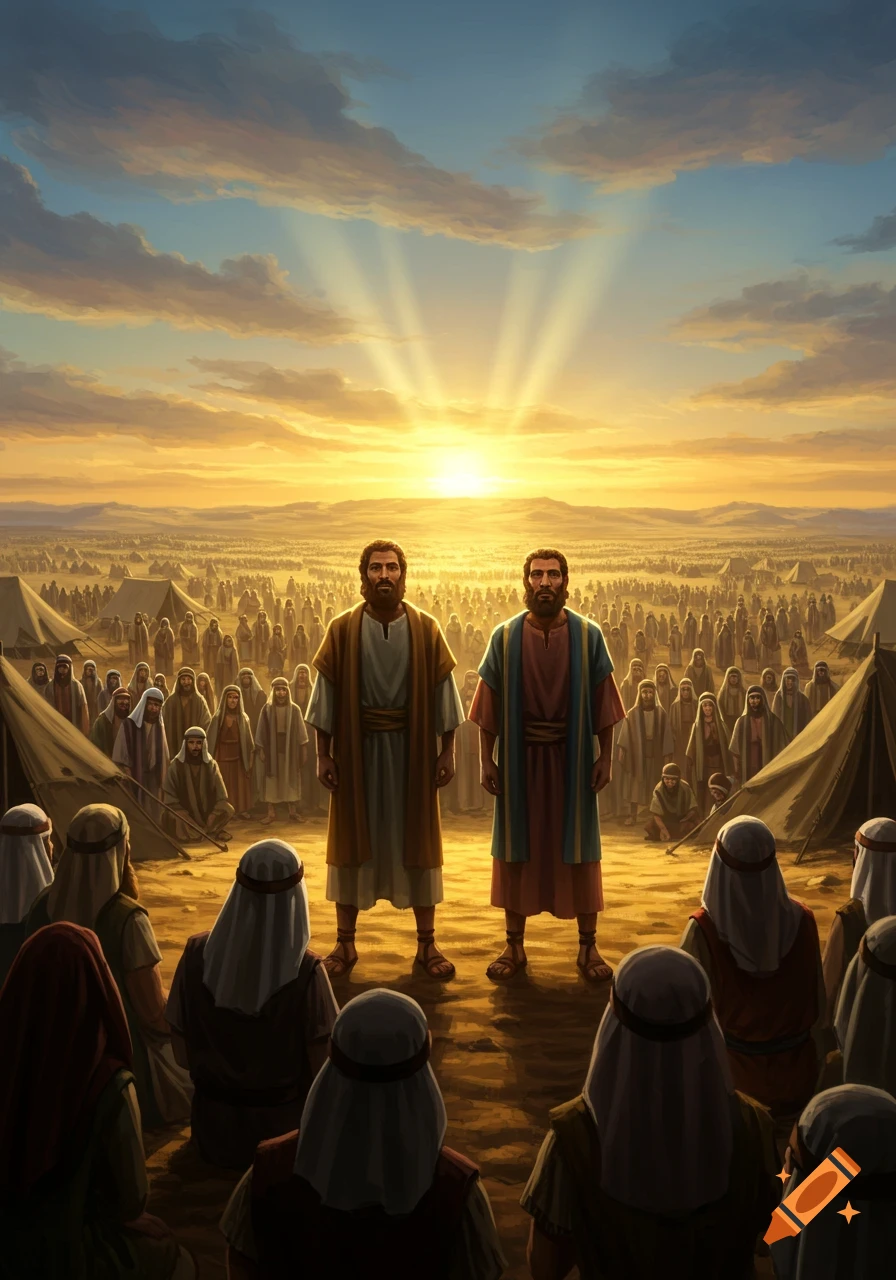
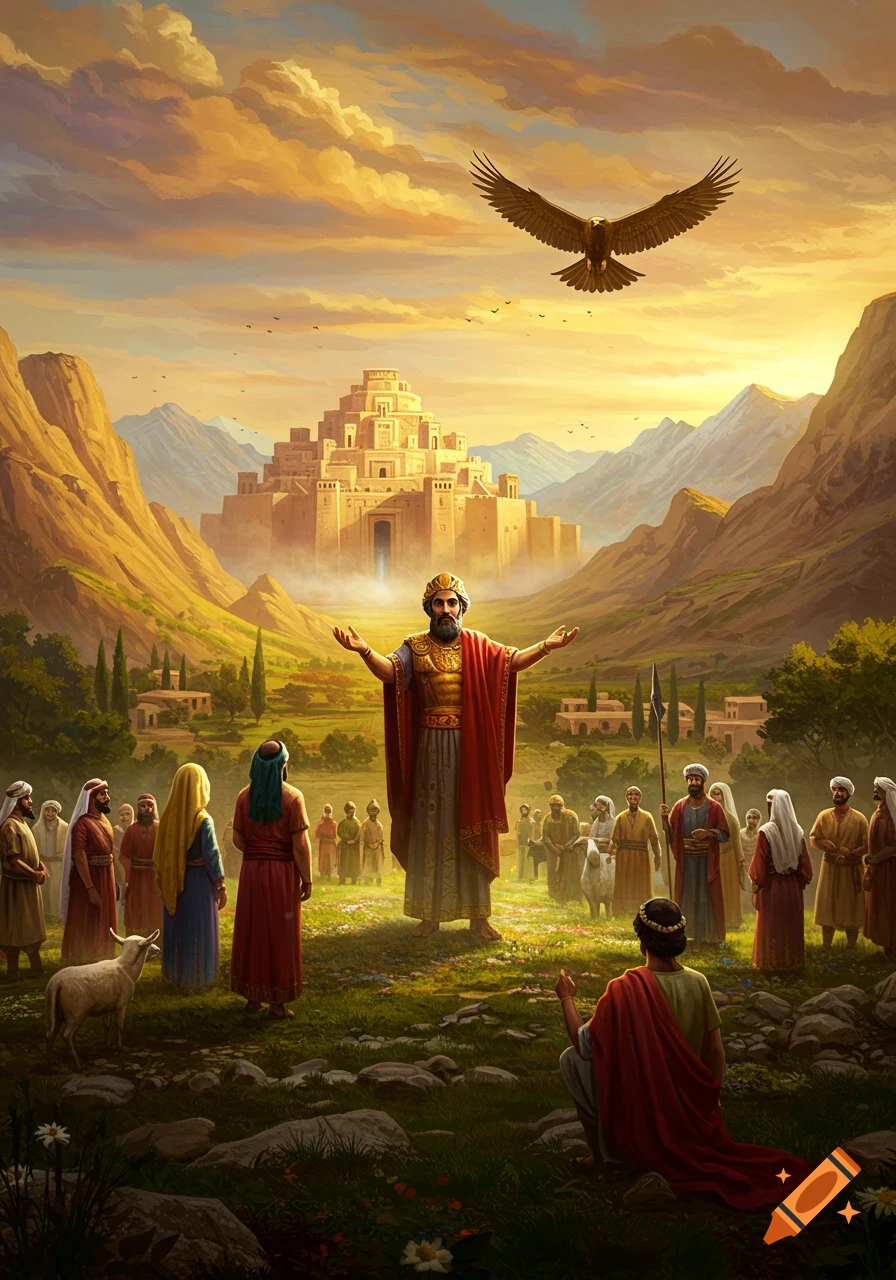
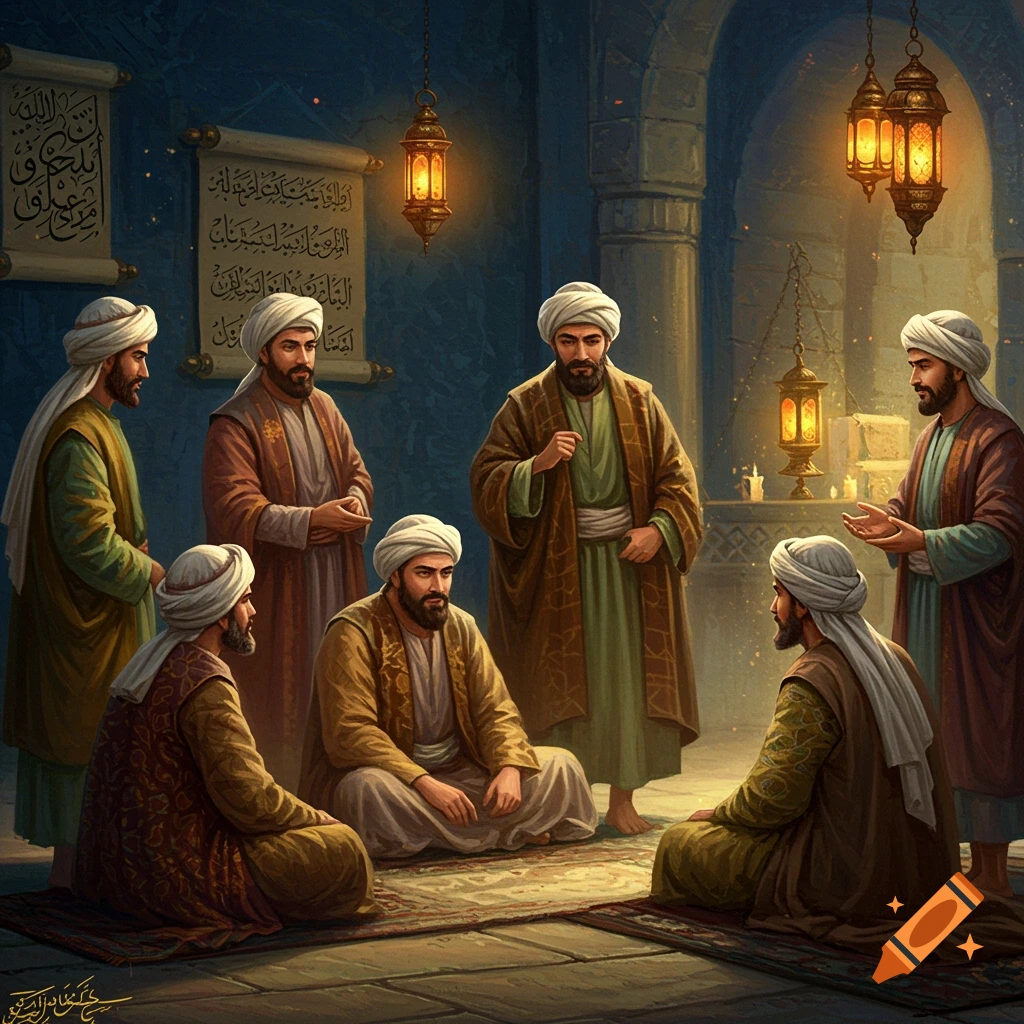
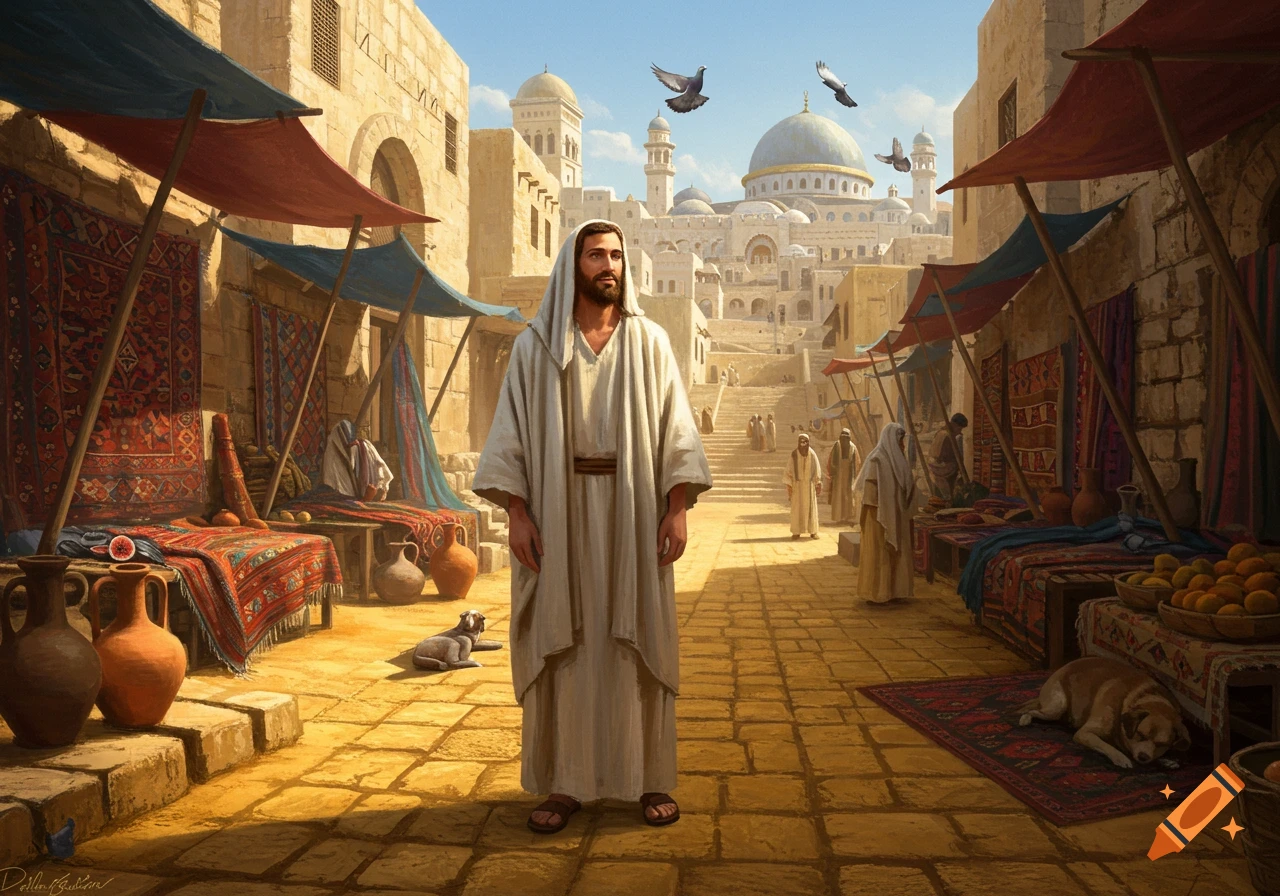
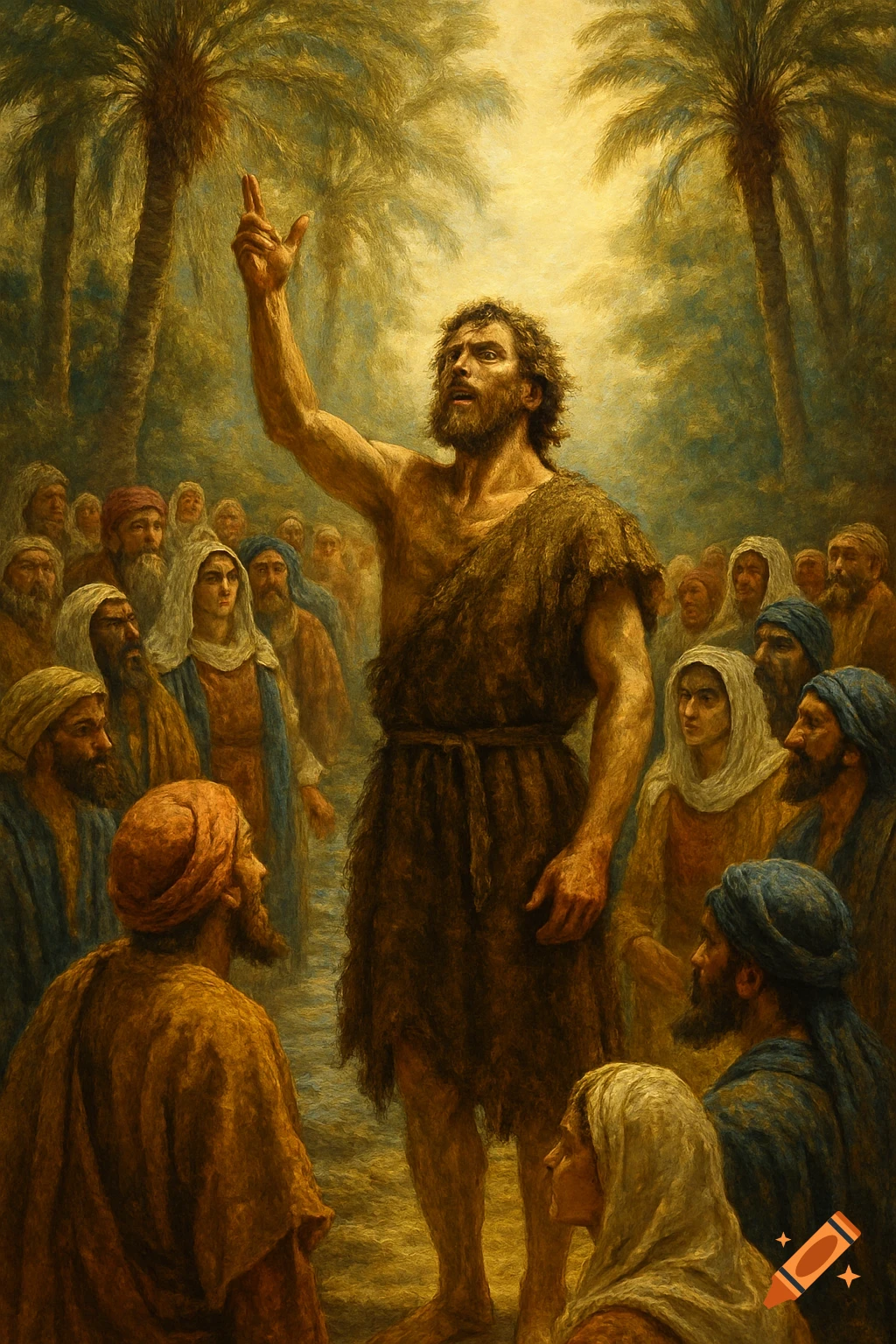
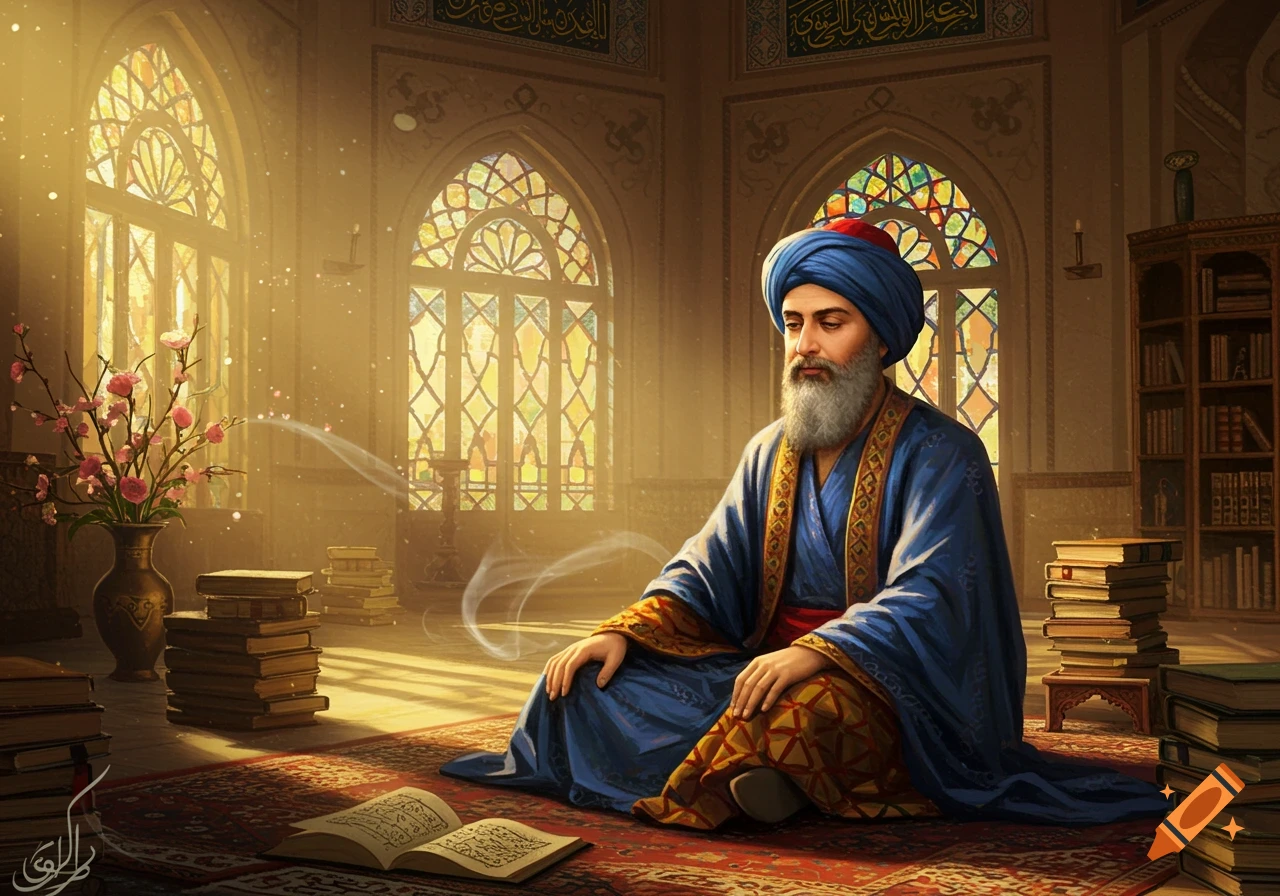
Three religious scholars sit in a glowing ancient valley with Arabic script, a tree of light, scales, a battlefield, and mountains shaped like Arabic text.

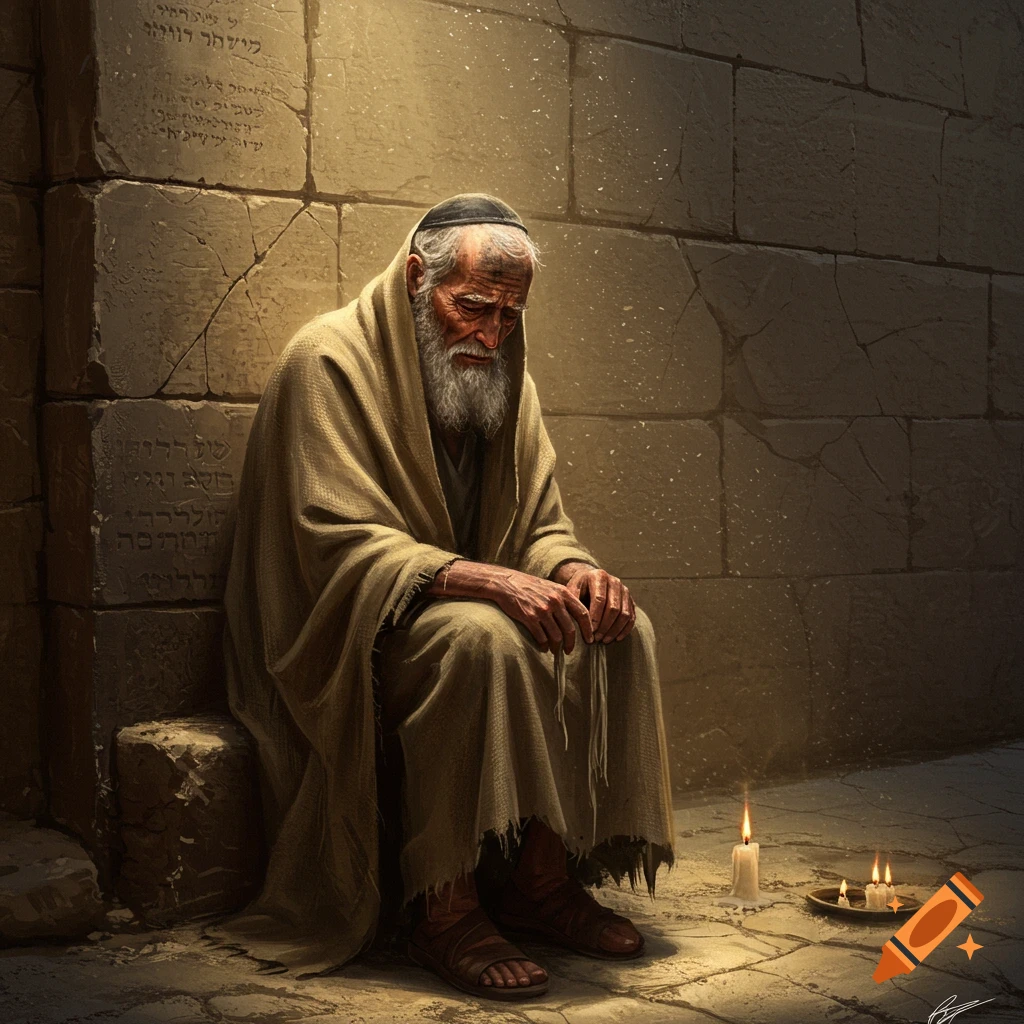
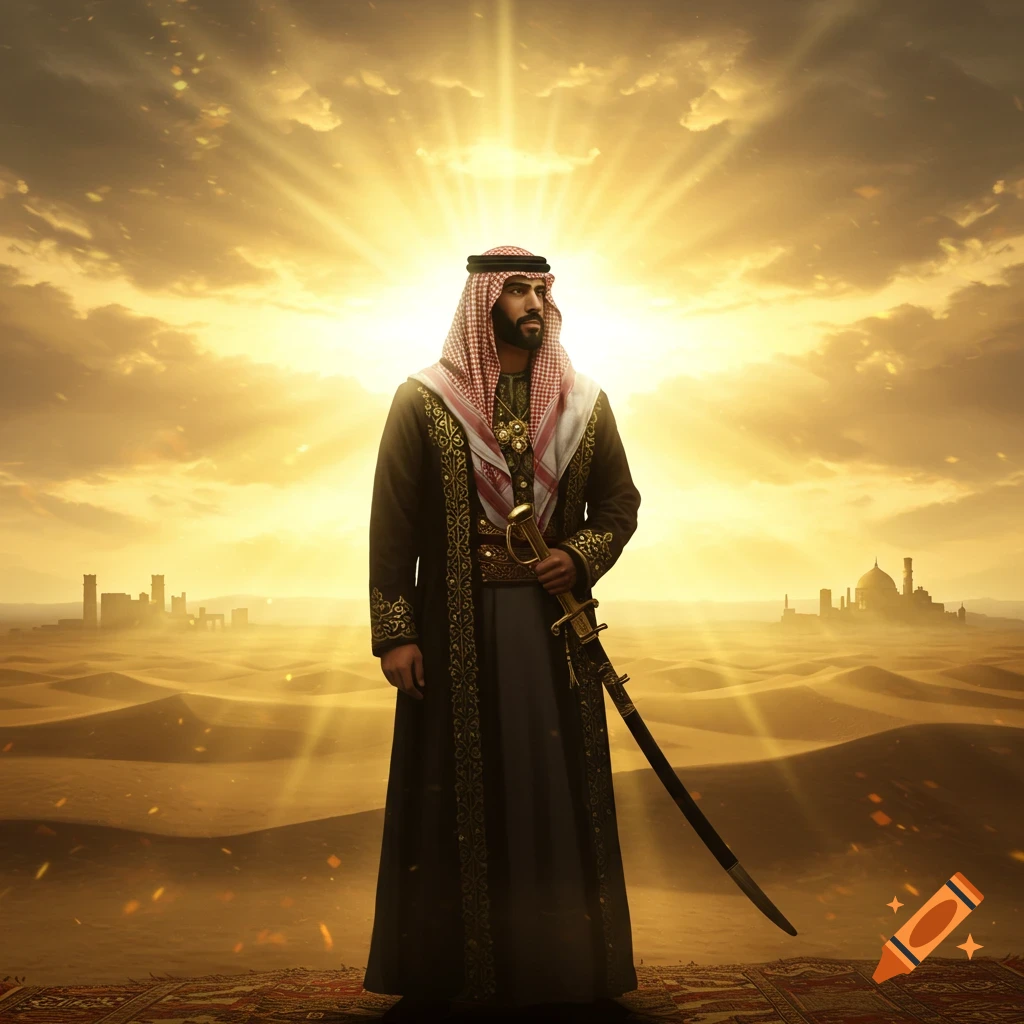
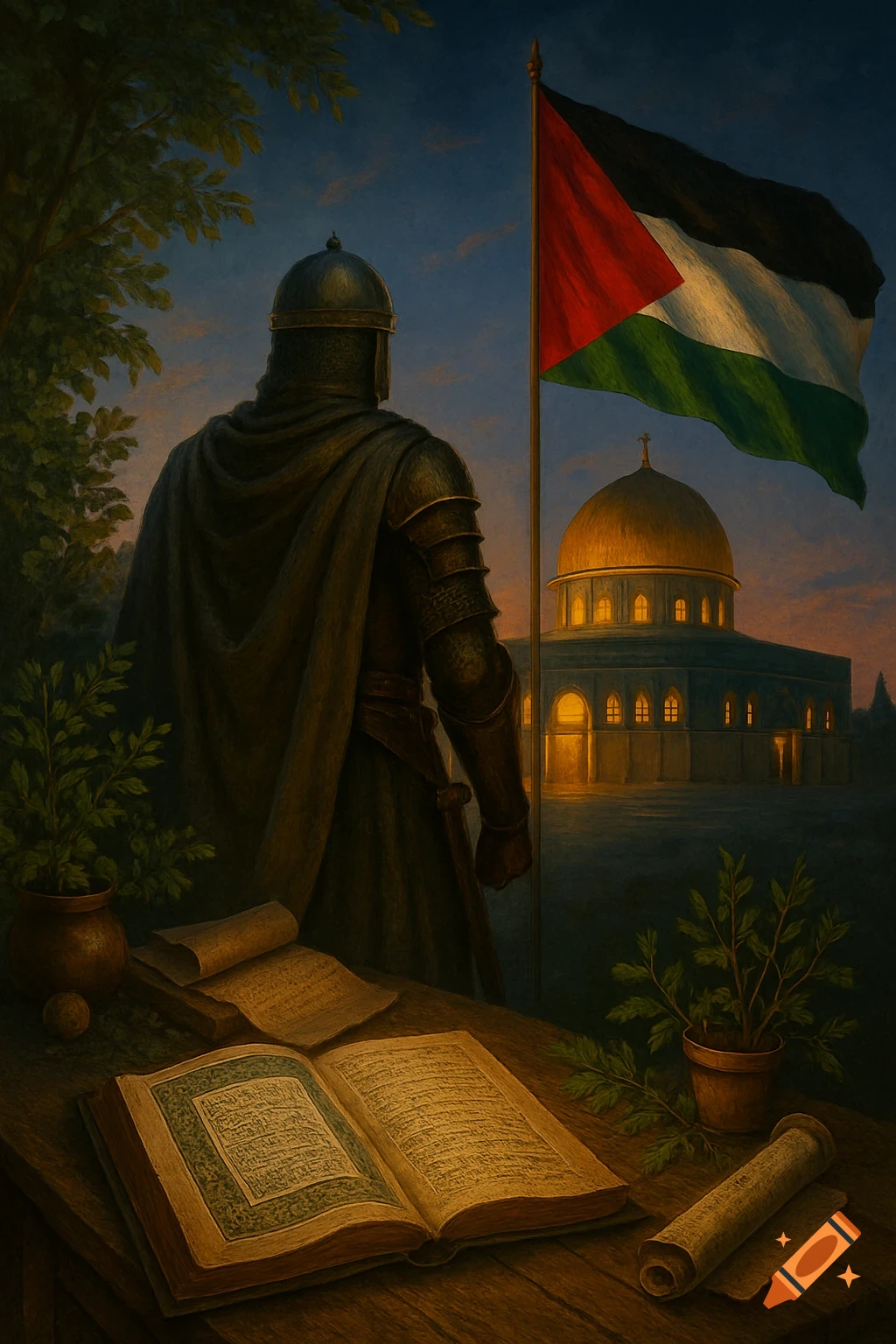
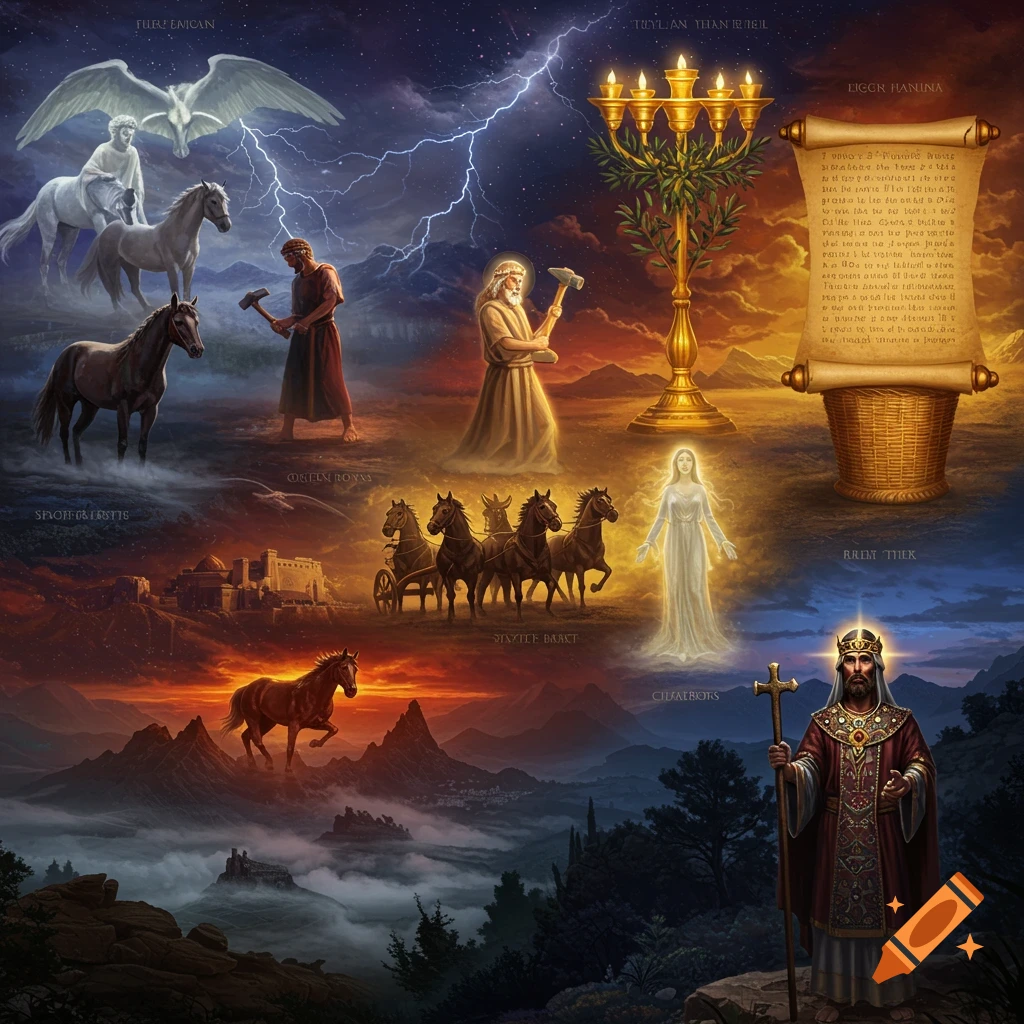
Panoramic view of an ancient sacred valley at dawn, designed as a precise memory palace for Surah Al-Imran. The composition is a winding path from foreground to distant mountains, divided into three distinct luminous zones representing the Surah's main sections. Foreground (Verses 1-30): A massive ornate gate inscribed with glowing Arabic script "الم" [Alif Lam Mim]. Before it, three figures stand in debate—a Jewish scholar, a Christian monk, and a Muslim sage—representing dialogue with People of the Book. Above them, a family tree made of light rises from the ground, showing Imran, Maryam, and Isa (peace be upon them) as interconnected golden branches. A small mihrab niche beside the gate contains a floating basket with fruits, referencing Maryam's sustenance (Verse 37). Midground (Verses 31-120): A rolling battlefield with a distinct hill on the right dotted with tiny archer silhouettes (Battle of Uhud, Verse 152). Some archers are descending prematurely. Above the battlefield, a scale hangs from the sky weighing two armies—300 against 1000—representing divine reinforcement (Verse 124). To the left, a figure in armor picks up handfuls of dust and throws it toward the enemy, symbolizing "not you threw, but Allah threw" (Verse 17). A cave nearby emits light, representing the believers' refuge. Background (Verses 121-200): Distant mountains shaped like the word "صبر" [Sabr] in subtle cloud formation. At the mountain peak, a radiant figure sits in contemplation, surrounded by Mehr sehen
More images like this