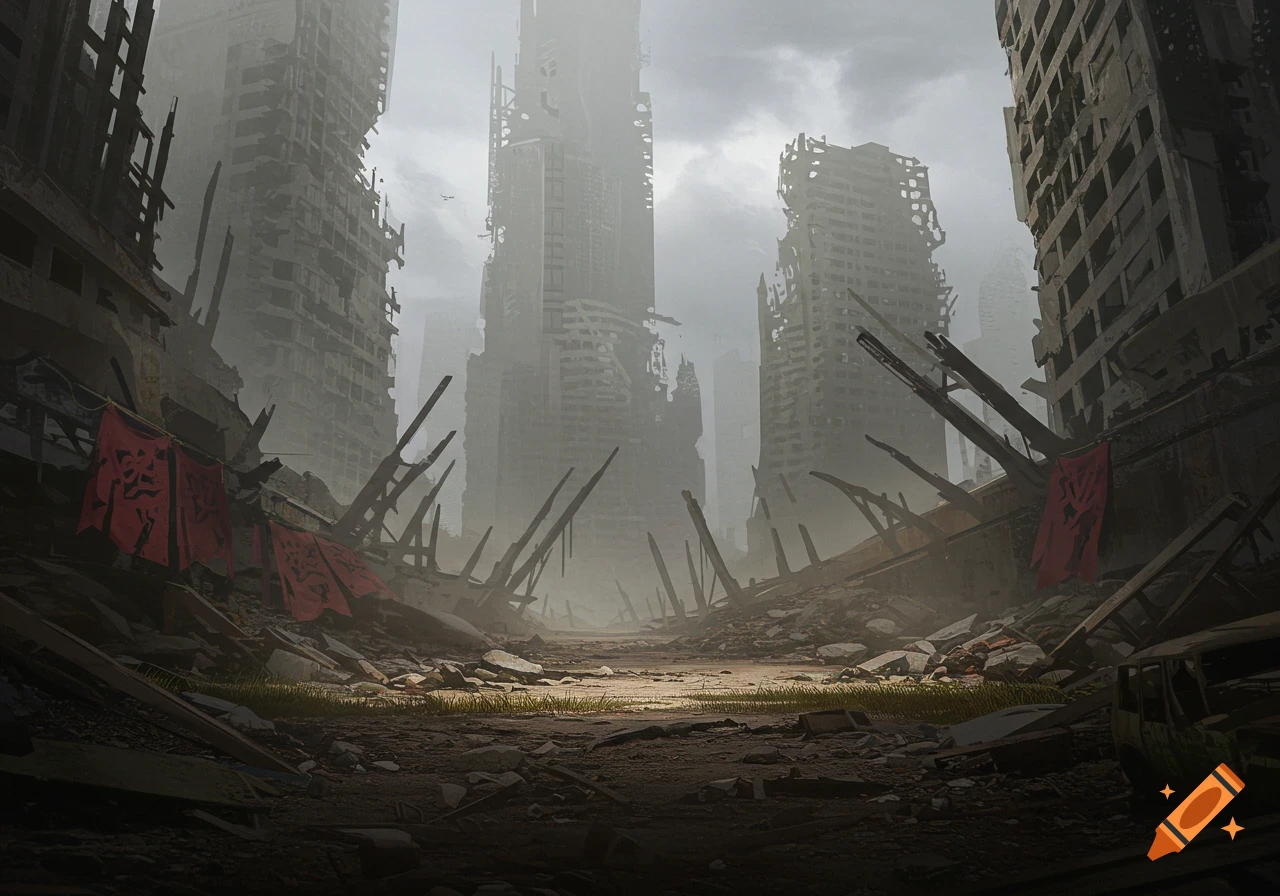
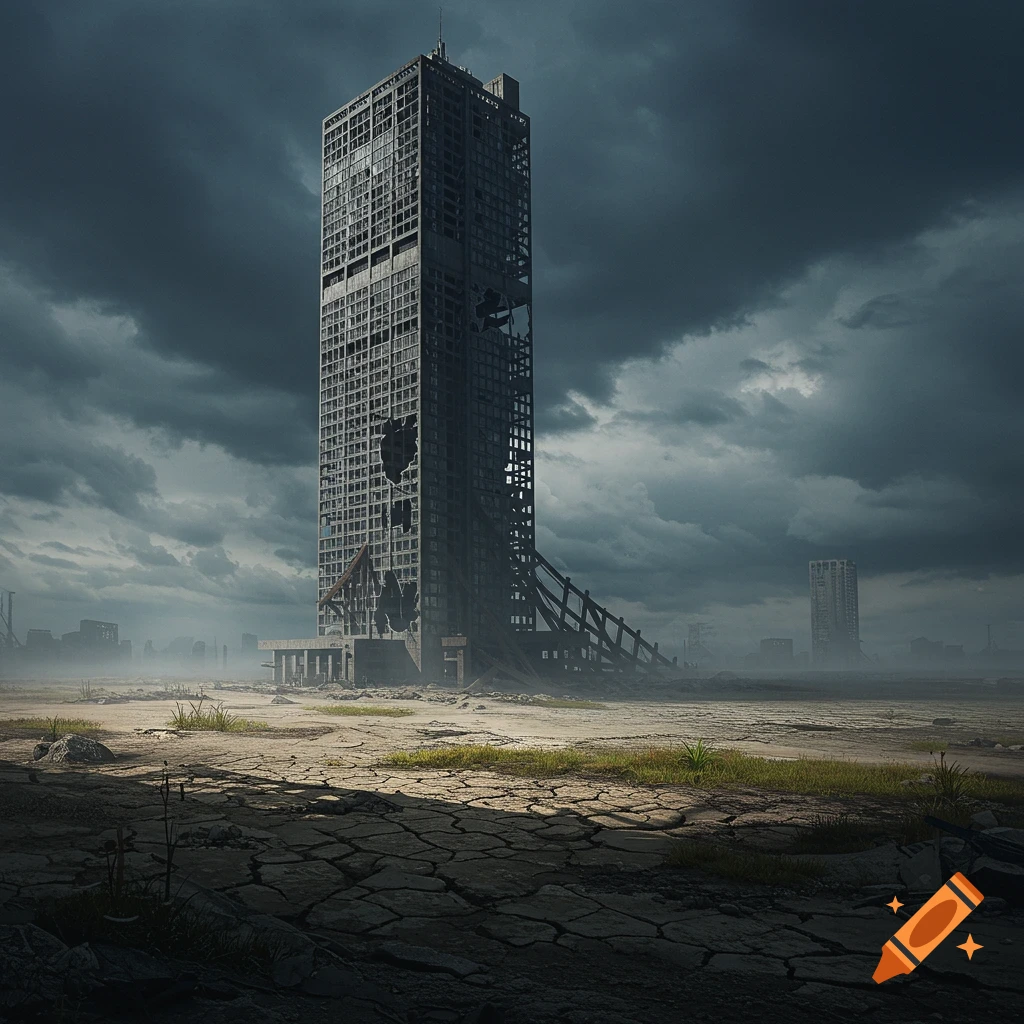
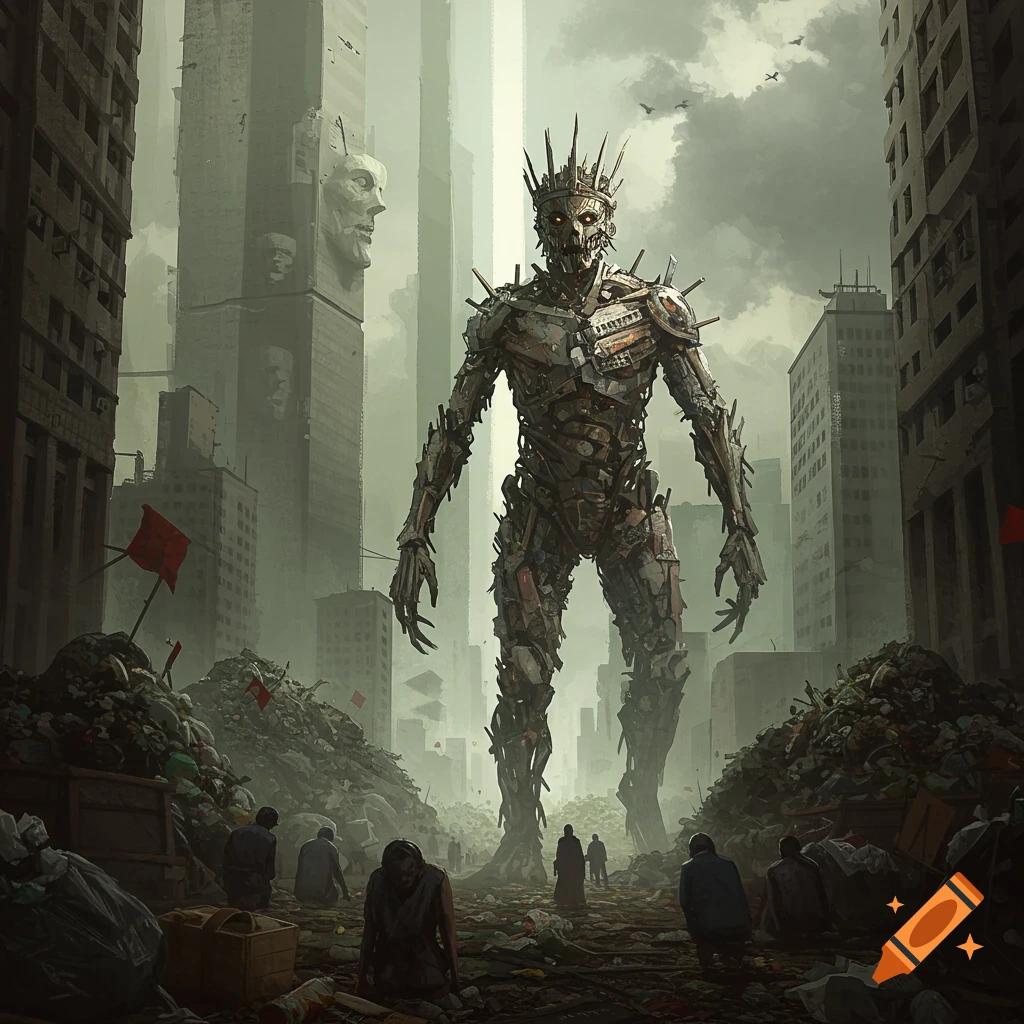
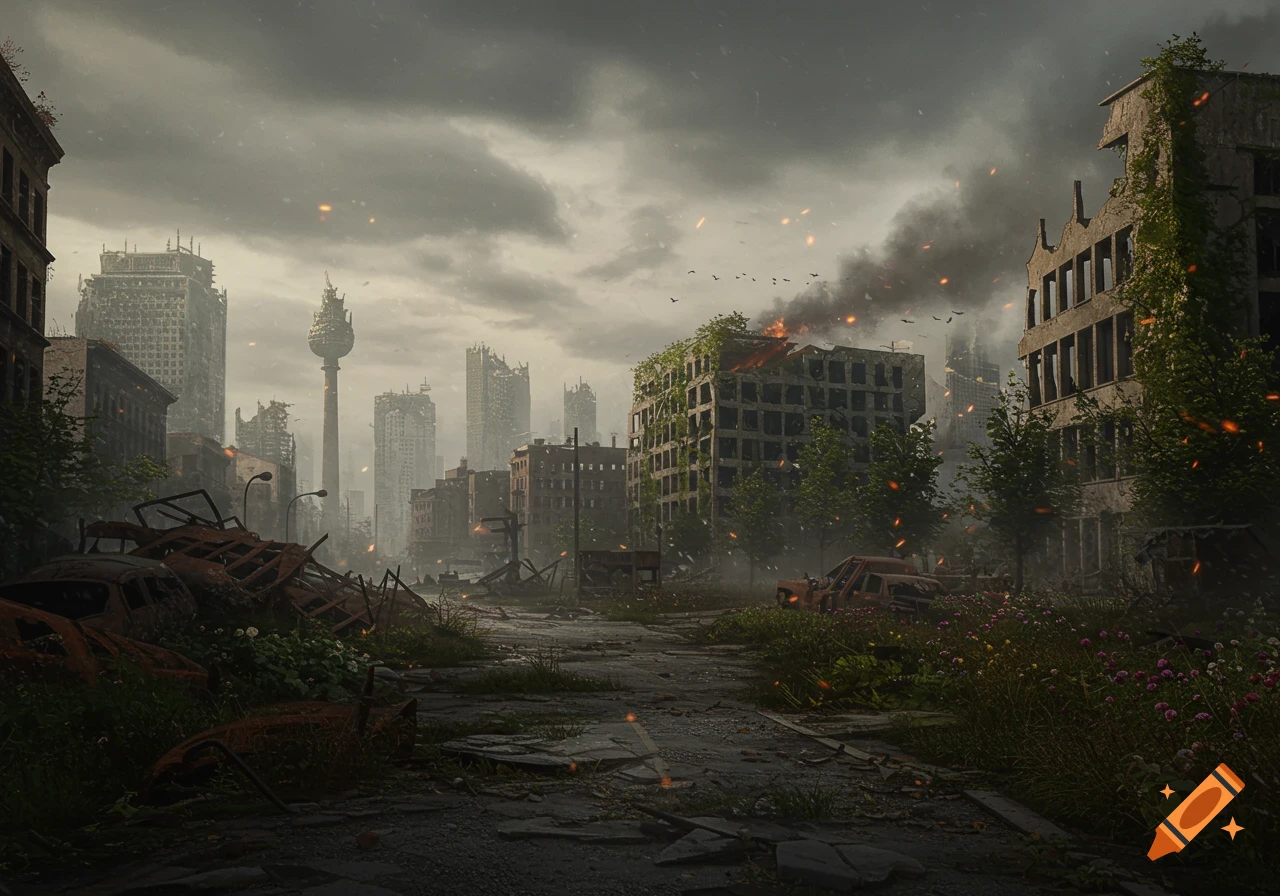
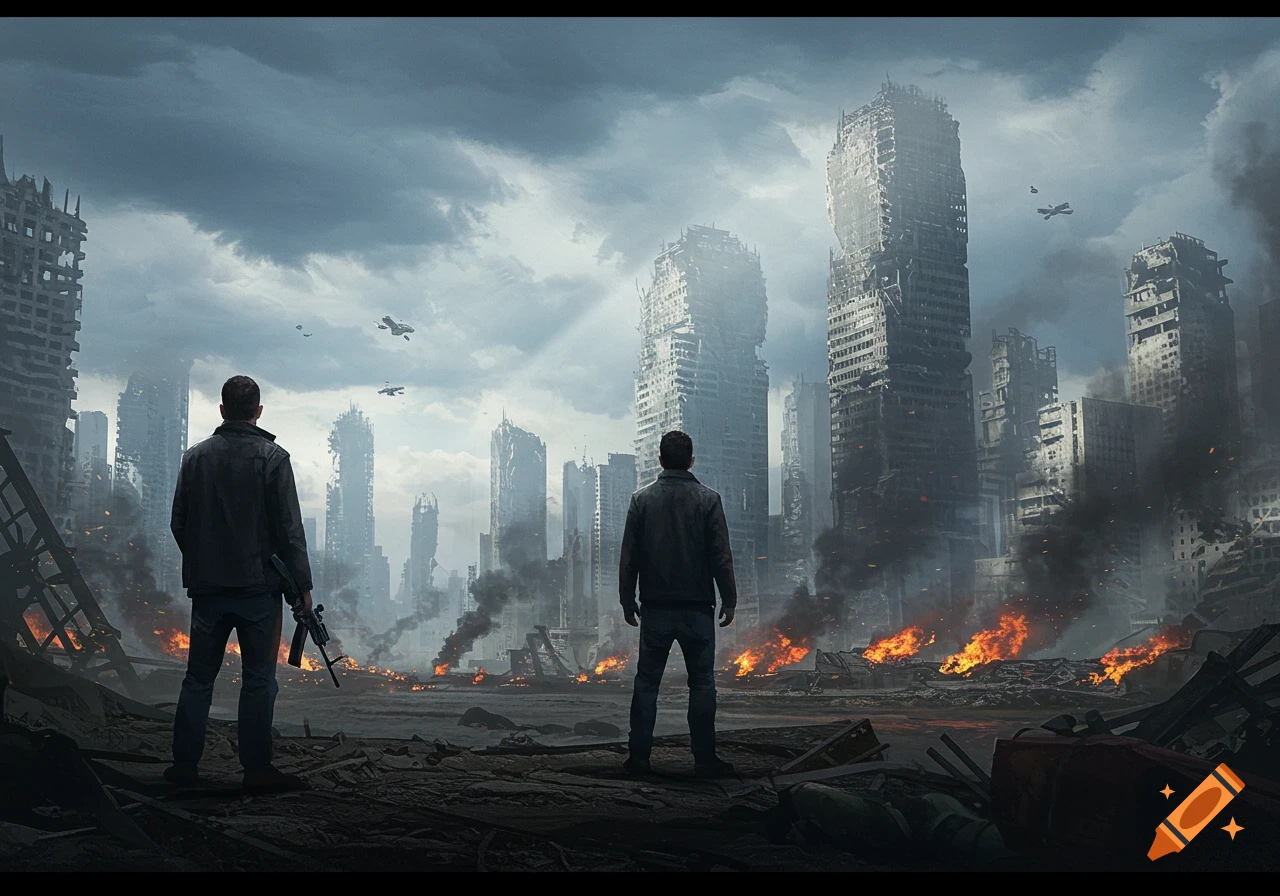
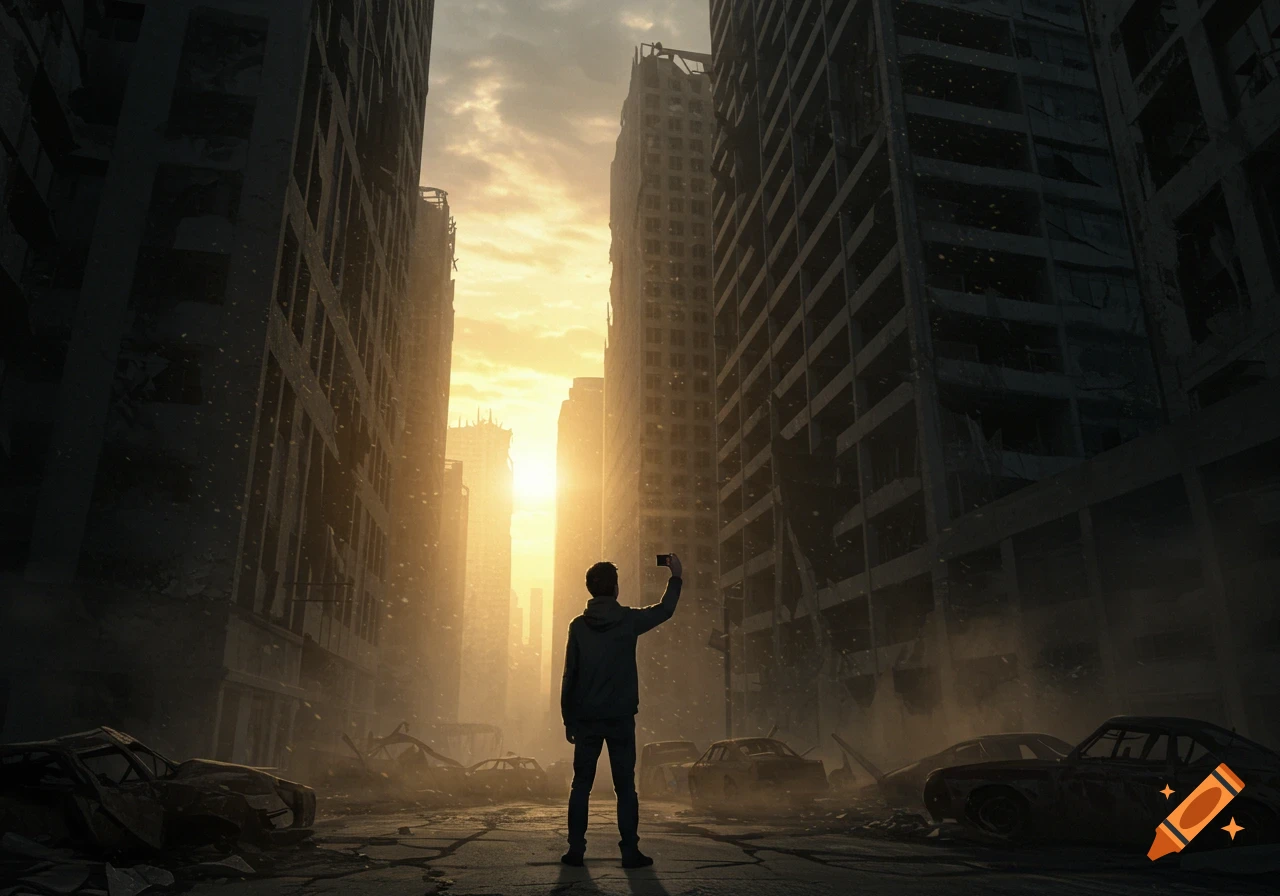
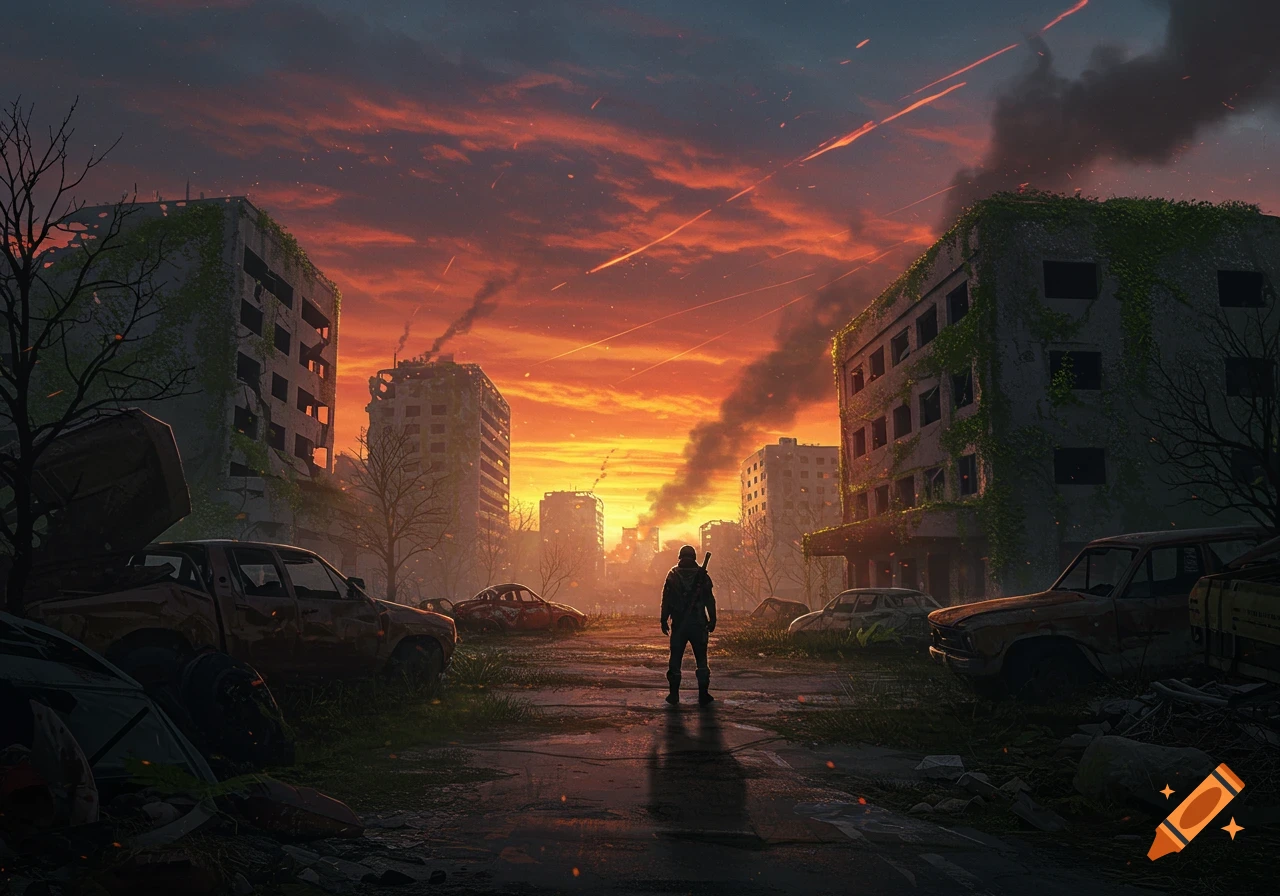
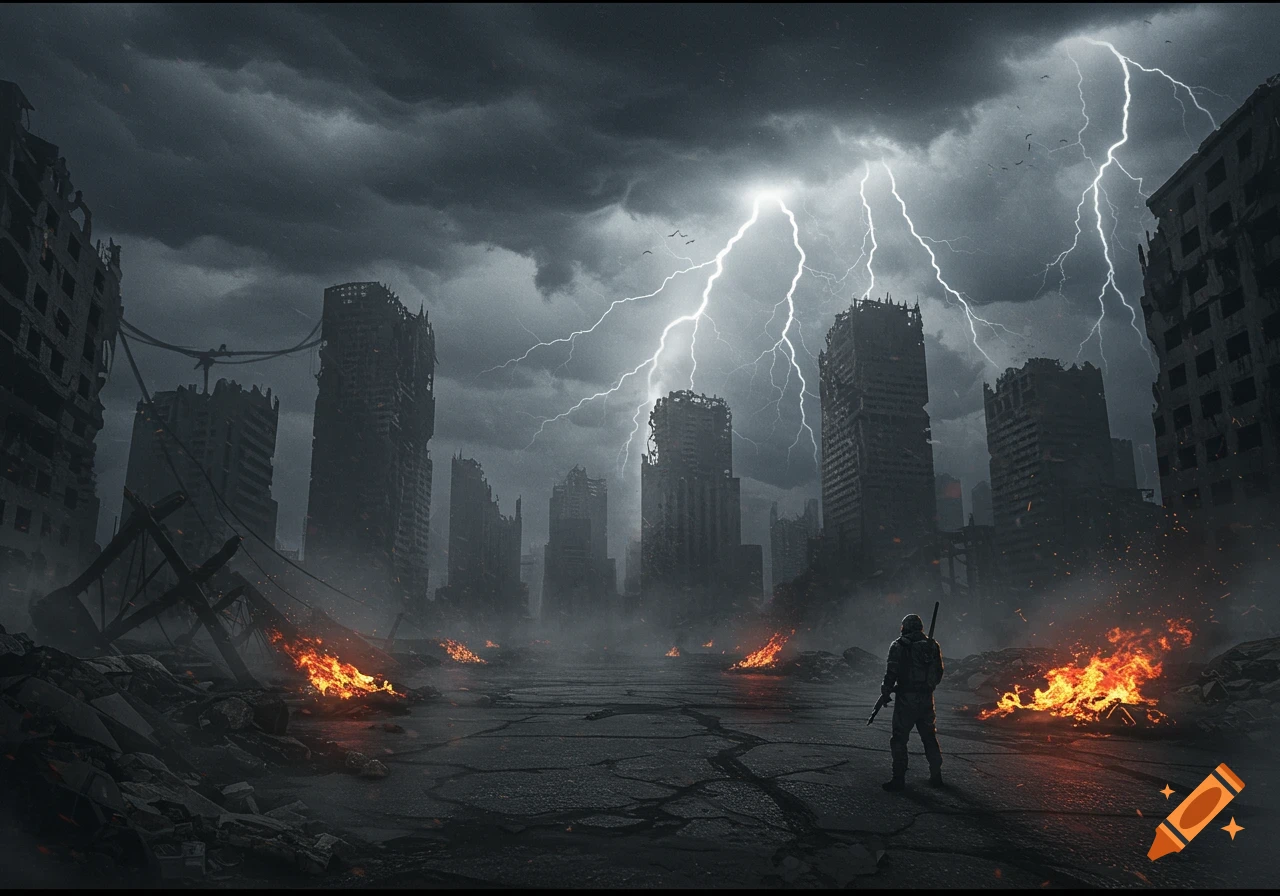
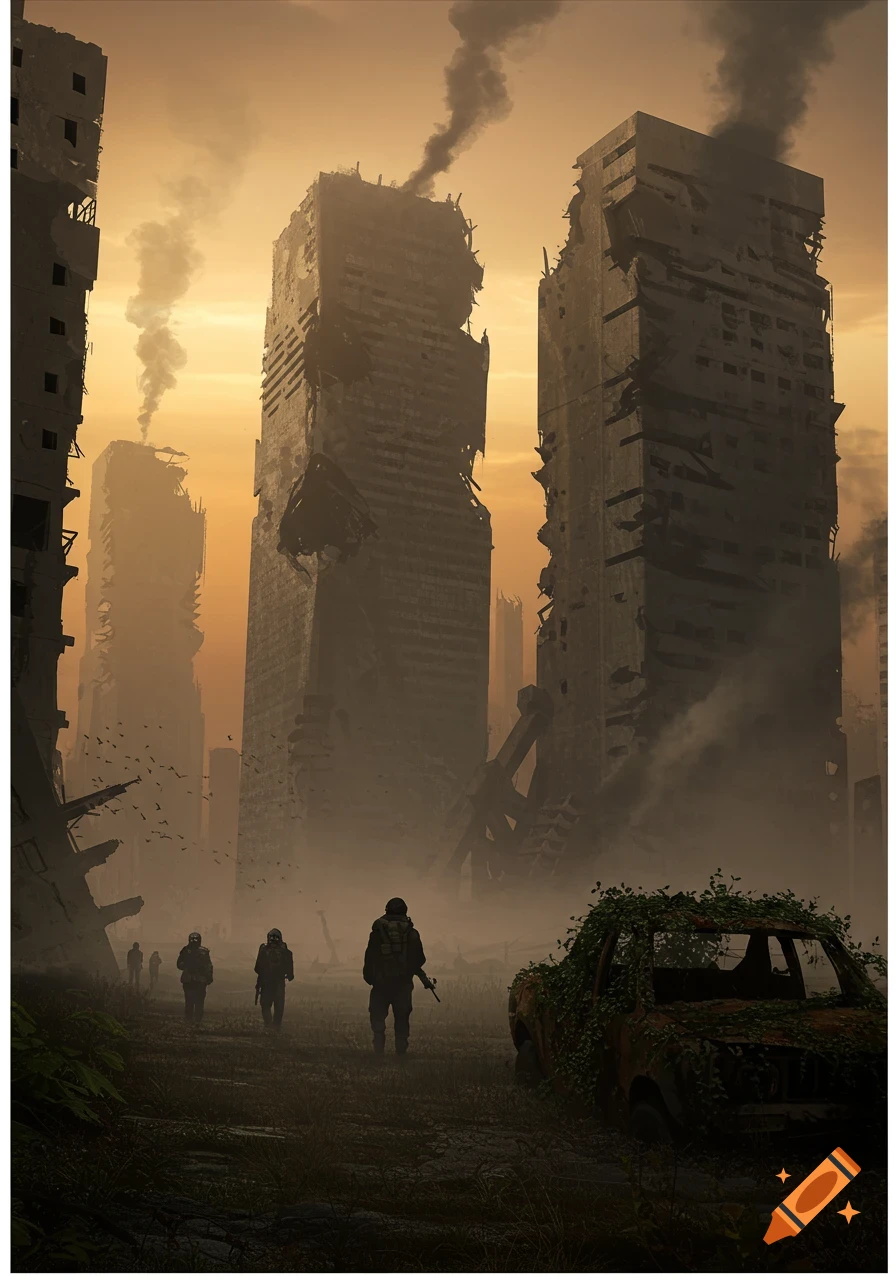
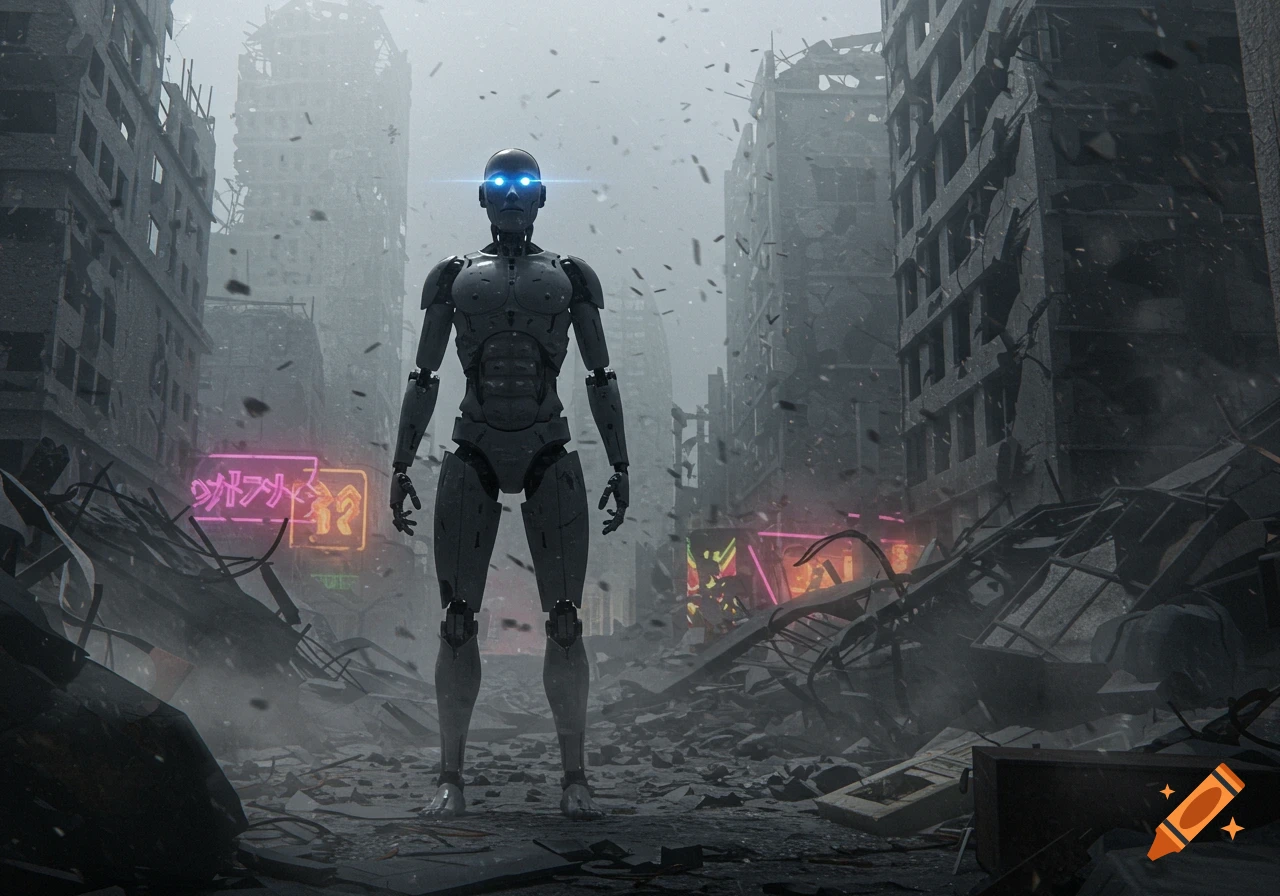
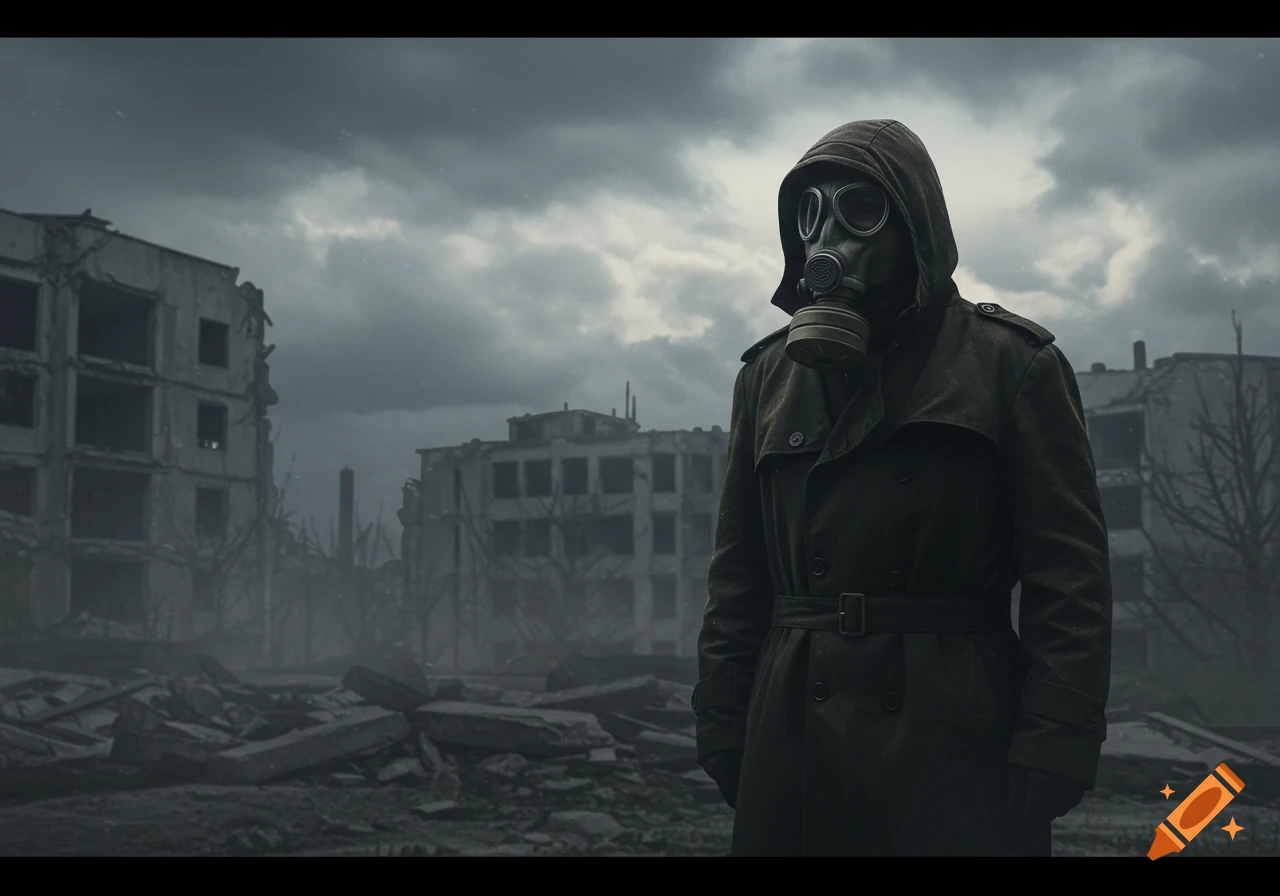
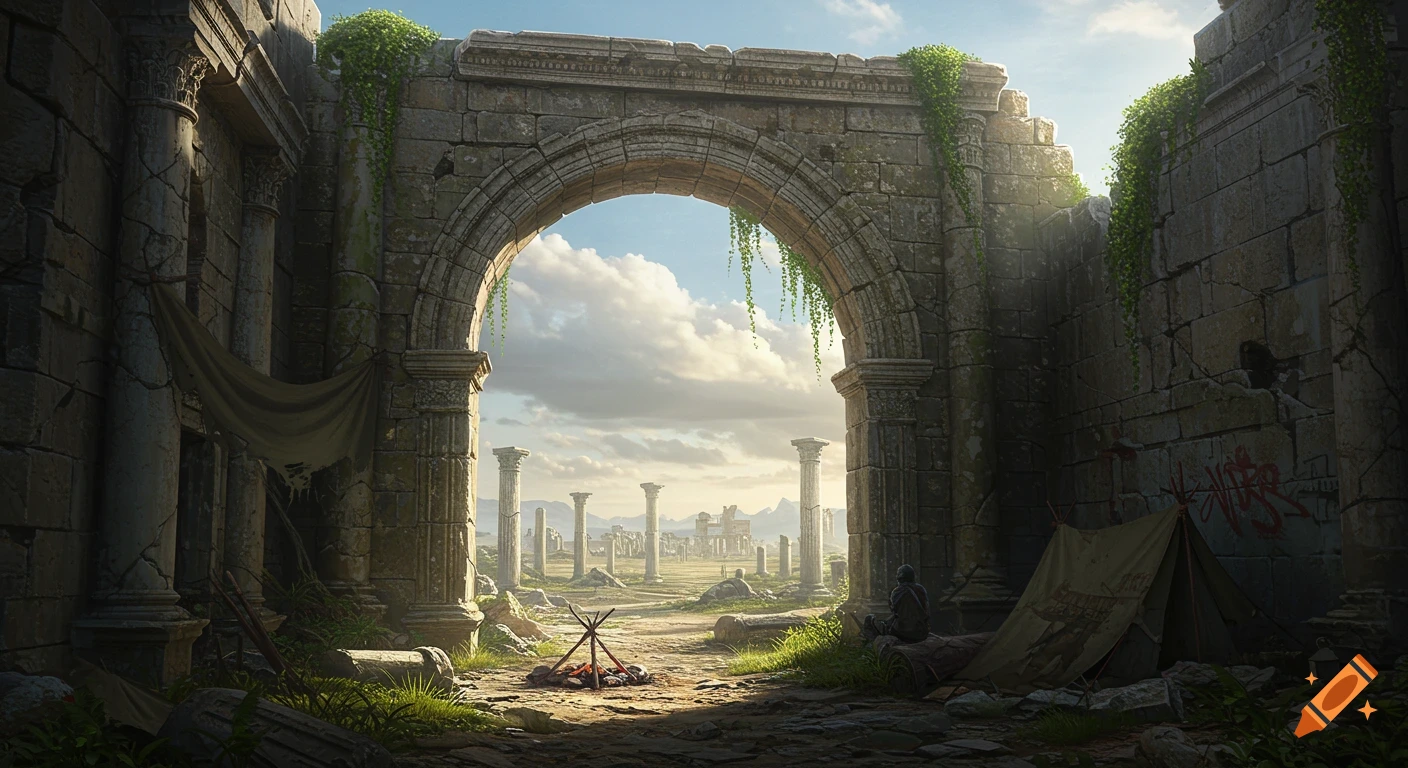
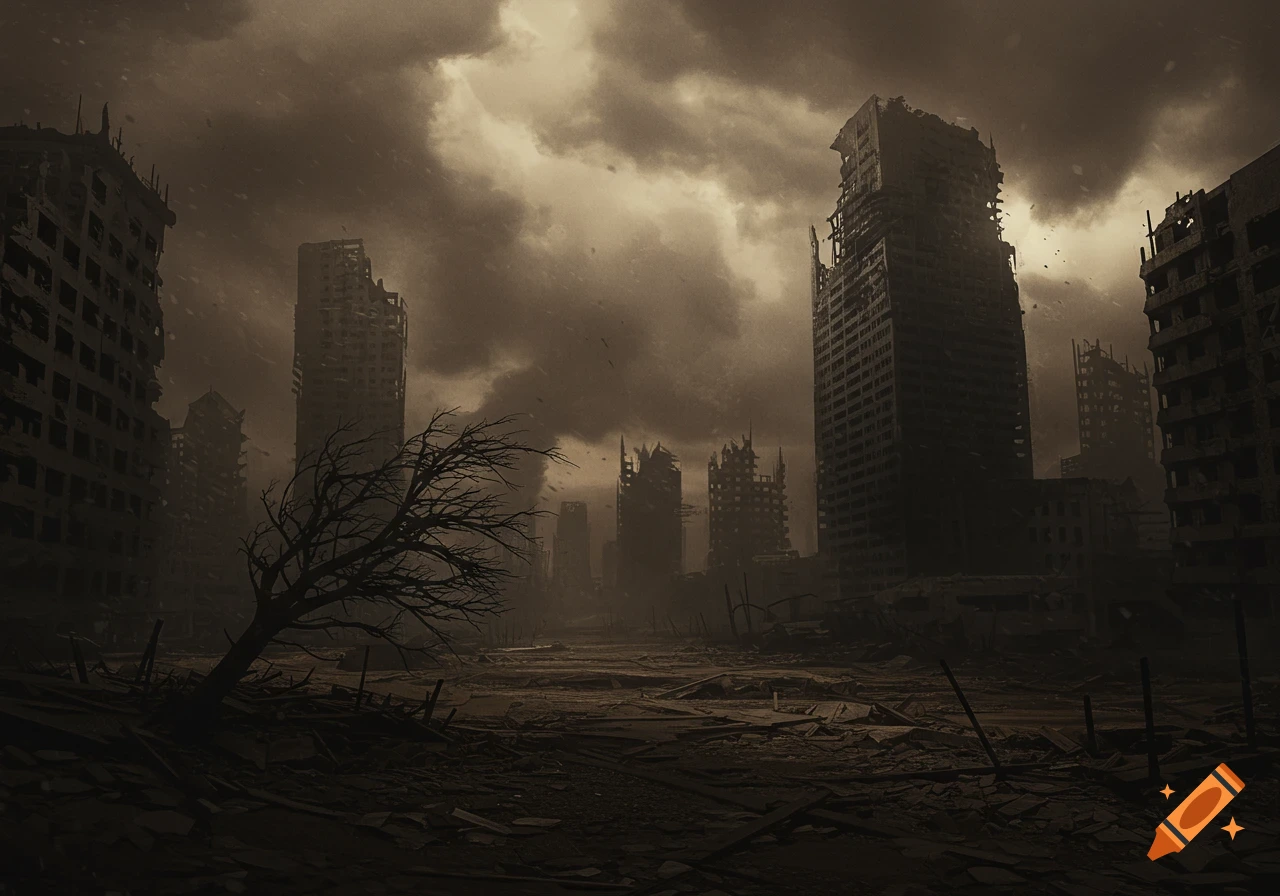
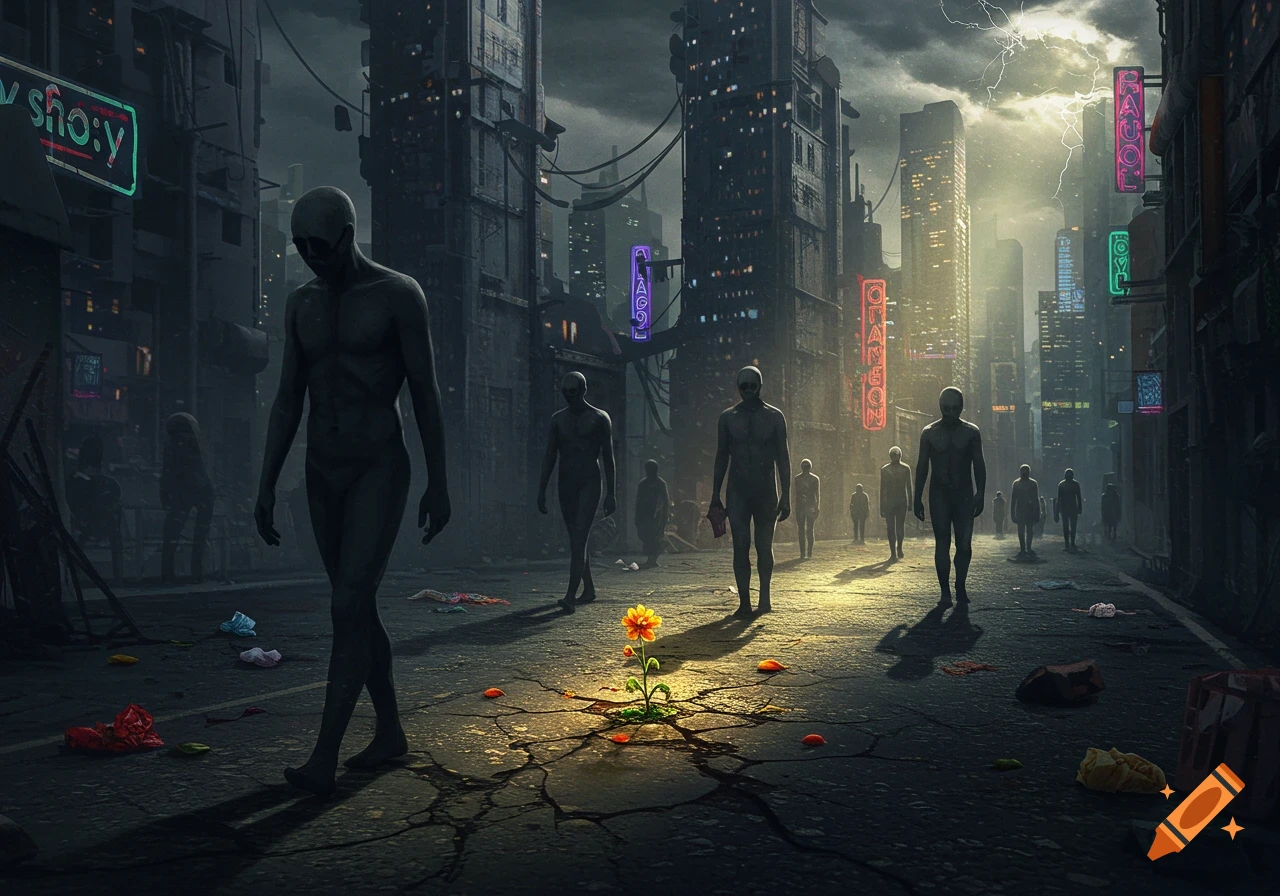
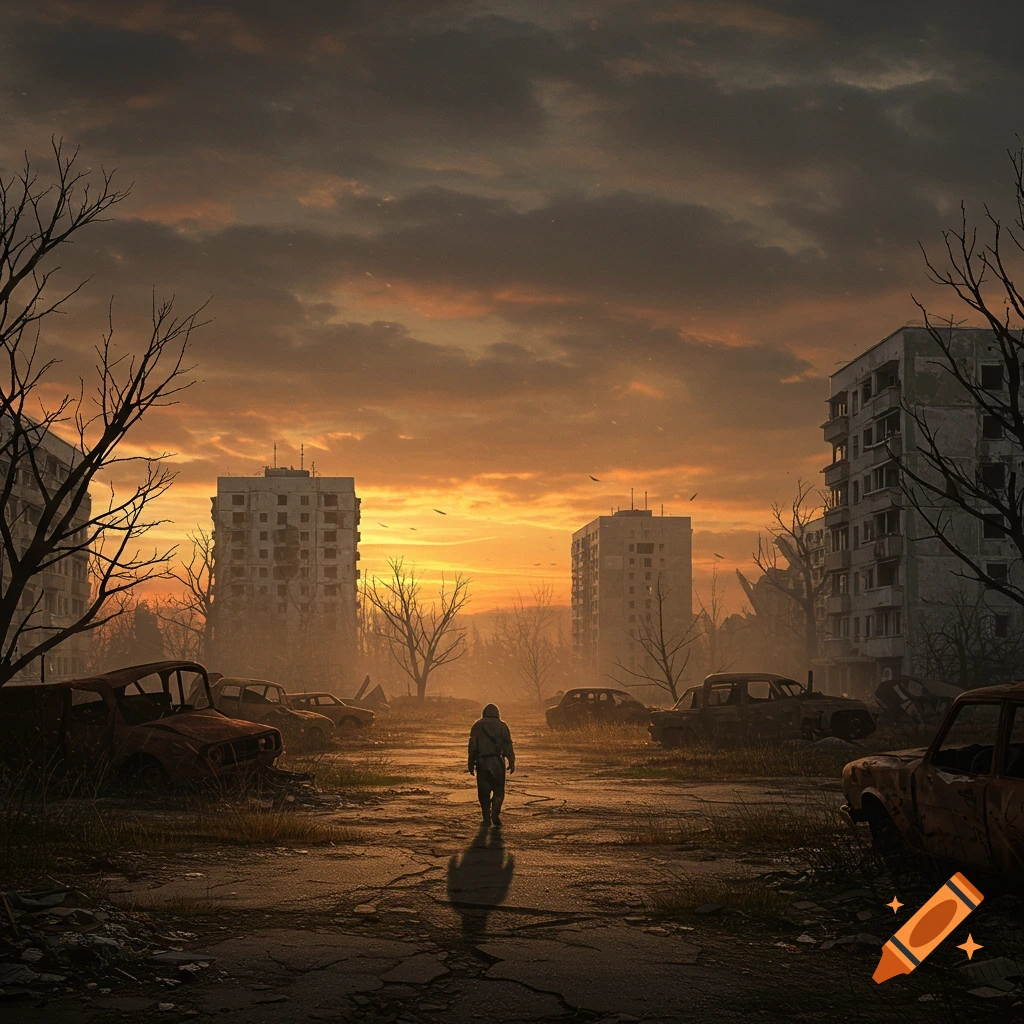
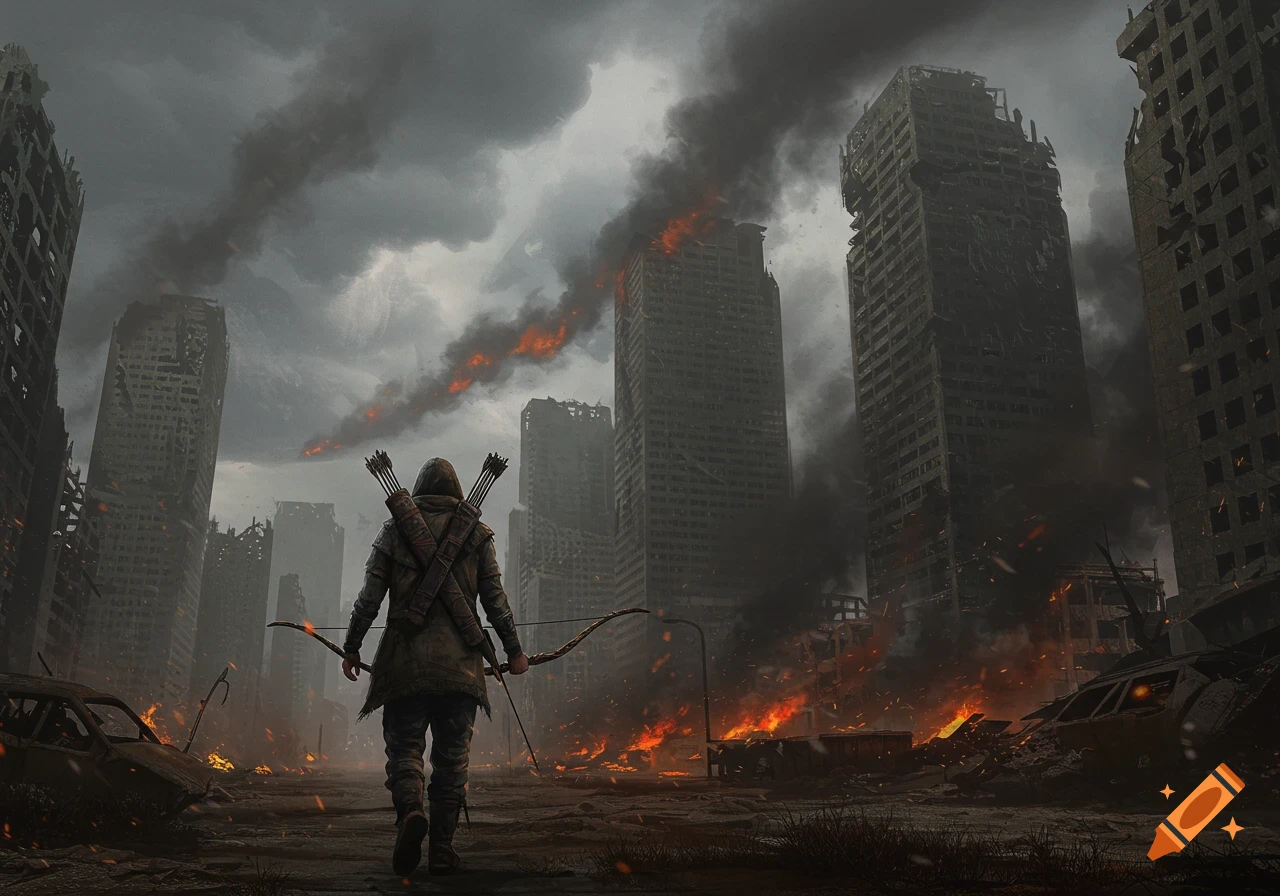
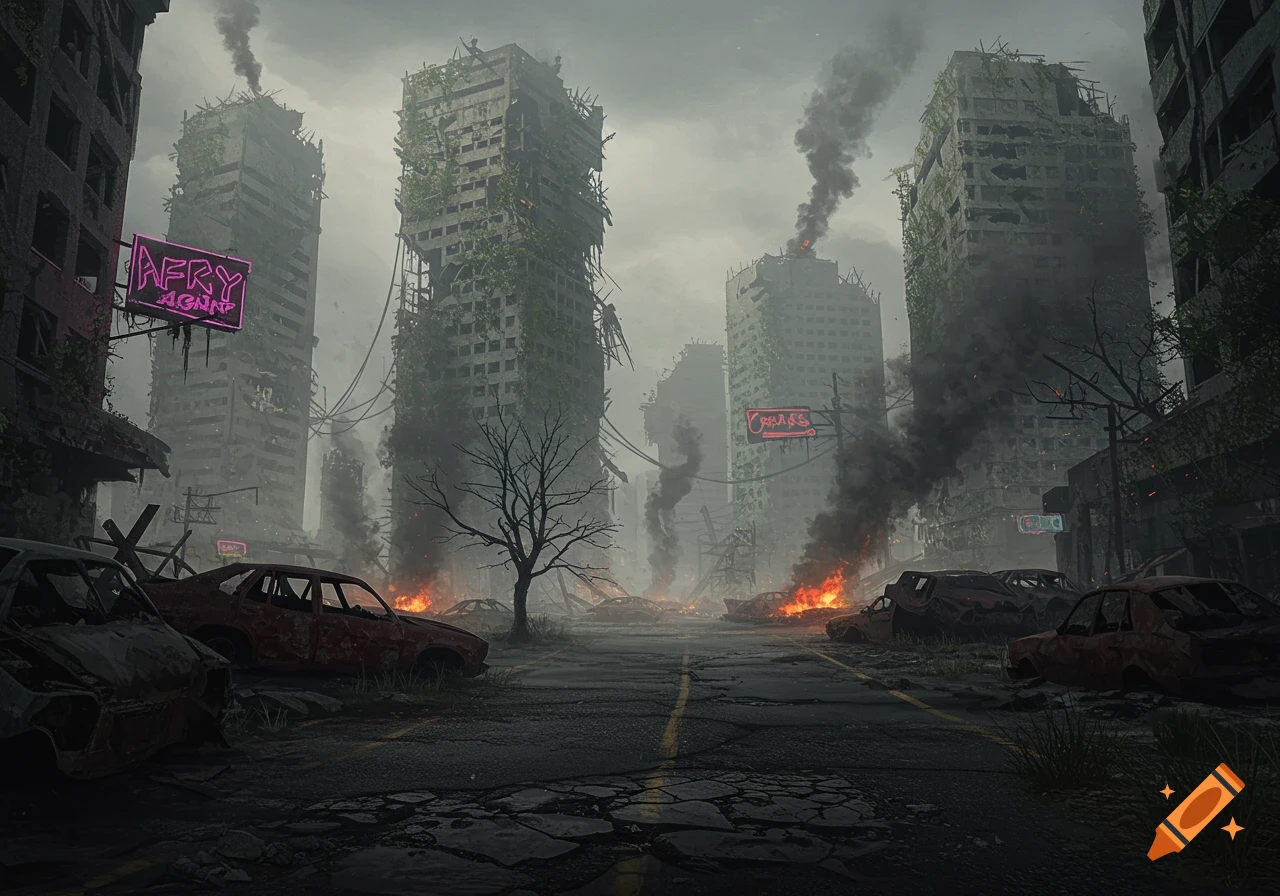
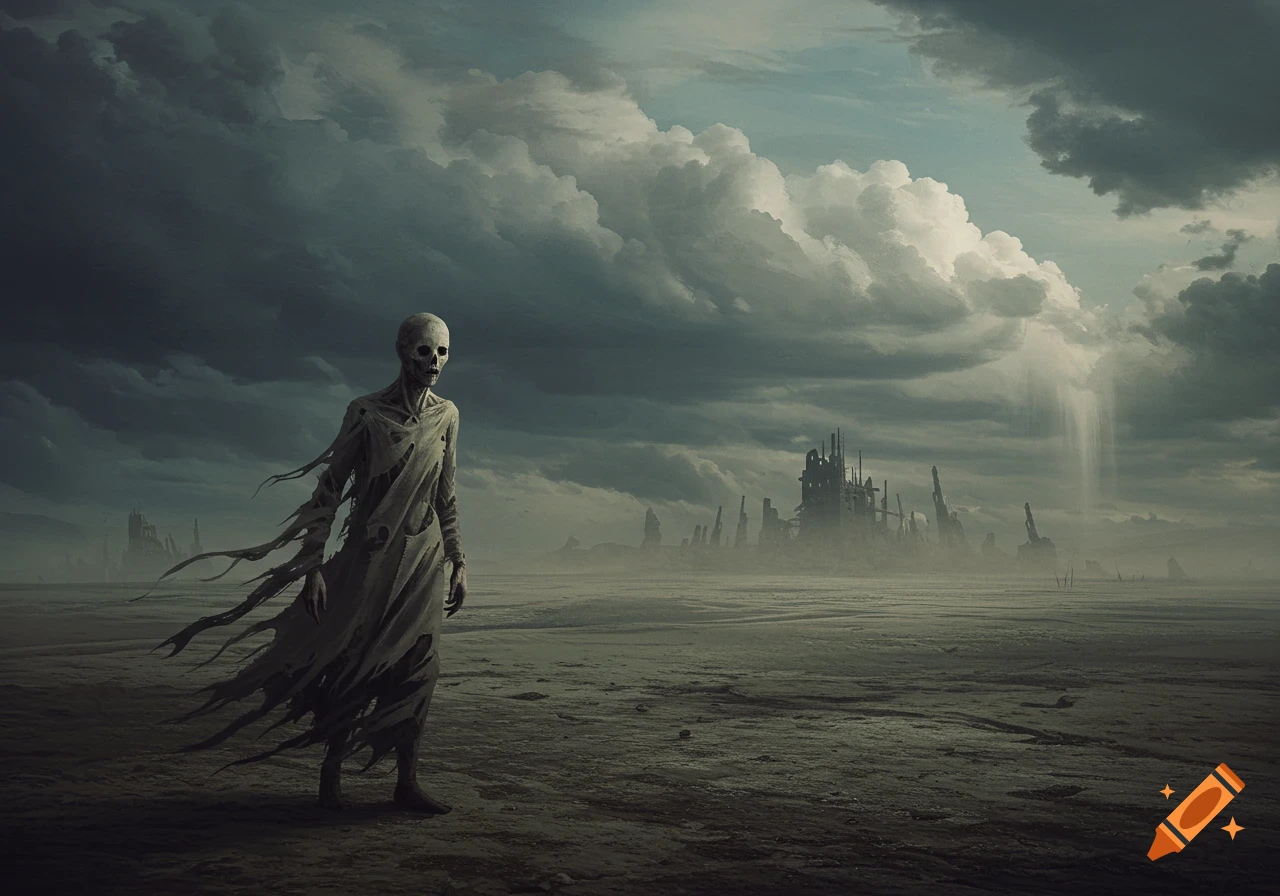
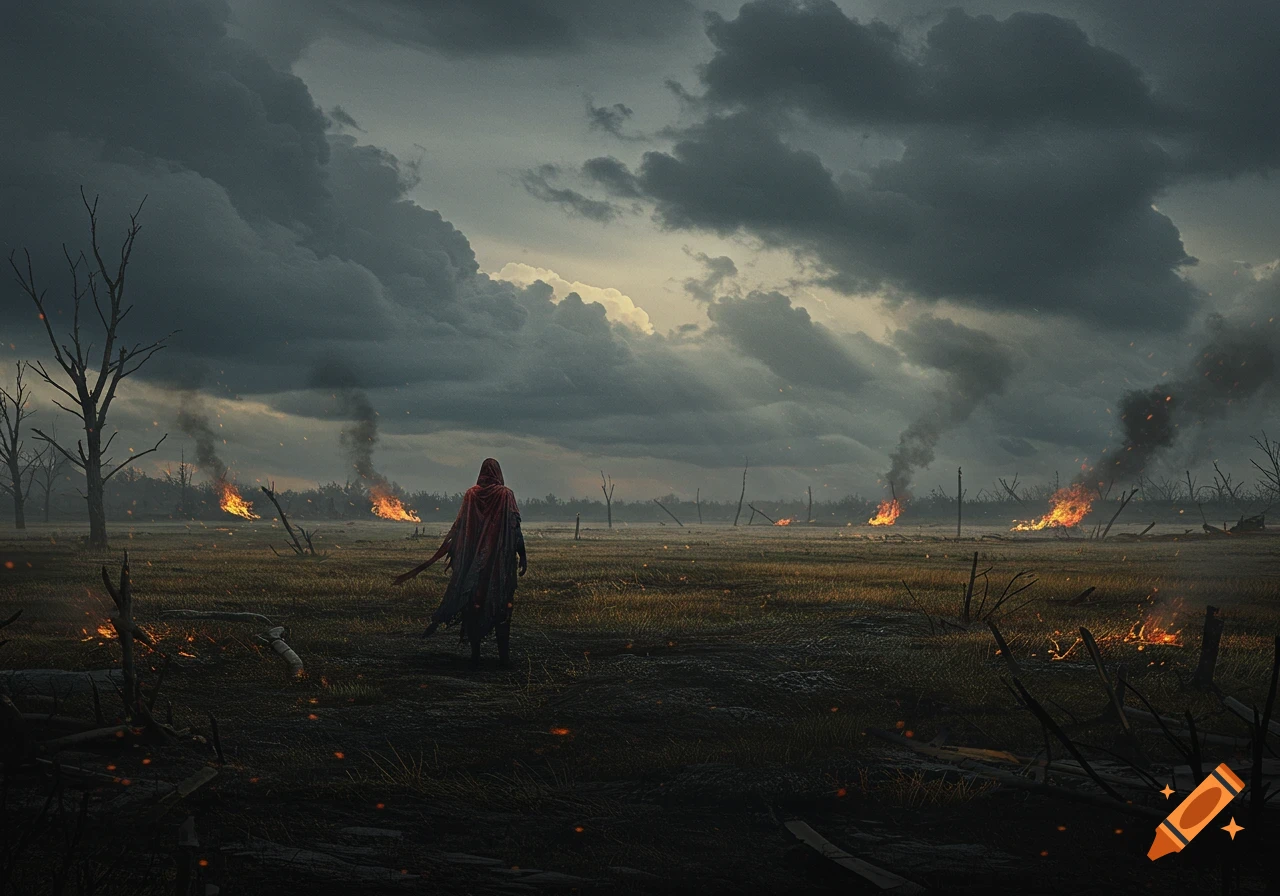
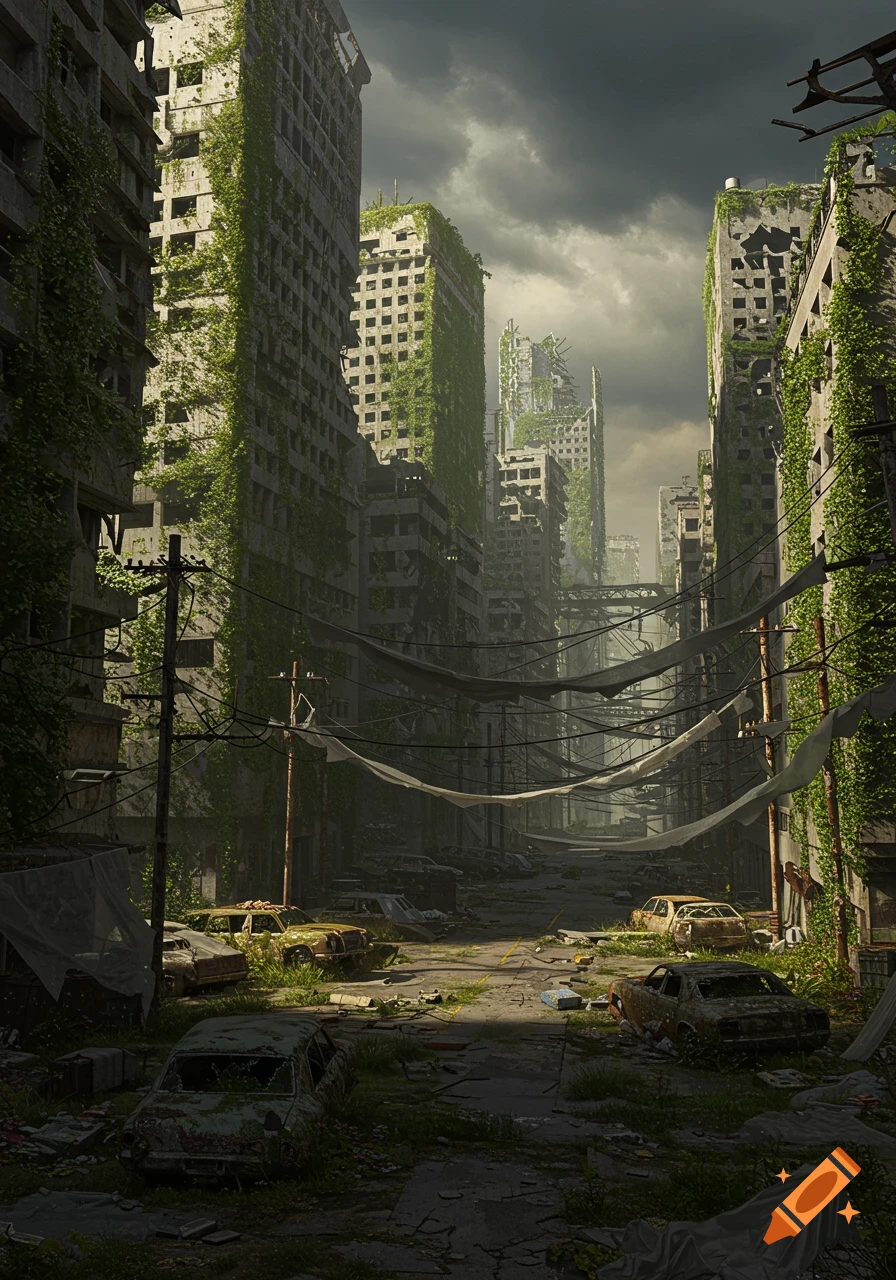
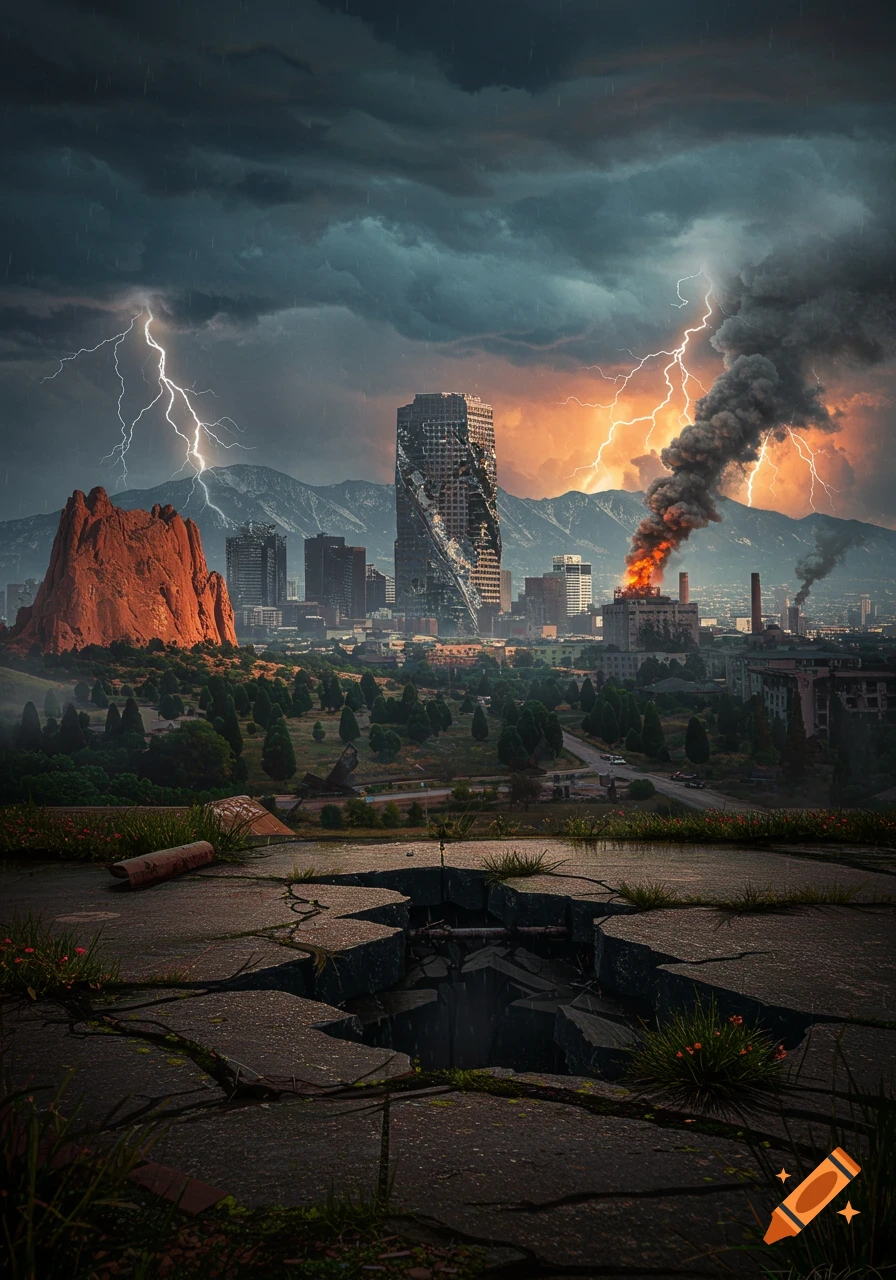
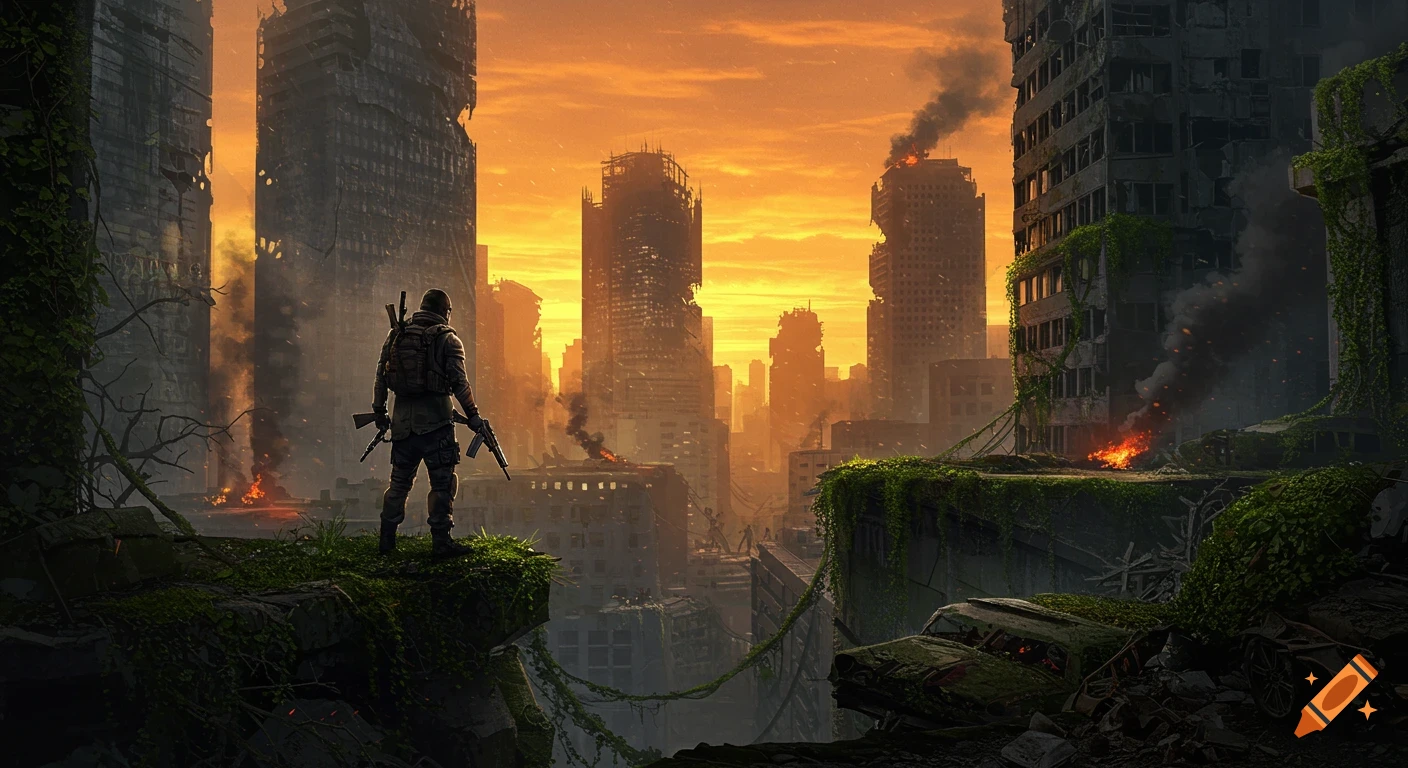
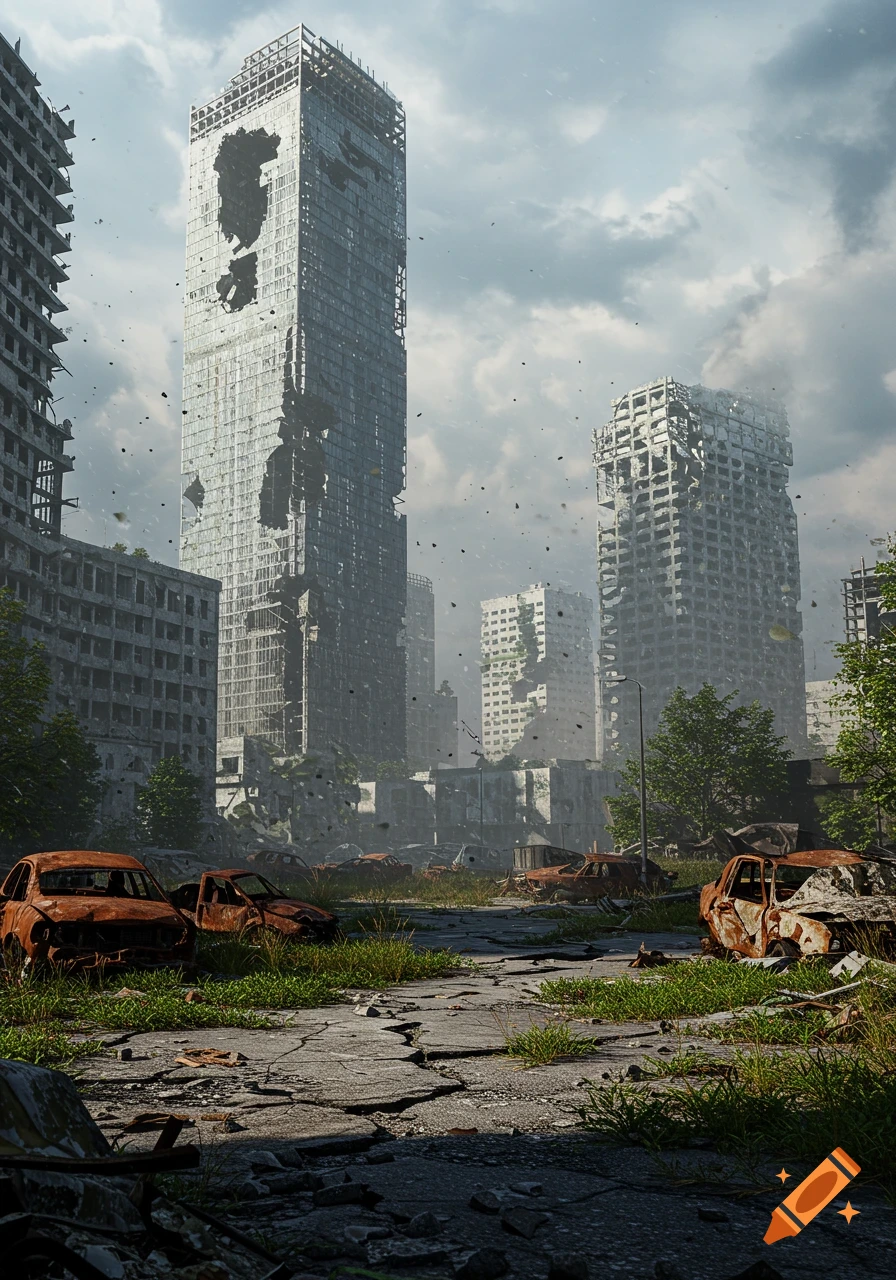
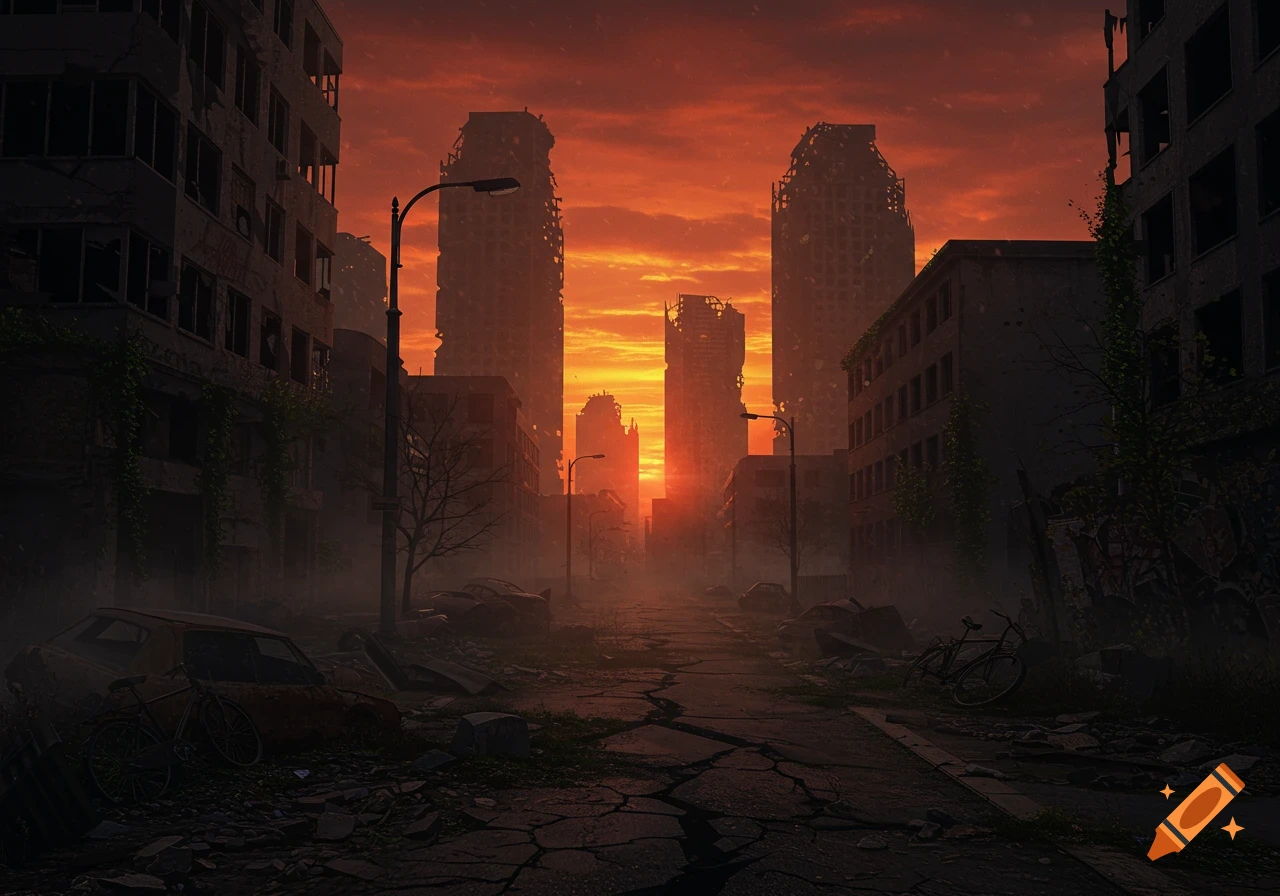
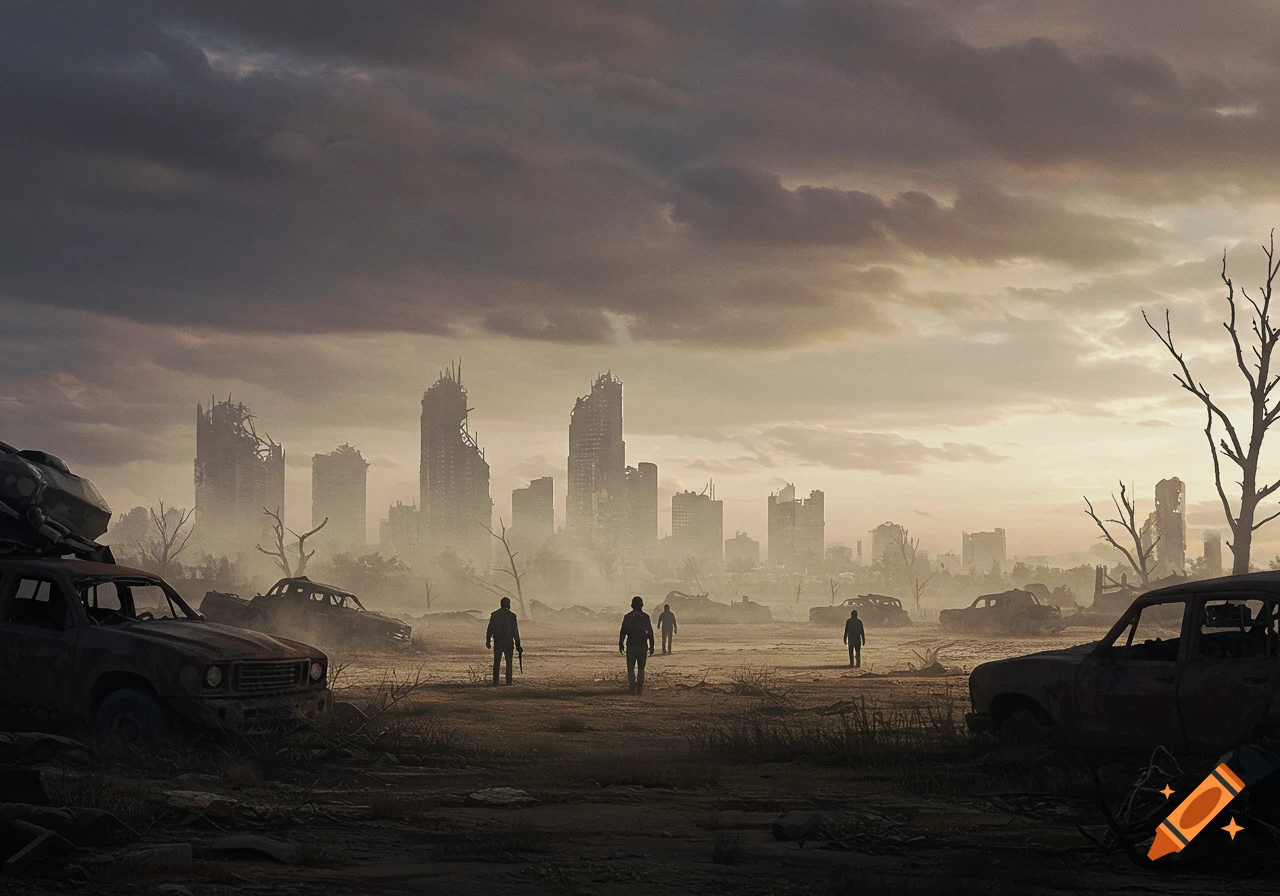
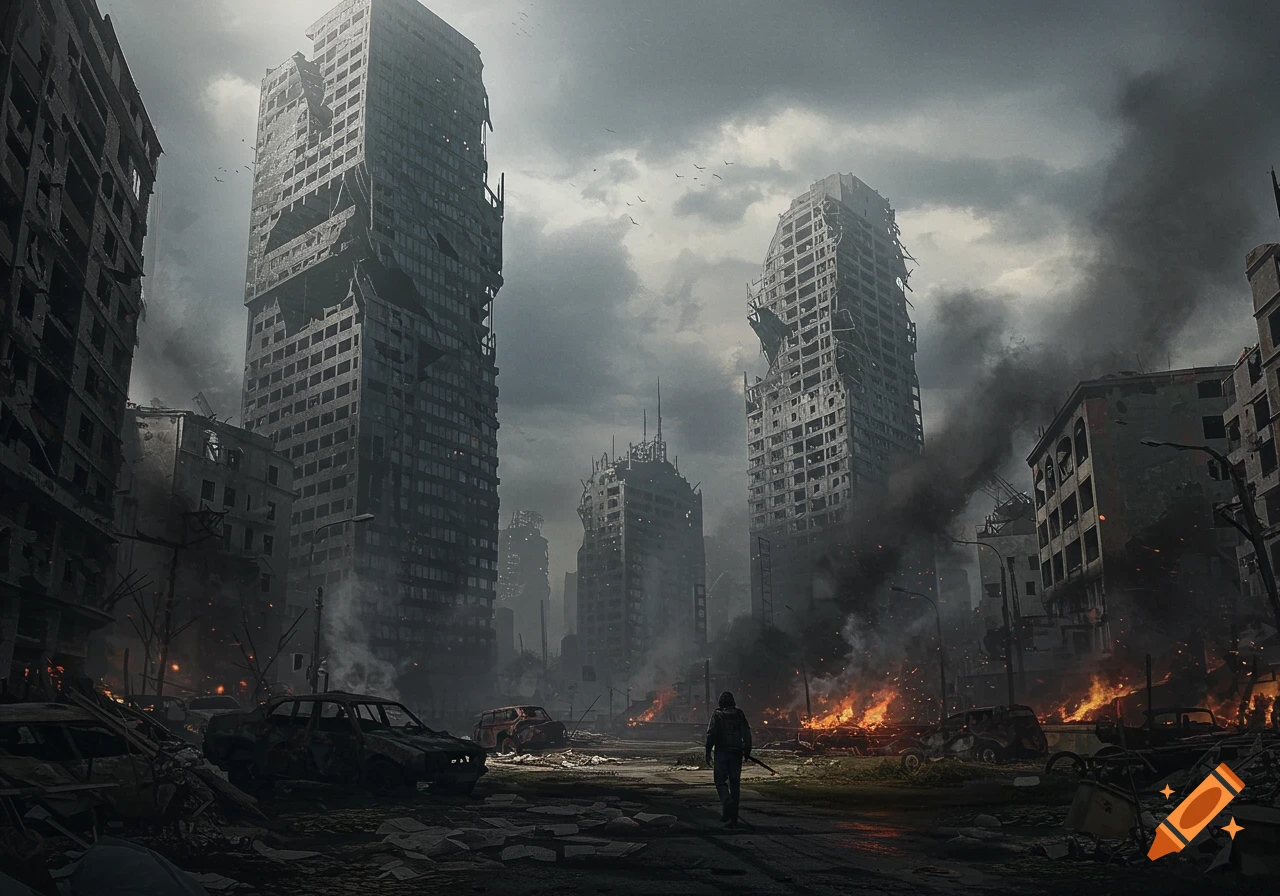
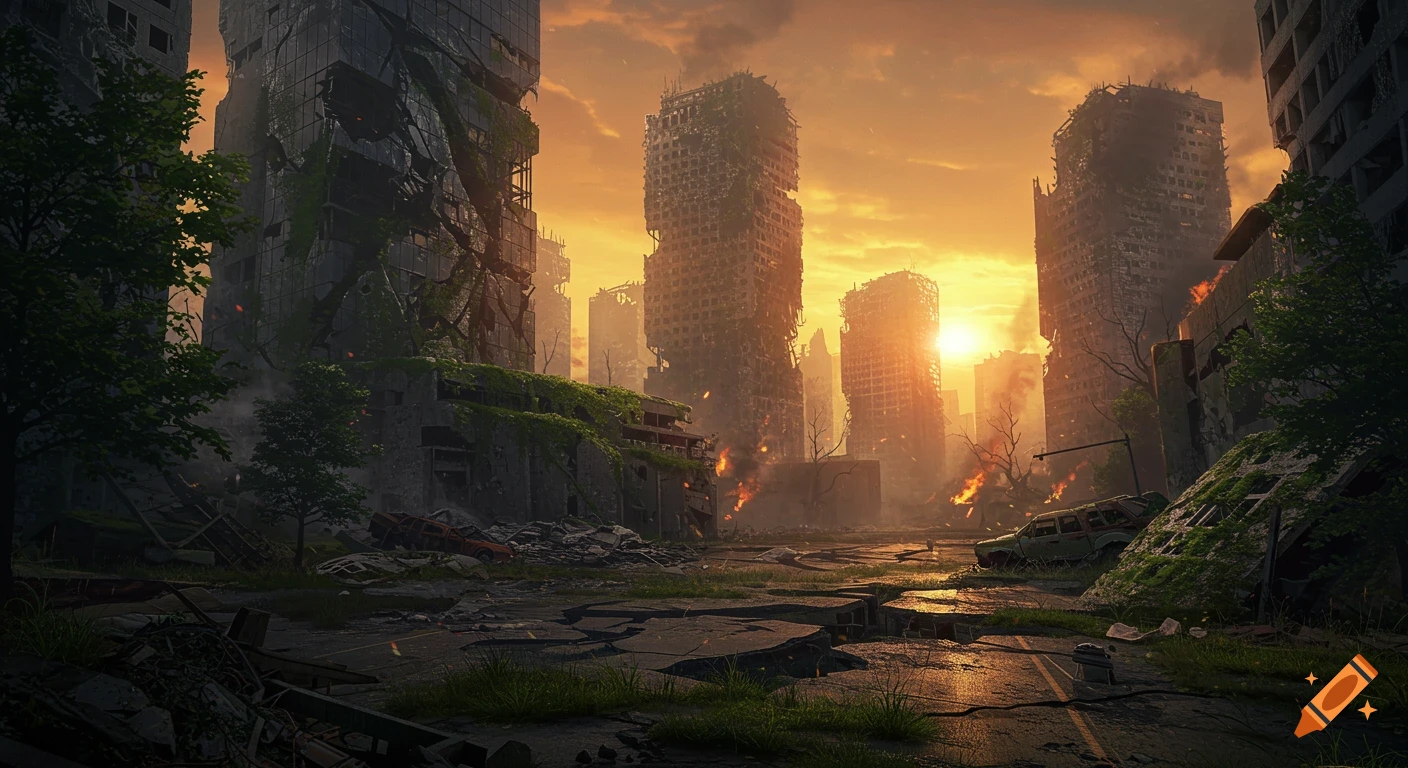
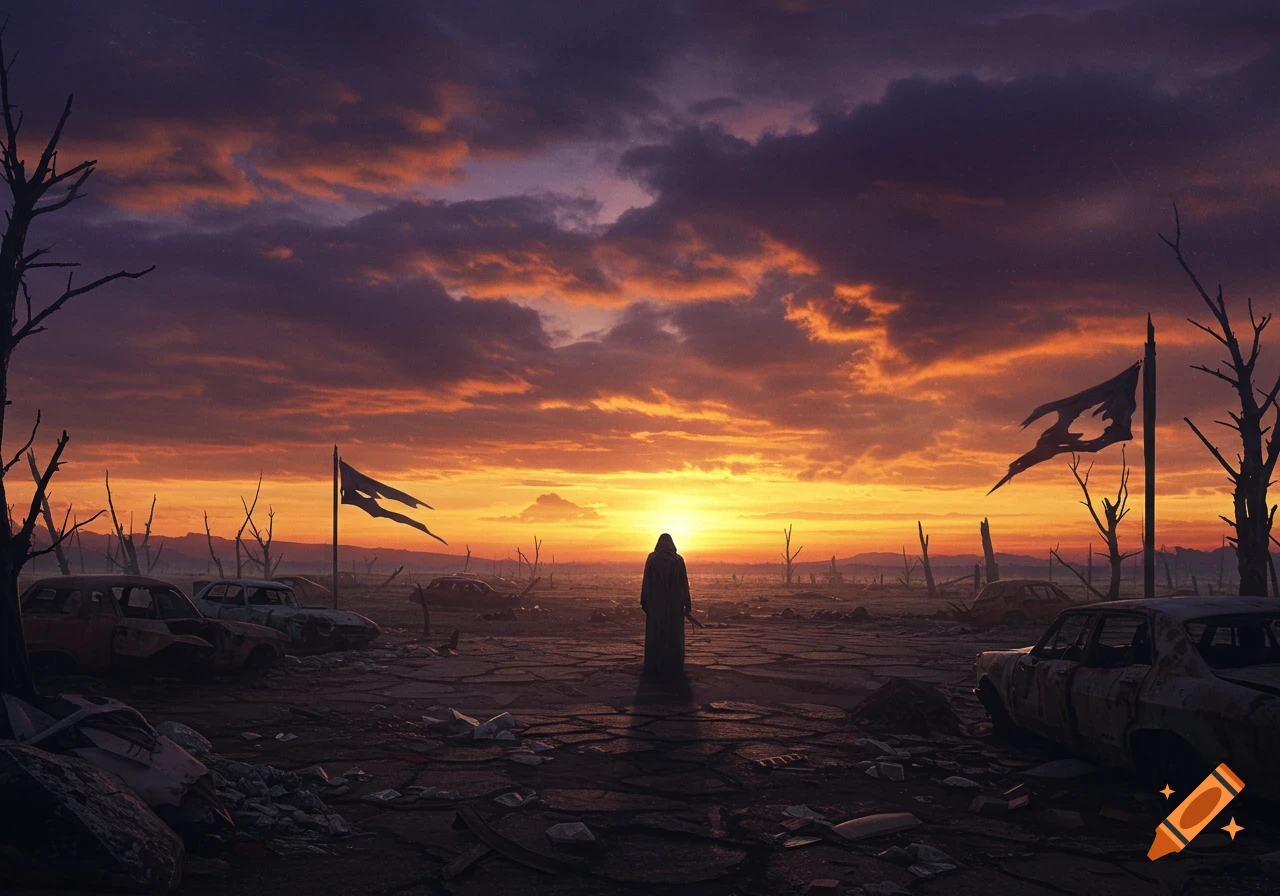
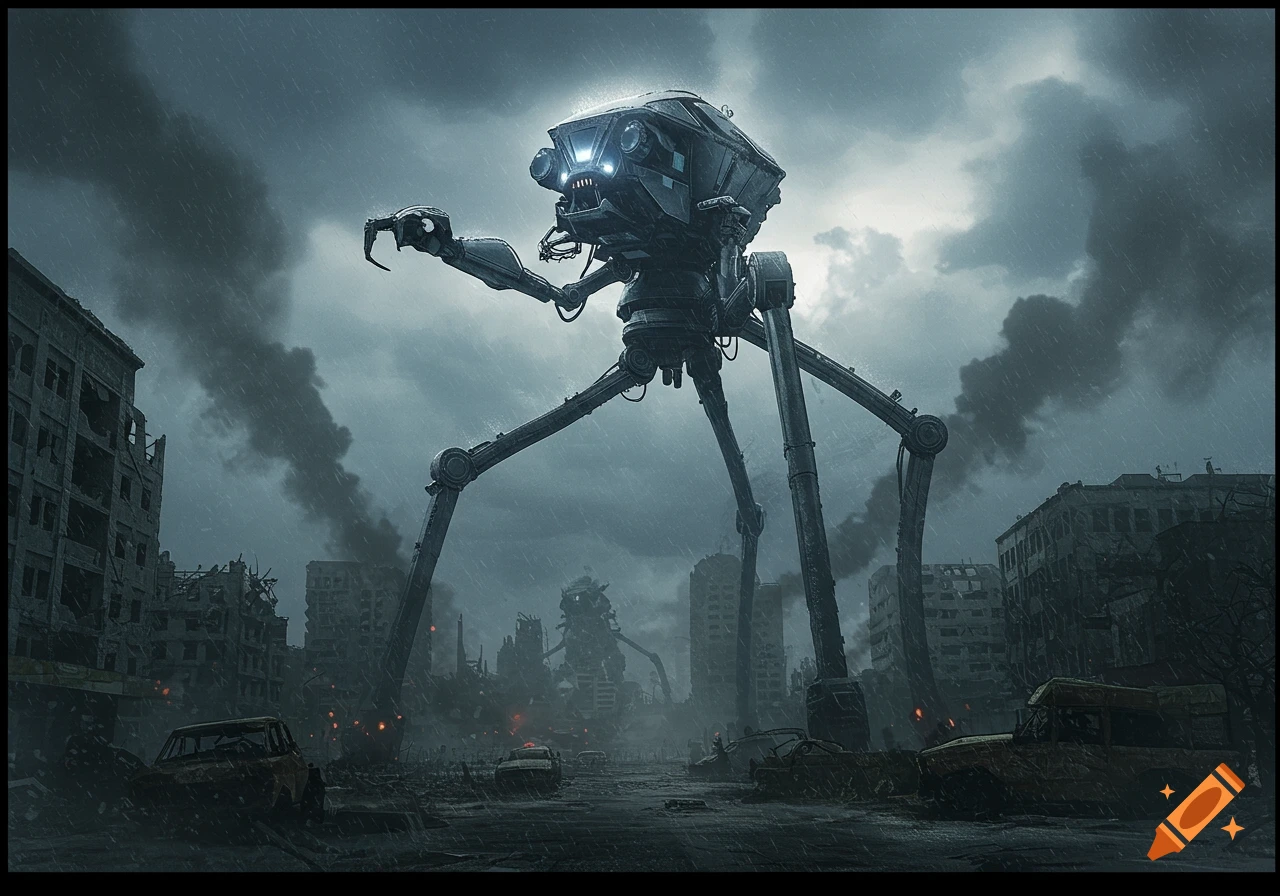
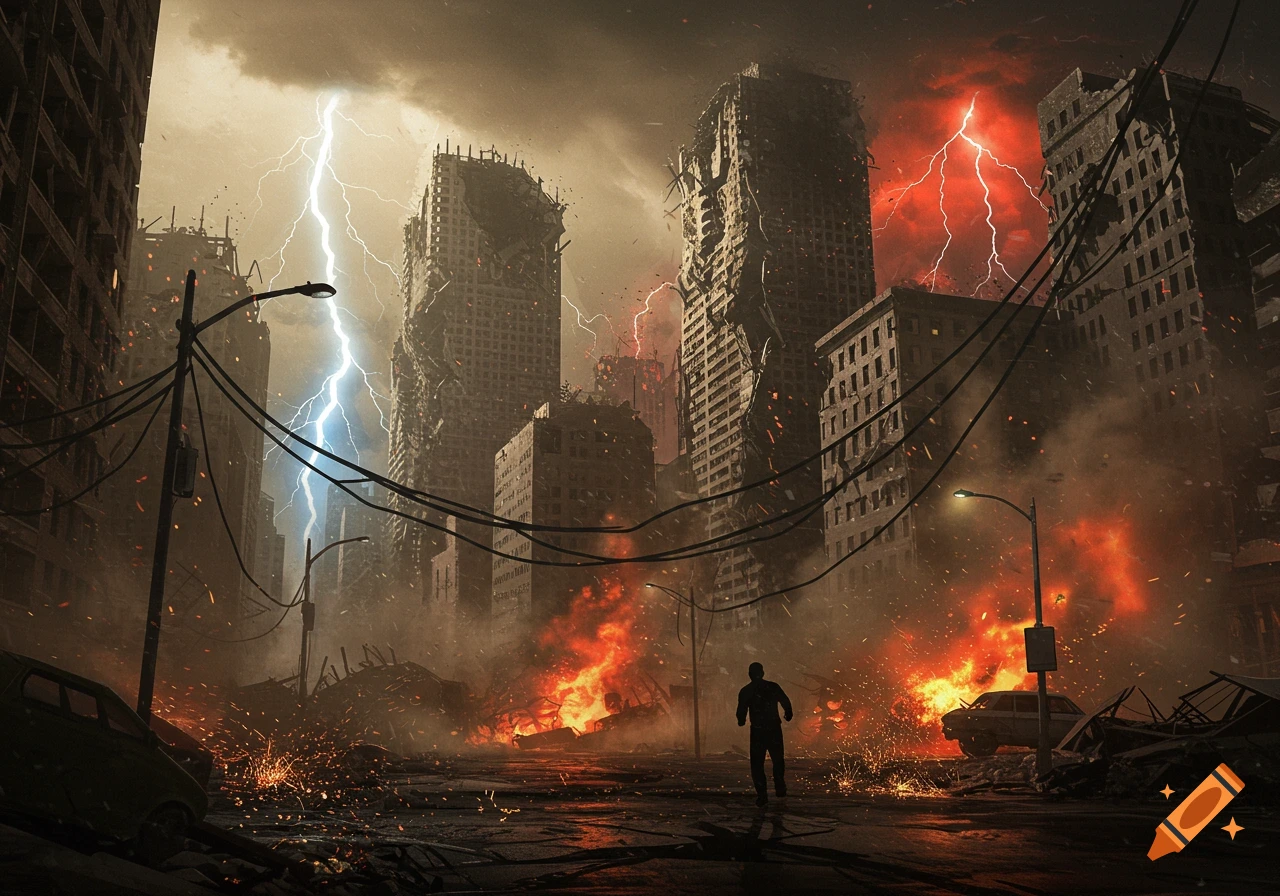
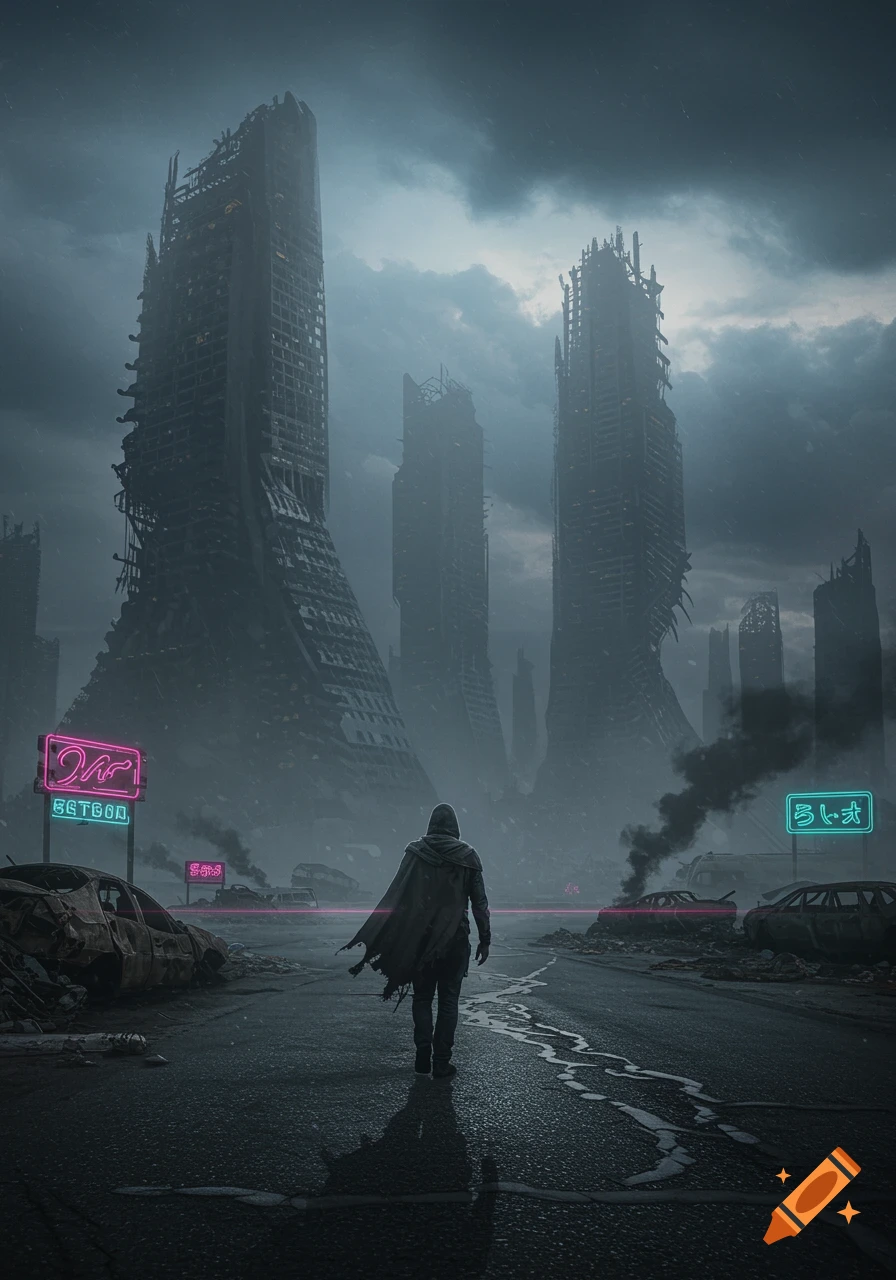
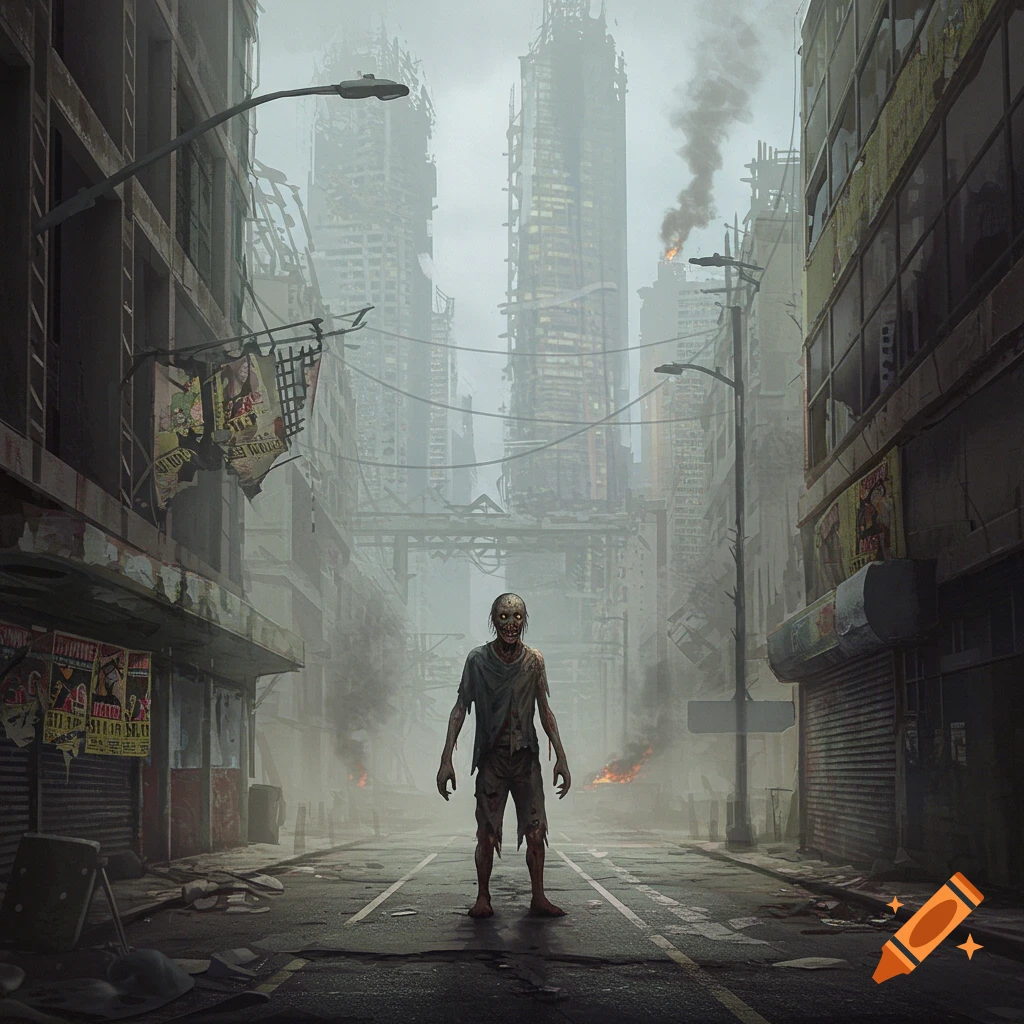
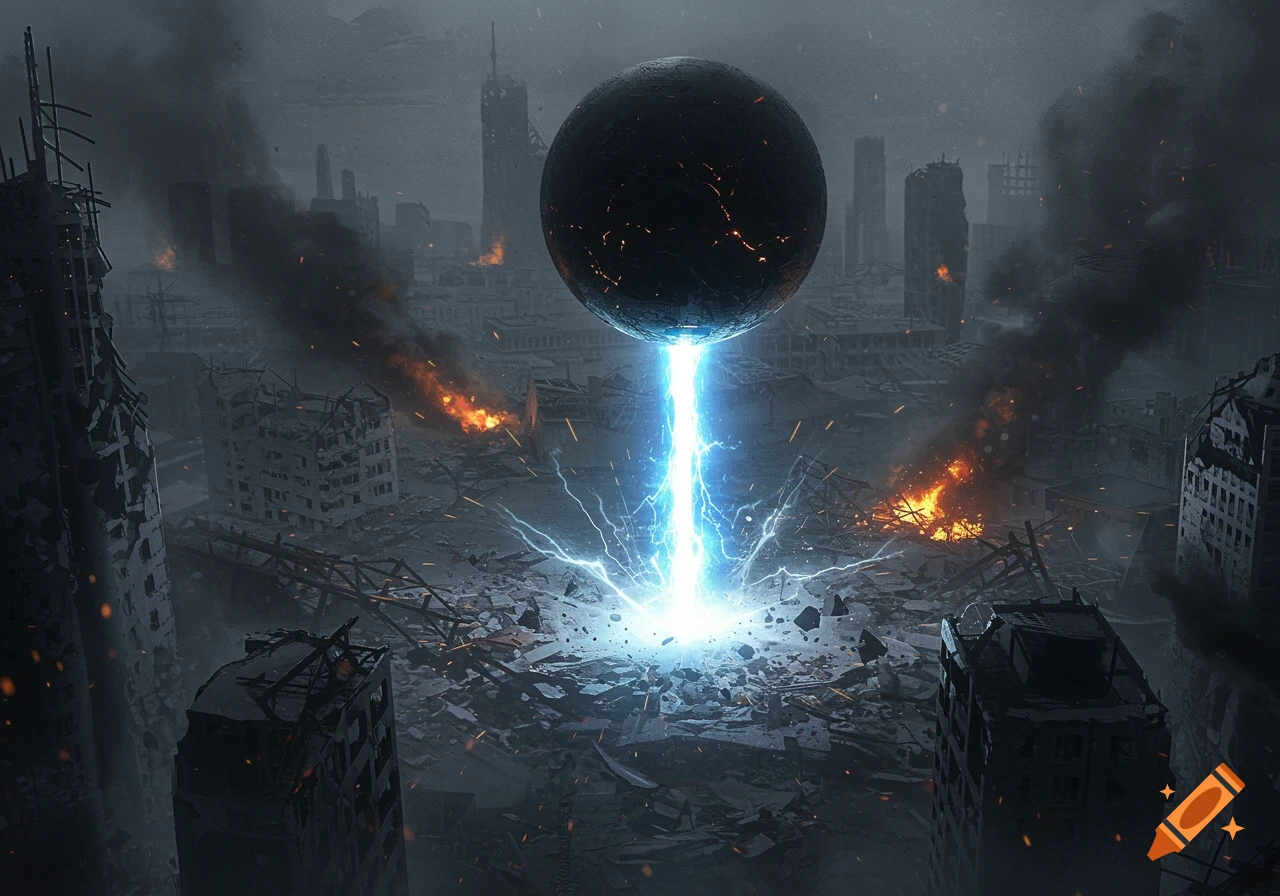
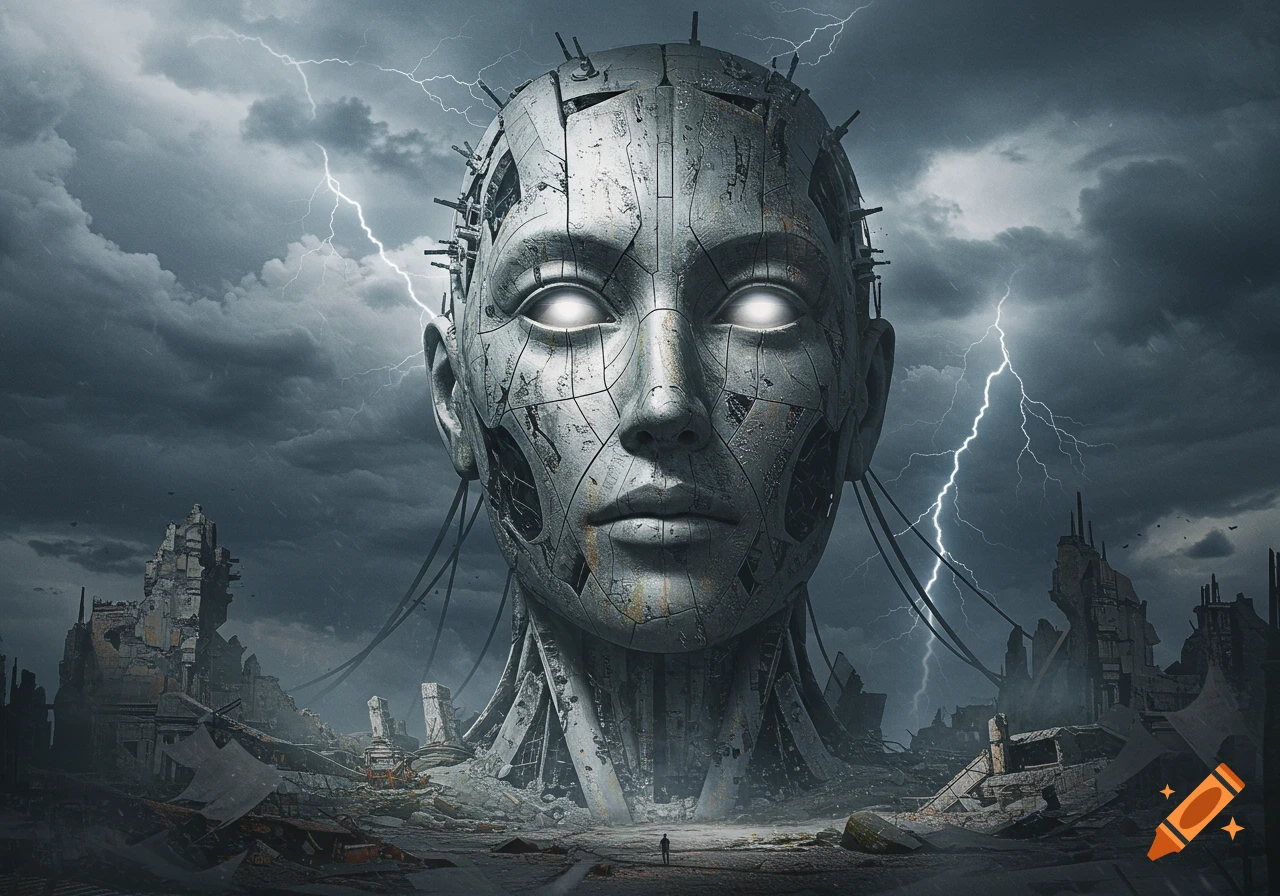
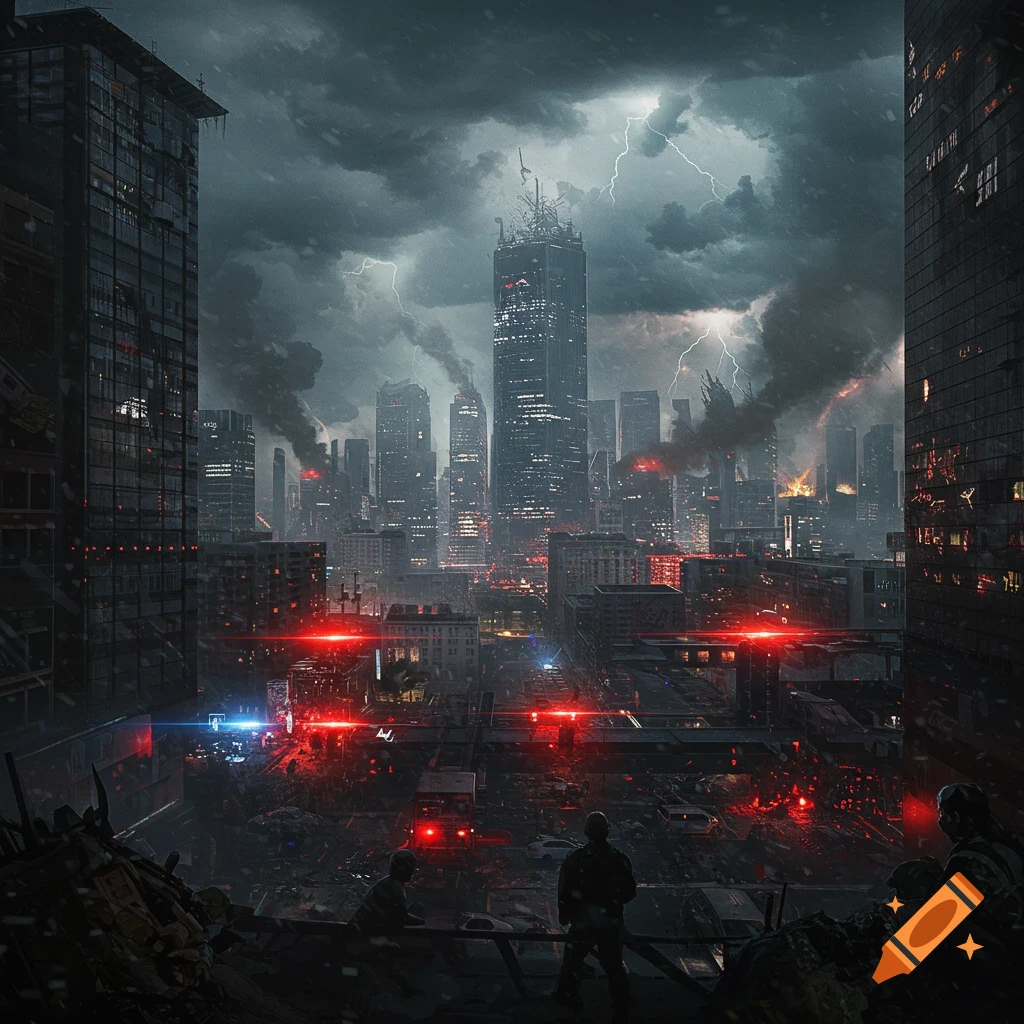
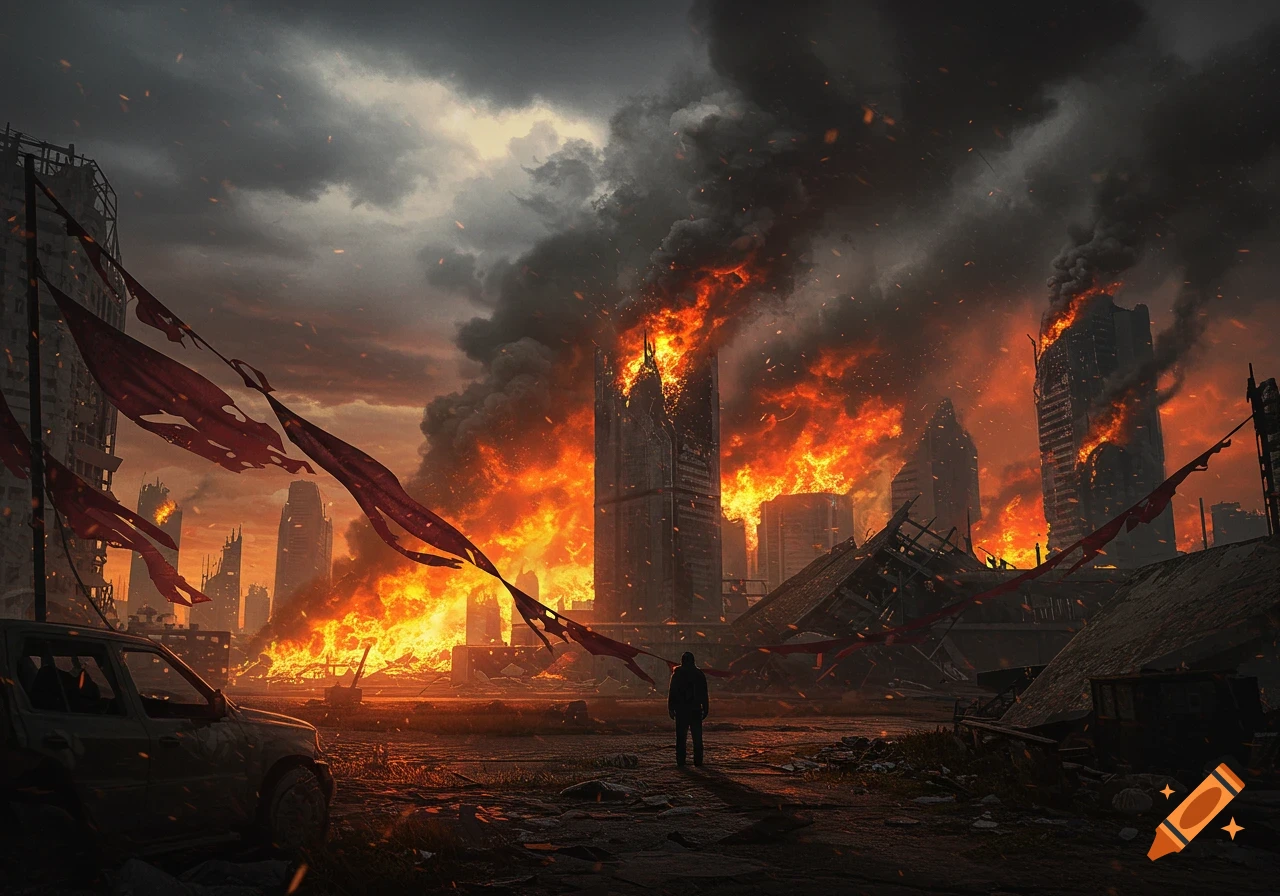
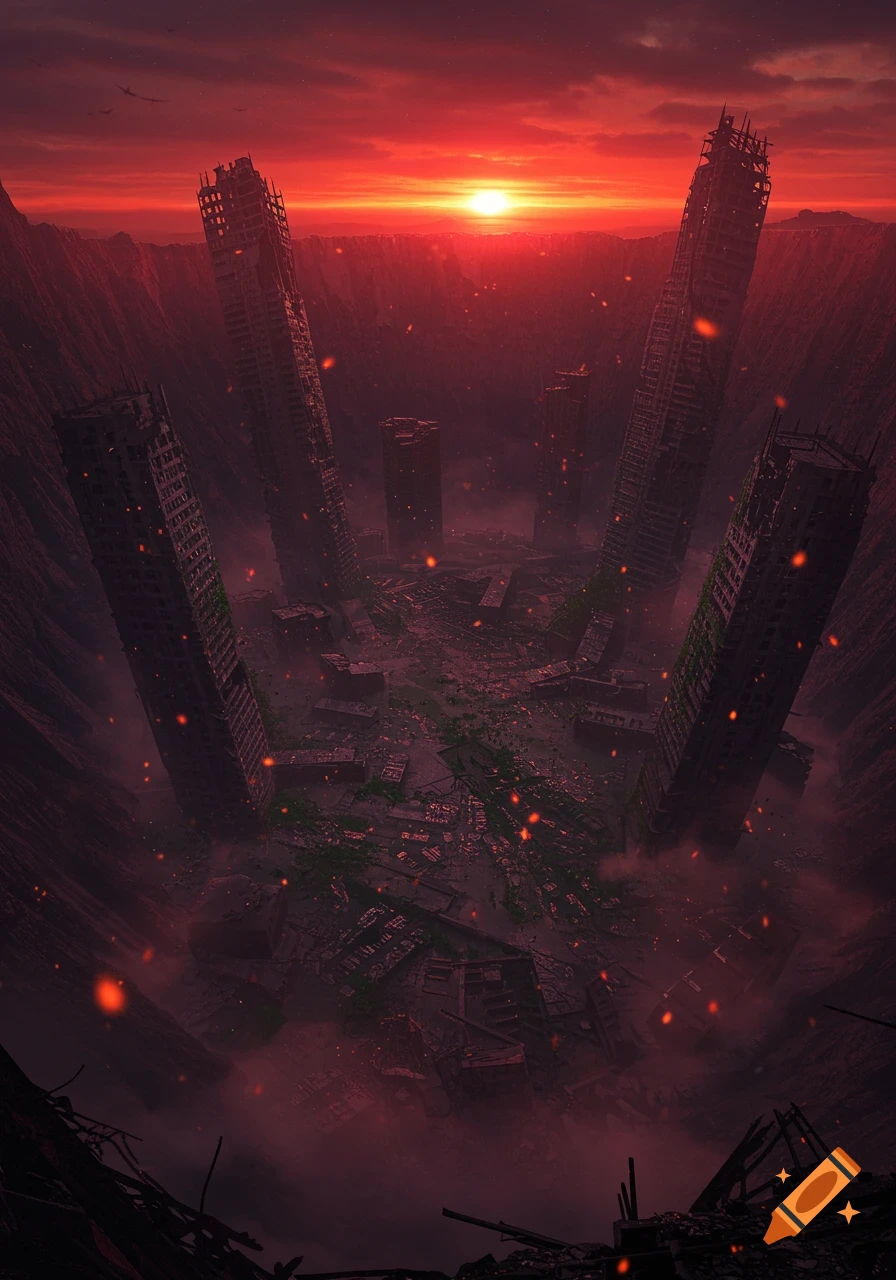
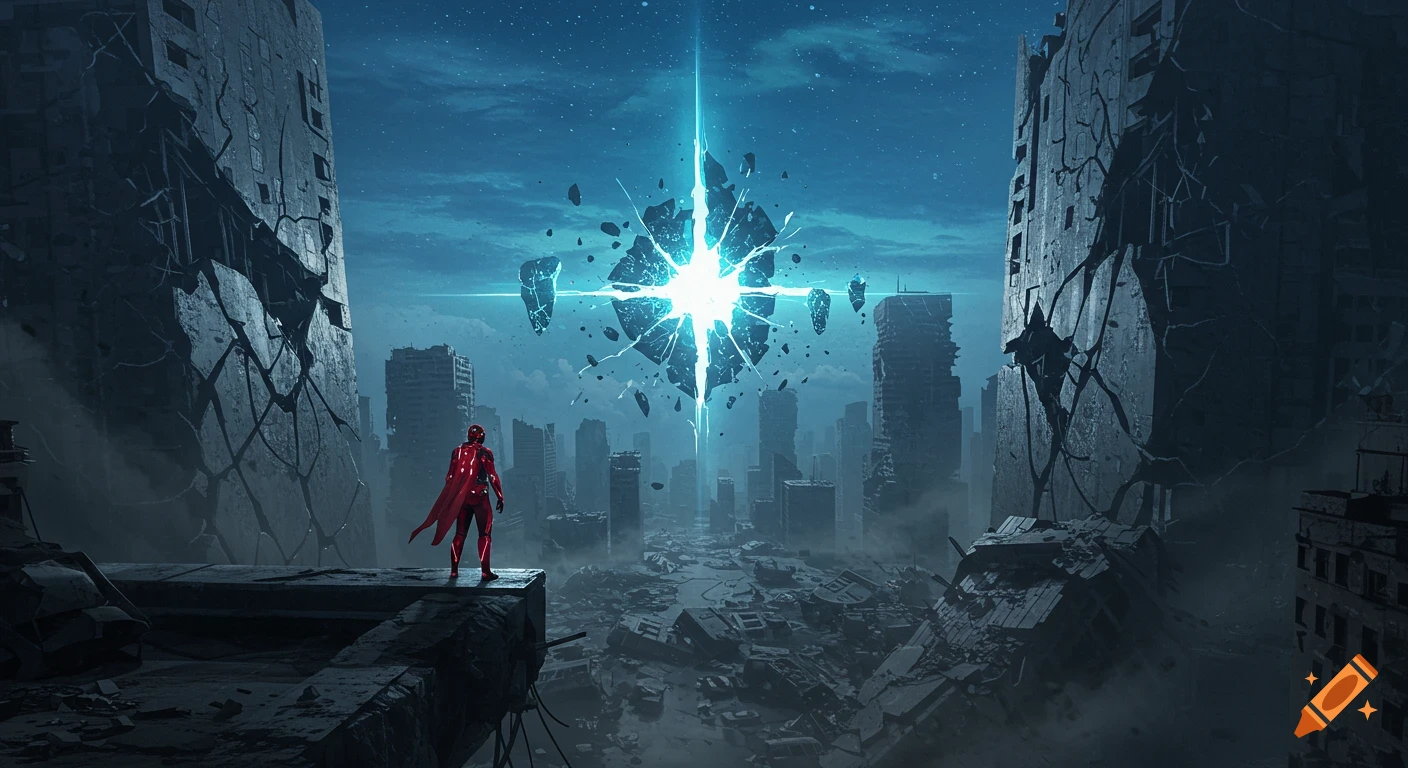
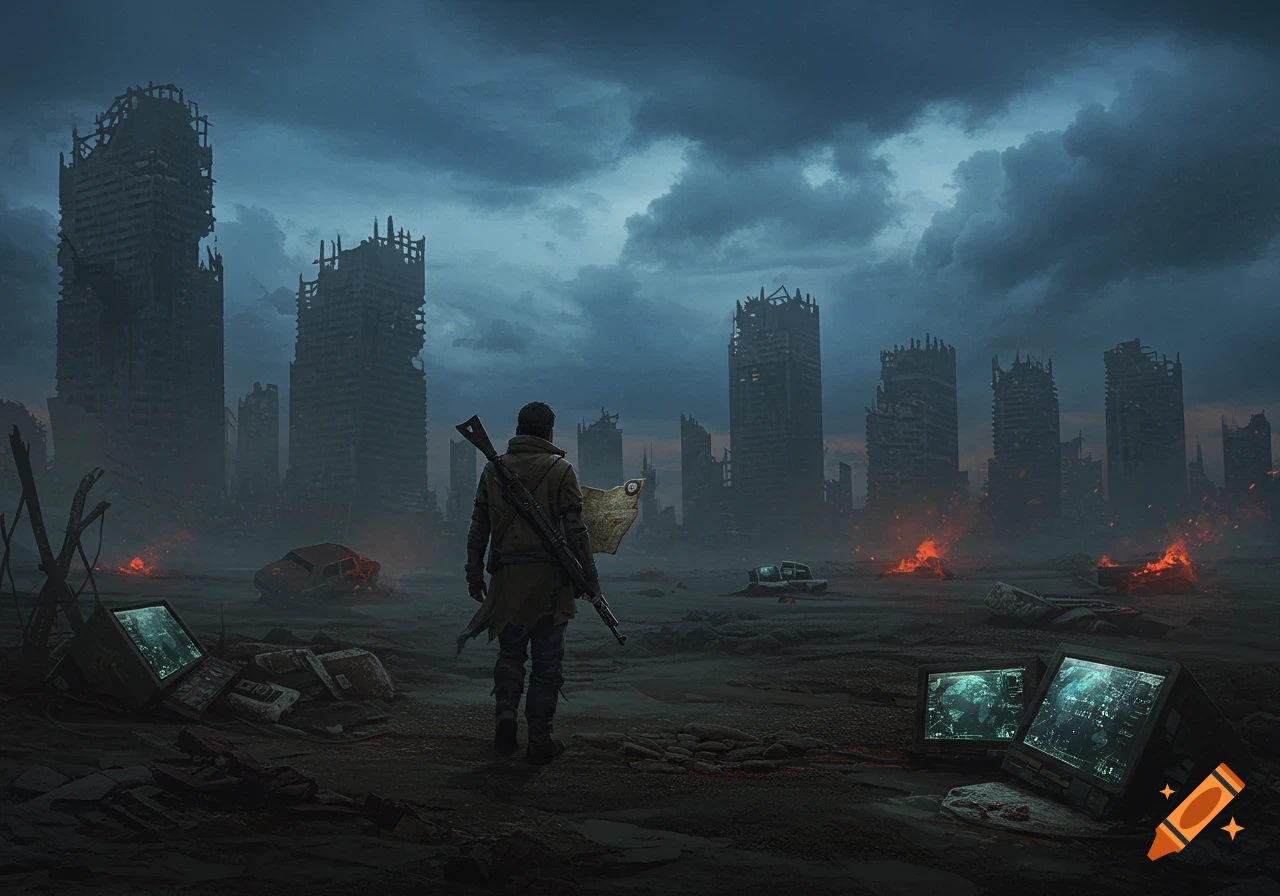
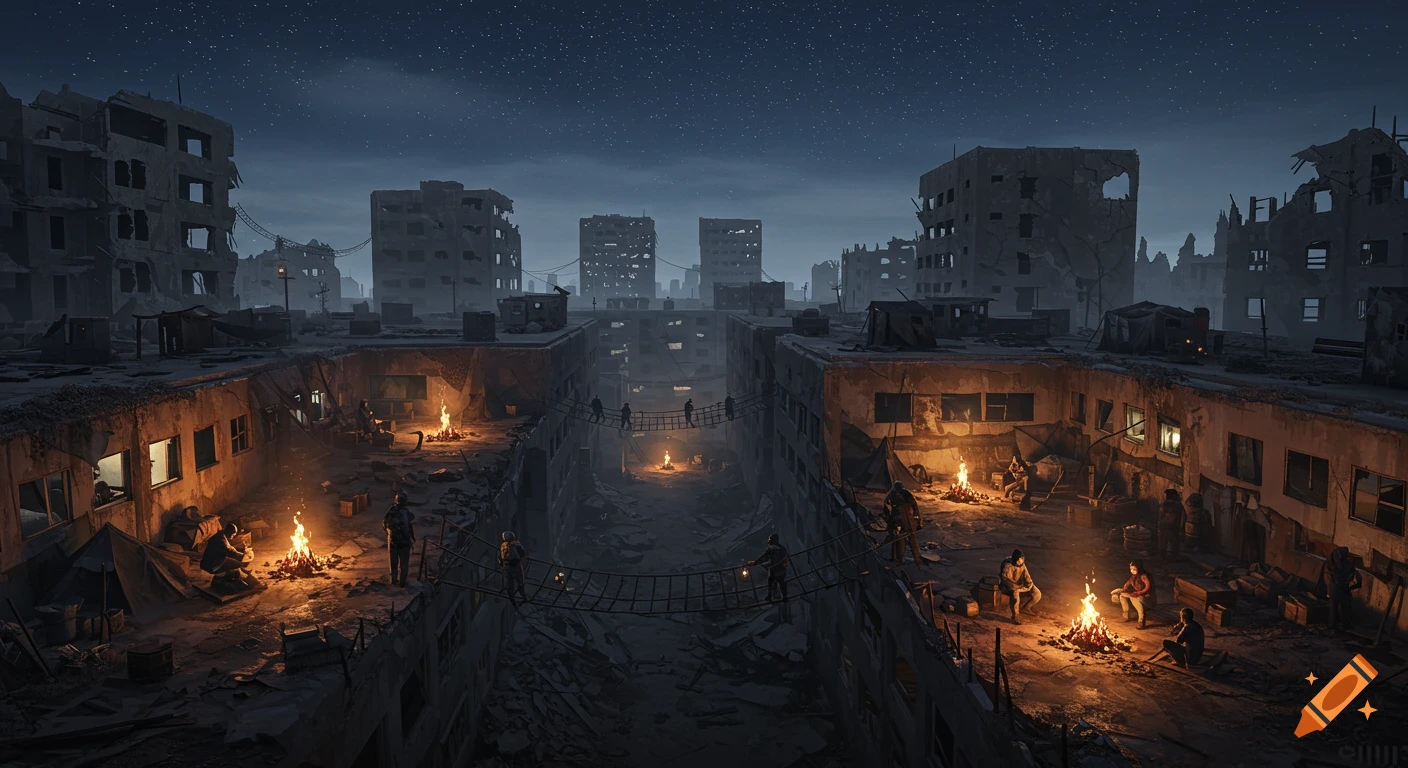
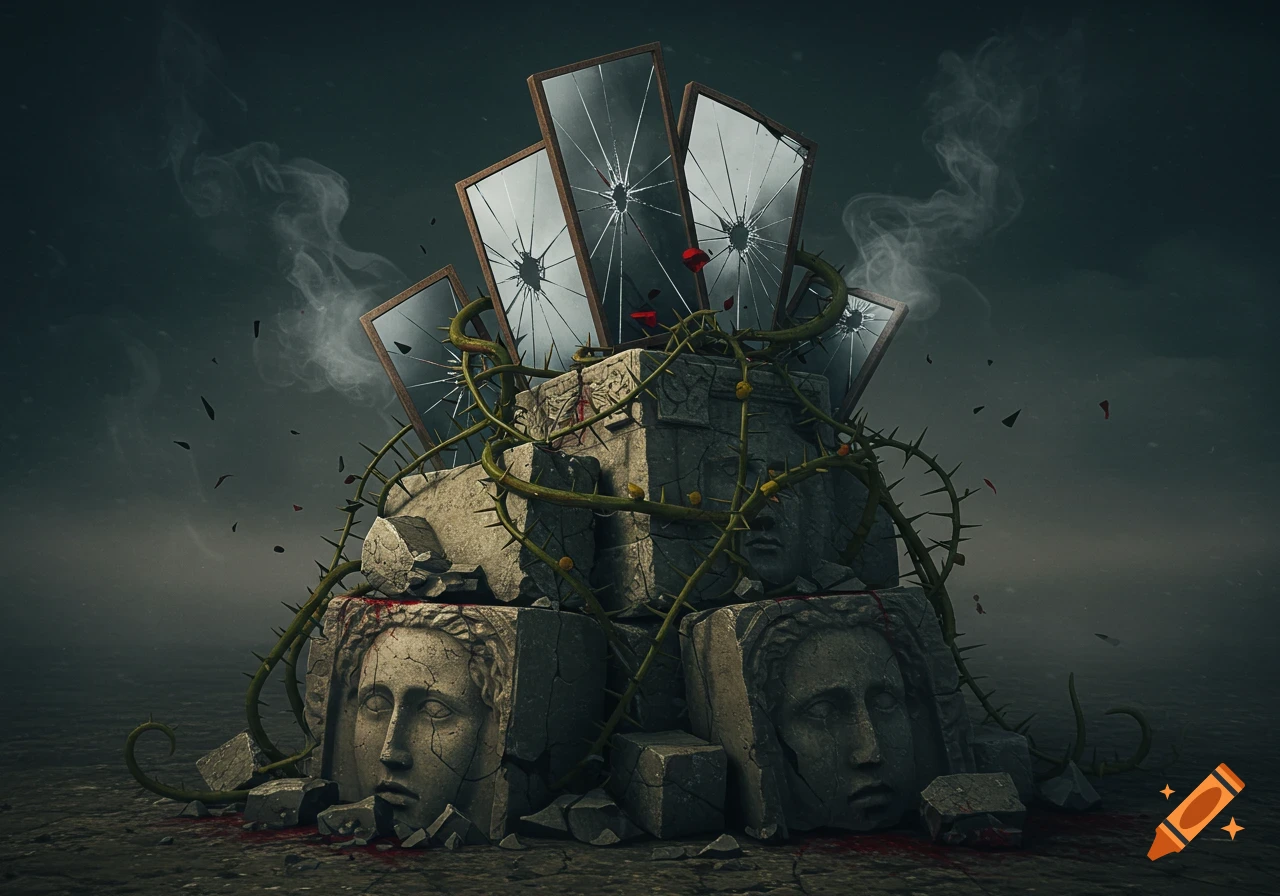
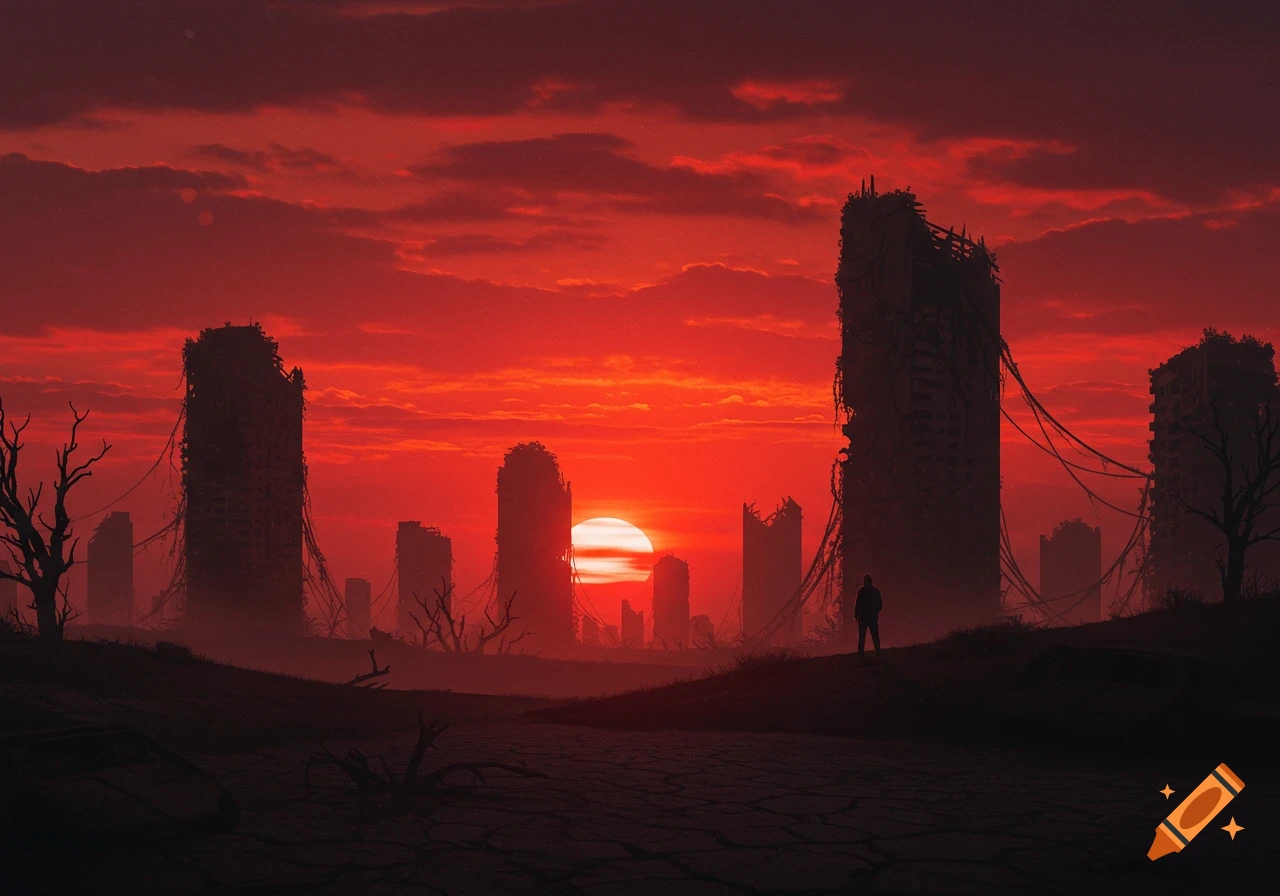
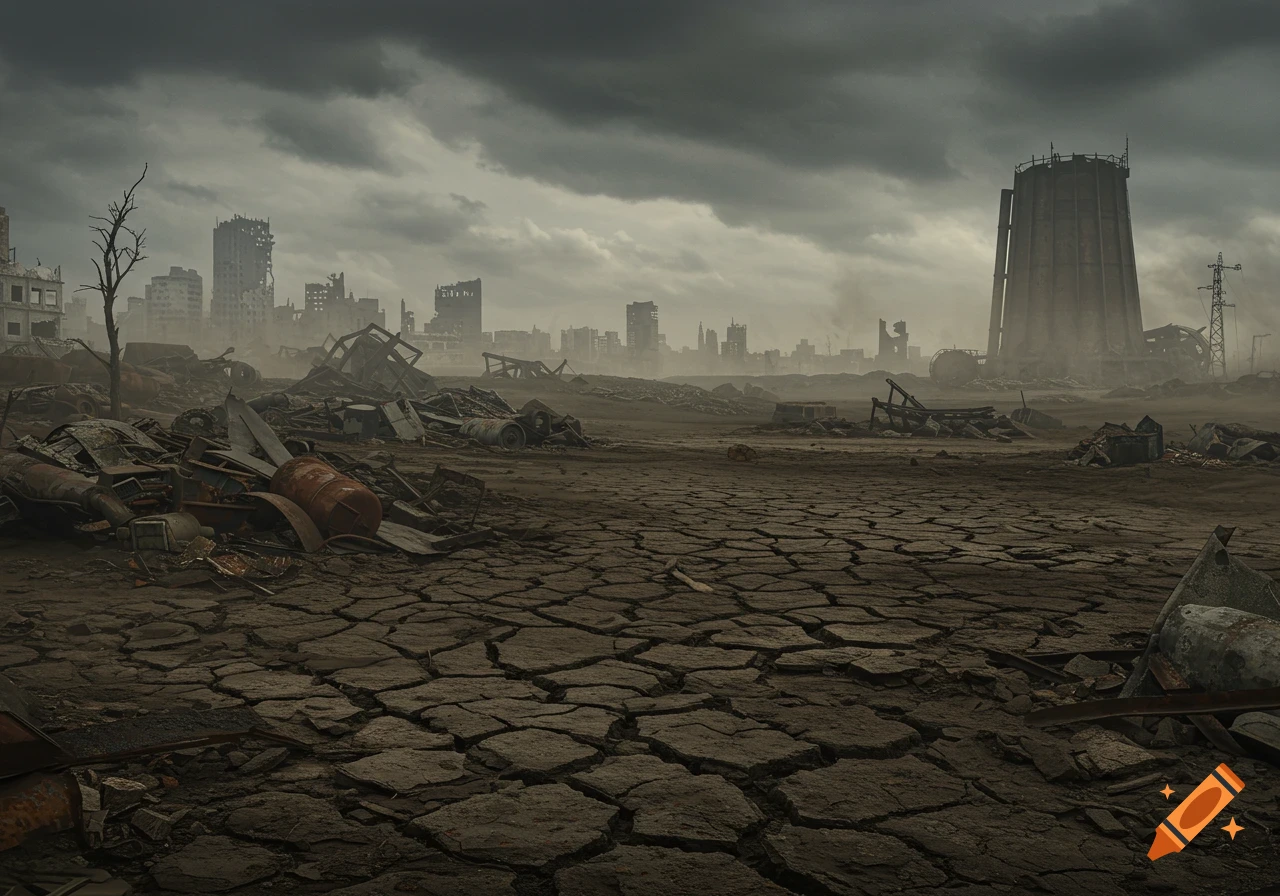
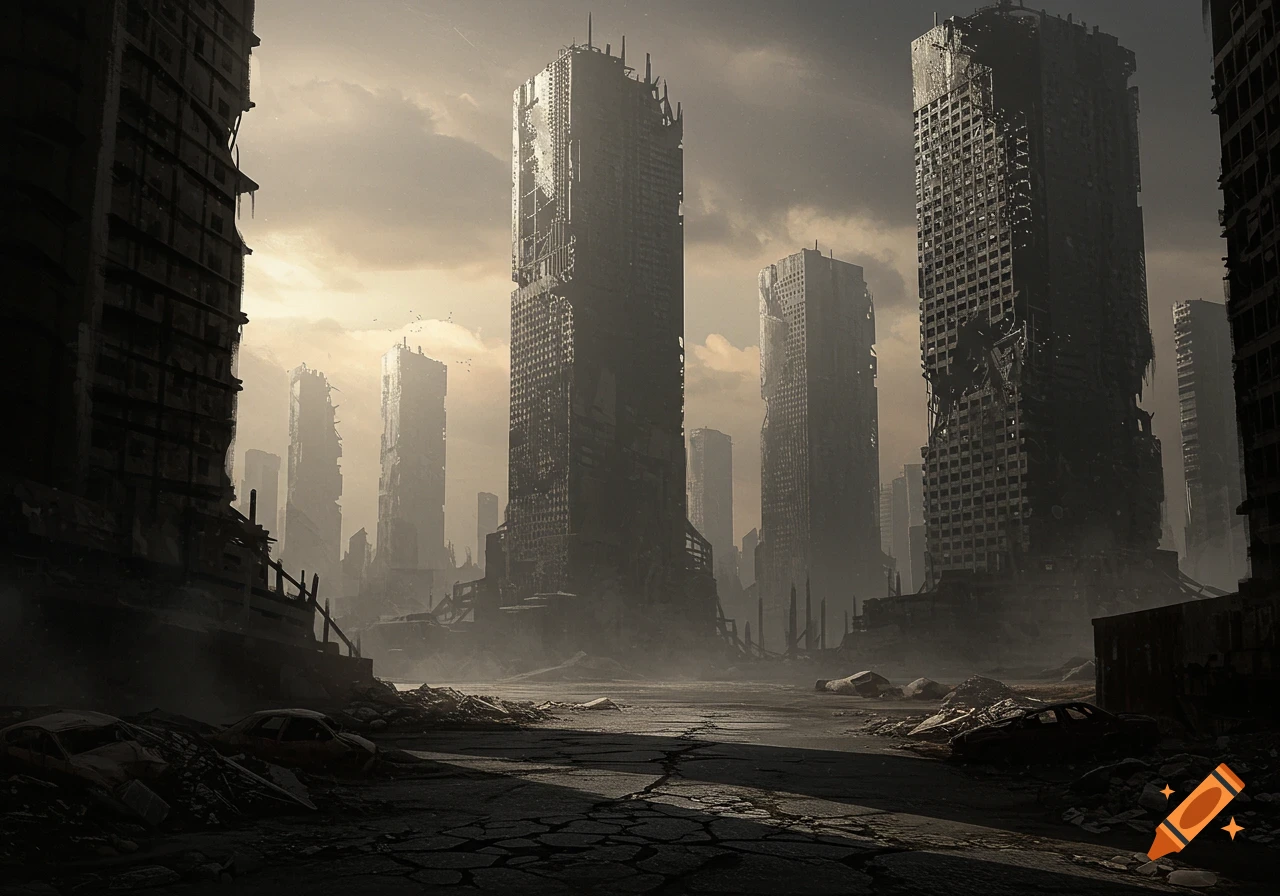
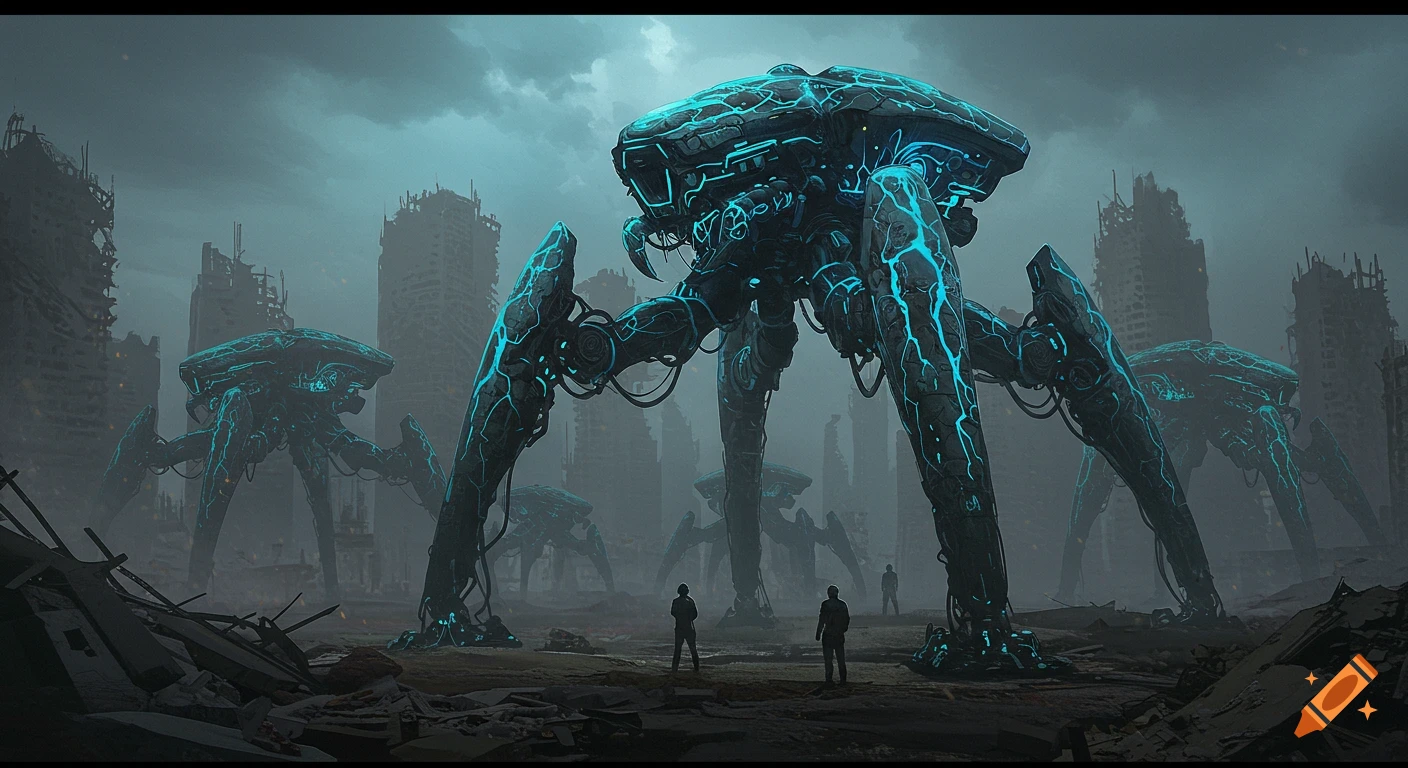
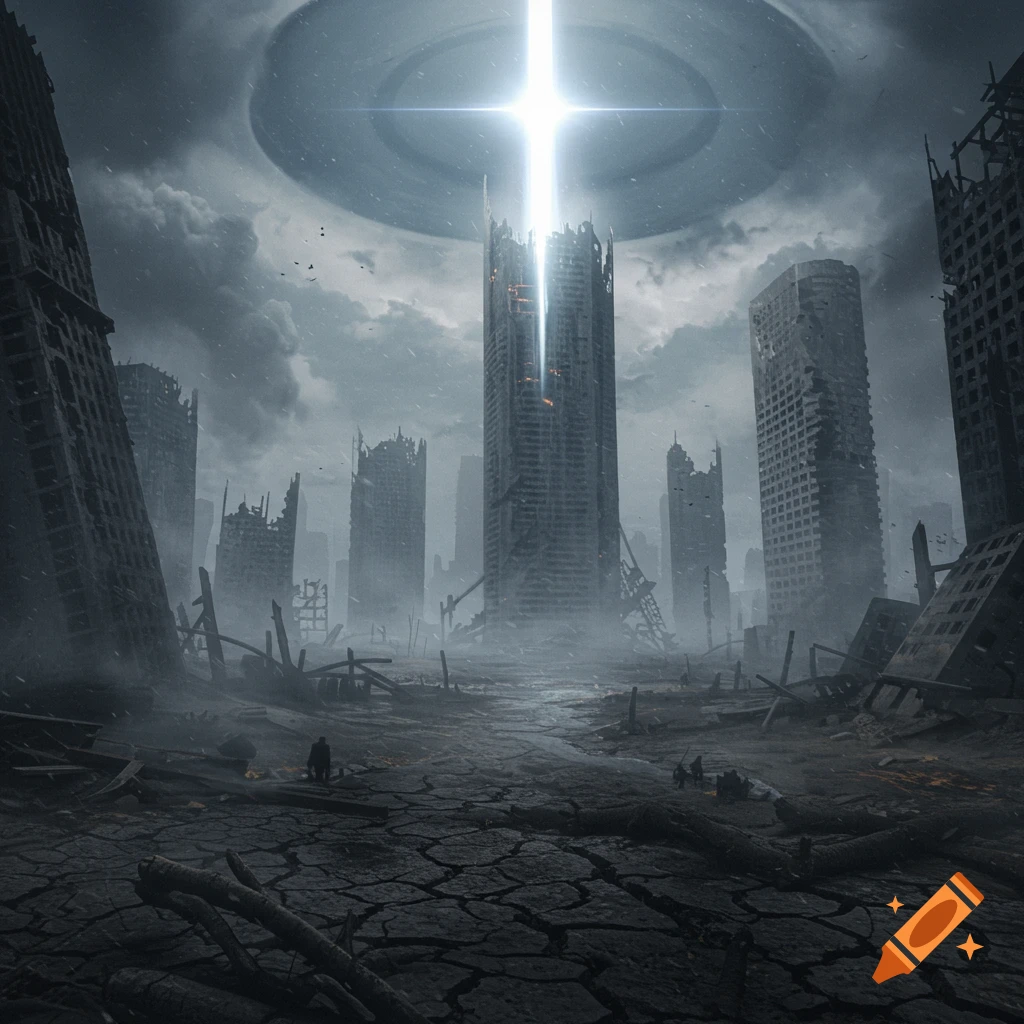
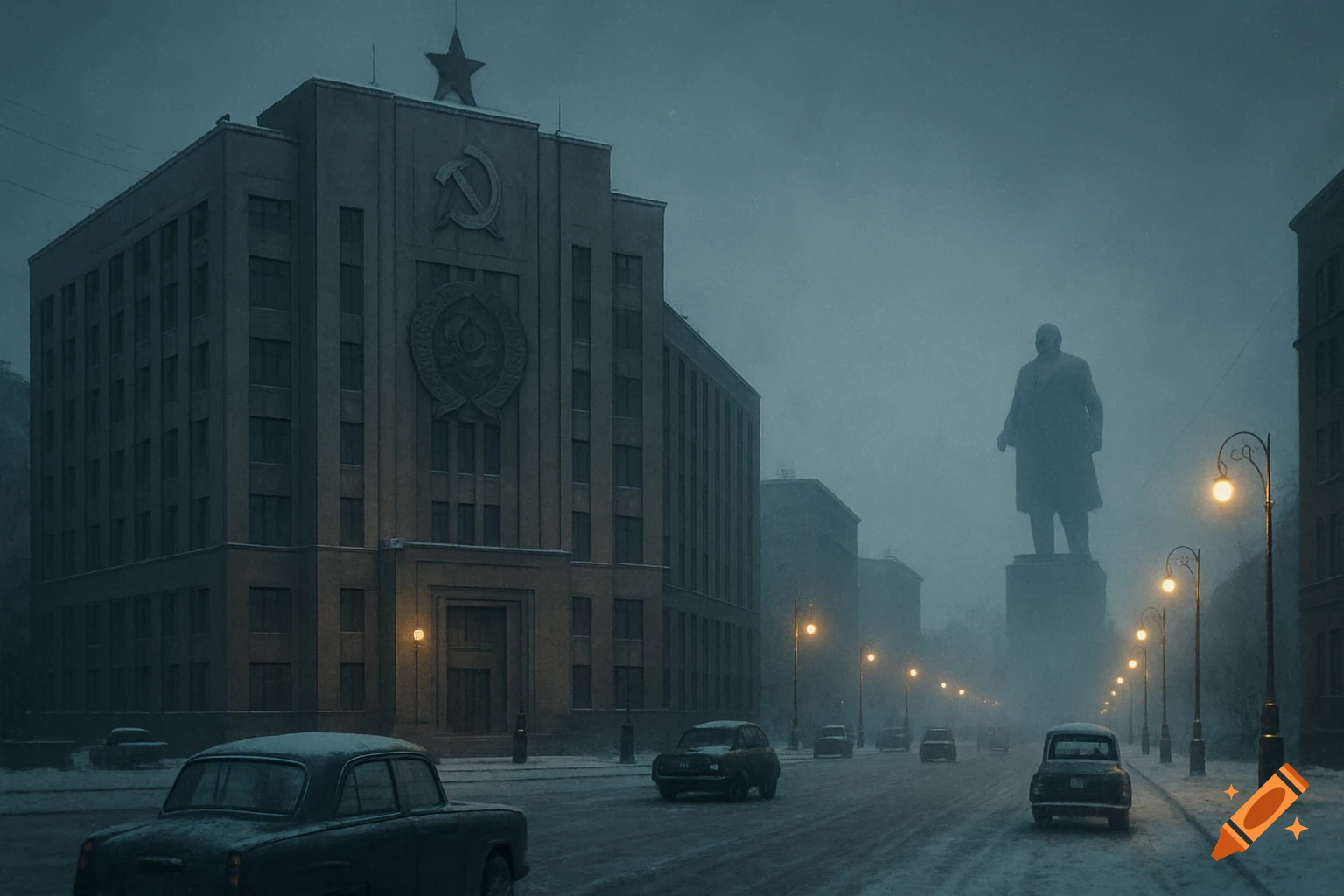
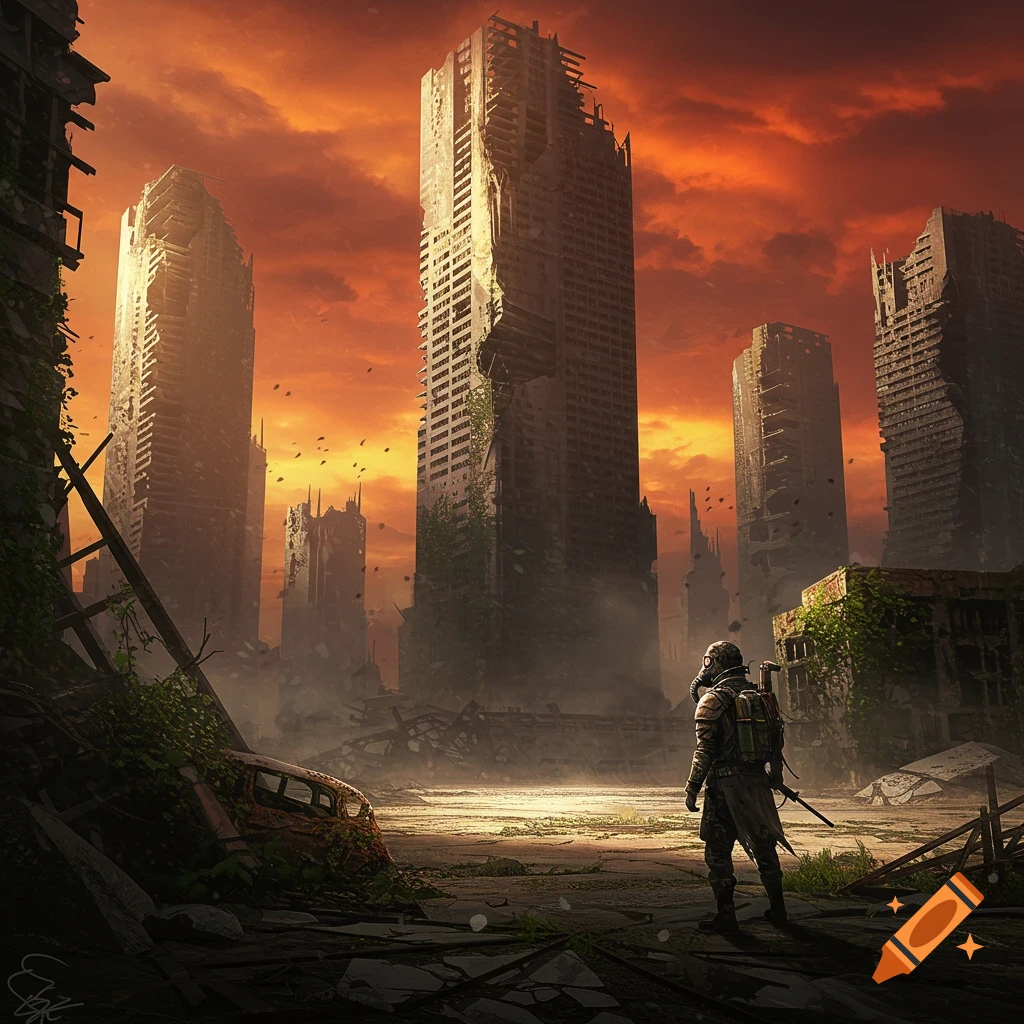
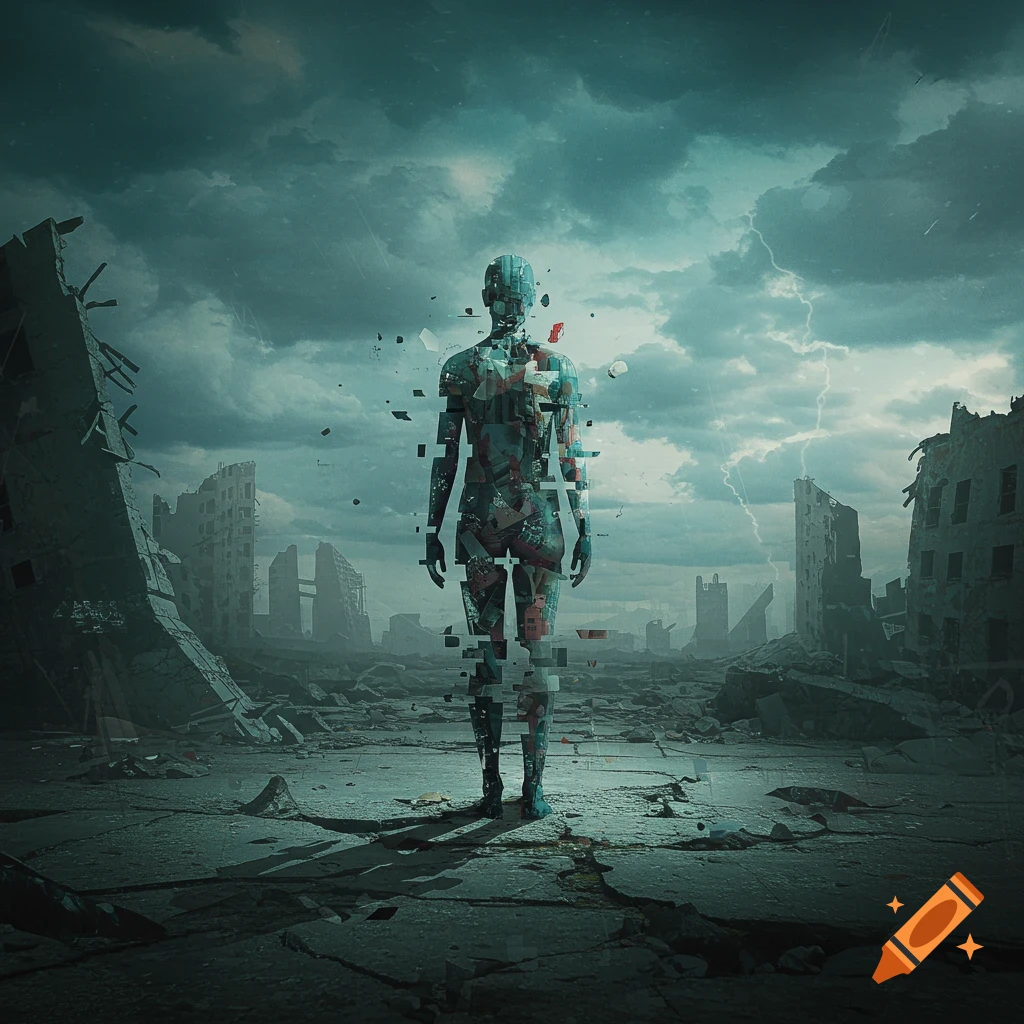
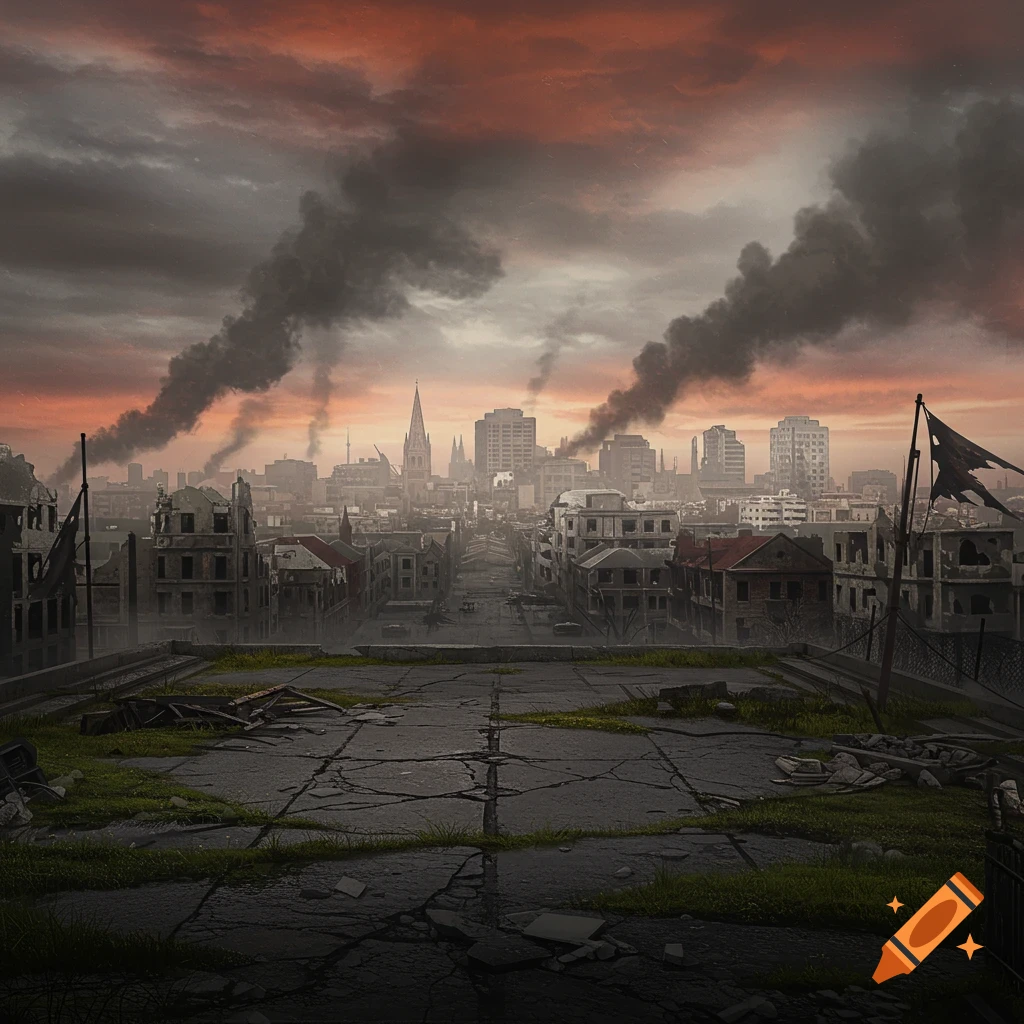
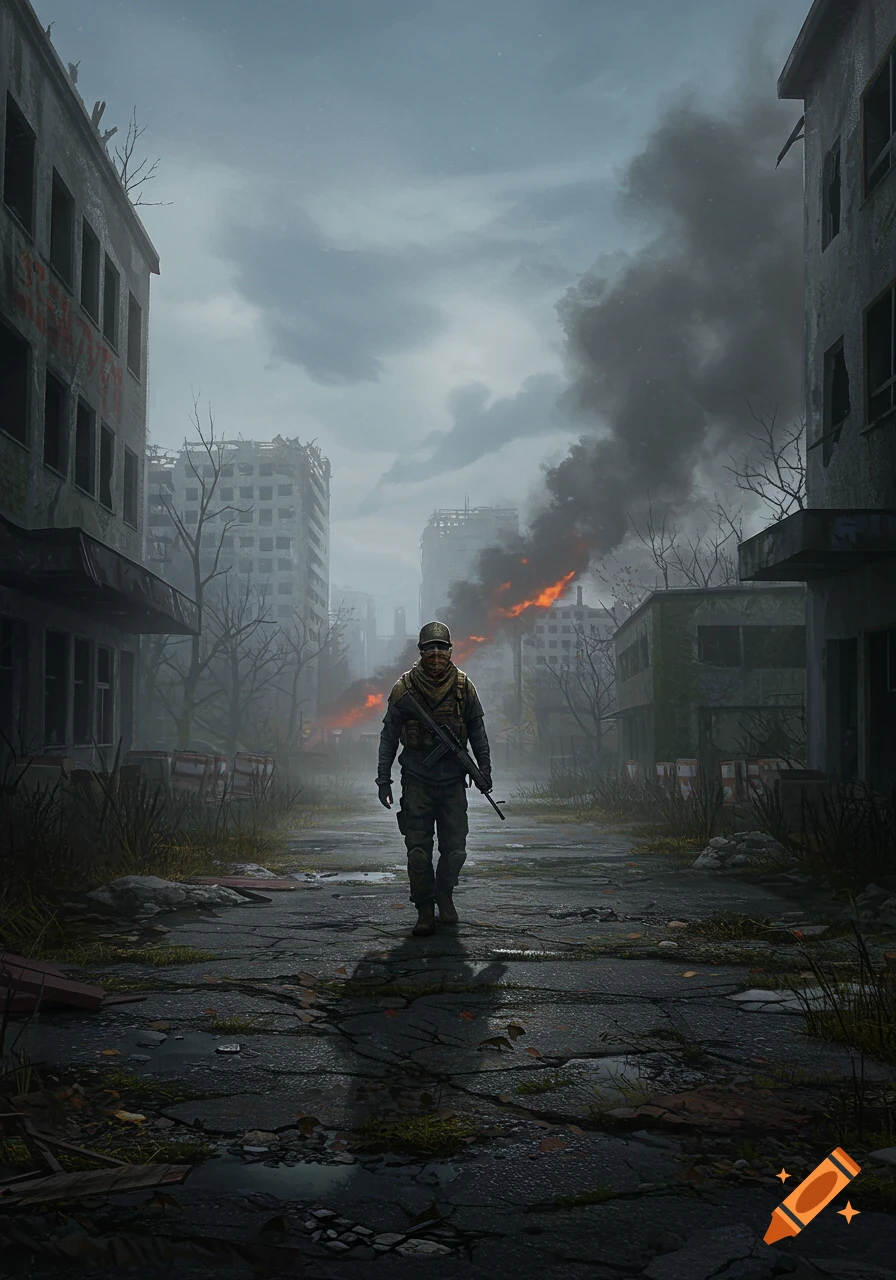
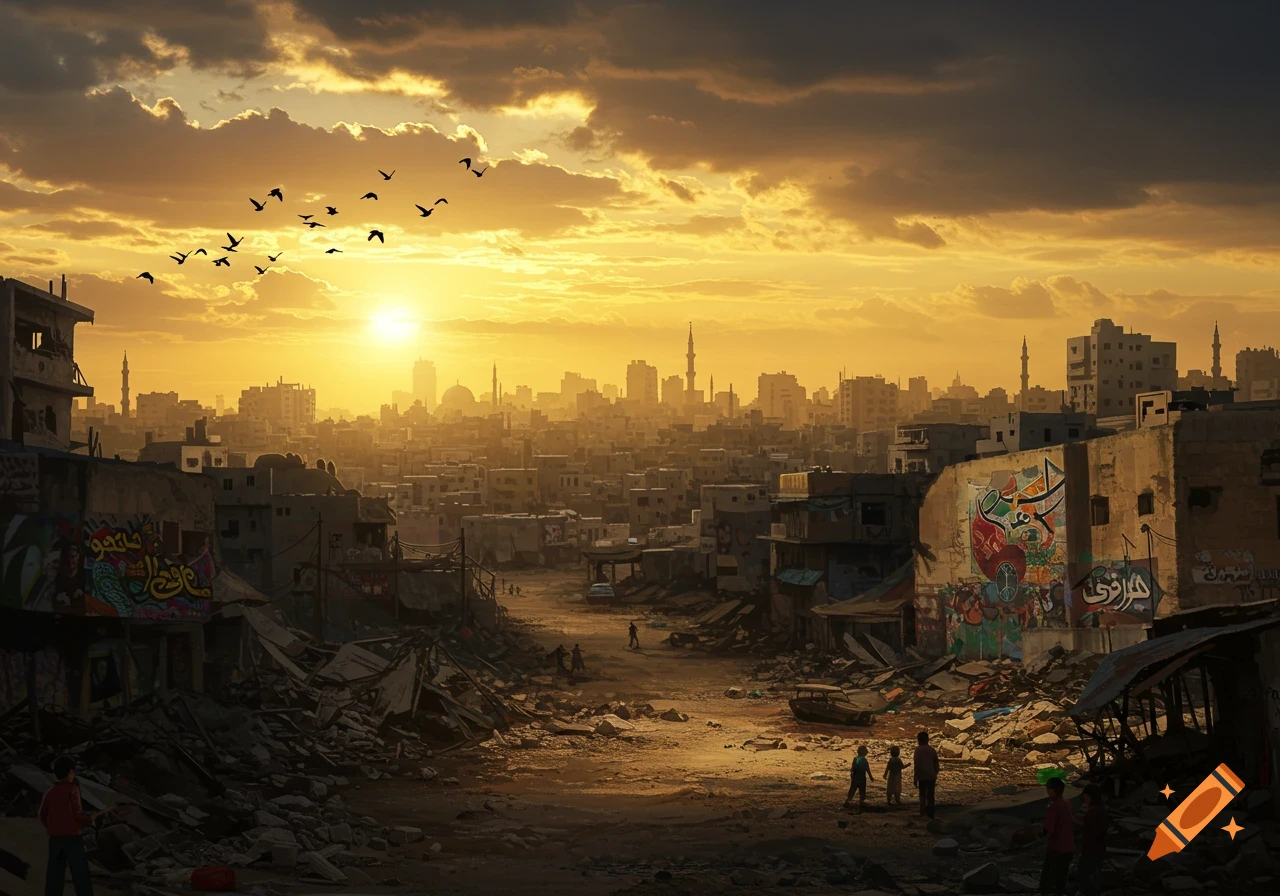
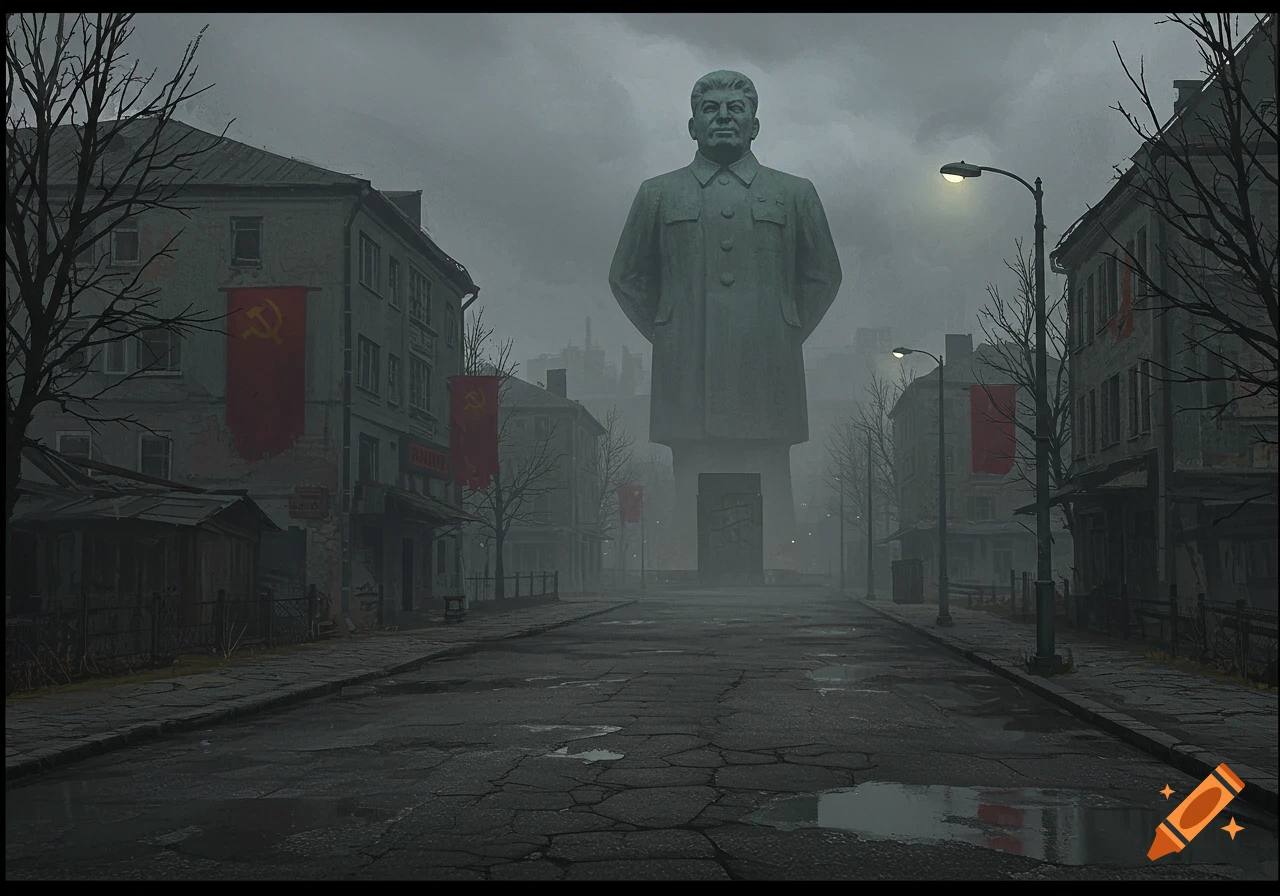
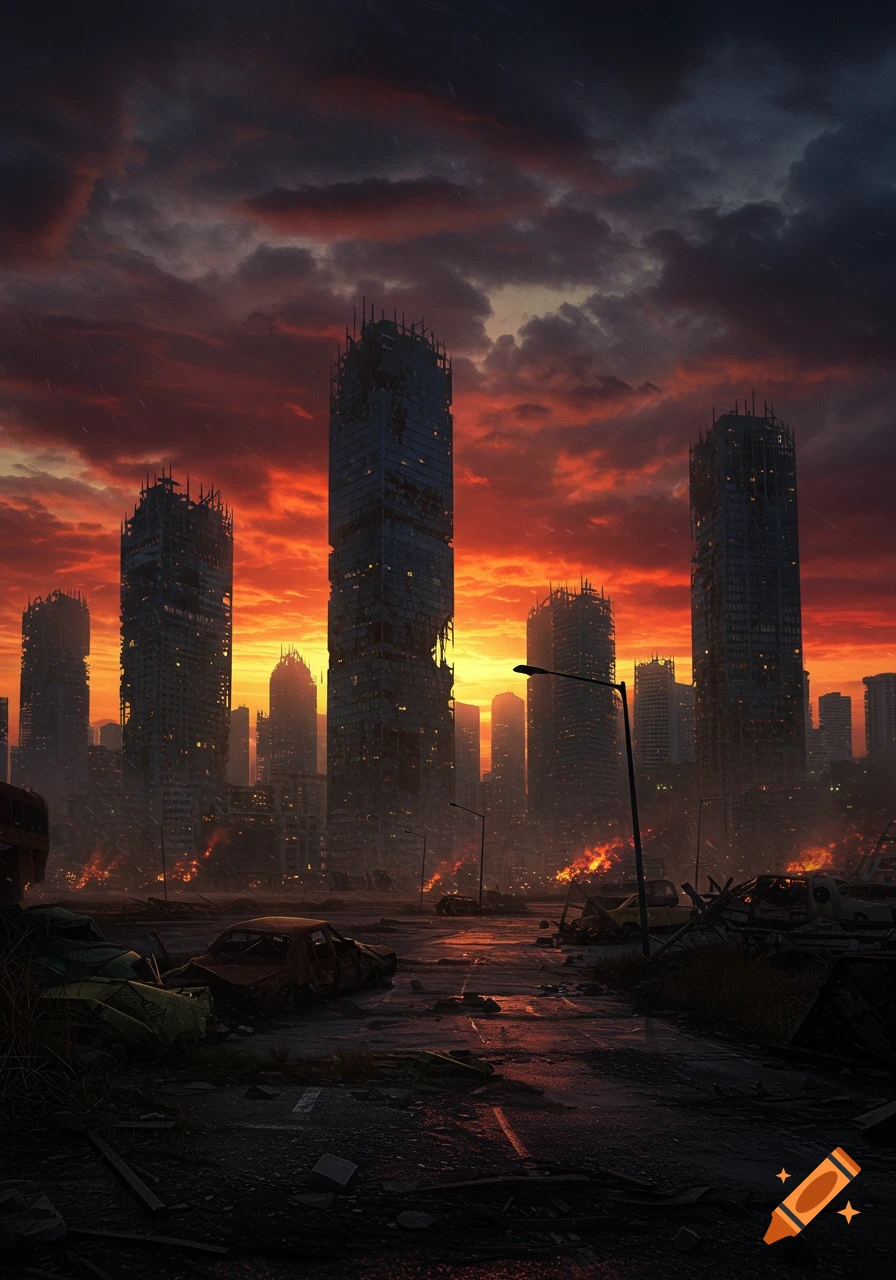
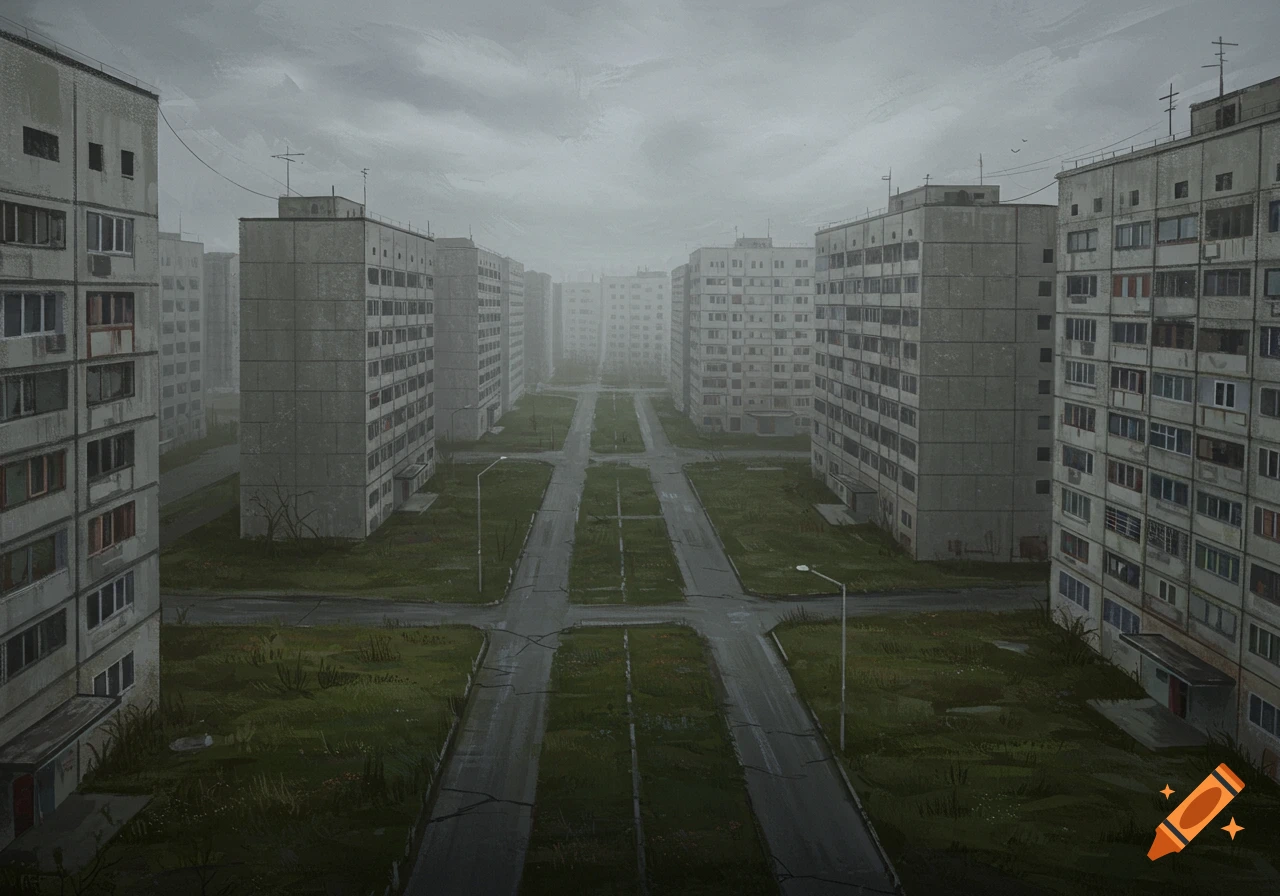
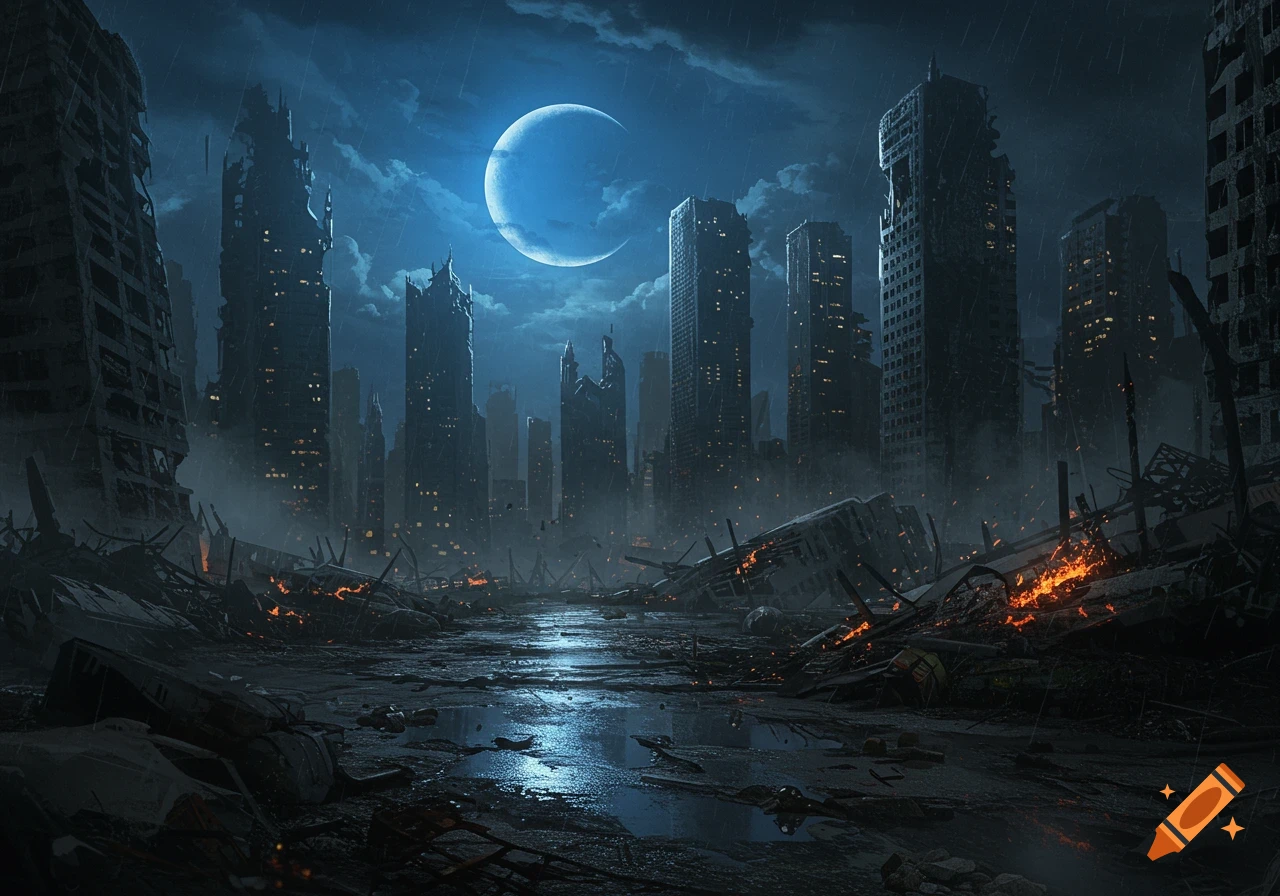
Two dark, abstract sculptures made of debris stand in a desolate, ruined city under a cloudy sky.

Imagine it’s 1991 and you’re a 47-year-old French artist born in 1943. You’re a war photojournalist who also creates sculptures, and your message and goal through them is to rebuild the lives and places destroyed by war. You have lived through multiple wars, such as the Vietnam War and the massacre in Lebanon, which affected you particularly deeply, and now you are working during the Persian Gulf War; you have witnessed terrible and horrifying things. You begin to feel drained, demotivated, pained, and defeated, carrying a heavy mental and emotional burden and developing a pessimistic view of the world. You reflect this perspective in your work. You draw inspiration from: the expressionist paintings of Edith Birkin (which reflect the horrors of the ghetto and concentration camps), Josef Thorak’s massive, large-scale sculptures, Anselm Kiefer’s paintings, and the storytelling approach of Christian Boltanski’s works—rooted in memory and his obsession with the biographical—and you always keep in mind the photographs you took, inspired by Robert Capa and Gerda Taro. You use multiple materials in your works, such as clothing, threads, resin, wires, shelves, display cases, lead, glass, destroyed or burned objects, cement, wood, wool, lights, clay, paints, flour, recycled objects, etc. You draw inspiration from movements such as Expressionism, Neo-Expressionism, Arte Povera, and contemporary art. Then generate a large-scale, site-specific sculpture located in the distance, across Mehr sehen
More images like this