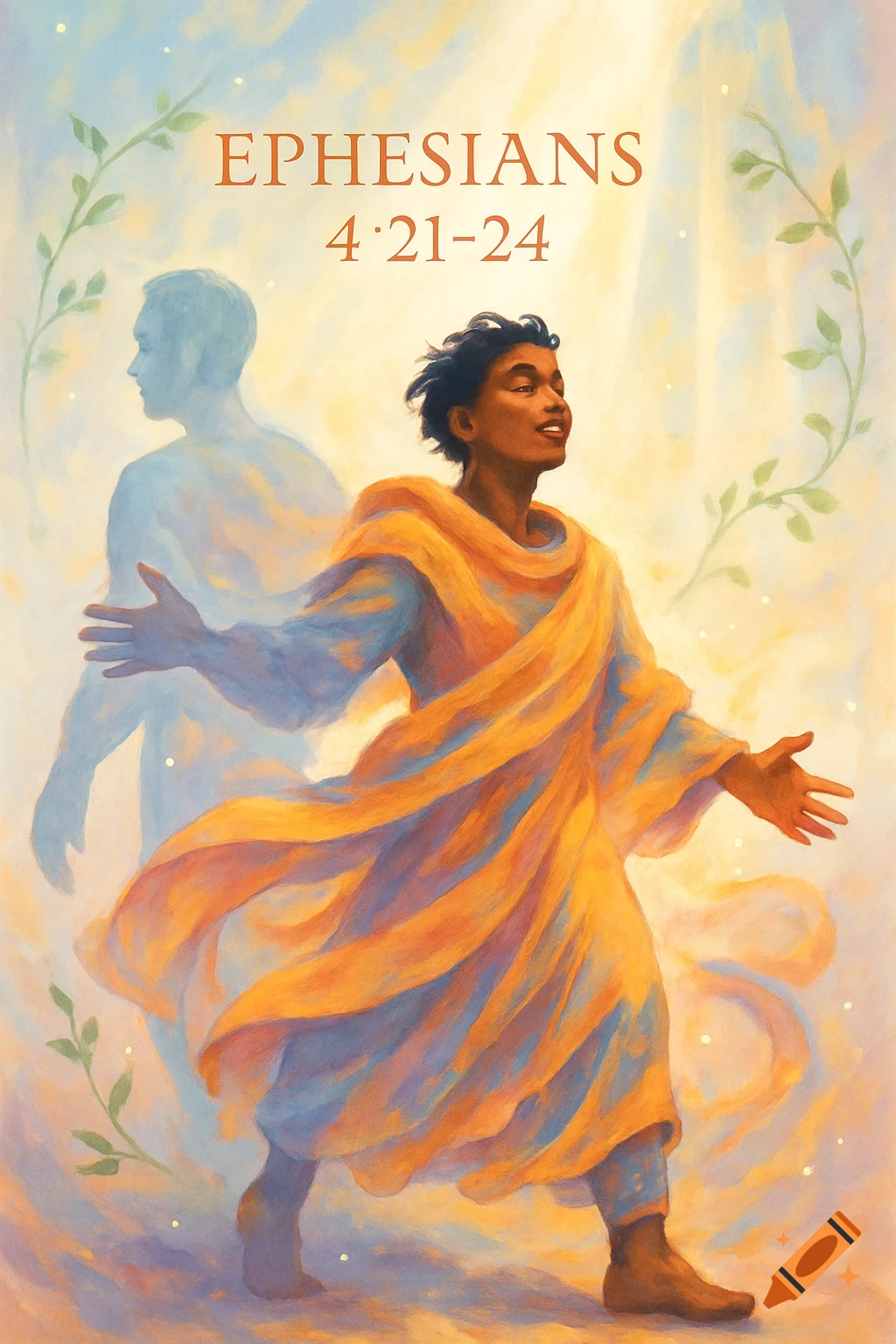
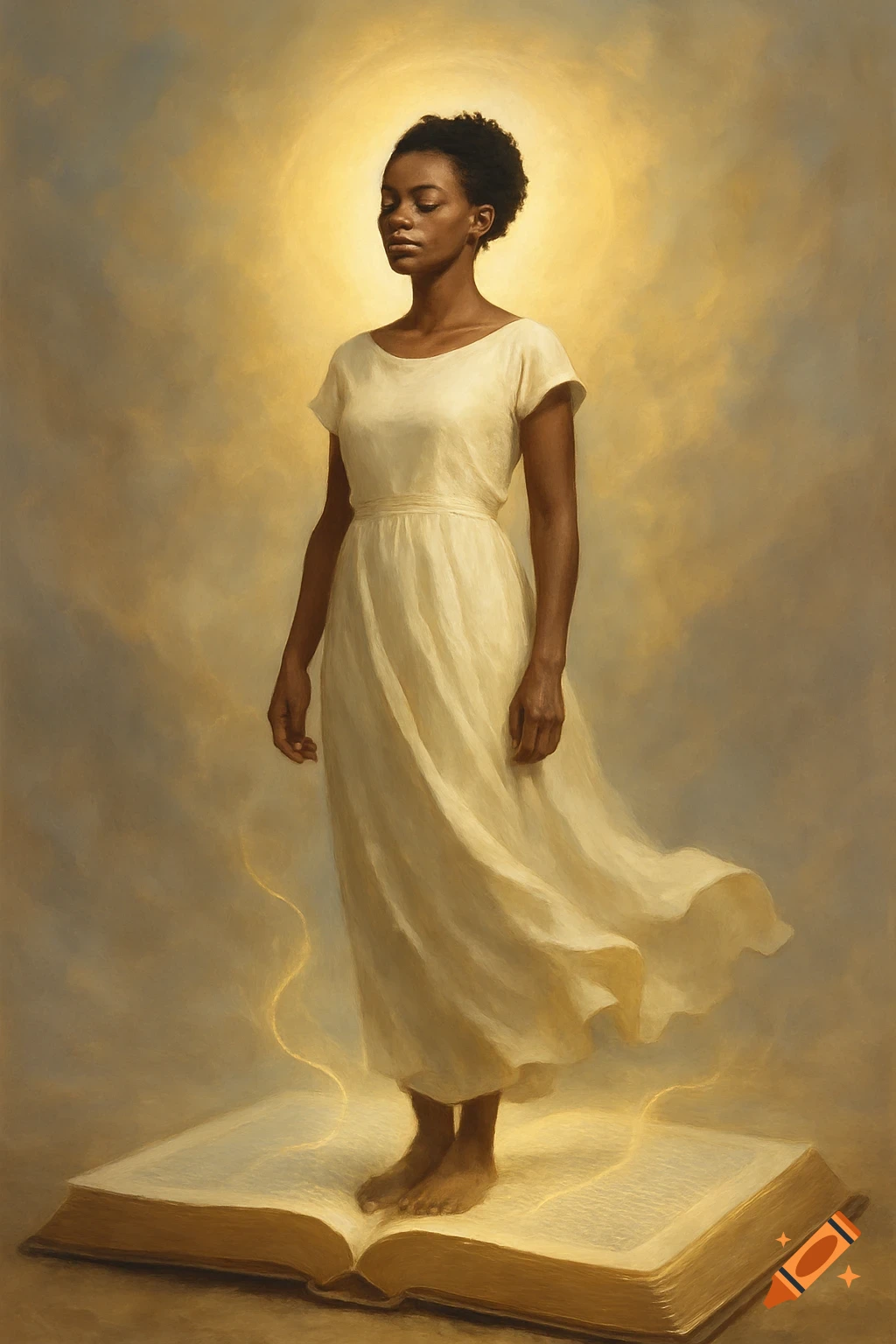
Symbolic illustration of a woman reclaiming her identity, featuring a hunched figure covered in words like shame, surrounded by societal pressures, and a dynamic figure with arms raised in liberation.
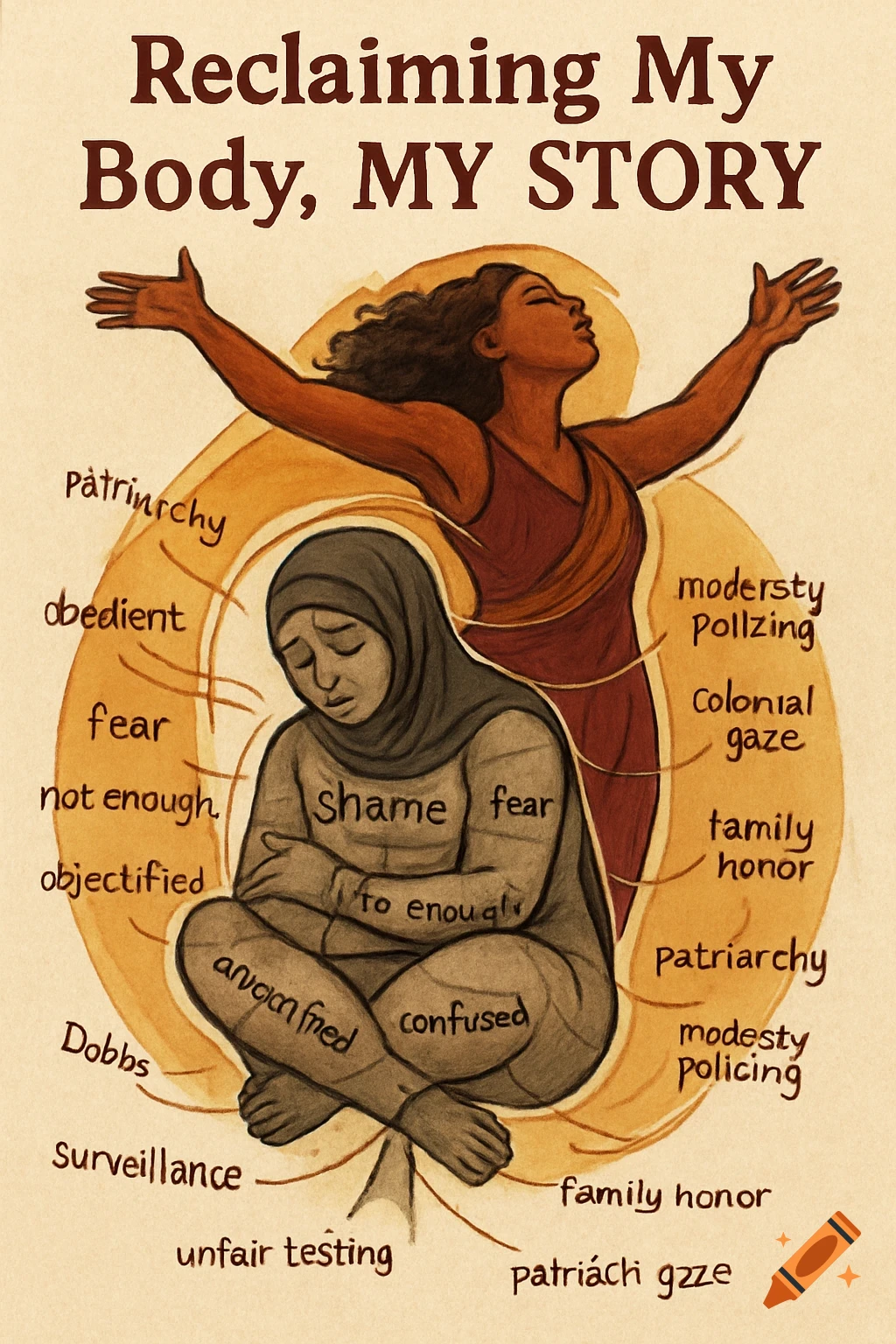
Part One: Body Map Write-Up Title: “Reclaiming My Body, My Story” My body map shows two versions of me layered on top of each other. The first version—drawn in dull tones like gray and beige—sits cross-legged in the center. She is quiet, small, with her shoulders hunched forward, arms wrapped around her knees. This is the version of me that was shaped by outside pressures—religion, culture, politics, race, and womanhood. Around her are stitched words like “shame,” “obedient,” “good Muslim girl,” “exotic,” and “quiet.” She has a hijab on not because she chose it freely, but because it was expected. She’s also surrounded by small arrows pointing inward labeled “patriarchy,” “modesty policing,” “colonial gaze,” and “family honor.” These words show how my body has often felt like public property—something to judge, control, or protect. Inside this version of me are also words like “fear,” “not enough,” “objectified,” and “confused.” She is stitched at the wrists and ankles with thread labeled “Dobbs,” “surveillance,” and “unfair testing.” These show how policies and medical systems have tried to control my body, especially as a Black Muslim woman—like the non-consensual drug testing of mothers or abortion bans that don't consider my humanity. Surrounding her, however, is a larger version of myself, drawn in bold, flowing lines and colored in deep reds, golds, browns, and purples—earthy, powerful tones. She is in motion—dancing, head thrown back, arms wide open. She wears what Mehr sehen
More images like this