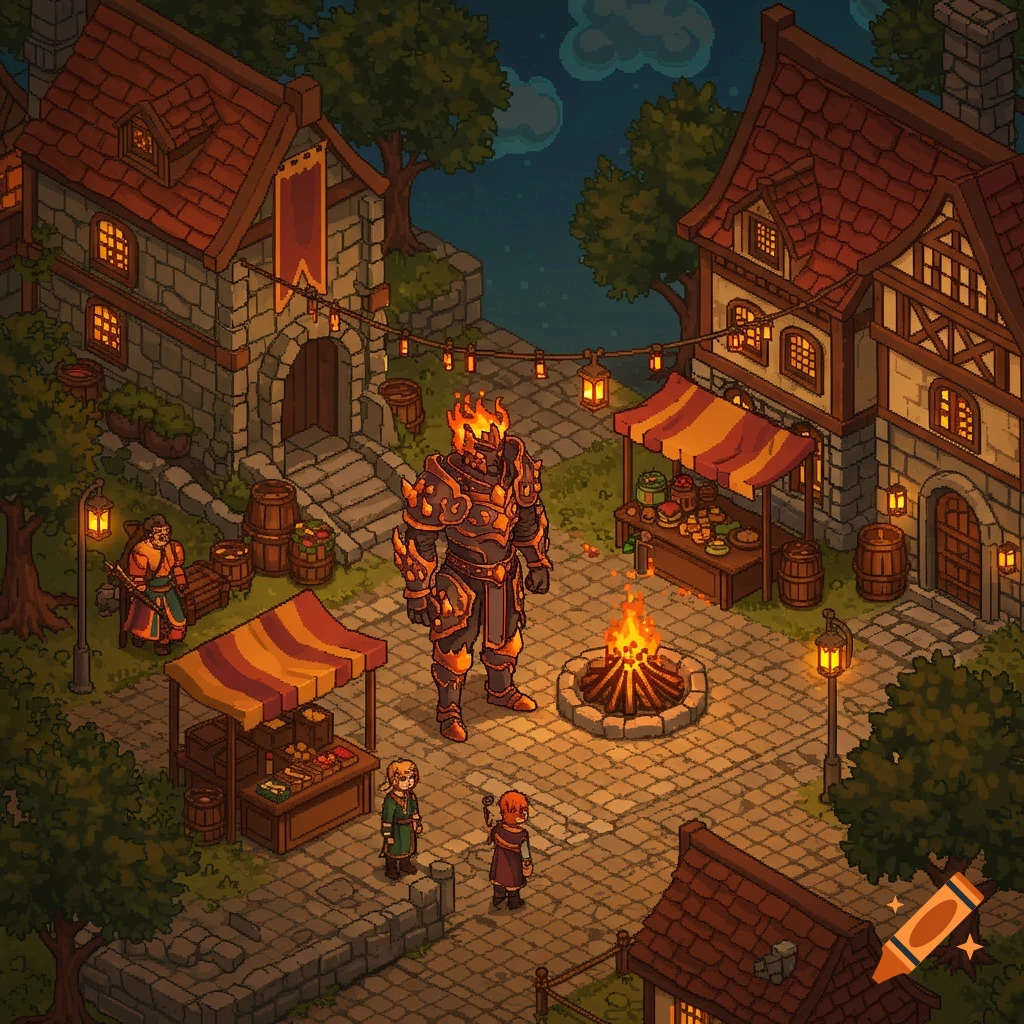
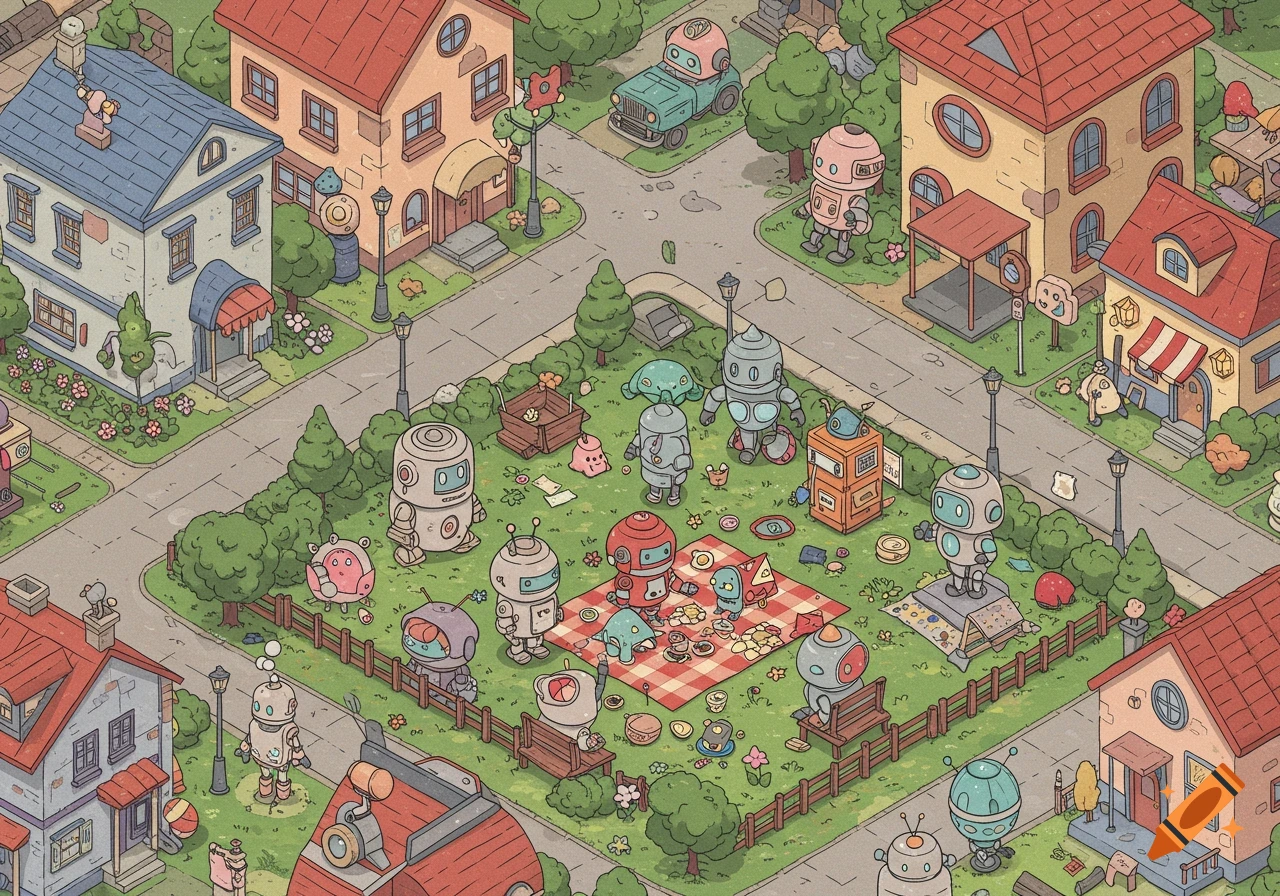
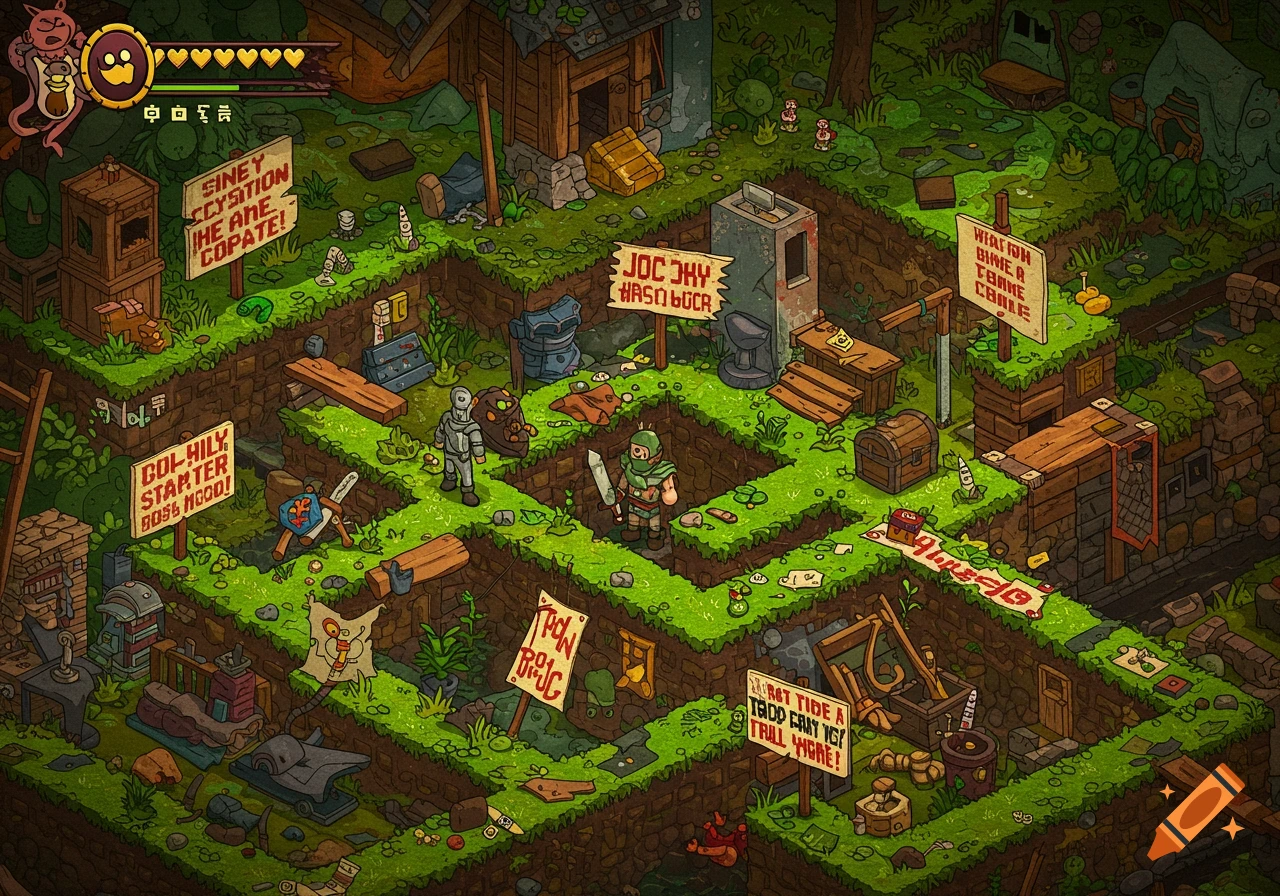
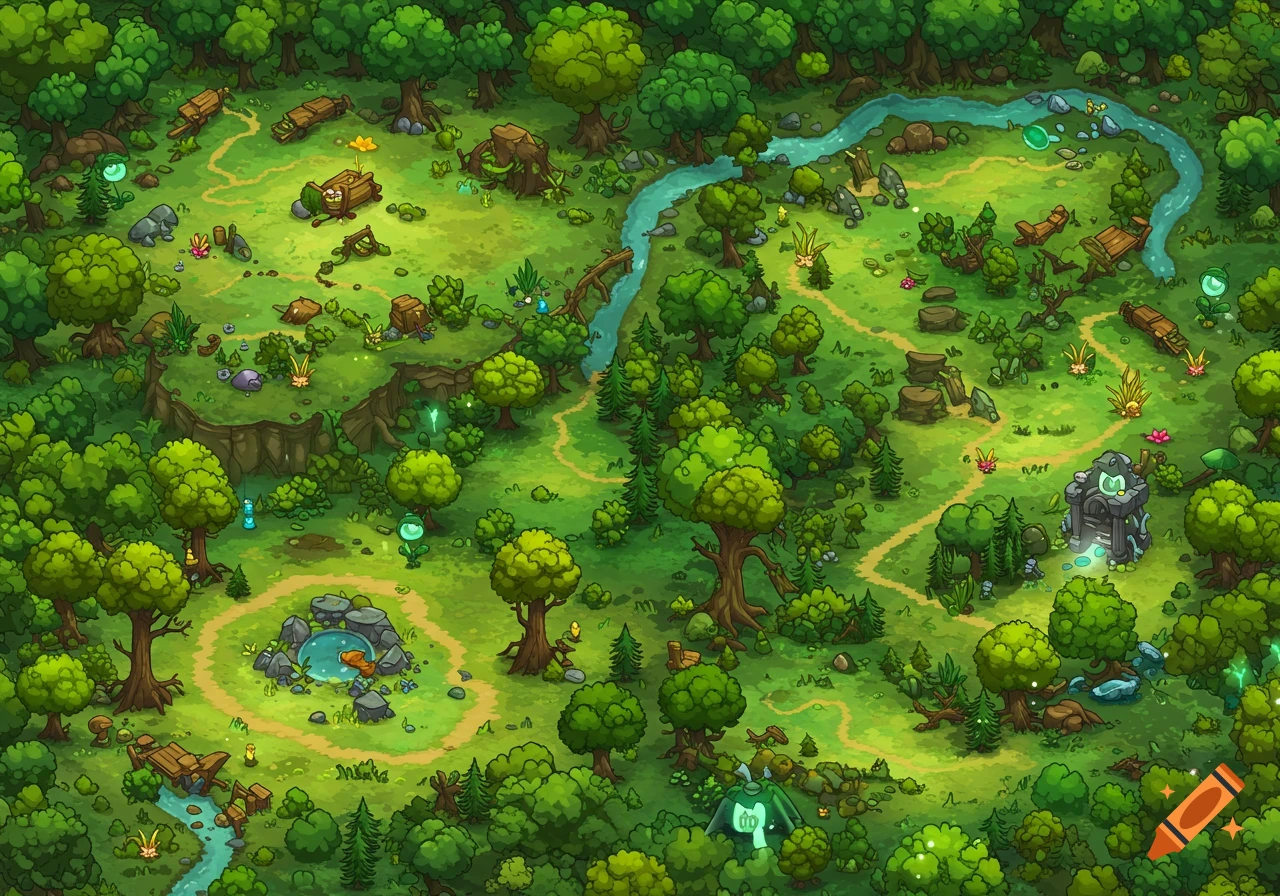
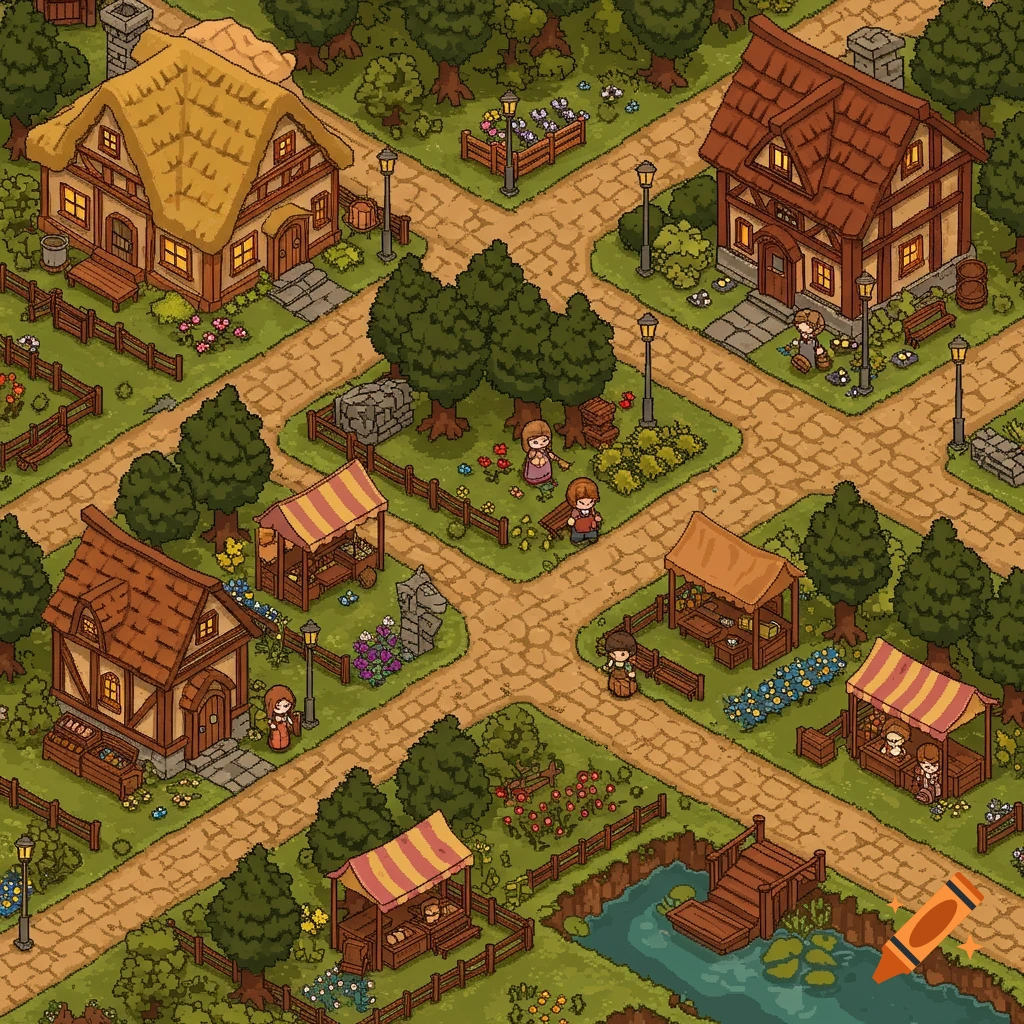
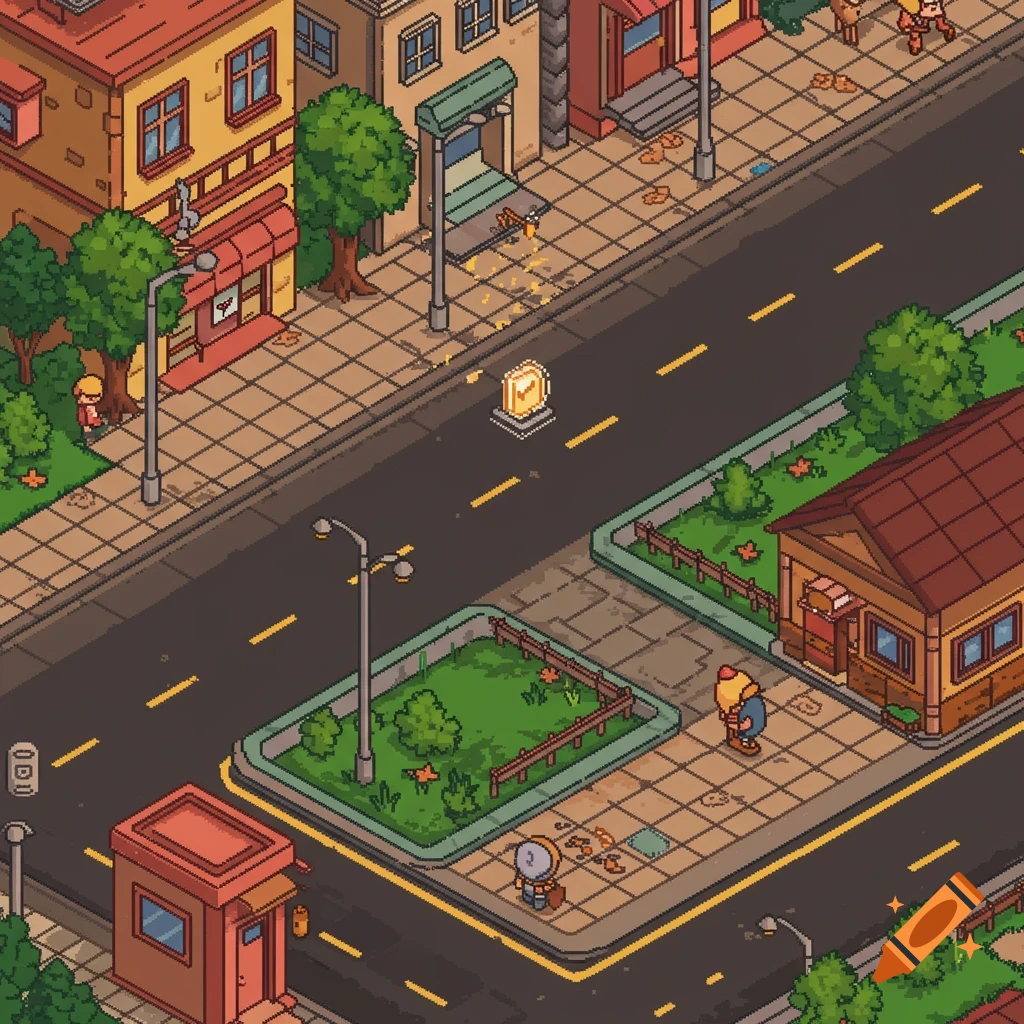
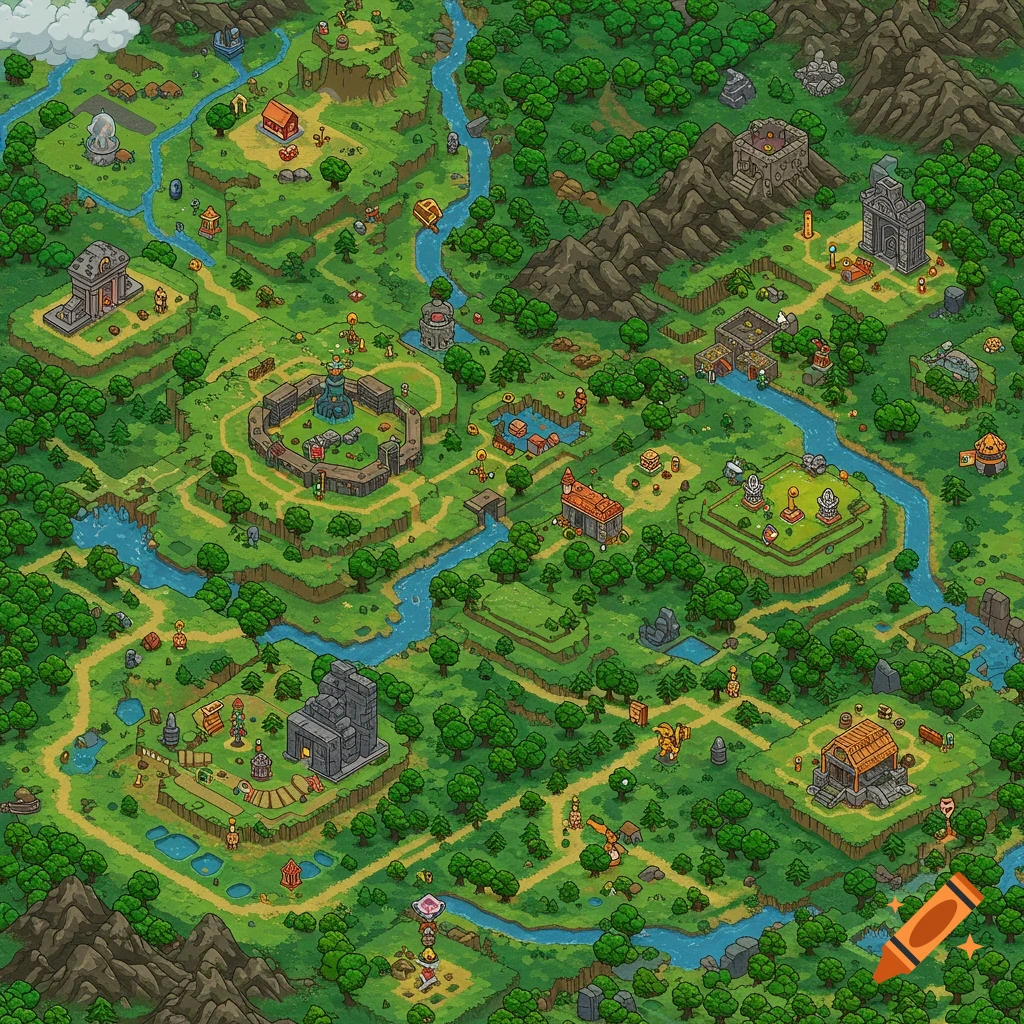
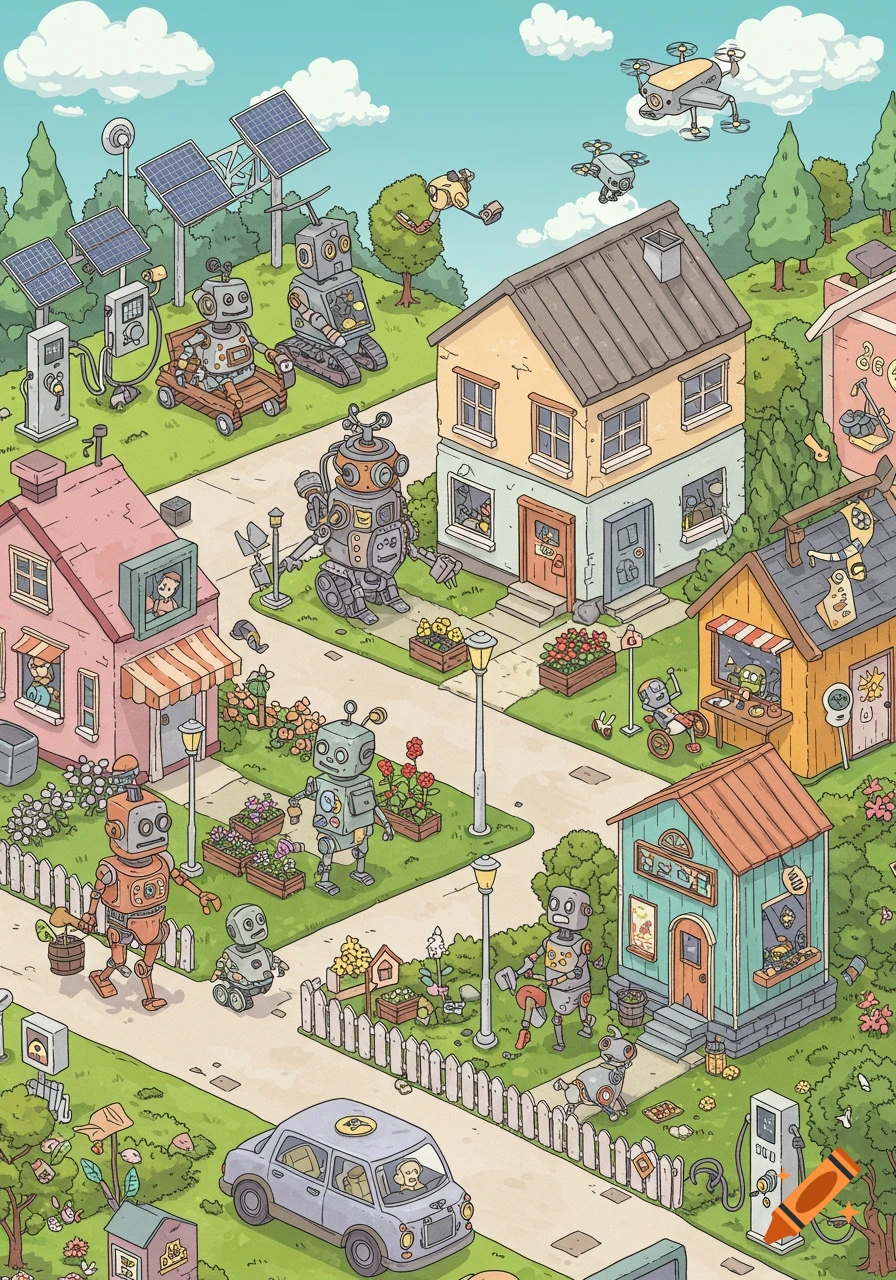
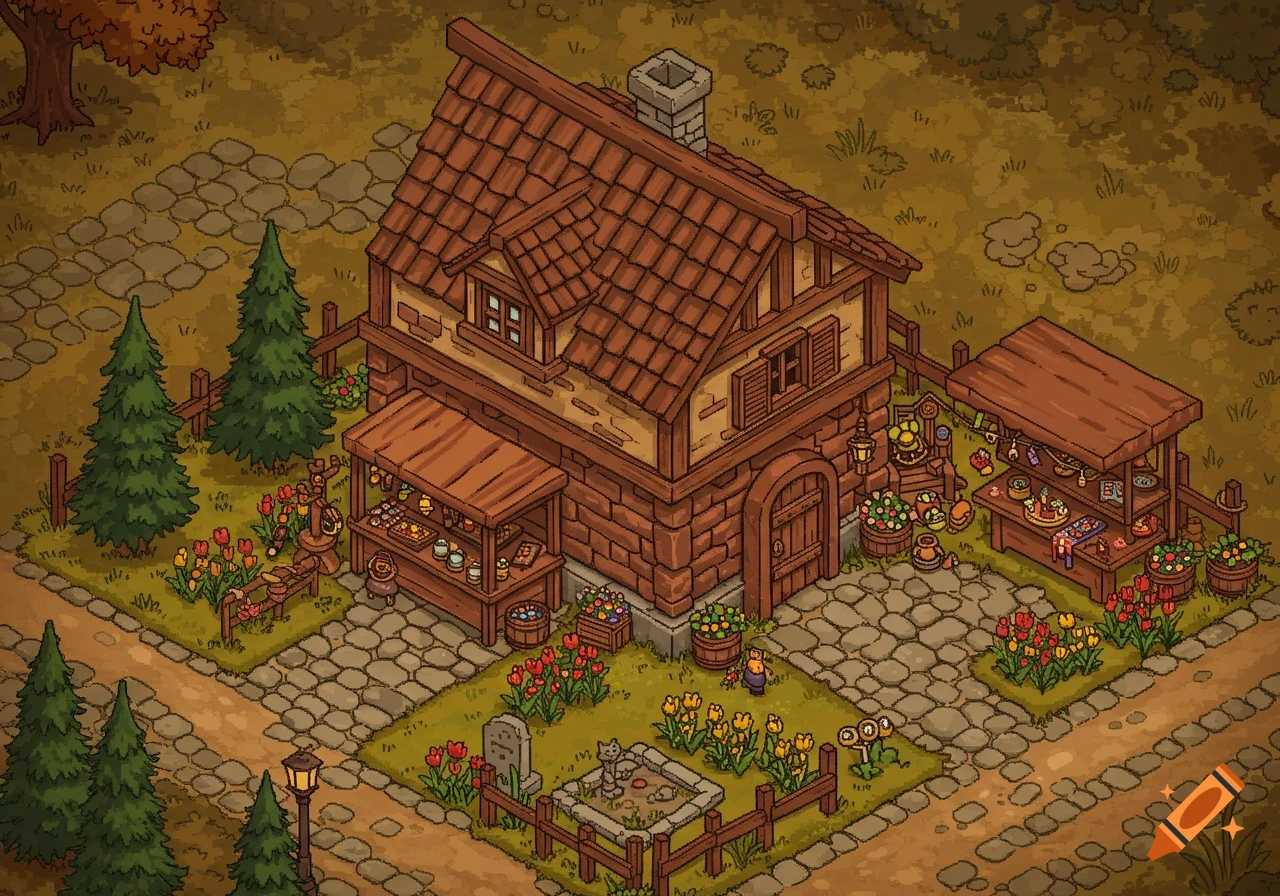
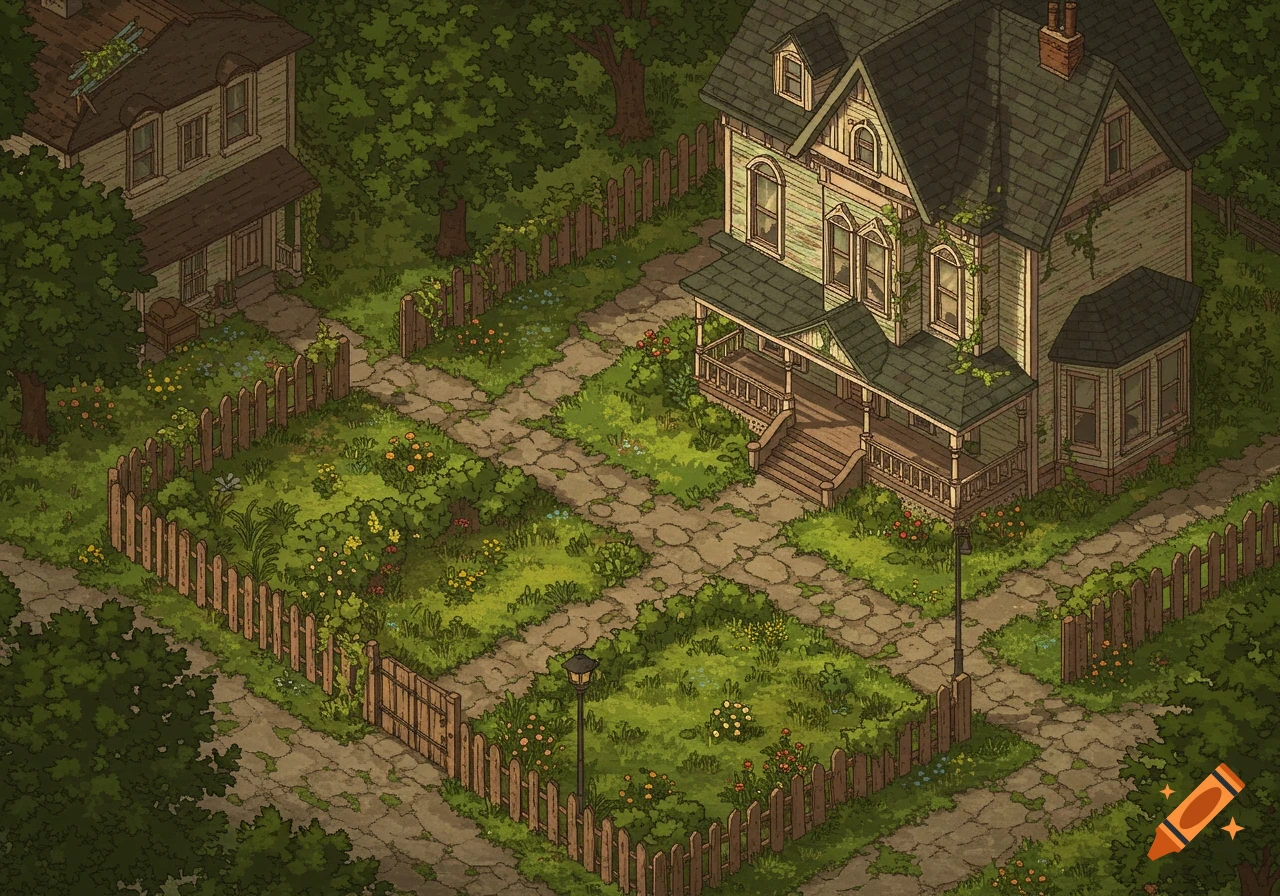
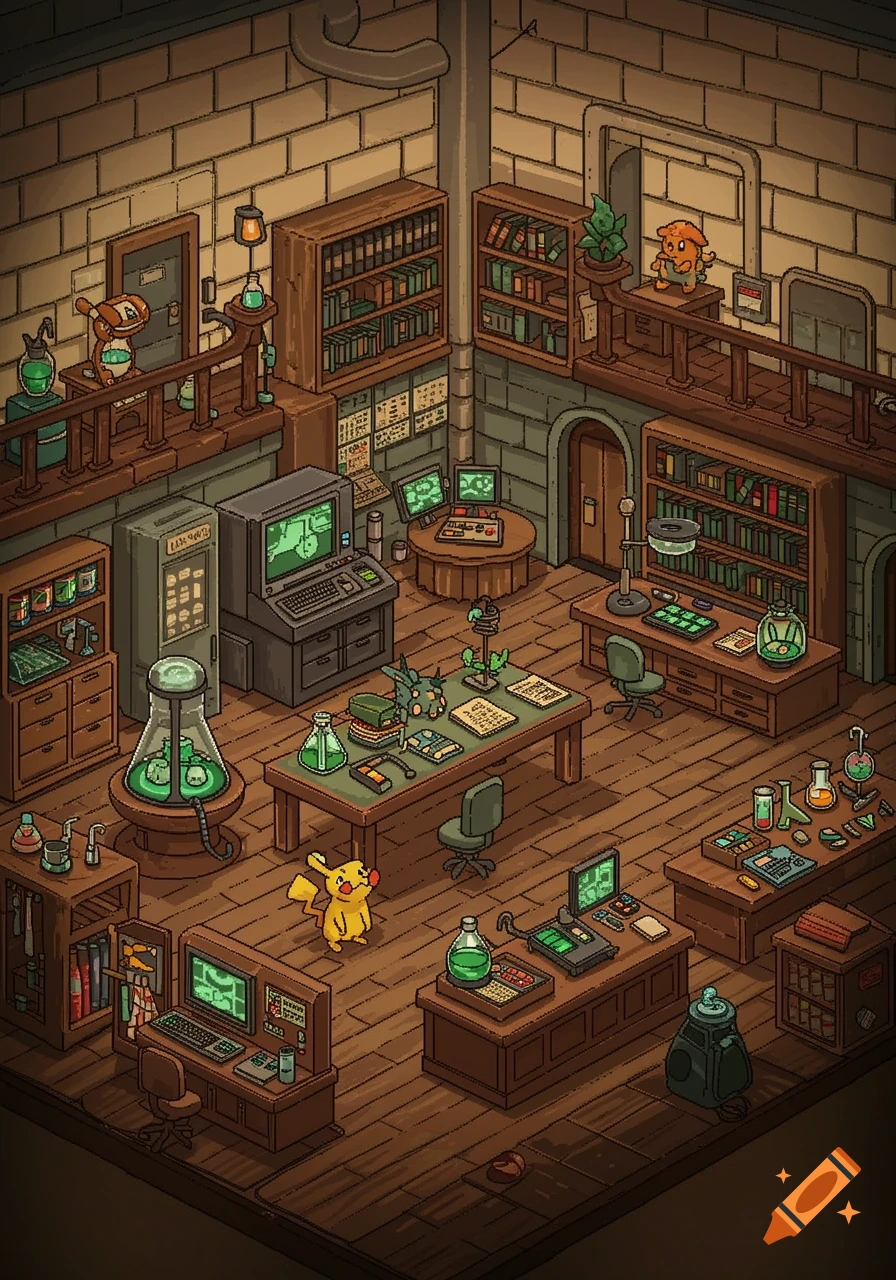
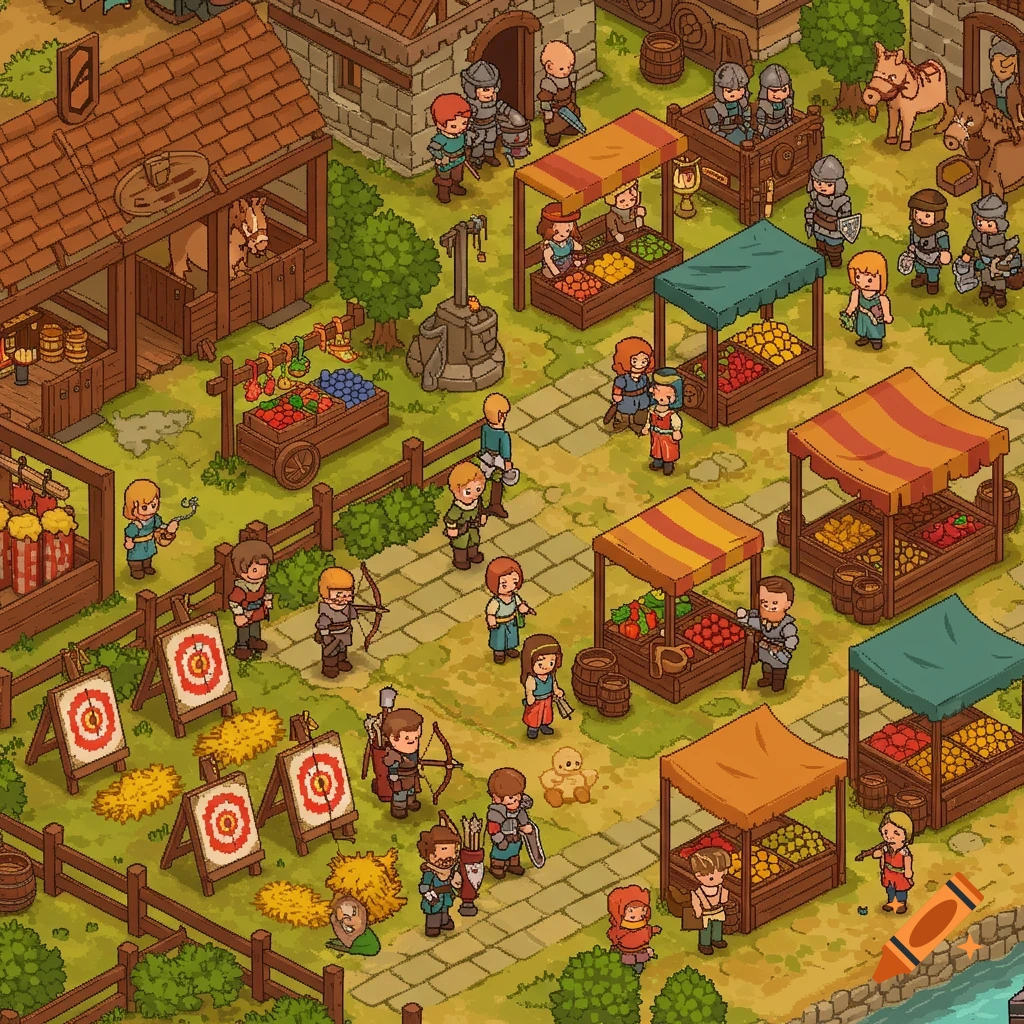
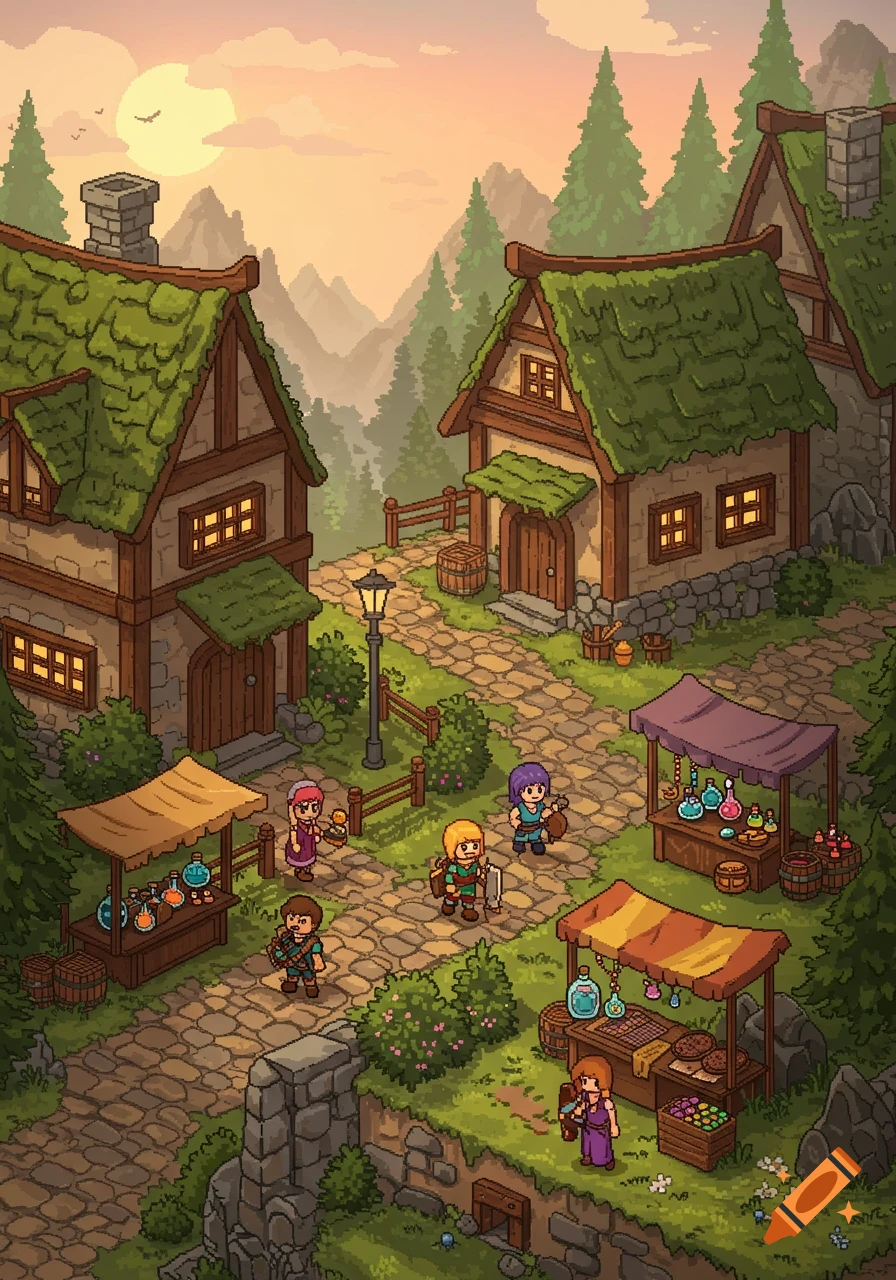
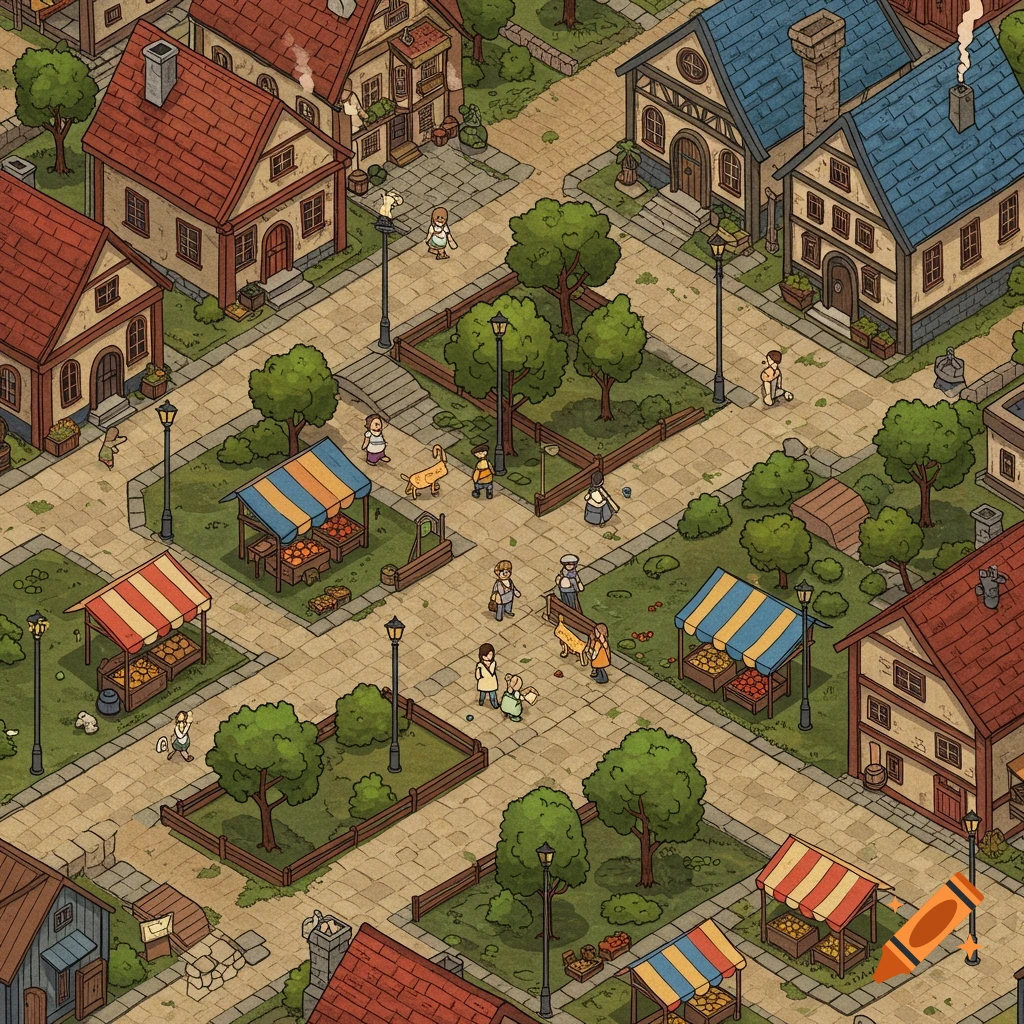
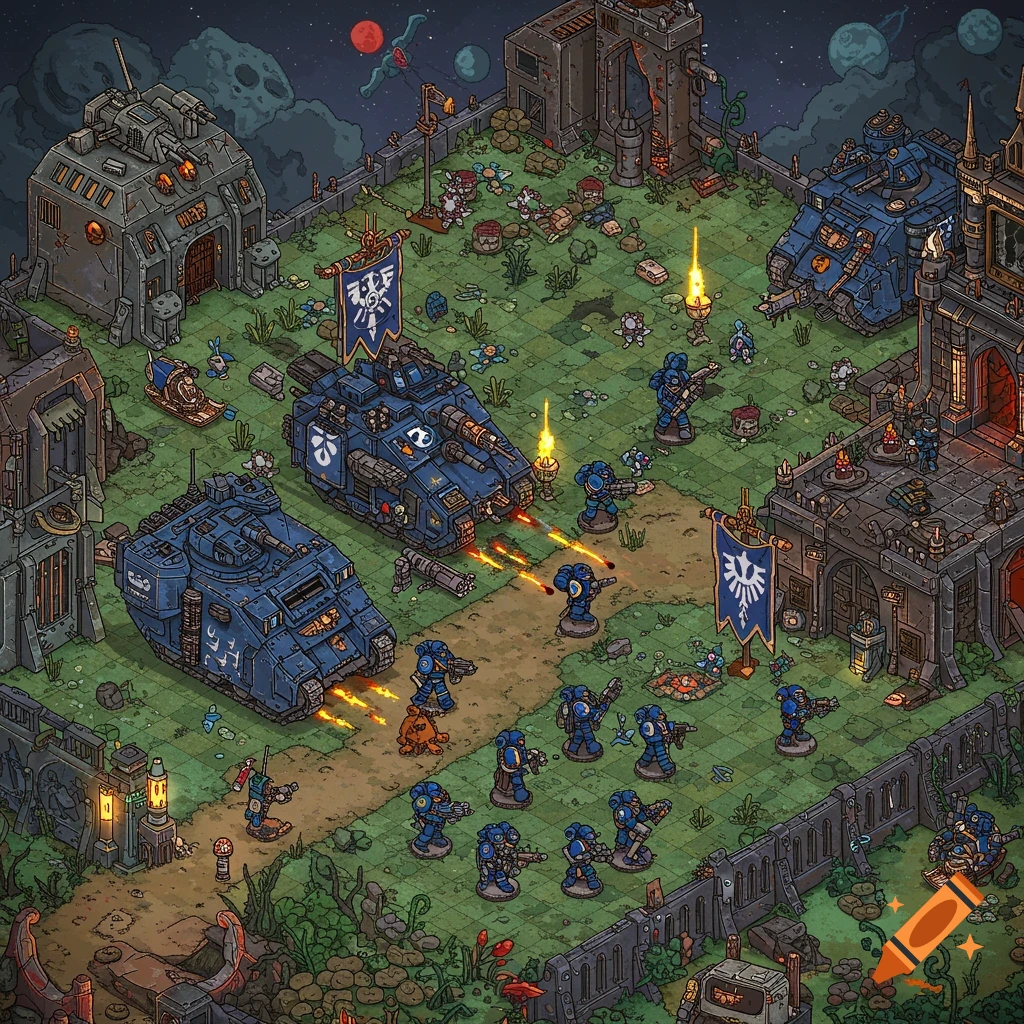
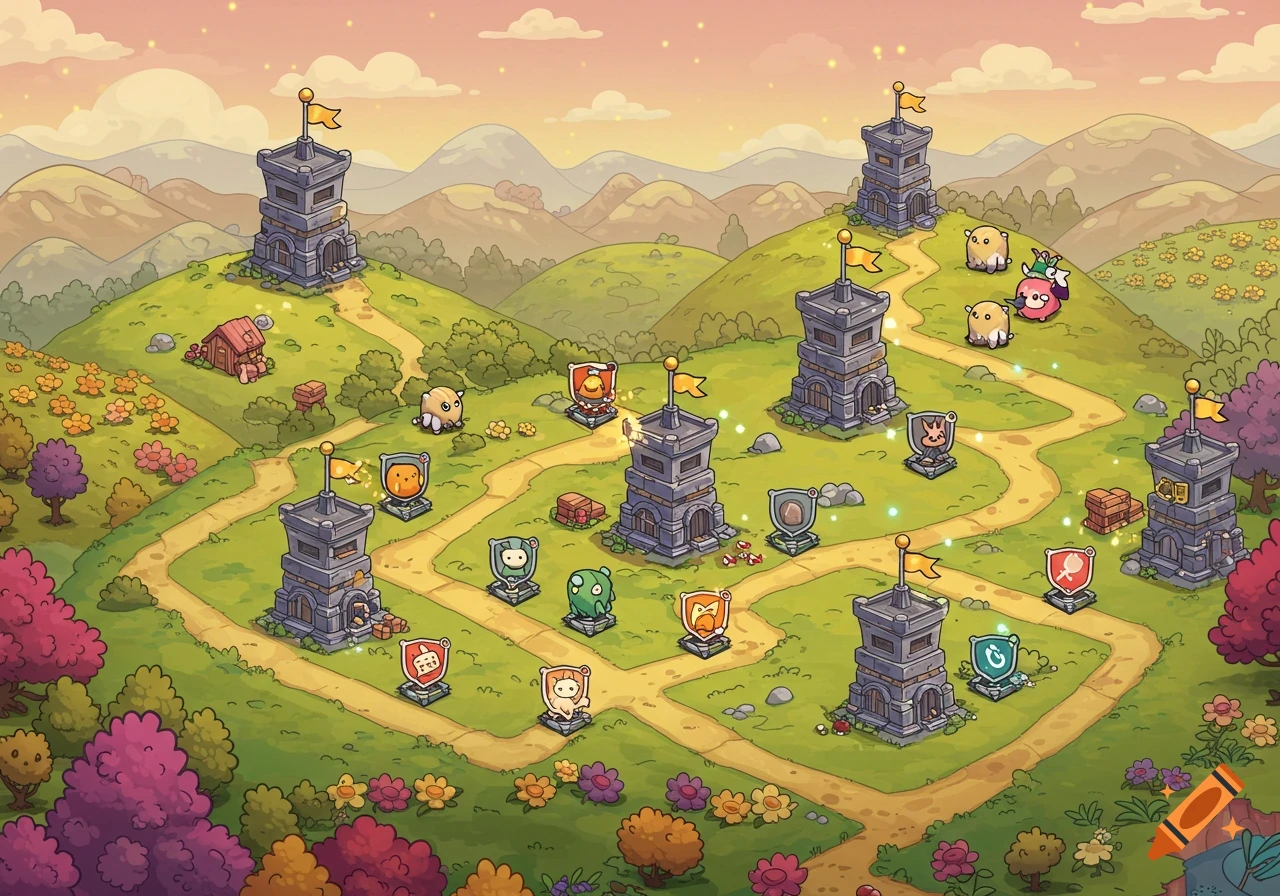
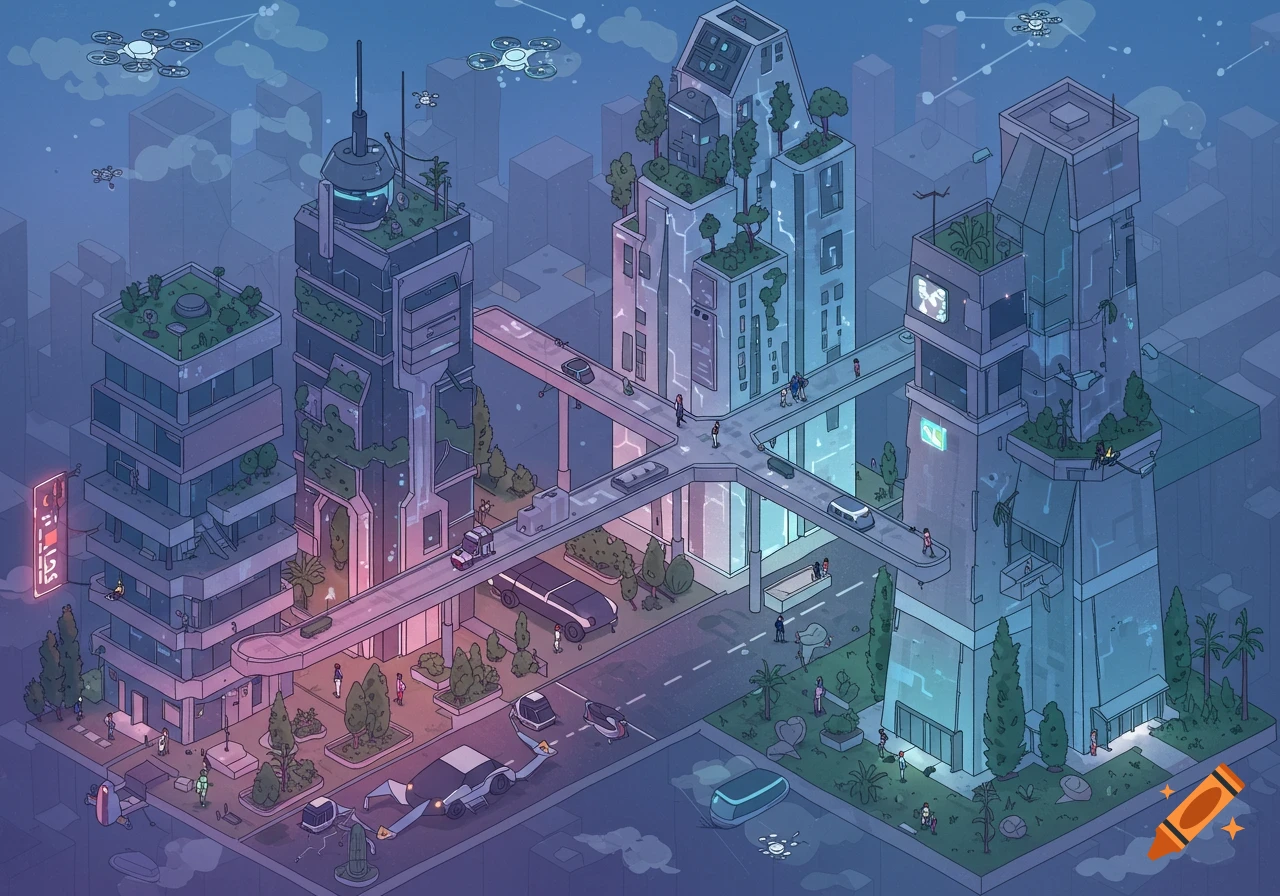
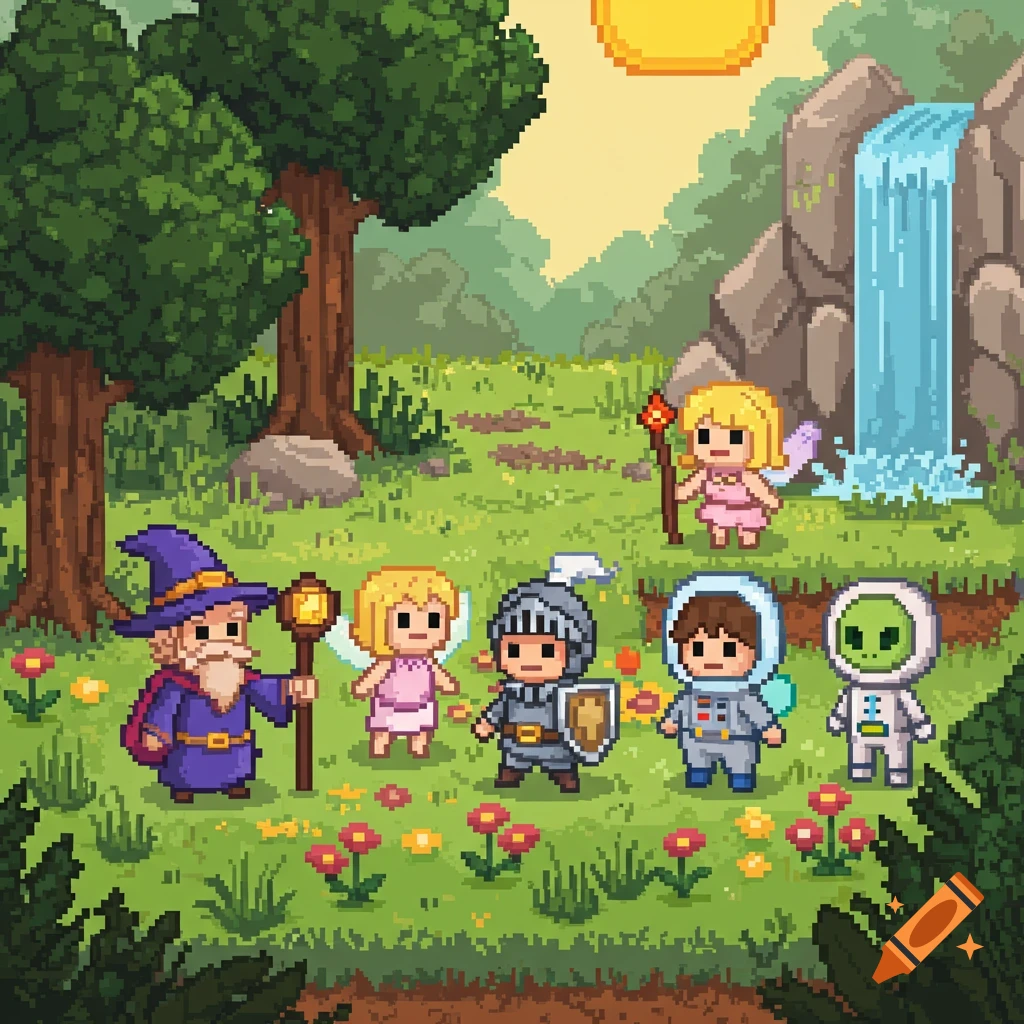
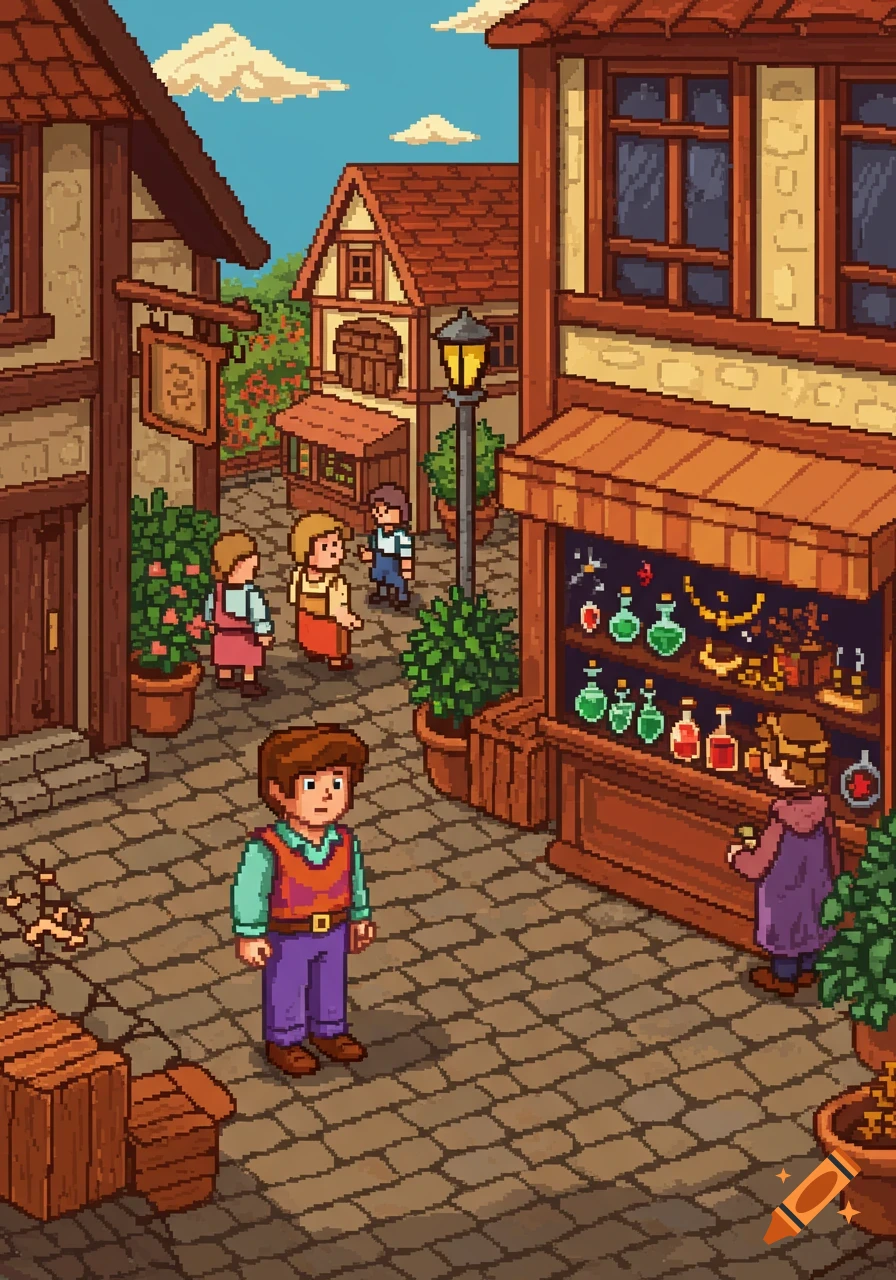
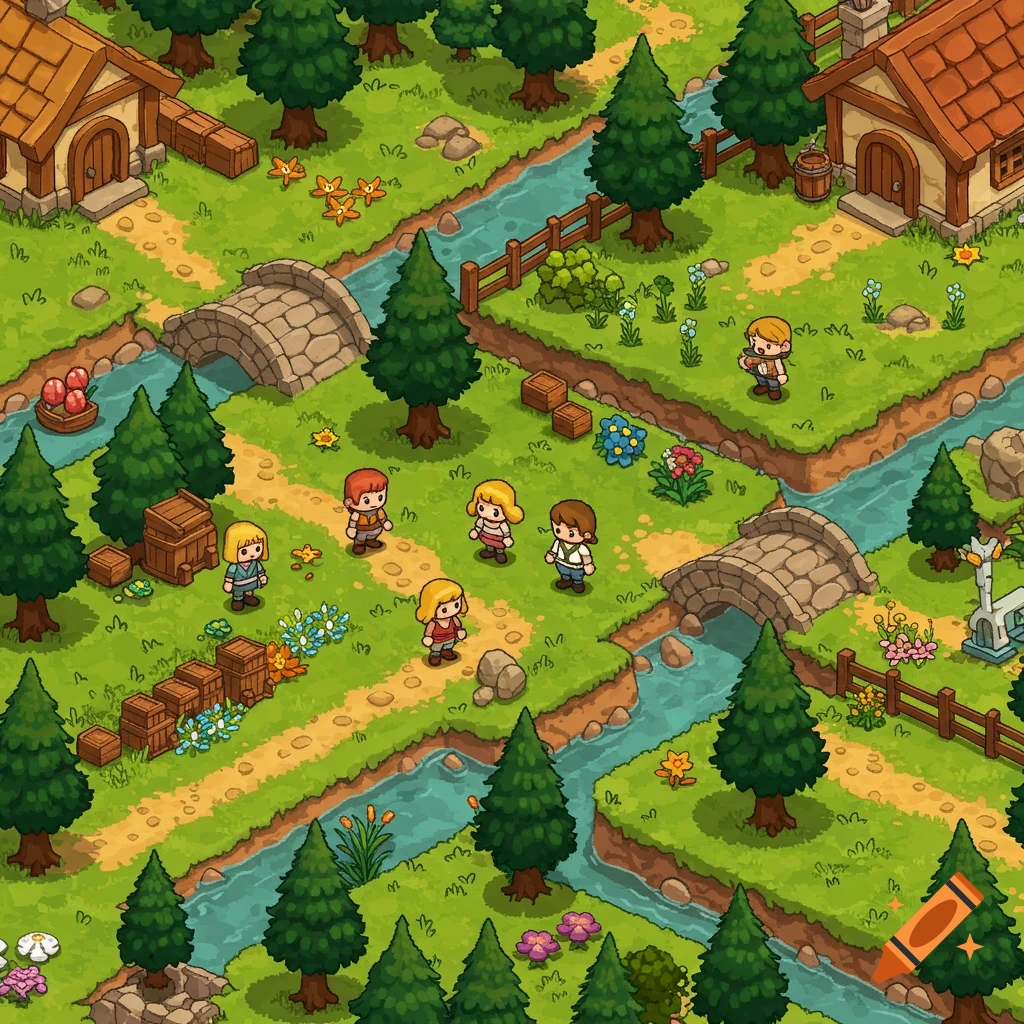
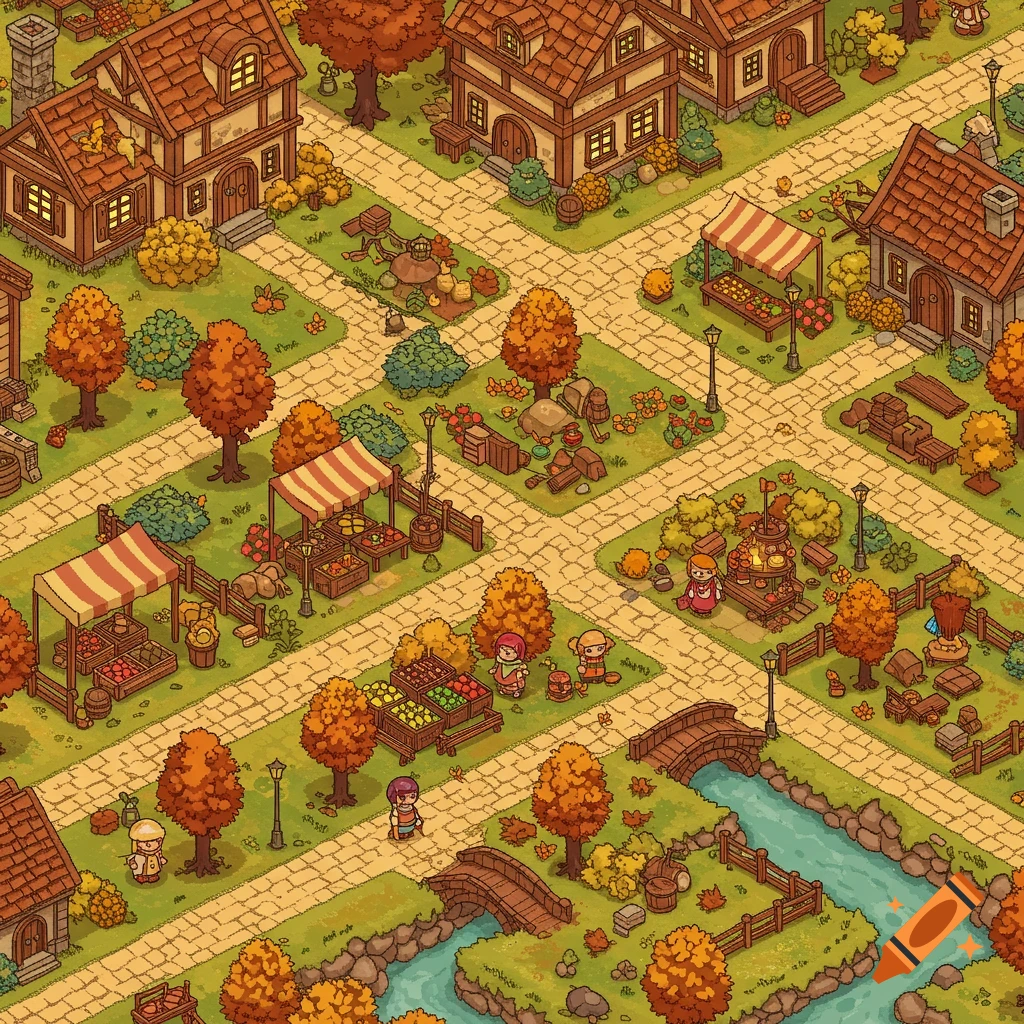
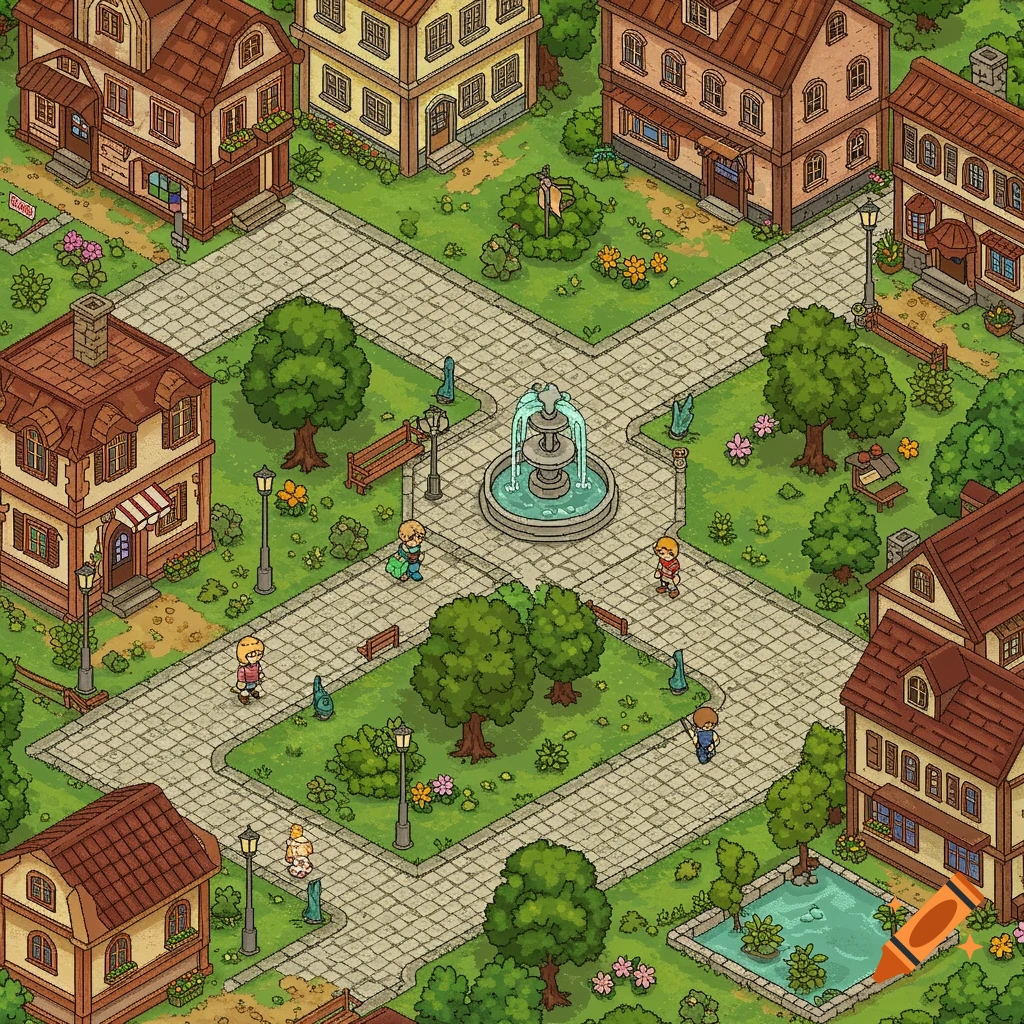
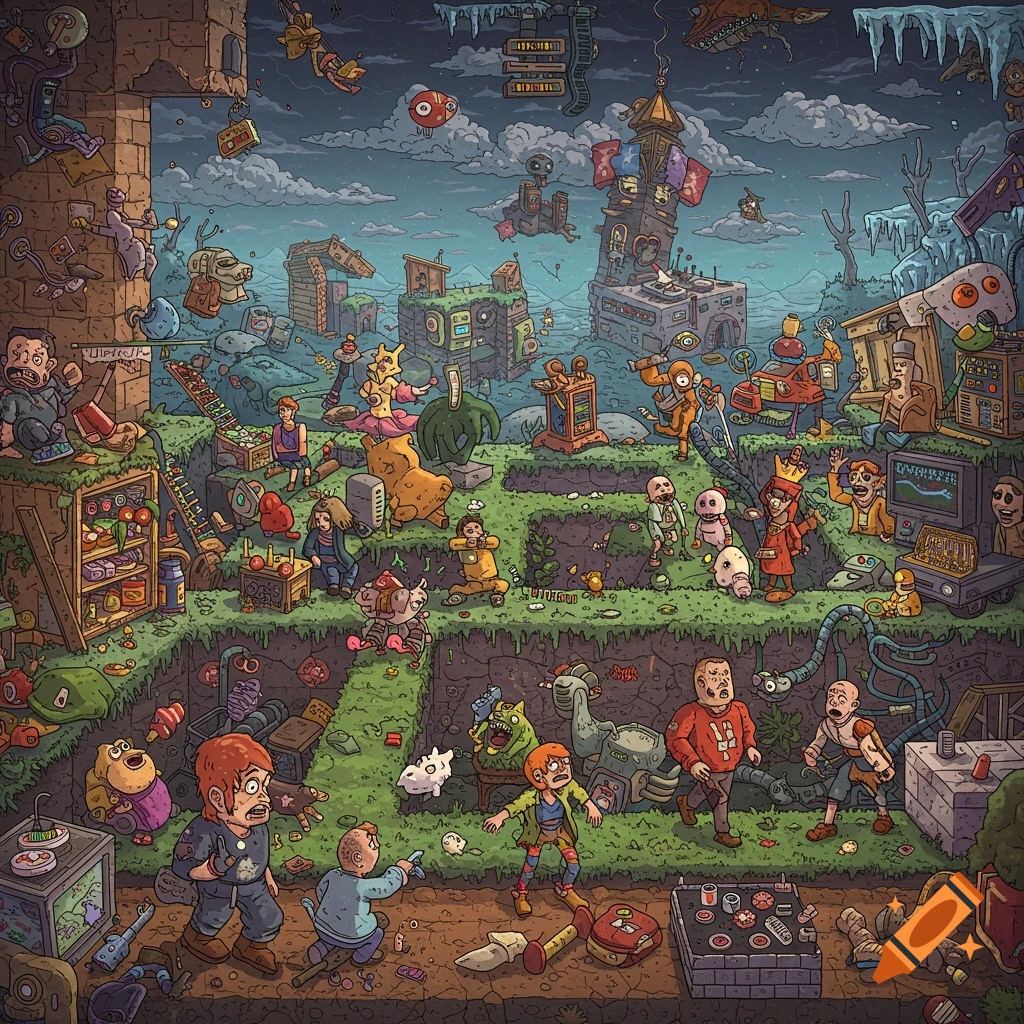
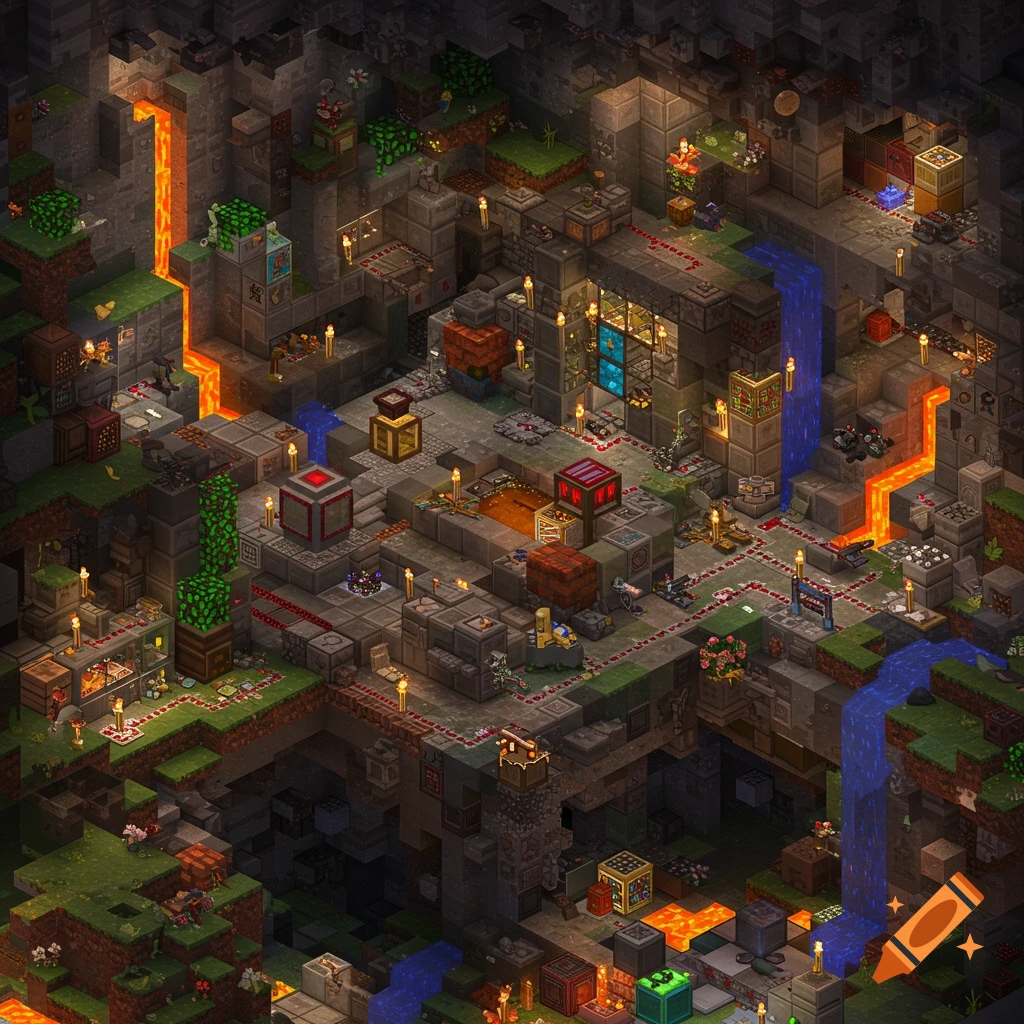
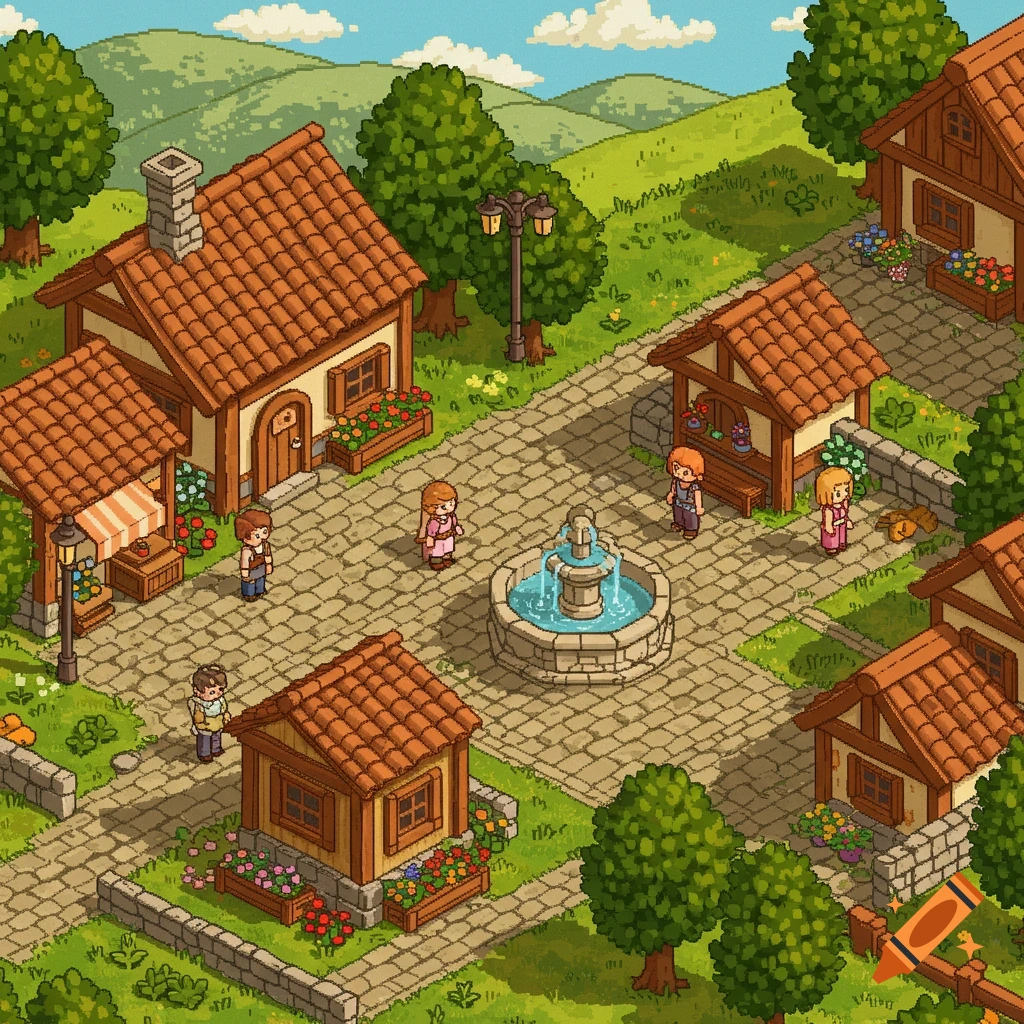
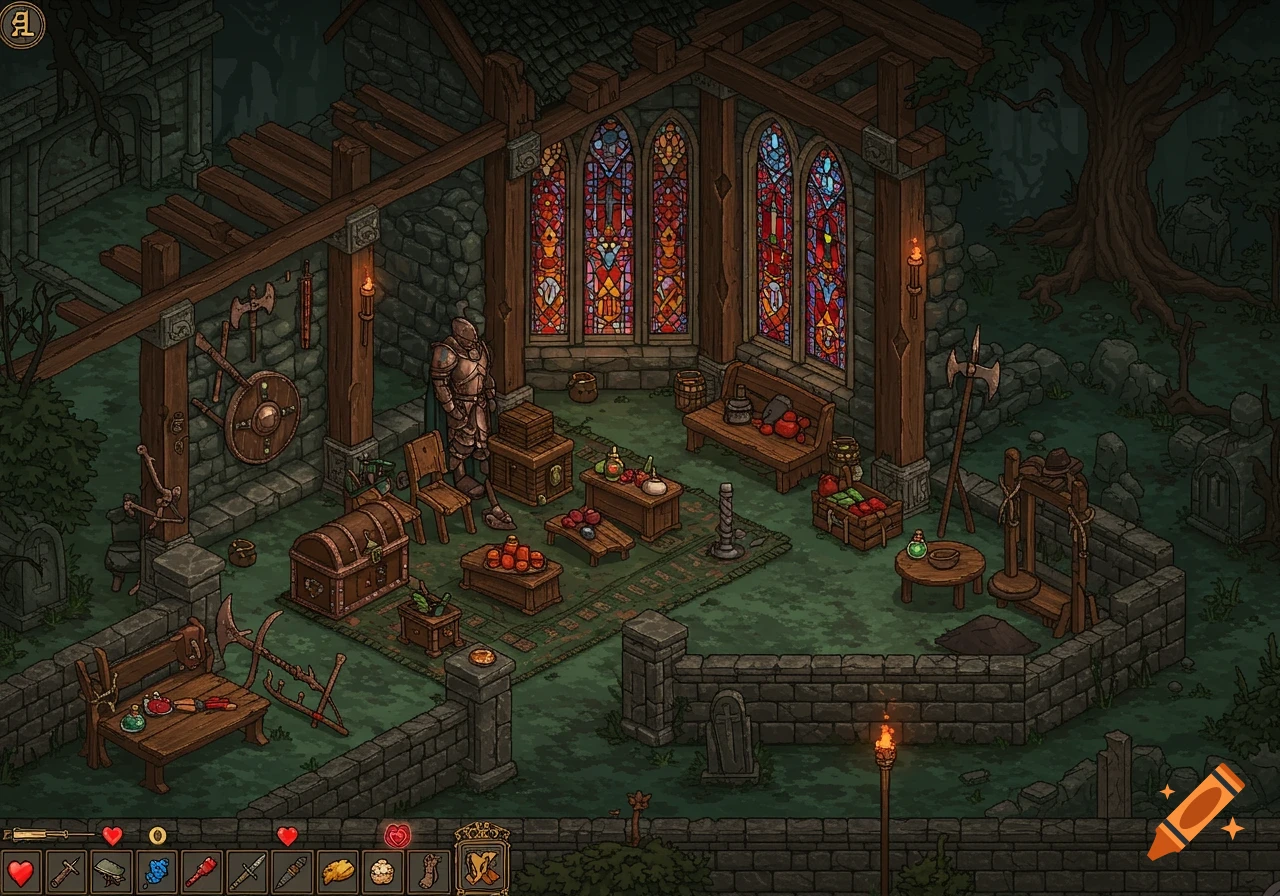
An isometric pixel art view of a colorful RPG world featuring characters, houses, buildings, and small creatures across a grassy landscape with cliffs and water.

EarthBound features many traditional role-playing game elements: the player controls a party of characters who travel through the game's two-dimensional world composed of villages, cities, caves, and dungeons. Along the way, the player fights battles against enemies and the party receives experience points for victories. If enough experience points are acquired, a character's level will increase. This pseudo-randomly increases the character's attributes, such as offense, defense, and the maximum hit points (HP) and psychic points (PP) of each character. Rather than using an overworld map screen like most console RPGs of its era, the world is entirely seamless, with no differentiation between towns and the outside world. Another non-traditional element is the perspective used for the world. The game uses oblique projection, while most 2D RPGs use a "top-down" view on a grid or an isometric perspective. Unlike its predecessor, EarthBound Beginnings, EarthBound does not use random encounters. In EarthBound, enemies are presented similar to other non-player characters scattered around the game's overworld. While the player can see enemy parties on-screen, the composition of the parties are randomly generated. If the party contacts an enemy from behind (indicated by a translucent green swirl that fills the screen), the player is given a first-strike priority when battle mode begins. If the party contacts an enemy with their backs, the swirl is red, and the enemy is given Mehr sehen
More images like this